


Search results
Search for "dielectric" in Full Text gives 460 result(s) in Beilstein Journal of Nanotechnology. Showing first 200.
Influence of dielectric layer thickness and roughness on topographic effects in magnetic force microscopy
Beilstein J. Nanotechnol. 2019, 10, 1056–1064, doi:10.3762/bjnano.10.106

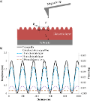
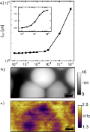
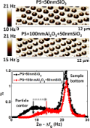
- overlapped by additional forces acting on the tip such as electrostatic forces. In this work the possibility to reduce capacitive coupling effects between tip and substrate is discussed in relation to the thickness of a dielectric layer introduced in the system. Single superparamagnetic iron oxide
- nanoparticles (SPIONs) are used as a model system, because their magnetic signal is contrariwise to the signal due to capacitive coupling so that it is possible to distinguish between magnetic and electric force contributions. Introducing a dielectric layer between substrate and nanoparticle the capacitive
- coupling can be tuned and minimized for thick layers. Using the theory of capacitive coupling and the magnetic point dipole–dipole model we could theoretically explain and experimentally prove the phase signal for single superparamagnetic nanoparticles as a function of the layer thickness of the dielectric




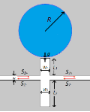
![[Graphic 2]](/bjnano/content/inline/2190-4286-10-106-i7.svg?max-width=637&scale=1.18182) ; black line) and measured phase shift for single nanoparticles with 10 ± 2 nm diameter...
; black line) and measured phase shift for single nanoparticles with 10 ± 2 nm diameter...


Revisiting semicontinuous silver films as surface-enhanced Raman spectroscopy substrates
Beilstein J. Nanotechnol. 2019, 10, 1048–1055, doi:10.3762/bjnano.10.105

- through percolated films to almost continuous films. We found that films below the percolation threshold (transition from dielectric-like to metal-like) made of isolated silver structures provided the largest SERS enhancement of 4-aminothiophenol (4-ATP) analyte signals. The substrate closest to the
- dielectric constant of the metal, surrounding dielectric, shape and size of the nanostructure, and its orientation with respect to the electric component of the electromagnetic field [1][2]. At resonance, the electric field near the surface of metallic nanostructures can be greatly enhanced and localized in
- . Chemical methods allow for fabrication, in solution or on surfaces, of nanostructures of various shapes including: nanospheres [5], spheres coated with a thin dielectric shell [10], dielectric core-metallic shell particles [11][12], nanostars [13], microflowers [14] and aggregates [15], just to mention a




Experimental study of an evanescent-field biosensor based on 1D photonic bandgap structures
Beilstein J. Nanotechnol. 2019, 10, 967–974, doi:10.3762/bjnano.10.97
- femtomolar range for oligonucleotides detection [6]. A particular type of photonic sensing devices are photonic bandgap (PBG) biosensors based on evanescent-wave detection [7]. PBG structures consist of a periodic dielectric configuration for which the propagation of a certain wavelength range is forbidden


Structural and optical properties of penicillamine-protected gold nanocluster fractions separated by sequential size-selective fractionation
Beilstein J. Nanotechnol. 2019, 10, 955–966, doi:10.3762/bjnano.10.96
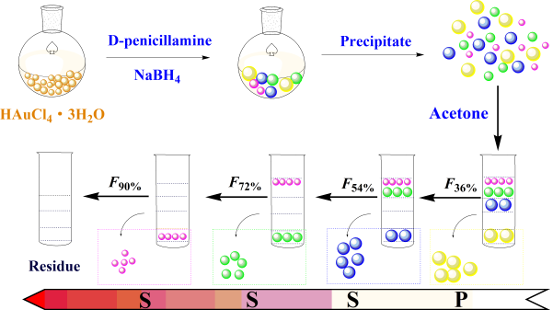
- the solution, the solubility of AuNCs in the mixed solvent was lowered due to the low dielectric constant of acetone, resulting in the precipitation of relatively large-sized clusters. The deposit could then be separated from the solution by centrifugation. Four fractions (F36%, F54%, F72%, and F90


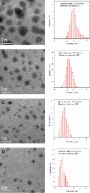

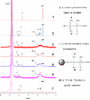
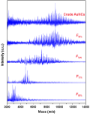
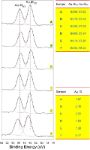

An efficient electrode material for high performance solid-state hybrid supercapacitors based on a Cu/CuO/porous carbon nanofiber/TiO2 hybrid composite
Beilstein J. Nanotechnol. 2019, 10, 781–793, doi:10.3762/bjnano.10.78

- seconds), long cycle life (>105), wide working potential and broad temperature range of operation [1][2]. The higher energy density and power density of supercapacitors are an important advantage over conventional dielectric capacitors and batteries. Supercapacitors can combine the advantages of batteries


Review of time-resolved non-contact electrostatic force microscopy techniques with applications to ionic transport measurements
Beilstein J. Nanotechnol. 2019, 10, 617–633, doi:10.3762/bjnano.10.62
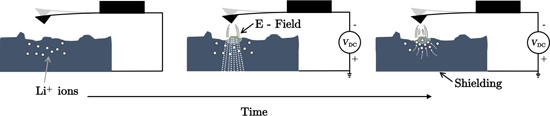
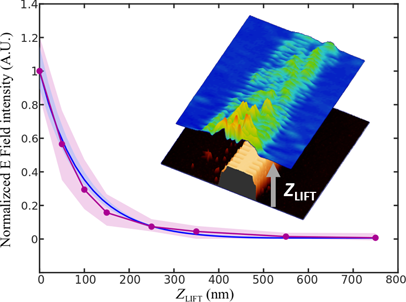
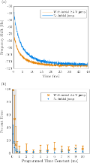
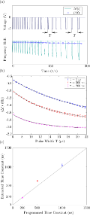
- investigated both a conducting sample and a thick dielectric sample (200 μm thick sapphire, εr = 11.3) by measuring the frequency shift as a function of the distance with a constant applied bias. The force was then extracted from the frequency shift using the Sader–Jarvis method [41] while taking care to
- with this particular probe type on samples of two extremes (a smooth conductor and a thick dielectric material). However, it is not necessarily valid in all cases and should therefore be verified through spectroscopy measurements such as this on a case-by-case basis. Sapphire was chosen for its high
- dielectric constant (εr > 10), which is similar to those found in many solid ionic conductors such as LiFePO4 and LiCoO2, and for its low electronic conductivity and lack of mobile ions. This experiment is therefore a reliable validation of the z-dependence of the tip–sample capacitance expected for actual





Biomimetic synthesis of Ag-coated glasswing butterfly arrays as ultra-sensitive SERS substrates for efficient trace detection of pesticides
Beilstein J. Nanotechnol. 2019, 10, 578–588, doi:10.3762/bjnano.10.59
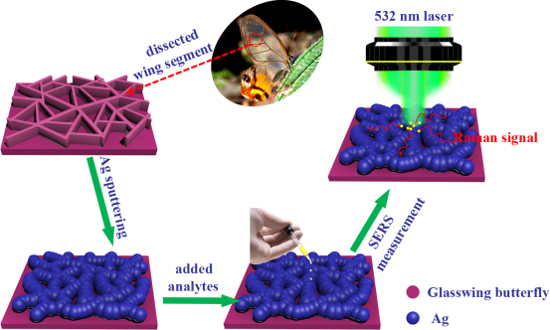
- signal intensity [3]. When incident light interacts with the free conduction electrons near the metallic plasmonic nanostructures, the collective oscillation of these electrons is significantly enhanced at metal–dielectric interfaces, which is known as localized surface plasmon resonance (LSPR). Namely
- set to 1 nm × 1 nm × 1 nm. The dielectric function of a metal is a complex entity as a function of the wavelength. Therefore, the infinite-frequency relative dielectric constant and the zero-frequency relative dielectric constant of Ag were set according to the Gai’s work [36]. In order to simulate as


Hydrophilicity and carbon chain length effects on the gas sensing properties of chemoresistive, self-assembled monolayer carbon nanotube sensors
Beilstein J. Nanotechnol. 2019, 10, 565–577, doi:10.3762/bjnano.10.58

- electromagnetic field around the Au–nanoparticle–dielectric interface. The Raman shift observed can be caused, in part, by LSPR. Further details can be found in Supporting Information File 1 (Figure S3). Since oxygen-plasma-treated CNTs were employed, a study on the nature of oxygenated species present (acting as


Mo-doped boron nitride monolayer as a promising single-atom electrocatalyst for CO2 conversion
Beilstein J. Nanotechnol. 2019, 10, 540–548, doi:10.3762/bjnano.10.55

- solvent environment [60], and the dielectric constant was 78.54. To construct the modes, we first built a periodic 5 × 5 BN supercell, whose vacuum region was 15 Å along the z-direction. The single TM atoms were doped at the boron vacancy sites [45]. All of the structures were completely optimized in a


Choosing a substrate for the ion irradiation of two-dimensional materials
Beilstein J. Nanotechnol. 2019, 10, 531–539, doi:10.3762/bjnano.10.54

- , initially recognized due to its catalytic effect in the CVD synthesis of graphene. SiO2, the most common material for supporting monolayers (usually in the SiO2/Si alignment), is in turn a typical dielectric, mostly referred to as introducing a comparatively small effect on the properties of 2D materials
- potentially useful since dielectric substrates are highly essential for nanoelectronic applications. Results and Discussion For each simulation a set of output values was obtained describing damage to the target substrate implemented through different processes. Among them, substrate sputtering can be on one
Nanocomposite–parylene C thin films with high dielectric constant and low losses for future organic electronic devices
Beilstein J. Nanotechnol. 2019, 10, 428–441, doi:10.3762/bjnano.10.42
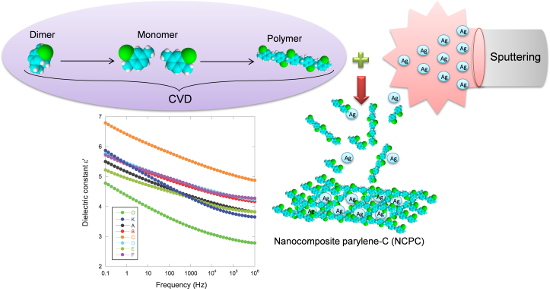
- with various contents and sizes of silver-oxide nanoparticles were investigated by broadband dielectric spectroscopy (BDS) in view of their final application. It was found that both the content and the size of the nanoparticles influence the value of the dielectric constant and the frequency-dependence
- of the permittivity. In particular, β-relaxation is affected by the addition of nanoparticles as well as the dissipation factor, which is even improved. A dielectric constant of 5 ± 1 with a dissipation factor of less than 0.045 in the range from 0.1 Hz to 1 MHz is obtained for a 2.7 µm thick NCPC
- with 3.8% Ag content. This study provides guidance for future NCPC materials for insulating gates in organic field-effect transistors (OFETs) and advanced electronic applications. Keywords: dielectric; nanocomposite polymer; organic field-effect transistor; parylene C; silver-containing nanoparticle




Advanced scanning probe lithography using anatase-to-rutile transition to create localized TiO2 nanorods
Beilstein J. Nanotechnol. 2019, 10, 412–418, doi:10.3762/bjnano.10.40

- . This is related to the high refractive index of TiO2, the size of the nanorods, and the dielectric antenna effect of the stringed nanorods [46]. To test the reliability of the presented method, the writing process was repeated with several probes. The spring constant is different for each probe even if


Electromagnetic analysis of the lasing thresholds of hybrid plasmon modes of a silver tube nanolaser with active core and active shell
Beilstein J. Nanotechnol. 2019, 10, 294–304, doi:10.3762/bjnano.10.28

- –dielectric interfaces or thin metal layers, and their standing-wave counterparts, localized surface plasmon (LSP) modes on metal particles and wires of deeply sub-wavelength (sub-λ) size. This phenomenon occurs due to the specific properties of the complex dielectric functions of metals in the optical range
- εmet(λ) = −εhost where εhost > 0 is the relative dielectric permittivity of the host medium – see [1][2] for details. If the host medium is air, then the corresponding wavelength is found in the ultraviolet range for silver and in the green range for gold where the bulk losses in metals are
- modes. Note also that there exist other LEP-like formulations aimed at the extraction of mode threshold [28][29][30][31][32]; some of them differ from LEP only by the choice of the material-gain parameter, which can be the imaginary part of the dielectric permittivity (because Im εa = 2αγ, where α is


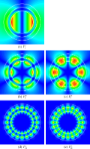
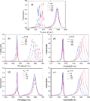
![[Graphic 29]](/bjnano/content/inline/2190-4286-10-28-i46.svg?max-width=637&scale=1.18182) λ = 565.03...
λ = 565.03...

![[Graphic 36]](/bjnano/content/inline/2190-4286-10-28-i53.svg?max-width=637&scale=1.18182) ...
...


Magnetic-field sensor with self-reference characteristic based on a magnetic fluid and independent plasmonic dual resonances
Beilstein J. Nanotechnol. 2019, 10, 247–255, doi:10.3762/bjnano.10.23
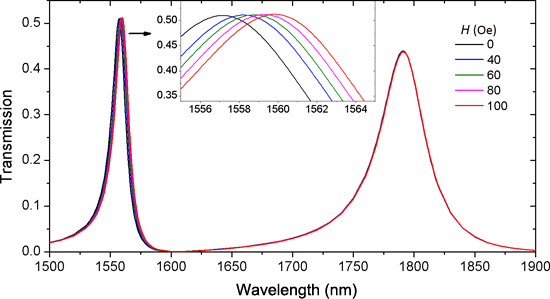
- , Tianjin 300222, China 10.3762/bjnano.10.23 Abstract A magnetic-field sensor with self-reference characteristic based on metal–dielectric–metal (MDM) plasmonic waveguides and a magnetic fluid (MF) is proposed and theoretically investigated. Independent dual resonances are supported by the coupled
- fabrication and compactness. In recent years, compact optical devices based on surface plasmon polaritons (SPPs) have been reported. SPPs propagate along the dielectric–metal interface with the amplitudes decaying exponentially into both sides [16]. The deep subwavelength confinement of SPPs leads to the
- development of various integrated photonic components, such as filters [17], modulators [18], interferometers [19], optical switches [20] and nanosensors [21][22]. As important plasmonic structures, metal–dielectric–metal (MDM) waveguides have attracted considerable attention. Various kinds of plasmonic



Interaction of Te and Se interlayers with Ag or Au nanofilms in sandwich structures
Beilstein J. Nanotechnol. 2019, 10, 238–246, doi:10.3762/bjnano.10.22

- basically the middle of the sample (and thus the depth where 2 nm of Te was deposited), as well as no concentration of Te at any metal/dielectric interface indicates that tellurium did not segregate nor diffuse into the gold film. In case of the silver sandwich, however, a noticeable concentration of Te can
- the Ag layer grown on Ge [26], Te segregates towards both Ag/dielectric interfaces. This is probably due to the fact that in a sandwich-like sample, Ge is surrounded by two different Ag layers – the one below it has flat density profile, while the one on top has a gradient density profile. This
- deposition of the samples in the UV–vis–mid-IR spectral range (0.06–6.5 eV) for three angles of incidence (65°, 70° and 75°) using two instruments: V-VASE (J.A.Woollam Co., Inc.) in the UV–vis–NIR and Sendira (Sentech GmbH) in the mid-IR. The complex dielectric function of effective Ag layers with segregated


Scanning probe microscopy for energy-related materials
Beilstein J. Nanotechnol. 2019, 10, 132–134, doi:10.3762/bjnano.10.12
- relationship between Li-ion conductivity and the microstructure of the solid-state electrolyte lithium aluminum titanium phosphate films [10]. Furthermore, dielectric properties play a role for the storage of electrochemical energy. Ying Wang and co-workers report on a novel method for the characterization of
- the local dielectric distribution based on surface adhesion mapping by SPM [11]. This method is evidently easy in terms of operation and thus has the potential to be widely used. Finally, we want to highlight the contribution “Electrostatic force spectroscopy revealing the degree of reduction of
Threshold voltage decrease in a thermotropic nematic liquid crystal doped with graphene oxide flakes
Beilstein J. Nanotechnol. 2019, 10, 71–78, doi:10.3762/bjnano.10.7
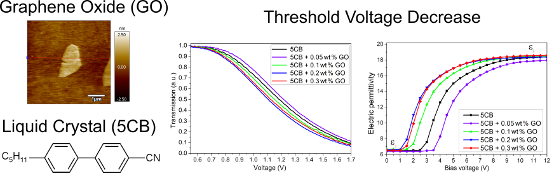
- dielectric spectroscopy measurements. The effect is related to the disrupted planar alignment due to the strong π–π stacking between the 5CB’s benzene rings and the graphene oxide’s structure. Additionally, we present the GO concentration dependence on the isotropic–nematic phase transition temperature
- oscilloscope (Tektronix TDS 2014) was used to register the electro-optical response. The duration of the driving pulse was 1 s. Dielectric spectroscopy (DS) studies were performed using an impedance analyzer (Agilent 4294A) and conducted over a broad frequency range from 100 Hz to 10 MHz, with the oscillation
- 0.1 wt %, the GO flakes disturb the formation of the nematic phase. In this experiment, the Frédericksz transition was induced by the electric field. The threshold voltage dependence on the GO concentration in 5CB was investigated by two methods: an electro-optic (EO) and dielectric spectroscopy (DS



A novel polyhedral oligomeric silsesquioxane-modified layered double hydroxide: preparation, characterization and properties
Beilstein J. Nanotechnol. 2018, 9, 3053–3068, doi:10.3762/bjnano.9.284

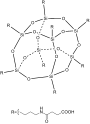
- controlled manner, making POSS a class of promising nanoscale building blocks for advanced functional nanomaterials [22][23][24]. Besides, the unique inorganic–organic architecture also endows POSS with low dielectric constant, high thermal and oxidation resistance [23][25]. And unlike traditional organic







Electrostatic force microscopy for the accurate characterization of interphases in nanocomposites
Beilstein J. Nanotechnol. 2018, 9, 2999–3012, doi:10.3762/bjnano.9.279
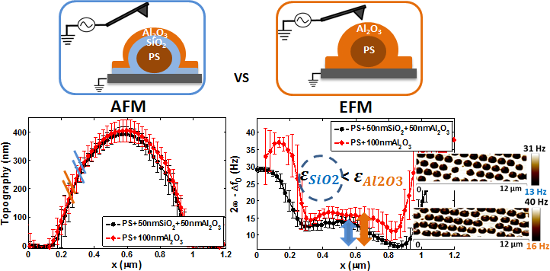
- deduced by comparison of experimental data and numerical simulations, as well as the interface state of silicone dioxide layers. Keywords: atomic force microscopy; building-block materials; dielectric permittivity; electrostatic force microscopy; finite element simulation; interphases; nanocomposites
- ; Introduction Composite nanomaterials (often referred to as “nanodielectrics” by the dielectrics community) can be synthesized by including dielectric nanoparticles in a polymeric matrix and are often used as insulating material [1][2][3]. Although the mechanical and thermal behavior of the base insulating
- polymer can be enhanced by microcomposites, its electrical performance is usually degraded [4][5]. On the other hand, the incorporation of nanofillers (1–10 wt %) into these polymers improves the dielectric properties of the resulting material, while meeting the thermal, mechanical and cost requirements




Colloidal chemistry with patchy silica nanoparticles
Beilstein J. Nanotechnol. 2018, 9, 2989–2998, doi:10.3762/bjnano.9.278

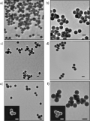
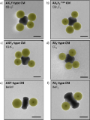
- samples was measured once again and the zeta potential values were measured using the Malvern Zetasizer 3000 HS setup (Malvern Instruments). Each measurement was performed for 30 s, the dielectric constant of solvent (water) was set to 80.4 and the Smoluchowsky factor f(κa) was 1.5. Synthesis of the CMs


Investigation of CVD graphene as-grown on Cu foil using simultaneous scanning tunneling/atomic force microscopy
Beilstein J. Nanotechnol. 2018, 9, 2953–2959, doi:10.3762/bjnano.9.274

- temperature, the Ar flow was stopped and the H2 flow was reduced while CH4 was let in to the quartz tube as the carbon source. As-grown samples, as well as graphene crsytals transferred on to dielectric substrates were investigated by optical microscopy and scanning electron microscopy (SEM). Raman spectra


In situ characterization of nanoscale contaminations adsorbed in air using atomic force microscopy
Beilstein J. Nanotechnol. 2018, 9, 2925–2935, doi:10.3762/bjnano.9.271

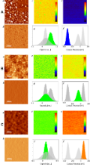
- function of tip–sample voltage and tip–sample distance, we are able to determine the contact potential, the Hamaker constant and the effective thickness of the dielectric layer within the tip–sample system. All these properties depend strongly on the contamination within the tip–sample system. We propose
- and that on each metallic surface a thin dielectric film may be adsorbed. In addition, we will assume that the (second derivative of) tip–sample capacitance (see Equation 3) can be approximated by the expression C″(d) = πε0R/(d + h/ε)2, where R is the effective tip radius, d is the tip–sample distance
- , h is the total thickness of the dielectric films on tip and sample, ε0 is the dielectric permittivity of vacuum and ε is the relative dielectric constant [43][44][45][46]. For a purely metallic system in air or vacuum were no dielectric layer is present (h = 0), the expression simplifies to C″(d


Time-resolved universal temperature measurements using NaYF4:Er3+,Yb3+ upconverting nanoparticles in an electrospray jet
Beilstein J. Nanotechnol. 2018, 9, 2916–2924, doi:10.3762/bjnano.9.270
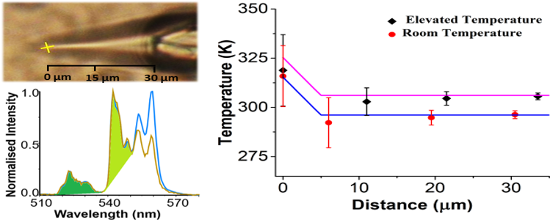
- slope value of −1182 ± 8.0 K and the intercept is 3.002 ± 0.021. The selection of the peak range is important for an accurate calculation of temperature. Changes in peak shape with external factors such as intensity, excitation time, and surrounding dielectric conditions [36] will corrupt the


Controlling surface morphology and sensitivity of granular and porous silver films for surface-enhanced Raman scattering, SERS
Beilstein J. Nanotechnol. 2018, 9, 2813–2831, doi:10.3762/bjnano.9.263
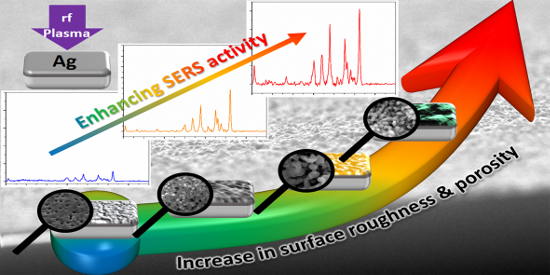
- the SERS activity can deteriorate due to surface oxidation of the silver surface [88]. For increasing the long-term stability of SERS active silver films we have studied a thin layer of dielectric Al2O3 as protective coating [89]. A 1 nm thick Al2O3 film was deposited on top of the nanoporous silver





Contactless photomagnetoelectric investigations of 2D semiconductors
Beilstein J. Nanotechnol. 2018, 9, 2741–2749, doi:10.3762/bjnano.9.256

- ] (ε0ε/we)Vg, where ε0 and ε are the permittivity of free space and the used dielectric, respectively; e is the electron charge; and w is the thickness of the dielectric. The authors of [35] provided the theoretical description of the current compact model of graphene field-effect transistors. In our

![[Graphic 1]](/bjnano/content/inline/2190-4286-9-256-i2.svg?max-width=637&scale=1.18182) evoked by the PME circulating current in a point-illuminated 2D...
evoked by the PME circulating current in a point-illuminated 2D...

![[Graphic 7]](/bjnano/content/inline/2190-4286-9-256-i8.svg?max-width=637&scale=1.18182) vs the illumination intensity for differe...
vs the illumination intensity for differe...

![[Graphic 15]](/bjnano/content/inline/2190-4286-9-256-i16.svg?max-width=637&scale=1.18182) vs the carrier lifetime for different values ...
vs the carrier lifetime for different values ...





