


Search results
Search for "nanoparticle" in Full Text gives 748 result(s) in Beilstein Journal of Nanotechnology. Showing first 200.
Self-assembly of amino acids toward functional biomaterials
Beilstein J. Nanotechnol. 2021, 12, 1140–1150, doi:10.3762/bjnano.12.85
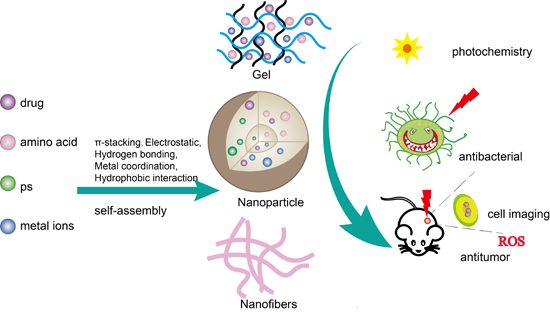
- been shown that a novel protein-based nanoparticle with enhanced photothermal effect has been obtained for antitumor therapy using metal ions, proteins, and photosensitizers as building blocks [69]. The integration of metal ions significantly improved the structural stability and photothermal
- properties of the nanoparticles [69]. The use of amino acids coordinated with metal ions and the encapsulation of guest molecule photosensitizers have also achieved encouraging results. Zhang et al. [70] developed an antitumor photodynamic therapy (PDT) nanoparticle based on the coordination of modified
- +/Ce6 was greater than 50.0% in both cases, and the encapsulation efficiency was greater than 99.0%. The Fmoc-H/Zn2+/Ce6 and Z-HF/Zn2+/Ce6 nanoparticle assembly were based on coordination and other noncovalent interactions which are sensitive to environmental changes. They demonstrated the robustness of

pH-driven enhancement of anti-tubercular drug loading on iron oxide nanoparticles for drug delivery in macrophages
Beilstein J. Nanotechnol. 2021, 12, 1127–1139, doi:10.3762/bjnano.12.84
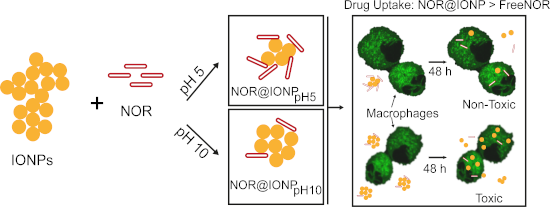
- Karishma Berta Cotta Sarika Mehra Rajdip Bandyopadhyaya Centre for Research in Nanotechnology and Science, IIT Bombay, Powai, Mumbai, Maharashtra – 400076, India Chemical Engineering Department, IIT Bombay, Powai, Mumbai, Maharashtra – 400076, India 10.3762/bjnano.12.84 Abstract Nanoparticle
- with stabilizing agents. We hypothesize that, zwitterionic drugs like norfloxacin (NOR, a fluoroquinolone) can manifest dual functionality – nanoparticle stabilization and antibiotic activity, eliminating the need of a separate stabilizing agent. Since these drugs have different charges, depending on
- imparts multiple benefits – improved IONP stability, enhanced drug coating, higher drug uptake in macrophages at reduced toxicity and slower drug release. Keywords: drug-nanoparticle interactions; drug uptake; intra-macrophage; iron oxide nanoparticles; norfloxacin; Introduction Nanoparticles have taken



Assessment of the optical and electrical properties of light-emitting diodes containing carbon-based nanostructures and plasmonic nanoparticles: a review
Beilstein J. Nanotechnol. 2021, 12, 1078–1092, doi:10.3762/bjnano.12.80
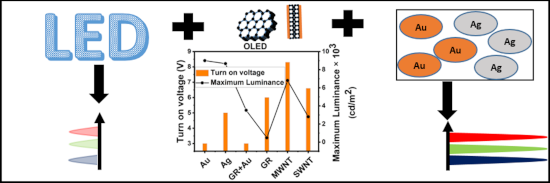
- and carbon-based nanostructures in the device architecture. Six types of OLED with AgNP, AuNP, GR, MWNT, SWNT, and GR + AuNP in the device structure were compared. In general, plasmonic nanoparticle-based OLED demonstrate lower turn-on voltages and higher luminance compared to the graphene or CNT


Use of nanosystems to improve the anticancer effects of curcumin
Beilstein J. Nanotechnol. 2021, 12, 1047–1062, doi:10.3762/bjnano.12.78

- environments because in this type of formulation, it is preferred that the nanoparticle is stable at pH 7.4 (pH of a healthy tissue) and that CUR release is carried out in an acidic pH, which is characteristic of tumor cell endosomes (pH 5.0–5.8) [39]. On the other hand, Bonaccorso et al. [85] compared CUR


Revealing the formation mechanism and band gap tuning of Sb2S3 nanoparticles
Beilstein J. Nanotechnol. 2021, 12, 1021–1033, doi:10.3762/bjnano.12.76
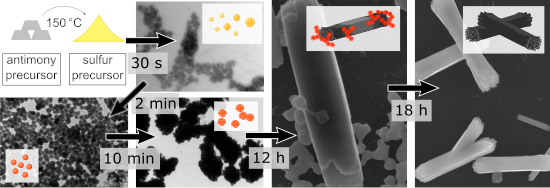
- electron beam, which caused the particles to appear larger. Consequently, the stacked deflection peaks (Figure 5b, 14.7 nm, red and green mark) correspond to a nanoparticle cluster similar to those found in Figure 4b. Chemical composition To confirm the XRD results for stibnite and to examine the


Progress and innovation of nanostructured sulfur cathodes and metal-free anodes for room-temperature Na–S batteries
Beilstein J. Nanotechnol. 2021, 12, 995–1020, doi:10.3762/bjnano.12.75
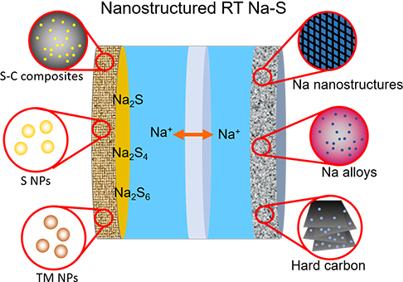
- to the shuttle effect, low electrochemical utilization of sulfur, and low specific surface area [16][52]. Many of these drawbacks can be overcome by reducing the size of the active sulfur phase to the nanoparticle range. The accompanied increase in surface area generally accelerates interfacial
- search results were reduced to half (703) and to a quarter (358) when “room-temperature” and additionally “sulfur or sulphur” were added to the search query, respectively, leaving the abovementioned companies still as the main applicants. The additional inclusion of the term “nanoparticle or




The role of deep eutectic solvents and carrageenan in synthesizing biocompatible anisotropic metal nanoparticles
Beilstein J. Nanotechnol. 2021, 12, 924–938, doi:10.3762/bjnano.12.69
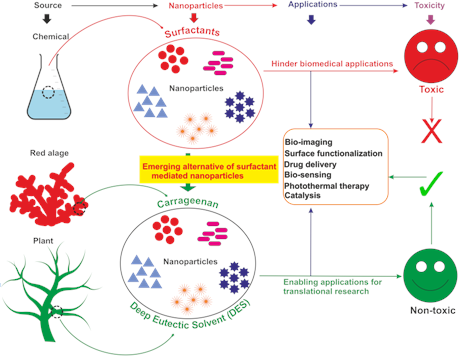
- of gold and silver nanoparticles. Surface plasmon resonance is an inherent property of plasmonic metal nanoparticles that is immensely employed as a tool for theranostics and is highly influenced by the size and shape of the nanoparticle [2]. The property of SPR has also been exploited for nanochips
- ability of NIR/IR rays to deeply penetrate tissues, enabling nanoparticle-mediated photothermal or contrast effects. However, the final purpose of these nanomaterials for biological applications is determined after successful toxicity assessment and stability evaluation in biological media [8
- potentials, neutralizing charge, and in particular, crystal face pacification, enabling preferential crystal growth. DESs are the medium where nanoparticle synthesis occurs in the presence of capping agent and reducing agents. Biocompatible capping and reducing agents, such as carbohydrates (i.e


Modification of a SERS-active Ag surface to promote adsorption of charged analytes: effect of Cu2+ ions
Beilstein J. Nanotechnol. 2021, 12, 902–912, doi:10.3762/bjnano.12.67
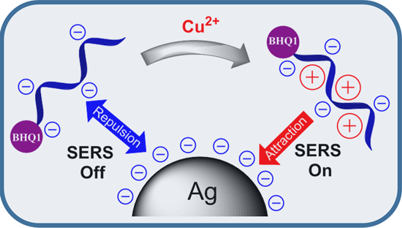
- round bottom flask and stirred until complete dissolution. Then, 640 µL of 4 mg/mL silver nitrate solution were added under vigorous stirring and kept for 4 h in the ultrasonic bath. The resulting silver nanoparticle solution was dialyzed against 2.5 mM sodium citrate and stored at 4 °С. Glass and


Comprehensive review on ultrasound-responsive theranostic nanomaterials: mechanisms, structures and medical applications
Beilstein J. Nanotechnol. 2021, 12, 808–862, doi:10.3762/bjnano.12.64


Silver nanoparticles nucleated in NaOH-treated halloysite: a potential antimicrobial material
Beilstein J. Nanotechnol. 2021, 12, 798–807, doi:10.3762/bjnano.12.63

- , and HNT-8 were recorded with TEM, while sample HNT-8 was also measured with XRD. (XRD was also performed for HNT-0 and HNT-4 but omitted from this report because it did not show any significant difference from HNT-8). Silver nanoparticle synthesis To synthesize silver nanoparticles, 10 g of HNT (from
- and DSC analysis, from room temperature up to 600 °C, at constant heating of 20 °C/min. In order to observe the phases identified in the DSC/TGA measurements, four 10 g samples of HNT-8 were loaded with AgNO3 using the process described in section “Silver nanoparticle synthesis” and heated up to 65
- , to a concentration of 105 CFU/mL. These new 105 CFU/mL suspensions were then divided into ten tubes each, and to each were added the following concentrations of Ag/HNT-0 or Ag/HNT-8: 3, 6, 12, 25, 50, 100, 200, 400, 800, and 1600 ppm. Finally, each nanoparticle + bacteria suspension was incubated




Recent progress in actuation technologies of micro/nanorobots
Beilstein J. Nanotechnol. 2021, 12, 756–765, doi:10.3762/bjnano.12.59
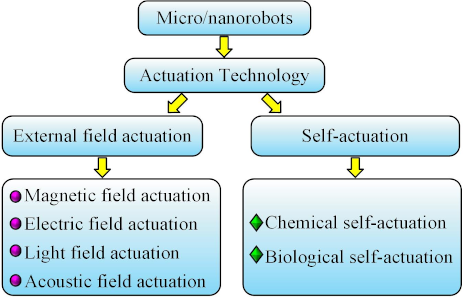
- this, the new microrobot is expected to be used in targeted drug delivery and other biomedical fields. Si et al. [27] proposed a theoretical concept of a nanorobot consisting of a nanoparticle and four single-stranded DNAs placed on a quad-nanopore device for motion control. When an electric field is


Recent progress in magnetic applications for micro- and nanorobots
Beilstein J. Nanotechnol. 2021, 12, 744–755, doi:10.3762/bjnano.12.58
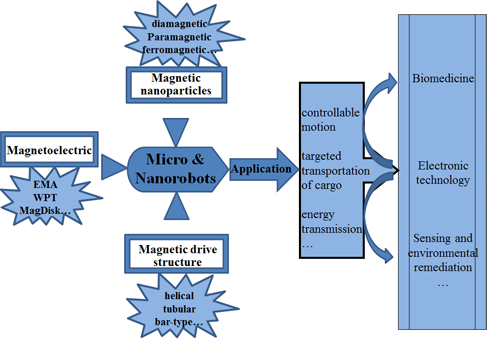
- processes of MNPs are adopted to fabricate MNRs [37]. A rotating magnetic field was often used to break particle chains into shorter fragments. As the magnetic field changes, the particle chain will be broken and re-formed. While disassembling the paramagnetic nanoparticle chains of MNRs, it is necessary to
- paramagnetic nanoparticle chains. They used a predefined dynamic magnetic field that could controllably spread and fragment the particle chains. This is an effective strategy that shows that the assembly and disassembly process is reversible. Swarms of MNR paramagnetic nanoparticles moved together in the form
- the same time, in order to reduce the chance of reorganization of the fragments a distance between disassembled parts could be established. Through magnetically induced repulsive forces the nanoparticle chains were forced to diffuse in different directions. This new method is of great significance for


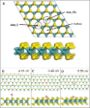
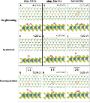
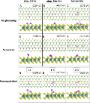
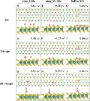
Prediction of Co and Ru nanocluster morphology on 2D MoS2 from interaction energies
Beilstein J. Nanotechnol. 2021, 12, 704–724, doi:10.3762/bjnano.12.56
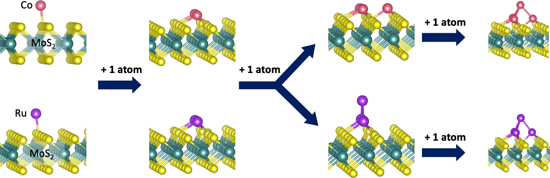
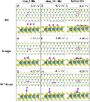
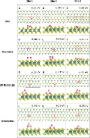
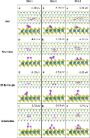
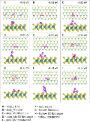
- interaction between metals and the MoS2 monolayer is of great importance when selecting systems for specific applications. In previous studies the focus has been largely on the strength of the interaction between a single atom or a nanoparticle of a range of metals, which has created a significant knowledge
- catalysts or for preventing islanding of conductive metals. Typically, theoretical studies focus on the adsorption of either single atoms of a series of metals [21][23][24][25][27] or large nanoparticle-like structures [19][20]. In our previous study we identified that while these studies do deliver useful



Fate and transformation of silver nanoparticles in different biological conditions
Beilstein J. Nanotechnol. 2021, 12, 665–679, doi:10.3762/bjnano.12.53

- vivo settings. Keywords: animal tissue; biological media; nanoparticle aggregation; nanoparticle dissolution; nanoparticle reformation; silver nanoparticles; Introduction The global consumption of silver nanoparticles (AgNPs) has been steadily increasing in the last decade and estimated to reach over




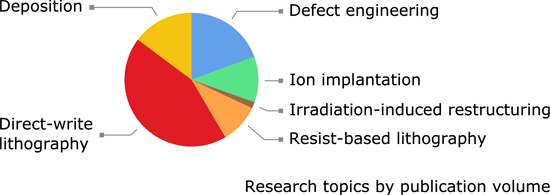
A review of defect engineering, ion implantation, and nanofabrication using the helium ion microscope
Beilstein J. Nanotechnol. 2021, 12, 633–664, doi:10.3762/bjnano.12.52


Stability and activity of platinum nanoparticles in the oxygen electroreduction reaction: is size or uniformity of primary importance?
Beilstein J. Nanotechnol. 2021, 12, 593–606, doi:10.3762/bjnano.12.49

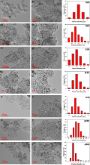
- min. A drop of the resulting suspension was applied to a standard copper mesh with a diameter of 3.05 mm, covered with a 5–6 nm thick layer of amorphous carbon. Next, the sample was dried in air at room temperature for 60 min. The histograms of platinum nanoparticle size distribution in the catalysts
- in the catalysts ranged from 1.2 (samples G20 and G25) to 1.3 nm (G30, G35, and G40) (Table 2). A selective electron microscopy study of the synthesized materials (Figure 2) showed that with an increase in the Pt loading in the catalysts, the average nanoparticle size also increased from 2 (G20) to
- the k-type, Θk is the fraction of the nanoparticle surface belonging to the k-type areas. Taking into account platinum nanoparticles with different numbers of catalytically active sites on their surface (different types of faces, edges, vertices, steps) it can be assumed that the smaller the amount of


On the stability of microwave-fabricated SERS substrates – chemical and morphological considerations
Beilstein J. Nanotechnol. 2021, 12, 541–551, doi:10.3762/bjnano.12.44

- on the substrates [8], the synthesis of complex nanoparticle structures with tunable interparticle gap sizes [9], the utilization of micro- and nanofabricated structures obtained by lithography techniques [10][11][12] comprising nanodisk arrays [13], nanoholes [14][15], nanocups [16][17
- ], nanogratings [18], or the customization of readily available structures (i.e., HR-DVD templates) [19]. The aim of these developments is not only the optimization of the nanoparticle arrangement to obtain high enhancement factors, but also to guarantee uniformity, homogeneity, the ease of fabrication, low
- typical heating process) which initiates the reduction of the silver salt by ethanol. This triggers a short burst of silver nanoparticle nucleation, which forms reaction seeds on the glass substrate. The strong affinity of the silver ions for the free hydroxyl groups of glass surfaces allows for the


Surface-enhanced Raman scattering of water in aqueous dispersions of silver nanoparticles
Beilstein J. Nanotechnol. 2021, 12, 497–506, doi:10.3762/bjnano.12.40

- near gold nanoparticles protected by various ligands [38][39]. The results of hydrogen bond dynamics and calculated far-IR spectra showed that a well-defined multilayered structure of water is formed close to the surface of the metal nanoparticle. The stabilization of this structure may be additionally
- enhanced by the mobility decrease in the nearest vicinity of the metal nanoparticle and by the increase of the rotational relaxation time and residence time of water molecules surrounding the ion wall in a charged monolayer-protected Au nanoparticle [39]. Assuming that the observed Raman enhancement is
- the water molecules could not be specifically organised onto the metal surface. Therefore, the shape and size of AgNPs may be the crucial point – more precisely, the optical plasmons responsible for the colour of the AgNPs. The location of the enhancement of the electric field around the nanoparticle


Rapid controlled synthesis of gold–platinum nanorods with excellent photothermal properties under 808 nm excitation
Beilstein J. Nanotechnol. 2021, 12, 462–472, doi:10.3762/bjnano.12.37

- , Hitachi, Japan). In the photothermal experiment, an 808 nm CW laser (MDL-III-808 nm, CNI, China) was used to irradiate the nanoparticle solutions, and temperature changes of all samples were recorded with an infrared thermal camera (225s, Fotric, China). Preparation of AuNRs AuNRs were synthesized


A review on nanostructured silver as a basic ingredient in medicine: physicochemical parameters and characterization
Beilstein J. Nanotechnol. 2021, 12, 440–461, doi:10.3762/bjnano.12.36

- determined not only by the large part of the surface atoms, but also by the crystallographic orientation on their surface. The number of atoms on the surface is influenced by the size of the nanoparticle, while the crystallographic orientation depends on the shape of the particles. The surfaces with {111
- –NIR absorption spectroscopy: Metallic nanoparticles are known to emit characteristic colors in the visible region of the electromagnetic spectrum due to a phenomenon known as surface plasmon resonance. The color of a colloidal nanoparticle solution is mainly dependent on the size and shape of the
- equations. Following the discrete dipole approximation (DDA), it is possible to calculate the dipole polarized by the incident light and all the other dipoles in the nanoparticle matrix, in addition to predicting the behavior of their respective spectra. Figure 11 shows the extinction, absorption, and


The impact of molecular tumor profiling on the design strategies for targeting myeloid leukemia and EGFR/CD44-positive solid tumors
Beilstein J. Nanotechnol. 2021, 12, 375–401, doi:10.3762/bjnano.12.31

- development and survival have fostered the parallel development of multifunctional bioactive nanomedicines capable of attacking multiple targets, which hold potential to overcome current deficiencies of targeted therapy. Targeting strategies with innovative ligands for nanoparticle surface engineering


Nickel nanoparticle-decorated reduced graphene oxide/WO3 nanocomposite – a promising candidate for gas sensing
Beilstein J. Nanotechnol. 2021, 12, 343–353, doi:10.3762/bjnano.12.28
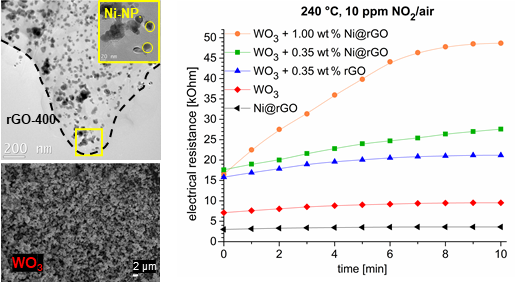
- Materials Research Center and Institute for Macromolecular Chemistry, Albert-Ludwigs-University Freiburg, 79104 Freiburg, Germany 10.3762/bjnano.12.28 Abstract We report for the first time the combination of WO3 sensing elements with a non-noble metal–carbon composite, namely a nickel metal nanoparticle
- decomposition approach with rGO synthesized from reduced graphite oxide at 400 °C. It is extremely important that the used rGO is thoroughly dried because of the oxyphilic nature of nickel nanoparticles. Therefore, before the nanoparticle synthesis, the rGO was dried using a turbo molecular pump at 5 × 10⁻⁷
- (Figure 3). Therefore, the thermal decomposition of the WO3 xerogel leads to the formation of only one crystalline WO3 phase without crystalline by-products. The average size of WO3 nanoparticle crystallites, calculated from the powder pattern using the Scherrer equation, is 40 nm. The SEM images show


Differences in surface chemistry of iron oxide nanoparticles result in different routes of internalization
Beilstein J. Nanotechnol. 2021, 12, 270–281, doi:10.3762/bjnano.12.22

- .12.22 Abstract The efficient entry of nanotechnology-based pharmaceuticals into target cells is highly desired to reach high therapeutic efficiency while minimizing the side effects. Despite intensive research, the impact of the surface coating on the mechanism of nanoparticle uptake is not sufficiently
- carrier, are the most frequently used materials for biomedical applications [17][18][19][20]. The impact of the surface chemistry on the mechanism of nanoparticle uptake has not been sufficiently clarified yet. MNPs with comparable basic physicochemical characteristics (e.g., particle size, surface charge
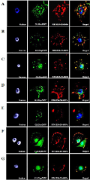
- endocytosis. BSA-SO-MNPs were internalized via CME while PEG-SO-MNPs were taken up via CavME or lipid rafts. These findings confirm the major role of nanoparticle coatings on cellular entry mechanisms. Our data suggest that the effects of endocytic inhibitors on the internalization pathways are rather complex



A review on the biological effects of nanomaterials on silkworm (Bombyx mori)
Beilstein J. Nanotechnol. 2021, 12, 190–202, doi:10.3762/bjnano.12.15

- been reported to improve the weight and the height of tobacco plants and it was also successful in reducing the severity of bacterial wilt caused by Ralstonia solanacearum when compared to control or to other magnesium dioxide nanoparticle concentrations (50 and 150 µg/mL) [23]. The ability of MgO NPs
- µg) did not increase the production of ROS and it was suggested that the its effect on hematopoiesis was self-repaired and the damage to the hematopoietic tissues was limited. Zou et al. [155] studied the efficacy in using silver nanoparticle colloids (AgNPC) to reduce the infection caused by BmNPV


A review on the green and sustainable synthesis of silver nanoparticles and one-dimensional silver nanostructures
Beilstein J. Nanotechnol. 2021, 12, 102–136, doi:10.3762/bjnano.12.9
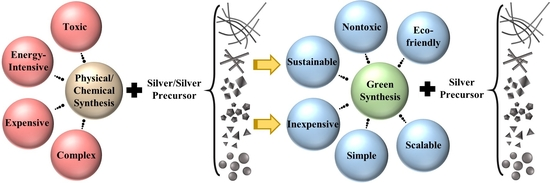
- pressure), it can synthesize AgNPs at a lower temperature compared to the sol–gel process alone [144]. Nevertheless, there are some disadvantages regarding the application and feasibility of sol–gel-produced nanoparticles and nanocomposites. For instance, in industrial applications of nanoparticle-doped
- deposition process. Chemical vapor deposition (CVD) and atomic layer deposition (ALD) are among other chemical methods for nanoparticle synthesis. CVD is a method that allows production of nanoparticles on a substrate [241]. The process consists of three steps. First, the addition of a volatile precursor in
- surface. We have recently reviewed engineered TMV and its virus‐like‐particles (VLPs) for synthesis of biotemplated nanomaterials. We also discussed the recent advances on novel barely stripe mosaic virus (BSMV) and its VLP as a novel template for metal nanoparticle synthesis [273][274]. 3.4 Algae





