

Search results
Search for "chitin" in Full Text gives 42 result(s) in Beilstein Journal of Nanotechnology.
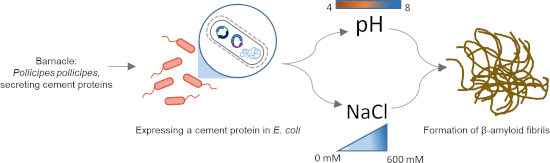
Self-assembly and adhesive properties of Pollicipes pollicipes barnacle cement protein cp19k: influence of pH and ionic strength
Beilstein J. Nanotechnol. 2025, 16, 1863–1872, doi:10.3762/bjnano.16.129
- stalk (peduncle) that anchors it to a surface [23]. Structural and biochemical analyses revealed that the cuticle is primarily composed of α-chitin, with indications of elastin-like proteins and collagen [23], and stiffness values comparable to those found in elastomers and in the soft cuticles of


Current status of using adsorbent nanomaterials for removing microplastics from water supply systems: a mini review
Beilstein J. Nanotechnol. 2025, 16, 1837–1850, doi:10.3762/bjnano.16.127
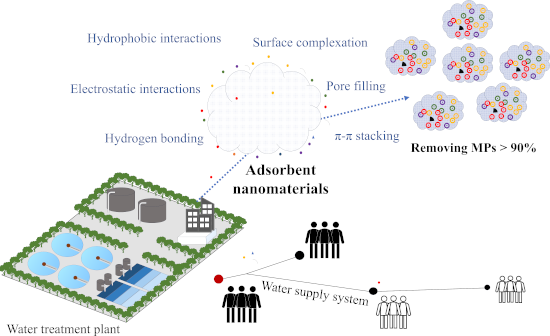
- of adsorption sites for MPs/NPs, not only on the external surface but also within the internal pores, thereby enhancing the material’s adsorption rate (Figure 4) [49]. Chitin–graphene oxide sponges showed an adsorption capacity of 89.8% for PS. The defined mechanisms include electrostatic attraction


Prospects of nanotechnology and natural products for cancer and immunotherapy
Beilstein J. Nanotechnol. 2025, 16, 1644–1667, doi:10.3762/bjnano.16.116
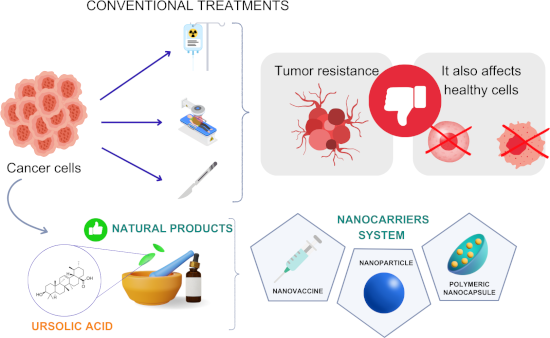
- ][85]. Furthermore, in polysaccharides such as chitin, hyaluronic acid, and alginate, factors such as molecular weight, degree of branching, monosaccharide composition, and processes like sulfation or phosphorylation significantly influence their ability to modulate the tumor microenvironment and
- ) obtained from fungi to prepare antitumor and immunomodulatory drugs, with chitosan–glucan being an API. Chitosan–glucan is a biopolymer complex composed of chitosan, a deacetylated derivative of chitin, and glucan, a polysaccharide commonly found in fungal cell walls, cereals, and seaweed. Chitosan



Nanotechnology-based approaches for the removal of microplastics from wastewater: a comprehensive review
Beilstein J. Nanotechnol. 2025, 16, 1607–1632, doi:10.3762/bjnano.16.114
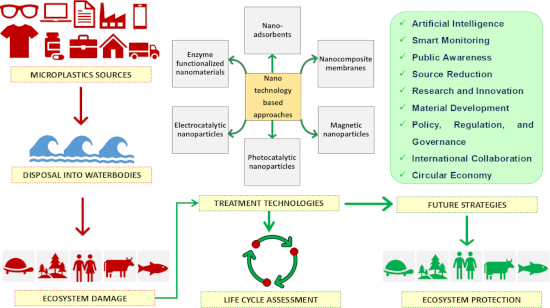
- environmental conditions and across a wide pH range, making them reliable materials for pollutant removal [83]. Sun et al. [84] studied the removal of MPs from water using a sustainable adsorbent composed of graphene oxide and chitin. The elastic nature of the sponge retains its high porosity, enabling
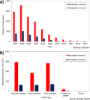


Hydrogels and nanogels: effectiveness in dermal applications
Beilstein J. Nanotechnol. 2025, 16, 1216–1233, doi:10.3762/bjnano.16.90
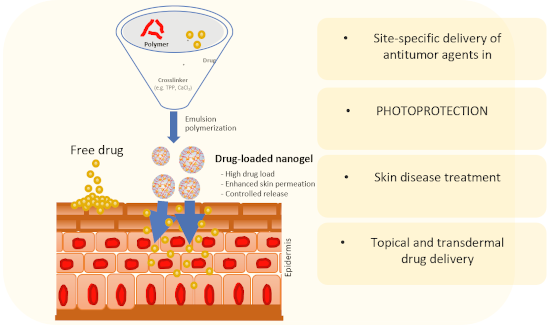
- ], hyaluronic acid [124], glucan [125], or PVA [107]. Chitosan can also be used as quaternized chitosan-g-polyaniline [126] and chitosan hydrochloride [127]. Nanofibrillated and cationized chitin, which is the precursor of chitosan, was used in the preparation of xanthan gum hydrogels [128]. Methods involving


Chitosan nanocomposite containing rotenoids: an alternative bioinsecticidal approach for the management of Aedes aegypti
Beilstein J. Nanotechnol. 2025, 16, 1197–1208, doi:10.3762/bjnano.16.88
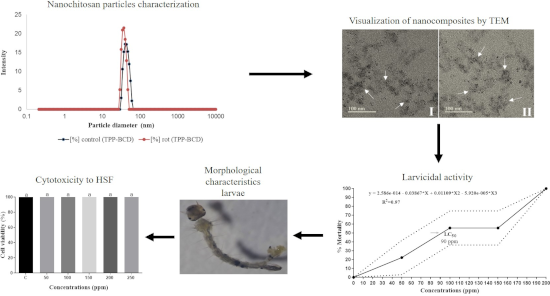
- diseases, we produced a chitosan nanocomposite with the isolated rotenoids. Chitosan is an aminated polysaccharide derived from the deacetylation of chitin and is the main structural component of insect and crustacean exoskeletons. It is widely recognized as the second most abundant natural polymer



Enhancing mechanical properties of chitosan/PVA electrospun nanofibers: a comprehensive review
Beilstein J. Nanotechnol. 2025, 16, 286–307, doi:10.3762/bjnano.16.22
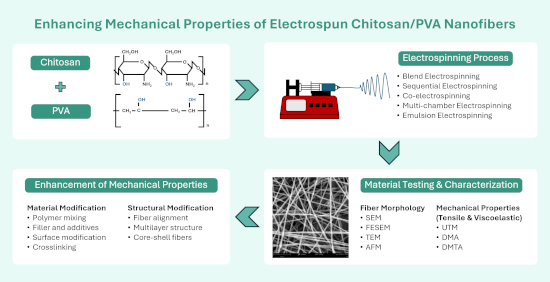
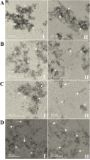
- current techniques and methods for improving the mechanical properties of electrospun nanofibers, thereby enhancing their application in various fields. Materials composition Chitosan is an intriguing material derived from chitin. Because of its promising properties, it has attracted significant attention


Orientation-dependent photonic bandgaps in gold-dust weevil scales and their titania bioreplicates
Beilstein J. Nanotechnol. 2025, 16, 1–10, doi:10.3762/bjnano.16.1
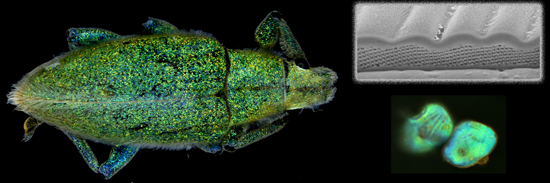
- 10.3762/bjnano.16.1 Abstract The scales of the gold-dust weevil Hypomeces squamosus are green because of three-dimensional diamond-type chitin–air photonic crystals with an average periodicity of about 430 nm and a chitin fill fraction of about 0.44. A single scale usually contains one to three
- prohibited, is generally not possible with biological photonic crystals, as the refractive index contrast (approx. 1.55) between chitin and air is too low to achieve this condition [4][5]. The intriguing properties of photonic bandgap materials extend beyond coloration, as they can be used for manipulating
- scales are composed of chitin and an undetermined short-wavelength absorbing pigment. To investigate whether the origin of the coloration is structural, we examined the external and internal structure of intact and plasma-etched elytral scales using scanning electron microscopy (Figure 2). Using a


Ultrablack color in velvet ant cuticle
Beilstein J. Nanotechnol. 2024, 15, 1554–1565, doi:10.3762/bjnano.15.122
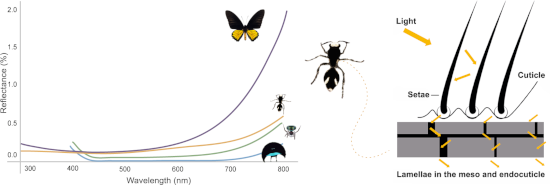
- resilin [18]. Insect cuticle with protein-dominated regions, which can include resilin, an elastic protein present in arthropod cuticles, or unsclerotized chitin exhibits autofluorescence when excited with a laser of 405 nm wavelength. Regions with a low degree or high degree of sclerotization emit
- longitudinal absorptive bands. These are often rods of chitin embedded in a protein matrix [23]. The authors also suggested that there is a proteinaceous filling material, which tends to leach out during preparation of the specimens for SEM, leaving behind empty lacunae. Modelled reflectance of V. orientalis
- on top of each other (E and F). There are also dark transverse bands that interconnect two consecutive longitudinal bands of the same lamellae (arrow), or of two separate lamellae (A and B). Legend: L = lamellae; P = pillars; R = rugosity of chitin fibers embedded in a protein matrix. Scale bars: 100



Functional morphology of cleaning devices in the damselfly Ischnura elegans (Odonata, Coenagrionidae)
Beilstein J. Nanotechnol. 2024, 15, 1260–1272, doi:10.3762/bjnano.15.102
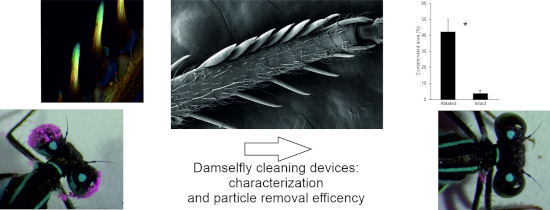
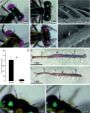
- flexible because of the lower degree of sclerotization, and (3) blue areas are rubber-like with a relatively high proportion of resilin-like proteins or unsclerotized chitin. This method has already been widely applied in the literature [37][38][39][40]. The insects to be observed were frozen in a
- hair to the cuticular lamina (Figure 2a,b). The flag-shaped grooming devices are set in a very soft socket, which appears blue, thus indicating a higher amount of resilin or unsclerotized chitin (Figure 2a). The base of the flag is very sclerotized in its basal portion appearing red and yellow, but
- tends to become richer in resilin or is unsclerotized in its apical portion, where more blue autofluorescence signal is visible (Figure 2a). The cuticular lamina appears blue, thus exhibiting large proportions of resilin or unsclerotized chitin (Figure 2b). Grooming behavior The grooming of damselfly


Functional fibrillar interfaces: Biological hair as inspiration across scales
Beilstein J. Nanotechnol. 2024, 15, 664–677, doi:10.3762/bjnano.15.55
- underwater to generate adhesion [51]. Mechanical protection While hairs provide protection via their thermal and chemical properties, they also offer protection based on their mechanical properties. Hairs are typically made of stiff materials, such as keratin and chitin, that have Young’s moduli of the order


The origin of black and white coloration of the Asian tiger mosquito Aedes albopictus (Diptera: Culicidae)
Beilstein J. Nanotechnol. 2023, 14, 496–508, doi:10.3762/bjnano.14.41
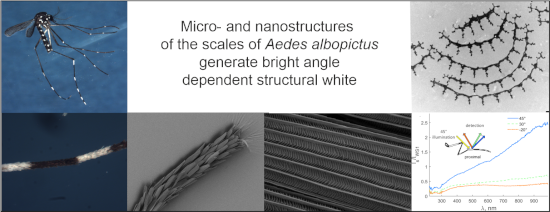
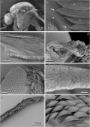
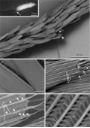
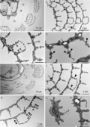
- only in dry specimens under reflected light, while the white scales observed under transmitted light appear transparent. Moreover, the white scales immersed in oil with a refractive index close that of chitin do not appear white, but rather transparent, while the black scales appear dark due to the
- , which modulates the reflection spectra. Its contribution is about 11% (considering the refractive index of chitin of 1.56 and an illumination angle of 45°), and it is visible as faint colours on the white background in microscopic observations (Figure 5a). A similar but weaker interference is present in
- enhance this effect. Collective effects of the overlapping scales Finally, the fact that the scales overlap each other (Figure 5d) may lead to an increase of both reflection and scattering. Thus, the specular reflection from four overlapping chitin scales at 45° should be three times stronger than the



Interaction between honeybee mandibles and propolis
Beilstein J. Nanotechnol. 2022, 13, 958–974, doi:10.3762/bjnano.13.84

- mandibles is particularly strong due to bonding of long chitin chains and sclerotization (crosslinking of proteins in the cuticle) [6]. Foraging and handling of propolis Worker bees exhibit a division of labour based on age (polyethism) [9] in which duties such as brood rearing are usually performed by


Effect of sample treatment on the elastic modulus of locust cuticle obtained by nanoindentation
Beilstein J. Nanotechnol. 2022, 13, 404–410, doi:10.3762/bjnano.13.33
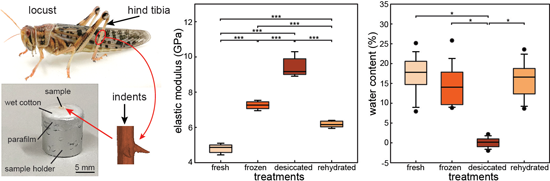
- changes in the interaction of water molecules with the chitin of the cuticle after rehydration. Insect cuticle is a biological composite with a protein matrix and embedded chitin fibers [17]. It is the only biological composite that has been modelled successfully using the modified Voigt estimate of the


A comprehensive review on electrospun nanohybrid membranes for wastewater treatment
Beilstein J. Nanotechnol. 2022, 13, 137–159, doi:10.3762/bjnano.13.10
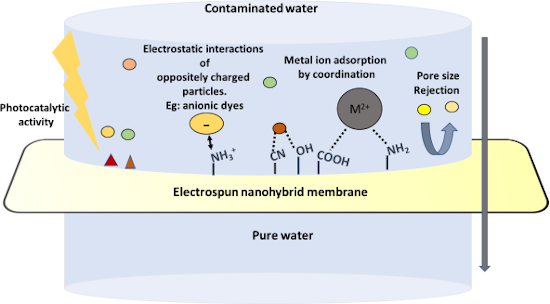
- , modified chitin, cellulose acetate (CA) and chitosan (CS) have been electrospun as nanohybrids and have been used in a variety of applications [7][8]. Regarding the health sector, the enhanced biocompatibility, antibacterial properties, and cell compatibility has made ENHs great candidates to deliver
- achieved. The membrane also showed antifouling properties and was reusable for several dye removing cycles [77]. Furthermore, Gopi and co-workers reported a PVDF electrospun nanomembrane functionalized with chitin nanowhiskers (ChNW) using a needleless electrospinning technique. ChNW transforms the




The role of deep eutectic solvents and carrageenan in synthesizing biocompatible anisotropic metal nanoparticles
Beilstein J. Nanotechnol. 2021, 12, 924–938, doi:10.3762/bjnano.12.69
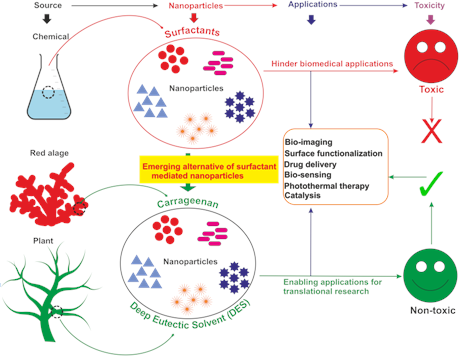
- for dissolving many species of high polarity, for example, amino acids, metal salts, glycerol, benzoic acid, citric acid, and glucose [26][76]. They are also promising in the dissolution of different polymers, such as starch, cellulose, lignin, chitin, and are also used in the pre-treatment of


Comprehensive review on ultrasound-responsive theranostic nanomaterials: mechanisms, structures and medical applications
Beilstein J. Nanotechnol. 2021, 12, 808–862, doi:10.3762/bjnano.12.64


Mapping the local dielectric constant of a biological nanostructured system
Beilstein J. Nanotechnol. 2021, 12, 139–150, doi:10.3762/bjnano.12.11

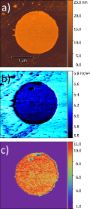
- ion mass spectrometry (TOF-SIMS), Carr et al. [18] concluded that the wing layers consist of mostly chitin with an alternating content of melanin. Chitin forms the structure and melanin modulates the relative permittivity along the cross section. From the results shown in Figure 7, we can see that, in
- the crystal. The Lyddane–Sachs–Teller relation has been extended to other crystalline systems and disordered materials [24][25][26] but its application for the present case, chitin with a varying concentration of melanin, is not straightforward. There is a direct relation between the refractive index
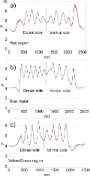
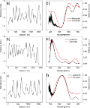
- obtained with the refraction index profiles shown on the left. According to the results shown in Figure 8, the refraction index along the cross section of the damselfly wings varies from 1.52 ± 0.02 to 1.72 ± 0.02. The layers are essentially composed of chitin with varying melanin concentration from layer




Antimicrobial metal-based nanoparticles: a review on their synthesis, types and antimicrobial action
Beilstein J. Nanotechnol. 2020, 11, 1450–1469, doi:10.3762/bjnano.11.129

- protection to the cell against osmotic rupture and mechanical damage. It is the first barrier against any harmful particles from the environment, such as oxidative molecules. Every type of microorganism has a different cell wall composition: i) fungi and yeast are mainly composed of chitin and


Biocatalytic oligomerization-induced self-assembly of crystalline cellulose oligomers into nanoribbon networks assisted by organic solvents
Beilstein J. Nanotechnol. 2019, 10, 1778–1788, doi:10.3762/bjnano.10.173

- nanoarchitectonics [1][4][11]. Achievements include nanopatterning [12], drug delivery [13], molecular sensing [14], nanodevices [15][16], and cell architectures [17][18]. On the other hand, crystalline poly- and oligosaccharides, such as cellulose and chitin, lag behind in nanoarchitectonics despite the superiority





Scavenging of reactive oxygen species by phenolic compound-modified maghemite nanoparticles
Beilstein J. Nanotechnol. 2019, 10, 1073–1088, doi:10.3762/bjnano.10.108
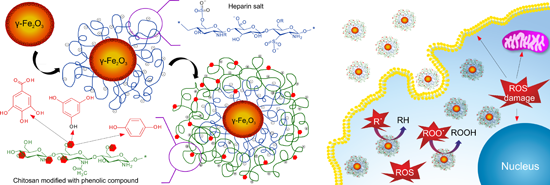
- ][10][11]. To enhance the antioxidant properties of inorganic particles, they should be surface-modified with antioxidants or antioxidant-modified polymers. These types of polymers include chitosan, which is a product of chitin deacetylation and is composed of D-glucosamine and N-acetyl-D-glucosamine





Biomimetic synthesis of Ag-coated glasswing butterfly arrays as ultra-sensitive SERS substrates for efficient trace detection of pesticides
Beilstein J. Nanotechnol. 2019, 10, 578–588, doi:10.3762/bjnano.10.59
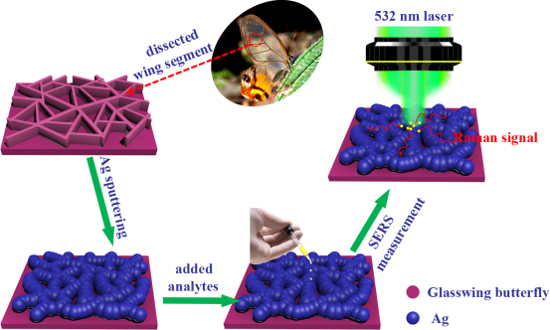
- hybrids (Ag-G.b.) by magnetron sputtering technology. The 3D surface-enhanced Raman scattering (SERS) substrate is fabricated from an original chitin-based nanostructure, which serves as a bio-scaffold for Ag nanofilms to be coated on. The novel crisscrossing plate-like nanostructures of 3D Ag-G.b


Review on nanoparticles and nanostructured materials: history, sources, toxicity and regulations
Beilstein J. Nanotechnol. 2018, 9, 1050–1074, doi:10.3762/bjnano.9.98

- building materials with 0.5 µm to 1 mm thickness [212]. Additionally, the insect wings are formed by a complex vein system which gives superior stability to the entire wing structure [213][214][215]. Long chain crystalline chitin polymer is the basic framework of insect wings that provides membrane support



Bioinspired self-healing materials: lessons from nature
Beilstein J. Nanotechnol. 2018, 9, 907–935, doi:10.3762/bjnano.9.85

- typically from chitin, cuticle (a chitin–protein composite material), or calcium carbonate [67]. Figure 5A shows the various layers that compose the epidermis and exoskeleton [68]. Secretion of exoskeletal material adds to the exoskeleton’s thickness, growing the exoskeleton from within [26]. This very







Liquid-crystalline nanoarchitectures for tissue engineering
Beilstein J. Nanotechnol. 2018, 9, 205–215, doi:10.3762/bjnano.9.22

- DNA, collagen, chitin, viruses, as well as phospholipids and cellulose [23][24]. In test tubes, biocolloidal systems can be finely tuned to form self-organized structures by complex interplays between entropic and enthalpic driving forces, electrostatic and viscoelastic effects, and hydrophilic and
- [36] and drug delivery systems [37]. For tissue regeneration, the mostly studied biomaterials are collagen and chitin, which are, respectively, protein-based and glucose-based biopolymers [38][39]. When denatured, collagen and chitin can be transformed into gelatin and chitosan, respectively, which
- cholesteric droplets of concentrated suspensions of α-chitin and chitosan have been reported [45], and nematic order was also confirmed in the solutions of collagen type IV [46]. Similarly, the cholesteric phase behavior of cellulose fibrils is well established. For all these cases, the isotropic–nematic