

Search results
Search for "colorectal cancer" in Full Text gives 15 result(s) in Beilstein Journal of Nanotechnology.
Nanocarrier strategies to overcome P-glycoprotein-mediated drug resistance in cancer therapy
Beilstein J. Nanotechnol. 2026, 17, 882–921, doi:10.3762/bjnano.17.64
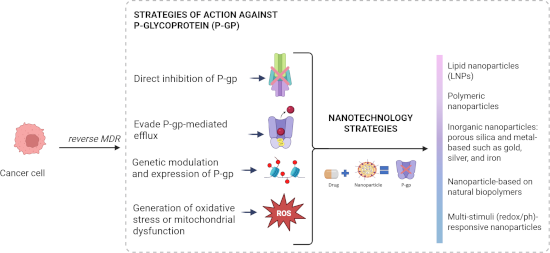
- concentration and therapeutic effectiveness [2]. Surmounting P-gp-mediated resistance has therefore emerged as a goal in experimental breast cancer research. 1.1.2 Colorectal cancer. Colorectal cancer, affecting the colon and rectum, ranks among the most prevalent cancers worldwide and significantly contributes
- -coding RNAs of 18–25 nucleotides, which are associated with cancer development, progression, and metastasis. Aiming to resensitize colorectal cancer tumors to 5-fluorouracil (5-FU), Li et al. conducted a combined treatment trial of 5-FU and mesoporous silica nanoparticles (MSNs) loaded with anti-miR-155


Development and in vitro evaluation of liposomes and immunoliposomes containing 5-fluorouracil and R-phycoerythrin as a potential phototheranostic system for colorectal cancer
Beilstein J. Nanotechnol. 2026, 17, 97–121, doi:10.3762/bjnano.17.7
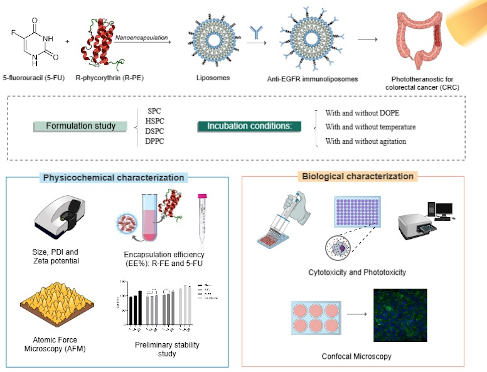
- São Paulo, Ribeirão Preto, São Paulo, Brazil Federal University of Ceará, Center of Technology, Department of Chemical Engineering, Fortaleza, Ceará, Brazil 10.3762/bjnano.17.7 Abstract 5-Fluorouracil (5-FU) is the first-line drug for the treatment of colorectal cancer (CRC), which is considered the
- , the HSPC 50 formulation containing R-PE and 5-FU, functionalized with cetuximab, is a promising alternative for the development of co-encapsulation delivery systems as a phototheranostic nanocarriers. Keywords: colorectal cancer; immunoliposomes; photodynamic therapy; R-phycoerythrin; 5-fluorouracil
- ; 1 Introduction Colorectal cancer (CRC) consists in malignant neoplasms related to several histologic types along the colon and rectum. In 2020, worldwide, colorectal cancer is the 3rd most prevalent type of cancer, corresponding to around 10% of the total cases of this disease. Regarding mortality



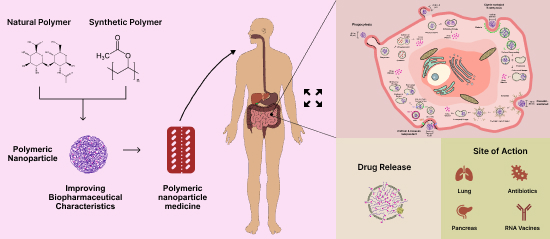
Exploring the potential of polymers: advancements in oral nanocarrier technology
Beilstein J. Nanotechnol. 2025, 16, 1751–1793, doi:10.3762/bjnano.16.122


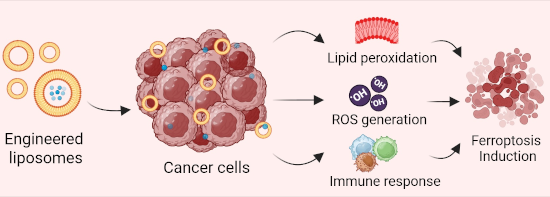
Ferroptosis induction by engineered liposomes for enhanced tumor therapy
Beilstein J. Nanotechnol. 2025, 16, 1325–1349, doi:10.3762/bjnano.16.97


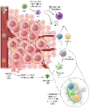
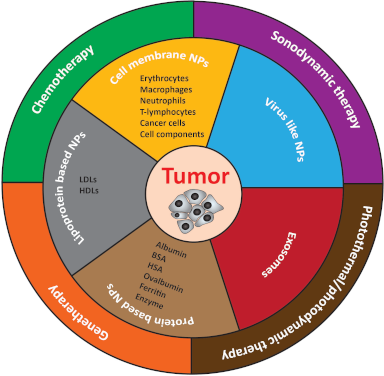
Better together: biomimetic nanomedicines for high performance tumor therapy
Beilstein J. Nanotechnol. 2025, 16, 1246–1276, doi:10.3762/bjnano.16.92


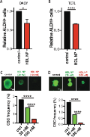
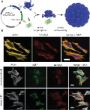





Characterization of ZnO nanoparticles synthesized using probiotic Lactiplantibacillus plantarum GP258
Beilstein J. Nanotechnol. 2025, 16, 78–89, doi:10.3762/bjnano.16.8
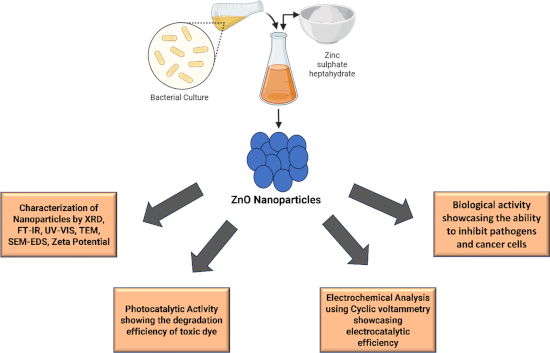
- , TPG96 were procured from Himedia, India and were of analytical grade. The National Centre for Cell Sciences in Pune supplied the human colorectal cancer cell lines (HT-29 ATCC). The Microbial Type Culture Collection and Gene Bank (MTCC, India) provided the test organisms. Phenotypic diagnosis Curd



Biomimetic nanocarriers: integrating natural functions for advanced therapeutic applications
Beilstein J. Nanotechnol. 2024, 15, 1619–1626, doi:10.3762/bjnano.15.127
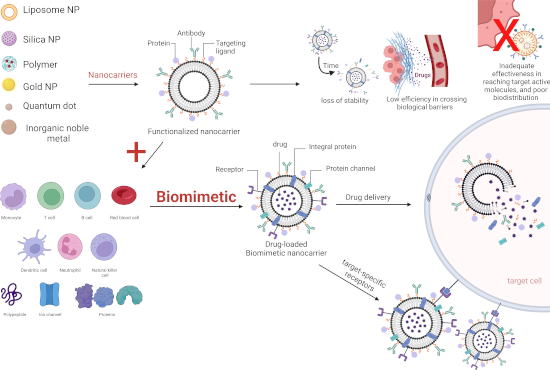
- activity of polylactic glycolic acid (PLGA) nanoparticles coated with membranes, Zhang et al. (2021) tested nanoparticles loaded with gambogic acid and coated with red-blood-cell-derived membranes in colorectal cancer cells. They demonstrated a reduction in phagocytosis, increasing the circulation time of


Polymer lipid hybrid nanoparticles for phytochemical delivery: challenges, progress, and future prospects
Beilstein J. Nanotechnol. 2024, 15, 1473–1497, doi:10.3762/bjnano.15.118
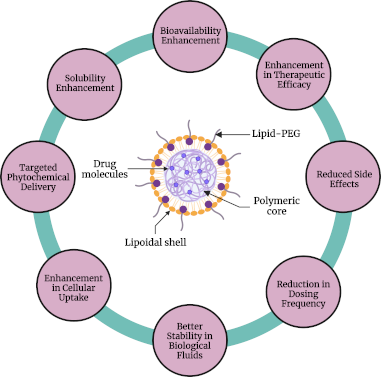
- enhancement in antioxidant activity. The APN-PLHNPs nearly halved the IC50 value against MCF-7 and MDA-MB-231 cells after 72 h compared with the free drug. Alfaleh et al. fabricated APN-PLHNPs for improved therapeutic efficacy against colorectal cancer [116]. The therapeutic efficacy of developed APN-PLHNPs


Orally administered docetaxel-loaded chitosan-decorated cationic PLGA nanoparticles for intestinal tumors: formulation, comprehensive in vitro characterization, and release kinetics
Beilstein J. Nanotechnol. 2022, 13, 1393–1407, doi:10.3762/bjnano.13.115
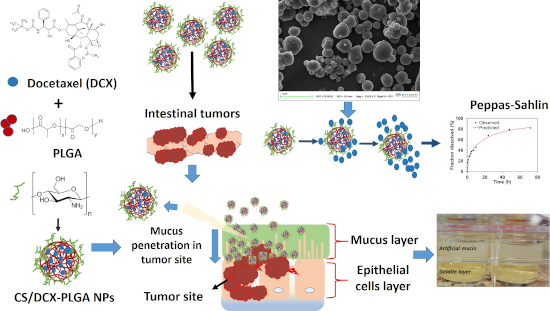
- and shortens the average life span [4][5]. The two most significant factors influencing survival in patients with colorectal cancer are tumor recurrence and propensities for distant metastasis. As cancer is connected with significant morbidity and mortality, investigations are still being conducted to


Use of nanosystems to improve the anticancer effects of curcumin
Beilstein J. Nanotechnol. 2021, 12, 1047–1062, doi:10.3762/bjnano.12.78

- advantages of these systems have been evidenced by the significant increase in the in vivo performance of drugs administered in this way [47]. For instance, CUR nanocrystals obtained by solution-enhanced dispersion via supercritical CO2 showed increased internalization and apoptotic effects in colorectal
- cancer cells (HCT116) by promoting cell cycle arrest at the G2/M phase [49]. A CUR nanocrystal has been successfully prepared using melt sonocrystallization, in which its therapeutic potential was evidenced according to in vitro cytotoxicity studies against a human oral cancer cell line (KB). The results


Multilayer capsules made of weak polyelectrolytes: a review on the preparation, functionalization and applications in drug delivery
Beilstein J. Nanotechnol. 2020, 11, 508–532, doi:10.3762/bjnano.11.41
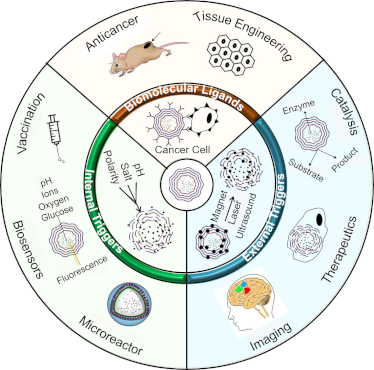
- drug-loaded PVPAlk capsules were even shown to overcome multidrug resistance with Dox and paclitaxel against LIM1899 colorectal cancer cells [98]. A new kind of dual (pH and redox) responsive, charge shifting click capsules based on poly(2-diisopropylaminoethyl methacrylate) (PDPA) were also fabricated
- specific to A33 antigens expressed on colorectal cancer cells were adsorbed on capsules from a buffer at pH 7.4 [102]. Both electrostatic and hydrogen bonding contributed to the binding of antibodies to the capsule external layer and to retaining their immunological activity. As mentioned in the previous
- section, the antibodies were used to functionalize PVPAlk low fouling capsules using covalent click chemistry to target cancer cells [101]. They were very effective against LIM2405 colorectal cancer cells even at a low concentration of 0.1% cancer cells in the total cell population. Protein A (obtained


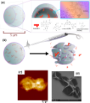

Review of advanced sensor devices employing nanoarchitectonics concepts
Beilstein J. Nanotechnol. 2019, 10, 2014–2030, doi:10.3762/bjnano.10.198
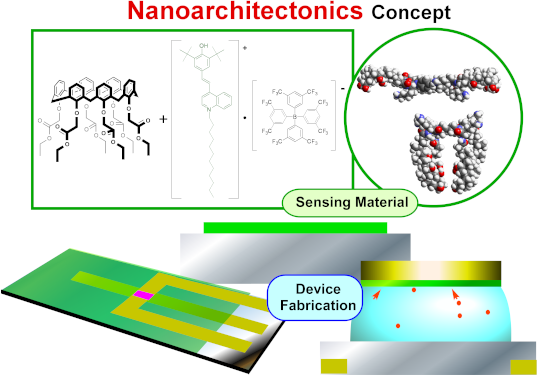
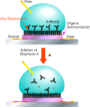
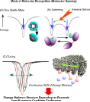
- electron mobility transistors were used to dynamically monitor changes in the transmembrane potential, as reported by Lee, Wang, and co-workers [110]. Here, circulating tumor cells of colorectal cancer together with cellular bioelectric signals were investigated. The proposed sensor design would also be


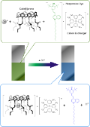



Enhanced antineoplastic/therapeutic efficacy using 5-fluorouracil-loaded calcium phosphate nanoparticles
Beilstein J. Nanotechnol. 2018, 9, 2499–2515, doi:10.3762/bjnano.9.233
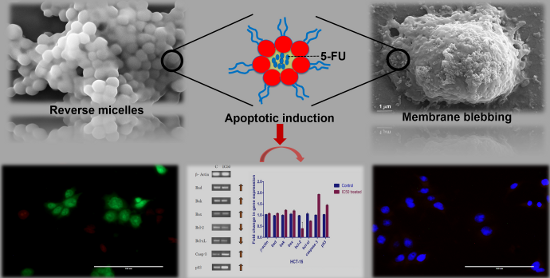
- MCF-7 cells [21]. Herein we report the synthesis of calcium phosphate nanoparticles loaded with 5-FU (CaP@5-FU NPs) with the goal of demonstrating enhanced efficacy in lung and colorectal cancer treatment in cell lines. The simple and reproducible reverse micellar microemulsion method was employed for
- bleb on the membrane can also be confirmed from the micrograph. Even the outer cytoskeleton of treated cells was found to be non-intact and structureless. This assay further confirms the apoptotic induction by the CaP@5-FU NPs in both lung and colorectal cancer cells in vitro. Intracellular reactive


A novel electrochemical nanobiosensor for the ultrasensitive and specific detection of femtomolar-level gastric cancer biomarker miRNA-106a
Beilstein J. Nanotechnol. 2016, 7, 2023–2036, doi:10.3762/bjnano.7.193

- Xq26.2. Unlike most members of this cluster, the altered expression of miR-106a can be followed in solid tumors, stool, and plasma/serum samples of patients with gastrointestinal tumors such as GC and colorectal cancer [10][11]. According to the recent studies, miR-106a level is significantly associated


Protein-coated pH-responsive gold nanoparticles: Microwave-assisted synthesis and surface charge-dependent anticancer activity
Beilstein J. Nanotechnol. 2014, 5, 1452–1462, doi:10.3762/bjnano.5.158
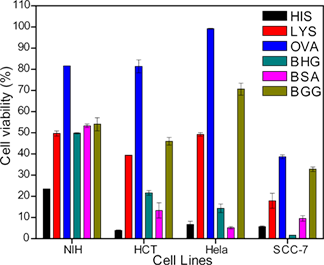
- prepared AuNPs as an effective anticancer agent, MTT assays were performed against three different cancer cells lines (human colorectal cancer cells (HCT116), human cervical cancer cells (HeLa) and squamous carcinoma cells (SCC-7)) by treating them with AuNPs. The results are shown in Figure 4B, 4C and 4D
- cytotoxicity studies. The reactions were also carried out in the absence of AgNO3, keeping all of the other conditions the same as above. Cell culture and cell viability test (MTT assay) In a similar manner to the methods described in [61], Mouse embryonic fibroblasts (NIH-3T3), human colorectal cancer cells