Search results
Search for "crystallites" in Full Text gives 202 result(s) in Beilstein Journal of Nanotechnology. Showing first 200.
Enhanced erosion resistance and radiation stability of WC–WO3 nanocomposite films under 100 keV Kr+ ion irradiation
Beilstein J. Nanotechnol. 2026, 17, 922–934, doi:10.3762/bjnano.17.65
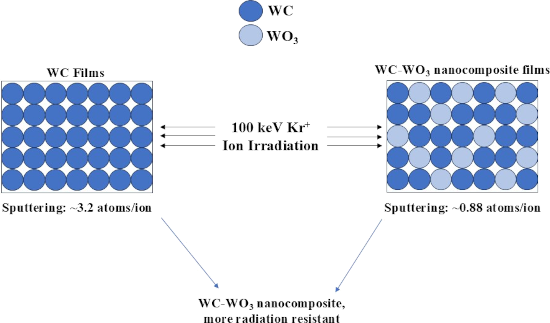
- irradiation-induced point defects, created through collision cascades, leads to mechanical instability in the crystallites. In nanocrystalline materials, collision cascades and subsequent defect formation occur near the grain boundaries. Since grain boundaries act as defect sinks, these defects tend to



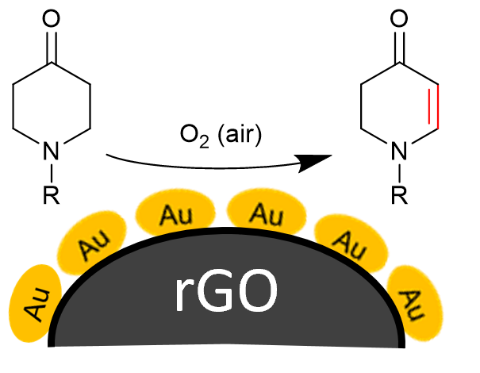
Gold nanoparticle-decorated reduced graphene oxide as a highly effective catalyst for the selective α,β-dehydrogenation of N-alkyl-4-piperidones
Beilstein J. Nanotechnol. 2026, 17, 218–238, doi:10.3762/bjnano.17.15
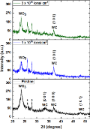
- ) reflection of rGO [39]. The crystallite size of the gold nanoparticles (AuNPs) is determined by X-ray diffraction (XRD) analysis using the Scherrer equation (Equation 1) below. The shape factor k, often referred to as the Scherrer constant, is influenced by several factors, including the crystallites’ shape


Beyond the shell: exploring polymer–lipid interfaces in core–shell nanofibers to carry hyaluronic acid and β-caryophyllene
Beilstein J. Nanotechnol. 2025, 16, 2015–2033, doi:10.3762/bjnano.16.139
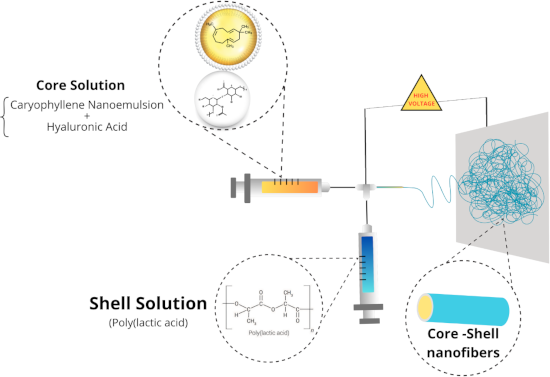
- , featuring an endothermic peak corresponding to the melting of crystallites, an exothermic peak related to the crystallization of polymer chains into spherulites, and a baseline shift indicative of the glass transition of the amorphous regions. Due to the high PLA content in the fibers, all three analyzed
- density of hydrophilic (carboxyl –COOH and hydroxyl –OH) and catalytic (carboxyl –COOH) end groups in the amorphous regions between crystalline domains. These terminal groups reduce chain packing in the amorphous regions between crystallites, making them less densely packed than amorphous polymers and




Enhancing the photoelectrochemical performance of BiOI-derived BiVO4 films by controlled-intensity current electrodeposition
Beilstein J. Nanotechnol. 2025, 16, 1289–1301, doi:10.3762/bjnano.16.94
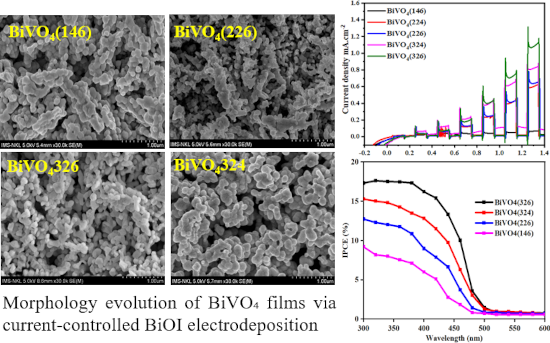
- . This distinction suggests that while the crystallite size governs the internal crystalline quality and carrier mobility, the particle size affects the surface area and interface kinetics. Ideally, a material such as BiVO4(326) with both large crystallites and small, porous particles offers superior PEC



Crystalline and amorphous structure selectivity of ignoble high-entropy alloy nanoparticles during laser ablation in organic liquids is set by pulse duration
Beilstein J. Nanotechnol. 2025, 16, 1141–1159, doi:10.3762/bjnano.16.84
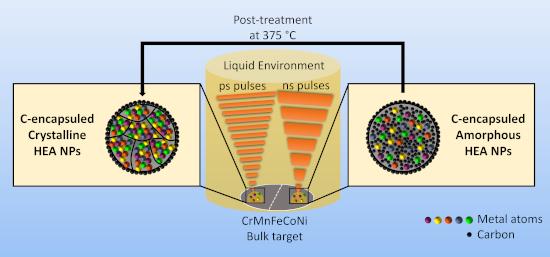
- elements in the target is fully homogeneous though it should be noted that the diameter of the used SEM-EDX probe beam is 1 µm. Thus, potential differences in the composition between the different crystallites with average diameters of 108 and 153 nm may not have been resolved. So, it is conceivable that
- small differences in the composition of the crystallites may have been responsible for the occurrence of two fcc phases. The determined values considering crystallite size and lattice constants by XRD agree with former studies on this element system in the bulk state [84]. In consecutive experiments, we
- )-ring, meaning that the energy input by heating results in the formation of crystallites which grow with increasing temperatures. At 500 °C the first weak reflection appears, with a d-value of 2.1 Å which belongs to the (111)-face of the fcc-structure (compare with Figure 1A and Figure 2A). These




Influence of ion beam current on the structural, optical, and mechanical properties of TiO2 coatings: ion beam-assisted vs conventional electron beam evaporation
Beilstein J. Nanotechnol. 2025, 16, 1097–1112, doi:10.3762/bjnano.16.81
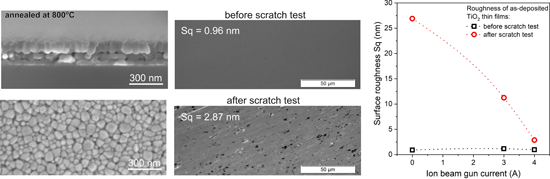
- which the crystallites sizes were also determined. The crystallite size was calculated using MDI Jade 5.0 software employing the Scherrer equation [32]. Thin film coatings deposited by EBE method had crystallites with an average size of 43.5 nm calculated from the (004) plane. In turn, increasing the
- ], increasing the annealing temperature improved the quality of the crystallites, which reduced the localized states and traps in the thin films, leading to a decrease in the bandgap. However, as can be observed (Figure 5c), the values of optical bandgap energy for as-deposited and annealed coatings prepared by
- structure but significantly affected the size of the crystallites, with higher ion gun currents resulting in smaller crystallites in the range of 30.8 to 43.5 nm. Additionally, Raman spectroscopy confirmed that only the anatase phase was present after annealing at 800 °C. SEM images reveal that post-process




Heat-induced transformation of nickel-coated polycrystalline diamond film studied in situ by XPS and NEXAFS
Beilstein J. Nanotechnol. 2025, 16, 887–898, doi:10.3762/bjnano.16.67
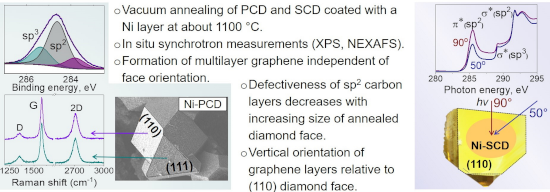
- crystallites; however, the layer defectiveness increased in areas with fine-dispersed crystallites. According to NEXAFS and Raman spectroscopy data, the most ordered atomic structure of graphitic layers was obtained by annealing nickel-coated SCD. The angular dependence of NEXAFS C K-edge spectra of nickel
- transformation of bare and nickel-coated polycrystalline diamond films under high-vacuum annealing The PCD film was produced by plasma-enhanced chemical vapor deposition (PE CVD) using acetone (CH3)2CO, hydrogen, and air as the precursor gases for the plasma [37]. The film consists of crystallites with
- nonuniform geometry, dimensions, and orientation (Supporting Information File 1, Figure S1a–c). The large diamond micro-sized crystallites, measuring about 100 μm, have a complex cuboctahedron shape with facets that have straight and acute angles. Electron backscatter diffraction (EBSD) analysis detected


Synchrotron X-ray photoelectron spectroscopy study of sodium adsorption on vertically arranged MoS2 layers coated with pyrolytic carbon
Beilstein J. Nanotechnol. 2025, 16, 847–859, doi:10.3762/bjnano.16.64
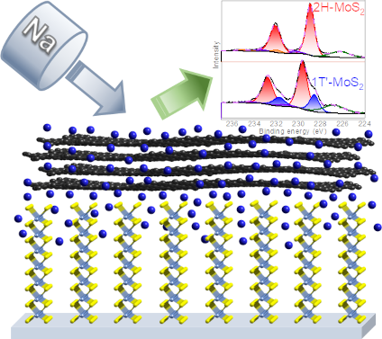
- confirms the vertical orientation of the MoS2 layers relative to the substrate surface [37]. The weak defect-induced mode LA(M) at 227 cm−1 and the asymmetric shape of the E12g and A1g modes indicate the nanometer size of the MoS2 crystallites in the plane [38][39]. All the above modes are visible in the


Morphology and properties of pyrite nanoparticles obtained by pulsed laser ablation in liquid and thin films for photodetection
Beilstein J. Nanotechnol. 2025, 16, 785–805, doi:10.3762/bjnano.16.60
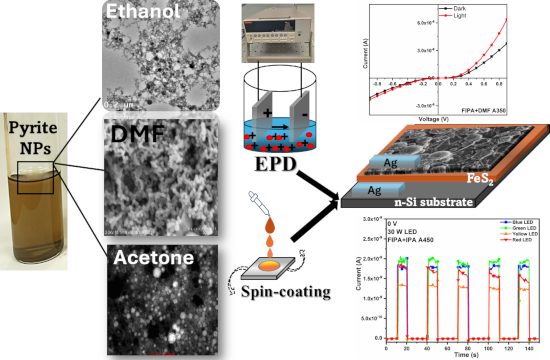
- powders and thin films of iron sulfide from molecular precursors by spin coating technique [59], clusters of densely packed crystallites and spherical crystallites were observed. They concluded that morphology is influenced by temperature and precursor type. Furthermore, different morphologies such as






Nanostructured materials characterized by scanning photoelectron spectromicroscopy
Beilstein J. Nanotechnol. 2025, 16, 700–710, doi:10.3762/bjnano.16.54
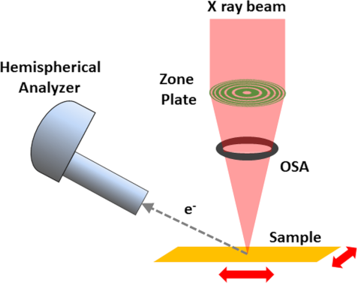
- societal challenges [1]. When composed of different elements, molecules, or compounds, these materials often show a regular and/or diffused heterogeneous structure based on elementary building blocks (e.g., crystallites or atomic/molecular groups) forming the entire solid or, in other cases, just their
- charge distribution, to list the most important features. If the building blocks are crystallites, any change in the structure or chemical composition may lead to the formation of incoherent or coherent interfaces among them which may influence the final properties of the material. Often the volumes of


Zeolite materials with Ni and Co: synthesis and catalytic potential in the selective hydrogenation of citral
Beilstein J. Nanotechnol. 2025, 16, 520–529, doi:10.3762/bjnano.16.40
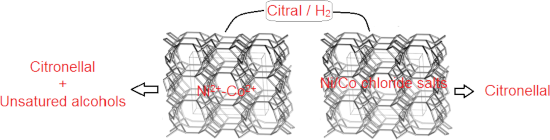
- these zeolites shown in the XRD pattern (Figure 1). This indicates that zeolitic mineral from the San Andrés deposit is mainly composed of a mordenite and clinoptilolite–heulandite mixture. Furthermore, the SEM micrographs reveal free spaces between crystallites, contributing to the material’s porosity
- levels (Figure 3). The chloride originates from the NiCl2 and CoCl2 solutions used in the treatments, which remain as residues on the materials. The residual solution may be retained through surface adsorption within the porosity and mesoporosity formed between the zeolite crystallites, as shown in the


N2+-implantation-induced tailoring of structural, morphological, optical, and electrical characteristics of sputtered molybdenum thin films
Beilstein J. Nanotechnol. 2025, 16, 495–509, doi:10.3762/bjnano.16.38
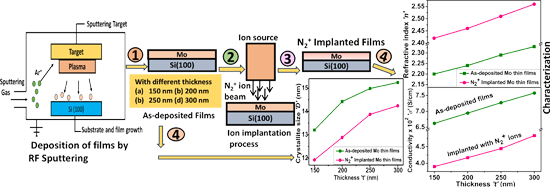
- lower thickness, the films exhibit higher tensile stress due to grain boundary contacts and point defects generated during the first phase of film growth. The increased thickness of films led to larger crystallites and improved crystallinity, which reduced tensile stress by decreasing atomic-scale
- . The increase in crystallite size with greater film thickness directly signifies enhanced crystallinity, observable by the formation of larger crystallites in thicker films. Additionally, the texture coefficient rises, signifying that crystallites attain a more uniform orientation in the film. Surface


Tailoring of physical properties of RF-sputtered ZnTe films: role of substrate temperature
Beilstein J. Nanotechnol. 2025, 16, 333–348, doi:10.3762/bjnano.16.25
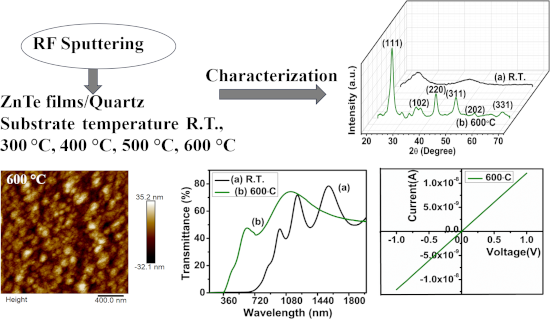
- orientation in that particular (hkl) direction, that is, more crystallites grow in this particular direction, while TC values less than one indicate that the orientation is random. The TC value of the (111) planes is greater than one, which indicates that [111] is the preferred orientation for all ZnT/Qz film




Orientation-dependent photonic bandgaps in gold-dust weevil scales and their titania bioreplicates
Beilstein J. Nanotechnol. 2025, 16, 1–10, doi:10.3762/bjnano.16.1
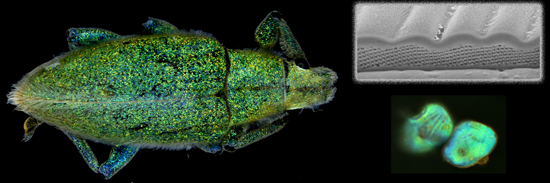
- crystallites with different lattice orientations. The reciprocal space images and reflection spectra obtained from single domains indicated a partial photonic bandgap in the wavelength range from 450 to 650 nm. Light reflected from {111}-oriented domains is green-yellow. Light reflected from blue, {100
- or multiple crystallites with varying lattice orientations under a structured enveloping cortex. Each crystallite contributes to the overall optical properties of the scale (Figure 3). The crystallites can feature different orientations, which has strong consequences for interference and, thus, the
- investigated material, many factors (e.g., local periodicity imperfections, optical crosstalk between crystallites, and optical effects of the lamina, or, in the case of replicas, depth-dependent etching) may additionally scramble the measured spectra. Comparing the experiments and the model, we therefore


Investigation of Hf/Ti bilayers for the development of transition-edge sensor microcalorimeters
Beilstein J. Nanotechnol. 2024, 15, 1353–1361, doi:10.3762/bjnano.15.108
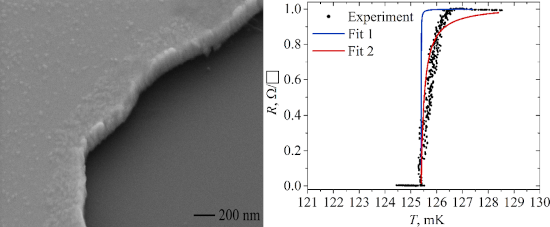
- . Titanium was deposited on hafnium at a growth rate of 0.5 Å/s. The roughness of hafnium films coated with titanium decreased compared to hafnium-only films. Because of the slow deposition rate of Ti, small crystallites with sizes below 10 nm are visible in Figure 2. The A1–A4 samples of square geometry


The role of a tantalum interlayer in enhancing the properties of Fe3O4 thin films
Beilstein J. Nanotechnol. 2024, 15, 1253–1259, doi:10.3762/bjnano.15.101
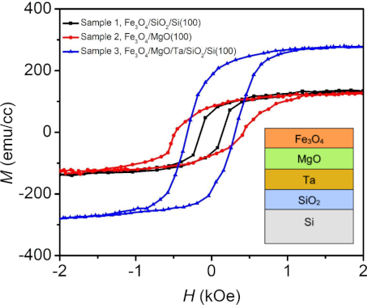
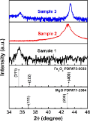
- %, corresponding to the Fe3O4(311) and Fe3O4(004) peaks, respectively, than samples 1 and 2 with values of −0.19% and −0.01%, respectively. Sample 3 exhibits a decrease in d-spacing for both the (311) and (400) peaks, in comparison to sample 1 and sample 2. The presence of compressive stress in the crystallites of


Effect of repeating hydrothermal growth processes and rapid thermal annealing on CuO thin film properties
Beilstein J. Nanotechnol. 2024, 15, 743–754, doi:10.3762/bjnano.15.62
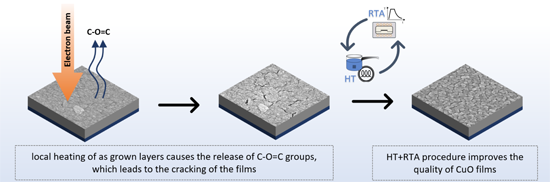
- nanocrystallites are not as clearly distinguishable. Under the influence of temperature, atoms can diffuse along the boundaries between particular crystallites, which leads to their coalescence. Moreover, annealing of polycrystalline films can lead to grain boundary migration to reduce the surface energy of the




Electron-induced deposition using Fe(CO)4MA and Fe(CO)5 – effect of MA ligand and process conditions
Beilstein J. Nanotechnol. 2024, 15, 500–516, doi:10.3762/bjnano.15.45
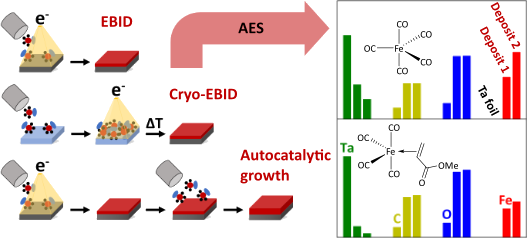
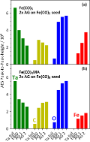
- ]. Autocatalytic growth (AG) of high-purity deposits leads to formation of individual crystallites as a consequence of precursor surface mobility at room temperature [21][24][25]. This mobility is suppressed when the surface is held at sufficiently low temperature. This was demonstrated by UHV experiments that

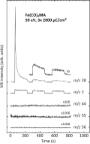
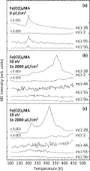

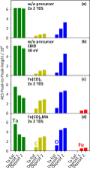
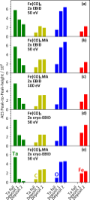

A combined gas-phase dissociative ionization, dissociative electron attachment and deposition study on the potential FEBID precursor [Au(CH3)2Cl]2
Beilstein J. Nanotechnol. 2023, 14, 1178–1199, doi:10.3762/bjnano.14.98
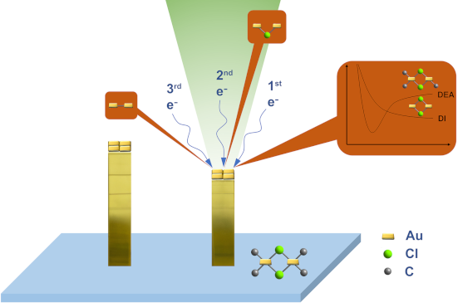
- amorphous matrixes of carbon with embedded metal crystallites and a gold content of 2–3 atom % [19], 10–40 atom % [20], and 8–20 atom % [21], respectively. This is most likely due to the fact that the CVD process is thermally driven, while in FEBID, the precursor fragmentation is primarily electron driven



Density functional theory study of Au-fcc/Ge and Au-hcp/Ge interfaces
Beilstein J. Nanotechnol. 2023, 14, 1093–1105, doi:10.3762/bjnano.14.90

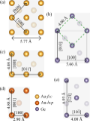
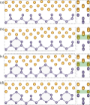
- , involving a hexagonal AuGe β phase present during the intermediate stages of growth. Interestingly, while the fcc crystallites were randomly oriented with respect to the Ge substrate, the hcp nanostructures were typically found with (001) planes at 60–65° to the (111) Ge planes [22]. In a recent experiment





Exploring internal structures and properties of terpolymer fibers via real-space characterizations
Beilstein J. Nanotechnol. 2023, 14, 1004–1017, doi:10.3762/bjnano.14.83

- molecular chains rather than optimizing crystallites. This strategy aimed to explore new chemistries that could enhance multifunctional aspects of fibers without adversely affecting fiber mechanical properties. Indeed, in developing Technora®, Teijin Ltd. had four principal aims: to manufacture a (i) cost
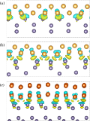
- crystallites, as random sequences of molecules including the DPE monomer (which locally changes chain orientation) would prevent neighboring molecules from forming cohesive extended crystals. This would lead to a mixture of ordered and disordered subdomains with varying alignment, as schematized in Figure 9
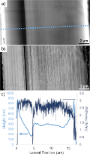
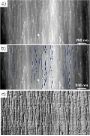
- , we see sudden topographical jumps up to tens of nanometers. This indicates that, when the fiber is separated after FIB notching, the crack that forms the exposed surface follows these interfaces rather than fracturing crystallites within the fibrils. In contrast, the exposed plane within Technora® is





Isolation of cubic Si3P4 in the form of nanocrystals
Beilstein J. Nanotechnol. 2023, 14, 971–979, doi:10.3762/bjnano.14.80

- . This is consistent with the average size of crystallites of 4 nm determined from the XRD data using the Scherrer equation. The electron diffraction ring pattern (Figure 6b) corresponds to a cubic lattice with a parameter of 5.05 Å (apart from the (111), (220) and (311) reflections discussed earlier


Titania nanoparticles for photocatalytic degradation of ethanol under simulated solar light
Beilstein J. Nanotechnol. 2023, 14, 616–630, doi:10.3762/bjnano.14.51
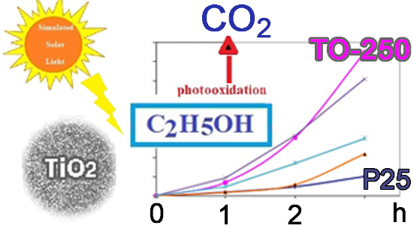
- with high purity, which did not require thermal treatment after synthesis (ca. 1 atom % of impurities). These nanoparticles show an increased anatase phase content (77.33–87.42%) and crystallite sizes of 23–45 nm. The TEM images showed that in both series small crystallites form spheroidal
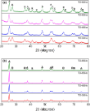
- (point defects), there are some deviations. The small oxygen deficiency observed even after calcination is related to remaining chlorine impurities and Ti3+ ions that resisted calcination. Phase composition and crystallites sizes of the TiO2 powders were investigated. The X-ray diffractograms of the
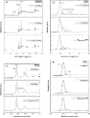
- , respectively, with increasing pressure in the reaction chamber. The TEM analysis reveals that the TiO2 crystallites tend to arrange in bigger spherical particles (Figure 2a,b). This tendency is more pronounced as the pressure in the reaction chamber increases. The average particles sizes for TO-250-a, TO-450-a




Combining physical vapor deposition structuration with dealloying for the creation of a highly efficient SERS platform
Beilstein J. Nanotechnol. 2023, 14, 83–94, doi:10.3762/bjnano.14.10

- growth of Ag–Al crystallites in a truncated octahedron shape at low temperatures (below 170 °C) [32][33]. Due to the rather short distance between the substrate and the target (i.e., 10 cm), particles have greater mobility, resulting in the growth of crystalline structures [34]. This induces the faceting




Upper critical magnetic field in NbRe and NbReN micrometric strips
Beilstein J. Nanotechnol. 2023, 14, 45–51, doi:10.3762/bjnano.14.5

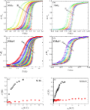
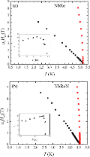
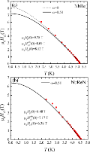
- more direct access to the order parameter in these systems. Regarding the aforementioned purpose, while in the case of NbRe it is now even more evident that films with larger crystallites are mandatory [7][8][12], detailed analyses of the NbReN crystal structure are still lacking and need to be