Search results
Search for "cyclic voltammetry (CV)" in Full Text gives 78 result(s) in Beilstein Journal of Nanotechnology.
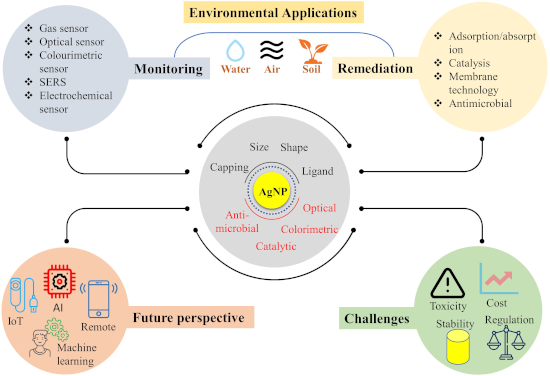
Environmental applications of silver nanoparticles: state-of-the-art review and emerging trends
Beilstein J. Nanotechnol. 2026, 17, 697–736, doi:10.3762/bjnano.17.49


Electrochemical determination of ciprofloxacin using a MIL-101/reduced graphene oxide-modified electrode
Beilstein J. Nanotechnol. 2026, 17, 541–554, doi:10.3762/bjnano.17.35
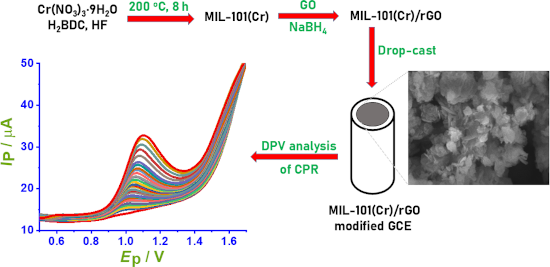
- . Electrochemical measurements Electrochemical measurements were conducted using a standard three-electrode setup connected to an electrochemical workstation. Cyclic voltammetry (CV) and differential pulse voltammetry (DPV) were employed to analyze the electrochemical behavior of CPR. All tests took place in BR


Parylene-coated platinum nanowire electrodes for biomolecular sensing applications
Beilstein J. Nanotechnol. 2025, 16, 1392–1400, doi:10.3762/bjnano.16.101
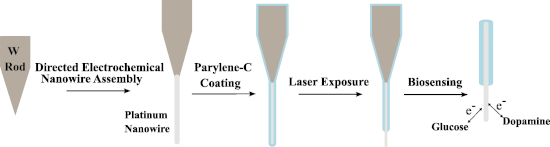
- rate [27]. The results show that the (limit of detection) LoD for dopamine with the DENA nanoscale electrode is 30 nM as depicted in Figure 3d. In glucose detection testing, two peaks were observed from both forward (Figure 4a) and reverse (Figure 4b) cyclic voltammetry (CV) scans. During forward scan
- option offers faster and automatic analysis for peak current calculation and improves the result of LoD calculation. Due to the difficulty of measuring the surface area of our electrode, the current was used here rather than current density. Glucose detection by cyclic voltammetry (CV) The 100 mM glucose


Facile one-step radio frequency magnetron sputtering of Ni/NiO on stainless steel for an efficient electrode for hydrogen evolution reaction
Beilstein J. Nanotechnol. 2025, 16, 837–846, doi:10.3762/bjnano.16.63
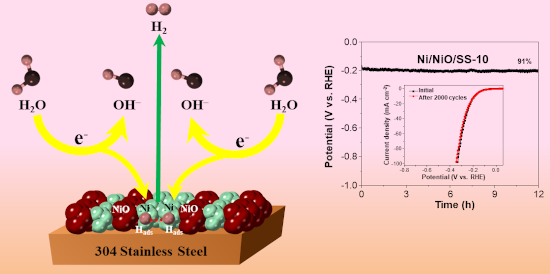
- different samples recorded at a potential of −200 mV vs RHE. (d) Double-layer capacitances obtained using cyclic voltammetry (CV). (a) LSV curves (normalized to the ECSA) of SS, Ni/NiO/SS-5, Ni/NiO/SS-10, Ni/NiO/SS-15, and Ni/NiO/SS-20 electrodes. (b) TOFs of Ni/NiO/SS-5, Ni/NiO/SS-10, Ni/NiO/SS-15, and Ni


Functionalized gold nanoflowers on carbon screen-printed electrodes: an electrochemical platform for biosensing hemagglutinin protein of influenza A H1N1 virus
Beilstein J. Nanotechnol. 2025, 16, 540–550, doi:10.3762/bjnano.16.42
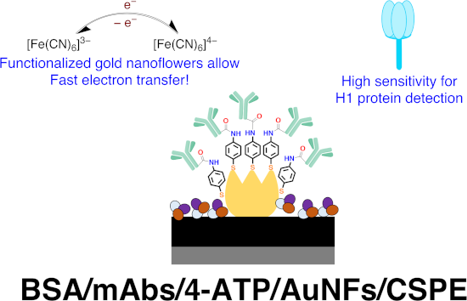
- could be seen experimentally (black curve of Figure 3), where the cyclic voltammetry (CV) analysis shows a large peak-to-peak separation of 0.72 V for the [Fe(CN)6]3−/4− redox pair. This differs significantly from the theoretical 0.057 V peak-to-peak separation in reversible redox processes that involve


Quantification of lead through rod-shaped silver-doped zinc oxide nanoparticles using an electrochemical approach
Beilstein J. Nanotechnol. 2025, 16, 422–434, doi:10.3762/bjnano.16.33
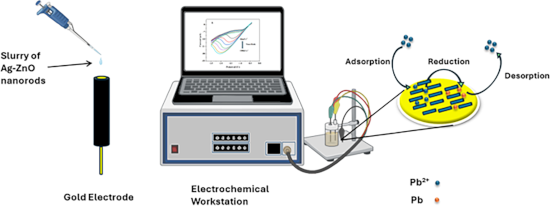
- counter electrode [27]. In order to investigate Ag@ZnO NRs response to lead, a standard cyclic voltammetry (CV) experiment was conducted both with and without lead. A typical CV sweep curve for a gold electrode modified with Ag@ZnO NRs in double-distilled water with (black line) and without (red line




Characterization of ZnO nanoparticles synthesized using probiotic Lactiplantibacillus plantarum GP258
Beilstein J. Nanotechnol. 2025, 16, 78–89, doi:10.3762/bjnano.16.8
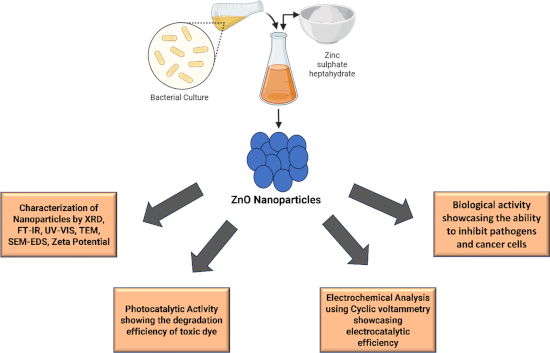
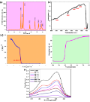
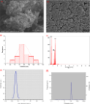
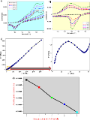
- colloidal system. Our biosynthesized nanoparticles showed a zeta potential of −60 mV. It is considered that a NP colloid with a zeta potential of more than ±30 mV shows good stability against aggregation. The zeta average size was found to be 99 nm (Figure 4e,f). Electrochemical analysis Cyclic voltammetry
- (CV) and electrochemical impedance spectroscopy (EIS) were carried out at room temperature using a three-electrode cell with 0.1 M KCl electrolyte. The ZnO NP electrode was measured at scan rates from 10 to 50 mV/s. The measurements revealed reversibility and electrode load efficiency along with



In situ magnesiothermic reduction synthesis of a Ge@C composite for high-performance lithium-ion batterie anodes
Beilstein J. Nanotechnol. 2023, 14, 751–761, doi:10.3762/bjnano.14.62

- five cycles and 1000 mAh·g−1 for the following cycles. The rate performance was measured under the same conditions with different specific currents from 100 to 5000 mA·g−1. Cyclic voltammetry (CV) was carried out in the above potential window at a scan rate of 0.1 mV·s−1 on a Biologic-MPG2 instrument


Metal-organic framework-based nanomaterials as opto-electrochemical sensors for the detection of antibiotics and hormones: A review
Beilstein J. Nanotechnol. 2023, 14, 631–673, doi:10.3762/bjnano.14.52
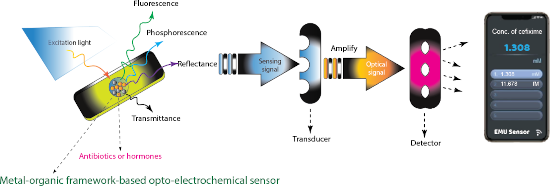
- then measure the resulting current [61]. In voltammetric sensors that typically have two or three electrodes (the working electrode, the counter electrode, and the reference electrode), the current is measured as a function of the applied voltage at the working electrode. Currently, cyclic voltammetry
- (CV), differential pulse voltammetry (DPV), square wave voltammetry (SWV), linear sweep voltammetry (LSV), and stripping voltammetry are well-established voltammetric techniques that are frequently used for electrochemical sensing of antibiotic and hormone residues [62]. However, other methods for the


Evaluation of electrosynthesized reduced graphene oxide–Ni/Fe/Co-based (oxy)hydroxide catalysts towards the oxygen evolution reaction
Beilstein J. Nanotechnol. 2023, 14, 420–433, doi:10.3762/bjnano.14.34
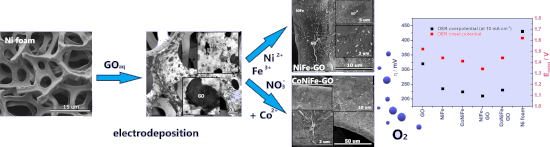
- 1 M KOH (Stanlab, pH ≈13.9). Before each electrochemical experiment, the electrode was stabilized during cyclic voltammetry (CV) by sweeping the potential from 1.1 to 1.6 V vs RHE for at least 20 cycles with a scan rate of 100 mV·s−1. Linear scan voltammetry (LSV) was performed from 1.1 to 2 V vs




Utilizing the surface potential of a solid electrolyte region as the potential reference in Kelvin probe force microscopy
Beilstein J. Nanotechnol. 2022, 13, 1558–1563, doi:10.3762/bjnano.13.129

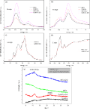
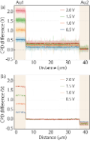
- electrode–electrolyte interface (ΔV+, ΔV−). Before explaining the results of the KPFM measurements, we discuss the electrochemical property of the Au electrode–solid electrolyte interface. Figure 2 shows a cyclic voltammetry (CV) curve obtained by applying a voltage to the Au electrode deposited on the




Rapid and sensitive detection of box turtles using an electrochemical DNA biosensor based on a gold/graphene nanocomposite
Beilstein J. Nanotechnol. 2022, 13, 1458–1472, doi:10.3762/bjnano.13.120

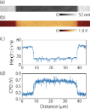
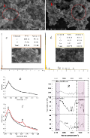
- the immobilisation of DNA. Supporting Information File 1, Table S1 illustrates the major peaks and their shifting after each modification of the nanocomposites. Modified effective surface area of screen-printed carbon electrodes Cyclic voltammetry (CV) was employed to measure SPCE and modified SPCE at



Electrocatalytic oxygen reduction activity of AgCoCu oxides on reduced graphene oxide in alkaline media
Beilstein J. Nanotechnol. 2022, 13, 1020–1029, doi:10.3762/bjnano.13.89

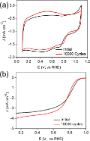
- solution) conditions, we have performed cyclic voltammetry (CV) and linear sweep voltammetry (LSV) on a rotating disc electrode (RDE), which provides the direct chemical identification of species exposed to the electrolytic solution. In particular, the comparative CV curves for the most active ACC-2


Influence of thickness and morphology of MoS2 on the performance of counter electrodes in dye-sensitized solar cells
Beilstein J. Nanotechnol. 2022, 13, 528–537, doi:10.3762/bjnano.13.44
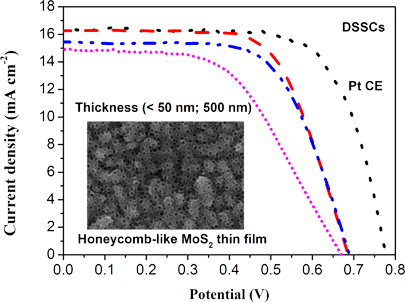
- disulfide (MoS2) was prepared on substrates coated with fluorine-doped tin oxide (FTO) to substitute the platinum counter electrode (CE) for dye-sensitized solar cells (DSSCs). Herein, we synthesized layered and honeycomb-like MoS2 thin films via the cyclic voltammetry (CV) route. Thickness and morphology
- : cyclic voltammetry (CV); dye-sensitized solar cells (DSSCs); electrocatalytic activity; honeycomb-like; molybdenum disulfide (MoS2); thin film; Introduction Since Grätzel’s first report in 1991, dye-sensitized solar cells (DSSCs) have been the subject of much research due to the easy fabrication process
- solution containing (NH4)6Mo7O24·4H2O and Na2S by cyclic voltammetry (CV). Morphology and thickness of the MoS2 thin films were controlled by adjusting the concentration of the precursor solution. The electrochemical catalytic activity of the MoS2 thin films was investigated regarding the I3–/I–redox


A non-enzymatic electrochemical hydrogen peroxide sensor based on copper oxide nanostructures
Beilstein J. Nanotechnol. 2022, 13, 424–436, doi:10.3762/bjnano.13.35

- -electrode cell was used, using oxide-coated copper wire as a working electrode, 0.4 mm diameter Ag/AgCl wire as a reference electrode, and a 6 × 6 mm PCB electrode with ENIG surface finish as a counter electrode. Cyclic voltammetry (CV) was carried out in the range from −0.8 to 0.1 V vs Ag/AgCl, with Ustart




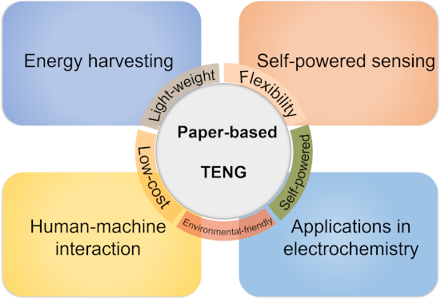
Paper-based triboelectric nanogenerators and their applications: a review
Beilstein J. Nanotechnol. 2021, 12, 151–171, doi:10.3762/bjnano.12.12
- spectra in Figure 10c. The electrochemical behavior of CNT and PANI–CNT electrodes were evaluated by using cyclic voltammetry (CV) and galvanostatic charge–discharge characterization (GCD). Compared with the pristine CNT, two pairs of redox peaks appeared in the CV curve of PANI–CNT electrodes at a scan






ZnO and MXenes as electrode materials for supercapacitor devices
Beilstein J. Nanotechnol. 2021, 12, 49–57, doi:10.3762/bjnano.12.4
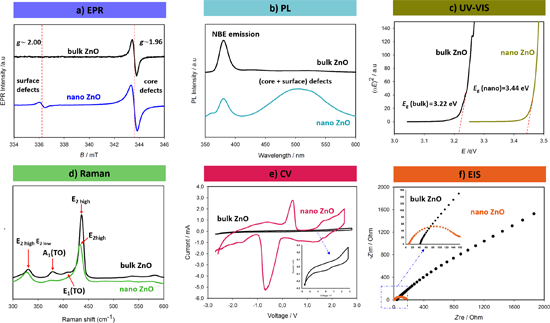
- ) spectroscopy techniques among the most powerful techniques to extract detailed information on the defect structures of ZnO. Also, electrical impedance spectroscopy (EIS) and cyclic voltammetry (CV) are sensitive to electrical properties such as specific capacitance and impedance, which can be correlated with
Atomic layer deposited films of Al2O3 on fluorine-doped tin oxide electrodes: stability and barrier properties
Beilstein J. Nanotechnol. 2021, 12, 24–34, doi:10.3762/bjnano.12.2
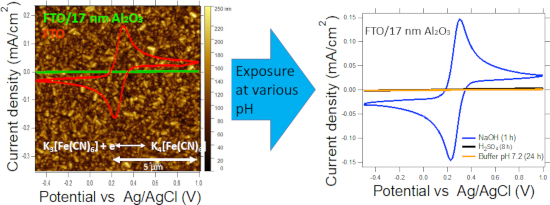
- M KCl) and a platinum rod was used as the counter electrode. The blocking properties of the deposited layers were evaluated by cyclic voltammetry (CV) in an aqueous electrolyte composed of 0.5 mM K3[Fe(CN)6] and 0.5 mM K4[Fe(CN)6] in 0.5 M KCl (pH 2.5, adjusted with HCl) or in phosphate buffer (pH


Self-standing heterostructured NiCx-NiFe-NC/biochar as a highly efficient cathode for lithium–oxygen batteries
Beilstein J. Nanotechnol. 2020, 11, 1809–1821, doi:10.3762/bjnano.11.163
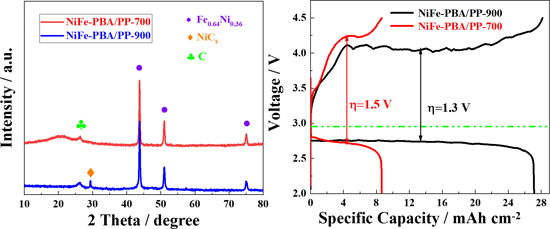
- impedance spectroscopy (EIS) in a frequency range from 100 kHz to 0.1 Hz and with a perturbation amplitude of 5 mV was used on the PARSTAT 4000 (AMETEK, USA) electrochemical workstation. Cyclic voltammetry (CV) was performed at a scan rate of 0.1 mV·s−1 and in a cell voltage range from 2.0 to 4.5 V vs Li






One-step synthesis of carbon-supported electrocatalysts
Beilstein J. Nanotechnol. 2020, 11, 1419–1431, doi:10.3762/bjnano.11.126
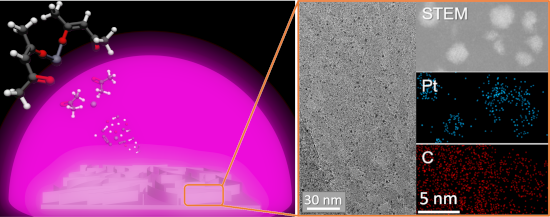
- by cyclic voltammetry (CV) measurements. Results and Discussion One-step synthesis and its product Platinum acetylacetonate was used as a single-source precursor for the deposition of Pt-NPs embedded in the supporting CNW matrix. CNWs are vertically aligned, graphitic, multilayer carbon sheets, which




Structure and electrochemical performance of electrospun-ordered porous carbon/graphene composite nanofibers
Beilstein J. Nanotechnol. 2020, 11, 1280–1290, doi:10.3762/bjnano.11.112

- station (CHI660E, Chenhua, Shanghai) by using cyclic voltammetry (CV), electrochemical impedance spectroscopy (EIS), and constant current galvanostatic charge/discharge (GCD) techniques. A voltage range of 0–1.0 V was applied to the CV electrode at a scan rate of 25 mV·s−1. The impedance measurements of


Exfoliation in a low boiling point solvent and electrochemical applications of MoO3
Beilstein J. Nanotechnol. 2020, 11, 662–670, doi:10.3762/bjnano.11.52
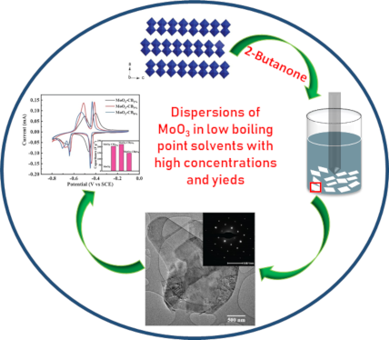
- properties of the exfoliated MoO3 nanosheets were evaluated using a three-electrode configuration and are shown in Figure 3. Figure 3a shows the cyclic voltammetry (CV) measurement of the electrodes recorded between −0.8 and −0.1 V with a scan rate of 50 mV/s. Initially, pristine exfoliated MoO3 sheets were

Comparison of fresh and aged lithium iron phosphate cathodes using a tailored electrochemical strain microscopy technique
Beilstein J. Nanotechnol. 2020, 11, 583–596, doi:10.3762/bjnano.11.46
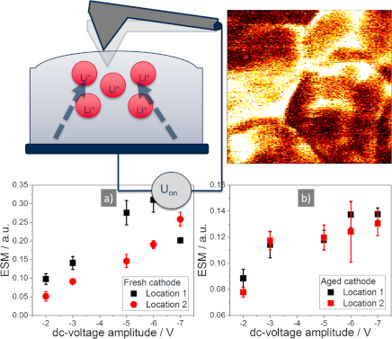
- cathode material due to ageing. A decrease of the electrochemical activity of the cathode could result in a smaller current peak intensity in a cyclic voltammetry (CV) experiment. However, performing CV with the fresh and an aged cathode in combination with a fresh graphite anode as counter electrode for



Electrochemically derived functionalized graphene for bulk production of hydrogen peroxide
Beilstein J. Nanotechnol. 2020, 11, 432–442, doi:10.3762/bjnano.11.34

- electrolyte concentration also determines the extent of functionalization of graphene. The presence of the C=O groups is further confirmed by cyclic voltammetry (CV) measurements in alkaline and acidic electrolyte. The CV profiles of the EEG samples (EEG-modified glassy carbon electrode (GCE) as the working
- -checked with graphite rod counter electrode, too) used as a reference and counter electrodes, respectively. The electrochemical performance of the materials was analyzed using cyclic voltammetry (CV), linear sweep voltammetry (LSV), and rotating ring and disk electrode (RRDE) measurements. A BioLogic SP


High-performance asymmetric supercapacitor made of NiMoO4 nanorods@Co3O4 on a cellulose-based carbon aerogel
Beilstein J. Nanotechnol. 2020, 11, 240–251, doi:10.3762/bjnano.11.18
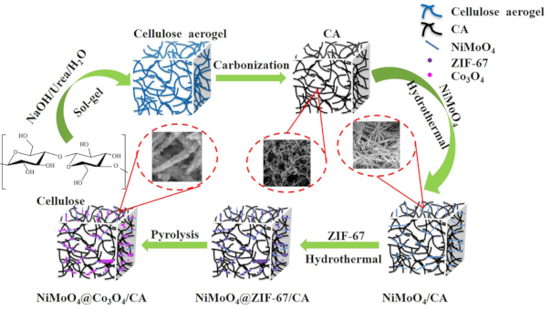
- counter electrode were a saturated calomel electrode (SCE) and a platinum electrode, respectively. Figure 6a shows the cyclic voltammetry (CV) curves of the NiMoO4@Co3O4/CA electrode at voltage scan rates of 2.5–50 mV/s. All the CV curves shown in Figure 6a consist of a pair of strong redox current peaks
- (b) C 1s, (c) Co 2p, (d) Ni 2p, (e) Mo 3d and (f) O 1s. Nitrogen adsorption/desorption isotherms and pore size distribution curves of (a) CA, (b) NiMoO4/CA (b), and (c) NiMoO4@Co3O4/CA composite. (a) Cyclic voltammetry (CV) curves at scan rates of 2.5–50 mV/s and (b) galvanostatic charge/discharge