


Search results
Search for "evolution" in Full Text gives 705 result(s) in Beilstein Journal of Nanotechnology. Showing first 200.
Electrochemical sensing of sildenafil in pharmaceutical formulations using an (S,N)-doped reduced graphene oxide-modified electrode
Beilstein J. Nanotechnol. 2026, 17, 1087–1102, doi:10.3762/bjnano.17.74
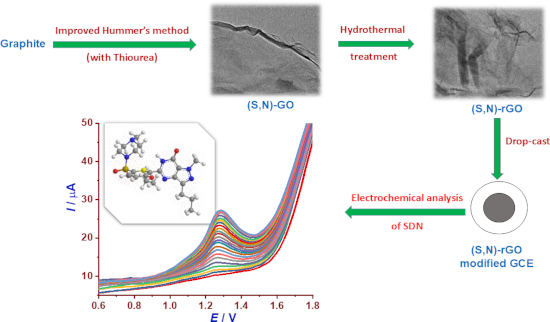
- partial restoration of graphitic domains [24]. The textural parameters in Table 1 and Figure 1b reveal a clear evolution of pore structure after doping and reduction. Pristine GO exhibits a very low BET surface area (6.93 m2·g−1) with no detectable microporosity, indicating a highly stacked structure with
- limited accessible surface. Upon (S,N)-co-doping, (S,N)-GO shows a significant increase in surface area (63.81 m2·g−1), mainly contributed by mesopores, suggesting that the introduction of heteroatoms and gas evolution during oxidation promotes exfoliation and pore formation. After reduction, rGO presents



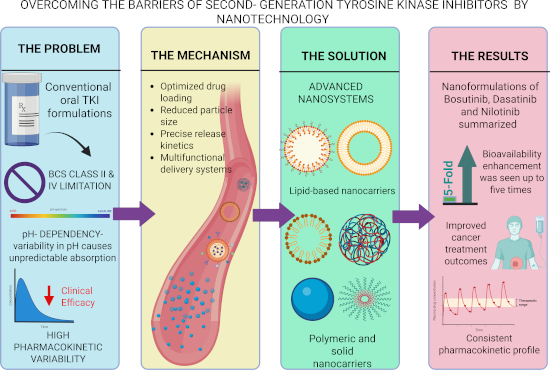
Breaking barriers: nanosystems to overcome solubility and permeability challenges of second-generation tyrosine kinase inhibitors
Beilstein J. Nanotechnol. 2026, 17, 1063–1086, doi:10.3762/bjnano.17.73


Nanoglasses: a trail towards uncharted regions of vitreous materials and their properties?
Beilstein J. Nanotechnol. 2026, 17, 1047–1062, doi:10.3762/bjnano.17.72
- evolution toward the global minimum, it simultaneously reduces the degree of structural variability accessible through relaxation, aging, or rejuvenation. At constant nominal composition and after sufficient time for the GGIs to form a structure of low free enthalpy, property tuning of nanoglasses thus


Synthesis and characterization of RF-sputtered ZnTe/Cu2−xTe thin films for solar cell applications
Beilstein J. Nanotechnol. 2026, 17, 1016–1027, doi:10.3762/bjnano.17.69
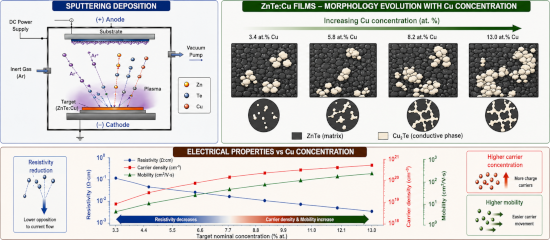
- target, including the combined effects of composition and substrate temperature on phase evolution, microstructure, and functional properties, remains limited. In particular, the relationship between Cu-induced phase segregation, structural evolution, and the resulting electrical transition has not been
- evolution, microstructural changes, and the resulting optical and electrical properties, as well as to determine whether simultaneous Cu and O incorporation leads to the formation of a homogeneous quaternary phase or to phase segregation phenomena. This strategy provides insight into the mechanisms
- governing Cu incorporation, phase segregation, and conductivity evolution in ZnTe-based films. In particular, it enables the identification of the transition from predominantly substitutional Cu incorporation at low concentrations to conductivity governed by Cu-rich secondary phases at higher concentrations



Ultrasonic irradiation in the synthesis of nanohydroxyapatite: a chemically friendly technique for improving hemocompatibility and antibiofilm applications
Beilstein J. Nanotechnol. 2026, 17, 991–1015, doi:10.3762/bjnano.17.68
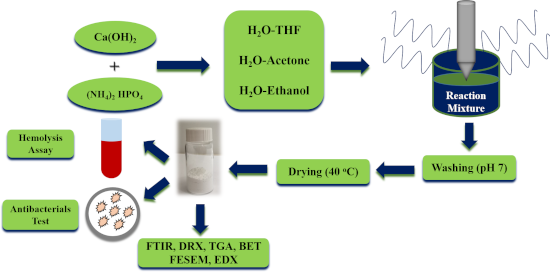
- the mass percentages obtained for both nanohydroxyapatite and calcite after 15 and 60 min of ultrasonic irradiation, illustrating the evolution of the phase content as a function of the reaction time. These results indicate that nHA is the predominant phase (94–97%), while calcite appears as a minor




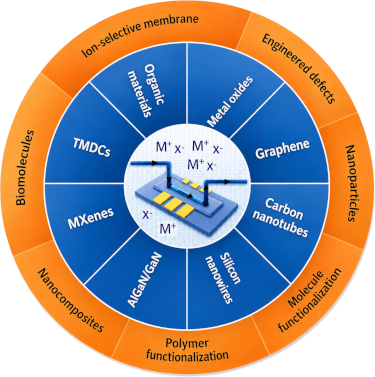
Materials challenges in solid-state sensors for continuous monitoring of ions in water
Beilstein J. Nanotechnol. 2026, 17, 935–973, doi:10.3762/bjnano.17.66


Enhanced erosion resistance and radiation stability of WC–WO3 nanocomposite films under 100 keV Kr+ ion irradiation
Beilstein J. Nanotechnol. 2026, 17, 922–934, doi:10.3762/bjnano.17.65
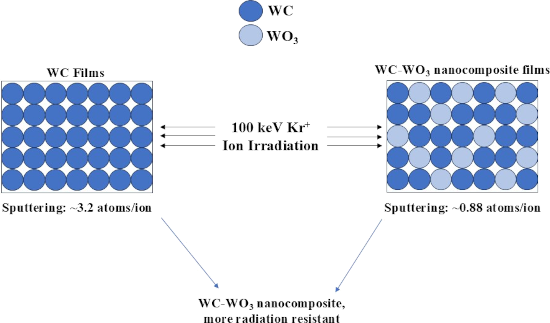
- , indicating dynamic microstructural evolution rather than amorphization under irradiation. These results highlight the potential of WC–WO3 nanocomposites as erosion-resistant and structurally resilient candidates for future plasma-facing applications in fusion reactors. Keywords: low energy ions; plasma
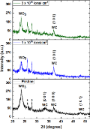
- in revealing the microstructural evolution of WC–WO3 nanocomposite films under ion irradiation. SEM images indicate progressive surface roughening, nanocluster formation, and morphological degradation with increasing fluence, particularly evident at 3 × 10¹⁶ ions/cm2. The grain coarsening seen in XRD
- to 100 keV Kr+ ion irradiation, with particular emphasis on sputtering behaviour, structural stability, and irradiation-induced microstructural evolution. RBS analysis revealed a significantly lower sputtering yield in case of WC–WO3 nanocomposite films (~0.9 atoms/ion) as compared to WC films (~3.2



He+ FIBID-fabricated 3D AFM tip architectures: an exploratory study of hollow pillars, helices, and spirals
Beilstein J. Nanotechnol. 2026, 17, 863–871, doi:10.3762/bjnano.17.62
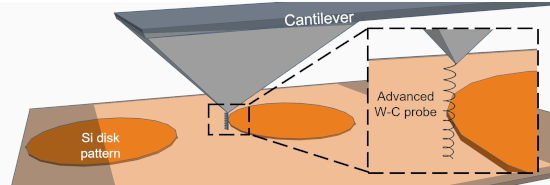
- the two commercial reference tips, allowing the morphological evolution of the structures under repeated operational stress to be monitored. SEM images acquired before and after AFM measurements for all investigated tips are provided in Supporting Information File 1. The different nanoarchitectures


Light-driven ammonia electrooxidation via carbon nitride–ruthenium molecular interfaces
Beilstein J. Nanotechnol. 2026, 17, 854–862, doi:10.3762/bjnano.17.61
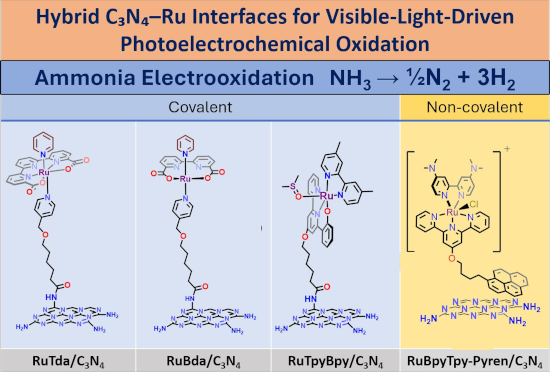
- carrier. Its oxidation requires significantly less energy than water splitting, only 33 MJ per kg H2 at −0.092 V vs NHE, compared to 180 MJ per kg H2 at 1.23 V vs NHE for the oxygen evolution reaction, representing a substantially lower thermodynamic barrier. Combined with its high volumetric energy


Glycerol photoelectrochemical oxidation reaction at carbon nitrides/BiVO4 materials
Beilstein J. Nanotechnol. 2026, 17, 806–817, doi:10.3762/bjnano.17.57
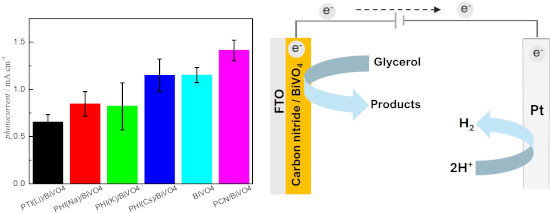
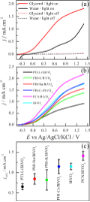
- Charles Garcia da Cunha Isabelle M. D. Gonzaga Cristian Hessel Izadora F. Reis Ivo F. Teixeira Lucia H. Mascaro Elton Sitta Federal University of São Carlos, São Carlos, SP, Brazil 10.3762/bjnano.17.57 Abstract The H2 evolution from water electrolysis can be coupled with co-generation of other




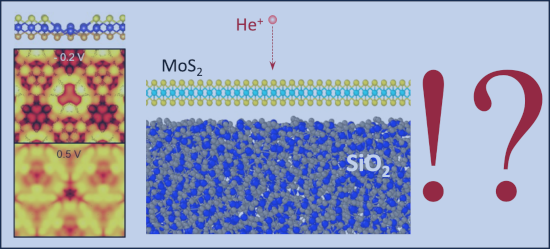
Substrate-dependent pore formation in molybdenum disulfide monolayers under ion irradiation
Beilstein J. Nanotechnol. 2026, 17, 769–780, doi:10.3762/bjnano.17.54
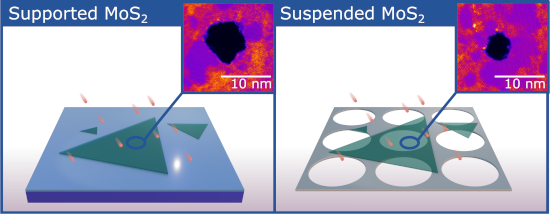
- coupled metallic substrate (Au) markedly reduces the pore formation efficiency for SHI irradiation. Together, these trends indicate that, for ions that primarily interact with the electronic system of the target, pore evolution is governed less by the energy deposition mechanism than by how efficiently


Tailoring Ag–Pt nanoalloys through solid-state dewetting: structural and optical insights
Beilstein J. Nanotechnol. 2026, 17, 748–759, doi:10.3762/bjnano.17.52

- presented in Figure 3d confirms the presence of Ag and Pt. The Ag and Pt ratio was calculated to be approximately 40 atom %:60 atom %. This reduced fraction may result from partial desorption of silver. Sublimation of Ag atoms plays a significant role in the morphology and the evolution of the elemental
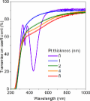
- were studied using UV–vis spectroscopy with a Thermo Fisher Scientific Evolution 220 double-beam spectrophotometer in transmittance mode over the range of 200–1000 nm. AFM image and profile of the as-deposited 4 nm Ag and 4 nm Pt bilayer. a) SEM image of nanostructures obtained by annealing at 650 °C




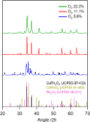
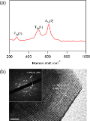
Oxidative atmosphere-driven formation of single-phase spinel CuRh2O4 nanofibers for alkaline water oxidation
Beilstein J. Nanotechnol. 2026, 17, 737–743, doi:10.3762/bjnano.17.50
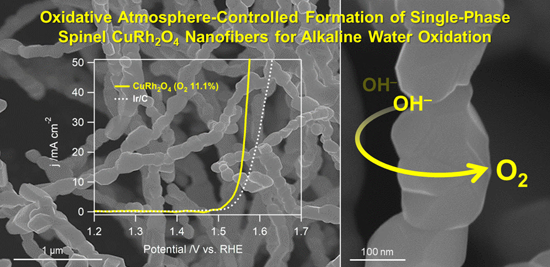
- concentration in the He carrier gas flow during the annealing process, the optimal atmosphere was identified to produce phase-pure CuRh2O4. The as-prepared CuRh2O4 nanofibers exhibited excellent electrocatalytic performance toward the oxygen evolution reaction in 1.0 M NaOH (aq), highlighting the importance of
- atmosphere-controlled thermal treatment for engineering high-activity spinel oxide electrocatalysts. Keywords: annealing; electrocatalyst; electrospinning; oxygen evolution reaction; spinel oxide; Introduction The oxygen evolution reaction (OER) is a kinetically demanding, multistep process that governs
- particularly sensitive to the synthetic environment because Cu readily changes its oxidation state (Cu0/Cu+/Cu2+) depending on the oxidative atmosphere during annealing [9][10]. As a result, slight variations in oxygen partial pressure can significantly alter phase evolution and often lead to undesired




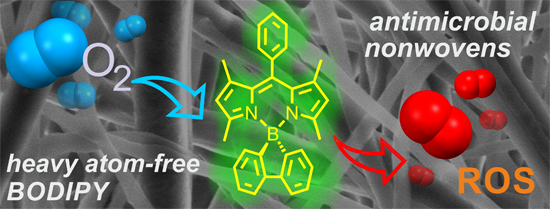
Decontamination from water pollutants and pathogens by electrospun nanofibers doped with heavy-atom-free borafluorene-BODIPY photosensitizers
Beilstein J. Nanotechnol. 2026, 17, 668–682, doi:10.3762/bjnano.17.46
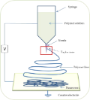
- , respectively. The surface polarity (Xp) was determined using Wu’s method (Equation 5), with γs being the total surface free energy: Optical properties The absorbance of the polymeric nonwovens doped with 1 was measured with an Evolution One Plus UV–vis spectrophotometer (Thermo Fisher Scientific) equipped with

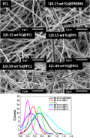


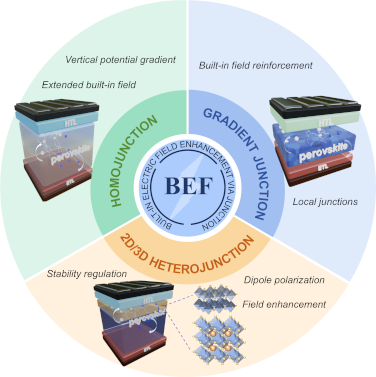
Recent progress in enhancing built-in electric fields of perovskite solar cells via junction engineering
Beilstein J. Nanotechnol. 2026, 17, 602–621, doi:10.3762/bjnano.17.42




Probing tribological evolution in atomically thin MoS2 at different scales
Beilstein J. Nanotechnol. 2026, 17, 586–597, doi:10.3762/bjnano.17.40
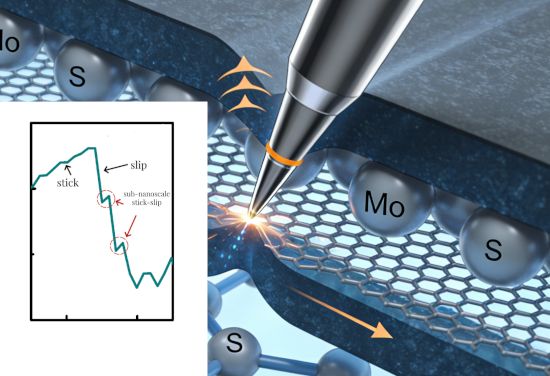
- foundational phenomena in the nanotribology of atomically thin two-dimensional (2D) materials, yet their sub-nanoscale origins and load-dependent evolution remain insufficiently characterized. Herein, we systematically investigate the sub-nanoscale friction behaviors of atomically thin molybdenum disulfide
- load-dependent transition, remaining nearly constant under low loads before increasing with higher loads, and ultimately decreasing at ultrahigh loads. This transition arises from two competing mechanisms: under low loads, the evolution of interfacial contact quality dominates the strengthening effect
- friction properties [5][16]. Previous studies on MoS2 have reported that nanoscale friction decreases with increasing layer thickness, and a transient nanoscale strengthening effect (enhanced friction in the initial sliding cycles) is attributed to either interfacial contact quality evolution or the


Impacts of annealing on structural and photophysical properties of zinc phthalocyanine adsorbed on graphene
Beilstein J. Nanotechnol. 2026, 17, 576–585, doi:10.3762/bjnano.17.39
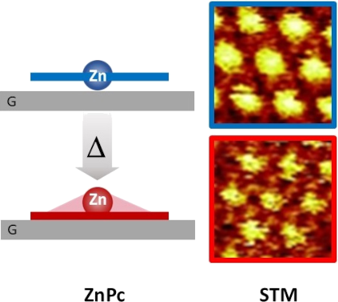
- images show a marked evolution internally to the network unit cell upon annealing (compare Figure 3b and Figure 3e). Mainly, the brighter spots, attributable to ZnPc molecules, become smaller and, consequently, the less bright TSB35-C12 conjugated cores become more apparent around the ZnPc spots (see


Laser–material interactions in liquids for the synthesis of nanomaterials: current status and perspectives
Beilstein J. Nanotechnol. 2026, 17, 571–575, doi:10.3762/bjnano.17.38
- requires input from computational modeling [33][36]. At longer timescales, shadowgraphy offers valuable information on bubble evolution [37], although processes occurring within the bubble remain largely inaccessible and necessitate the use of X-ray probing to elucidate nanoparticle growth mechanisms [38
- processing parameters has enabled a wide range of applications [53]. These include catalysis [54] (e.g., for oxygen [55] and hydrogen evolution reactions [56] in hydrogen production), sensing (e.g., surface-enhanced Raman spectroscopy [51] for detection of pollutants and optical sensing of glucose [57
Synthesis of Cu–Mo/TiO2 and Co–Mo/TiO2 photocatalysts for the efficient degradation of organic pollutants in water
Beilstein J. Nanotechnol. 2026, 17, 559–570, doi:10.3762/bjnano.17.37
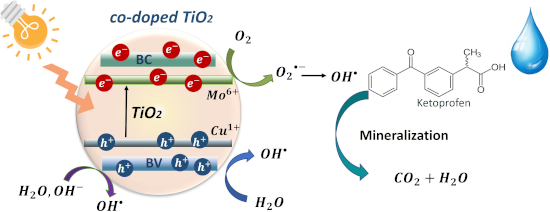
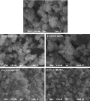
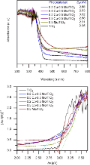
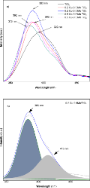
- using a NOVA 2000e Quantachrome Instrument. The XPS analysis was performed on a SPECS instrument with an energy analyzer, PHOIBOS 150 WAL. A UV–vis diffuse reflectance spectrophotometer, Thermo Scientific Evolution 600, was used to measure the photocatalyst bandgap energy (Eg). All samples were analyzed



Fractional shot noise of an SU(N) Kondo system
Beilstein J. Nanotechnol. 2026, 17, 515–540, doi:10.3762/bjnano.17.34
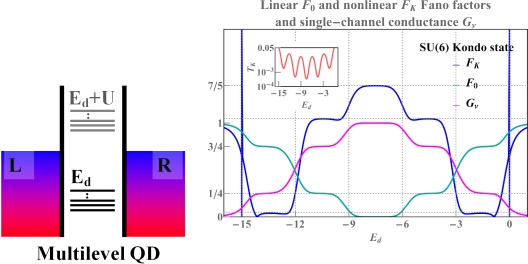
- temperature evolution of Kondo peaks provide this information [57]. Although some information about correlations is hidden in the renormalization of transmission, a deeper insight into the correlations of electronic wave functions can be obtained from the shot noise; therefore, we especially focus in this


![[Graphic 127]](/bjnano/content/inline/2190-4286-17-34-i187.svg?max-width=637&scale=1.18182)

Probing internal continua and atomic ultrafast charge transfer within size-controlled nanoparticles by post-collision interaction in core-hole clock spectroscopy
Beilstein J. Nanotechnol. 2026, 17, 505–514, doi:10.3762/bjnano.17.33
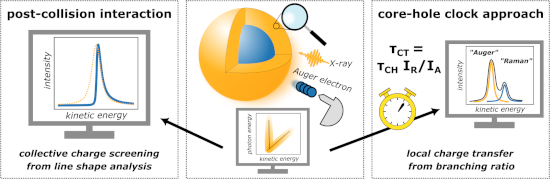
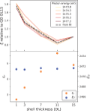
- different photon energies strongly suggests that the observed variations are indeed the result of a size-dependent process. To gain further insight into the PCI effect, we modeled the observed evolution of the asymmetry parameter as a function of the particle size. As previously discussed, the strength of
- the dielectric constant εr are displayed in Figure 4 (bottom panel), exhibiting a trend matching the evolution of the relative asymmetry parameters. As expected, increasing shell thickness enhances electron density, leading to a higher dielectric constant and improved screening ability. These findings
- and, thus, does not allow for energy redistribution within itself. In fact, examining the evolution of the charge transfer times and of the asymmetry parameter across photon energies above the proposed CBM (light gray area in Figure 5), except within the dark gray area, both follow expectations



Defects and defect-mediated engineering of two-dimensional materials: challenges and open questions
Beilstein J. Nanotechnol. 2026, 17, 454–488, doi:10.3762/bjnano.17.31
- evolution in real time. However, it was realized long ago [32][33] that energetic electrons in the TEM interacting with the specimen can give rise to the formation of defects or even to the complete destruction of the sample, an undesirable effect, which stimulated the research on beam–sample interactions
- can these limitations be addressed? X-ray photoelectron spectroscopy (XPS) is a powerful tool for identifying and quantifying defects in 2D materials, offering unique advantages in surface sensitivity, chemical state analysis, and real-time monitoring of defect evolution. While challenges such as
- surface contamination, depth sensitivity, energy resolution, and data complexity exist, they can be addressed through careful sample preparation, the use of complementary techniques, and the integration of theoretical modelling for data analysis. The ability of XPS to study defect evolution under specific





Ferroelectric nanodot reservoir for neuromorphic computing
Beilstein J. Nanotechnol. 2026, 17, 352–364, doi:10.3762/bjnano.17.24
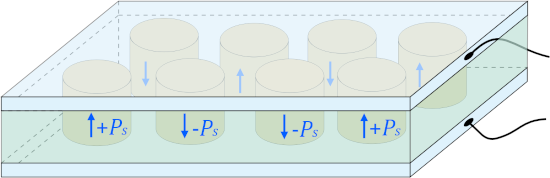
- evolution of polarization states with low energy consumption and fast switching speeds, leveraging the intrinsic properties of ferroelectrics. Furthermore, while previous considerations of neuromorphic ferroelectric nanodot-based setups [38][39] demonstrated static logic functions in topologically
- structured ferroelectric domain networks, the present system shifts toward dynamic, time-dependent processing, essential for tasks such as time-series prediction, temporal pattern recognition, and classification. The reservoir’s ability to encode temporal correlations through physical polarization evolution
- dot with the lowest switching threshold among the eligible ones undergoes a polarization reversal, thereby updating the system state. This discrete event simulation captures the nonlinear hysteretic evolution of the entire reservoir. Importantly, because of the broad distribution of Ec and the


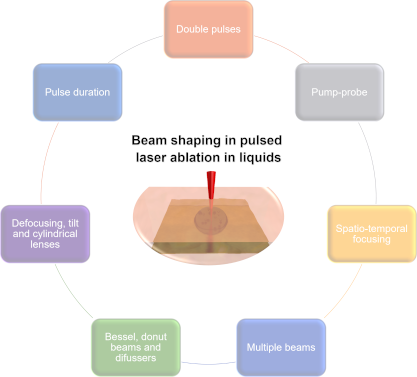
Beam shaping techniques for pulsed laser ablation in liquids: Unlocking tunable control of nanoparticle synthesis in liquids
Beilstein J. Nanotechnol. 2026, 17, 309–342, doi:10.3762/bjnano.17.22
- approximated by the Bessel function J0 [145]. The anatomy of the quasi-Bessel beam propagation in space is shown in Figure 8 with a detailed view of its spatiotemporal shape including the evolution of the cross-sectional structure [146]. Two laser beams, one continuous wave (CW) and a femtosecond pulsed laser
- distribution. Figure 11 shows simulated intensity distributions of a Gaussian and DS beam with the same pulse energy [154]. When a DS pulse is focused inside a liquid at a fluence above the liquid breakdown, a ring CB is generated, followed by a series of transient phenomena [155]. The evolution of the DS
- bubble, it induces a tertiary bubble cloud that vanishes within approx. 100 ns. Finally, the central bubble collapses after 1–2 µs, and the annular bubble fragments into cylindrical bubbles within approx. 100 µs. This evolution differs from Gaussian pulses in liquids, where a single bubble exhibits large







Micro- and nanoscale effects in biological and bioinspired materials and surfaces
Beilstein J. Nanotechnol. 2026, 17, 214–217, doi:10.3762/bjnano.17.14
- varying environmental parameters. For terrestrial animals, adhesive systems usually provide temporary adhesion and do not make use of cements. A study on the evolution of subdigital microstructures in Cyrtodactylus geckos by Ginal et al. [16] addressed how adhesive microstructures (setae) have



