
Search results
Search for "shape control" in Full Text gives 15 result(s) in Beilstein Journal of Nanotechnology.
Laser ablation in liquids for shape-tailored synthesis of nanomaterials: status and challenges
Beilstein J. Nanotechnol. 2025, 16, 1963–1997, doi:10.3762/bjnano.16.137
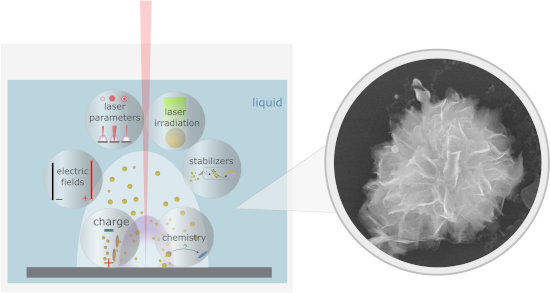
- demonstrated as a clean, simple, and versatile NP synthesis method. However, the conditions of NP formation and growth are favouring the production of spherical NPs. There are fewer studies of shape control during laser ablation. With that in mind, this perspective article represents a view on the current
- stage of the development of laser ablation in liquids from the perspective of shape control of the forming nanomaterials. The key parameters influencing the NP shape are highlighted, including the composition of a liquid, laser focusing conditions and introduction of external fields, and the mechanism
- liquids; laser irradiation; nanofabrication; nanoparticles; shape control; Perspective 1 Introduction: Mechanisms and key parameters influencing the morphology of laser-produced NPs The precise control and tailoring of NP parameters has long been an aim of the laser ablation synthesis in liquids






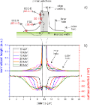
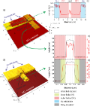
Graphene removal by water-assisted focused electron-beam-induced etching – unveiling the dose and dwell time impact on the etch profile and topographical changes in SiO2 substrates
Beilstein J. Nanotechnol. 2024, 15, 190–198, doi:10.3762/bjnano.15.18
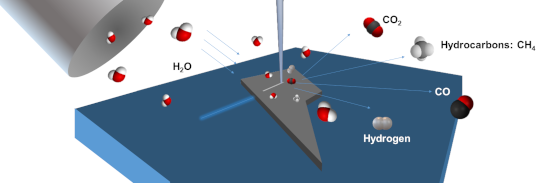
- shape control are very limited in those cases. Conventional electron beam lithography (EBL) reaches the resolution of a few nanometers. However, it leaves residual resists on the surface [9], which strongly affects electrical transport properties [10]. A similar high resolution can be achieved with e


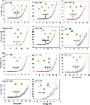
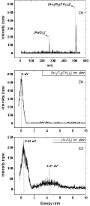
A combined gas-phase dissociative ionization, dissociative electron attachment and deposition study on the potential FEBID precursor [Au(CH3)2Cl]2
Beilstein J. Nanotechnol. 2023, 14, 1178–1199, doi:10.3762/bjnano.14.98
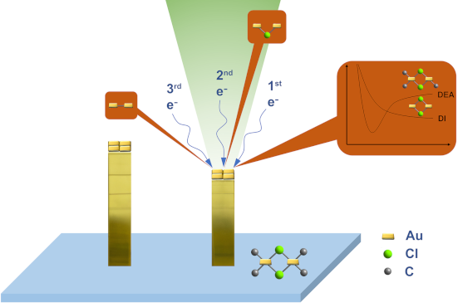
- nanostructures are critical for the enhancement of absorption and controlled scattering of light [10]. Focused-electron-beam-induced deposition (FEBID) is a direct writing method for controlled deposition/fabrication of nanostructures on either flat or nonflat surfaces. It offers excellent shape control and thus



The role of deep eutectic solvents and carrageenan in synthesizing biocompatible anisotropic metal nanoparticles
Beilstein J. Nanotechnol. 2021, 12, 924–938, doi:10.3762/bjnano.12.69
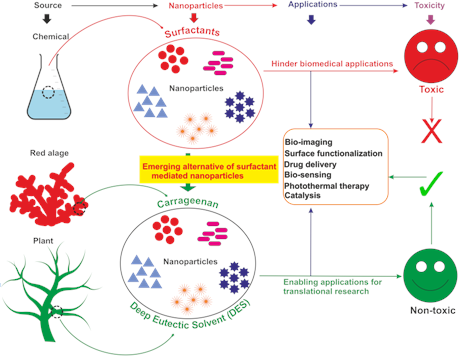
- maintaining high yield and monodispersity. Initially, gold nanorods were synthesized using electrochemical methods using polycarbonate membrane templates or porous alumina for shape control in the presence of surfactants (mostly CTAB) [34][35]. Because of their optical properties, gold nanorods became


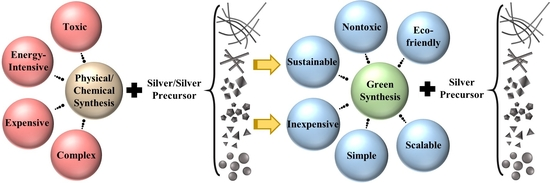
A review on the green and sustainable synthesis of silver nanoparticles and one-dimensional silver nanostructures
Beilstein J. Nanotechnol. 2021, 12, 102–136, doi:10.3762/bjnano.12.9


Lead-free hybrid perovskites for photovoltaics
Beilstein J. Nanotechnol. 2018, 9, 2209–2235, doi:10.3762/bjnano.9.207
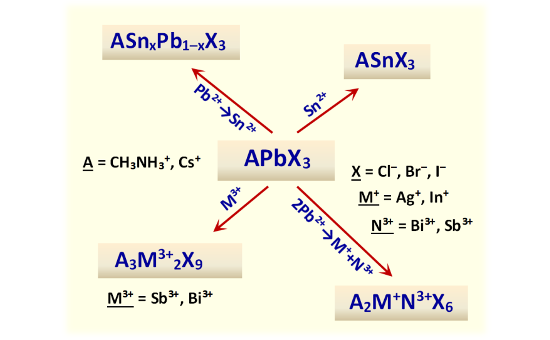
- for the thermodynamics-driven formation of HPs, resulting in a higher material quality and reproducibility as compared to the conventional kinetically quenched syntheses (solvent evaporation, spin or spray coating). The shape control over CsSnX3 nanoscale phases grown in the presence of tri


Facile chemical routes to mesoporous silver substrates for SERS analysis
Beilstein J. Nanotechnol. 2018, 9, 880–889, doi:10.3762/bjnano.9.82
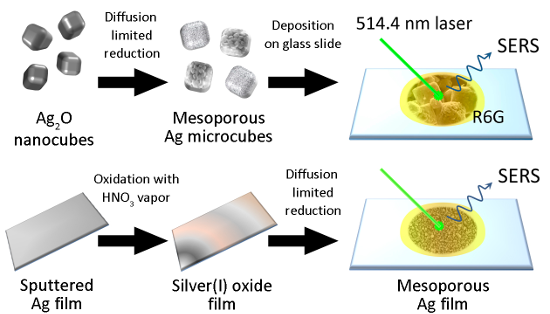
- efficient method for synthesis of silver polygonal structures with amazingly precise shape control using silver(I) oxide as a structural precursor. According to the technique described also elsewhere [27], polycrystalline uniform Ag2O polyhedron-like crystallites could be quantitatively obtained. Such cubic


Facile phase transfer of gold nanorods and nanospheres stabilized with block copolymers
Beilstein J. Nanotechnol. 2018, 9, 616–627, doi:10.3762/bjnano.9.58

- available, with the seeded growth method being the most popular in terms of size and shape control [13]. Its current version [14][15][16] allows one to obtain Au nanorods with a high yield and desired aspect ratio ranging from 1.5 to 5. The water-soluble nanoparticles synthesized in this way require


Systematic control of α-Fe2O3 crystal growth direction for improved electrochemical performance of lithium-ion battery anodes
Beilstein J. Nanotechnol. 2017, 8, 2032–2044, doi:10.3762/bjnano.8.204

- (vicinal position) are assumed to be supportive, since a thermodynamically favored 5-membered ring can be formed. This possibly explains the superior shape-controlling ability of 1,2-diaminopropane over 1,3-diaminopropane. Besides shape control, the complex formation has a second effect: the free-iron


Synthesis of [Fe(Leq)(Lax)]n coordination polymer nanoparticles using blockcopolymer micelles
Beilstein J. Nanotechnol. 2017, 8, 1318–1327, doi:10.3762/bjnano.8.133
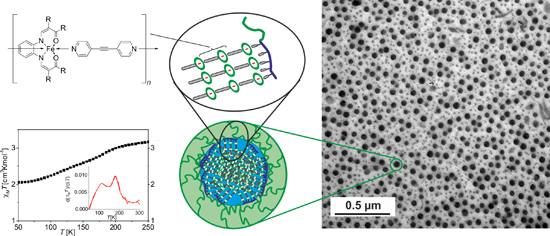
- procedures for nanoparticles with size control (gold [6][7], metal oxides [8][9]) and/or shape control (gold and silver [10]) are already well known. The reduction of metal salts is very common for noble metals [11], while (fast) precipitation or inverse-micelle technique are often used for metal oxides



Formation and shape-control of hierarchical cobalt nanostructures using quaternary ammonium salts in aqueous media
Beilstein J. Nanotechnol. 2017, 8, 494–505, doi:10.3762/bjnano.8.53


From iron coordination compounds to metal oxide nanoparticles
Beilstein J. Nanotechnol. 2016, 7, 2074–2087, doi:10.3762/bjnano.7.198

- light scattering. The parameters were varied within each route to fine tune the size and shape of the formed nanoparticles. Keywords: iron coordination compounds; mixed oxide nanoparticles; morphology control; nanoparticle shape control; optimization procedure; Introduction The iron oxide-based


Surfactant-controlled composition and crystal structure of manganese(II) sulfide nanocrystals prepared by solvothermal synthesis
Beilstein J. Nanotechnol. 2015, 6, 2319–2329, doi:10.3762/bjnano.6.238

- products, that is, α-, β- or γ-MnS NCs. Of course, this is advantageous as different crystal phases display different physical properties. However, in contrast to size and shape control, relatively little attention has been paid to the factors controlling the crystal structure of MnS NCs. The reaction


Self-assembly mechanism of Ni nanowires prepared with an external magnetic field
Beilstein J. Nanotechnol. 2015, 6, 2123–2128, doi:10.3762/bjnano.6.217
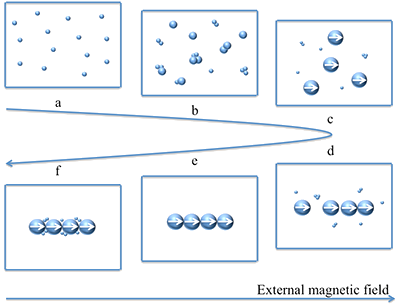
- should be noted that more attention has been paid to the exploration of preparation systems using the magnetic-assisted method for the shape control of the resulting nanowires under an external magnetic field, as opposed to the self-assembly mechanism of this method. The team of Makoto Kawamori [19][20


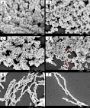


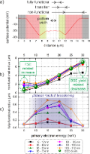
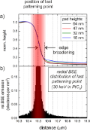
Fundamental edge broadening effects during focused electron beam induced nanosynthesis
Beilstein J. Nanotechnol. 2015, 6, 462–471, doi:10.3762/bjnano.6.47

- ][40], and nanoscale stress/strain or gas sensors [28][41][42]. While highly accurate and reproducible surface morphologies are essential for some of these applications, e.g., nano-optics, all of these applications require predictable and reproducible shape control in the context of high integration