

Search results
Search for "transformation" in Full Text gives 423 result(s) in Beilstein Journal of Nanotechnology. Showing first 200.
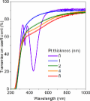
Tailoring Ag–Pt nanoalloys through solid-state dewetting: structural and optical insights
Beilstein J. Nanotechnol. 2026, 17, 748–759, doi:10.3762/bjnano.17.52

- under an argon atmosphere. The process induced the transformation of continuous bilayers into isolated nanoislands through solid-state dewetting. Scanning electron microscopy and transmission electron microscopy analyses revealed the formation of well-defined, nearly spherical nanoislands with a
- tension) and the energy gained by reducing the total contact area between the film and the substrate (interfacial tension). A comprehensive analysis of the transformation of a thin layer into isolated islands was provided in a series of publications by Thompson and collaborators [13][20][21][22]. They
- film in the multiple grain junctions and transformation into isolated islands. These phenomena are consistent with our earlier observations [23][24] and those of others [42][43][44]. It is worth noting that the nucleation of holes can also be accelerated by surface melting or premelting, especially in




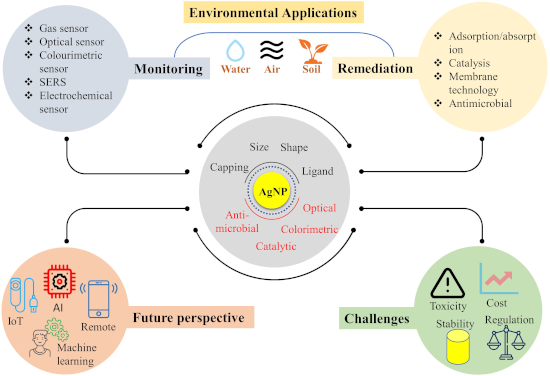
Environmental applications of silver nanoparticles: state-of-the-art review and emerging trends
Beilstein J. Nanotechnol. 2026, 17, 697–736, doi:10.3762/bjnano.17.49


Impacts of annealing on structural and photophysical properties of zinc phthalocyanine adsorbed on graphene
Beilstein J. Nanotechnol. 2026, 17, 576–585, doi:10.3762/bjnano.17.39
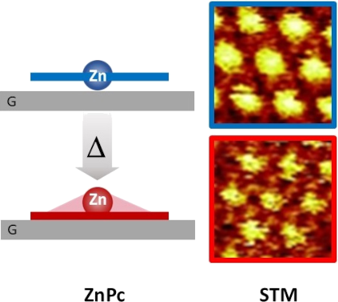
- resolution (≈1 µm) both Q-band absorption peaks are uniformly distributed all along the considered area of the sample. This holds also for the intermediate situation, showing that the spectral effect of annealing does not involve a 2D phase transformation with domains larger than the micrometer. Fluorescence


Synthesis of Cu–Mo/TiO2 and Co–Mo/TiO2 photocatalysts for the efficient degradation of organic pollutants in water
Beilstein J. Nanotechnol. 2026, 17, 559–570, doi:10.3762/bjnano.17.37
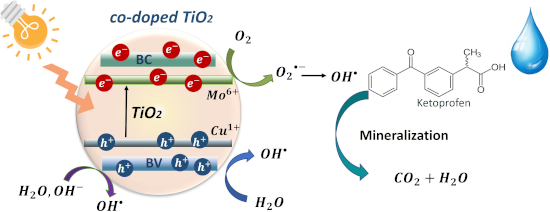
- causes the inhibition of crystalline phase transformation from anatase to rutile, which is an expected behavior for cationic dopants of valence higher than 4. The change in lattice parameters may also indicate the presence of oxygen vacancies created by the incorporation of impurities as Mo. The charge
- emission may coexist with trapping states. The relationships between PL intensity and photocatalytic activity are very complicated and depend on dopant species [39]. The inhibition of TiO2 phase transformation from anatase to rutile can increase surface oxygen vacancy and defect content [39]. Then, the



Fractional shot noise of an SU(N) Kondo system
Beilstein J. Nanotechnol. 2026, 17, 515–540, doi:10.3762/bjnano.17.34
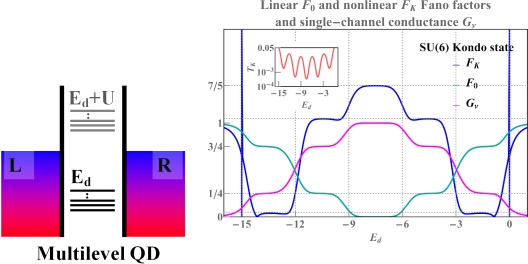


![[Graphic 127]](/bjnano/content/inline/2190-4286-17-34-i187.svg?max-width=637&scale=1.18182)

Ferroelectric nanodot reservoir for neuromorphic computing
Beilstein J. Nanotechnol. 2026, 17, 352–364, doi:10.3762/bjnano.17.24
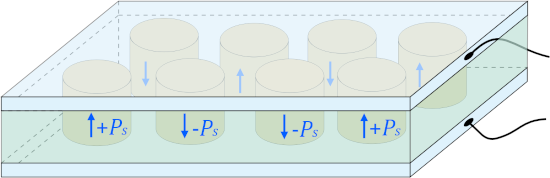
- individually or integrated between common conducting plates. By leveraging the intrinsic nonlinearity and memory of ferroelectric polarization switching, the device maps incoming signals into a high-dimensional space of polarization configurations. This physical transformation enables efficient temporal
- associated readout layer can remain minimal, typically linear, while the principal feature transformation occurs within the reservoir itself. Interface architecture The setup considered in the previous section corresponds to the case where all nanodots are confined between the same pair of conducting
- , sequential application of charge pulses leads to rich dynamics in high-dimensional configuration spaces, with the number of accessible metastable states growing combinatorially with the number of nanodots. Such complexity enables the encoding and transformation of temporal information in a manner suitable


Gold nanoparticle-decorated reduced graphene oxide as a highly effective catalyst for the selective α,β-dehydrogenation of N-alkyl-4-piperidones
Beilstein J. Nanotechnol. 2026, 17, 218–238, doi:10.3762/bjnano.17.15
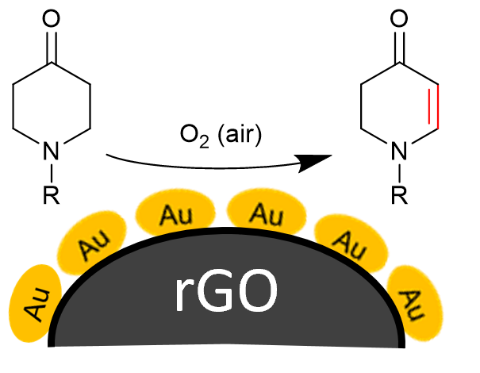
- -, and N-benzyl-4-piperidone to the respective N-methyl-2,3-dihydropyridin-4(1H)-ones as a model reaction (Scheme 1). This transformation is an example of the synthesis of β-N-substituted α,β-unsaturated ketones and requires catalysts with strong oxidizing capabilities, such as gold-based catalysts. The
- type of transformation, particularly for the oxidative dehydrogenation of N-alkyl-4-piperidone to the corresponding N-alkyl-2,3-dihydropyridin-4(1H)-one. Table 3 compares the N-methyl-4-piperidone substrate in this work with the best results reported in the literature using supported metals. Notably


Structure-dependent thermochromism of PAZO thin films: theory and experiment
Beilstein J. Nanotechnol. 2026, 17, 186–199, doi:10.3762/bjnano.17.12
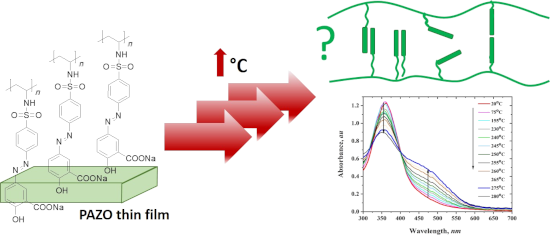
- be a new phase of PAZO transformation. Finally, the last three spectra in Figure 2B show how after reaching the maximum heating temperature of 300 °C and subsequent cooling to r.t., the spectrum remains relatively unchanged for a short time. It should be noted that the polymer retains its ability to


From shield to spear: Charge-reversible nanocarriers in overcoming cancer therapy barriers
Beilstein J. Nanotechnol. 2026, 17, 159–175, doi:10.3762/bjnano.17.10
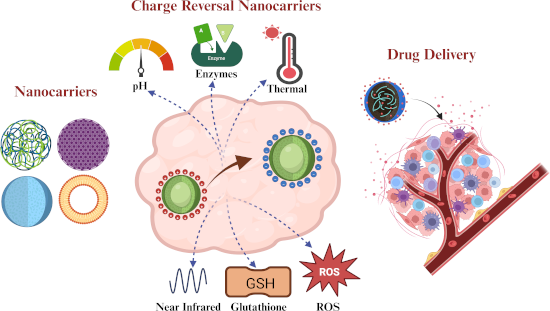
- or intracellular compartments like endosomes and lysosomes [20]. Bobrin et al. studied that a PEI-based polymeric nanocarrier demonstrated charge reversal from negative (pH 7.4) to positive (pH 6.8) under tumour pH. This transformation facilitated tumour cell uptake and site-specific unloading of
- reductive tumour microenvironment, leading to structural transformation and payload discharge. By taking advantage of the high GSH concentration and acidic extracellular pH of the tumour, these systems can achieve precise site-specific drug release and improved therapeutic efficacy while minimizing systemic
- become protonated or lose their protective shells, leading to a shift in surface charge from negative to positive. This transformation enhances electrostatic attraction toward negatively charged tumour cell membranes, thereby facilitating more efficient endocytosis and intracellular delivery of


Capabilities of the 3D-MLSI software tool in superconducting neuron design
Beilstein J. Nanotechnol. 2026, 17, 122–138, doi:10.3762/bjnano.17.8
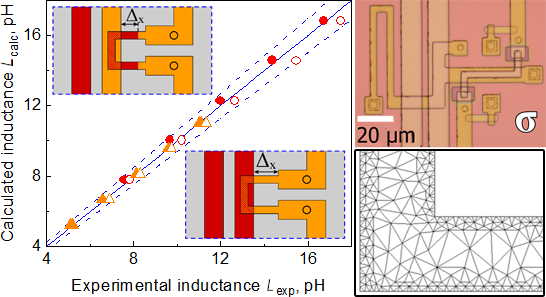
- superconducting sigma neuron since its theoretical models are more developed and allow for approximation of the TF of the experimental device (see Section “Discussion”). The purpose of the sigma neuron is a sigmoidal transformation of the input signal, and the desired shape of the TF is achieved at certain values



Microscopic study of the intermediate mixed state in intertype superconductors
Beilstein J. Nanotechnol. 2026, 17, 57–62, doi:10.3762/bjnano.17.5
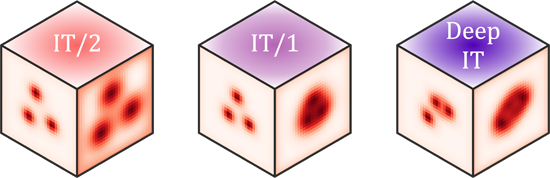
- foundation for the IT regime in single-band superconductors and clarifies its persistence and transformation with temperature. These insights open a path for future investigations of materials tuned near the Bogomolnyi point, where unconventional vortex structures and collective effects may play a decisive


Subdigital integumentary microstructure in Cyrtodactylus (Squamata: Gekkota): do those lineages with incipiently expressed toepads exclusively exhibit adhesive setae?
Beilstein J. Nanotechnol. 2026, 17, 38–56, doi:10.3762/bjnano.17.4
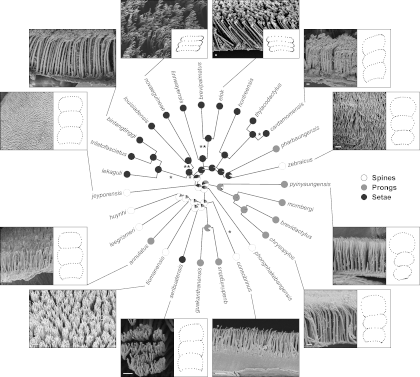
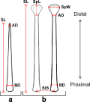
- indicates that the transformation of epidermal microstructures to setae and the expression of macroscopically defined incipient toepads occurred together. However, C. cf. consobrinus retains the ancestral microstructure of Cyrtodactylus (spines) but bears weakly developed lamella-like subdigital scales
- the effect that this would have on the proximodistal extent of the digits. This putatively explains the occurrence of lateromedial subdigital scale expansion, leading to the expression of macroscopically defined incipient toepads. Increasing subdigital scale area without the transformation of their


Competitive helical bands and highly efficient diode effect in F/S/TI/S/F hybrid structures
Beilstein J. Nanotechnol. 2026, 17, 15–23, doi:10.3762/bjnano.17.2
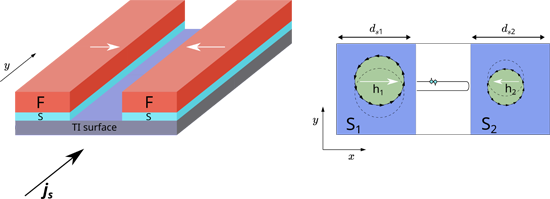
- in the dirty limit. h = (hx, 0, 0) is the exchange field due to the adjacent ferromagnetic material. The matrices τ and σ are 2 × 2 Pauli matrices in the particle–hole and spin spaces, respectively. The superconducting pair potential matrix is defined as , where the transformation matrix is . The
- through the hybrid structure as a function of q, from which the supercurrent and critical current of the system are determined. The supercurrent in the diffusive limit can be found from the expression Performing the unitary transformation U, the current density transforms as follows: The total


![[Graphic 16]](/bjnano/content/inline/2190-4286-17-2-i31.svg?max-width=637&scale=1.18182)
![[Graphic 17]](/bjnano/content/inline/2190-4286-17-2-i32.svg?max-width=637&scale=1.18182)


Improving magnetic properties of Mn- and Zn-doped core–shell iron oxide nanoparticles by tuning their size
Beilstein J. Nanotechnol. 2025, 16, 2285–2295, doi:10.3762/bjnano.16.157
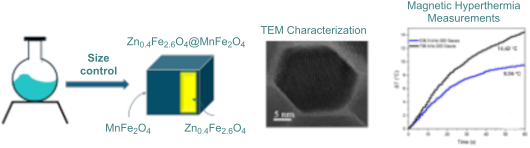
- the synthesis and characterization of polyhedral Zn0.4Fe2.6O4 nanoparticles and their subsequent transformation into Zn0.4Fe2.6O4@MnFe2O4 core–shell nanoparticles with tunable sizes. Previous studies have explored core–shell systems with Co-based shells, but our approach employs MnFe2O4 as the shell



Optical bio/chemical sensors for vitamin B12 analysis in food and pharmaceuticals: state of the art, challenges, and future outlooks
Beilstein J. Nanotechnol. 2025, 16, 2207–2244, doi:10.3762/bjnano.16.153
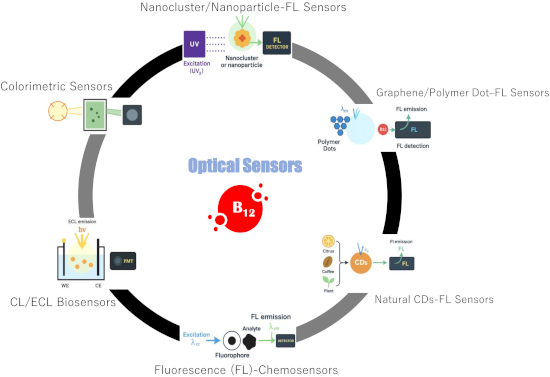
- the decyanation of CNCbl and the dealkylation of alkylcobalamins (alkylCbls). These biochemical transformations are contingent upon the enzymatic action of glutathione S-transferase [47][56][57]. The subsequent transformation of cob(II)alamin into AdoCbl and MeCbl is facilitated by a complex of
- cofactor for MCM, facilitating the transformation of methylmalonyl-CoA into succinyl-CoA, with methylmalonyl-CoA being a byproduct of propionate metabolism. In the majority of mammals, propionate is generated through the catabolism of specific amino acids (e.g., Ile, Met, Thr, Thy, and Val), cholesterol


Hartree–Fock interaction in superconducting condensate fractals
Beilstein J. Nanotechnol. 2025, 16, 2177–2182, doi:10.3762/bjnano.16.150
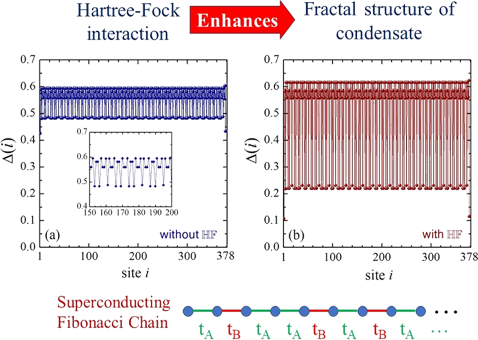
- -imbalanced regimes in which . The effective Hamiltonian is diagonalized by applying the Bogoliubov–Valatin transformation [4], where uν(i) and vν(i) are, respectively, the particle-like and hole-like quasiparticle (bogolon) wavefunctions, and γνσ and are the annihilation and creation operators for bogolon


Missing links in nanomaterials research impacting productivity and perceptions
Beilstein J. Nanotechnol. 2025, 16, 2168–2176, doi:10.3762/bjnano.16.149
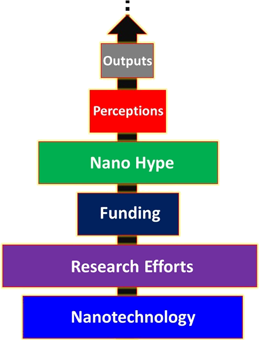
- produce instantaneous and dramatic impacts that a nonscientific audience can easily perceive, unlike developments in AI, virtual reality, or other highly visible innovations. This lack of immediate, observable transformation has contributed to a strong perception, especially among political leaders
Quality by design optimization of microemulsions for topical delivery of Passiflora setacea seed oil
Beilstein J. Nanotechnol. 2025, 16, 2116–2131, doi:10.3762/bjnano.16.146
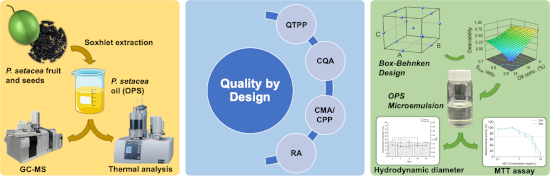
- of the experimental space. The prepared formulations corresponding to the experimental design runs are shown in Figure 4, and a summary of the BBD is presented in Table 5. To refine the model and improve predictive accuracy, the response data were subjected to Box–Cox transformation, an essential
- step when non-normal distribution is detected [25]. Following transformation, analysis of variance (ANOVA) was conducted to evaluate the statistical significance of the overall model and the individual formulation factors. To enhance model parsimony, backward regression elimination was applied to


Laser ablation in liquids for shape-tailored synthesis of nanomaterials: status and challenges
Beilstein J. Nanotechnol. 2025, 16, 1963–1997, doi:10.3762/bjnano.16.137
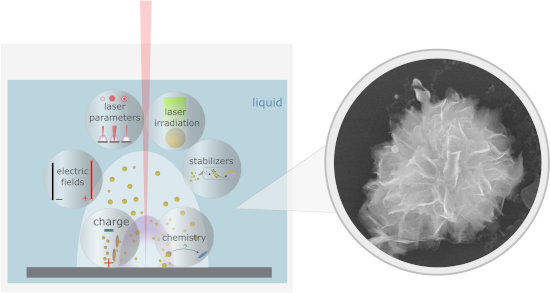
- , shape, crystal structure, and temperature [12]. As a result, thermodynamically controlled growth typically results in near-spherical NPs. The lowest surface energy of nanospheres also induces the transformation of other shapes into spherical ones. The effect of surface energy is most pronounced in small
- modification. The presence of the active ionic species has been shown to guide the formation of Ni(OH)2 nanosheets in [30]. After NP formation, the shape transformation can occur during the stages of growth, self-organization, and ageing of the NPs. In this case, laser ablation, which is performed for
- , small near-spherical Pb NPs are produced, which are quickly oxidized and assembled into planar structures due to the existence of a preferential [002] growth direction in the PbO structure. The transformation of the morphology occurs after the laser is switched off and the colloid undergoes ageing at





Mechanical property measurements enabled by short-term Fourier-transform of atomic force microscopy thermal deflection analysis
Beilstein J. Nanotechnol. 2025, 16, 1952–1962, doi:10.3762/bjnano.16.136
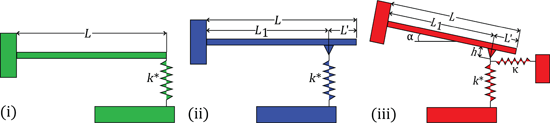
- transform, or transformation of the time-based AFM deflection into the frequency domain is conducted. In the majority of studies examining the thermal oscillations of AFM cantilevers, the cantilever’s displacement is measured for a specific length of time and then converted to frequency space over the




Electrical, photocatalytic, and sensory properties of graphene oxide and polyimide implanted with low- and medium-energy silver ions
Beilstein J. Nanotechnol. 2025, 16, 1794–1811, doi:10.3762/bjnano.16.123
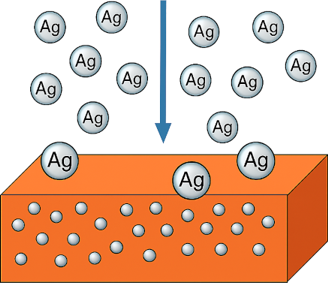
- , and C–O) and the simultaneous transformation of the amorphous polymer phase into a graphitized structure with higher electrical parameters [9]. This results in carbon regions rich in conjugated π-electron systems, which allow for efficient charge delocalization and the formation of conducting pathways


Advances of aptamers in esophageal cancer diagnosis, treatment and drug delivery
Beilstein J. Nanotechnol. 2025, 16, 1734–1750, doi:10.3762/bjnano.16.121

- conjugates and aptamer-functionalized drug nanocarriers for targeted drug delivery in esophageal cancer are reviewed in this paper. In addition, we expect investigators to pay special attention to improving aptamer permeability and stability to accelerate aptamer clinical transformation. In conclusion
- cancer [85], prostate cancer [86], and ovarian cancer [87]. Scientists have discovered that p37 protein promotes invasiveness and induces malignant transformation of cells [88], which may be a key target for Mycoplasma pathogenicity. However, given that Mycoplasma-mediated cellular malignant
- transformation is characterized by long-latency, multistage chronic infections [89], it is extremely challenging to collect sufficient epidemiological data to establish a direct causal relationship between Mycoplasma infection and tumors. Immunohistochemical results of 53 cancer tissue samples showed that


Beyond the bilayer: multilayered hygroscopic actuation in pine cone scales
Beilstein J. Nanotechnol. 2025, 16, 1695–1710, doi:10.3762/bjnano.16.119
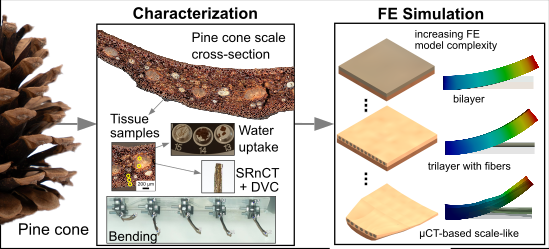
- information. DVC was performed using the image registration software Elastix with its implemented B-spline transformation (ver. 5.1.0) [39]. The images were aligned in a two-step process, first with an affine transformation and then with a B-spline transformation. For both steps, a pyramidal approach with
- five resolution levels using a Gaussian filter was applied. The number of iterations per resolution level was set to 1000 for the affine transformation and 2000 for the B-spline transformation. Advanced normalized correlation was chosen as the correlation metric. The detailed parameter files


Ambient pressure XPS at MAX IV
Beilstein J. Nanotechnol. 2025, 16, 1677–1694, doi:10.3762/bjnano.16.118

- active sites on catalytic materials. These surface sites, often structurally undercoordinated and electronically distinct from the bulk material, drive the transformation of reactants into products. While catalysts regenerate at the end of each cycle, their surfaces can be highly sensitive and unstable





Energy spectrum and quantum phase transition of the coupled single spin and an infinitely coordinated Ising chain
Beilstein J. Nanotechnol. 2025, 16, 1668–1676, doi:10.3762/bjnano.16.117
- thermodynamic limit of an infinite chain, we map the chain Hamiltonian to the Hamiltonian of the Lipkin–Meshkov–Glik model, and the system as a whole is described by a generalized Rabi Hamiltonian. Next, the effective Hamiltonian is obtained using the Foulton–Gouterman transformation. In the thermodynamic limit
- ]. The Hamiltonian of the whole system then becomes akin to the Hamiltonian of the generalized Rabi model, but with the bosonic field replaced by the collective spin of the LMG model. Next, it is diagonalized in the spin space using the Fulton–Gouterman transformation and we obtain an effective
- mode, but to a more complicated environment [16][17][18]. Diagonalization in the Spin Space The Hamiltonian in the spin space can be diagonalized using the formula for the determinant of a 2 × 2 block matrix. This is also known as the Fulton–Gouterman transformation [19]. This leads to two effective

![[Graphic 39]](/bjnano/content/inline/2190-4286-16-117-i63.svg?max-width=637&scale=1.18182)


![[Graphic 51]](/bjnano/content/inline/2190-4286-16-117-i75.svg?max-width=637&scale=1.18182)