


Search results
Search for "circular dichroism" in Full Text gives 146 result(s) in Beilstein Journal of Organic Chemistry.
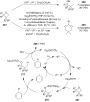
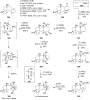
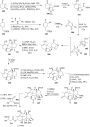
Discovery of sugarnitriles A and B, and structural reassignment of SF-2140, from a sugarcane endophytic actinomycete Amycolatopsis sp. JS-O27
Beilstein J. Org. Chem. 2026, 22, 1114–1121, doi:10.3762/bjoc.22.90
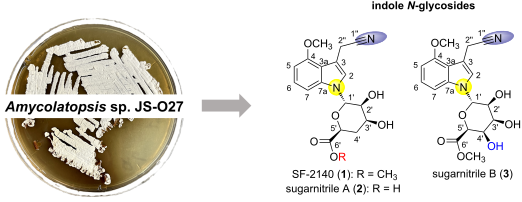
- constants and NOESY data, and comparison of their electronic circular dichroism (ECD) spectra. Compounds 1 and 3 exhibited moderate to weak antibacterial activity against Escherichia coli at 100 μg/mL. Keywords: Amycolatopsis sp.; indole N-glycosides; SF-2140; structure reassignment; sugarnitriles
- structure of 2 was then elucidated by detailed analysis of 2D NMR data with a combination of analysis of 3JH−H coupling constants and NOESY data (Table S3, Supporting Information File 1, and Figure 2). To determine the absolute configurations of 2, the electronic circular dichroism (ECD) spectra of 1 and 2


Synthesis of functionalized, 13-alkyl-substituted coralyne derivatives and investigation of their interactions with duplex and abasic site-containing DNA
Beilstein J. Org. Chem. 2026, 22, 1057–1066, doi:10.3762/bjoc.22.84
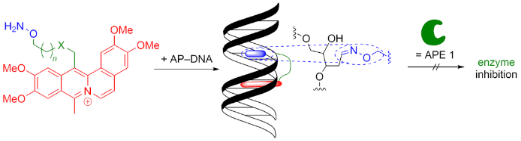
- the coralyne 2e with calf thymus DNA (ct DNA) were examined with photometric and fluorimetric titrations as well as with circular dichroism (CD) and linear dichroism (LD) spectroscopy (Figure 2). The experiments were carried out in aqueous buffer solutions with 10% of DMSO, because of the low water


The role of spacer length and flexibility in peptide self-assembly
Beilstein J. Org. Chem. 2026, 22, 986–996, doi:10.3762/bjoc.22.77
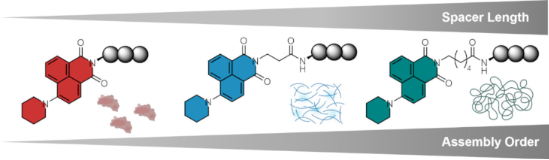
- -assembly. The peptides have been analyzed with respect to their assembly properties using assembly conversion determinations, fluorescence microscopy, transmission electron microscopy (TEM), atomic force microscopy (AFM), circular dichroism (CD) spectroscopy, and nuclear magnetic resonance (NMR
- constructs with longer aliphatic spacers (C3-Nap-ICA 7 and C6-Nap-ICA 6) assembled readily into well-defined supramolecular architectures. Moreover, spectroscopic and biochemical analyses reveal a clear correlation between spacer length and assembly propensity. Circular dichroism spectroscopy, NMR


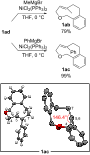
Synthesis and stereochemical analysis of dynamic planar chiral oxa[7]orthocyclophene
Beilstein J. Org. Chem. 2026, 22, 436–442, doi:10.3762/bjoc.22.30

- °C: 24.5 kcal/mol), respectively, which are within the predicted range of stereochemical stability (Figure 6). For the determination of absolute stereochemistry of 1ab and 1ad, we performed HPLC analysis using circular dichroism (CD) detector [17]. The HPLC analyses with OJ-H column of 1ab and 1ad






Electrosynthetic access to unsymmetrical oxaza[8]helicenes with high chiral stability and strong circularly polarized luminescence (CPL)
Beilstein J. Org. Chem. 2026, 22, 372–382, doi:10.3762/bjoc.22.25
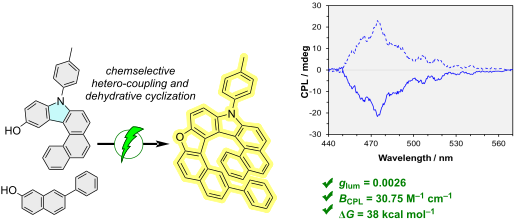
- ) relative to their oxaza[7]helicene analogues (<25 kcal/mol). After chiral HPLC separation, the enantiomers display mirror-image CD and strong solution CPL, with |glum| up to 2.6 × 10⁻³ and fluorescence brightness up to 30.75 M−1 cm−1. Keywords: chemoselectivity; chiroptical; circular dichroism




Screwing the helical chirality through terminal peri-functionalization
Beilstein J. Org. Chem. 2026, 22, 205–212, doi:10.3762/bjoc.22.14
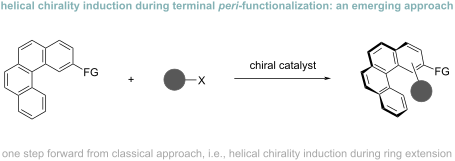
- circularly polarized organic light emitting diodes (OLEDs), circularly polarized luminescence (CPL), and photonic devices, etc., due to their strong circular dichroism and circularly polarized luminescence [15][16]. Their well-defined three-dimensional chiral environment also makes helicenes useful in


Design and synthesis of an axially chiral platinum(II) complex and its CPL properties in PMMA matrix
Beilstein J. Org. Chem. 2026, 22, 143–150, doi:10.3762/bjoc.22.7
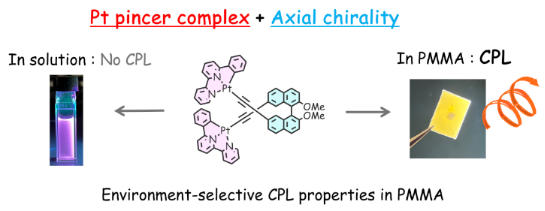
- -to-ligand charge transfer (MLCT). Furthermore, chiroptical measurements by circular dichroism (CD) and CPL spectroscopy indicated that the axial chirality of the binaphthyl moiety governs the relative orientation of the Pt(II)-based chromophore pair, generating MLCT-band CD and CPL signals through


Efficient solid-phase synthesis and structural characterization of segetalins A–H, J and K
Beilstein J. Org. Chem. 2025, 21, 2612–2617, doi:10.3762/bjoc.21.202

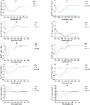
- purification, all cyclopeptides were obtained in 45–70% isolated yields. Structural identities were confirmed by HRESIMS, NMR, and HPLC (>95% purity). Circular dichroism (CD) spectroscopy revealed distinct secondary structures, including β-sheets (1, 2, 3, 4, 7, 8, 10) and α-helical elements (5, 6). This
- . Secondary structure analysis by circular dichroism (CD) The secondary structures of compounds 1–10 were investigated using circular dichroism (CD) spectroscopy in aqueous buffer (0.01×PBS), deionized H₂O, and 30% TFE (2,2,2-trifluoroethanol) (Figure 2). CD spectra in the far-UV region (190–250 nm) provide


Recent advances in total synthesis of illisimonin A
Beilstein J. Org. Chem. 2025, 21, 2571–2583, doi:10.3762/bjoc.21.199
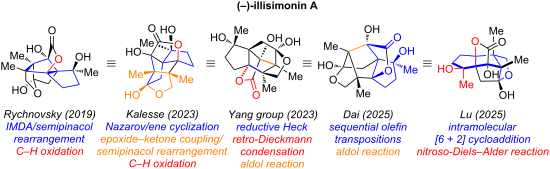
- as “illisimonane skeleton”. The absolute configuration of (−)-illisimonin A was determined to be 1R,4R,5R,6R,7S,9S,10S by comparing the calculated electronic circular dichroism (EDC) spectrum with experimental CD data (Figure 2). Biological evaluation revealed that illisimonin A exhibits






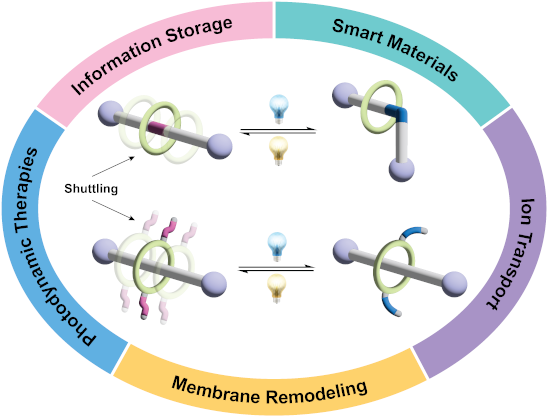
Rotaxanes with integrated photoswitches: design principles, functional behavior, and emerging applications
Beilstein J. Org. Chem. 2025, 21, 2345–2366, doi:10.3762/bjoc.21.179
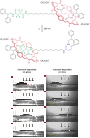
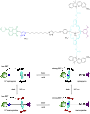
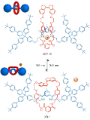
- the axle and allowed geometrical changes to occur, thereby modifying the nature and strength of the interaction between the macrocycle and the recognition sites [63][64]. Later, a new rotaxane was reported, which generates a strong induced circular dichroism response when the macrocycle is hydrogen
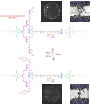
- photoisomerization of the hydrazone. When the macrocycle is closer to the chiral center (cis isomer), the rotaxane exhibits significantly enhanced chiral expression, as confirmed by a stronger circular dichroism and an increase in the helical twisting power of the liquid crystal (Figure 10). This example





A chiral LC–MS strategy for stereochemical assignment of natural products sharing a 3-methylpent-4-en-2-ol moiety in their terminal structures
Beilstein J. Org. Chem. 2025, 21, 2243–2249, doi:10.3762/bjoc.21.171
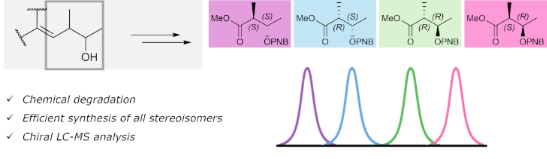
- circular dichroism (ECD) spectra [17]. However, despite their utility, the general applicability of these computational approaches to MPO-containing molecules is uncertain due to their high conformational flexibility. In other cases, the absolute configurations of compounds such as linearolides [20


A m-quaterphenyl probe for absolute configurational assignments of primary and secondary amines
Beilstein J. Org. Chem. 2025, 21, 2211–2219, doi:10.3762/bjoc.21.168
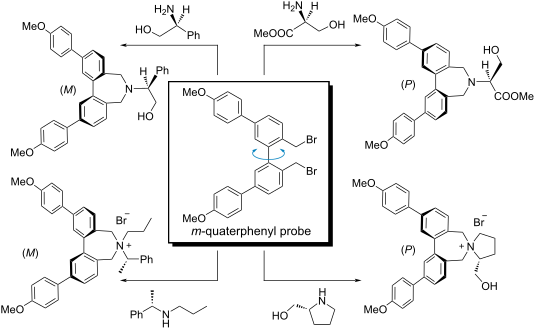
- secondary amines through the combined use of a m-quaterphenyl probe 1 and theoretical calculations. The probe 1 is covalently attached to chiral amines to form conjugates that exhibit exciton-coupled circular dichroism (ECCD) in the m-quaterphenyl chromophores. The calculated ratios of the P and M
- conformers, obtained via DFT calculations, show a correlation with both the sign and intensity of the experimentally observed CD spectra. Keywords: absolute configuration; chiral amine; chiral quaternary ammonium salt; circular dichroism; DFT calculation; Introduction Determining the absolute
- ]. However, its use in the analysis of chiral amines has been restricted, largely due to the complexity arising from their conformational flexibility [3]. Circular dichroism (CD) spectroscopy offers a highly sensitive technique for stereochemical analysis at the microgram scale [4][5][6]. In particular


Synthesis of N-doped chiral macrocycles by regioselective palladium-catalyzed arylation
Beilstein J. Org. Chem. 2025, 21, 1917–1923, doi:10.3762/bjoc.21.149
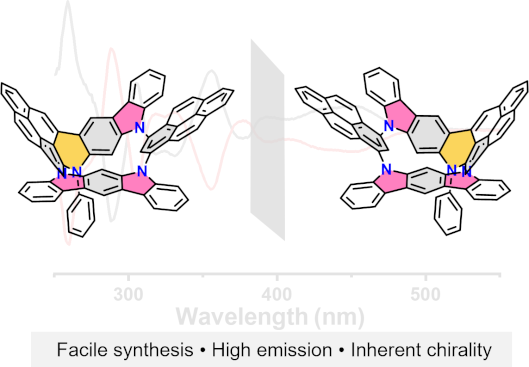
- yields (ΦF up to 0.69). Furthermore, enantiomeric resolution of inherent chiral MC1 was achieved using preparative chiral HPLC, enabling detailed investigation of its chiroptical behavior through circular dichroism and circularly polarized luminescence spectroscopy. Keywords: dihydroindolocarbazole
- through circular dichroism (CD) and circularly polarized luminescence (CPL) spectroscopy. Results and Discussion The syntheses of N-doped macrocycles MC1–3 are shown in Scheme 1. Diamines 1a and 1b were synthesized by double Pd-catalyzed C–N coupling reaction of 4,6-dichlorobenzene-1,3-diamine with phenyl




Synthesis of optically active folded cyclic dimers and trimers
Beilstein J. Org. Chem. 2025, 21, 1603–1612, doi:10.3762/bjoc.21.124

- the PL decay curves (Figure S17, Supporting Information File 1) were fitted with the single exponential function. The lifetimes (τ) were estimated to be 1.6 ns and 1.0 ns, respectively. Circular dichroism (CD) and CPL spectra of (Sp)-6 and (Sp)-7 were obtained in CHCl3 solutions (1.0 × 10⁻⁵ M), and
- lifetime measurement was performed on a Hamamatsu Photonics Quantaurus-Tau fluorescence lifetime spectrometer system. Specific rotations ([α]Dt) were measured with a HORIBA SEPA-500 polarimeter: concentration “c” is g/dL. Circular dichroism (CD) spectra were recorded on a JASCO J-1500 spectropolarimeter


Wittig reaction of cyclobisbiphenylenecarbonyl
Beilstein J. Org. Chem. 2025, 21, 1454–1461, doi:10.3762/bjoc.21.107
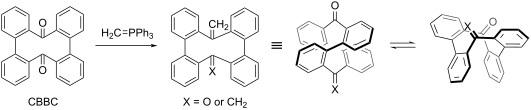
- low racemization barrier as with structurally similar methylenedioxy-substituted DBC derivative [22]. Racemization dynamics The racemization barriers of CBBC 1, mono-olefin 3, and bis-olefin 5 were evaluated by monitoring the decrease of circular dichroism (CD) signals in 1,2-dichlorobenzene at 170 °C



Advances in nitrogen-containing helicenes: synthesis, chiroptical properties, and optoelectronic applications
Beilstein J. Org. Chem. 2025, 21, 1422–1453, doi:10.3762/bjoc.21.106
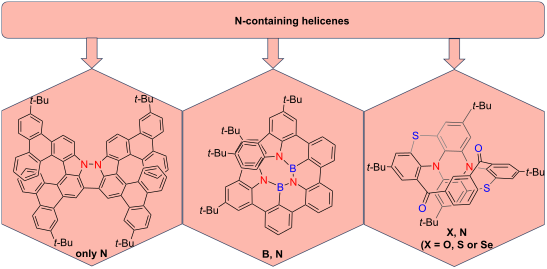
- with Ru(II) to form NIR-emissive complexes that exhibit redox-responsive chiroptical switching, notably with complex 8 showing reversible electronic circular dichroism (ECD) upon oxidation [21]. Liao and co-workers introduced a narrowband CP-TADF emitter 9, characterized by a narrow emission bandwidth
- −1 (Table 3). Importantly, both dimers displayed selective fluoride ion recognition through hydrogen bonding, with (M,M)-12c exhibiting a high binding constant (Ka = 2 × 10⁵ M−1). The resulting [12c·F−] and [12d·F−] complexes exhibited red-shifted circular dichroism (CD), fluorescence, and CPL

Oxetanes: formation, reactivity and total syntheses of natural products
Beilstein J. Org. Chem. 2025, 21, 1324–1373, doi:10.3762/bjoc.21.101










Recent advances and future challenges in the bottom-up synthesis of azulene-embedded nanographenes
Beilstein J. Org. Chem. 2025, 21, 1272–1305, doi:10.3762/bjoc.21.99
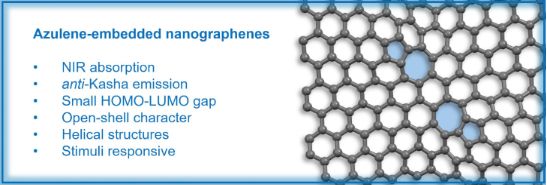
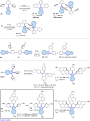
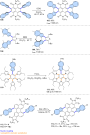
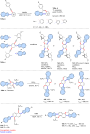
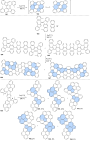
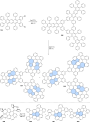
- non-benzenoid nanographene 34 [45]. Single crystals of 34 surprisingly exhibit SHG-CD (second harmonic generation–circular dichroism) properties due to the unusual self-sorting of R and S enantiomers in the crystalline state. Scholl-type oxidation: The Scholl oxidation is a highly useful tool for






Data accessibility in the chemical sciences: an analysis of recent practice in organic chemistry journals
Beilstein J. Org. Chem. 2025, 21, 864–876, doi:10.3762/bjoc.21.70

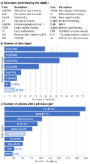
- community risks becoming left behind without urgent cultural change. Journal data policies for the study timeframe, 01 February – 31 March 2023. ‘All data’ refers to: spectroscopic data (NMR, IR, UV–vis, Raman, circular dichroism and mass spectrometry), chromatography (GC, HPLC, SEC), physical data (m.p





Antibiofilm and cytotoxic metabolites from the entomopathogenic fungus Samsoniella aurantia
Beilstein J. Org. Chem. 2025, 21, 327–339, doi:10.3762/bjoc.21.23
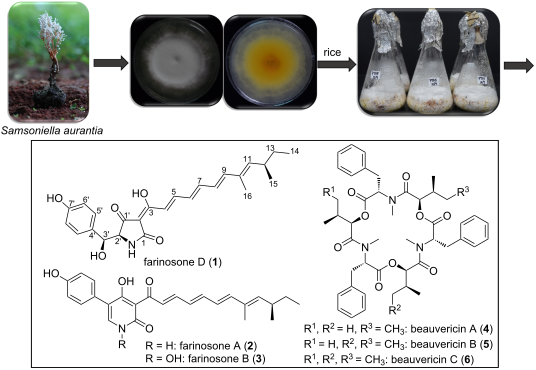
- experimental methods Optical rotations at 20 °C were measured with an Anton Paar MCP 150 circular polarimeter (Anton Paar, Graz, Austria). UV–vis spectra spanning the 190–600 nm range were acquired using a Shimadzu UV2450 spectrophotometer (Shimadzu, Kyoto, Japan). Electronic circular dichroism (ECD) spectra


Hot shape transformation: the role of PSar dehydration in stomatocyte morphogenesis
Beilstein J. Org. Chem. 2025, 21, 47–54, doi:10.3762/bjoc.21.5
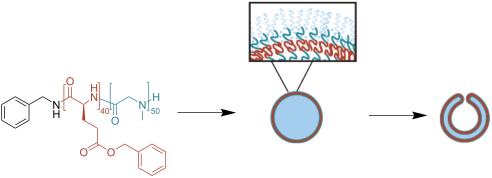
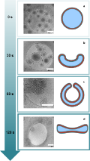
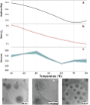
- . However, when the membrane gets too stiff, the deformation is prevented regardless of the increased force that is applied. For further affirmation of the mechanism circular dichroism (CD) spectroscopy was employed to give more insight on the morphological changes in the polymers secondary structure


Ceratinadin G, a new psammaplysin derivative possessing a cyano group from a sponge of the genus Pseudoceratina
Beilstein J. Org. Chem. 2024, 20, 3215–3220, doi:10.3762/bjoc.20.267
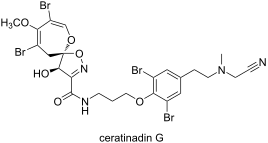
- of psammaplysin A remained ambiguous for approximately 30 years but was determined in 2015 by Kurtán, Garson, and co-workers through a comparison of experimental and calculated electronic circular dichroism data, as well as a method employing Trost's chiral anisotropic reagents [6]. More recently


Cyclodextrin-based rotaxanes for polymer materials: challenge on simultaneous realization of inexpensive production and defined structures
Beilstein J. Org. Chem. 2024, 20, 3026–3049, doi:10.3762/bjoc.20.252
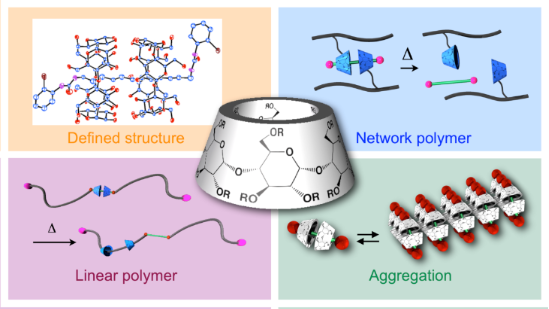
- formation of this inclusion complex, circular dichroism spectroscopy represents a powerful tool when combined with nuclear magnetic resonance (NMR) and X-ray single-crystal analysis. This is because the induced circular dichroism (ICD) can be observed on the guest molecule of the inclusion complex derived






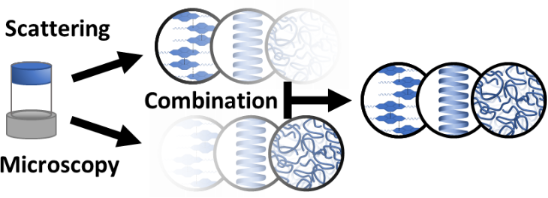
Applications of microscopy and small angle scattering techniques for the characterisation of supramolecular gels
Beilstein J. Org. Chem. 2024, 20, 2608–2634, doi:10.3762/bjoc.20.220


Spin and charge interactions between nanographene host and ferrocene
Beilstein J. Org. Chem. 2024, 20, 1011–1019, doi:10.3762/bjoc.20.89
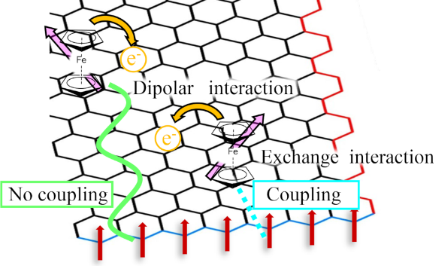
- (SQUID) [21][22] and X-ray magnetic circular dichroism (XMCD) spectroscopy [23]. However, only a tiny paramagnetic behavior of encapsulated ferrocene was observed, and no magnetic host–guest interactions were reported due to the diamagnetic nature of CNTs. Activated carbon fibers (ACFs) consist of a





