


Search results
Search for "complexes" in Full Text gives 1202 result(s) in Beilstein Journal of Organic Chemistry. Showing first 200.
Controlled supramolecular assemblies of luminescent tridentate cyclometalated alkynylgold(III) amphiphiles in aqueous media
Beilstein J. Org. Chem. 2026, 22, 1097–1106, doi:10.3762/bjoc.22.88
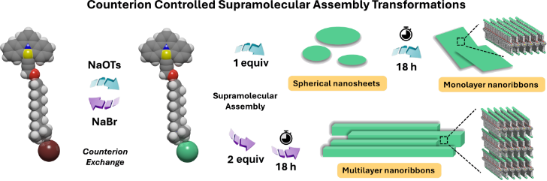
- .22.88 Abstract Gold(III) complexes and amphiphiles have been extensively investigated over a decade. Supramolecular assemblies of gold(III) amphiphiles in aqueous media exhibit high sensitivities to external stimulations for soft functional materials. Herein, we introduce a new molecular design of a
- Supramolecular assemblies in natural systems, such as lipid bilayers and protein complexes, play essential roles in maintaining proper biological functions [1][2][3]. These natural structures have inspired developments of artificial supramolecular systems that offer structural diversity through delicate designed
- cancer immunotherapy [34][35]. An alternative molecular design approach is to incorporate organometallic complexes into amphiphile designs, thereby combining the advantageous functional properties of inorganic centers with the self-assembled structural properties of amphiphiles [36][37][38][39][40]. Gold


Synthesis of functionalized, 13-alkyl-substituted coralyne derivatives and investigation of their interactions with duplex and abasic site-containing DNA
Beilstein J. Org. Chem. 2026, 22, 1057–1066, doi:10.3762/bjoc.22.84
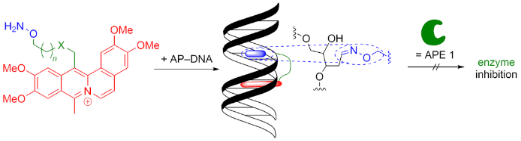
- intensively investigated interdisciplinary research field [2][3][4][5]. In particular, one focus is on external ligands which form complexes with DNA by groove binding or intercalation and thus block the binding sites of the DNA and/or significantly change the helix structure at the binding site [2][3][4][5
- and a fluorescence quantum yield of Φfl = 0.40. The titration of 2e with ct DNA led to strong quenching of the fluorescence by up to 82% at saturation (Figure 2B). CD-spectroscopic analysis of the ligand–DNA complexes revealed slight pertubation of the characteristic band of the DNA at 285 nm. At the


Synthesis and optical resolution of 4,5-diaminohomoadamantane: a promising scaffold for chiral ligands and bioactive compounds
Beilstein J. Org. Chem. 2026, 22, 1013–1022, doi:10.3762/bjoc.22.80
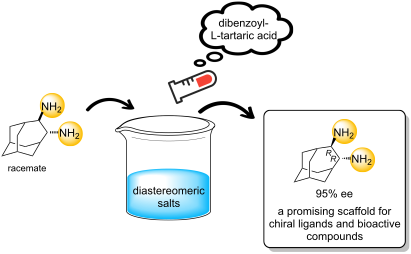
- , what allows to assign the (4R,5R)-configuration to compound 8a′. Since the chiral resolution of trans-4,5-diaminohomoadamantane was successful, we decided to study metal complexes of ligands based on (4R,5R)-8a′ in model reactions. Ligand 18 was obtained by the reaction of diamine (4R,5R)-8a' with


Z-Selective semihydrogenation of alkynes via Ni/Lewis acid synergistic catalyzed system using DMF as hydrogen source and solvent
Beilstein J. Org. Chem. 2026, 22, 1004–1012, doi:10.3762/bjoc.22.79
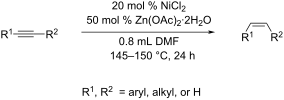
- ). Notably, phosphine-ligated Ni complexes such as (dppe)NiCl2 showed poor activity (20% yield, Table 1, entry 6), while NiCO3·2Ni(OH)2·4H2O afforded 2a in 2% yield (entry 10). Unsurprisingly, control experiments confirmed that the reaction does not proceed in the absence of a nickel source (Table 1, entry
- -selectivity (Table 3, entry 2). Other nickel sources, including Ni(acac)2 and phosphine-ligated complexes such as (dppe)NiCl2, gave notably lower yields (Table 3, entries 3–12). We then examined the catalyst loading. The combination of 20 mol % NiCl2 and 50 mol % Zn(OAc)2·2H2O (Table 3, entry 2) remained



Electrochemical reduction of unsaturated carbon–carbon bonds via 3d transition-metal catalysis
Beilstein J. Org. Chem. 2026, 22, 955–981, doi:10.3762/bjoc.22.75
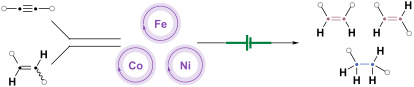
- formation of Co(III)–H intermediates and their reactivity toward alkene substrates, the authors systematically investigated a series of cobalt salen complexes bearing electronically diverse ligand frameworks using complementary electrochemical and synthetic approaches. Rotating disk electrode (RDE
- divided cell setup (Scheme 9A) [111]. In certain established electroreductive nickel systems, such as the DuBois-type Ni–H complexes [112][113][114], hydride formation occurs at potentials coincident with HER or leads to undesired overreduction, both of which can suppress the desired substrate reduction








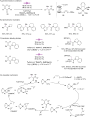
Recent advances in copper-catalyzed direct hydroamination of alkenes with (hetero)aromatic amines
Beilstein J. Org. Chem. 2026, 22, 925–947, doi:10.3762/bjoc.22.73
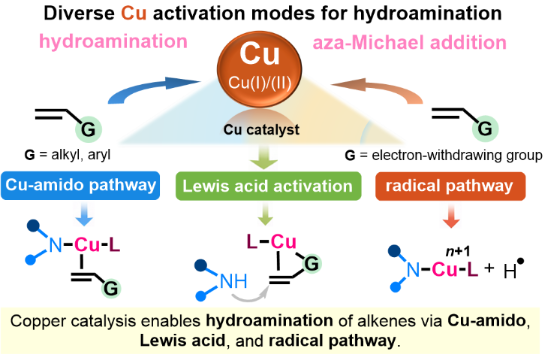
- selective hydroamination chemistry. Review Copper-catalyzed aza-Michael addition Early studies on copper–amido complexes by Gunnoe The aza-Michael addition of (hetero)aromatic amines to electron-deficient olefins provides a straightforward and atom-economical route to β-amino carbonyl, β-amino sulfone, and
- nucleophilicity, facilitating conjugate addition to electron-deficient alkenes. The formation of such well-defined copper–amido complexes provides valuable mechanistic insights into copper-catalyzed hydroamination and conjugate addition reactions. Pioneering studies by Gunnoe et al. describe the synthesis and
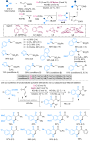
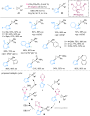
- characterization of well-defined copper–amido complexes I and II, supported by electron-donating ligands such as phosphines and N-heterocyclic carbenes (NHCs) (Scheme 2) [32][33][34]. Copper–amido complex I was prepared by treating the dtbpe-ligated Cu–Cl complex (dtbpe = 1,2-bis(di-tert-butylphosphino)ethane






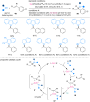

Site-specific labelling of native peptides and proteins: chemical and enzymatic strategies
Beilstein J. Org. Chem. 2026, 22, 857–881, doi:10.3762/bjoc.22.67
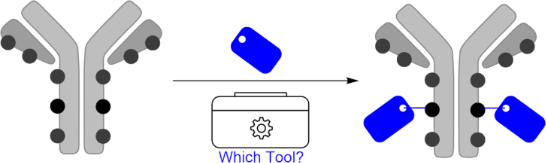
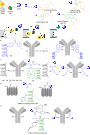
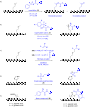
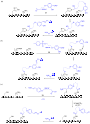
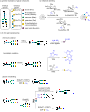
- substrate profiling. Affinity-guided labelling. a) Reagents and catalysts appended to the binder include electrophilic motifs 14–17 as well as b) benzophenone 18, c) rhodium complexes 19, d) 4-dimethylaminopyridine 20 (DMAP), and e) pyridinium aldoxime 21 (PyOx). Chemical sequence to convert subtilisin


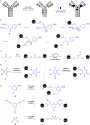
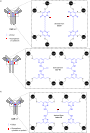







The trans-influence in gold chemistry from a catalytic perspective
Beilstein J. Org. Chem. 2026, 22, 838–856, doi:10.3762/bjoc.22.66
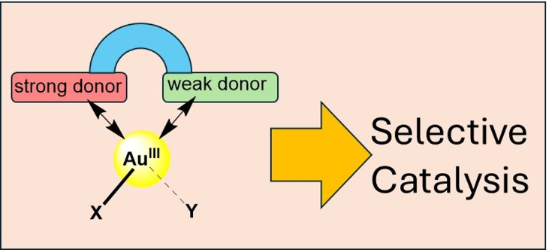
- gold(III) complexes has more recently become a focus of interest. Although often underestimated or not considered, the ligand trans-influence is a crucial factor in determining the reactivity of gold(III) compounds; it modifies not only bond polarisation, dissociation energies and thermal stability but
- documented in monographs and special themed journal issues, see for example [1][2][3][4][5][6][7][8][9][10]. Of special interest here are gold complexes supported by bidentate and tridentate ligands; their chemistry has been the subject of a number of reviews, covering different aspects of structure, bonding
- . This effect is probably more dominant in gold chemistry than in most other transition-metal complexes; it can on occasions appear even more important than the formal oxidation state and d-electron count. Tilset and co-workers have recently summarised the importance of the trans-influence in C^N


Unsymmetrical sulfoxides with sterically hindered catechol fragment: synthesis, structure, electrochemical properties, and antiradical activity
Beilstein J. Org. Chem. 2026, 22, 828–837, doi:10.3762/bjoc.22.65
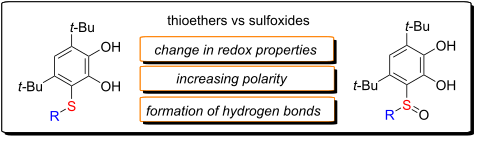
- soft sulfoxide group within a single molecule also provides a basis for the preparation of metal complexes with unusual properties. The aim of the present work is to synthesize new unsymmetrical sulfoxides bearing hydrocarbon fragments derived from catechol thioethers, to study their structure and
- antioxidants, stimuli-responsive materials, and functional ligands for metal complexes with tailored electronic properties. Molecular structures of 1a (a), 4a (b), 5a (c), 6a (d), 7a (e) (solvent molecules and fragment disordering are omitted; for 4a and 5a, only one independent molecule is shown). CV curves


Knoevenagel condensation of 4,5- and 1,8-diazafluorenes
Beilstein J. Org. Chem. 2026, 22, 803–812, doi:10.3762/bjoc.22.62
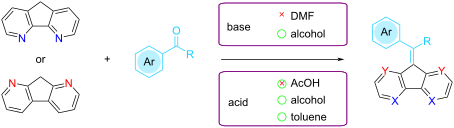
- be applied as antitumor agents [1][2][3], emitters and sensors [4][5]. They have also been extensively used as ligands yielding a wide library of transition-metal complexes [6][7][8], catalysts [9][10], light-driven molecular motors [11][12], nonlinear optical chromophores [13], and electrochromic




Synthesis of heterocycles based on azomethine ylides from α-amino acids (or amines) and carbonyl compounds
Beilstein J. Org. Chem. 2026, 22, 705–741, doi:10.3762/bjoc.22.55
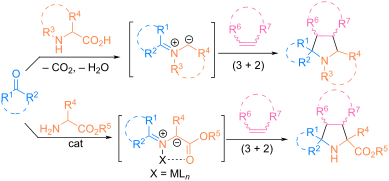
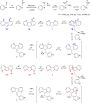
- from imino esters, catalyzed by chiral Cu(I,II) and Ag(I) complexes, are widely used. Reactions using α-amino acids proceed, in most cases, without the use of catalysts, with high yields and high stereoselectivity. Electrophilic alkenes of various structures, (hetero)aromatic olefins and benzofulvenes
- chiral metal complexes of Ag(I), Cu(I/II), Zn(II), Ni(II) with ligands of the Segphos, Fesulfos, or Biphamphos type [12][13][14][15]. Such catalytic systems control the enantioselectivity of cycloaddition and allow the preparation of enantioenriched pyrrolidines containing several stereocenters in high
- diastereoselectivity in the catalytic (3 + 2) cycloaddition between iminoethers and electrophilic alkenes occurring using chiral metal complexes based on copper(I) and silver(I) salts and ligands (S)-DM-Segphos (L12) or (S)-DTBM-Segphos (L11) (Scheme 12). The reactions involved various dipolarophiles such as acrylates


Using generative AI to transform peptide hits into small molecule leads
Beilstein J. Org. Chem. 2026, 22, 672–679, doi:10.3762/bjoc.22.51
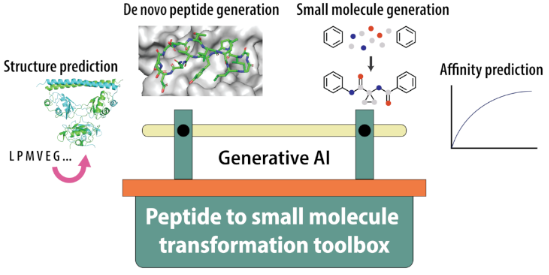
- protein partners that form functional complexes [1][2][3]. Furthermore, powerful high-throughput library screening technologies such as mRNA and phage display have revolutionised our ability to identify novel peptide binders, frequently generating binders with nanomolar affinity directly from screening
- bound complexes, including computational analysis of the amino acid interactions (SiteMap [16]) and hydration in the binding pocket (grid inhomogeneous solvation theory [17] in AmberTools [18]). The pharmacophores were then used as the basis for virtual screening with docking (Glide [19][20]) to obtain
- ) experiment in 2020 [24]. Since then, numerous models with advanced functionality have been released (Table 1), including AlphaFold3 which incorporates diffusion-based components, providing a range of options for predicting the structure of protein targets (including protein complexes and interactions with


Photoorganocatalytic trifluoromethylation of (het)arenes in green conditions
Beilstein J. Org. Chem. 2026, 22, 662–671, doi:10.3762/bjoc.22.50
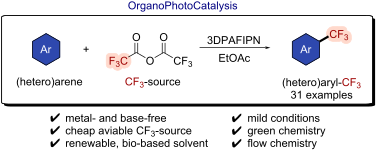
- -based complexes to other transition metals and organic photocatalysts, as well as diverse CF3 sources. The major limitations of these methodologies include the high cost of catalysts and trifluoromethylating reagents, along with the use of toxic species such as transition-metal complexes and hazardous


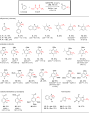


Advantages of PROTACs in achieving selective degradation of homologous protein families
Beilstein J. Org. Chem. 2026, 22, 628–661, doi:10.3762/bjoc.22.49
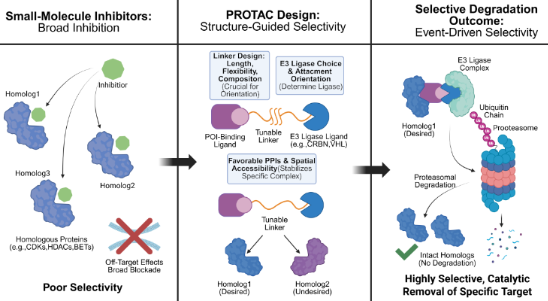
- optimization often prioritizes the linker fragment, as its length and composition are critical determinants of target selectivity [39]. Recent evidence underscores the pivotal role of the linker in promoting the assembly of "positive cooperative" ternary complexes [40], wherein the linker participates in
- in recent years [12]. The selectivity of PROTACs toward CDK4/6 over other highly homologous CDKs can be attributed to their event-driven pharmacology and the formation of stable ternary complexes that exploit subtle structural differences among the family members [54]. Unlike traditional kinase
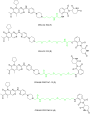
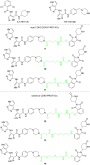
- VHL ligand are connected via a conformation-restricting macrocyclic linker. Although this seems to be a minor change, the comparison of these two studies reveals that compound 36 is able to cooperatively form ternary complexes with the BD2 domains of BRD4, BRD2, and BRD3. The cooperativity factor α, a









Hydrogen production from formic acid catalyzed by NHC–Cu complexes
Beilstein J. Org. Chem. 2026, 22, 620–627, doi:10.3762/bjoc.22.48
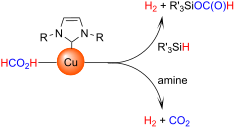
- ]. Finally, a Cu(I)–formato complex able to promote FA dehydrogenation in the absence of any additive was very recently reported by Berthet, Cantat and co-workers [48]. During the past decades, NHC–Cu complexes have shown to be efficient catalysts in a plethora of reactions. Indeed, they guarantee better
- performances than copper salts, even with lower catalyst loading and under milder conditions [49][50][51]. Based on this background, the first potential formic acid dehydrogenation catalyzed by NHC–Cu complexes (Figure 1) was investigated. Results and Discussion We have shown that the reaction of [Cu(OH)(IPr
- ), almost 2 equivalents of gas were produced from 1 equivalent of formic acid within 3 hours. It has to be noted that, since all reactions were conducted in solution, all copper complexes must be considered as monomeric. In fact, dimeric Cu–H and Cu–formato are generally observed only in the solid state [53


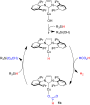

Kinetic resolution of racemic planar-chiral vinylcymantrenes by molybdenum-catalyzed asymmetric metathesis dimerization
Beilstein J. Org. Chem. 2026, 22, 568–574, doi:10.3762/bjoc.22.42
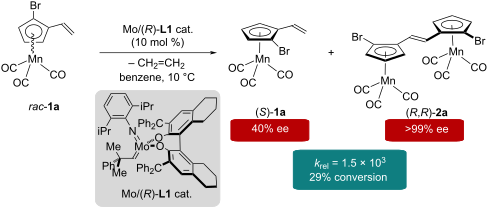
- metathesis chemistry, and various chiral metal-alkylidene catalysts have been prepared over the past two decades [6][7][8][9]. Since 2002, our group and others have been interested in utilizing the olefin metathesis reaction for the modulation of various transition-metal complexes [10][11][12][13] thanks to
- the excellent tolerance of the Mo-/Ru-metathesis catalysts toward the organometallic substrates. The olefin metathesis protocols could be extended to the asymmetric synthesis of diverse planar-chiral transition metal complexes either by the kinetic resolution of the racemic substrates [14][15][16] or
- by the desymmetrization of the Cs-symmetric substrates [17][18][19] by the use of an appropriate chiral catalyst (see the drawing in Table 1 for the structures of the representative chiral molybdenum precatalysts used in this study) [20][21][22][23]. Planar-chiral transition-metal complexes have been


Molecular tweezer–peptide conjugates disrupt the protein–protein interaction between survivin and histone H3 essential in mitosis
Beilstein J. Org. Chem. 2026, 22, 557–567, doi:10.3762/bjoc.22.41
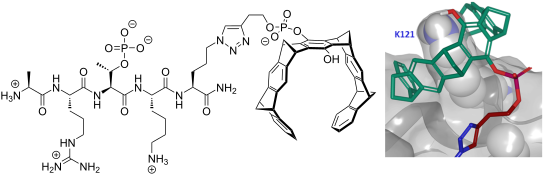
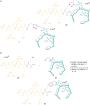
- region of histone H3 (green). The boxed region is enlarged in the right panel. Several of the residues lining the interface between survivin and histone H3 are shown. Survivin complexes with peptide tweezers: Fluorescence polarization measurements of wild type and mutated survivin (top) and modeling of




Synthesis and uranyl(VI) extraction performance of a calix[4]pyrrole–tetrahydroxamic acid receptor
Beilstein J. Org. Chem. 2026, 22, 486–494, doi:10.3762/bjoc.22.36
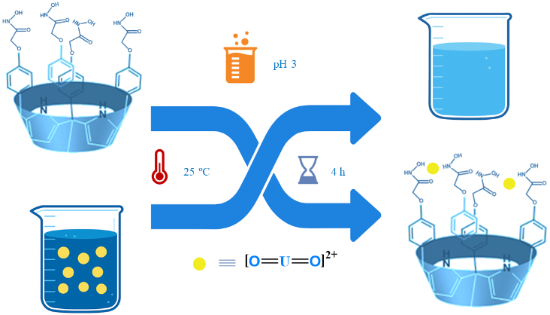
- and have found diverse applications across both biomedical and industrial fields [25][26]. Hydroxamic acids are also well known for their strong chelating ability toward uranyl, forming stable complexes through the synergistic coordination of the carbonyl and hydroxylamine groups [27]. Uranium is a
- aqueous solution, hexavalent uranium, the most dominant oxidation state, exists predominantly as the linear uranyl ion UO22+. In this ion, two oxo ligands occupy axial positions while the equatorial plane accommodates four to six donor atoms [74][75]. Complexes of UO22+ often adopt either a pseudoplanar


Synthesis of a HDAC inhibitor–nanogold probe for cryo-EM visualization in class I HDAC co-repressor complexes
Beilstein J. Org. Chem. 2026, 22, 480–485, doi:10.3762/bjoc.22.35
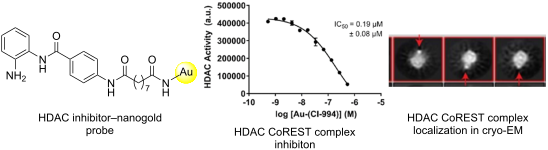
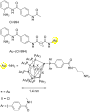
- LE1 7RH, UK 10.3762/bjoc.22.35 Abstract Class I histone deacetylases (HDACs 1–3) serve as catalytic subunits within seven multiprotein co-repressor complexes, each of which has distinct functions in the cell. We report the synthesis of a HDAC inhibitor–nanogold probe, derived from the class I HDAC
- inhibitor CI-994, for cryo-electron microscopy (cryo-EM) visualization of the HDAC catalytic domain within class I HDAC co-repressor complexes. The nanogold probe retained HDAC inhibitory activity comparable to CI-994 against the HDAC1-LSD1-CoREST complex in vitro. In cryo-EM studies, 2D class averages
- III [3]. HDAC1, HDAC2, and HDAC3 of the class I HDACs exist in multiprotein co-repressor complexes in vivo [4]. HDAC1 and HDAC2 exist interchangeably in the CoREST, MIDAC, SIN3, NuRD, MIER, and RERE complexes, while HDAC3 exists in the SMRT/NCoR complex [4]. The protein complex partners govern the



Recent advances in the stereoselective synthesis of distal biaxially chiral molecules
Beilstein J. Org. Chem. 2026, 22, 461–479, doi:10.3762/bjoc.22.34
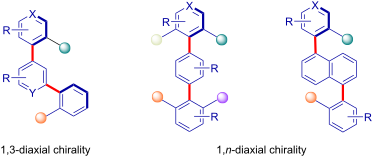
- -containing five-membered rings with iridium complexes and examined the influence of different alcohol protecting groups on the monoalkyne substrates. The reaction proceeded in generally high yields (>70%) with satisfactory enantioselectivity. Building on this work, Shibata and Tsuchikama developed a one-pot


Cone p-aminocalix[4]arenes enriched with ‘clickable’ alkyne or azide functionalities
Beilstein J. Org. Chem. 2026, 22, 399–415, doi:10.3762/bjoc.22.28
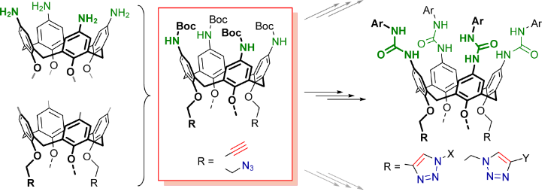
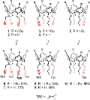
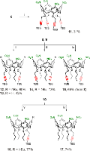
- derived from propargylated and 2-azidoethylated precursors possess drastically different complexation abilities towards transition-metal cations [81][82][83][84] including the formation of unique inherently dinuclear iridium(III) complexes with cone calix[4]arenes having pairs of 2-(4-aryltriazol-1-yl




Design, synthesis and biological evaluation of 2,5-diaryloxazolo[4,5-d]pyrimidin-7-ylamines as selective cytotoxic agents against HeLa cells
Beilstein J. Org. Chem. 2026, 22, 390–398, doi:10.3762/bjoc.22.27

- regulation of the cell life cycle [8]. On the contrary, oxazolo[4,5-d]pyrimidines represent a poorly studied class of compounds because of limited access to this scaffold [9]. An in silico study showed that both isomeric forms of oxazolopyrimidines can form stable complexes due to hydrogen bonds between a
- lone electron pair at the nitrogen atoms and protonated amino acids of proteins. However, oxazolo[5,4-d]pyrimidine forms more stable complexes, which is in good agreement with in vitro studies [10]. We have already shown the anticancer potential of 7-N-derivatives of 2,5-diaryl[1,3]oxazolo[4,5-d


Recent advances in the cleavage of non-activated amides
Beilstein J. Org. Chem. 2026, 22, 352–369, doi:10.3762/bjoc.22.23
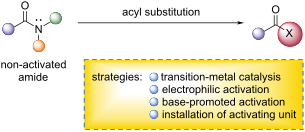
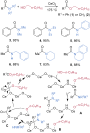
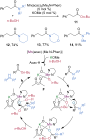
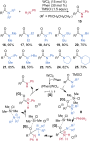
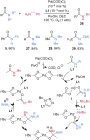
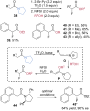
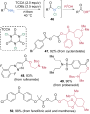
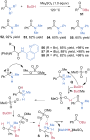
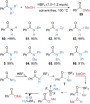
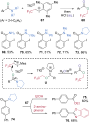
- % yield. Mechanistically, WCl6 coordinates with Phen to generate the active tungsten species [G]. In cooperation with TMSCl as a Lewis acid, the catalyst activates the amide toward nucleophilic attack by forming an electron-deficient intermediate H that readily undergoes substitution. Palladium complexes
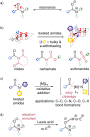
- dianion activates the amide carbonyl, thereby facilitating nucleophilic attack and subsequent transamidation. Boron complexes, among the most commonly used non-metallic Lewis acids, are effective activators for amide C–N bond cleavage, as demonstrated in the esterification developed by Dou et al. (Scheme








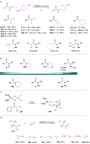


Arene activation via π-bond localization: concepts and opportunities
Beilstein J. Org. Chem. 2026, 22, 257–273, doi:10.3762/bjoc.22.19
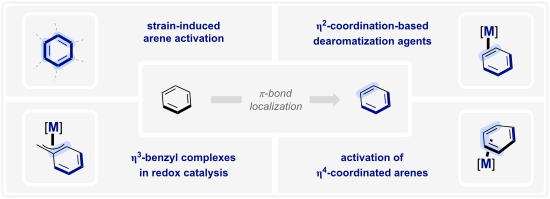
- highlighted. Collectively, these concepts create a roadmap for the development of new strategies that harness π-bond localization to expand the synthetic utility of aromatic compounds. Keywords: arene activation; arene functionalization; dearomatization; metal–arene π-complexes; strained molecules
- following sections therefore focus on the selective disruption of aromaticity through the formation of transition metal–arene π-complexes. Transient and reversible coordination of transition metals to aromatic π-systems is a key feature of many catalytic transformations, with the oxidative addition of
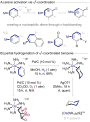
- palladium to aryl halides serving as a prominent example [41]. In addition to such fleeting intermediates, recent decades have seen the emergence of numerous well-defined metal–arene complexes, sufficiently stable to enable systematic exploration of their rich and versatile organic chemistry. η2




Design and synthesis of an axially chiral platinum(II) complex and its CPL properties in PMMA matrix
Beilstein J. Org. Chem. 2026, 22, 143–150, doi:10.3762/bjoc.22.7
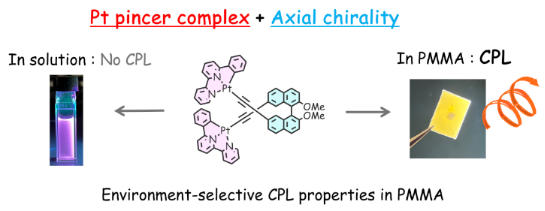
- Luminescent materials based on metal complexes have been extensively studied due to their high phosphorescence efficiency, making them promising candidates for applications in organic light-emitting diodes (OLEDs) [1][2][3][4][5], sensors [6][7][8][9], and bioimaging materials [10][11]. Among these materials
- , pincer-type platinum(II) complexes have attracted particular attention, owing to the structural robustness imparted by tridentate chelating ligands and their excellent luminescent properties [12][13][14][15][16][17]. These complexes have been widely investigated, not only for practical application but
- also from the perspective of fundamental chemistry. In recent years, the design and synthesis of luminescent pincer-type platinum(II) metal complexes incorporating chirality, as well as the study of their physicochemical properties, have gained significant interest [18][19][20][21][22]. Such efforts





