


Search results
Search for "dipolarophiles" in Full Text gives 71 result(s) in Beilstein Journal of Organic Chemistry.
Synthesis of novel 1,2,4-oxadiazole-isoxazoline hybrids and their in silico potential with adenosine receptors
Beilstein J. Org. Chem. 2026, 22, 1033–1047, doi:10.3762/bjoc.22.82
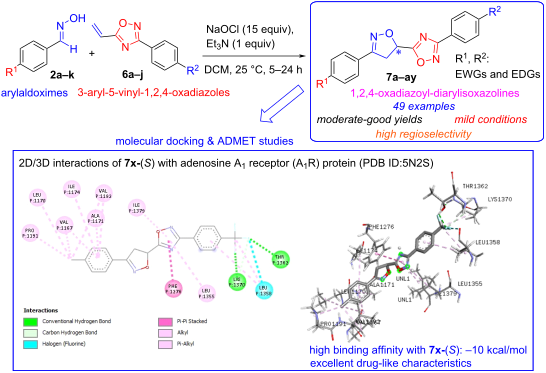
- dipolarophiles [54][55][56][57]. Despite the proven efficacy of both heterocyclic rings as pharmacophores, reports focusing on the synthesis of 1,2,4-oxadiazole-isoxazoline hybrids remain scarce. Previous studies have suggested that such hybrid structures may exhibit phosphodiesterase IV inhibitory activity or
- via Nitrile Oxide Cycloadditions” (Bolu Abant İzzet Baysal University, 2022), and Mohammed K. S. Dalo, “1,3-Dipolar Cycloadditions of Electron-Rich Nitrile Oxides with Some Vinylic Dipolarophiles” (Bolu Abant İzzet Baysal University, 2022). Funding Bolu Abant İzzet Baysal University, Directorate of


Synthesis of heterocycles based on azomethine ylides from α-amino acids (or amines) and carbonyl compounds
Beilstein J. Org. Chem. 2026, 22, 705–741, doi:10.3762/bjoc.22.55
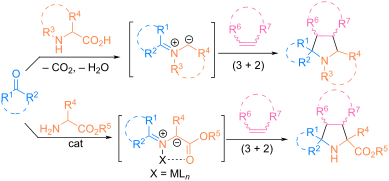
- , cyclic and acyclic unsaturated substrates, and fullerenes are useful dipolarophiles. This reaction method allows for the single-step creation of a wide variety of complex polyheterocyclic systems that may be useful for practical applications. Keywords: alkenes; α-amino acids; azomethine ylides; carbonyl
- compounds; catalysis; (3 + 2) cycloaddition; decarboxylation; dipolarophiles; iminoesters; polycyclic compounds; spirocyclic compounds; stereoselectivity; Introduction The 1,3-dipolar cycloaddition is one of the most popular pericyclic reactions in organic synthesis, in which a dipole molecule interacts
- -pyrrolizidine derivatives obtained from isatin, various α-amino acids and dipolarophiles is considered. This structural fragment plays an important role in biological processes, exhibiting antitumor activity, anti-HIV activity, anti-inflammatory, and, in some cases, analgesic effects. A 2016 review addressed


Spirobarbiturates with a pyrrolizidine moiety: synthesis, structure and biological evaluation
Beilstein J. Org. Chem. 2026, 22, 274–288, doi:10.3762/bjoc.22.20
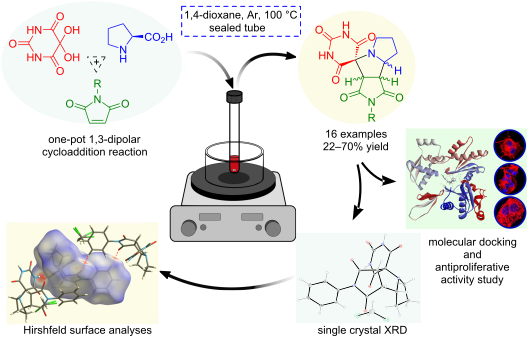
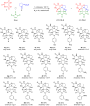
- ylide, which is generated in situ by condensation of alloxan and ʟ-proline, can react with maleimides to give spirobarbiturate-pyrrolo[3,4-a]pyrrolizidine-1,3-diones in moderate to good yields. We have demonstrated the possibility of using a wide range of N-substituted maleimides as dipolarophiles. All
- -carboxylic acid, thiazolidinecarboxylic acid, and pipecolic acid, in combination with alloxan (1) and maleimides 3, did not lead to the formation of the corresponding cycloadducts. In this work, we also used other dipolarophiles. Under the standard reaction conditions (1,4-dioxane, heating with alloxan and ʟ




The high potential of methyl laurate as a recyclable competitor to conventional toxic solvents in [3 + 2] cycloaddition reactions
Beilstein J. Org. Chem. 2025, 21, 2389–2415, doi:10.3762/bjoc.21.184
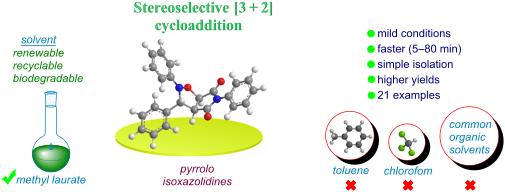
- sugars (Figure 1) [42][43][44][45][46][47][48]. More specifically cycloaddition reactions of nitrones (1,3-dipoles) with N-aryl-substituted maleimides (electron-poor dipolarophiles) are a highly popular and versatile method for the formation of regio- and stereoselective pyrrolo-isoxazolidine-fused ring
- chloroform, for the [3 + 2] cycloaddition reactions between nitrones and diverse dipolarophiles has not been predicated on any criteria other than their inertness [60]. Conversely, certain studies have reported that the effects of organic solvents in such reactions are negligible, and that an increase in
- structure, results in elevated cis or trans diastereoselectivity [85][111]. Furthermore, the [3 + 2] cycloaddition reactions of nitrones with electron-poor dipolarophiles, such as N-phenylmaleimide, is controlled by the HOMO FMO of the nitrone. Consequently, it can be deduced that HOMOnitrone–LUMON






Preparation of spirocyclic oxindoles by cyclisation of an oxime to a nitrone and dipolar cycloaddition
Beilstein J. Org. Chem. 2025, 21, 1890–1896, doi:10.3762/bjoc.21.146
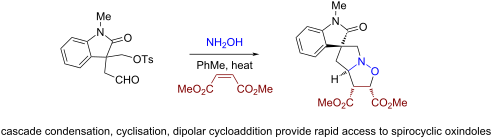
- leaving group and activated, electron-poor dipolarophiles has been reported [31][32]. Treatment of aldehyde 4 with hydroxylamine in toluene at 60 °C for 1–3 h resulted in loss of the aldehyde as judged by 1H NMR spectroscopy of the crude mixture. When this was carried out in the presence of N
- the formation of two new rings and a complex polycyclic product from relatively simple starting materials. To test the scope of the chemistry, we screened several other dipolarophiles for this transformation. As expected, the related N-phenylmaleimide resulted in the formation of the analogous N
- approach. This generates the desired spirooxindole connected to a bicyclic amine, with functionality related to the natural products. It is likely that unactivated dipolarophiles could be successful in related intramolecular cycloadditions [18]. Hence this approach could allow access the spirooxindole and


Transition-state aromaticity and its relationship with reactivity in pericyclic reactions
Beilstein J. Org. Chem. 2025, 21, 1613–1626, doi:10.3762/bjoc.21.125

- chemistry [91][92][93]. Among the number of dipolarophiles compatible with this [3 + 2]-cycloaddition, phosphaalkynes [94][95][96] and arsaalkynes [97] have been recently used because they allow easy access to novel heterocycles. For instance, when using organic azides as dipoles, the transformation leads
- to the preparation of triazaphospholes and triazaarsoles, π-conjugated species with potential applications in materials science due to their luminescent properties [98]. However, these heavier alkyne analogues are typically kinetically unstable, which limits their use as dipolarophiles. Despite that


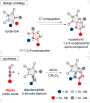
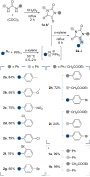
Facile synthesis of hydantoin/1,2,4-oxadiazoline spiro-compounds via 1,3-dipolar cycloaddition of nitrile oxides to 5-iminohydantoins
Beilstein J. Org. Chem. 2025, 21, 1552–1560, doi:10.3762/bjoc.21.118

- of double and triple bonds, most of the described reactions are related to dipolarophiles with C=C, C≡C or C=S bonds [7]. However, the [3 + 2]-cycloaddition of nitrile oxides to exocyclic C=N bonds, is a much less explored area. There are few known reactions of these dipoles with imino derivatives of
- '-disubstituted ureas were initially reacted with oxalyl chloride to form imidazolidinetriones 1a,b, which were then added to an iminophosphorane formed in situ from an aryl azide and triphenylphosphine. As a result of the aza-Wittig reaction, 5-iminohydantoins 2a–i were then used as dipolarophiles in the 32CA
- processes. It is worth noting that, in some cases, due to the high reactivity of nitrile oxides towards certain types of dipolarophiles, such as monosubstituted or activated by electron-acceptor groups olefins [31], no additional attention to this is required. However, when introducing obstructed



Ambident reactivity of enolizable 5-mercapto-1H-tetrazoles in trapping reactions with in situ-generated thiocarbonyl S-methanides derived from sterically crowded cycloaliphatic thioketones
Beilstein J. Org. Chem. 2025, 21, 1508–1519, doi:10.3762/bjoc.21.113
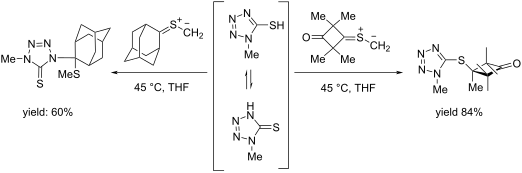
- ]-cycloaddition of respective thiocarbonyl dipolarophiles (preferably non-enolizable thioketones) with diazomethane, was demonstrated as a favorable method for their generation [5][6]. In the past three decades, 1,3-dipoles 1 have extensively been studied as useful building blocks for the preparation of various
- five-membered heterocycles via [3 + 2]-cycloaddition reactions. Depending on the type of the dipolarophile used in these reactions, the target heterocycles may contain only one sulfur atom (cycloadditions with C=C or C≡C dipolarophiles) or more heteroatoms (cycloadditions with C=S, C=O, C=N, N=N, S=O
- , N=S=O, etc. dipolarophiles) [5][6][7][8][9][10] (Scheme 1, upper part). Notably, [3 + 2]-cycloadditions of the sterically crowded thiocarbonyl S-methanide 1b with electron deficient, tetrasubstituted ethylenes activated with CN and CF3 (or CN and CO2Me) groups were encountered as the first examples


Salen–scandium(III) complex-catalyzed asymmetric (3 + 2) annulation of aziridines and aldehydes
Beilstein J. Org. Chem. 2025, 21, 1087–1094, doi:10.3762/bjoc.21.86
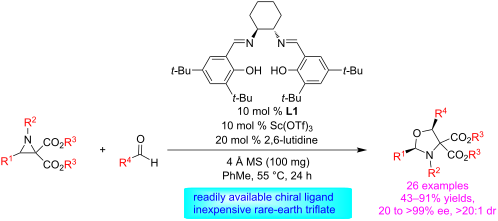
- alcohols and aldehydes [11] and through [2 + 3] cycloaddition of azomethine ylides and carbonyl dipolarophiles [12]. Recently, the [2 + 3] annulation of aldehydes and donor–acceptor dialkyl 2-aryl-1-sulfonylaziridine-2,2-dicarboxylates, which generate azomethine ylides, has been developed for the synthesis



Harnessing the versatility of hydrazones through electrosynthetic oxidative transformations
Beilstein J. Org. Chem. 2024, 20, 1988–2004, doi:10.3762/bjoc.20.175
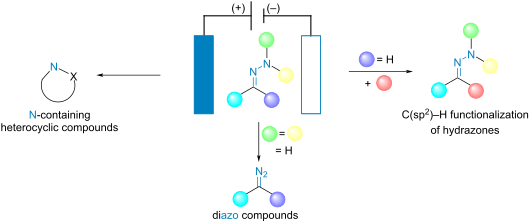
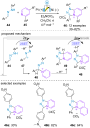
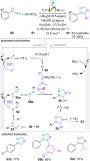
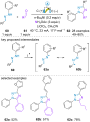
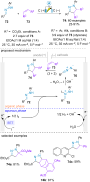
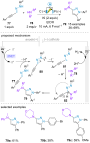
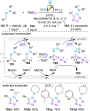
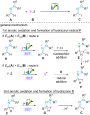
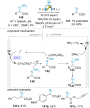
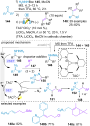
- system (aqueous/organic) was engineered during which the oxidation of the iodide mediator took place in the aqueous place, thereby protecting sensitive dipolarophiles such as styrenes from side reactions (e.g., overoxidation or polymerisation) in the organic phase. Ethyl acetate was employed as organic
- solvent for ethyl glyoxylate phenylhydrazone 72a while methyl tert-butyl ether was preferred for aromatic and aliphatic aldehyde-derived hydrazones 72b. Styrenes, enamines as well as electron poor aliphatic alkenes were all suitable dipolarophiles. From a mechanistic point of view, the authors proposed
- situ cathodic generation of the base was supported by a control experiment in a divided cell, where no conversion was achieved. Final formal (3 + 2)-cycloaddition with the dipolarophiles 73 delivered the pyrazolines 74. It is interesting to note that a complementary (3 + 2)-cycloaddition between








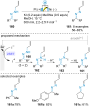
Construction of diazepine-containing spiroindolines via annulation reaction of α-halogenated N-acylhydrazones and isatin-derived MBH carbonates
Beilstein J. Org. Chem. 2023, 19, 1923–1932, doi:10.3762/bjoc.19.143
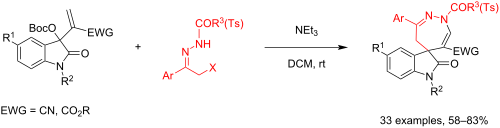
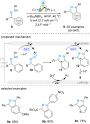
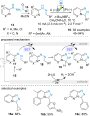
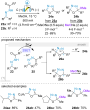
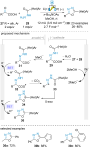
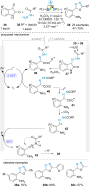
- alternative synthetic methodologies for functionalized 1,2-diazepines has drawn extensive attention [14][15][16][17][18][19][20][21]. One of the most attractive strategies to synthesize the 1,2-diazepine motif represents the [4 + 3] cycloaddition reaction between activated azoalkenes and 1,3-dipolarophiles



Trifluoromethylated hydrazones and acylhydrazones as potent nitrogen-containing fluorinated building blocks
Beilstein J. Org. Chem. 2023, 19, 1741–1754, doi:10.3762/bjoc.19.127
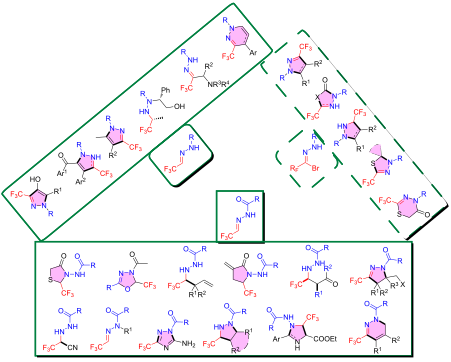
- dipolarophiles in the [3 + 2]-cycladditions (Scheme 19b). Conclusion Fluorine-containing molecules have attracted widespread attention as important components of agrochemicals, pharmaceuticals, and advanced materials. Abundant and fruitful progress in the applications of fluoromethylated hydrazones and


Decarboxylative 1,3-dipolar cycloaddition of amino acids for the synthesis of heterocyclic compounds
Beilstein J. Org. Chem. 2023, 19, 1677–1693, doi:10.3762/bjoc.19.123
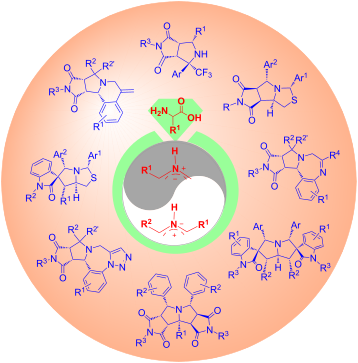
- ][50][51]. However, to the best of our knowledge, there are only few examples on the reactions of N–H-type semi-stabilized AMYs B3 or B4 which were either derived from special carbonyl compounds (such as isatin) [52][53][54][55] or the AMYs were reacted with uncommon alkenes as the 1,3-dipolarophiles




Lewis acid-promoted direct synthesis of isoxazole derivatives
Beilstein J. Org. Chem. 2023, 19, 1562–1567, doi:10.3762/bjoc.19.113

- 11). With the optimal reaction conditions in hand, various alkynes were examined as dipolarophiles (Scheme 2). A range of functional groups were tolerated in this reaction, such as alkyl, methoxy, halo, and heterocycles. It was found that electron-deficient groups in the phenyl ring (3g–i) were more


Selective construction of dispiro[indoline-3,2'-quinoline-3',3''-indoline] and dispiro[indoline-3,2'-pyrrole-3',3''-indoline] via three-component reaction
Beilstein J. Org. Chem. 2023, 19, 1234–1242, doi:10.3762/bjoc.19.91
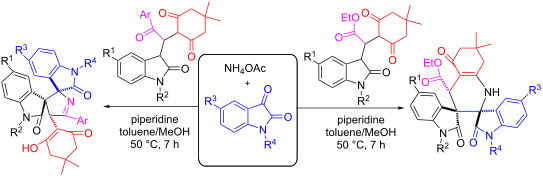
- as Michael acceptors, 1,3-dipolarophiles, 1,4-dienophiles and other multiple substrates. They have been widely employed as key component to finish many multicomponent and domino reactions [26][27][28][29][30][31][32][33][34][35]. Recently, the Michael adduct of 3-methyleneoxindoles with various



Synthesis of bis-spirocyclic derivatives of 3-azabicyclo[3.1.0]hexane via cyclopropene cycloadditions to the stable azomethine ylide derived from Ruhemann's purple
Beilstein J. Org. Chem. 2022, 18, 769–780, doi:10.3762/bjoc.18.77
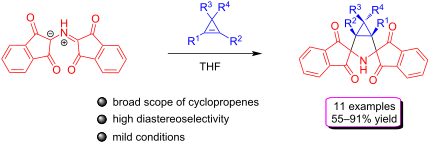
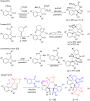
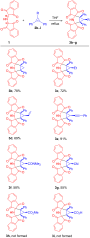
- [15]. In our recent studies, great attention was paid to developing methods for the synthesis of spiro[3-azabicyclo[3.1.0]hexanes] based on 1,3-dipolar cycloaddition reactions involving azomethine ylides and cyclopropene dipolarophiles, and also the in vitro activity of some synthesized compounds has
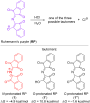
- have turned our attention to a tetrasubstituted azomethine ylide – the N-protonated Ruhemann's purple (PRP). This stable ylide was first utilized as a 1,3-dipole in cycloaddition reactions by Grigg and co-workers [27]. This research group demonstrated that the reactions of PRP with dipolarophiles such
- as N-phenylmaleimide, maleic anhydride, and methyl propiolate resulted in the formation of the corresponding bis-spirocyclic cycloadducts (Scheme 1b). It is clear that PRP has been studied in reactions with a small number of dipolarophiles. Accordingly, it is impossible to fully evaluate the






A straightforward conversion of 1,4-quinones into polycyclic pyrazoles via [3 + 2]-cycloaddition with fluorinated nitrile imines
Beilstein J. Org. Chem. 2021, 17, 1509–1517, doi:10.3762/bjoc.17.108
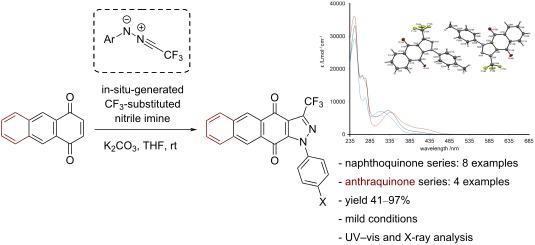
- respective hydrazonoyl bromides 8 and smoothly undergo [3 + 2]-cycloadditions with both electron-rich C=C dipolarophiles [27][28][29] and arynes [30], yielding the corresponding pyrazole derivatives. Unexpectedly, they reacted also with electron-deficient polyfluorinated thioamides to give the desired 1,3,4
- 1,4-naphthoquinone (1a) and 1,4-anthraquinone (1b), which were selected as model dipolarophiles. In addition, an important issue of the work was the examination of the chemoselectivity governing the formation of five-membered rings via competitive cycloaddition of the in-situ-generated 1,3-dipoles
- + 2]-cycloadduct 10b undergoes spontaneous elimination of MeOH, yielding the aromatized product 9d. A similar mechanistic scenario was observed and discussed previously for the reactions of trifluoroacetonitrile imines 7 with enol ethers used as dipolarophiles [27]. An additional experiment deserves a


Microwave-assisted multicomponent reactions in heterocyclic chemistry and mechanistic aspects
Beilstein J. Org. Chem. 2021, 17, 819–865, doi:10.3762/bjoc.17.71
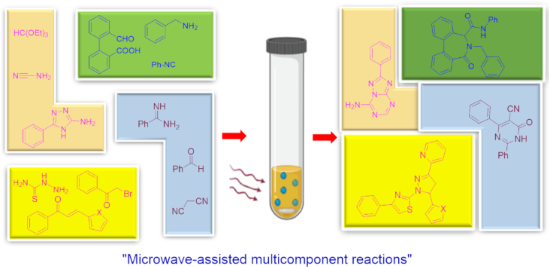
- plausible mechanism shown in Scheme 14 explains the formation of azomethine ylide B by condensation of isatin with amino acid followed by release of a molecule of CO2 via A. The imine B undergoes 1,3-dipolar cycloaddition with the dipolarophiles 39. The cyclization yields the desired product 40 of the three






A sustainable strategy for the straightforward preparation of 2H-azirines and highly functionalized NH-aziridines from vinyl azides using a single solvent flow-batch approach
Beilstein J. Org. Chem. 2021, 17, 203–209, doi:10.3762/bjoc.17.20
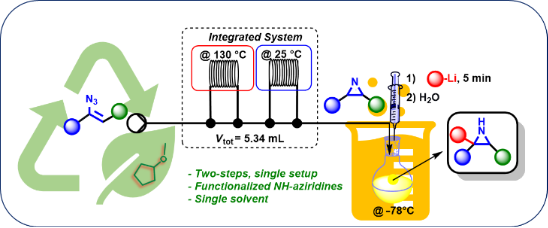
- resulted in safer procedures for the preparation of 2H-azirines, offering valuable alternatives for production purposes. In 2013, Kirschning harnessed the photoinduced electrocyclization of vinyl azides in a microfluidic photoreactor yielding 2H-azirines as precursors of 1,3-dipolarophiles (Scheme 1a) [27


Selective and reversible 1,3-dipolar cycloaddition of 6-aryl-1,5-diazabicyclo[3.1.0]hexanes with 1,3-diphenylprop-2-en-1-ones under microwave irradiation
Beilstein J. Org. Chem. 2020, 16, 2679–2686, doi:10.3762/bjoc.16.218
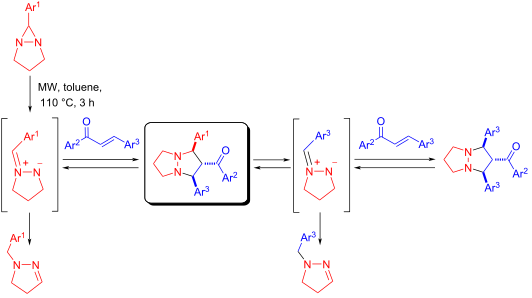
- studied in detail only with the very active dipolarophiles: N-arylmaleimides, dialkyl fumarates, dicyanoethylene, diphenylcyclopropenone, aryl isocyanates, and aryl isothiocyanates [18][19][20][21][22]. Another approach to the generation of unstable AMIs from 6-aryl-1,5-diazabicyclo[3.1.0]hexanes is based
- assumption, we decided to study alternative methods for the generation of azomethine imines from adducts 3. For this purpose, pyrazolopyrazole 3g was heated in toluene at 110 °C for 3 hours under microwave irradiation in the presence of dipolarophiles such as maleimide 5, isocyanate 7, and isothiocyanate 9
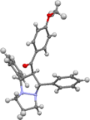
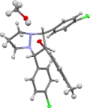
- [1,2-a]pyrazoles (Michael-type adducts). For the first time it was shown, that under heating the cycloadducts can undergo cycloreversion with the generation of new azomethine imines, which can be trapped with suitable dipolarophiles. Single-crystal X-ray structure of compound 3e. Single-crystal X-ray




Ferrocenyl-substituted tetrahydrothiophenes via formal [3 + 2]-cycloaddition reactions of ferrocenyl thioketones with donor–acceptor cyclopropanes
Beilstein J. Org. Chem. 2020, 16, 1288–1295, doi:10.3762/bjoc.16.109

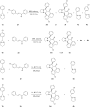
- -methanides (thiocarbonyl ylides) with electron-deficient ethylenic dipolarophiles. This method was extensively developed by Huisgen and co-workers in the 1980s [3][4][5]. In the course of these studies, a non-orthodox stepwise mechanism of the 1,3-dipolar cycloaddition was established by experiments


The use of isoxazoline and isoxazole scaffolding in the design of novel thiourea and amide liquid-crystalline compounds
Beilstein J. Org. Chem. 2020, 16, 175–184, doi:10.3762/bjoc.16.20
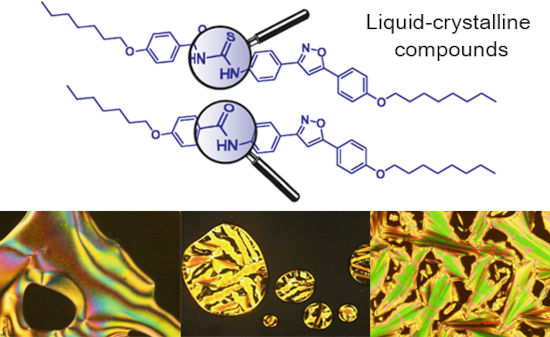
- , 8, 9, 12 and 13 were then prepared by [3 + 2]-1,3-dipolar cycloaddition of nitrile oxide (ArCNO) formed in situ from oximes and a number of alkenes as dipolarophiles, to yield the precursors of the cycloadducts isoxazolines 2, 7 and 11 regioselectively. The cycloadducts were subjected to SnCl2




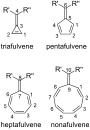
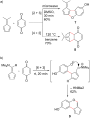
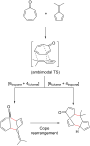
An overview of the cycloaddition chemistry of fulvenes and emerging applications
Beilstein J. Org. Chem. 2019, 15, 2113–2132, doi:10.3762/bjoc.15.209

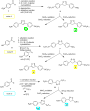
- fulvene to function as a 6π component in reactions with electron-deficient dienes (Scheme 5b) and fulvenes acting as dipolarophiles have been reported for enantioselective [6 + 3] and [3 + 2] cycloadditions [83][84][105]. In general, reactions with electron-rich alkenes will take place preferentially at





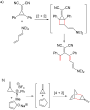
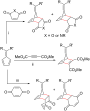


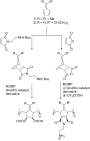
Introduction of an isoxazoline unit to the β-position of porphyrin via regioselective 1,3-dipolar cycloaddition reaction
Beilstein J. Org. Chem. 2019, 15, 1434–1440, doi:10.3762/bjoc.15.143
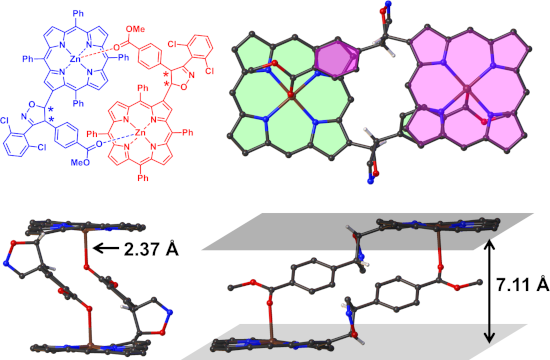
- [15][16][17][18][19][20][21][22][23][24]. Among them, the 1,3-dipolar cycloaddition reaction [25] is an efficient method to fuse five-membered rings on the periphery of the porphyrin framework. Because the periphery double bonds of the porphyrin macrocycle are nice dipolarophiles, and can trap 1,3
- dipoles not only react with various dipolarophiles but also undergo spontaneous dimerization to form furoxans. To avoid or minimize this drawback, the substitutents (e.g., Cl or Me) around the CNO group were introduced to stabilize the nitrile oxides even at room temperature [46][47]. Here, the 2,6


Synthesis and selected transformations of 2-unsubstituted 1-(adamantyloxy)imidazole 3-oxides: straightforward access to non-symmetric 1,3-dialkoxyimidazolium salts
Beilstein J. Org. Chem. 2019, 15, 497–505, doi:10.3762/bjoc.15.43
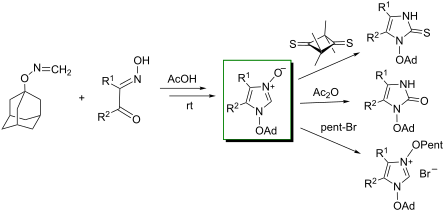
- reactivity analogous to aldonitrones, which enables their conversion via [3 + 2]-cycloadditions with dipolarophiles such as activated ethylenes [8][9], activated acetylenes [10][11] or isocyanates [11][12]. The initially formed [3 + 2]-cycloadducts undergo spontaneous secondary conversions leading to re





