


Search results
Search for "β-ketoester" in Full Text gives 55 result(s) in Beilstein Journal of Organic Chemistry.
Solvent-free copper-catalyzed click chemistry for the synthesis of N-heterocyclic hybrids based on quinoline and 1,2,3-triazole
Beilstein J. Org. Chem. 2017, 13, 2352–2363, doi:10.3762/bjoc.13.232
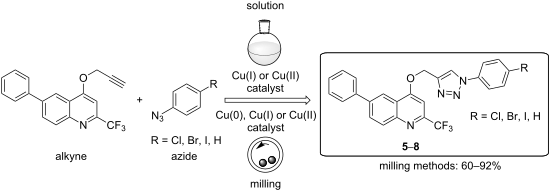
- containing a trifluoromethyl group at C-2 and a p-halogen-substituted and non-substituted phenyl-1,2,3-triazole moieties. The synthesis of 2-(trifluoromethyl)-6-phenylquinolone was achieved by Conrad–Limpach reaction of a primary aromatic amine with a β-ketoester [37][38]. Namely, thermal condensation of 4



One-pot multistep mechanochemical synthesis of fluorinated pyrazolones
Beilstein J. Org. Chem. 2017, 13, 1950–1956, doi:10.3762/bjoc.13.189
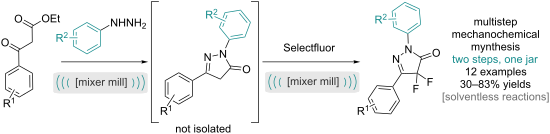
- electron-withdrawing trifluoromethyl substituent was an exception to this (7) [31]. For this case, crude 19F NMR after the first step shows a 41% conversion, suggesting that the pyrazolone formation is the limiting factor in this example. An alkyl β-ketoester (ethyl acetoacetate) was also used, affording
- methyl substituted difluoropyrazolone 12 in modest yield. Finally, an α-substituted β-ketoester was successfully converted to the pyrazolone before monofluorination using one equivalent of Selectfluor to prepare pyrazolone 13, also in moderate yield. In general the optimised approach seems to apply to a


Iodoarene-catalyzed cyclizations of N-propargylamides and β-amidoketones: synthesis of 2-oxazolines
Beilstein J. Org. Chem. 2017, 13, 1823–1827, doi:10.3762/bjoc.13.177

- 2-oxazoline formation through the iodoarene-catalyzed cyclization of β-amidoketones 5. These are readily prepared by alkylation of the corresponding β-ketoester followed by decarboxylation (Scheme 4) [40][41]. The cyclization of β-amidoketones 5 was successful with the same conditions as






Synthesis of structurally diverse 3,4-dihydropyrimidin-2(1H)-ones via sequential Biginelli and Passerini reactions
Beilstein J. Org. Chem. 2017, 13, 54–62, doi:10.3762/bjoc.13.7
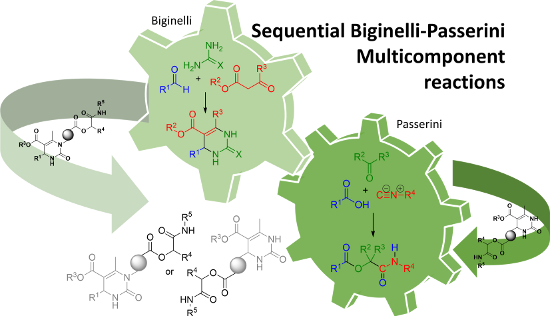
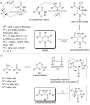
- 3 can then react with the nucleophilic α-carbon atom of β-ketoester 4 to an open chain ureide 5. Subsequent ring closure results in a hexahydropyrimidine intermediate 6. In the last step, the irreversible elimination of water forms the thermodynamically favored DHMP product 7. This accepted
- mechanism was supported by spectroscopic data. However, alternative mechanisms are discussed in the literature [17][18]. In the so called enamine route, urea 2 and the β-ketoester 4 form an enamine in the first reaction step. Subsequently, the enamine reacts with the aldehyde 1 [19]. A third mechanism
- discussed, is the Knoevenagel type reaction between the aldehyde 1 and β-ketoester 4 followed by a subsequent reaction with urea 2 [20]. The Passerini reaction The Passerini reaction was discovered in 1921 by Mario Passerini and is a three-component reaction between a carboxylic acid 8, a carbonyl compound



Multicomponent reactions: A simple and efficient route to heterocyclic phosphonates
Beilstein J. Org. Chem. 2016, 12, 1269–1301, doi:10.3762/bjoc.12.121
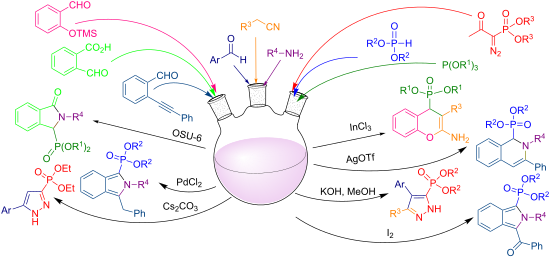
- 2015. Review 1 Biginelli condensation The classical Biginelli condensation involves the reaction of an aldehyde 1 with urea (2) and a β-ketoester 3 under acidic conditions in refluxing ethanol to yield 3,4-dihydropyrimidin-2-one derivatives 4 (Scheme 1) [24]. Although, a large number of CH-acidic


Catalytic asymmetric formal synthesis of beraprost
Beilstein J. Org. Chem. 2015, 11, 2654–2660, doi:10.3762/bjoc.11.285
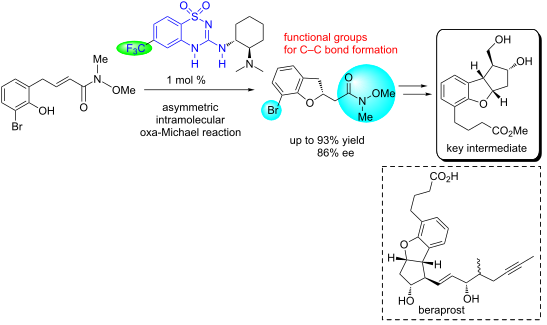
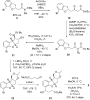
- yield (Table 1, entry 8). With both the AIOM adducts 5 and 6 in hand, we next investigated the construction of the tricyclic core (Scheme 3 and Scheme 4). The cross-Claisen condensation of 6 with lithium tert-butyl acetate afforded the corresponding β-ketoester, which was then treated with 2-azido-1,3



A simple and efficient method for the preparation of 5-hydroxy-3-acyltetramic acids
Beilstein J. Org. Chem. 2015, 11, 323–327, doi:10.3762/bjoc.11.37

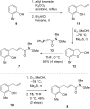
- ] variant of Lacey–Dieckmann [8] condensation (Scheme 1) [9][10]. Reaction of either β-ketoester 4 or Meldrum’s acid derivative 9 with suitably protected glycine esters (5,6,10), followed by base-induced condensation furnished the desired tetramic acid model compounds as crystalline solids after treatment


Formal total syntheses of classic natural product target molecules via palladium-catalyzed enantioselective alkylation
Beilstein J. Org. Chem. 2014, 10, 2501–2512, doi:10.3762/bjoc.10.261

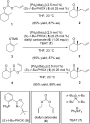
- (±)-32 in racemic form. We anticipated the interception of (−)-32 [57] in Danishefsky’s route using enantioselective palladium-catalyzed allylic alkylation to set the quaternary stereocenter. The formal total synthesis of (−)-dysidiolide (29) commenced with known allyl β-ketoester 4 (Scheme 7), which was
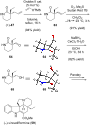
- -cyclohexanedione (40), which was converted to isobutyl vinylogous ether 41 under acid promotion (Scheme 9) [65]. The β-ketoester 42 was prepared using a two-step sequence of acylation and alkylation, then treated with the (S)-t-Bu-PHOX catalyst system (with [Pd(dmdba)2]) to generate (+)-43 in 86% ee. The challenge




Application of cyclic phosphonamide reagents in the total synthesis of natural products and biologically active molecules
Beilstein J. Org. Chem. 2014, 10, 1848–1877, doi:10.3762/bjoc.10.195
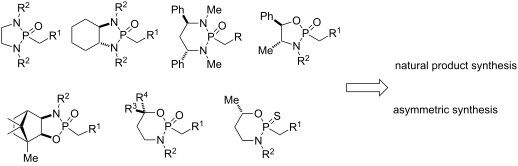
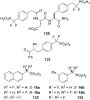
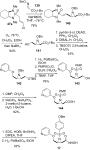
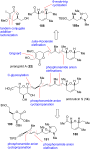
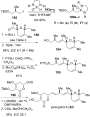
- to allyl diethylphosphonoformate (114) afforded β-ketoester 115, which in turn was condensed with commercially available azetidinone 116 to give 117 as a mixture of diastereomers. Protection of the nitrogen with TBS triflate followed by deprotection of the allyl carboxylate with formic acid under












Synthesis and bioactivity of analogues of the marine antibiotic tropodithietic acid
Beilstein J. Org. Chem. 2014, 10, 1796–1801, doi:10.3762/bjoc.10.188
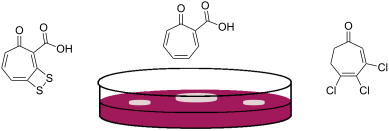
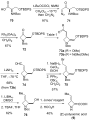
- . Oxidative cleavage of the glycol with NaIO4 resulted in a β-ketoester aldehyde that upon treatment with silica gel underwent an intramolecular aldol condensation to a mixture of 10a and 11a that were separable by column chromatography. Oxidation with DDQ gave tert-butyl tropone-2-carboxylate (12a) that was
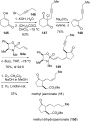
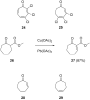
- cycloheptanone derivatives with rigorously simplified structures as compared to TDA were included in this study. The β-ketoester 27 containing a Michael acceptor was synthesised from methyl cycloheptanone-2-carboxylate (26) by oxidation with Cu(OAc)2 and Pb(OAc)2 according to a known procedure [16]. The compound


Multicomponent reactions in nucleoside chemistry
Beilstein J. Org. Chem. 2014, 10, 1706–1732, doi:10.3762/bjoc.10.179
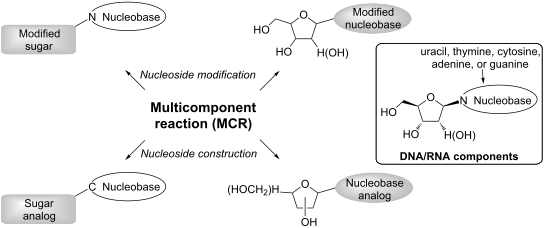
- (77a), the aldehyde function (77b), or the β-ketoester function (77c) (Scheme 29) [101][102]. In contrast to the N-1-substituted homo-C-nucleosides 78, the C-4 or C-6-substituted C-nucleosides (i.e., compounds 79 or 80, respectively) were obtained with the diastereoisomeric excess varied from 33% to 50
- of the sugar aldehyde 77b or the sugar β-ketoester 77c, respectively. The debenzylated forms of C-nucleosides 78, 79 and 80 (as single diastereoisomers) were evaluated in vitro and in vivo as antimitotic agents [41]. They appeared to be less active than the reference (4S)-monastrol. Pyranose-derived


Recent applications of the divinylcyclopropane–cycloheptadiene rearrangement in organic synthesis
Beilstein J. Org. Chem. 2014, 10, 163–193, doi:10.3762/bjoc.10.14
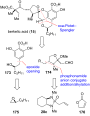
- alcohol to yield aldehyde 34. Addition of double deprotonated methyl acetoacetate gave β-ketoester 35. Diazotransfer followed by double protection resulted in the formation of compound 36. Rh-catalyzed intramolecular cyclopropanation of this compound gave bicycle 37. Selective removal of the secondary




Efficient synthesis of dihydropyrimidinones via a three-component Biginelli-type reaction of urea, alkylaldehyde and arylaldehyde
Beilstein J. Org. Chem. 2013, 9, 2846–2851, doi:10.3762/bjoc.9.320
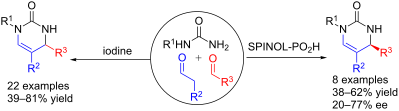
- Biginelli [3][4]. Among them, the Biginelli multicomponent reaction, involving a multicomponent condensation of aldehyde, β-ketoester, and urea, provides an easy access to the preparation of DHPMs, because multicomponent reactions (MCRs) are considered with high facileness, efficiency and economy in organic


The chemistry of isoindole natural products
Beilstein J. Org. Chem. 2013, 9, 2048–2078, doi:10.3762/bjoc.9.243
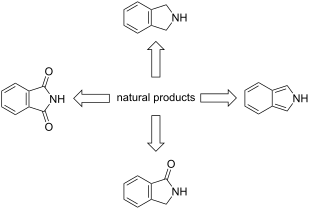
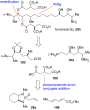
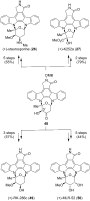
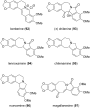
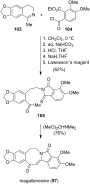
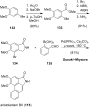
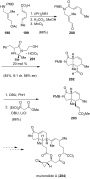
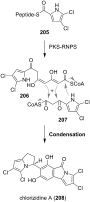
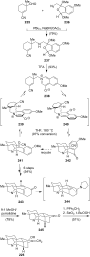
- Rh(II)-catalyzed C–H and OH insertion reactions (Scheme 4). The preparation of both enantiomeric furanose building blocks commenced with the Rh2(OAc)4-catalyzed OH insertion of 39, respectively 40 into the α-diazo-β-ketoester 40. A tandem [3,3]/[1,2]-rearrangement cascade, followed by reductive
















Asymmetric allylic alkylation of Morita–Baylis–Hillman carbonates with α-fluoro-β-keto esters
Beilstein J. Org. Chem. 2013, 9, 1853–1857, doi:10.3762/bjoc.9.216
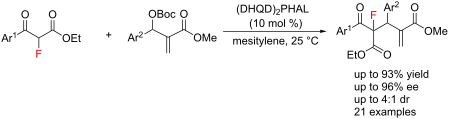
- compounds with chiral quaternary carbon centres containing a fluorine atom. Results and Discussion In the preliminary experiments, we investigated the reaction of α-fluoro-β-ketoester 1a with MBH carbonate 2a as the model substrate, in the presence of several commercially available Cinchona alkaloids as
- of the allylic alkylation with respect to various MBH carbonates 2 and α-fluoro-β-ketoester 1a was investigated (Table 2, entries 7–20). The desired allylic alkylation adducts 3ab–o were achieved in moderate to good yields with good to excellent enantioselectivities and moderate
- centres containing a fluorine atom, were successfully prepared in 50–93% yields with 84–96% ee and a dr of 3:1 to 4:1. The absolute configurations of adducts still have to be determined and will be reported in due course. Experimental Representative procedure for the synthesis of 3aa: α-Fluoro-β-ketoester

A reductive coupling strategy towards ripostatin A
Beilstein J. Org. Chem. 2013, 9, 1533–1550, doi:10.3762/bjoc.9.175
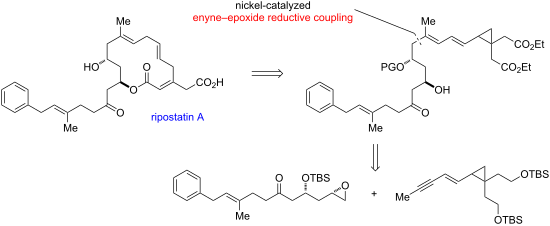
- recognized that reaction of the enolate of ester 45, a compound previously synthesized in just two steps, and subsequent oxidation could give the β-ketoester 61. Decarboxylation of this compound would provide rapid access to the key iodocyclization substrate 55. Aldehyde 62 was prepared by reduction of the
- thiazolidinethione 60 with DIBAL-H (Scheme 15). Treatment of the ester with LDA, followed by trapping with the aldehyde, afforded the aldol adduct as a mixture of up to four possible diastereomers. This was then oxidized under Ley’s conditions [62] to the β-ketoester 61, itself a mixture of two diastereomers
- analogous procedure for aldol reaction and oxidation the TMSE β-ketoester was obtained (Scheme 17). Treatment with an excess of TBAF in THF at room temperature overnight resulted in formation of the β-hydroxyketone 63. Although the yield for this transformation remained moderate, it was higher than that


Mechanistic studies on the CAN-mediated intramolecular cyclization of δ-aryl-β-dicarbonyl compounds
Beilstein J. Org. Chem. 2013, 9, 1472–1479, doi:10.3762/bjoc.9.167
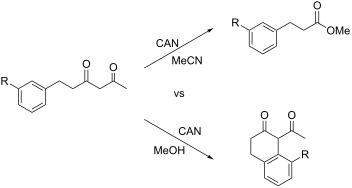
- products in moderate to good yields. Additionally, cyclization of the β-ketoester 1b proceeded efficiently, generating 2b in an 85% yield. Previous work by Rickards and co-workers on a related system reported strong electronic effects when electron-donating substituents were incorporated onto the δ-aryl


Synthesis of the tetracyclic core of Illicium sesquiterpenes using an organocatalyzed asymmetric Robinson annulation
Beilstein J. Org. Chem. 2013, 9, 1135–1140, doi:10.3762/bjoc.9.126
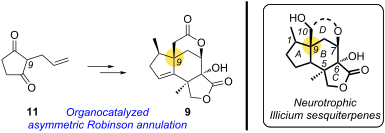
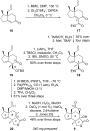
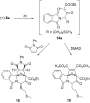
- under Meerwein’s conditions to afford β-ketoester 17. Treatment of 17 with TMSOTf/Et3N followed by enolate alkylation [82] under TBAF/MeI conditions afforded the desired C-5 quaternary center of 18 as a single isomer (35% over four steps). Global reduction of 18 with lithium aluminium hydride produced


Mechanochemistry assisted asymmetric organocatalysis: A sustainable approach
Beilstein J. Org. Chem. 2012, 8, 2132–2141, doi:10.3762/bjoc.8.240
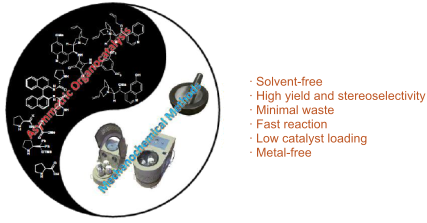
- catalyst activates and orients the β-ketoester. Morita–Baylis–Hillman (MBH) reaction The Morita–Baylis–Hillman (MBH) reaction provides a very useful and interesting method for the synthesis of β-hydroxycarbonyl compounds with an α-alkylidene group [49][50][51][52][53]. Mechanochemical methods of neat
- of the solvent-free organocatalytic pestle and mortar grinding methodology for the enantioselective amination of β-ketoester 13a with di-isopropylazodicarboxylate (25) (Scheme 12) [48]. Using 5 mol % of X the chiral adduct 26 bearing an amino group at a quaternary stereocentre was obtained in 97
- . Enantioselective amination of β-ketoester by using pestle and mortar. Acknowledgements Our research work was supported by the research project sanctioned to S. S. C. by the Department of Science and Technology (DST) India [SR/S1/OC 35/2011]. Financial support from UGC, India, under CAS-I is gratefully


Recyclable fluorous cinchona alkaloid ester as a chiral promoter for asymmetric fluorination of β-ketoesters
Beilstein J. Org. Chem. 2012, 8, 1233–1240, doi:10.3762/bjoc.8.138
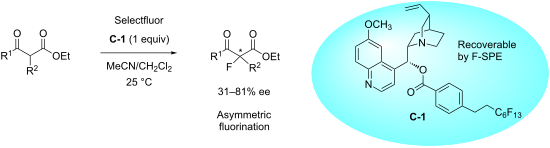
- the reaction mixture by simple fluorous solid-phase extraction (F-SPE) and used for the next round of reaction without further purification. Keywords: asymmetric fluorination; β-ketoester; fluorous cinchona ester; organocatalysis; recyclable chiral promoter; Introduction Fluorinated organic
- hand, we explored the fluorination reaction using ethyl 2-methyl-3-oxo-3-phenylpropanoate (1a) as a model compound. Nonfluorous quinine esters, such as C-2 and C-3, cinchona alkaloids C-4 and C-5, and fluorous pyrrolidine ester C-6, were also evaluated (Figure 2). The results of the fluorination of β
- -ketoester 1a with Selectfluor and different promoters are listed in Table 1. It was found that using MeCN as a solvent with 1 equiv of C-1 gave fluorinated product 2a in 49% yield and 65% ee (Table 1, entry 1). Compared to other promoters (Table 1, entries 2–5), C-1 gave fluorinated products in a slightly


Intramolecular carbenoid ylide forming reactions of 2-diazo-3-keto-4-phthalimidocarboxylic esters derived from methionine and cysteine
Beilstein J. Org. Chem. 2012, 8, 433–440, doi:10.3762/bjoc.8.49
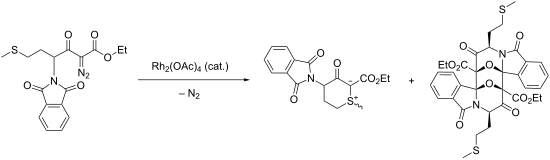
- trap HCl) with the acid chloride of 6a. Although the yield was modest (28%), it was still better and gave fewer byproducts than the β-ketoester route. The phthaloylation of 5a–c was achieved with phthalic anhydride in the presence of a catalytic amount of triethylamine to lower the reaction temperature



Development of the titanium–TADDOLate-catalyzed asymmetric fluorination of β-ketoesters
Beilstein J. Org. Chem. 2011, 7, 1421–1435, doi:10.3762/bjoc.7.166

- of a β-ketoester substructure (Figure 1c) [16]. Fluorinated agrochemicals and drugs are now produced industrially on a large scale by a range of methods, including reactions with notoriously reactive fluorine gas in the production of the anticancer drug fluorouracil (Figure 1d) [17]. However, many
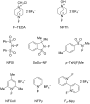
- reactions were developed, before Differding and Lang found the first stoichiometric asymmetric fluorination of β-ketoester enolates with a chiral N–F (N-fluoroamine) reagent in 1988 [21]. Later work by Davis [22][23], Takeuchi [24] and their respective coworkers extended this chemistry, while Haufe and
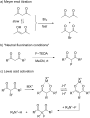
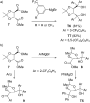
- for α-methyl-β-ketoester 4, which was fluorinated in high yield with the aid of TiCl4 as a catalyst (Scheme 4a). With the same catalyst, β-ketoester 5 suffered partial cleavage of the ester group, but the milder Lewis acid CpTiCl3 induced a clean fluorination with high selectivity towards






PEG-embedded KBr3: A recyclable catalyst for multicomponent coupling reaction for the efficient synthesis of functionalized piperidines
Beilstein J. Org. Chem. 2011, 7, 1334–1341, doi:10.3762/bjoc.7.157

- ethanol, which could be the real catalyst for the present transformation. The probable mechanistic pathway is shown in Scheme 3, which is in analogy to the established mechanism as reported in the literature [30][31]. According to the proposed pathway, aniline reacts with β-ketoester and aldehyde in the


An overview of the key routes to the best selling 5-membered ring heterocyclic pharmaceuticals
Beilstein J. Org. Chem. 2011, 7, 442–495, doi:10.3762/bjoc.7.57
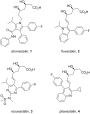
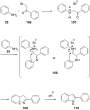
- indole synthesis a hydrazine, which is most commonly derived from the corresponding diazonium salt, is reacted with a suitable carbonyl compound. Alternatively, the Japp–Klingemann reaction can be used to directly couple the diazonium salt with a β-ketoester to obtain a hydrazone which can then undergo







Oxidative allylic rearrangement of cycloalkenols: Formal total synthesis of enantiomerically pure trisporic acid B
Beilstein J. Org. Chem. 2011, 7, 421–425, doi:10.3762/bjoc.7.54
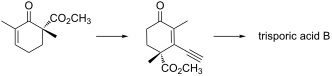
- cyclohexenone (+)-7, which is the key building block in our synthesis, was the incorporation of a C2 unit into β-ketoester (−)-1c (Scheme 3). This was achieved by adding ethynyl magnesium bromide in THF at room temperature. The cyclohexenol (+)-6 can be isolated in 79% yield with a diastereomeric ratio of 96:4
- synthesized enantiomerically pure in a two step procedure starting from optically pure β-ketoester (−)-1c in an overall yield of 65%. Furthermore, we have shown that the oxidative allylic rearrangement of cycloalkenols can be carried out easily despite a high degree of functionalization and steric
- ), 178 (23), 150 (21), 119 (65), 91 (50); Anal. Calcd for C12H14O3 (206.2): C, 69.89; H, 6.84. Found: C, 69.72; H, 7.03. (9E)- and (9Z)-trisporic acid B. PLE (pig liver esterase)-catalyzed saponification of β-ketoesters 1. Synthesis and PLE-catalyzed saponification of β-ketoester 1c. Synthesis of key





