


Search results
Search for "carbamate" in Full Text gives 206 result(s) in Beilstein Journal of Organic Chemistry. Showing first 200.
Synthesis of N-acyl carbazoles, phenoxazines and acridines from cyclic diaryliodonium salts
Beilstein J. Org. Chem. 2024, 20, 12–16, doi:10.3762/bjoc.20.2
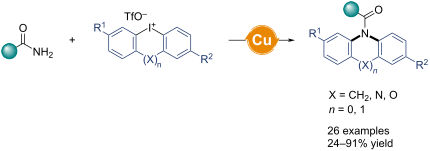
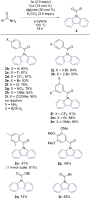
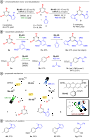
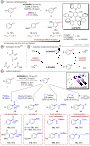
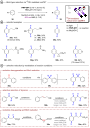
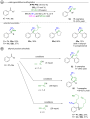
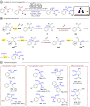
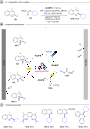
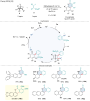
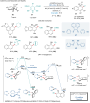
- the robustness of this method. Substrates with multiple electron-withdrawing substituents such as trifluoromethyl and bromide gave good yields. The ethyl carbamate 2q proved to be a valid substrate for the reaction with a 74% yield. Phenylacetamide as the substrate resulted in the formation of 2r in

Synthesis of 7-azabicyclo[4.3.1]decane ring systems from tricarbonyl(tropone)iron via intramolecular Heck reactions
Beilstein J. Org. Chem. 2023, 19, 1615–1619, doi:10.3762/bjoc.19.118
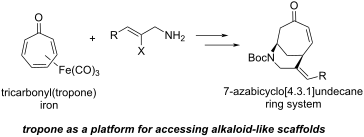
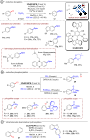
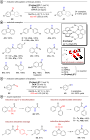
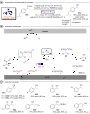
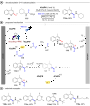
- cleanly according to TLC analysis, but the isolated yield of the intramolecular Heck product was low, perhaps due to instability of one of the intermediate palladium complexes and/or a slow olefin insertion step. Moreover, the product was obtained as an inseparable mixture of the allylic carbamate 18 and


Synthesis of ether lipids: natural compounds and analogues
Beilstein J. Org. Chem. 2023, 19, 1299–1369, doi:10.3762/bjoc.19.96
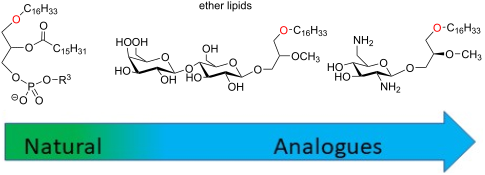
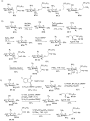
- of glycerol is readily hydrolyzed in vivo and in serum [100][101]. With the aim to produce more stable compounds, the modification of the sn-2 position of the glycerol was reported. A first option consisted in placing a carbamate function leading to the synthesis of methyl carbamoyl-PAF (1-O






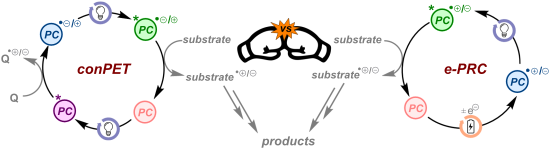
Photoredox catalysis harvesting multiple photon or electrochemical energies
Beilstein J. Org. Chem. 2023, 19, 1055–1145, doi:10.3762/bjoc.19.81
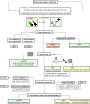
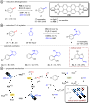
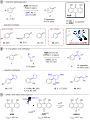
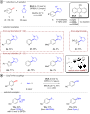
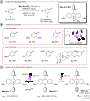
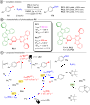
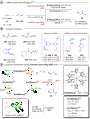
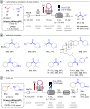
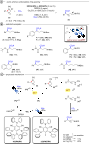
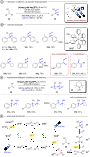
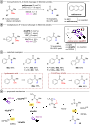
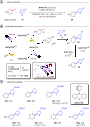
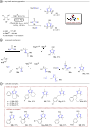
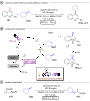
- hydroarylation of tert-butyl vinylcarbamate and unactivated alkenes like 1-octene and 3-buten-1-ol although the vinyl carbamate substrate (Epred = −2.2 V vs SCE) is significantly easier to reduce than most aryl chlorides. This selectivity, especially considering the need for an excess of the vinyl carbamate

























Synthesis of medium and large phostams, phostones, and phostines
Beilstein J. Org. Chem. 2023, 19, 687–699, doi:10.3762/bjoc.19.50
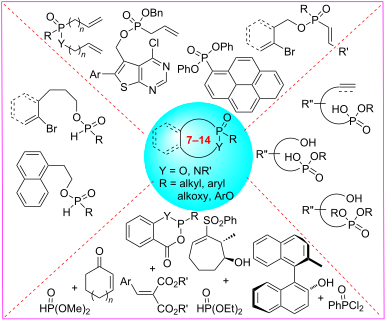
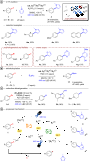
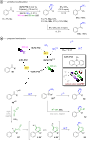
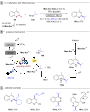
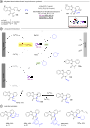
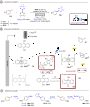
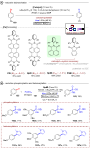
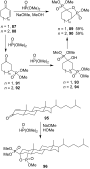
- of the etheric oxygen atom and the antibonding orbital of the P=O bond (the stereoelectronic effect), leading to the more stable anti-diastereomer 74 (Scheme 16) [38]. In the phostone 74 was installed a linker 2-(5-aminopentoxy) group via transesterification with benzyl N-(5-hydroxypentyl)carbamate




Access to cyclopropanes with geminal trifluoromethyl and difluoromethylphosphonate groups
Beilstein J. Org. Chem. 2023, 19, 541–549, doi:10.3762/bjoc.19.39
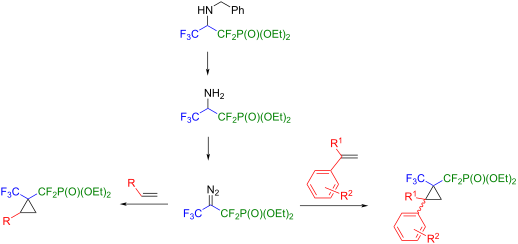
- the reaction with tert-butyl-N-allyl carbamate 7g (1:6) while the reaction with allylcyclohexane resulted with the lowest yield (7f, 28%), probably due to the steric hindrance of the reagents. In the case of N-Boc-allylamine, improved diastereoselectivity might result from the coordination of the



Transition-metal-catalyzed domino reactions of strained bicyclic alkenes
Beilstein J. Org. Chem. 2023, 19, 487–540, doi:10.3762/bjoc.19.38
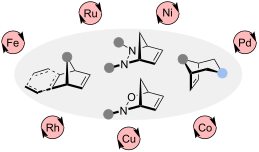
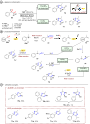
- ]-sigmatropic rearrangement of the diazabicycle 47 to form the allylic carbazate intermediate 51. Nucleophilic attack of an organomagnesium, or organocuprate, in an anti SN2’ fashion on 52 furnish the final ring-opened product 49. The authors note the use of a carbamate protecting group was crucial for the



















Synthesis and reactivity of azole-based iodazinium salts
Beilstein J. Org. Chem. 2023, 19, 317–324, doi:10.3762/bjoc.19.27
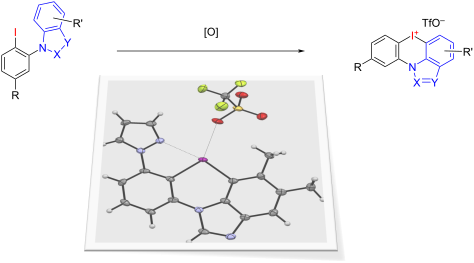
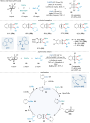
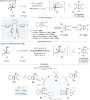
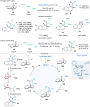
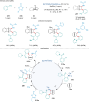
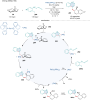
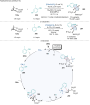
- underwent undesired ring openings. Treating 12 with BocNH2 resulted in the formation of protected guanidine 15 in 80% yield (Scheme 2c), which would not be possible to obtain via an oxidative cyclization of the corresponding iodine(I) species due to a carbamate cleavage with acid. The other dicationic salts




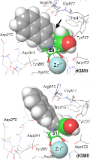
Synthesis, α-mannosidase inhibition studies and molecular modeling of 1,4-imino-ᴅ-lyxitols and their C-5-altered N-arylalkyl derivatives
Beilstein J. Org. Chem. 2023, 19, 282–293, doi:10.3762/bjoc.19.24
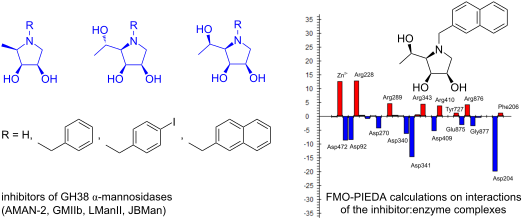
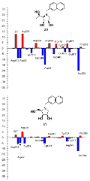
- inverted via cyclic carbamate 21. Aminoalcohol 22 obtained after a basic hydrolysis of 21 was N-alkylated with the corresponding arylalkyl bromides to furnish derivatives 23–25. These were subjected to an acidic hydrolysis of the acetonide moiety to give the target compounds 26–28. Iminosugar 29 (6-deoxy


Inline purification in continuous flow synthesis – opportunities and challenges
Beilstein J. Org. Chem. 2022, 18, 1720–1740, doi:10.3762/bjoc.18.182
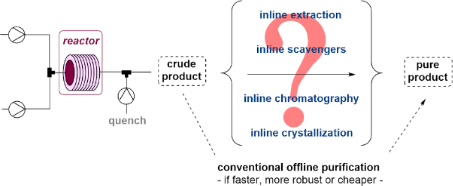
- group where an immobilized lipase (e.g., CALB) facilitated the derivatization of high-boiling benzyl alcohol in scaled Curtius rearrangement reactions. Ultimately, this approach negated the use of column chromatography in favor of a simple trituration process to isolate pure carbamate products [106




Preparation of β-cyclodextrin-based dimers with selectively methylated rims and their use for solubilization of tetracene
Beilstein J. Org. Chem. 2022, 18, 1596–1606, doi:10.3762/bjoc.18.170
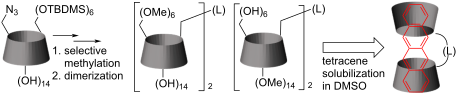
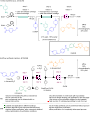
- somewhat, giving us a 41% yield after 12 h of the reaction. Testing the same conditions for dimer 5, we also noticed a speed up in the reaction rate, but a presence of the trimer with an extra CD moiety connected by carbamate group (Mr ≈ 4000) was spotted, giving us lower yields. We assume the Lewis acid


1,4,6,10-Tetraazaadamantanes (TAADs) with N-amino groups: synthesis and formation of boron chelates and host–guest complexes
Beilstein J. Org. Chem. 2022, 18, 1424–1434, doi:10.3762/bjoc.18.148
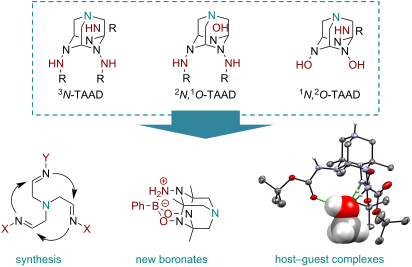
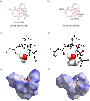
- and carbamate groups form inclusion complexes with water or methanol (Figure 3a–d). In the crystal state, a common hydrogen-bonded motif is observed, in which the guest molecule is located in a pocket created by amide/carbamate groups and the triazinane ring of the 3N-TAAD structure that is well
- –178.1°) forming two -cyclic motifs. There seems to be a preference for the coordination of certain guest molecules depending on the nature of the amide/carbamate groups. Thus, N-propionyl and ethyl carbamate derivatives (4a, 4a·HCl, and 4b) form the aforementioned complexes with water (Figure 3c
- , 21, and 21·HCl as well as the previously described 3O-TAADs 2 do not form such host–guest complexes, although water and methanol molecules are present in their crystal lattices. Thus, the presence of amide/carbamate groups is essential for the assembly of these supramolecular structures. The






Preparation of an advanced intermediate for the synthesis of leustroducsins and phoslactomycins by heterocycloaddition
Beilstein J. Org. Chem. 2022, 18, 1385–1395, doi:10.3762/bjoc.18.143
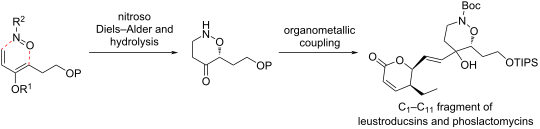
- the reaction medium, it was found necessary to add a small amount of calcium carbonate. Optically active cycloadduct 10b was obtained in 73% yield and 86% ee after nitrogen protection as its Boc-carbamate. Ketone 11b was obtained by Red-Al reduction in identical yield to the racemic equivalent. We


Make or break: the thermodynamic equilibrium of polyphosphate kinase-catalysed reactions
Beilstein J. Org. Chem. 2022, 18, 1278–1288, doi:10.3762/bjoc.18.134
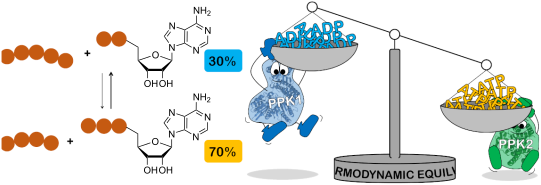
- ][29]. Also for carbamate kinase (using carbamoyl phosphate), the equilibrium lies far on the ATP side with a calculated equilibrium concentration of 3.9 × 10⁻⁴ M ADP out of 0.1 M ADP [30]. As most kinases use a phosphate donor with a high phosphate transfer potential (see Figure 3c) and a product


Synthetic strategies for the preparation of γ-phostams: 1,2-azaphospholidine 2-oxides and 1,2-azaphospholine 2-oxides
Beilstein J. Org. Chem. 2022, 18, 889–915, doi:10.3762/bjoc.18.90
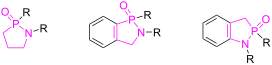
- the Ortiz group investigated the directed ortho-lithiation of aminophosphazenes, they realized one example synthesis of (R)-1-phenyl-2-((R)-1-phenylethyl)-2-hydrobenzo[c][1,2]azaphosphol-3-one 1-oxide (239) from methyl (R)-(diphenyl((1-phenylethyl)amino)-λ5-phosphanylidene)carbamate (237) via the
- ortho-directed lithiation with tert-butyllithium with carbamate as the directing group followed by electrophilic quench with methyl chloroformate and intramolecular aminolysis. Finally, hydrolysis removed the directing group, affording the final product 239 in 50% yield (Scheme 38) [59]. Structurally
- of (R)-1-phenyl-2-((R)-1-phenylethyl)-2-hydrobenzo[c][1,2]azaphosphol-3-one 1-oxide (239) from methyl (R)-(diphenyl((1-phenylethyl)amino)-λ5-phosphanylidene)carbamate (237) via ortho-directed lithiation followed by electrophilic quench and intramolecular aminolysis. Synthesis of dihydro[1,2




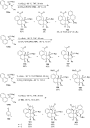

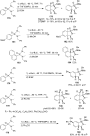


The asymmetric Henry reaction as synthetic tool for the preparation of the drugs linezolid and rivaroxaban
Beilstein J. Org. Chem. 2022, 18, 438–445, doi:10.3762/bjoc.18.46
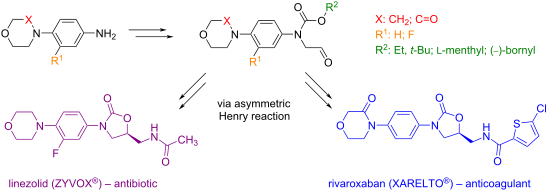
- 15 and 19 was also performed with the aim to increase the enantiomeric purity of the corresponding nitroaldol products 21–26. The structural modification consisted in the introduction of different alkyl moieties to the carbamate functional group of the aldehyde intermediates 15–20. As bulky and/or
- 2). The bulky (R2 = t-Bu) or chiral (R2 = ʟ-menthyl or (−)-bornyl) alkoxy groups (derived from relatively inexpensive and readily available alcohols) were introduced into the carbamate moiety instead of an ethyl group as in aldehydes 15 and 19. Here, the influence of this structural modification of
- the R2O- part of the carbamate group does not modify the structure of linezolid (1), because this molecular moiety is cleaved during the intramolecular nucleophilic substitution in the final reaction step (Scheme 2). The catalysts derived from ligands Ia, IIa, IIIa, and IV were also tested in the


Asymmetric organocatalytic Michael addition of cyclopentane-1,2-dione to alkylidene oxindole
Beilstein J. Org. Chem. 2022, 18, 167–173, doi:10.3762/bjoc.18.18
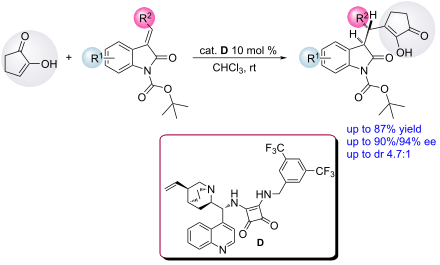
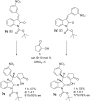
- ). The use of a sterically more demanding Fmoc-protecting group decreased the ee values even more for the minor diastereoisomer (Scheme 1, 3c). Surprisingly, with benzyl-protected oxindole, the reaction did not proceed (Scheme 1, 3d), which implies that the carbonyl group of the carbamate moiety in the N


Efficient and regioselective synthesis of dihydroxy-substituted 2-aminocyclooctane-1-carboxylic acid and its bicyclic derivatives
Beilstein J. Org. Chem. 2022, 18, 77–85, doi:10.3762/bjoc.18.7
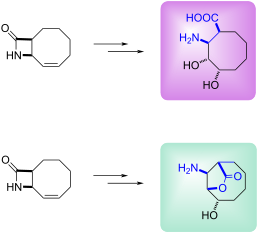
- , Hacettepe University, 06800 Ankara, Turkey 10.3762/bjoc.18.7 Abstract The first synthesis of 2-amino-3,4-dihydroxycyclooctane-1-carboxylic acid, methyl 6-hydroxy-9-oxo-8-oxabicyclo[5.2.1]decan-10-yl)carbamate, and 10-amino-6-hydroxy-8-oxabicyclo[5.2.1]decan-9-one starting from cis-9-azabicyclo[6.2.0]dec-6
- -oxabicyclo[5.2.1]decan-10-yl)carbamate was confirmed by X-ray diffraction. Keywords: aminocyclitol; azidolysis; bicyclic β-lactam; bicyclic lactone; cyclic β-amino acids; DFT; Introduction Cyclic β-amino acids have for the past few decades aroused widespread synthetic interest owing to their diverse
- a mixture of products 10 and 11 in a 7:3 ratio was determined by NMR spectroscopy. The reaction mixture was purified using preparative silica gel TLC on a chromatotron with ethyl acetate/hexane (50:50) as the eluent to give carbamate 10 and diol isomer mixture 11 in 65% and 25% yields, respectively


The ethoxycarbonyl group as both activating and protective group in N-acyl-Pictet–Spengler reactions using methoxystyrenes. A short approach to racemic 1-benzyltetrahydroisoquinoline alkaloids
Beilstein J. Org. Chem. 2021, 17, 2716–2725, doi:10.3762/bjoc.17.183
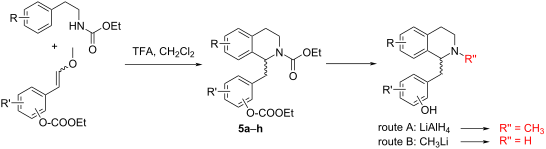
- , also as protective group for phenolic residues. After ring closure, the ethoxycarbonyl-protected phenols are deprotected simultaneously with the further processing of the carbamate group, either following route A (lithium alanate reduction) to give N-methylated phenolic products, or following route B
- highly electrophilic N-acyliminium intermediates [17]. As a special aspect, we used a carbamate unit (instead of the commonly used carboxamide), ending up with 1-benzyl-1,2,3,4-tetrahydroisoquinolines bearing an N-ethoxycarbonyl residue, which in turn was easily converted directly into an N-methyl group
- reduction of the intermediate nitrostyrenes and N-ethoxycarbonylation of the resulting primary amines [15]. For the synthesis of the alkaloids rac-reticuline (2e) and rac-orientaline (2f) we used a carbamate building block A3 without protection of the phenolic group, since our previous work [10


Synthesis of highly substituted fluorenones via metal-free TBHP-promoted oxidative cyclization of 2-(aminomethyl)biphenyls. Application to the total synthesis of nobilone
Beilstein J. Org. Chem. 2021, 17, 2668–2679, doi:10.3762/bjoc.17.181
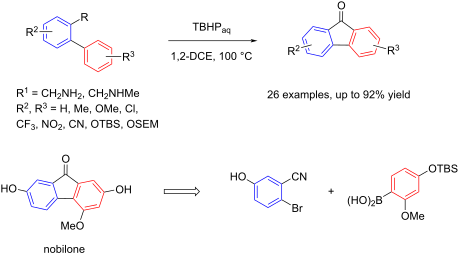
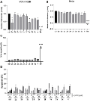
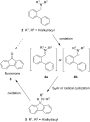
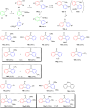
- fluorenone (3) in 30% yield (determined by GC–MS). TLC analysis further revealed that fluorenone formation does not occur when treating tertiary amides 2h and 2i, γ-lactam derivative 2e, and carbamate 2j with this reagent (Table 1, entries 5, 8, 9, and 10). The reaction does, however, also work with tertiary





Base-free enantioselective SN2 alkylation of 2-oxindoles via bifunctional phase-transfer catalysis
Beilstein J. Org. Chem. 2021, 17, 2287–2294, doi:10.3762/bjoc.17.146
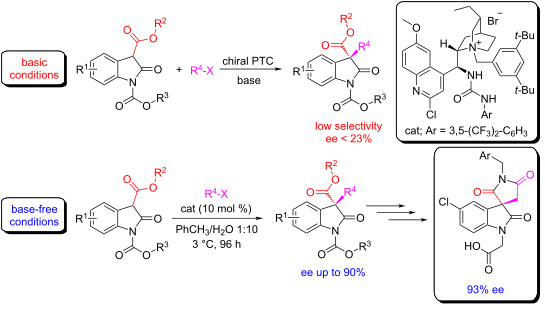
- ee, with lower enantiocontrol associated with groups possessing greater electron-withdrawing character (i.e., 10Da, 10Ca, 10Ea). Finally, modifications on both the substrate ester and carbamate-moieties did not afford remarkably different outcomes (i.e., 10Fa, 10Ga). We continued our studies by



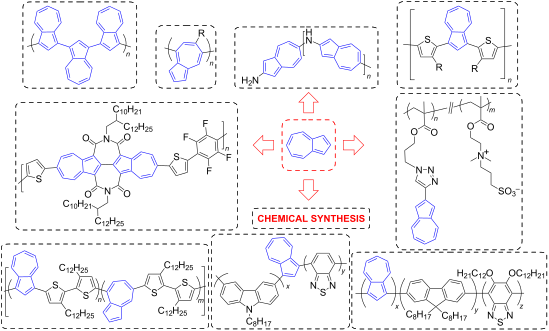
Chemical syntheses and salient features of azulene-containing homo- and copolymers
Beilstein J. Org. Chem. 2021, 17, 2164–2185, doi:10.3762/bjoc.17.139
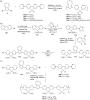
- protocol (Scheme 7). The synthesis of the key building blocks 2-aminoazulene (24), 2-amino-6-bromoazulene (26), and its corresponding carbamate, tert-butyl N-(6-bromoazulen-2-yl)carbamate (27), used in their synthesis is presented in Scheme 7A. The carbamate 27 was subjected to a Buchwald–Hartwig reaction
- of directly connected 4,7-polyazulenes 18–20. Synthesis of (A) tert-butyl N-(6-bromoazulen-2-yl)carbamate (27), (B) dimeric aminoazulene 29, and (C) poly[2,6-aminoazulene] 31. Synthesis of poly{1,3-bis[2-(3-alkylthienyl)]azulene} 33–38. Synthesis of polymer ruthenium complexes 40–43. Synthesis of 4,7



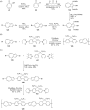


Sustainable manganese catalysis for late-stage C–H functionalization of bioactive structural motifs
Beilstein J. Org. Chem. 2021, 17, 1733–1751, doi:10.3762/bjoc.17.122

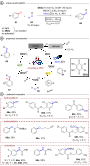
- anticonvulsant drug used to treat epilepsy and anxiety disorders [39], and an analogue of pregabalin was transformed to azidated derivative 11a. It is noteworthy that positional selectivity was observed for the α-position of the carbamate functional group due to the stabilization of the carbon radical by the
- adjacent carbamate group. The naturally available substrate 9b was shown to undergo the azidation process at the less sterically hindered position. An analogue of rasagiline (Azilect®), a Parkinson’s disease drug, successfully underwent benzylic azidation, providing product 11c. Other complex molecules


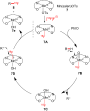


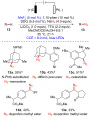
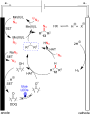


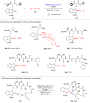


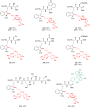

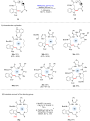
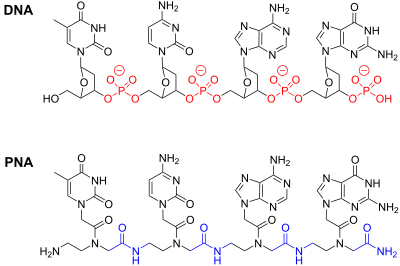
Chemical approaches to discover the full potential of peptide nucleic acids in biomedical applications
Beilstein J. Org. Chem. 2021, 17, 1641–1688, doi:10.3762/bjoc.17.116









Stereoselective synthesis and transformation of pinane-based 2-amino-1,3-diols
Beilstein J. Org. Chem. 2021, 17, 983–990, doi:10.3762/bjoc.17.80
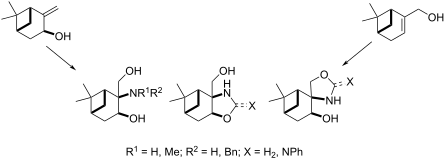
- synthesised in a stereoselective manner. Isopinocarveol prepared from (−)-α-pinene was converted into condensed oxazolidin-2-one in two steps by carbamate formation followed by a stereoselective aminohydroxylation process. The relative stereochemistry of the pinane-fused oxazolidin-2-one was determined by 2D
- carbamate 8 in good yield [27][28][36]. In the next step, the aminohydroxylation was accomplished by potassium osmate(VI) as the catalyst and t-BuOCl in the presence of DIPEA affording oxazolidine-2-one 9 [27]. The reaction was found to be highly stereoselective, giving exclusively the diexo-fused tricyclic
- (Figure 2). To synthesize the regioisomeric spiro-oxazolidinone derivative 12, (1R)-(−)-myrtenol (10) was chosen as starting material (Scheme 2). The synthetic method was similar to that mentioned above for (−)-isopinocarveol. In the first step, carbamate 11 was prepared [37], then the aminohydroxylation





