


Search results
Search for "cyclopentene" in Full Text gives 72 result(s) in Beilstein Journal of Organic Chemistry.
A photochemical determination of luminescence efficiency of upconverting nanoparticles
Beilstein J. Org. Chem. 2019, 15, 2671–2677, doi:10.3762/bjoc.15.260
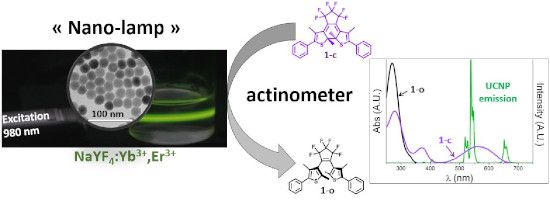
- green emission of NaYF4:Yb,Er nanoparticles. Using the recently calibrated actinometer 1,2-bis(2,4-dimethyl-5-phenyl-3-thienyl)-3,3,4,4,5,5-hexafluoro-1-cyclopentene operating in the green region of the visible spectra, we propose a simple photochemical experiment to get an accurate estimation of the
- reliability. Recently, an accurate determination of photochemical quantum yields (QY) [26] was achieved for a commercially available diarylethene 1,2-bis(2,4-dimethyl-5-phenylthien-3-yl)-3,3,4,4,5,5-hexafluoro-1-cyclopentene, labelled 1. Since then, this dye has been used as actinometer in the visible range


Photochromic diarylethene ligands featuring 2-(imidazol-2-yl)pyridine coordination site and their iron(II) complexes
Beilstein J. Org. Chem. 2019, 15, 2428–2437, doi:10.3762/bjoc.15.235
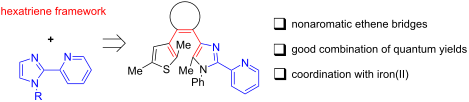
- ligands feature non-aromatic ethene bridges (cyclopentene, cyclopentenone, and cyclohexenone), as well as closely spaced photoactive and metal coordination sites aiming a strong impact of photocyclization on the electronic structure of the coordinated metal ion. The ligands with cyclopentenone and
- their complexes with rhodium(I) [18], platinum(II) [30], and iridium(III) [31] were reported. In contrast, in our work, the 2-(imidazol-2-yl)pyridine unit is used as a heterocyclic moiety of diarylethenes with cyclopentenone, cyclopentene, and cyclohexenone ethene bridges. The novel ligands have been
- tested in the coordination chemistry with iron(II) aiming photoswitchable SCO systems. Results and Discussion Synthesis and structure of photochromic ligands Recently, some of us have developed original methods for the synthesis of various diarylethenes with cyclopentenone, cyclopentene, and



Click chemistry towards thermally reversible photochromic 4,5-bisthiazolyl-1,2,3-triazoles
Beilstein J. Org. Chem. 2019, 15, 2161–2169, doi:10.3762/bjoc.15.213
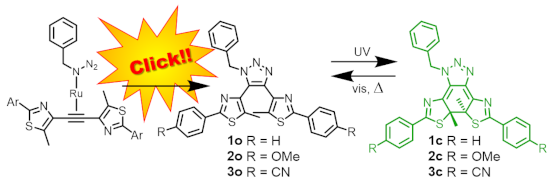
- observation was well-reproduced by TD DFT calculations (Table 1 and chapter SI-4 in Supporting Information File 1). When the absorption maximum wavelength of 1c, whose central ethene moiety is triazole, is compared with those of the closely related 7c (cyclopentene) [37], 8c (hexafluorocyclopentene) [38], 9c



Enantioselective PCCP Brønsted acid-catalyzed aza-Piancatelli rearrangement
Beilstein J. Org. Chem. 2019, 15, 1569–1574, doi:10.3762/bjoc.15.160
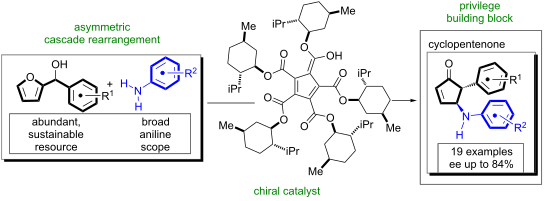
- methodologies to construct this privileged scaffold. The aza-Piancatelli reaction has recently emerged as a particularly attractive method to access densely functionalized cyclopentene cores bearing nitrogen substituents directly from readily available 2-furylcarbinols [13][14][15]. Inspired by Piancatelli’s


Synthesis of polydicyclopentadiene using the Cp2TiCl2/Et2AlCl catalytic system and thin-layer oxidation of the polymer in air
Beilstein J. Org. Chem. 2019, 15, 733–745, doi:10.3762/bjoc.15.69
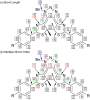
- cyclopentene double bond, one of the options may be the formation of the D units (Scheme 2) as a result of the transannular rearrangement of the growing carbocation [1]. As it was found, A-type units (up to 70%) dominate in the structure of polymers formed as a result of cationic polymerization. The number of
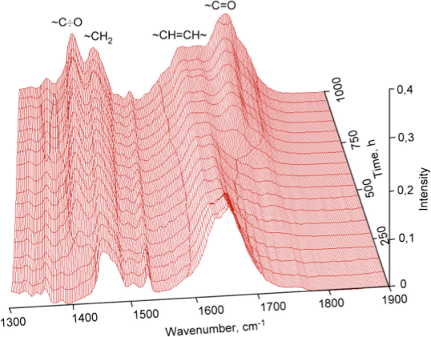
- region contains a wide signal corresponding to the superposition of resonances of –СН and –СН2 groups of cyclopentene and cyclopentane rings. The region from 5.0 to 6.3 ppm contains several wide signals corresponding to resonances of protons of double bonds of the polymer chain and the cyclopentene ring





Ruthenium-based olefin metathesis catalysts with monodentate unsymmetrical NHC ligands
Beilstein J. Org. Chem. 2018, 14, 3122–3149, doi:10.3762/bjoc.14.292
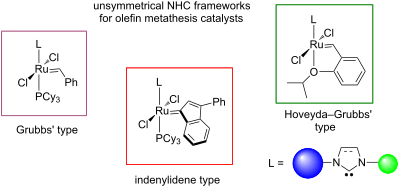
- ) with cyclooctene (COE, 47) and cyclopentene (CPE, 48), respectively (Scheme 6). An NBE/COE ratio of 1:50 was found necessary to realize a copolymer containing 97% of alternating diads ([poly(NBE-alt-COE)n]), while an NBE/CPE ratio of only 1:7 resulted in the formation of a copolymer with roughly 90% of
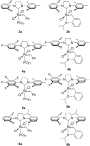
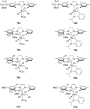
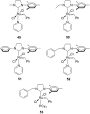
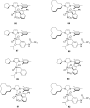
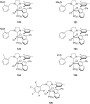
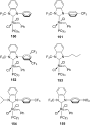
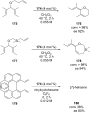
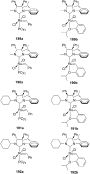
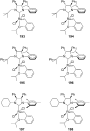
- diastereoselective ring-rearrangement metathesis (dRRM) of cyclopentene 131 (Scheme 12). The presence of a nitro group at the ortho or para positions of the benzyl substituent (134 and 135 in Figure 24), reported by Malinowska and co-workers [45], led to higher activities in the RCM of 7 and 9 (Schemes 1 and 2
- high selectivity in the dRRM of cyclopentene 131 was also observed (Scheme 12). Self metathesis of 1-octene (96) was conducted in the presence of 136, 137, 139 and 140, in order to selectively obtain tetradec-7-ene (97). The presence of the N-benzyl substituent was crucial to achieve high yield (up to



















Degenerative xanthate transfer to olefins under visible-light photocatalysis
Beilstein J. Org. Chem. 2018, 14, 3047–3058, doi:10.3762/bjoc.14.283

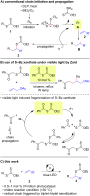
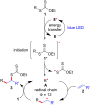
- olefins such as methylenecyclopropane 2j and methylenecyclobutane (2k) are amenable to the current protocol (Table 2, entries 9 and 10), whereas the reaction of methylenecyclopentane (2l) afforded not only the desired xanthate adduct 3al in 60% yield but also the substituted cyclopentene 3al’ in 18% yield



Oxidative and reductive cyclization in stiff dithienylethenes
Beilstein J. Org. Chem. 2018, 14, 2812–2821, doi:10.3762/bjoc.14.259
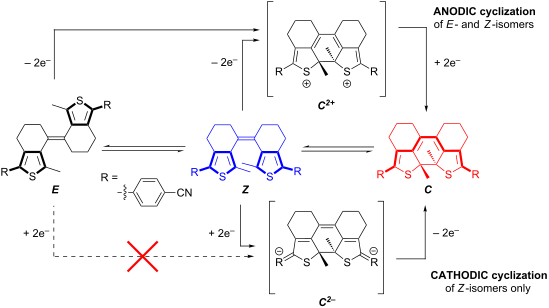
- -conjugation between both hemispheres. Similar to the model compound sDTE66-Me, all available sDTE66 derivatives as well as both Z-configured sDTE77 derivatives undergo electrocyclization upon oxidation. This also holds true for all cyclopentene-bridged DTE derivatives. However, in butene-Me the formation of
- cyclization product was formed (Figure 4a). Note that, however, both open isomers undergo oxidative cyclization (Figure S19b and Figure S20b, Supporting Information File 1). To investigate the generality of reductive cyclization mediated by cyano groups, we subjected the cyclopentene-bridged DTE with


Novel photochemical reactions of carbocyclic diazodiketones without elimination of nitrogen – a suitable way to N-hydrazonation of C–H-bonds
Beilstein J. Org. Chem. 2018, 14, 2250–2258, doi:10.3762/bjoc.14.200

- %. Further irradiation of hydrazones derived from furan-fused tricyclic diazocyclopentanediones culminates in the cycloelimination of furans to yield 2-N-(alkyl)hydrazone of cyclopentene-1,2,3-trione. By contrast, the direct photolysis of carbocyclic diazodiketones gives only Wolff rearrangement products


Recent applications of chiral calixarenes in asymmetric catalysis
Beilstein J. Org. Chem. 2018, 14, 1389–1412, doi:10.3762/bjoc.14.117
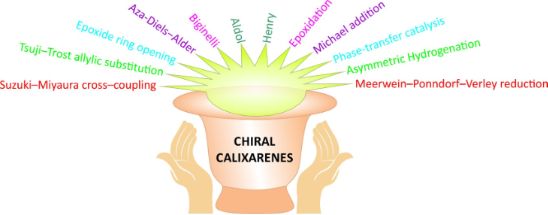
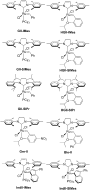
- yields but low enantiomeric excesses were obtained when cyclohexene and cyclopentene oxides were used as substrates (71% yield, 18% ee; 75% yield, 11% ee, respectively). Cyclooctene oxide was found to be poorly reactive with conversions of less than 10%. Conclusion This review demonstrates that


Atom-economical group-transfer reactions with hypervalent iodine compounds
Beilstein J. Org. Chem. 2018, 14, 1263–1280, doi:10.3762/bjoc.14.108
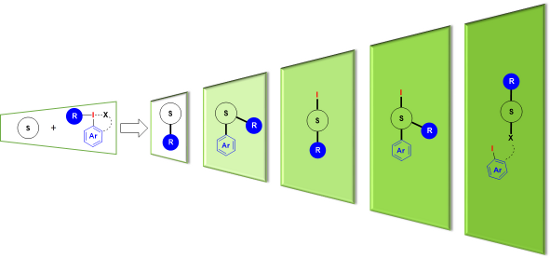
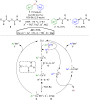
- thiophene, cyclopentene and adamantyl derivatives 30a–c with good AE values (51% for 30a). The proposed mechanism involves two distinct catalytic cycles for the amination and the arylation reaction step (Scheme 17). First, a metallanitrene B is formed via the reaction of the (dicarboxyiodo)benzene 20 with






Recent advances in synthetic approaches for medicinal chemistry of C-nucleosides
Beilstein J. Org. Chem. 2018, 14, 772–785, doi:10.3762/bjoc.14.65
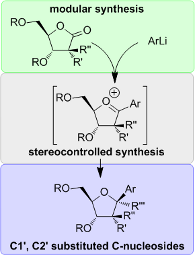
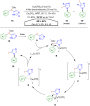
- substitution on cyclopentanone gives C1'–OH carbocyclic C-nucleosides. B. Synthesis of cyclopentanone from norbornadiene and substituents that facilitate carbocyclic C-nucleoside syntheses. Synthesis of carbocyclic C-nucleosides via Suzuki coupling [53]. A. Synthesis of OTf-cyclopentene that enable Suzuki


Fluorination of some highly functionalized cycloalkanes: chemoselectivity and substrate dependence
Beilstein J. Org. Chem. 2017, 13, 2364–2371, doi:10.3762/bjoc.13.233
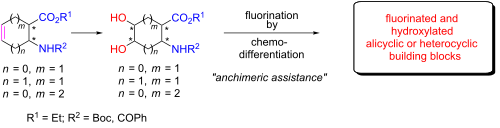
- , cispentacin) are relevant antifungal agents [19]. Therefore we have selected some five and six-membered alicyclic dihydroxylated β-amino ester stereo- and regioisomers as model compounds [23][24][25][26], derived from cyclopentene or cyclohexene β-amino acids. These were used in order to evaluate their


Unusual traits of cis and trans-2,3-dibromo-1,1-dimethylindane on the way from 1,1-dimethylindene to 2-bromo-, 3-bromo-, and 2,3-dibromo-1,1-dimethylindene
Beilstein J. Org. Chem. 2016, 12, 1178–1184, doi:10.3762/bjoc.12.113
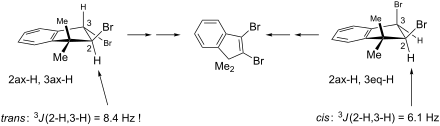
- cyclopentene moieties should always have more positive 3J NMR coupling constants for the cis than for the trans arrangement: Unrecognized exceptions might misguide one to wrong stereochemical assignments and thence to erroneous mechanistic conclusions. We show here that two structurally innocent-looking 2,3
- envelope shape (expected puckering ca. 22–33°) of the cyclopentene parts of 1 (lines 2 and 3 of Scheme 1): the distance between two vicinal, sp3-positioned protons in indanes clearly must be substantially longer for the pseudodiaxial (2ax-H,3ax-H) trans than for the pseudoaxial/pseudoequatorial (2ax-H,3eq
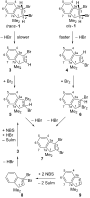
- the generated portion of 4 together with remnant n-BuLi, so that a very rapid Br/Li interchange reaction of 4 with n-BuLi will produce 1,1-dimethyl-2-lithioindene, whose protolysis forms 1,1-dimethylindene (2). Conclusion Cis/trans differentiation in the saturated part of cyclopentene moieties should



The synthesis of functionalized bridged polycycles via C–H bond insertion
Beilstein J. Org. Chem. 2016, 12, 985–999, doi:10.3762/bjoc.12.97
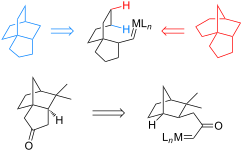
- is the case for carbene 19, since the alkyl bridge locks its conformation in such a way that prevents an activating alignment, and the oxygen acts as an inductive electron-withdrawing group. The alkene in the cyclopentene of 20 was oxidatively cleaved, and then an aldol condensation gave the







Opportunities and challenges for direct C–H functionalization of piperazines
Beilstein J. Org. Chem. 2016, 12, 702–715, doi:10.3762/bjoc.12.70
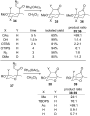
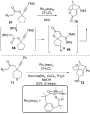
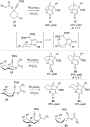
- yields than aryl and acyl groups. Other olefins such tert-butylethylene and cyclopentene can be used as well, but the yields were significantly lower (cf. 63 and 64). The scope of the directing 2-pyridinyl group can be expanded to electron-withdrawing groups such as ester and trifluoromethyl, while





Enantioselective [3 + 2] annulation of α-substituted allenoates with β,γ-unsaturated N-sulfonylimines catalyzed by a bifunctional dipeptide phosphine
Beilstein J. Org. Chem. 2016, 12, 343–348, doi:10.3762/bjoc.12.37
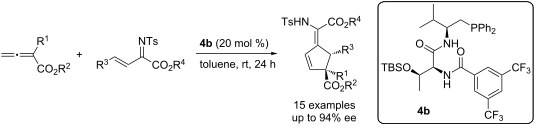
- -sulfonylimines proceeded in an unexpected [3 + 2] annulation mode to afford a cyclopentene ring with an all-carbon quaternary center (Scheme 1) [48]. In recent years our group has developed a family of amino acid-derived bifunctional phosphines and has intensively investigated related asymmetric transformations


Study on the synthesis of the cyclopenta[f]indole core of raputindole A
Beilstein J. Org. Chem. 2016, 12, 334–342, doi:10.3762/bjoc.12.36

- of cyclopentene anellation by cyclization of aryl-substituted allyl cations. High yields were reported by Alvarez-Manzaneda et al. in the course of their total synthesis of taiwaniaquinone H. They induced the cyclization by treatment of arylvinylcarbinols with the mild Lewis acid SnCl4, which were




Hexacoordinate Ru-based olefin metathesis catalysts with pH-responsive N-heterocyclic carbene (NHC) and N-donor ligands for ROMP reactions in non-aqueous, aqueous and emulsion conditions
Beilstein J. Org. Chem. 2015, 11, 1960–1972, doi:10.3762/bjoc.11.212
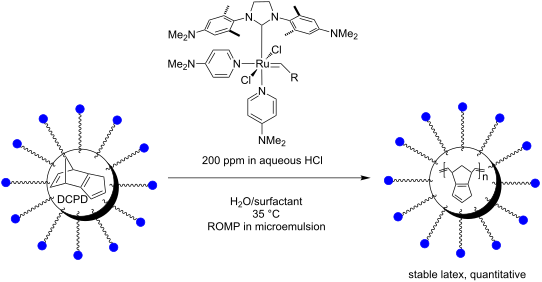
- – 1.0 mM, 0.60 mL, 0.6 μmol) in a NMR tube. The substrate conversion was monitored at 20 °C via 1H NMR spectroscopy by integration of the sufficiently separated multiplet signals at δ 2.78 ppm (m, allyl-CH2, DEDAM) and 3.13 ppm (m, ring-CH2, cyclopentene derivative). General procedure for the RCM of
- with ethyl vinyl ether, dried under vacuum, and the monomer conversion was monitored via 1H NMR spectroscopy (300.1 MHz, 20 °C, D2O) by integration of the signals δ 2.58 (DAMA-CH2) and δ 2.98 ppm (cyclopentene-CH2). The aliquots taken after 60 min indicated the same conversion level as those taken


Recent applications of ring-rearrangement metathesis in organic synthesis
Beilstein J. Org. Chem. 2015, 11, 1833–1864, doi:10.3762/bjoc.11.199

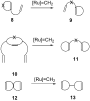
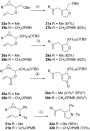
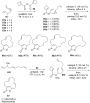
- RRM with E-selectivity at the macrocyclic double bond. Along similar lines, compound 65f was treated with catalyst 1 in refluxing toluene followed by treatment with catalyst 2 to deliver desmethylmanshurolide 67 in 44% yield (Scheme 11). Cyclopentene systems In RRM with cyclopentene systems, the
- and Li [17] disclosed a highly distereoselective RRM approach starting with cyclopentene derivatives. In this regard, the cyclopentene derivative 72 was treated with the catalyst 2 in the presence of ethylene (24) to generate the required cyclohexene-based product 73. The total synthesis of
- , when the cyclopentene derivative 74 gave 75 and 76 (1:5, 75%) with catalyst 1; whereas, the catalyst 2 produced 75 and 76 in 85% yield (12:1). Here, they have shown the thermodynamically favored RRM leads to the formation of 75, while kinetically favored RCM gave the product 76 (Scheme 14). Cyclohexene










SmI2-mediated dimerization of indolylbutenones and synthesis of the myxobacterial natural product indiacen B
Beilstein J. Org. Chem. 2015, 11, 1700–1706, doi:10.3762/bjoc.11.184

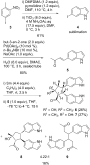
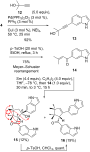
- ]. Treatment of indole 14 with SmI2 afforded the cyclic bisindole 15 and, after silica column chromatography, its elimination product cyclopentene 16. On the TLC only the tertiary alcohol 15 and full consumption of the starting material were observed. Product 15 was converted quantitatively to cyclopentene 16
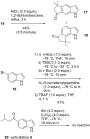
- between the two β-carbons. When the enone unit was connected to the indole 6-position via the carbonyl moiety, a deconjugated cyclopentene (16) became accessible. In the absence of the α,β-double bond as in the natural product verticillatine B (20), SmI2 in THF was not able to induce a dimerization and no
- . Meyer–Schuster rearrangement of 13 and SmI2-mediated reductive [3 + 2] cycloaddition, followed by elimination to cyclopentene 16. Selected NOESY correlations for compound 15 are given. Nazarov-type cyclization of 14 to cyclopentanones 17 and 18; synthesis of verticillatine B (20). Synthesis and X-ray



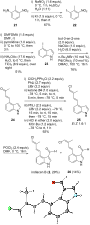
Latent ruthenium–indenylidene catalysts bearing a N-heterocyclic carbene and a bidentate picolinate ligand
Beilstein J. Org. Chem. 2015, 11, 1541–1546, doi:10.3762/bjoc.11.169
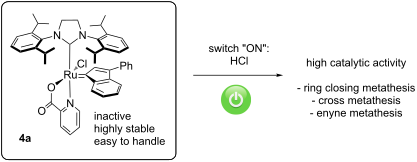
- hand, we then briefly investigated the scope of metathesis transformations using 1 mol % of 4a in dichloromethane at 25 °C, using hydrochloric acid as activator (Table 1). Both substrates 6 and the tosylamine 8 were efficiently converted to the desired cyclopentene products that were isolated in 97 and


Thermal properties of ruthenium alkylidene-polymerized dicyclopentadiene
Beilstein J. Org. Chem. 2015, 11, 1469–1474, doi:10.3762/bjoc.11.159
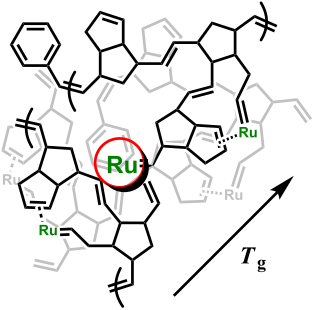
- be disrupted first to afford a linear polymer, followed by the ring opening of the less reactive cyclopentene double bond to effectively cross-link the chains (Scheme 1). Notably, with tungsten and molybdenum initiators the linear polymer may be isolated [20][21]; unlike the case with ruthenium
- attributable to further polymerization of unreacted cyclopentene bonds and free monomer. Resting temperature effect. Blue columns: resting at room temperature. Orange columns: resting at −5 °C. Gray columns: resting at −196 °C. Time elapsed between measurements was 1 week. Top: Sample after 1 week with ethyl


Synthesis of novel N-cyclopentenyl-lactams using the Aubé reaction
Beilstein J. Org. Chem. 2015, 11, 1060–1067, doi:10.3762/bjoc.11.119

- , we then tested the scope of the reaction using different cyclic ketones. Thus, the reaction of the azido alcohol (±)-3 with cyclobutanone and cyclopentanone afforded the corresponding cyclopentene-substituted lactams (±)-7 and (±)-8 in good yields. The 2D NMR analysis and HMBC correlations for one of
- the products (±)-8 are shown in Scheme 4 and confirmed the 1,2-substitution in the cyclopentene ring of the product. Similarly, lactam (±)-9 was prepared from 4-pyranone with (±)-3 and obtained in moderate yield. To further broaden the scope of this method, the reaction was also performed with
- symmetrical ketone 6,6-dimethyl-bicyclo[3.1.0]hexan-3-one [39] with (±)-3 resulted in compound (±)-10 in 40% yield. Since all synthesized compounds contain a 1,2-substituted cyclopentene ring in their structures, it is suggested that the starting 1,3-azido alcohol 3 undergoes a 1,3-shift to give the




N–O Cleavage reactions of heterobicycloalkene-fused 2-isoxazolines
Beilstein J. Org. Chem. 2014, 10, 2200–2205, doi:10.3762/bjoc.10.227

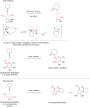
- cleavage of carbobicycle-fused 2-isoxazolines converts both exo- and endo stereoisomers of 8 into the corresponding single isomer of cyclopentene 9 (Table 1) [20]. Since then, we have been interested in the outcomes of cleavage reactions of 2-isoxazolines fused to heterobicyclic compounds 10 or 11, which





