


Search results
Search for "drug release" in Full Text gives 44 result(s) in Beilstein Journal of Organic Chemistry.
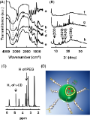
Self-assemblies of γ-CDs with pentablock copolymers PMA-PPO-PEO-PPO-PMA and endcapping via atom transfer radical polymerization of 2-methacryloyloxyethyl phosphorylcholine
Beilstein J. Org. Chem. 2015, 11, 2267–2277, doi:10.3762/bjoc.11.247
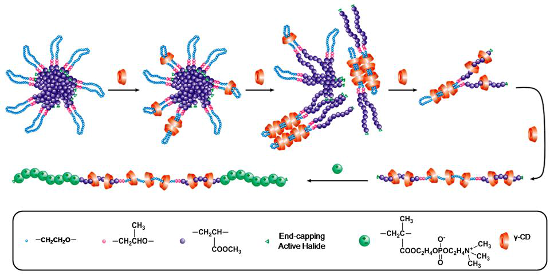
- compared with PPO or PMAA), respectively, these unmatched PRs possess the potential to be applied as dynamic-responsive materials, carriers for controlled drug release, biosensors and catalysts. Poly(methyl acrylate) (PMA) prepared via ATRP of methyl acrylate (MA) is a typical hydrophobic polymer with a
- PR supramolecular polymers show potential as dynamic-responsive materials, carriers for controlled drug release, biosensors and catalysts. Experimental Materials PPO-PEO-PPO with a central block of 90 PEO units and two flank blocks of 5 PPO units was supplied by Zhejiang Huangma Chemical Industry




Dicarboxylic esters: Useful tools for the biocatalyzed synthesis of hybrid compounds and polymers
Beilstein J. Org. Chem. 2015, 11, 1583–1595, doi:10.3762/bjoc.11.174

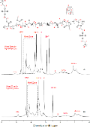
- water and could be used for drug delivery (Figure 18) [71]. A few years earlier the same authors used the same principle to synthesize amphiphilic mPEG-block-poly(profenamide-co-ester) copolymers that self-assembled in water and could be used for drug release [72]. As a follow up the same laboratory


Formulation development, stability and anticancer efficacy of core-shell cyclodextrin nanocapsules for oral chemotherapy with camptothecin
Beilstein J. Org. Chem. 2015, 11, 204–212, doi:10.3762/bjoc.11.22
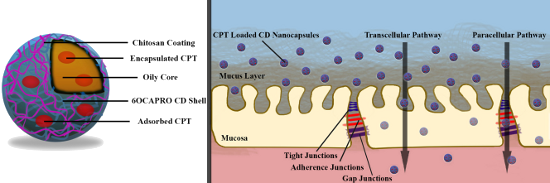
- attributed to the smaller particle diameter and higher drug loading in these formulations. It was also previously reported that drug release rates from large nanoparticles were slower than the release profile from smaller nanoparticles [16][39]. This is quite understandable since smaller particle sizes have


Release of β-galactosidase from poloxamine/α-cyclodextrin hydrogels
Beilstein J. Org. Chem. 2014, 10, 3127–3135, doi:10.3762/bjoc.10.330
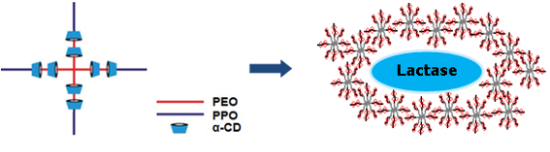
- protein for efficient digestion of lactose in the body. For pharmaceutical applications, surface-eroding polymer matrices are interesting because in these systems, drug release follows zero order kinetics [14]. This erosion feature provides an advantage in many applications compared to other non-eroding


Cyclodextrin–polysaccharide-based, in situ-gelled system for ocular antifungal delivery
Beilstein J. Org. Chem. 2014, 10, 2903–2911, doi:10.3762/bjoc.10.308
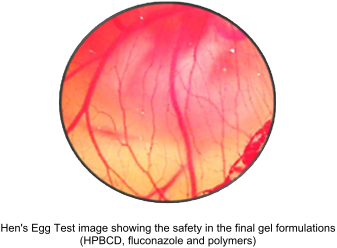
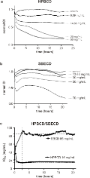
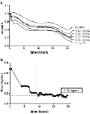
- simulated tear fluid. This gelation promotes controlled drug release, suppressing their premature release. The release of fluconazole from ion-sensitive gels is performed relatively fast during the first hour, being completely released by the end of this period. However, gels made with cyclodextrins prolong
- the drug release for approximately 4 hours. Additionally, a higher dose of fluconazole incorporated in the hydrogels containing cyclodextrins allowed the release of a higher quantity of the antifungal (α < 0.05). Insignificant differences in the drug release properties were observed as a function of
- drug release. Finally, the inclusion of HPBCDs in the in situ-formed gel allows for more effective control and a significant increase in the fluconazole release. Experimental Materials In this study, the following substances were used: Sulfobutyl ether-β-cyclodextrin (SBECD, Captisol®, average degree




Preparation and evaluation of cyclodextrin polypseudorotaxane with PEGylated liposome as a sustained release drug carrier
Beilstein J. Org. Chem. 2014, 10, 2756–2764, doi:10.3762/bjoc.10.292
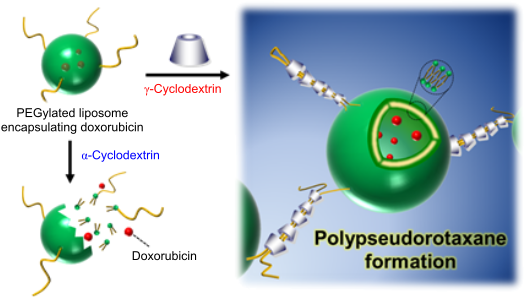
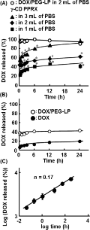
- sustained release profile of DOX. To investigate the release mechanism of naked DOX or DOX/PEG-LP from γ-CD PPRX, the release kinetic profiles were applied to kinetic models such as zero order, first order, Higuchi and Hixson–Crowell equations [45]. The drug-release data obtained within 12 h in 1 mL of
- value of 0.90, indicating that the release shows the matrix type release profile. In the matrix type release profile, the bases are either hydrophilic or hydrophobic. If a base is hydrophilic, the erosion and the dissolution of a base are observed among the drug release, and the Korsmeyer–Peppas model
- . Korsmeyer–Peppas’s model where Mt/M∞ is fraction of drug release at time t, kP is the release rate constant, and n is the release exponent. Data analysis Data were given as the mean ± S.E. The statistical significance of mean coefficients for the studies was performed by analysis of variance followed by


Anomalous diffusion of Ibuprofen in cyclodextrin nanosponge hydrogels: an HRMAS NMR study
Beilstein J. Org. Chem. 2014, 10, 2715–2723, doi:10.3762/bjoc.10.286
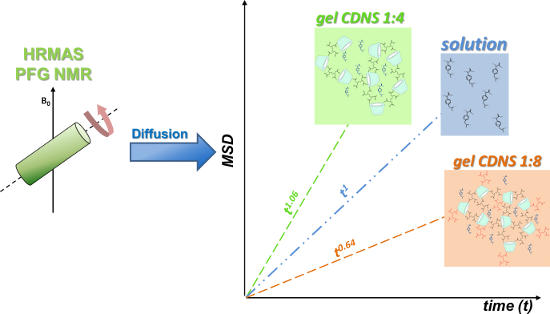
- transport properties of a drug encapsulated in polymeric scaffolds. The diffusion properties of IP in CDNS can be modulated by suitable polymer synthesis; this finding opens the possibility to design suitable systems for drug delivery with predictable and desired drug release properties. Keywords: cross


Linear-g-hyperbranched and cyclodextrin-based amphiphilic block copolymer as a multifunctional nanocarrier
Beilstein J. Org. Chem. 2014, 10, 2696–2703, doi:10.3762/bjoc.10.284
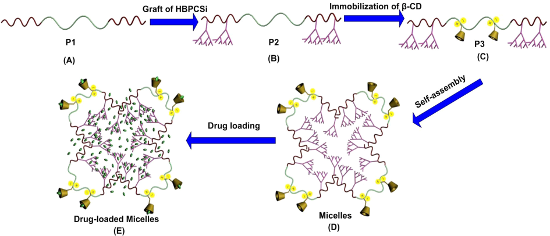
- achieve controlled drug release. An amphiphilic, triblock polymer (ABC) with hyperbranched polycarbonsilane (HBPCSi) and β-cyclodextrin (β-CD) moieties were first synthesized by the combination of a two-step reversible addition-fragmentation transfer polymerization into a pseudo-one-step hydrosilylation
- exhibit controlled drug release based on the diffusion release mechanism. The novel multifunctional nanocarrier may be applicable to produce highly efficient and specialized delivery systems for drugs, genes, and diagnostic agents. Keywords: amphiphilic block copolymer; cyclodextrin polymer
- micelles by taking advantage of the β-CD cavities. Additionally, longevity and controlled drug release abilities are possible as a result of the PDMAEMA block. Results and Discussion Synthesis of ABC with HBPCSi and β-CD (P3) P1 was first synthesized via a two-step RAFT polymerization and the subsequent


The search for new amphiphiles: synthesis of a modular, high-throughput library
Beilstein J. Org. Chem. 2014, 10, 1578–1588, doi:10.3762/bjoc.10.163

- ][11]. Each of these applications requires a specific, stable liquid-crystalline phase. The phase behaviour can have a significant impact on performance for the end application with, for example, drug-release rates known to vary depending on the geometrical characteristics of the lyotropic phase [12


Carbohydrate PEGylation, an approach to improve pharmacological potency
Beilstein J. Org. Chem. 2014, 10, 1433–1444, doi:10.3762/bjoc.10.147
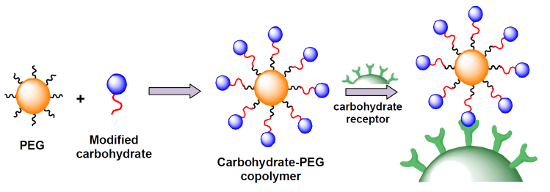
- conjugated with both paclitaxel, a potent anticancer drug, and alendronate, a bone-targeting biphosphonate, in order to obtain strong bone tropism and fast drug release [12]. An enzymatic method using a microbial transglutaminase was described for PEGylation of human growth hormone [13]. Glycans have been


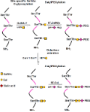
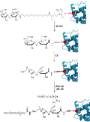
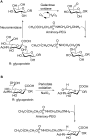




Glycosystems in nanotechnology: Gold glyconanoparticles as carrier for anti-HIV prodrugs
Beilstein J. Org. Chem. 2014, 10, 1339–1346, doi:10.3762/bjoc.10.136
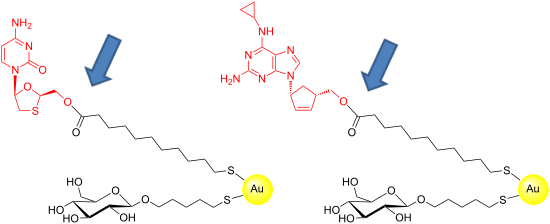
- followed for 2–3 days until a plateau in the kinetic curve of the drug release was reached (Figure 2). Calibration curves of the free drugs were performed in triplicate by LC–MS (Supporting Information File 1). The release of the drug from a 2 µg/mL GNP dilution after 150–170 h was estimated to be around


Atherton–Todd reaction: mechanism, scope and applications
Beilstein J. Org. Chem. 2014, 10, 1166–1196, doi:10.3762/bjoc.10.117





Linkage of α-cyclodextrin-terminated poly(dimethylsiloxanes) by inclusion of quasi bifunctional ferrocene
Beilstein J. Org. Chem. 2013, 9, 1278–1284, doi:10.3762/bjoc.9.144
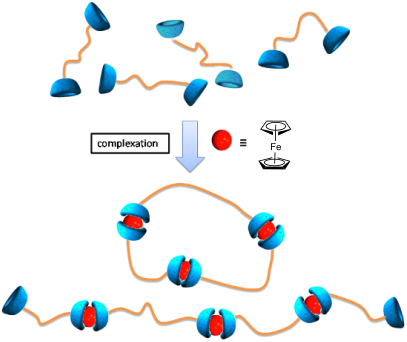
- resolution of ferrocene derivates [11][12]. α-CD-functionalized siloxanes, however, have rarely been described in the literature. There are many reports on siloxanes bearing β-CD attached on the surface, which are used as stationary phases for chromatography and for drug-release systems [13][14][15][16][17


Cyclodextrin-based nanosponges as drug carriers
Beilstein J. Org. Chem. 2012, 8, 2091–2099, doi:10.3762/bjoc.8.235
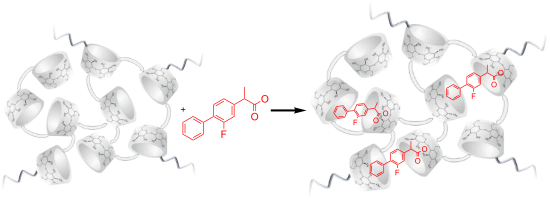
- side effects. Different drug delivery systems have been designed to modify the release kinetics of medicinal products. The drug release kinetics from nanosponges can be obtained with a prolonged release profile over time. Previous in vitro studies showed that flurbiprofen was released slowly from β-CD
- [38]. Nelfinavir is a protease inhibitor with low bioavailability, used to treat HIV infections. In this case, the drug was released more slowly from nanosponges than from a β-CD complex. This behaviour shows that nanosponges are able to prolong drug release over time and consequently could also be
- of the drug without the initial burst effect, and 20% drug release was obtained after three hours. Protection from light or degradation Nanosponges can also be used as carriers to protect encapsulated molecules from light or from chemical- and enzyme-induced degradation. To evaluate the potential


Control over molecular motion using the cis–trans photoisomerization of the azo group
Beilstein J. Org. Chem. 2012, 8, 1071–1090, doi:10.3762/bjoc.8.119
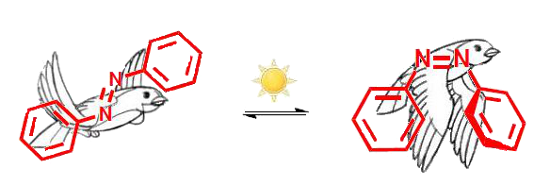
- the molecular motion of the device 15 achieves the expectations of the authors, to prove the usefulness of the device. Molecular driving force One of the more attractive and interesting applications of the isomerization processes of azobenzenes is their use as nanoimpeller-controlled drug release


Exceptionally small supramolecular hydrogelators based on aromatic–aromatic interactions
Beilstein J. Org. Chem. 2011, 7, 167–172, doi:10.3762/bjoc.7.23
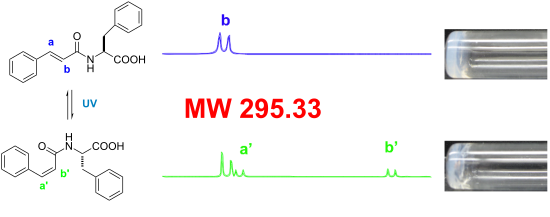
- and molecular structure, but also offers a small molecular building block for the development of enzyme based molecular self-assembly. Furthermore, cis/trans-isomerization offers a novel pathway for achieving well-dispersed nanofibers, which could be used in drug separation, drug release and other




Hybrid biofunctional nanostructures as stimuli-responsive catalytic systems
Beilstein J. Org. Chem. 2010, 6, 922–931, doi:10.3762/bjoc.6.98
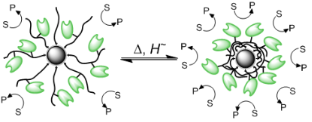
- [4]. Other systems use a photodynamic process to force a medical effect by the photochemical drug release during light irradiation [5]. By combining thermoresponsive polymers with magnetic nanoparticles, hybrid materials become accessible that can be manipulated by two different stimuli, temperature
- and magnetic fields. Such dual responsive materials are of interest for a variety of applications ranging from magnetic separation or drug release systems to sensors and actuation [6][7][8][9][10][11][12][13]. We, and other groups, have demonstrated that magnetite nanoparticles decorated with a


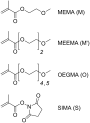


![[Graphic 1]](/bjoc/content/inline/1860-5397-6-98-i6.png?max-width=637&scale=0.1536366) ).
).


Poly(glycolide) multi-arm star polymers: Improved solubility via limited arm length
Beilstein J. Org. Chem. 2010, 6, No. 67, doi:10.3762/bjoc.6.67
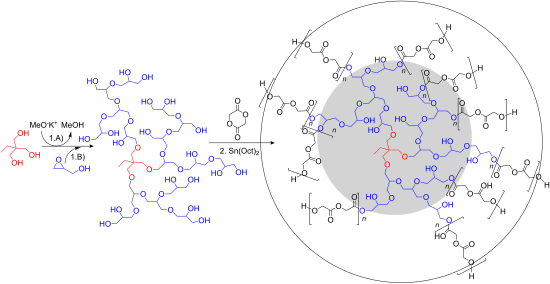
- acid chains along with the increased number of end-groups are expected to enhance hydrolytic degradability significantly, rendering the novel materials promising candidates for drug release applications. Experimental Instrumentation 1H NMR spectra were recorded at 300 MHz on a Bruker AC 300. The


New amphiphilic glycopolymers by click functionalization of random copolymers – application to the colloidal stabilisation of polymer nanoparticles and their interaction with concanavalin A lectin
Beilstein J. Org. Chem. 2010, 6, No. 58, doi:10.3762/bjoc.6.58
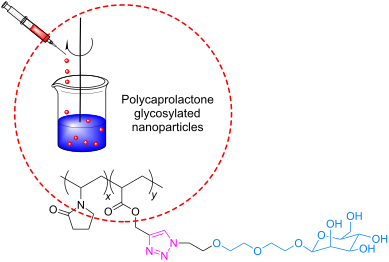
- attention because of their potential since they represent attractive alternatives to conventional pharmaceutical applications. In addition, the size, morphology and composition of the polymer particles can be tuned to optimize the drug release kinetics in order to reduce, e.g., toxicity and improve efficacy





