Search results
Search for "fluorophores" in Full Text gives 108 result(s) in Beilstein Journal of Organic Chemistry.
Tuning the solid-state emission of liquid crystalline nitro-cyanostilbene by halogen bonding
Beilstein J. Org. Chem. 2021, 17, 124–131, doi:10.3762/bjoc.17.13
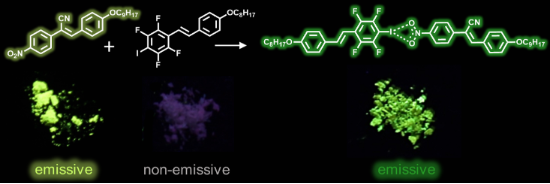
- [22]. This readily accessible class of fluorophores can easily be modified and attached to other functional entities, thus it has become a promising candidate for the design of new materials for optoelectronic applications [23]. Recently, it was successfully employed as a fluorescent moiety in the


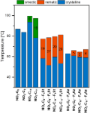

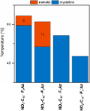



Circularly polarized luminescent systems fabricated by Tröger's base derivatives through two different strategies
Beilstein J. Org. Chem. 2021, 17, 52–57, doi:10.3762/bjoc.17.6
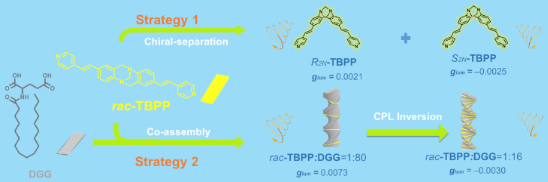
- ; inversion of CPL handedness; Tröger's base; Introduction Recently, much effort has been devoted to constructing luminescent materials with efficient high emission in the solid state [1][2][3]. More and more types of fluorophores with aggregation-induced emission (AIE) characteristics have been discovered
- DGG. In the CPL-active co-gels, noncovalent weak interactions might be formed between achiral fluorophores and a chiral gelator. So, the CPL emission of co-gels could be adjusted easily by external stimuli. The ᴅ-glutamic acid gelator DGG and its enantiomer LGG possess three hydrogen-bond sites, two


Selected peptide-based fluorescent probes for biological applications
Beilstein J. Org. Chem. 2020, 16, 2971–2982, doi:10.3762/bjoc.16.247

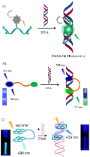
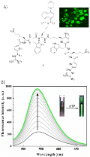
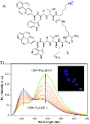
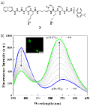
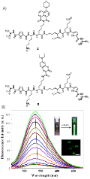
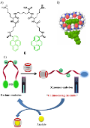
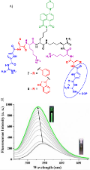
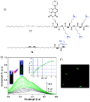
- labeled with environmentally sensitive/FRET fluorophores have allowed direct detection/monitoring of biomolecules in aqueous media and in live cells. In this review, key peptide-based approaches for different biological applications are presented. Keywords: fluorescent probe; fluorophores; molecular
- organic fluorophore (reporter) with a specific peptide sequence is the common approach for designing peptide-based fluorescent probes [16]. Fluorophores on peptidic arms perform as reporter during the interaction with biomolecules [17][18]. The interaction with biomolecules will alter the fluorescence
- intensities of absorption or emission at two wavelengths minimizes the error from the physical or chemical fluctuations in the sample. Conventional peptide probes based on environment-sensitive fluorophores [20][21][22], fluorescence resonance energy transfer (FRET) pairs [13] and pyrene excimer/monomer [23




Easy access to a carbohydrate-based template for stimuli-responsive surfactants
Beilstein J. Org. Chem. 2020, 16, 2788–2794, doi:10.3762/bjoc.16.229
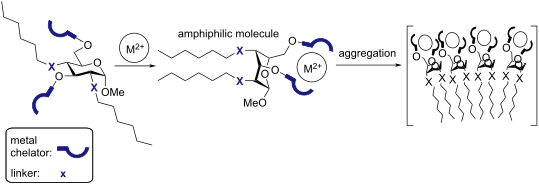
- metal-binding event. This study was carried out by having pyrene fluorophores attached to the two non-chelating positions, giving rise to excimer fluorescence when the distance between them was decreased due to the ring flip [12]. Carbohydrates with gluco stereochemistry have also been used as templates




Synthesis and characterization of S,N-heterotetracenes
Beilstein J. Org. Chem. 2020, 16, 2636–2644, doi:10.3762/bjoc.16.214

- heterotetracenes comprising four pyrrole rings (‘NNNN’) as electron-rich, ladder-type fluorophores by a two-step synthesis [36]. The possible asymmetric SN4 isomer ‘SNSN’ and heterotetracenes comprising three pyrrole rings are unknown so far. In continuation of our work on heteroacenes, we now report in detail the


Naphthalene diimide–amino acid conjugates as novel fluorimetric and CD probes for differentiation between ds-DNA and ds-RNA
Beilstein J. Org. Chem. 2020, 16, 2032–2045, doi:10.3762/bjoc.16.170
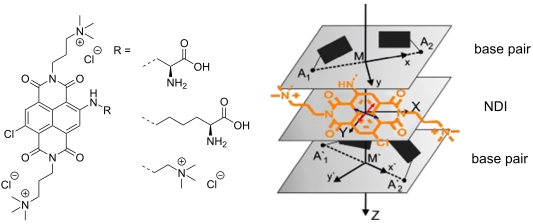
- access to large libraries of close analogues. Further, in such peptide-based chromophore systems, a multitude of different chromophores/fluorophores [10] could allow fine tuning of spectroscopic responses to various DNA/RNA sequences. With this concept in mind, Piantanida and co-workers recently
- -(trimethylammonium)ethylamine instead of an amino acid (Figure 1) was prepared. In our study of the interactions with DNA/RNA weakly acidic conditions (pH 5) were chosen to complement available pH-dependent AA-fluorophores used in our previous research (PHEN-AAs [12][26] and GCP-derivatives [15][27]), which allowed
- of the water-soluble NDIs The spectrophotometric properties of the NDIs 3a,b, and 5 were investigated in cacodylate buffer at pH 5.0 for easier comparison with complementary pH-dependent AA–fluorophores used in our previous research (PHEN–AAs [26] and GCP derivatives [27]). Additionally, the


Et3N/DMSO-supported one-pot synthesis of highly fluorescent β-carboline-linked benzothiophenones via sulfur insertion and estimation of the photophysical properties
Beilstein J. Org. Chem. 2020, 16, 1740–1753, doi:10.3762/bjoc.16.146

- incorporation of sulfur to generate multifunctional β-carboline-linked benzothiophenones in good to excellent yields. The synthetic strategy could also be extended towards the synthesis of β-carboline-linked benzothiophenes. Moreover, the afforded products emerged as promising fluorophores and displayed
- ]. It is worth mentioning that the majority of the β-carboline-substituted benzothiophenone derivatives showed good fluorescence. The emission maxima of the fluorophores showed a wide region for fluorescent emissions (λem, 490–582 nm in CHCl3) along with large Stokes shifts (up to 293 nm), excellent
- quantum yields (up to 47%), and high brightness (up to 11196). The brightness of the fluorophores was calculated by multiplication of the quantum yield (Φ) with its molar extinction coefficient (ε). In case of the β-carboline C1-substituted benzothiophenones 2aA–nA, 2bB, and 2hB, the substituents R1 and


Clickable azide-functionalized bromoarylaldehydes – synthesis and photophysical characterization
Beilstein J. Org. Chem. 2020, 16, 1683–1692, doi:10.3762/bjoc.16.139
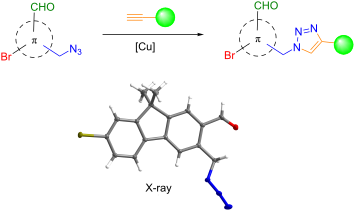
- , Germany Institute for Inorganic and Crystallographic Chemistry, University of Bremen, Leobener Straße NW2, 28359 Bremen, Germany 10.3762/bjoc.16.139 Abstract Herein, we present a facile synthesis of three azide-functionalized fluorophores and their covalent attachment as triazoles in Huisgen-type



Mechanochemical green synthesis of hyper-crosslinked cyclodextrin polymers
Beilstein J. Org. Chem. 2020, 16, 1554–1563, doi:10.3762/bjoc.16.127
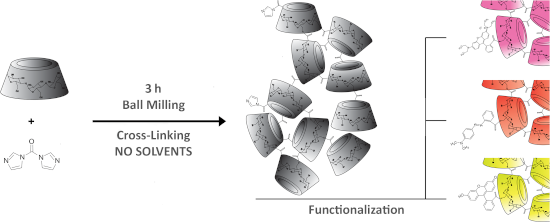
- instance, dye-modified cyclodextrins and CD derivatives have found wide use for the preparation of chemical sensors [24][25]. As CDs and consequently CD nanosponges can be easily coupled with fluorophores, they could find applications in the pharmacological area, for example, as biological markers, in




Synthesis of new fluorescent molecules having an aggregation-induced emission property derived from 4-fluoroisoxazoles
Beilstein J. Org. Chem. 2020, 16, 1411–1417, doi:10.3762/bjoc.16.117
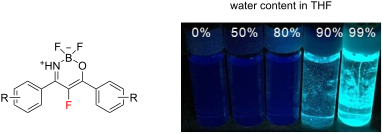
- light ray and the structures often include fluorescein, rhodamine, or 7-amino-4-methylcoumarin (7-AMC) scaffolds as fluorophores. These fluorophores usually exhibit strong fluorescence in dilute solutions, but most of their emissions are partially or completely quenched in the solid state or in highly
- , fluorescent probes having an isoxazole scaffold are rare and the limited examples that are available also contain other fluorophores such as styryl, anthranyl, or pyrenyl groups in the molecules. We recently reported the synthesis of 3,5-diaryl-4-fluoroisoxazoles 3 that were found to have planar structures


Synthesis of novel multifunctional carbazole-based molecules and their thermal, electrochemical and optical properties
Beilstein J. Org. Chem. 2020, 16, 1066–1074, doi:10.3762/bjoc.16.93
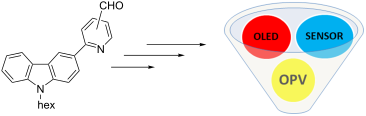
- combinations [14][15]. In sensor studies, carbazole derivatives are used as fluorophores. In this regard many different carbazole-based fluorophores are reported in the literature [16][17][18][19]. Some of the carbazole derivatives were used as colourimetric anion sensors [20], and others as biothiol sensors


Bipyrrole boomerangs via Pd-mediated tandem cyclization–oxygenation. Controlling reaction selectivity and electronic properties
Beilstein J. Org. Chem. 2020, 16, 895–903, doi:10.3762/bjoc.16.81
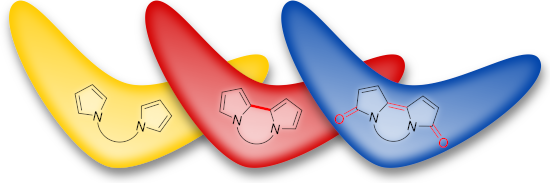
- activation, and a double α-oxygenation. The latter reaction can be partly suppressed for the least reactive systems, providing access to α-unsubstituted boomerangs for the first time. These “α-free” systems are highly efficient fluorophores, with emission quantum yields exceeding 80% in toluene. Preliminary
- bipyrroles are very efficient fluorophores (Table 2), noticeably more emissive than the lactam analogues and the other previously reported boomerangs [32]. Highest fluorescence quantum yields were observed in toluene (83 and 80%, respectively). For comparison, the Φfl values for the lactams cNMI2O and cNMI3O
- coupling in moderating the reactivity of α positions toward oxygenation. The latter systems are of interest because of their very high fluorescence quantum yields, the best so far recorded for this family of fluorophores. Our preliminary results indicate that bipyrrole boomerangs may be usable as CPL




Towards triptycene functionalization and triptycene-linked porphyrin arrays
Beilstein J. Org. Chem. 2020, 16, 763–777, doi:10.3762/bjoc.16.70

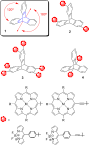
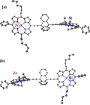
- essentially half a porphyrin molecule. These highly fluorescent organic compounds are a part of the difluoroboraindacene family. Owing to their versatility, they have become increasingly popular for their use as fluorophores [17][18][19]. BODIPY-based dyes have found application in many areas including





Regioselectively α- and β-alkynylated BODIPY dyes via gold(I)-catalyzed direct C–H functionalization and their photophysical properties
Beilstein J. Org. Chem. 2020, 16, 587–595, doi:10.3762/bjoc.16.53
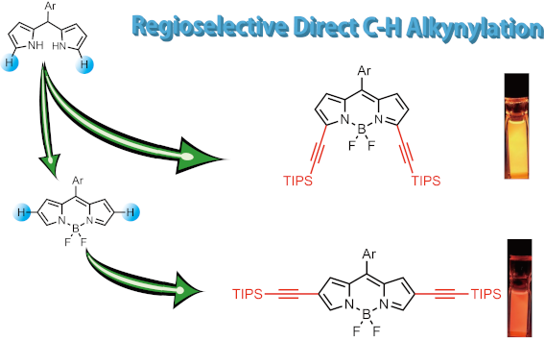
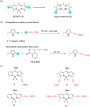
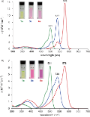
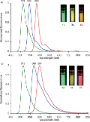
- -materials. Keywords: alkynylation; BODIPY; direct C–H functionalization; gold(I); Introduction Boron-dipyrromethene (BODIPY, 1) and its derivatives are representative families of fluorophores that have been widely used in applications for bioimaging [1][2][3][4][5][6], photodynamic therapy [7][8][9][10



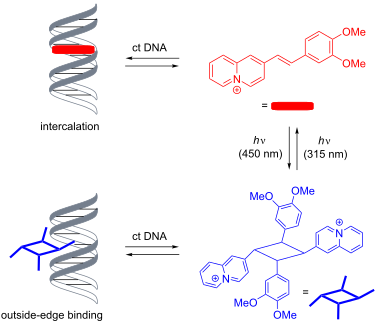
Reversible photoswitching of the DNA-binding properties of styrylquinolizinium derivatives through photochromic [2 + 2] cycloaddition and cycloreversion
Beilstein J. Org. Chem. 2020, 16, 111–124, doi:10.3762/bjoc.16.13
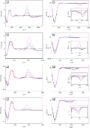
- emission intensity of 3d was too low to identify a maximum, as usually observed with nitro-substituted fluorophores. Unfortunately, the emission quantum yields of 3a–c could not be determined in water because of the compounds’ tendency to dimerize even at very low concentrations (see below). Overall, the




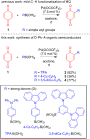
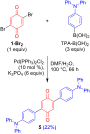
Synthesis and optoelectronic properties of benzoquinone-based donor–acceptor compounds
Beilstein J. Org. Chem. 2019, 15, 2914–2921, doi:10.3762/bjoc.15.285

- ) properties. In EL devices, such as organic light-emitting diodes (OLEDs), there are three main exciton-harvesting mechanisms for organic compounds that offer the potential to expand beyond the 25% internal quantum efficiency (IQE) offered by fluorophores: (1) phosphorescence, frequently mediated by a rare





Emission solvatochromic, solid-state and aggregation-induced emissive α-pyrones and emission-tuneable 1H-pyridines by Michael addition–cyclocondensation sequences
Beilstein J. Org. Chem. 2019, 15, 2684–2703, doi:10.3762/bjoc.15.262
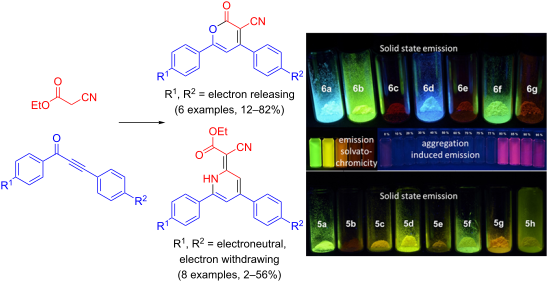
- achieved [4]. Small molecule organic fluorophores are particularly advantageous due to the potential of a tailored fine-tuning of their photophysical properties through synthetic modifications [5]. Based on their structural features, functionalized organic chromophores, containing N-, O- or S-atoms, are
- fluorophores [19], in particular on aggregation-induced emissive polar dyes [20]. Conceptually, many of these consecutive multicomponent syntheses rely on transition-metal-catalyzed heterocyclic syntheses [21]. By virtue of catalytic generation of alkynones [22] we have recently disclosed consecutive
- synthesized a series of α-pyrone derivatives with emission maxima between 400 and 675 nm in the solid state and between 486 and 542 nm in chloroform [16][24][25][26], including fluorescence quantum yields as high as 95% in solution and 58% in the solid state [16][24]. While these fluorophores were synthesized




A new approach to silicon rhodamines by Suzuki–Miyaura coupling – scope and limitations
Beilstein J. Org. Chem. 2019, 15, 2569–2576, doi:10.3762/bjoc.15.250
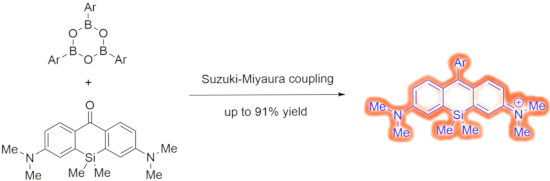
- application in STED (stimulated emission depletion) microscopy, as sensor molecules for, e.g., ions and as fluorophores for the optical imaging of tumors. Different strategies were already employed for their synthesis. Because of just three known literature examples in which Suzuki–Miyaura cross couplings
- pharmacokinetic or -dynamic properties of the tumor tracers, silicon rhodamines are relatively small and already examined as fluorophores for the optical imaging of tumors. Using silicon rhodamine SiR700 a more enhanced tumor-to-background ratio in optical imaging could be achieved compared to the cyanine based
- observation than cyanine-based fluorophores [24]. Different synthetic approaches were established to form the silicon rhodamine framework 1 (Scheme 1). While the group of Wu used a copper(II) bromide-catalyzed solvent-free condensation of a diarylsilane 2 with various benzaldehydes 3 [25], Sparr and Fischer


Probing of local polarity in poly(methyl methacrylate) with the charge transfer transition in Nile red
Beilstein J. Org. Chem. 2019, 15, 2552–2562, doi:10.3762/bjoc.15.248
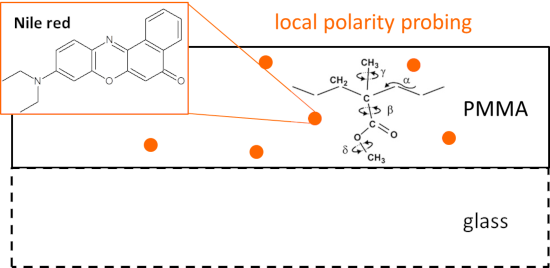
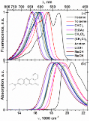
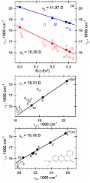
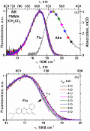
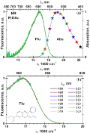
- anomalous fluorescence red shift of fluorophores in alcohols [44]. The additional red shift of NR in protic solvents, such as alcohols and probably chloroform, is associated with the hydrogen-bond formation with the carbonyl group of the dye [45]. The fluorescence maxima of NR in highly polarizable toluene



Targeted photoswitchable imaging of intracellular glutathione by a photochromic glycosheet sensor
Beilstein J. Org. Chem. 2019, 15, 2380–2389, doi:10.3762/bjoc.15.230
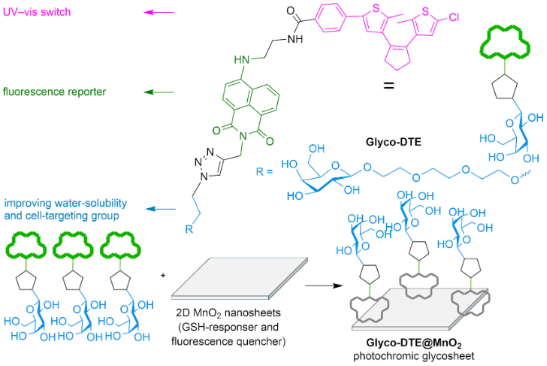
- broad and strong absorption makes the 2D MnO2 nanosheets a potential energy acceptor for the fluorophores which are stacked on the nanosheets plane, leading to the fluorescence quenching through FRET mechanism [32][34]. The transmission electron microscopy (TEM) image of the prepared product revealed
- obvious morphology of nanosheets which presented a large 2D and ultrathin plane with a diameter of ca. 200 nm (Figure 2B) [33][34]. By virtue of the expansive surface, 2D MnO2 nanosheets possess the ability to load dozens of fluorophores. An array of fluorescent reporters thus formed, which facilitate



Mono- and bithiophene-substituted diarylethene photoswitches with emissive open or closed forms
Beilstein J. Org. Chem. 2019, 15, 2344–2354, doi:10.3762/bjoc.15.227
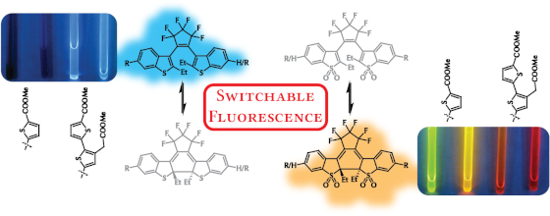
- Table 1) is only weakly fluorescent (φFl ≈ 0.01) [4]. In general, diarylethenes with fluorescent open forms are rare, while photoswitchable compounds with highly fluorescent “open” and “closed” forms represent a yet unknown and unique class of ratiometric fluorophores. Recently, we demonstrated that


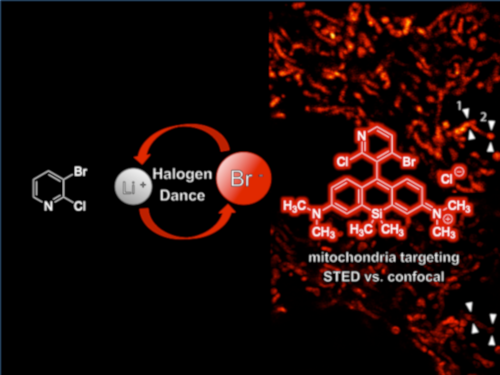
Synthesis of a dihalogenated pyridinyl silicon rhodamine for mitochondrial imaging by a halogen dance rearrangement
Beilstein J. Org. Chem. 2019, 15, 2333–2343, doi:10.3762/bjoc.15.226
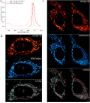
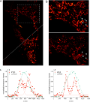
- trends for both radiative and nonradiative decays still remain difficult to predict despite theoretical and experimental efforts of the past years [29]. Here we initially assume that, in analogy to BODIPY fluorophores [30], restricted rotation around the xanthene aryl bond should lead to an improved
- quantum yields without any benzene moiety (Table 1, entries 1, 5 and 6). The fluorophores 11 and 12 exhibit values of 0.66 and 0.70 and have, to the best of our knowledge, the highest quantum yields known amongst silicon rhodamines (Scheme 1, Table 1, entries 11 and 12). One reason might be the bulkiness



Fluorescent phosphorus dendrimers excited by two photons: synthesis, two-photon absorption properties and biological uses
Beilstein J. Org. Chem. 2019, 15, 2287–2303, doi:10.3762/bjoc.15.221
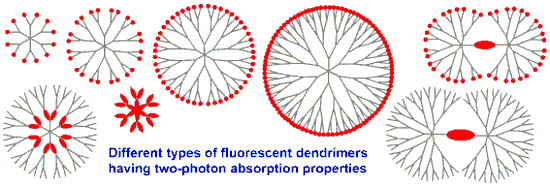
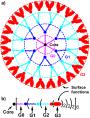
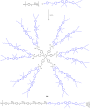
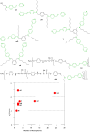
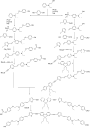
- Different types of two-photon absorbing (TPA) fluorophores have been synthesized and specifically functionalized to be incorporated in the structure of phosphorus dendrimers (highly branched macromolecules). The TPA fluorophores were included in the periphery as terminal functions, in the core, or in the
- branches of the dendrimer structures, respectively. Also the functionalization in two compartments (core and surface, or branches and surface) was achieved. The consequences of the location of the fluorophores on the fluorescence and TPA properties have been studied. Several of these TPA fluorescent
- dendrimers have water-solubilizing functions as terminal groups, and fluorophores at the core or in the branches. They have been used as fluorescent tools in biology for different purposes, such as tracers for imaging blood vessels of living animals, for determining the phenotype of cells, for deciphering









Synthesis and properties of sulfur-functionalized triarylmethylium, acridinium and triangulenium dyes
Beilstein J. Org. Chem. 2019, 15, 2133–2141, doi:10.3762/bjoc.15.210
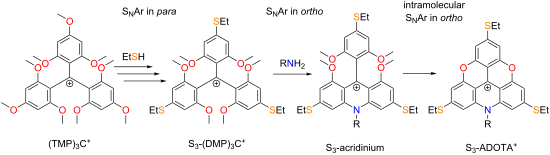
- less bright fluorophores. Thus, the dialkylamino-substituted analogue of 5a (A3-ADOTA+) has a reported quantum yield as high as 64% in acetonitrile [17], on par with A3-TOTA+ and A2-TOTA+ which display quantum yields from 50–100% depending on the solvent [31]. A similar reduction in fluorescence


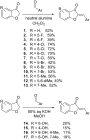
A golden opportunity: benzofuranone modifications of aurones and their influence on optical properties, toxicity, and potential as dyes
Beilstein J. Org. Chem. 2019, 15, 1781–1785, doi:10.3762/bjoc.15.171
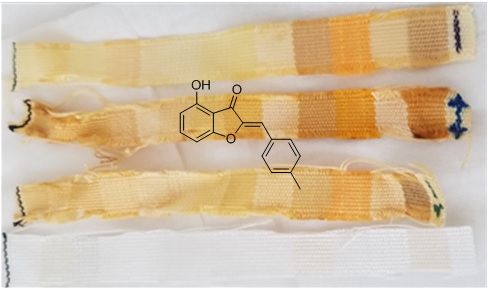
- to develop and validate the method for the rational design of new aurone fluorophores [5]. Two more recent studies have explored the influence of the benzofuranone portion of the aurone system. Salas examined a larger set of compounds featuring methoxy substitution at 4 or 5-position on the