


Search results
Search for "hydrogel" in Full Text gives 41 result(s) in Beilstein Journal of Organic Chemistry.
Anomalous diffusion of Ibuprofen in cyclodextrin nanosponge hydrogels: an HRMAS NMR study
Beilstein J. Org. Chem. 2014, 10, 2715–2723, doi:10.3762/bjoc.10.286
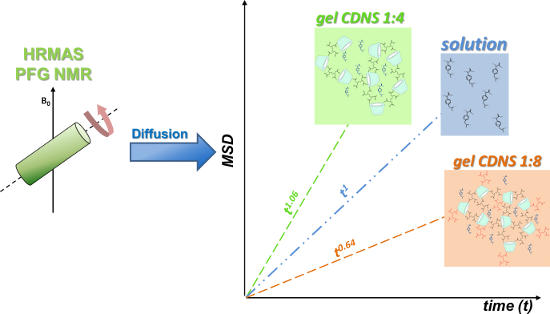
- of physical and chemical interactions [17][18]. The formation of hydrogel from CDNS is of particular practical importance as it is an easy and efficient way to load the gel with a given compound by swelling the polymer in an aqueous solution of the molecule of interest. In the past few years the


Synthesis of novel conjugates of a saccharide, amino acids, nucleobase and the evaluation of their cell compatibility
Beilstein J. Org. Chem. 2014, 10, 2406–2413, doi:10.3762/bjoc.10.250

- conjugates, which forms compound 5–8, results in no hydrogel (Supporting Information File 1, Figure S1C, D and Figure S2C, D). These results suggest that the sequences of the three types of fundamental biological building blocks in the conjugates are critical for their self-assembly. Cell compatibility To


Molecular recognition of surface-immobilized carbohydrates by a synthetic lectin
Beilstein J. Org. Chem. 2014, 10, 1354–1364, doi:10.3762/bjoc.10.138
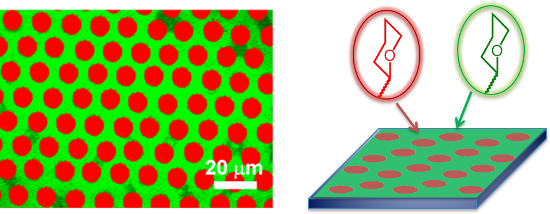
- plasmon resonance (SPR) spectroscopy a commercially available polycarboxylate hydrogel sensor surface was employed, which is known to be particularly advantageous for low molecular weight compounds due to the signal amplification caused by multiple binding events in the hydrogel on the sensor. The
- functionalization of the polycarboxylate hydrogel with amine terminated NANA was performed by N-hydroxysuccinimide (NHS) activation and subsequent peptide coupling. Indeed, using the hydrogel sensor a small but significant SPR signal increase was observed upon the addition of HisHis (see Figure S5 in Supporting


A new building block for DNA network formation by self-assembly and polymerase chain reaction
Beilstein J. Org. Chem. 2014, 10, 1037–1046, doi:10.3762/bjoc.10.104
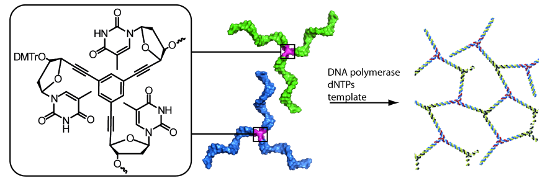
- other to form covalently linked objects [16][18][25][26]. Furthermore, by using branched DNA constructs and ligases, a DNA hydrogel was generated [27][28][29]. Luo et al. used a DNA based network, manufactured in that fashion, that can act as a protein producing gel and can be used as an efficient cell


Polymeric redox-responsive delivery systems bearing ammonium salts cross-linked via disulfides
Beilstein J. Org. Chem. 2013, 9, 1652–1662, doi:10.3762/bjoc.9.189

- transition temperature (Tg), swelling behavior and cloud points (Tc) were investigated. Redox-responsive behavior was further analyzed by rheological measurements. Keywords: cationic hydrogel; cross-linked polymer; 2-(dimethylamino)ethyl methacrylate (DMAEMA); disulfide cleavage; N,N-diethylacrylamide
- -linked polycationic hydrogel when investigating the swelling–deswelling behavior and the absorbency of organic substances [12]. Positively charged polymeric systems show an increased adsorption to negatively charged cell membranes, a higher retention time within tumor tissue [13][14][15] and the ability
- structure after a cleavage induced by the addition of DTT, and which subsequently release the embedded substances, such as dyes or DNA molecules [33][43][44][45]. Other examples for disulfide cross-linked hydrogel networks are copolymers of N-(2-hydroxypropyl)methacrylamide (HPMA) and N




C–C Bond formation catalyzed by natural gelatin and collagen proteins
Beilstein J. Org. Chem. 2013, 9, 1111–1118, doi:10.3762/bjoc.9.123

- ]. Very interestingly, even the direct use of edible gelatin obtained from the supermarket (either in powdered or cooked form) promoted the C–C bond formation in good yields (Table 2, entries 6 and 7). On the other hand, although the use of gelatin in hydrogel form did not afford a higher yield than in
- the biocatalyst used. In the case of biopolymers in powder form, first-order rate constants increased in the order chitosan < gelatin < BSA < collagen, whereas the same concentration of gelatin in hydrogel form showed slower kinetics. These results suggest a detrimental decrease of accessibility to
- . Typical procedure for gelatin hydrogel-catalyzed Henry reaction A mixture of PSTA (6 mg) in H2O (0.3 mL) was gently heated in a sealed screw cap vial (4 mL) until a homogeneous solution was obtained. This solution was stored overnight at rt to promote gel formation, which was confirmed by the complete


The conjugation of nonsteroidal anti-inflammatory drugs (NSAID) to small peptides for generating multifunctional supramolecular nanofibers/hydrogels
Beilstein J. Org. Chem. 2013, 9, 908–917, doi:10.3762/bjoc.9.104

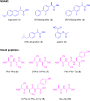
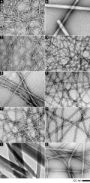
- covalent linkage of Phe–Phe and NSAIDs results in conjugates that self-assemble in water to form molecular nanofibers as the matrices of hydrogels. When the NSAID is naproxen (1), the resultant hydrogelator 1a forms a hydrogel at a critical concentration (cgc) of 0.2 wt % at pH 7.0. Hydrogelator 1a, also
- -delivery; hydrogel; multifunctional; nanofibers; NSAID; self-assembly; supramolecular; topical use; Introduction This article reports the design, synthesis, and characterization of hydrogelators made of non-steroidal anti-inflammatory drugs (NSAID) and small peptides for the development of multifunctional
- diphenylalanine (FF). We use diphenylalanine because it is able to self-assemble to form nanotubes [57]. We find that compound 1a, forming a hydrogel at the critical gelation concentration (cgc) of 0.2 wt % at pH 7.0, also serves as a general motif to enable enzymatic hydrogelation that converts 1c to 1d by a





A peptidic hydrogel that may behave as a “Trojan Horse”
Beilstein J. Org. Chem. 2013, 9, 417–424, doi:10.3762/bjoc.9.44

- 10.3762/bjoc.9.44 Abstract A physical hydrogel prepared with the low-molecular-weight hydrogelator (LMWHG) CH2(C3H6CO-L-Phe-D-Oxd-OH)2 and water/ethanol mixture was applied as a potential “Trojan Horse” carrier into cells. By SEM and XRD analysis we could demonstrate that a fibrous structure is present in
- confocal microscopy, fluorescent hydrogels were prepared, introducing the fluorescent dansyl moiety into the mixture. Keywords: amino acids; confocal microscopy; controlled release; hydrogel; low molecular weight hydrogelator; Introduction Drug delivery is an important topic in the finding of successful
- as gelator, doped by a small amount of the dansyl-containing compounds B, C and D. These all readily form fluorescent hydrogels, which may be used to evaluate the cellular uptake of A. Before evaluating the cellular uptake of the hydrogels, the structure of 1 (hydrogel), and its corresponding xerogel


Cyclodextrin-based nanosponges as drug carriers
Beilstein J. Org. Chem. 2012, 8, 2091–2099, doi:10.3762/bjoc.8.235
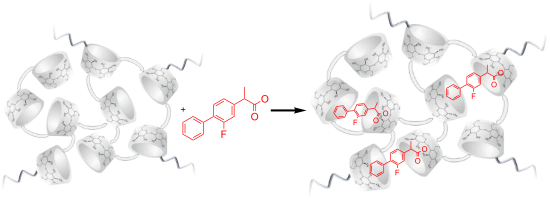
- release oxygen both in the presence and in the absence of ultrasound (US). Oxygen permeation through a silicone membrane was obtained by using a nanosponge/hydrogel combination system All types of nanosponges were able to encapsulate, store and release oxygen for prolonged periods. Ultrasound enhanced the
- in vitro release and permeation of oxygen. The nanosponge/hydrogel system produces a slower sustained release of the gas. Therefore, nanosponges could be suitable carriers for topical oxygen delivery in the presence and in the absence of US and could act as an oxygen reservoir. Conclusion Nanosponges


Supramolecular hydrogels formed from poly(viologen) cross-linked with cyclodextrin dimers and their physical properties
Beilstein J. Org. Chem. 2012, 8, 1594–1600, doi:10.3762/bjoc.8.182
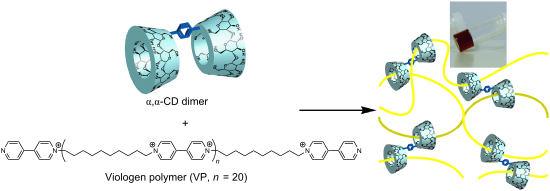
- hydrogel of α,α-CD dimer/VP forms a self-standing gel, which does not relax (G' > G'') in the frequency range 0.01–10 rad·s−1. On the other hand, the supramolecular hydrogel decomposes upon addition of bispyridyl decamethylene (PyC10Py) as a competitive guest. Moreover, the β-CD dimer (β,β-CD dimer) with
- VP does not form a supramolecular hydrogel, indicating that complexation between the C10 unit of VP and the α-CD unit of the α,α-CD dimer plays an important role in the formation of supramolecular hydrogels. Keywords: cyclodextrins; poly(viologen); supramolecular hydrogel; Introduction Development
- reports of supramolecular complexes with cyclodextrin (CD) dimers. A supramolecular hydrogel, which was constructed by the formation of an inclusion complex between the copolymer with an adamantyl group and CD dimer, showed a lower critical solution temperature (LCST) [11]. Another report indicated that


Protonation and deprotonation induced organo/hydrogelation: Bile acid derived gelators containing a basic side chain
Beilstein J. Org. Chem. 2011, 7, 304–309, doi:10.3762/bjoc.7.40
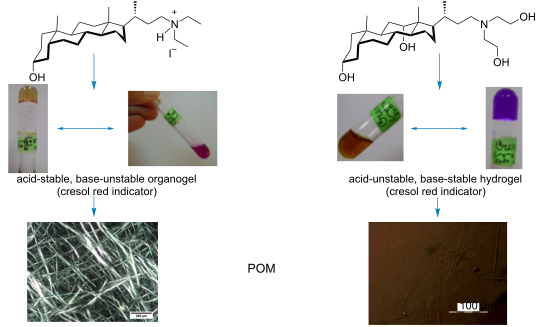
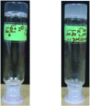
- °C and exposed to HI vapour (this was done by keeping the test tube containing the hot solution inside a sealed chamber containing conc. HI), sol to gel conversion did not require further heating and cooling. However, for the hydrogel derived from 2, the situation was reversed. The neutral amine 2
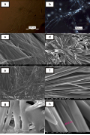
- /water hydrogel (normally cooled), inter-connected fibres (Figure 5a) and some needle-like microcrystallites (Figure 5b) were observed under a polarizing optical microscope. Interestingly, there were two types of morphology observed in the SEM micrographs: Normally-cooled gels showed finer fibres as
- -stability of the hydrogel. However, it was also found that the organogel showed high thermal stability and the nanoscale morphology represented fibres of diameters ranging from 80 nm to 1 μm. The hydrogel had comparatively lower thermal stability and showed different morphologies on sonication induced






Exceptionally small supramolecular hydrogelators based on aromatic–aromatic interactions
Beilstein J. Org. Chem. 2011, 7, 167–172, doi:10.3762/bjoc.7.23
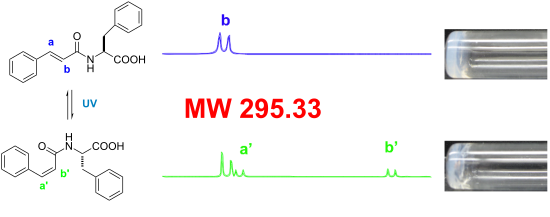
- properties. Notably, compound 6 can undergo cis/trans-isomerization upon UV irradiation. Keywords: aromatic–aromatic interaction; cinnamoyl; hydrogel; hydrogelator; supramolecular; Introduction Gels formed by three-dimensional, elastic networks to encapsulate a liquid [1], have many useful properties (e.g
- molecular weight as low as 448.51 g/mol, can form a hydrogel at a concentration as low as 0.2 mM and elucidated the molecular structure of the hydrogel based on the crystal structure of the gelator. During that gelation experiment, dimethyl sulfoxide (DMSO) was required in the gel, however, this might
- turns from a clear solution into a suspension (Figure 2B). The suspension becomes an opaque gel (Figure 2C) when the pH reaches 4.6, which finally turns into a clear hydrogel after aging for ten days (Figure 2D): The aging process apparently helps the small molecules of 6 to disperse evenly and self


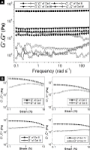


Differences between β-Ala and Gly-Gly in the design of amino acids-based hydrogels
Beilstein J. Org. Chem. 2010, 6, 973–977, doi:10.3762/bjoc.6.109
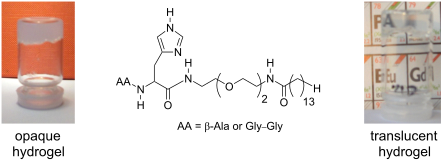
- networks as a result of intimate interactions between gelator molecules. Keywords: amino acid; histidine; hydrogel; peptide-based surfactant; soft matter; supramolecular; Introduction Hydrogels continue to attract much interest due to their versatile applications in tissue engineering, biosensing, drug
- amphiphiles, we have recently shown that Gly-Gly-His and β-Ala-His-amphiphiles act as efficient hydrogelators [10]. The histidine moiety seems to play a key role in hydrogel formation, developing not only π-π stacking interactions but also by H-bonding; by replacing histidine by phenylalanine no hydrogel
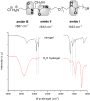
- observed at 1644 cm−1, whereas in the D2O hydrogel a weak and broad absorption band appeared at 1635 cm−1, demonstrating the existence of H-bonded amide groups. Furthermore, the increase in intensity of the methylene scissoring vibration δ(CH2) at 1454 cm−1 indicates the high conformational packing of




Pyridinium based amphiphilic hydrogelators as potential antibacterial agents
Beilstein J. Org. Chem. 2010, 6, 859–868, doi:10.3762/bjoc.6.101
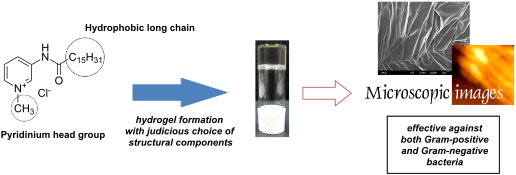
- originates from the interdigitated bilayer packing of the amphiphile leading to the development of an efficient hydrogel. Interestingly, the presence of the pyridinium scaffold along with the long alkyl chain render these amphiphiles inherently antibacterial. The amphiphilic hydrogelators exhibited high
- ; hydrogel; pyridinium; self-assembly; Introduction Gels are an outstanding group of soft materials lying at the interface of solid and liquid, and find numerous applications in various fields including tissue engineering, biosensors, food processing, cosmetics, photography, controlled drug delivery etc. [1
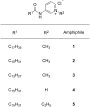
- . Amphiphile 1, with a N-methylated pyridinium moiety as the polar head linked by a C-18 alkyl chain through an amide bond, exhibited efficient water gelation ability (MGC of 2.0%, w/v). The stable to inversion of container method confirmed the formation of gel. However, the hydrogel was not stable as the



Chiral gels derived from secondary ammonium salts of (1R,3S)-(+)-camphoric acid
Beilstein J. Org. Chem. 2010, 6, 848–858, doi:10.3762/bjoc.6.100
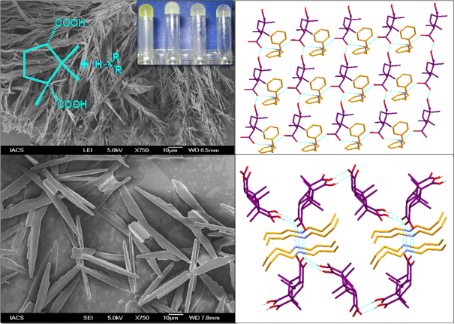
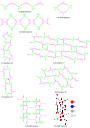
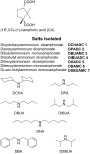
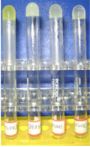
- form gel. A gel with an organic solvent is called organogel whereas that obtained from water or an aqueous solvent mixture is known as a hydrogel. Among the various classes of supramolecular gelators, interest in low molecular mass organic gelators (LMOGs) [1][2][3][4][5][6][7][8][9][10] is a




Comparison of zwitterionic N-alkylaminomethanesulfonic acids to related compounds in the Good buffer series
Beilstein J. Org. Chem. 2010, 6, No. 31, doi:10.3762/bjoc.6.31

- ), but have been unable to characterize the product as it forms an intractable aqueous gel (hydrogel) that was completely resistant to all attempts to dehydrate it. Characterization as buffers We then performed titrations to determine the pKa values of proton dissociation from the ammonium ion (1a and





