Search results
Search for "lysine" in Full Text gives 124 result(s) in Beilstein Journal of Organic Chemistry.
Peptide stapling by late-stage Suzuki–Miyaura cross-coupling
Beilstein J. Org. Chem. 2022, 18, 1–12, doi:10.3762/bjoc.18.1
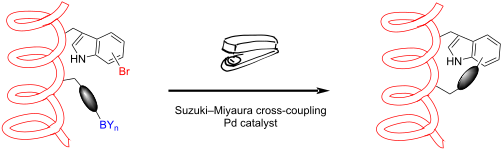
- of biomolecules [35][36][37]. The approaches by Buchwald and Pentelute are suitable for selective, bioorthogonal labelling of cysteine- [38][39][40] and lysine-containing [41][42] peptides and proteins using stochiometric amounts of pre-formed Pd(II)-aryl complexes. They can further be applied for
- -diaminobutyric acid (Dab), ornithine (Orn), or lysine (Lys). Utilising the Alloc protecting group allowed the coupling of 4-carboxyphenylboronic acid once the linear sequence had been synthesised (Scheme 2C). The intramolecular SMC between 6- or 7-bromotryptophan and the boronic acid afforded the stapled
- in i + 4-position of the linear axin CBD sequence aAxWt were substituted by tryptophan and lysine, respectively, to have a higher analogy to the lysine modified SMC stapled peptides. Following the indications of DFT calculations, stapled peptide P5 was synthesised by modification of lysine in the i


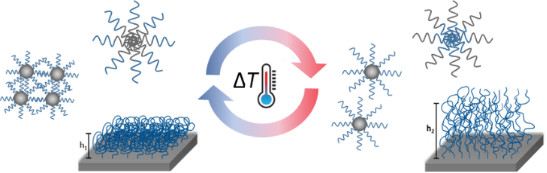
Constrained thermoresponsive polymers – new insights into fundamentals and applications
Beilstein J. Org. Chem. 2021, 17, 2123–2163, doi:10.3762/bjoc.17.138


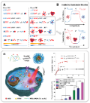
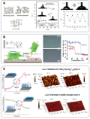
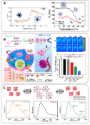
Cationic oligonucleotide derivatives and conjugates: A favorable approach for enhanced DNA and RNA targeting oligonucleotides
Beilstein J. Org. Chem. 2021, 17, 1828–1848, doi:10.3762/bjoc.17.125
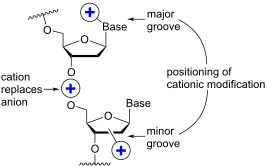
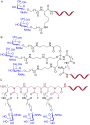
- resistance was maintained [75]. The attachment of a lysine onto the aminohexyl residue resulted in a lysylaminohexyl group (monomer 40) which displayed a gradual increase in Tm upon incorporation of up to three modifications, and also improved the resistance against nuclease degradation relative to the
- relative to the downregulation of the reference ASO (Oblimersen) [91]. In an entirely different approach, the 2’-amino group of amino-LNA-thymine (amino-LNA-T) has been explored as an attachment point for various cationic groups. As one example, amino acids such as glycine, lysine, and proline in different


Chemical approaches to discover the full potential of peptide nucleic acids in biomedical applications
Beilstein J. Org. Chem. 2021, 17, 1641–1688, doi:10.3762/bjoc.17.116
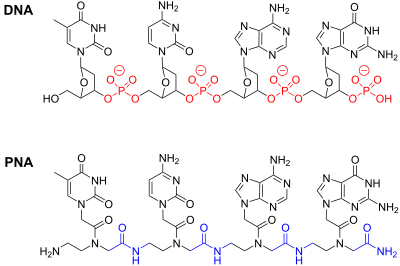
- vulnerabilities. Limited water solubility, especially for purine rich sequences, was noted in early studies. To improve water solubility and decrease aggregation, typical PNA designs place a lysine at the C-terminus (Figure 1) introducing a second positive charge in addition to the charge at the N-terminus of PNA
- [1]. Even with the additional lysine, the solubility of PNA decreases as the polymer length increases. PNA solubility in the HEPES buffer at pH 7.3 and 37 °C is estimated to be in the 0.1–0.5 mM range [12][13]. The hydrophobic nature and lack of electrostatic repulsion of the PNA backbone favors
- transitions between different binding modes of γ-hydroxymethyl-modified triplex-forming PNAs have been also explored [78]. Englund and Appella showed that PNA containing γ-modifications derived from ʟ-lysine formed stronger duplexes with DNA and RNA, while γ-modifications derived from ᴅ-lysine decreased the









Beyond ribose and phosphate: Selected nucleic acid modifications for structure–function investigations and therapeutic applications
Beilstein J. Org. Chem. 2021, 17, 908–931, doi:10.3762/bjoc.17.76
- in the vicinity of a hydrophobic patch that is surrounded by lysine and arginine residues [15]. The latter generate an electric field that could polarize sulfur atoms (the PS2 group still carries a negative charge), thereby enhancing the interaction of the PS2 moiety with the edge of phenylalanine as




Synthesis and physicochemical evaluation of fluorinated lipopeptide precursors of ligands for microbubble targeting
Beilstein J. Org. Chem. 2021, 17, 511–518, doi:10.3762/bjoc.17.45
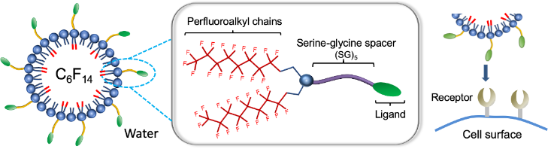
- hydrophobic chains (CnF2n+1, n = 6, 7, 8, 1–3) grafted through a lysine moiety on a hydrophilic chain composed of a lysine–serine–serine (KSS) sequence followed by 5 SG sequences. These F-lipopeptides are precursors of targeting lipopeptide conjugates. A hydrocarbon counterpart with a C10H21 chain (4) was
- (SG)5KSS peptide chain is assembled stepwise using a Fmoc solid-phase peptide synthesis procedure. In a second step, the two perfluoroalkylated chains are grafted to the peptide chain through a lysine moiety. Next, the surface activity of the synthesized lipopeptides is investigated by assessing their
- develop between the F-lipopeptide and perfluorohexane in the bubble’s interfacial film. Conclusion A series of lipopeptides carrying CnF2n+1 chains (n = 6, 7, 8, 1–3) or C10H21 chains (4) grafted through a lysine moiety on a peptide chain composed of a KSS sequence followed by 5 SG sequences were


19F NMR as a tool in chemical biology
Beilstein J. Org. Chem. 2021, 17, 293–318, doi:10.3762/bjoc.17.28
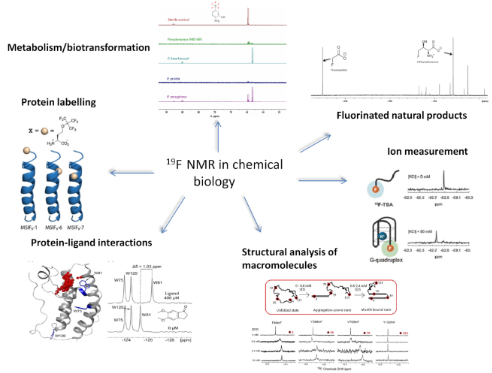
- lysine residues. This approach is attractive as it can be directly applied to isotopically enrich unlabelled proteins, which may have been obtained previously from natural sources or as recombinant proteins under less demanding cell growth conditions. As shown in Figure 3, these fluorine tags consist, in
- combined with the aforementioned chemical approaches based on cysteine and lysine modification. It is worth noting that for small proteins and peptides the chemical incorporation of the desired fluorinated amino acids using SPPS protocols still remains the method of choice, as it enables the site-specific


Molecular basis for protein–protein interactions
Beilstein J. Org. Chem. 2021, 17, 1–10, doi:10.3762/bjoc.17.1
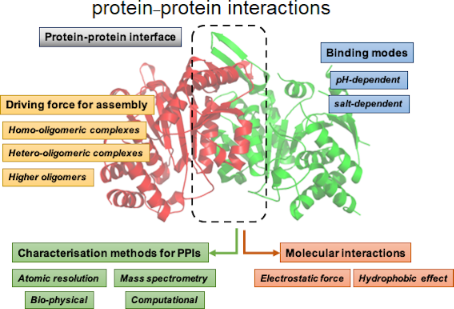
- hydrophobic residues, such as leucine, phenylalanine, tryptophan, and methionine, as well as polar residues, such as aspartate, glutamate, histidine, and arginine, tend to be part of bifurcated interactions. On the other hand, glutamine and lysine were the only amino acids that tend to not take part in such


Semiautomated glycoproteomics data analysis workflow for maximized glycopeptide identification and reliable quantification
Beilstein J. Org. Chem. 2020, 16, 3038–3051, doi:10.3762/bjoc.16.253
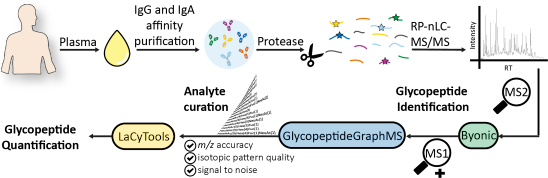
- database including 71,591 protein sequences (20,205 from Swiss-Prot and 51,386 from TrEMBL). The C-terminal cleavage of lysine and arginine and a maximum of two missed cleavages was allowed. A tolerance of 10 ppm was applied for the precursors and 20 ppm for fragment ions. A carbamidomethylation was set as



Selected peptide-based fluorescent probes for biological applications
Beilstein J. Org. Chem. 2020, 16, 2971–2982, doi:10.3762/bjoc.16.247

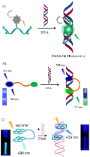
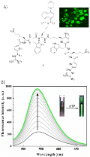
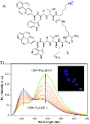
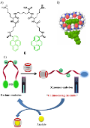
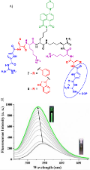
- peptidic arms equipped with lysine and an artificial strong anion binding site, the guanidinocarbonylpyrrole (GCP) moiety (Figure 2A). These arms also contain tryptophan for dissimilar aromatic interactions with different nucleobases. The fluorescence intensity of probe 1 increases by more than 4-fold at
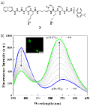
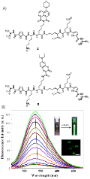
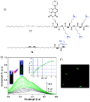
- fluorescent probes for nucleic acids detection. The first probe 2 is a pyrene-based peptide beacon containing two Trp–Thr–Lys tripeptide arms attached to a central lysine spacer (Figure 3A) [34]. Unbound peptide beacon 2 in folded form exhibits typical pyrene excimer emission at 490 nm. Peptide beacon 2
- interacts effectively with double-stranded DNA (dsDNA) as positively charged lysine residues are expected to interact with the phosphate backbone electrostatically. Upon binding to dsDNA, it undergoes a conformational change from the folded to an extended form that switches the fluorescence signal from




Encrypting messages with artificial bacterial receptors
Beilstein J. Org. Chem. 2020, 16, 2749–2756, doi:10.3762/bjoc.16.225
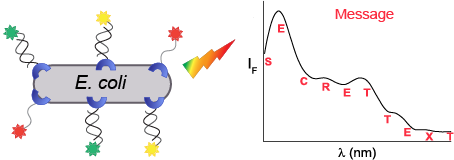
- grow in the same medium on a shaking incubator at 30 °C. Fluorescent imaging to study labeling during bacterial growth. The bacterial sample to be imaged was normalized to an OD600 = 0.3, suspended in 100 µL PBS, and placed on a glass-bottom dish (P35G-1.5-14-C; MatTek) precoated with poly-ʟ-lysine




Enzyme-instructed morphological transition of the supramolecular assemblies of branched peptides
Beilstein J. Org. Chem. 2020, 16, 2709–2718, doi:10.3762/bjoc.16.221

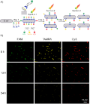
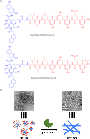
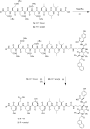
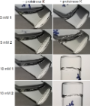
- assemblies of the peptides. The attachment of DEDDDLLI sequences to the ε-amine of the lysine residue of a tetrapeptide produces branched peptides that form micelles. Upon the proteolytic cleavage of the branch, catalyzed by proteinase K, the micelles turn into nanofibers. We also found that the acetylation
- peptides has received limited attention [2][32][33][34][35][36][37]. For example, Stupp et al. reported that a cell adhesion epitope, RGDS, acts as a branch to peptide amphiphiles for making hydrogels via self-assembly [34][36]. Ulijn et al. connected Fmoc-DAARRGG to a lysine side chain for incorporation
- assemblies of the peptides. The conjugation of Asp–Glu–Asp–Asp–Asp–Leu–Leu–Ile–Gly (DEDDDLLIG) sequences to the ε-amine of the lysine residue of a tetrapeptide Nap–ᴅ-Phe–ᴅ-Phe–ᴅ-Lys–ᴅ-Tyr (Nap-ffky) [9] produces the branched peptide 1, which forms micelles (Figure 1). When proteinase K catalyzed the




NMR Spectroscopy of supramolecular chemistry on protein surfaces
Beilstein J. Org. Chem. 2020, 16, 2505–2522, doi:10.3762/bjoc.16.203
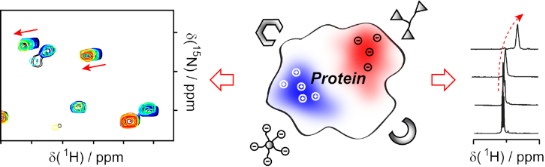
- mostly on ligands that recognize either positively or negatively charged patches on a protein surface, discussing the molecules shown in Figure 1 in greater detail. Ligands designed to recognize positively charged regions, containing lysine (Lys) and arginine (Arg) residues, on a protein include
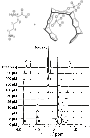
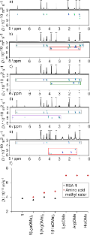
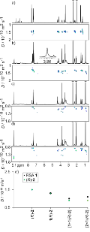
- phosphonate groups. While sulfonato-calix[4]arenes can bind unmodified Lys and Arg residues, their strength lies in the recognition and even tighter binding of methylated lysines [29]. Their binding affinity increases 70-fold from unmethylated over mono- and di- to trimethylated lysine, as every methyl group
- adds more hydrophobic interactions with the aromatic side walls of the bowl-shaped calixarene core. A similar, but even more pronounced trend, is observed for the pumpkin-shaped macrocycle cucurbit[7]uril, favoring the trimethylated over unmethylated lysine by a factor of 3500 [49]. Methylated lysines




Naphthalene diimide–amino acid conjugates as novel fluorimetric and CD probes for differentiation between ds-DNA and ds-RNA
Beilstein J. Org. Chem. 2020, 16, 2032–2045, doi:10.3762/bjoc.16.170
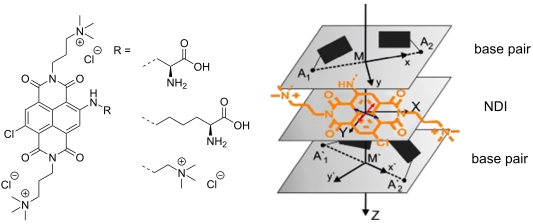
- [nm] = 581; Φfl = 0.21. Synthesis of (S)-N,N'-bis((3-(trimethylammonium)propyl)amino)-2- (5-amino-5-carboxypentyl)amino-6-chloro-1,4,5,8-naphthalenetetracarboxylic acid diimide dichloride (3b): Diimide (1, 100 mg, 190 µmol) and Nα-(tert-butoxycarbonyl)-ʟ-lysine (95.0 mg, 390 µmol) were placed under


Automated high-content imaging for cellular uptake, from the Schmuck cation to the latest cyclic oligochalcogenides
Beilstein J. Org. Chem. 2020, 16, 2007–2016, doi:10.3762/bjoc.16.167
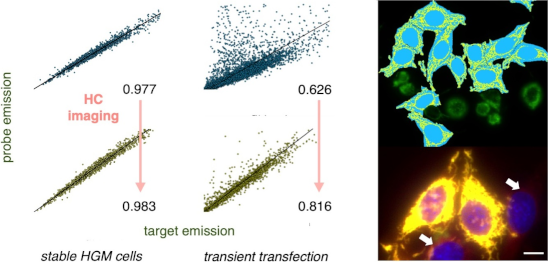
- far exceeds the related tetrapeptide analogues with arginine or lysine residues. As a result, the gene transfection efficiency of 13 is better than that of polyethylenimine (PEI) with a large number of charges, which is one of the current standards in gene transfection. The uptake takes place through
- offsetting a charge repulsion of the extra lysine residues, and thus allowing the formation of stable cationic nanofibers. These nanoaggregates, assembled from the monomer 16, are efficient gene transfection vectors. However, the control peptide 17, which cannot self-assemble into nanotubes, shows negative




Synthesis, docking study and biological evaluation of ᴅ-fructofuranosyl and ᴅ-tagatofuranosyl sulfones as potential inhibitors of the mycobacterial galactan synthesis targeting the galactofuranosyltransferase GlfT2
Beilstein J. Org. Chem. 2020, 16, 1853–1862, doi:10.3762/bjoc.16.152
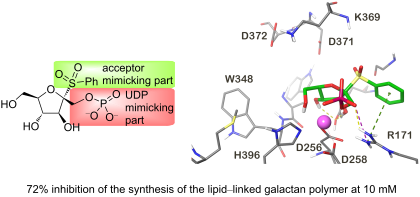
- C5 hydroxy group very often interacts with the catalytic base aspartate D372 side chain. Moreover, in the poses where this interaction has been found, the C5 hydroxy group creates a hydrogen bond with the ammonium group of the lysine K369 residue. In many docking poses the interaction of the C3


Heterogeneous photocatalysis in flow chemical reactors
Beilstein J. Org. Chem. 2020, 16, 1495–1549, doi:10.3762/bjoc.16.125










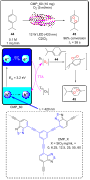

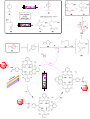


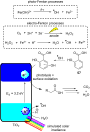

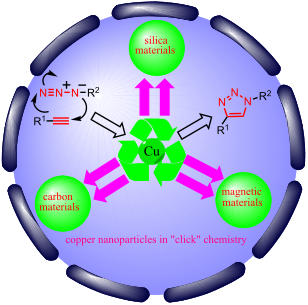
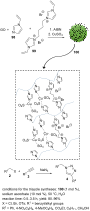
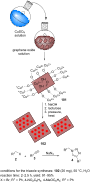
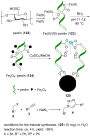
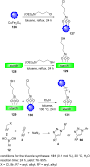
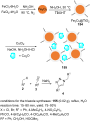
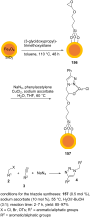
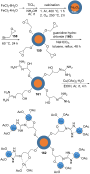
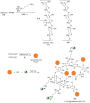
A systematic review on silica-, carbon-, and magnetic materials-supported copper species as efficient heterogeneous nanocatalysts in “click” reactions
Beilstein J. Org. Chem. 2020, 16, 551–586, doi:10.3762/bjoc.16.52





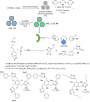
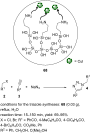


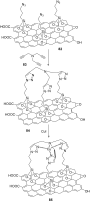


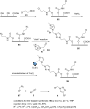







Light-controllable dithienylethene-modified cyclic peptides: photoswitching the in vivo toxicity in zebrafish embryos
Beilstein J. Org. Chem. 2020, 16, 39–49, doi:10.3762/bjoc.16.6
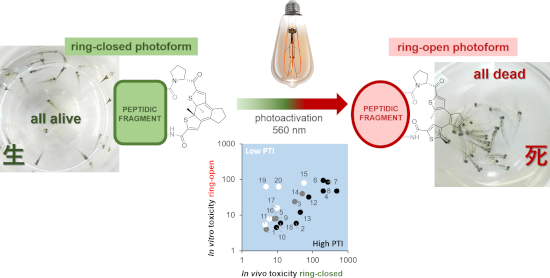
- (open)24h vs LD50(opened)24h. An exception was noted for the elongated analogues 16–18, where the light-generated ring-opened forms did not restore the activity levels observed in the direct application experiment. This behavior could be explained by a decreased proteolytic stability of these lysine


α,ß-Didehydrosuberoylanilide hydroxamic acid (DDSAHA) as precursor and possible analogue of the anticancer drug SAHA
Beilstein J. Org. Chem. 2019, 15, 2524–2533, doi:10.3762/bjoc.15.245

- , originally recognized as a pan-inhibitor, recent studies have established that it is unable to inhibit Class IIA lysine deacetylases (HDAC/4/5/79), thus showing some selectivity profile [6][7]. Moreover, pan-inhibition is also a cause of increased concern due to adverse side effects [8]. The closely related


Azologization and repurposing of a hetero-stilbene-based kinase inhibitor: towards the design of photoswitchable sirtuin inhibitors
Beilstein J. Org. Chem. 2019, 15, 2170–2183, doi:10.3762/bjoc.15.214
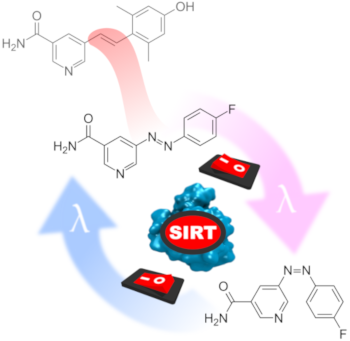
- . This class of lysine deacetylases (KDACs) is distinguished from others by their dependence on the cosubstrate NAD+. In mammals, seven sirtuin isoforms have been identified to date [1]. These can be grouped into five classes (I, II, III, IV and V) according to their phylogenetic relationship [2]. The


Complexation of chiral amines by resorcin[4]arene sulfonic acids in polar media – circular dichroism and diffusion studies of chirality transfer and solvent dependence
Beilstein J. Org. Chem. 2019, 15, 1913–1924, doi:10.3762/bjoc.15.187
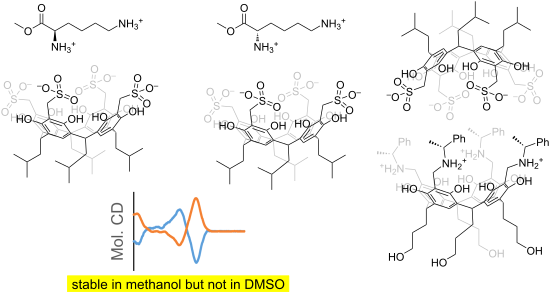
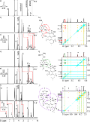
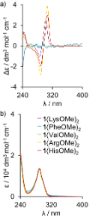
- configurations and ee values were simultaneously determined by circular dichroism spectroscopy [20]. Recently, dyn[4]arene, first described by the Leclaire and co-authors [21], was demonstrated to bind various lysine derivatives which leads to distinct ICD outputs in buffered aqueous solution [22]. Even a larger
- ), H-Val-OMe (∙HCl). After a few minutes, complexes of 1 with lysine, arginine and histidine methyl esters precipitated. The obtained solids were isolated and dried in vacuum. 1(LysOMe)2, yield 71% (10 mg). 1H NMR (600 MHz, methanol-d4, δ) 7.28 (s, 4H), 4.58 (t, J = 7.9 Hz, 4H), 4.26 (dd, J = 14.0 Hz




Design and synthesis of multivalent α-1,2-trimannose-linked bioerodible microparticles for applications in immune response studies of Leishmania major infection
Beilstein J. Org. Chem. 2019, 15, 623–632, doi:10.3762/bjoc.15.58
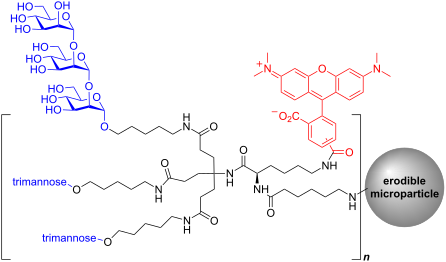
- core allowed for various potential linkage options in addition to providing the amine handle for microparticle surface functionalization. Unfortunately, the sterically encumbered tertiary amine of the dendrimer prevented simple coupling of commercially available Nα-TAMRA-Nε-Teoc-L-lysine to the
- dendrimer. Therefore, we settled on first coupling Nα-Fmoc-Nε-(4-methyltrityl)-L-lysine (17) to the dendrimeric amine 18 by standard HATU amide coupling conditions (Scheme 3). The protecting groups were chosen specifically for selective deprotection and compatibility with the TAMRA fluorophore, which is


Cyclopropene derivatives of aminosugars for metabolic glycoengineering
Beilstein J. Org. Chem. 2019, 15, 584–601, doi:10.3762/bjoc.15.54
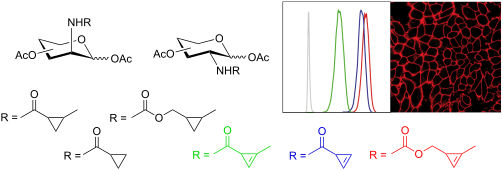
- approach similar to that used in previously described experiments [24], HEK 293T cells (18000 cells cm−1) were seeded in a 4-well ibiTreat µ-Slides (ibidi) Ph+ coated with poly-L-lysine (0.0025




Aqueous olefin metathesis: recent developments and applications
Beilstein J. Org. Chem. 2019, 15, 445–468, doi:10.3762/bjoc.15.39
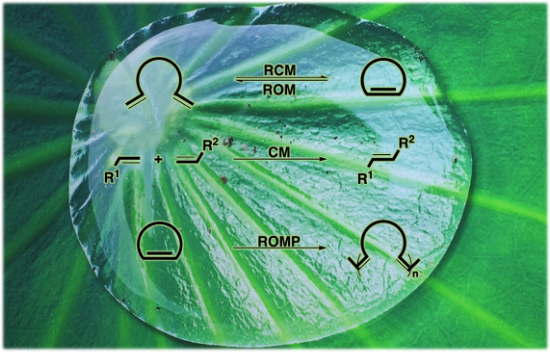
- , yielding 85% of product 22 (Table 5). A substitution of lysine with histidine at position 198 (Table 5, entries 8 and 9) did not improve the catalytic efficiency of ArM 2 at pH 7.0. Jeschek et al. subsequently evolved ArM 1 in vivo by directed evolution of an artificial metathase [68]. Tethering an OmpA