Search results
Search for "phosphonates" in Full Text gives 105 result(s) in Beilstein Journal of Organic Chemistry.
Silver-catalyzed synthesis of β-fluorovinylphosphonates by phosphonofluorination of aromatic alkynes
Beilstein J. Org. Chem. 2020, 16, 3086–3092, doi:10.3762/bjoc.16.258
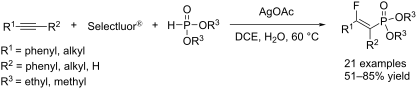
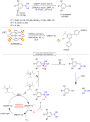
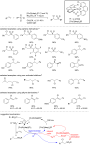
- others concerning the silver-catalyzed phosphonofluorination of alkenes [24][25][26], we herein present a general silver-catalyzed regio- and stereoselective phosphonofluorination of alkynes using Selectfluor® and phosphonates as reactants (Scheme 1). This new silver-catalyzed approach to fluorinated
- that no product was obtained (Scheme 6) [30]. Conclusion In conclusion, a novel method for the synthesis of β-fluorophosphonates through the direct phosphonofluorination of alkynes with Selectfluor® and H-phosphonates under mild reaction conditions has been successfully developed. Owing to its broad



Metal-free synthesis of biarenes via photoextrusion in di(tri)aryl phosphates
Beilstein J. Org. Chem. 2020, 16, 3008–3014, doi:10.3762/bjoc.16.250
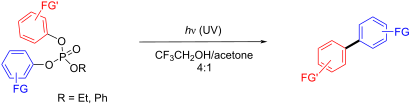
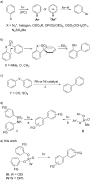
- reports described that in some cases biaryls may be obtained in variable yields starting from biaryl phosphates [52], biaryl phosphonates II [53][54][55][56], and triaryl phosphates [57][58][59][60][61] (Scheme 1d, path b). In search for alternative ways for the preparation of biaryls under photoinduced
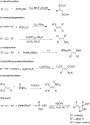
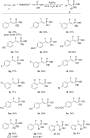
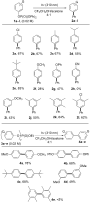
- photoextrusion from benzene sulfonamides I and phosphonates II, and e) photoextrusion from diaryl- (III) and triaryl (IV) phosphates. Metal-free photochemical synthesis of biaryls 2 and 4. Photoreactivity of aryl phosphates 1 and 3 in protic media. Optimization of the reaction conditions. Emission data of



Convenient access to pyrrolidin-3-ylphosphonic acids and tetrahydro-2H-pyran-3-ylphosphonates with multiple contiguous stereocenters from nonracemic adducts of a Ni(II)-catalyzed Michael reaction
Beilstein J. Org. Chem. 2020, 16, 2073–2079, doi:10.3762/bjoc.16.174
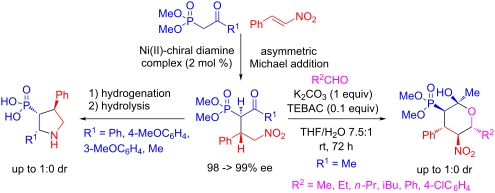
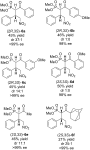
- University, Leninskie Gory, 1, 119991, Mosсow, Russian Federation 10.3762/bjoc.16.174 Abstract A new synthetic strategy toward nonracemic phosphoryl-substituted pyrrolidines and tetrahydropyranes with three and five contiguous stereocenters is presented. Readily available β-keto phosphonates react with
- conjugated nitroolefins in the presence of a chiral Ni(II) complex to give nitro keto phosphonates with two stereocenters with excellent enantioselectivity and moderate to high diastereoselectivity. These products were used for a reductive cyclization leading to pyrrolidin-3-ylphosphonic acid and for
- reactions with aldehydes yielding tetrahydropyranylphosphonates as individual stereoisomers. These nonracemic heterocycles containing phosphoryl moieties are useful for designing new pharmacologically active compounds. Keywords: asymmetric catalysis; Michael addition; phosphonates; pyrrolidines



Facile synthesis of 7-alkyl-1,2,3,4-tetrahydro-1,8-naphthyridines as arginine mimetics using a Horner–Wadsworth–Emmons-based approach
Beilstein J. Org. Chem. 2020, 16, 1617–1626, doi:10.3762/bjoc.16.134
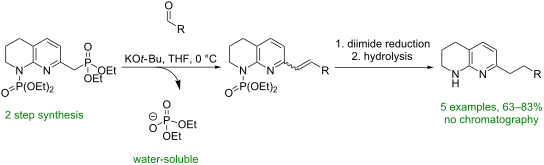
- chromatographic purification (Scheme 2). Results and Discussion Based on applications of phosphonates derived from 2-methylpyridine and 2-methlylquinoline derivatives in Horner–Wadsworth–Emmons olefinations [13][14][15], it was proposed that similar a methodology could be applied to 7-methyl-1,2,3,4-tetrahydro
- taking place (Scheme 8) [24][25][26]. The autoxidation of phosphonates under THF/potassium tert-butoxide has been reported previously [27]. In order to circumvent racemisation of aldehyde 22 during the Horner–Wadsworth–Emmons olefination, alkylation of phosphoramidate 13 was explored using commercially



The McKenna reaction – avoiding side reactions in phosphonate deprotection
Beilstein J. Org. Chem. 2020, 16, 1436–1446, doi:10.3762/bjoc.16.119
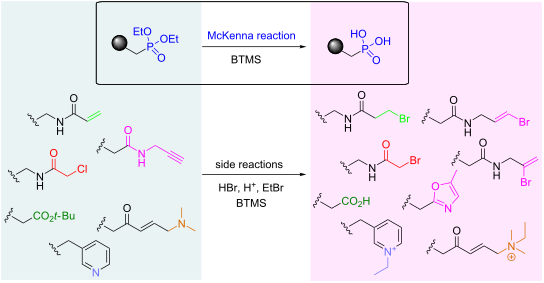
- compounds, with one representing the phosphonate, and the other containing a functional group, which could undergo a side reaction under the reaction conditions. As the first class of compounds, representing the phosphoryl group, we used phosphonates 8 and 9 (Figure 1). As the second class of model
- water and 1 equiv of TEA. Section 3: N-Alkylation As reported in the original paper [1], the McKenna reaction required up to 2 h at room temperature for simple phosphonates. However, depending on the structure of the phosphonate, longer reaction times are required, and the reaction is commonly carried
- expected, our studies using phosphonates 9a,b showed that as the concentration of ethyl bromide increases (Scheme 1), the formation of the N-alkylated product 20 was observed (Scheme 4), for compound 9a as well as for the α-fluorinated analog 9b (7–10% within 24 h, at 35 °C, monitored by 31P NMR


Highly selective Diels–Alder and Heck arylation reactions in a divergent synthesis of isoindolo- and pyrrolo-fused polycyclic indoles from 2-formylpyrrole
Beilstein J. Org. Chem. 2020, 16, 1320–1334, doi:10.3762/bjoc.16.113
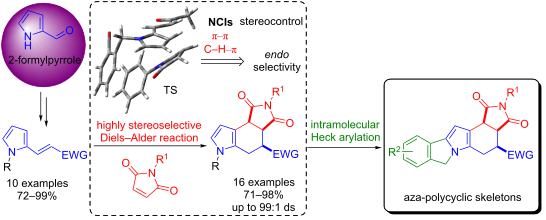
- phosphonates 15a–c to afford derivatives 8a–f in high yields (Table 1, entries 1–6). For the synthesis of pyrroles 8g,h (R1 = Ac), pyrroles 13c and 13e were subjected to condensation reactions at a higher temperature, with acetone as the nucleophile (instead the phosphonate 15) in the presence of KOH as the


Synthesis, antiinflammatory activity, and molecular docking studies of bisphosphonic esters as potential MMP-8 and MMP-9 inhibitors
Beilstein J. Org. Chem. 2020, 16, 1277–1287, doi:10.3762/bjoc.16.108

- , angiogenesis, and metastasis in cancer [12][13][14][15], pointing at bisphosphonates as potential treatments for cancer and other inflammation-related diseases. In this respect, MMP inhibition by phosphonates or bisphosphonates has been previously studied through computational or X-ray diffraction analyses to


Oxime radicals: generation, properties and application in organic synthesis
Beilstein J. Org. Chem. 2020, 16, 1234–1276, doi:10.3762/bjoc.16.107
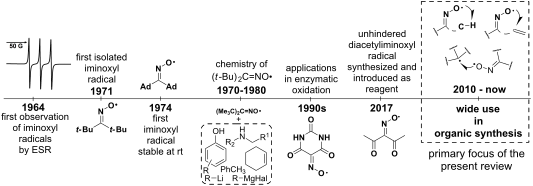
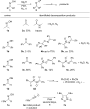
- example, based on N-containing heterocycles (isoxazolones, pyrazolones, pyrazolidin-3,5-diones, and 1,2,3-triazolones [52]), sulfones [65], and phosphonates [54] (Scheme 8). Based on the data of EPR spectroscopy [35][38][49][50][66] and quantum chemical calculations [67], the maximum spin density in




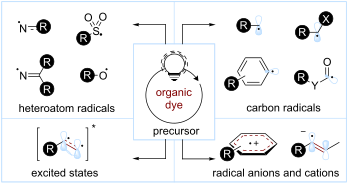
Photocatalysis with organic dyes: facile access to reactive intermediates for synthesis
Beilstein J. Org. Chem. 2020, 16, 1163–1187, doi:10.3762/bjoc.16.103

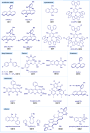




Recent applications of porphyrins as photocatalysts in organic synthesis: batch and continuous flow approaches
Beilstein J. Org. Chem. 2020, 16, 917–955, doi:10.3762/bjoc.16.83
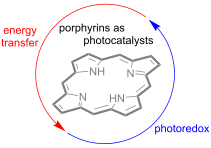
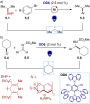
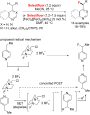
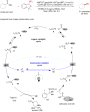
- reactions between N-phenyltetrahydroisoquinoline and dimethyl malonate, nitromethane, indoles, and dialkyl phosphonates furnished the α-substituted N-phenyltetrahydroisoquinolines in yields equal or better than with the originally used photocatalysts, such as eosin and Ir-complex [29][30][31] (Scheme 10
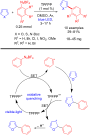
- ]. Che and co-workers showed that a variety of nucleophiles can be used for the α-functionalization of N-aryltetrahydroisoquinolines using a low Pd-TPFPP loading. This photocatalyst provided the α-aminonitriles in 71–85%, β-nitroamines in 72–83%, β-diester amines in 68–74%, and α-amino phosphonates in 63






Efficient synthesis of dipeptide analogues of α-fluorinated β-aminophosphonates
Beilstein J. Org. Chem. 2020, 16, 756–762, doi:10.3762/bjoc.16.69
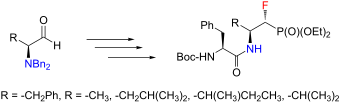
- applications of fluorinated aminophosphonates and aminophosphonic acid derivatives, they exhibit antiviral [4][5], antibacterial [6] and antifungal [7] activities. Moreover, α-fluorinated phosphonates can be considered as hydrolytically stable mimics of naturally occurring phosphates [8]. Due to the fact that
- enzyme binding may depend on the C–F stereochemistry, the synthesis of such compounds with a specific configuration is very important [9][10][11]. α-Fluorinated phosphonates can be prepared by many different protocols [12][13][14][15][16]. Nucleophilic fluorination is one of the fundamental reactions in


Copper-catalyzed O-alkenylation of phosphonates
Beilstein J. Org. Chem. 2020, 16, 611–615, doi:10.3762/bjoc.16.56

- /bjoc.16.56 Abstract Copper catalysis allows the direct oxygen alkenylation of dialkyl phosphonates with alkenyl(aryl)iodonium salts with selective transfer of the alkenyl group. This novel methodology proceeds with a wide range of phosphonates under mild conditions and gives straightforward access to
- valuable enol phosphonates in very good yields. Keywords: alkenylation; copper; C(sp2)–O bond formation; hypervalent iodine; phosphonates; Introduction Organophosphorus compounds represent an important class of products with a wide range of applications in biology, agriculture and synthetic organic
- chemistry [1][2][3]. In particular, O-alkenyl phosphonate esters (i.e., enol phosphonates) have been described as potent insecticides and show antifungal activity [4]. While several methods are available for the preparation of cyclic enol phosphonates [5][6][7][8][9][10], the synthesis of the acyclic


Recent advances in photocatalyzed reactions using well-defined copper(I) complexes
Beilstein J. Org. Chem. 2020, 16, 451–481, doi:10.3762/bjoc.16.42
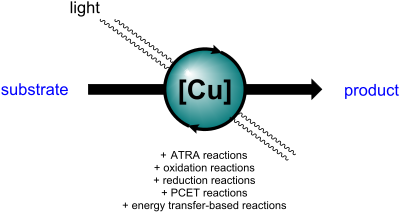
- chlorides [20]. This ATRA reaction was carried out with various fluoroalkylsulfonyl chlorides, such as CFH2SO2Cl, CF2HSO2Cl, CF3SO2Cl, CF3CH2SO2Cl, and C4F9SO2Cl, electron-deficient alkenes, including α,β-unsaturated ketones, amides, esters, carboxylic acids, sulfones, and phosphonates (Scheme 4). In














[1,3]/[1,4]-Sulfur atom migration in β-hydroxyalkylphosphine sulfides
Beilstein J. Org. Chem. 2020, 16, 88–105, doi:10.3762/bjoc.16.11
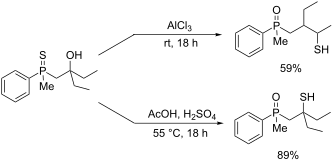
- phosphonate–phosphinate rearrangement of dimethyl phosphonates [50]. Other [1,3]-rearrangements of organophosphorus compounds include phosphoenolpyruvate formation from phosphonopyruvate [51], benzylphosphonium salt formation from the corresponding o-methylaryl-substituted precursors [52], or the formation of


Synthesis of C-glycosyl phosphonate derivatives of 4-amino-4-deoxy-α-ʟ-arabinose
Beilstein J. Org. Chem. 2020, 16, 9–14, doi:10.3762/bjoc.16.2
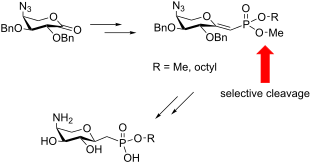
- Ara4N transferase reacted with the equatorial phosphodiester lipid, we opted to use lactone 4 as a suitable precursor for C-glycosyl phosphonates, based on literature precedents [10][20][21]. Thus, a modified Swern oxidation of lactol 3 with acetic anhydride in DMSO afforded a near-quantitative yield of
- precursors for the introduction of fluoromethyl phosphonates, which are the better bioisosters of phosphates [23][24][25]. Exo-glycal 8 was obtained in 74% yield when using methyl oxalyl chloride [26], which proved to be superior to the use of trifluoroacetic anhydride, which gave 8 in 57% yield [27]. The Z
- lipid A by ArnT. Phosphonate and glycal synthesis. Synthesis of methyl phosphonate 11 and octyl phosphonates 16 and 17. Supporting Information Supporting Information File 324: Experimental section, spectral data, and copies of 1H, 13C, and 31P NMR spectra of compounds 4, 6, and 8–17. Acknowledgements


Recent advances in transition-metal-catalyzed incorporation of fluorine-containing groups
Beilstein J. Org. Chem. 2019, 15, 2213–2270, doi:10.3762/bjoc.15.218
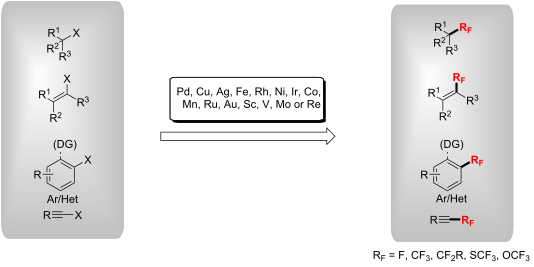
- a palladium catalyst (Scheme 9). Under these conditions, the fluorination of ethyl 2-cyano-2-phenylacetate afforded the product with highest enantiomeric excess (93%). In 2013, Kim’s group [46] described an enantioselective electrophilic fluorination of α-chloro-β-keto phosphonates with up to 95% ee











Synthesis of ([1,2,4]triazolo[4,3-a]pyridin-3-ylmethyl)phosphonates and their benzo derivatives via 5-exo-dig cyclization
Beilstein J. Org. Chem. 2019, 15, 1563–1568, doi:10.3762/bjoc.15.159
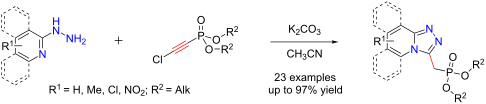
- . Chemical shifts of the phosphorus nucleus for compounds 3–8 were registered in the range of δP 22–23 and 18–19 ppm for dimethyl а and diisopropyl phosphonates b, respectively. In the 1Н NMR spectra of products 3–8, the methylene unit was recorded as a doublet signal (δH 3.42–4.19 ppm) with a spin–spin


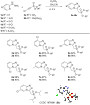


Synthesis of non-racemic 4-nitro-2-sulfonylbutan-1-ones via Ni(II)-catalyzed asymmetric Michael reaction of β-ketosulfones
Beilstein J. Org. Chem. 2019, 15, 1289–1297, doi:10.3762/bjoc.15.127
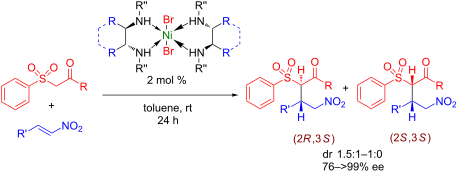
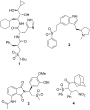
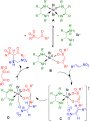
- that the reaction of β-keto phosphonates with nitroalkenes in the presence of Ni(II) complexes with chiral vicinal diamines was carried out not only with excellent enantioselectivity, but also diastereoselectivity [55]. Moreover, β-keto sulfoxides react with nitroalkenes under catalysis by Ni(II




An improved synthesis of adefovir and related analogues
Beilstein J. Org. Chem. 2019, 15, 801–810, doi:10.3762/bjoc.15.77
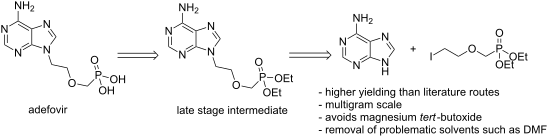
- the synthesis of acyclic nucleoside phosphonates including mesylates [42], tosylates [16][43][44] and alkyl chlorides [45][46][47][48][49][50][51]. Alkylation reactions conducted with these electrophiles generally require higher temperatures. Furthermore, these reagents typically afford products in


Cross metathesis-mediated synthesis of hydroxamic acid derivatives
Beilstein J. Org. Chem. 2018, 14, 3070–3075, doi:10.3762/bjoc.14.285

- CM-mediated synthesis of functionalized alkenes of various kinds continue to appear. For example, cross metathesis with acrylates [8][9][10], α,ß-unsaturated acid chlorides [11], acrylamides [12][13][14], vinyl sulfones [15], vinylphosphine oxides [16], vinyl phosphonates [17], enones [18], and


Pd-Catalyzed microwave-assisted synthesis of phosphonated 13α-estrones as potential OATP2B1, 17β-HSD1 and/or STS inhibitors
Beilstein J. Org. Chem. 2018, 14, 2838–2845, doi:10.3762/bjoc.14.262
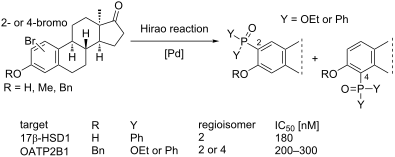
- dialkyl phosphites (H-phosphonates) as the reagents, Pd(PPh3)4 as the catalyst and Et3N as the base [26]. Variations of the reaction have recently been published to prepare diverse functionalized phosphonates [27][28]. The C–P couplings have been performed not only under traditional thermal conditions


Applications of organocatalysed visible-light photoredox reactions for medicinal chemistry
Beilstein J. Org. Chem. 2018, 14, 2035–2064, doi:10.3762/bjoc.14.179
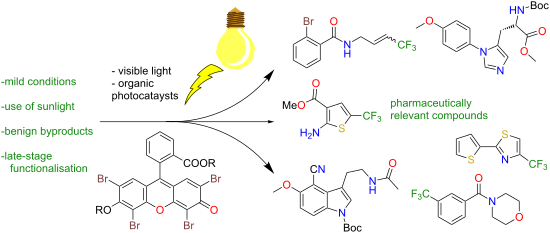
- chemistry set-up, which requires a large amount of optimisation itself. A range of nucleophiles including nitroalkanes, cyanides, malonates and phosphonates are used to modify different N-aryltetrahydroisoquinolines. These products have the potential for quite a range of subsequent reactions for elaboration




Preparation of trinucleotide phosphoramidites as synthons for the synthesis of gene libraries
Beilstein J. Org. Chem. 2018, 14, 397–406, doi:10.3762/bjoc.14.28
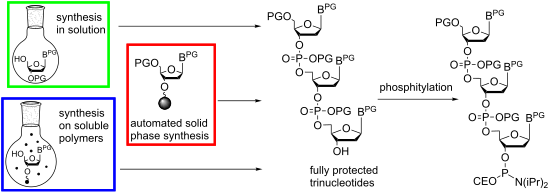
- advantages of solution chemistry and solid-phase methods. Thus, solid-supported acyl chloride or pyridinium tosylate as the activator of nucleoside-3'-O-H-phosphonates/phosphoramidites, and polystyrene-bound trimethylammonium periodate as oxidation reagent have been demonstrated to be superior for dimer and


Fluorescent nucleobase analogues for base–base FRET in nucleic acids: synthesis, photophysics and applications
Beilstein J. Org. Chem. 2018, 14, 114–129, doi:10.3762/bjoc.14.7
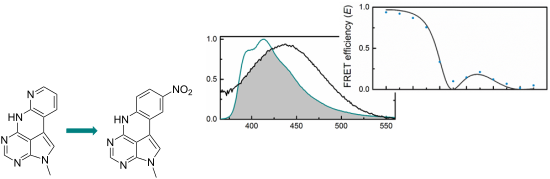
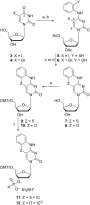
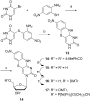
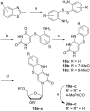
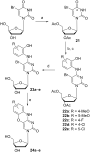
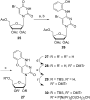
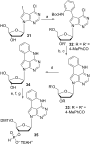
- product 9, which was used in the next step without isolation and 10 in 50% yield over three steps, respectively. Lastly, phosphitylation yielded the corresponding H-phosphonates 11 in 71% yield over two steps and 12 in 80% yield (Scheme 2). In 2001, tC was reported as a fluorescent nucleobase analogue [39
- deoxyribose phosphonates [41]. (a) Ac2O, pyridine, rt; (b) 2-mesitylenesulfonyl chloride, TEA, then 2-aminothiophenol or 2-aminophenol, DBU, rt, 27% and 54% yield, respectively, over two steps; (c) t-BuOK in EtOH, reflux, 38%; (d) NH3 in MeOH, rt, then 10 equiv of KF, EtOH, reflux; (e) 4,4´-dimethoxytrityl





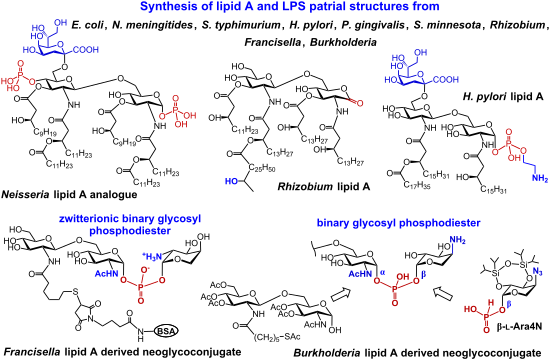
Aminosugar-based immunomodulator lipid A: synthetic approaches
Beilstein J. Org. Chem. 2018, 14, 25–53, doi:10.3762/bjoc.14.3