


Search results
Search for "α,β-unsaturated ketones" in Full Text gives 85 result(s) in Beilstein Journal of Organic Chemistry.
New metathesis catalyst bearing chromanyl moieties at the N-heterocyclic carbene ligand
- Agnieszka Hryniewicka,
- Szymon Suchodolski,
- Agnieszka Wojtkielewicz,
- Jacek W. Morzycki and
- Stanisław Witkowski
Beilstein J. Org. Chem. 2015, 11, 2795–2804, doi:10.3762/bjoc.11.300
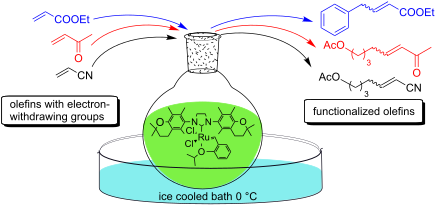
- -deficient olefin (e.g., acrylates or acrylonitriles, type II or III). In these cases, full conversion and high yields can be achieved [18]. Although the problem with the CM reactions of olefins with electron-withdrawing groups, such as α,β-unsaturated ketones and esters, is partly solved [19][20], the

Graphical Abstract

Figure 1: Examples of olefin metathesis ruthenium catalysts.
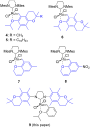
Figure 2: Selected ruthenium metathesis catalyst bearing chromanyl moieties.

Scheme 1: Synthesis of the new NHC precursor. Reagents and conditions: a) HNO3, CH2Cl2, 0 °C, 58%; b) HOCH2SO...

Scheme 2: CM with electron-deficient olefin.

Scheme 3: Possible products of metathesis reaction between diene and alkene.

Figure 3: π-Complex and rutenacyclobutane intermediate with a five-membered ring chelate.

Scheme 4: CM reaction of β-carotene and retinyl acetate with ethyl (2E,4Z/E)-3-methylhexa-2,4-dienoate. React...

Figure 4: Numbering of carbon atoms in the chromanyl moiety.
Rhodium, iridium and nickel complexes with a 1,3,5-triphenylbenzene tris-MIC ligand. Study of the electronic properties and catalytic activities
- Carmen Mejuto,
- Beatriz Royo,
- Gregorio Guisado-Barrios and
- Eduardo Peris
Beilstein J. Org. Chem. 2015, 11, 2584–2590, doi:10.3762/bjoc.11.278
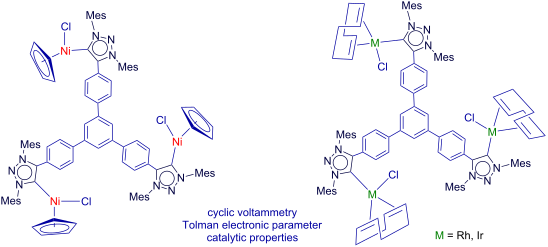
- addition reaction of arylboronic acids to α,β-unsaturated ketones. Keywords: arylation of unsaturated ketones; mesoionic carbenes; nickel; iridium; rhodium; Introduction Highly symmetrical poly-NHCs are a very interesting type of ligands, because they allow the preparation of a variety of supramolecular
- the catalytic properties of the tris-NHC Rh(I) complex 6 (Scheme 4) in the rhodium-catalyzed addition of arylboronic acids to α,β-unsaturated ketones [25] we decided to study complex 2 in the same reaction. From these comparative data it was assumed to gaining more information about the effects of the
- nature of the carbene ligand while maintaining a similar structural environment on the catalyst. The catalytic addition of arylboronic acids to α,β-unsaturated ketones [58][59][60][61][62] is a process for which several Rh(I)-NHC complexes have afforded excellent activities and chemoselectivities [58][63

Graphical Abstract

Scheme 1: Schematic representation of ligands A and B.

Scheme 2: Synthesis of rhodium(I), iridium(I), and nickel(II) complexes of ligand B.

Scheme 3: Tolman electronic parameters (TEP) for A, B and their related monocarbenes.

Figure 1: CV plots of complexes 2 (a), and 3 (b). Experiments were carried out using 1 mM solutions of the co...

Figure 2: CV plot (a) and relevant DPV section (b) of complex 4. Experiments were carried out using 1 mM solu...

Scheme 4: Schematic representation of complex 6.
Copper-catalyzed stereoselective conjugate addition of alkylboranes to alkynoates
- Takamichi Wakamatsu,
- Kazunori Nagao,
- Hirohisa Ohmiya and
- Masaya Sawamura
Beilstein J. Org. Chem. 2015, 11, 2444–2450, doi:10.3762/bjoc.11.265

- not been used for these methods [11]. As related studies we reported earlier the copper-catalyzed conjugate addition of alkylboranes (alkyl-9-BBN) to imidazole-2-yl α,β-unsaturated ketones [12][13][14] and the copper-catalyzed three-component coupling with alkylboranes, alkynoates, and tributyltin

Graphical Abstract

Scheme 1: Conjugate addition of alkylborane 2a to alkynoate 3a.

Scheme 2: Synthesis of five membered carbocycle.

Scheme 3: Deuterium-labeling experiment.

Figure 1: Possible mechanism.

Figure 2: Isomerization of the alkenylcopper intermediates.
Copper-catalyzed asymmetric conjugate addition of organometallic reagents to extended Michael acceptors
- Thibault E. Schmid,
- Sammy Drissi-Amraoui,
- Christophe Crévisy,
- Olivier Baslé and
- Marc Mauduit
Beilstein J. Org. Chem. 2015, 11, 2418–2434, doi:10.3762/bjoc.11.263
- performance in terms of enantioselectivity, and was used in combination with Cu(OTf)2 in the 1,6-ACA of cyclic dienones of the type 30 (Scheme 6). NHC ligands also enabled a total regioselectivity and ees ranging from 58 to 91%. Given the efficiency of (R)-Binap L4 in Cu-catalyzed 1,4-ACA on α,β-unsaturated
- ketones [21], the potency of other atropoisomeric diphosphines was also studied in 1,4 and 1,6-conjugate additions with cyclic and linear substrates [27]. (S)-Synphos L6 and (R)-Fluorophos L7 were used in combination with CuTC and compared to L4 (Scheme 7). Notably, the reaction of cyclic dienone 32 with

Graphical Abstract

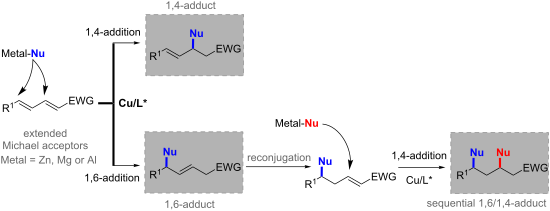
Figure 1: Possible reaction pathways in conjugate additions of nucleophiles on extended Michael acceptors.

Figure 2: Early reports of conjugate addition of copper-based reagents to extended Michael acceptors.

Figure 3: First applications of copper catalyzed 1,6-ACA in total synthesis.

Scheme 1: First example of enantioselective copper-catalyzed ACA on an extended Michael acceptor.

Scheme 2: Meldrum’s acid derivatives as substrates in enantioselective ACA.

Scheme 3: Reactivity of a cyclic dienone in Cu-catalyzed ACA of diethylzinc.

Scheme 4: Efficiency of DiPPAM ligand in 1,6-ACA of dialkylzinc to cyclic dienones.

Scheme 5: Sequential 1,6/1,4-ACA reactions involving linear aryldienones.

Scheme 6: Unsymmetrical hydroxyalkyl NHC ligands in 1,6-ACA of cyclic dienones.

Scheme 7: Performance of atropoisomeric diphosphines in 1,6-ACA of Et2Zn on cyclic dienones.

Scheme 8: Selective 1,6-ACA of Grignard reagents to acyclic dienoates, application in total synthesis.

Scheme 9: Reactivity of polyenic linear thioesters towards sequential 1,6-ACA/reconjugation/1,4-ACA and produ...

Scheme 10: 1,6-Conjugate addition of trialkylaluminium with regards to cyclic dienones.

Scheme 11: Copper-catalyzed conjugate addition of trimethylaluminium onto nitro dienoates.

Scheme 12: Copper-catalyzed selective 1,4-ACA in total synthesis of erogorgiaene.

Scheme 13: 1,4-selective addition of diethylzinc onto a cyclic enynone catalyzed by a chiral NHC-based system.

Scheme 14: Cu-NHC-catalyzed 1,6-ACA of dimethylzinc onto an α,β,γ,δ-unsaturated acyl-N-methylimidazole.

Scheme 15: 1,4-Selectivity in conjugate addition on extended systems with the concomitant use of a chelating c...

Scheme 16: Cu-NHC catalyzed 1,4-ACA as the key step in the total synthesis of ent-riccardiphenol B.

Scheme 17: Cu-NHC-catalyzed 1,4-selective ACA reactions with enynones.

Scheme 18: Linear dienones as substrates in 1,4-asymmetric conjugate addition reactions of Grignard reagents c...

Scheme 19: 1,4-ACA of trimethylaluminium to a cyclic enynone catalyzed by a copper-NHC system.

Scheme 20: Generation of a sterically encumbered chiral cyclohexanone from a polyunsaturated cyclic Michael ac...

Scheme 21: Selective conversion of β,γ-unsaturated α-ketoesters in copper-catalyzed asymmetric conjugate addit...

Scheme 22: Addition of trialkylaluminium compounds to nitroenynes catalyzed by L9/CuTC.

Scheme 23: Addition of trialkylaluminium compounds to nitrodienes catalyzed by L9/CuTC.

Scheme 24: Copper catalyzed 1,8- and 1,10-ACA reactions.
Intermolecular addition reactions of N-alkyl-N-chlorosulfonamides to unsaturated compounds
- Gerold Heuger and
- Richard Göttlich
Beilstein J. Org. Chem. 2015, 11, 1226–1234, doi:10.3762/bjoc.11.136

- aminohalogenation of cinnamic esters using N,N-dichloro-p-toluenesulfonamide and ZnCl2 or Cu(OTf)2 [18] as catalysts and transferred these conditions to reactions with alkynes [19][20][21] and α,β-unsaturated ketones [19][20][21]. An ionic mechanism via halonium ions was proposed. The amidofluorination of alkenes

Graphical Abstract

Scheme 1: Preparation of the chloroamides.

Scheme 2: First experiments for the intermolecular radical addition.

Scheme 3: Reaction of sterically hindered N-chlorosulfonamides.

Scheme 4: Proposed mechanism of the chlorination.

Scheme 5: Ring opening in the case of cationic or radical intermediates.

Scheme 6: Addition to unsaturated alcohols prone to halocyclization.
Diastereoselective and enantioselective conjugate addition reactions utilizing α,β-unsaturated amides and lactams
- Katherine M. Byrd
Beilstein J. Org. Chem. 2015, 11, 530–562, doi:10.3762/bjoc.11.60

- expanded to include α,β-unsaturated ketones, aldehydes, lactones, esters, nitroolefins, and to a lesser extent α,β-unsaturated amides and lactams. Review The lack of development in the CA of α,β-unsaturated amides and lactams is not surprising because these substrates are significantly less reactive than
- α,β-unsaturated amides and lactams are less reactive, the ACA reactions that have been developed for α,β-unsaturated ketones, esters and other substrates, would not necessarily work well on α,β-unsaturated amides and lactams. Therefore, the focus of this review is to highlight the work that has been
- pyrrolinones have only resulted in low yields and enantioselectivities. Compared to the number of existing methods for copper-catalyzed ECA reactions of α,β-unsaturated ketones and other substrates, there is definitely a need for additional research in this area. 2.2 Rhodium-catalyzed ECA reactions Unlike

Graphical Abstract

Scheme 1: Generic mechanism for the conjugate addition reaction.

Figure 1: Methods to activate unsaturated amide/lactam systems.

Scheme 2: DCA of Grignard reagents to an L-ephedrine derived chiral α,β–unsaturated amide.

Figure 2: Chiral auxiliaries used in DCA reactions.

Scheme 3: Comparison between auxiliary 5 and the Oppolzer auxiliary in a DCA reaction.

Scheme 4: Use of Evans auxiliary in a DCA reaction.
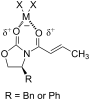
Figure 3: Lewis acid complex of the Evans auxiliary [43].

Scheme 5: DCA reactions of α,β-unsaturated amides utilizing (S,S)-(+)-pseudoephedrine and the OTBS-derivative...

Figure 4: Proposed model accounting for the diastereoselectivity observed in the 1,4-addition of Bn2NLi to α,...

Scheme 6: An example of a tandem conjugate addition–α-alkylation reaction of an α,β-unsaturated amide utilizi...

Scheme 7: Conjugate addition to an α,β-unsaturated bicyclic lactam leading to (+)-paroxetine and (+)-femoxeti...

Scheme 8: Intramolecular conjugate addition reaction to α,β-unsaturated amide.

Scheme 9: Conjugate addition to an α,β-unsaturated pyroglutamate derivative.

Scheme 10: Cu(I)–NHC-catalyzed asymmetric silylation of α,β-unsaturated lactams and amides.

Scheme 11: Asymmetric copper-catalyzed 1,4-borylation of an α,β-unsaturated amide.

Scheme 12: Asymmetric cross-coupling 49 to phenyl chloride.

Scheme 13: Rhodium-catalyzed asymmetric 1,4-arylation of an α,β-unsaturated lactam.

Scheme 14: Rhodium-catalyzed asymmetric 1,4-arylation of an α,β-unsaturated amide.

Scheme 15: Rhodium-catalyzed asymmetric 1,4-arylation of an α,β-unsaturated amide using a chiral bicyclic dien...

Scheme 16: Synthesis of (R)-(−)-baclofen through a rhodium-catalyzed asymmetric 1,4-arylation of lactam 58.

Scheme 17: Rhodium-catalyzed asymmetric 1,4-arylation of an α,β-unsaturated amide and lactam employing organo[...

Scheme 18: Rhodium-catalyzed asymmetric 1,4-arylation of an α,β-unsaturated lactam employing benzofuran-2-ylzi...

Figure 5: Further chiral ligands that have been used in rhodium-catalyzed 1,4-additions of α,β-unsaturated am...

Scheme 19: Palladium-catalyzed asymmetric 1,4-arylation of arylsiloxanes to a α,β-unsaturated lactam.

Scheme 20: SmI2-mediated cyclization of α,β-unsaturated Weinreb amides.

Figure 6: Chiral Lewis acid complexes used in the Mukaiyama–Michael addition of α,β-unsaturated amides.

Scheme 21: Mukaiyama–Michael addition of thioester silylketene acetal to α,β-unsaturated N-alkenoyloxazolidino...

Scheme 22: Asymmetric 1,4-addition of aryl acetylides to α,β-unsaturated thioamides.

Scheme 23: Asymmetric 1,4-addition of alkyl acetylides to α,β-unsaturated thioamides.

Scheme 24: Asymmetric vinylogous conjugate additions of unsaturated butyrolactones to α,β-unsaturated thioamid...

Scheme 25: Gd-catalyzed asymmetric 1,4-cyanation of α,β-unsaturated N-acylpyrroles [205].

Scheme 26: Lewis acid-catalyzed asymmetric 1,4-cyanation of α,β-unsaturated N-acylpyrazole 107.

Scheme 27: Lewis acid mediated 1,4-addition of dibenzyl malonate to α,β-unsaturated N-acylpyrroles.

Scheme 28: Chiral Lewis acid mediated 1,4-radical addition to α,β-unsaturated N-acyloxazolidinone [224].

Scheme 29: Aza-Michael addition of O-benzylhydroxylamine to an α,β-unsaturated N-acylpyrazole.

Scheme 30: An example of the aza-Michael addition of secondary aryl amines to an α,β-unsaturated N-acyloxazoli...

Scheme 31: Aza-Michael additions of anilines to a α,β-unsaturated N-alkenoyloxazolidinone catalyzed by palladi...

Scheme 32: Aza-Michael additions of aniline to an α,β-unsaturated N-alkenoylbenzamide and N-alkenoylcarbamate ...

Scheme 33: Difference between aza-Michael addition ran using the standard protocol versus the slow addition pr...

Scheme 34: Aza-Michael additions of aryl amines salts to an α,β-unsaturated N-alkenoyloxazolidinone catalyzed ...

Scheme 35: Aza-Michael addition of N-alkenoyloxazolidiniones catalyzed by samarium diiodide [244].

Scheme 36: Asymmetric aza-Michael addition of p-anisidine to α,β-unsaturated N-alkenoyloxazolidinones catalyze...

Scheme 37: Asymmetric aza-Michael addition of O-benzylhydroxylamine to N-alkenoyloxazolidinones catalyzed by i...

Scheme 38: Asymmetric 1,4-addition of purine to an α,β-unsaturated N-alkenoylbenzamide catalyzed by (S,S)-(sal...

Scheme 39: Asymmetric 1,4-addition of phosphites to α,β-unsaturated N-acylpyrroles.

Scheme 40: Asymmetric 1,4-addition of phosphine oxides to α,β-unsaturated N-acylpyrroles.

Scheme 41: Tandem Michael-aldol reaction catalyzed by a hydrogen-bonding organocatalyst.

Scheme 42: Examples of the sulfa-Michael–aldol reaction employing α,β-unsaturated N-acylpyrazoles.

Scheme 43: Example of the sulfa-Michael addition of α,β-unsaturated N-alkenoyloxazolidinones.

Figure 7: Structure of cinchona alkaloid-based squaramide catalyst.

Scheme 44: Asymmetric intramolecular oxa-Michael addition of an α,β-unsaturated amide.

Scheme 45: Formal synthesis atorvastatin.
Cross-dehydrogenative coupling for the intermolecular C–O bond formation
- Igor B. Krylov,
- Vera A. Vil’ and
- Alexander O. Terent’ev
Beilstein J. Org. Chem. 2015, 11, 92–146, doi:10.3762/bjoc.11.13
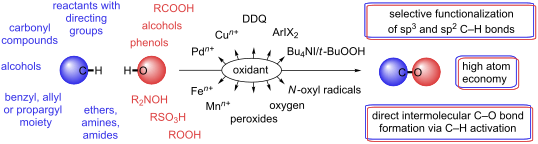
- system; different β-keto esters and hydroxamic acid derivatives can be used [203]. The acetoxylation at the α’-position of α,β-unsaturated ketones with Mn(OAc)3 was studied in detail. It is suggested that manganese(III) acetate causes the generation of C-radicals from ketones followed by the
- ) were obtained in 61–85% yield [211]. This method was modified by using not carboxylic acids but their mixtures with the corresponding anhydrides and was applied to the α’-acyloxylation of α,β-unsaturated ketones with complex structures with the aim of preparing analogues of natural compounds [212]. 4

Graphical Abstract

Scheme 1: Cross-dehydrogenative coupling.

Scheme 2: Cross-dehydrogenative C–O coupling.

Scheme 3: Regioselective ortho-acetoxylation of meta-substituted arylpyridines and N-arylamides.
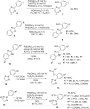
Scheme 4: ortho-Acyloxylation and alkoxylation of arenes directed by pyrimidine, benzoxazole, benzimidazole a...

Scheme 5: Cu(OAc)2/AgOTf/O2 oxidative system in the ortho-alkoxylation of arenes.
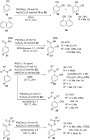
Scheme 6: Pd(OAc)2/persulfate oxidative system in the ortho-alkoxylation and acetoxylation of arenes with nit...
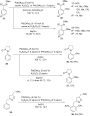
Scheme 7: ortho-Acetoxylation and methoxylation of O-methyl aryl oximes, N-phenylpyrrolidin-2-one, and (3-ben...

Scheme 8: Ruthenium-catalyzed ortho-acyloxylation of acetanilides.

Scheme 9: Acetoxylation and alkoxylation of arenes with amide directing group using Pd(OAc)2/PhI(OAc)2 oxidat...

Scheme 10: Alkoxylation of azoarenes, 2-aryloxypyridines, picolinamides, and N-(1-methyl-1-(pyridin-2-yl)ethyl...

Scheme 11: Acetoxylation of compounds containing picolinamide and quinoline-8-amine moieties using the Pd(OAc)2...

Scheme 12: (CuOH)2CO3 catalyzed oxidative ortho-etherification using air as oxidant.

Scheme 13: Copper-catalyzed aerobic alkoxylation and aryloxylation of arenes containing pyridine-N-oxide moiet...

Scheme 14: Cobalt-catalyzed aerobic alkoxylation of arenes and alkenes containing pyridine N-oxide moiety.

Scheme 15: Non-symmetric double-fold C–H ortho-acyloxylation.

Scheme 16: N-nitroso directed ortho-alkoxylation of arenes.

Scheme 17: Selective alkoxylation and acetoxylation of alkyl groups.

Scheme 18: Acetoxylation of 2-alkylpyridines and related compounds.
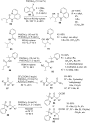
Scheme 19: Acyloxylation and alkoxylation of alkyl fragments of substrates containing amide or sulfoximine dir...

Scheme 20: Palladium-catalyzed double sp3 C–H alkoxylation of N-(quinolin-8-yl)amides for the synthesis of sym...

Scheme 21: Copper-catalyzed acyloxylation of methyl groups of N-(quinolin-8-yl)amides.

Scheme 22: One-pot acylation and sp3 C–H acetoxylation of oximes.

Scheme 23: Possible mechanism of oxidative esterification catalyzed by N-heterocyclic nucleophilic carbene.

Scheme 24: Oxidative esterification employing stoichiometric amounts of aldehydes and alcohols.

Scheme 25: Selective oxidative coupling of aldehydes with alcohols in the presence of amines.

Scheme 26: Iodine mediated oxidative esterification.

Scheme 27: Oxidative C–O coupling of benzyl alcohols with methylarenes under the action of Bu4NI/t-BuOOH syste...

Scheme 28: Oxidative coupling of methyl- and ethylarenes with aromatic aldehydes under the action of Bu4NI/t-B...

Scheme 29: Cross-dehydrogenative C–O coupling of aldehydes with t-BuOOH in the presence of Bu4NI.

Scheme 30: Bu4NI-catalyzed α-acyloxylation reaction of ethers and ketones with aldehydes and t-BuOOH.

Scheme 31: Oxidative coupling of aldehydes with N-hydroxyimides and hexafluoroisopropanol.

Scheme 32: Oxidative coupling of alcohols with N-hydroxyimides.

Scheme 33: Oxidative coupling of aldehydes and primary alcohols with N-hydroxyimides using (diacetoxyiodo)benz...

Scheme 34: Proposed mechanism of the oxidative coupling of aldehydes and N-hydroxysuccinimide under action of ...

Scheme 35: Oxidative coupling of aldehydes with pivalic acid (172).

Scheme 36: Oxidative C–O coupling of aldehydes with alkylarenes using the Cu(OAc)2/t-BuOOH system.

Scheme 37: Copper-catalyzed acyloxylation of C(sp3)-H bond adjacent to oxygen in ethers using benzyl alcohols.

Scheme 38: Oxidative C–O coupling of aromatic aldehydes with cycloalkanes.

Scheme 39: Ruthenium catalyzed cross-dehydrogenative coupling of primary and secondary alcohols.

Scheme 40: Cross-dehydrogenative C–O coupling reactions of β-dicarbonyl compounds with sulfonic acids, acetic ...

Scheme 41: Acyloxylation of ketones, aldehydes and β-dicarbonyl compounds using carboxylic acids and Bu4NI/t-B...

Scheme 42: Acyloxylation of ketones using Bu4NI/t-BuOOH system.

Scheme 43: Cross-dehydrogenative C–O coupling of β-dicarbonyl compounds and their heteroanalogues with N-hydro...

Scheme 44: Cross-dehydrogenative C–O coupling of β-dicarbonyl compounds and their heteroanalogues with t-BuOOH....

Scheme 45: Oxidative C–O coupling of 2,6-dialkylphenyl-β-keto esters and thioesters with tert-butyl hydroxycar...

Scheme 46: α’-Acyloxylation of α,β-unsaturated ketones using KMnO4.

Scheme 47: Possible mechanisms of the acetoxylation at the allylic position of alkenes by Pd(OAc)2.

Scheme 48: Products of the oxidation of terminal alkenes by Pd(II)/AcOH/oxidant system.

Scheme 49: Acyloxylation of terminal alkenes with carboxylic acids.

Scheme 50: Synthesis of linear E-allyl esters by cross-dehydrogenative coupling of terminal alkenes wih carbox...

Scheme 51: Pd(OAc)2-catalyzed acetoxylation of Z-vinyl(triethylsilanes).

Scheme 52: α’-Acetoxylation of α-acetoxyalkenes with copper(II) chloride in acetic acid.

Scheme 53: Oxidative acyloxylation at the allylic position of alkenes and at the benzylic position of alkylare...

Scheme 54: Copper-catalyzed alkoxylation of methylheterocyclic compounds using di-tert-butylperoxide as oxidan...

Scheme 55: Oxidative C–O coupling of methylarenes with β-dicarbonyl compounds or phenols.

Scheme 56: Copper-catalyzed esterification of methylbenzenes with cyclic ethers and cycloalkanes.

Scheme 57: Oxidative C–O coupling of carboxylic acids with toluene catalyzed by Pd(OAc)2.

Scheme 58: Oxidative acyloxylation at the allylic position of alkenes with carboxylic acids using the Bu4NI/t-...

Scheme 59: Cross-dehydrogenative C–O coupling of carboxylic acids with alkylarenes using the Bu4NI/t-BuOOH sys...

Scheme 60: Oxidative C–O cross-coupling of methylarenes with ethyl or isopropylarenes.

Scheme 61: Phosphorylation of benzyl C–H bonds using the Bu4NI/t-BuOOH oxidative system.

Scheme 62: Selective C–H acetoxylation of 2,3-disubstituted indoles.

Scheme 63: Acetoxylation of benzylic position of alkylarenes using DDQ as oxidant.

Scheme 64: C–H acyloxylation of diarylmethanes, 3-phenyl-2-propen-1-yl acetate and dimethoxyarene using DDQ.

Scheme 65: Cross-dehydrogenative C–O coupling of 1,3-diarylpropylenes and 1,3-diarylpropynes with alcohols.

Scheme 66: One-pot azidation and C–H acyloxylation of 3-chloro-1-arylpropynes.

Scheme 67: Cross-dehydrogenative C–O coupling of 1,3-diarylpropylenes, (E)-1-phenyl-2-isopropylethylene and is...

Scheme 68: Cross-dehydrogenative C–O coupling of alkylarenes and related compounds with N-hydroxyphthalimide.

Scheme 69: Acetoxylation at the benzylic position of alkylarenes mediated by N-hydroxyphthalimide.

Scheme 70: C–O coupling of methylarenes with aromatic carboxylic acids employing the NaBrO3/NaHSO3 system.

Scheme 71: tert-Butyl peroxidation of allyl, propargyl and benzyl ethers catalyzed by Fe(acac)3.

Scheme 72: Cross-dehydrogenative C–O coupling of ethers with carboxylic acids mediated by Bu4NI/t-BuOOH system....

Scheme 73: Oxidative acyloxylation of dimethylamides and dioxane with 2-aryl-2-oxoacetic acids accompanied by ...

Scheme 74: tert-Butyl peroxidation of N-benzylamides and N-allylbenzamide using the Bu4NI/t-BuOOH system.

Scheme 75: Cross-dehydrogenative C–O coupling of aromatic carboxylic acids with ethers using Fe(acac)3 as cata...

Scheme 76: Cross-dehydrogenative C–O coupling of cyclic ethers with 2-hydroxybenzaldehydes using iron carbonyl...
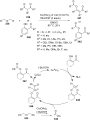
Scheme 77: Cross-dehydrogenative C–O coupling of ethers with β-dicarbonyl compounds and phenols using copper c...

Scheme 78: Cross-dehydrogenative C–O coupling of 2-hydroxybenzaldehyde with dioxane catalyzed by Cu2(BPDC)2(BP...

Scheme 79: Ruthenium chloride-catalyzed acyloxylation of β-lactams.

Scheme 80: Ruthenium-catalyzed tert-butyl peroxydation amides and acetoxylation of β-lactams.

Scheme 81: PhI(OAc)2-mediated α,β-diacetoxylation of tertiary amines.

Scheme 82: Electrochemical oxidative methoxylation of tertiary amines.

Scheme 83: Cross-dehydrogenative C–O coupling of ketene dithioacetals with carboxylic acids in the presence of...

Scheme 84: Cross-dehydrogenative C–O coupling of enamides with carboxylic acids using iodosobenzene as oxidant....

Scheme 85: Oxidative alkoxylation, acetoxylation, and tosyloxylation of acylanilides using PhI(O(O)CCF3)2 in t...

Scheme 86: Proposed mechanism of the oxidative C–O coupling of actetanilide with O-nucleophiles in the presenc...

Scheme 87: Three-component coupling of aldehydes, anilines and alcohols involving oxidative intermolecular C–O...

Scheme 88: Oxidative coupling of phenols with alcohols.

Scheme 89: 2-Acyloxylation of quinoline N-oxides with arylaldehydes in the presence of the CuOTf/t-BuOOH syste...

Scheme 90: Cross-dehydrogenative C–O coupling of azoles with primary alcohols.

Scheme 91: Oxidation of dipyrroles to dipyrrins and subsequent oxidative alkoxylation in the presence of Na3Co...

Scheme 92: Oxidative dehydrogenative carboxylation of alkanes and cycloalkanes to allylic esters.

Scheme 93: Pd-catalyzed acetoxylation of benzene.
Chiral phosphines in nucleophilic organocatalysis
- Yumei Xiao,
- Zhanhu Sun,
- Hongchao Guo and
- Ohyun Kwon
Beilstein J. Org. Chem. 2014, 10, 2089–2121, doi:10.3762/bjoc.10.218
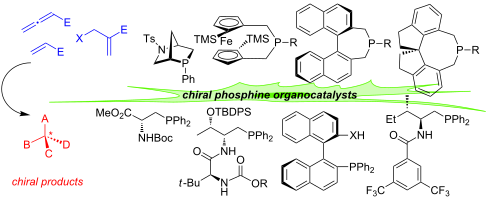

Graphical Abstract

Figure 1: Cyclic chiral phosphines based on bridged-ring skeletons.

Figure 2: Cyclic chiral phosphines based on binaphthyl skeletons.

Figure 3: Cyclic chiral phosphines based on ferrocene skeletons.

Figure 4: Cyclic chiral phosphines based on spirocyclic skeletons.

Figure 5: Cyclic chiral phosphines based on phospholane ring skeletons.

Figure 6: Acyclic chiral phosphines.

Figure 7: Multifunctional chiral phosphines based on binaphthyl skeletons.

Figure 8: Multifunctional chiral phosphines based on amino acid skeletons.

Scheme 1: Asymmetric [3 + 2] annulations of allenoates with electron-deficient olefins, catalyzed by the chir...

Scheme 2: Asymmetric [3 + 2] annulations of allenoate and enones, catalyzed by the chiral binaphthyl-based ph...

Scheme 3: Asymmetric [3 + 2] annulations of N-substituted olefins and allenoates, catalyzed by the chiral bin...

Scheme 4: Asymmetric [3 + 2] annulations of 2-aryl-1,1-dicyanoethylenes with ethyl allenoate, catalyzed by th...

Scheme 5: Asymmetric [3 + 2] annulations of 3-alkylideneindolin-2-ones with ethyl allenoate, catalyzed by the...

Scheme 6: Asymmetric [3 + 2] annulations of 2,6-diarylidenecyclohexanones with allenoates, catalyzed by the c...

Scheme 7: Asymmetric [3 + 2] annulations of allenoate with alkylidene azlactones, catalyzed by the chiral bin...

Scheme 8: Asymmetric [3 + 2] annulations of C60 with allenoates, catalyzed by the chiral phosphine B6.

Scheme 9: Asymmetric [3 + 2] annulations of α,β-unsaturated esters and ketones with an allenoate, catalyzed b...

Scheme 10: Asymmetric [3 + 2] annulations of exocyclic enones with allenoates, catalyzed by the ferrocene-modi...

Scheme 11: Asymmetric [3 + 2] annulations of enones with an allenylphosphonate, catalyzed by the ferrocene-mod...

Scheme 12: Asymmetric [3 + 2] annulations of 3-alkylidene-oxindoles with ethyl allenoate, catalyzed by the fer...

Scheme 13: Asymmetric [3 + 2] annulations of dibenzylideneacetones with ethyl allenoate, catalyzed by the ferr...

Scheme 14: Asymmetric [3 + 2] annulations of trisubstituted alkenes with ethyl allenoate, catalyzed by the fer...

Scheme 15: Asymmetric [3 + 2] annulations of 2,6-diarylidenecyclohexanones with allenoates, catalyzed by the f...

Scheme 16: Asymmetric [3 + 2] annulations of α,β-unsaturated ketones with ethyl allenoates, catalyzed by the f...

Scheme 17: Asymmetric [3 + 2] annulations of α,β-unsaturated esters with allenoates, catalyzed by the ferrocen...

Scheme 18: Asymmetric [3 + 2] annulations of alkylidene azlactones with allenoates, catalyzed by the chiral sp...

Scheme 19: Asymmetric [3 + 2] annulations of α-trimethylsilyl allenones and electron-deficient olefins, cataly...

Scheme 20: Asymmetric [3 + 2] annulations of α,β-unsaturated ketones with an allenone, catalyzed by the chiral...

Scheme 21: Asymmetric [3 + 2] annulations of cyclic enones with allenoates, catalyzed by the chiral α-amino ac...

Scheme 22: Asymmetric [3 + 2] annulations of arylidenemalononitriles and analogues with an allenoate, catalyze...

Scheme 23: Asymmetric [3 + 2] annulations of α,β-unsaturated esters with an allenoate, catalyzed by the chiral...

Scheme 24: Asymmetric [3 + 2] annulations of 3,5-dimethyl-1H-pyrazole-derived acrylamides with an allenoate, c...

Scheme 25: Asymmetric [3 + 2] annulations of maleimides with allenoates, catalyzed by the chiral phosphine H10....

Scheme 26: Asymmetric [3 + 2] annulations of α-substituted acrylates with allenoate, catalyzed by the chiral p...

Scheme 27: Asymmetric [3 + 2] annulation of an N-tosylimine with an allenoate, catalyzed by the chiral phosphi...

Scheme 28: Asymmetric [3 + 2] annulations of N-tosylimines with an allenoate, catalyzed by the chiral phosphin...

Scheme 29: Asymmetric [3 + 2] annulations of N-tosylimines with an allenoate, catalyzed by the chiral phosphin...

Scheme 30: Asymmetric [3 + 2] annulations of N-diphenylphosphinoyl aromatic imines with butynoates, catalyzed ...

Scheme 31: Asymmetric [3 + 2] annulations of N-tosylimines with allenylphosphonates, catalyzed by the chiral p...

Scheme 32: Asymmetric [3 + 2] annulation of an N-tosylimine with an allenoate, catalyzed by the chiral phosphi...

Scheme 33: Asymmetric [3 + 2] annulations of N-diphenylphosphinoyl aromatic imines with allenoates (top), cata...

Scheme 34: Asymmetric [3 + 2] annulation of N-diphenylphosphinoylimines with allenoates, catalyzed by the chir...

Scheme 35: Asymmetric [3 + 2] annulation of an azomethine imine with an allenoate, catalyzed by the chiral pho...

Scheme 36: Asymmetric [3 + 2] annulations between α,β-unsaturated esters/ketones and 3-butynoates, catalyzed b...

Scheme 37: Asymmetric intramolecular [3 + 2] annulations of electron-deficient alkenes and MBH carbonates, cat...

Scheme 38: Asymmetric [3 + 2] annulations of methyleneindolinone and methylenebenzofuranone derivatives with M...

Scheme 39: Asymmetric [3 + 2] annulations of activated isatin-based alkenes with MBH carbonates, catalyzed by ...

Scheme 40: Asymmetric [3 + 2] annulations of maleimides with MBH carbonates, catalyzed by the chiral phosphine ...

Scheme 41: A series of [3 + 2] annulations of various activated alkenes with MBH carbonates, catalyzed by the ...

Scheme 42: Asymmetric [3 + 2] annulations of an alkyne with isatins, catalyzed by the chiral phosphine F1.

Scheme 43: Asymmetric [4 + 2] annulations catalyzed by the chiral phosphine B1.

Scheme 44: Asymmetric [4 + 2] annulations catalyzed by the chiral phosphine H5.

Scheme 45: Asymmetric [4 + 2] annulations catalyzed by the chiral phosphines H13 and H12.

Scheme 46: Asymmetric [4 + 2] annulations catalyzed by the chiral phosphine H6.

Scheme 47: Kerrigan’s [2 + 2] annulations of ketenes with imines, catalyzed by the chiral phosphine B7.

Scheme 48: Asymmetric [4 + 1] annulations, catalyzed by the chiral phosphine G6.

Scheme 49: Asymmetric homodimerization of ketenes, catalyzed by the chiral phosphine F5 and F6.

Scheme 50: Aza-MBH/Michael reactions, catalyzed by the chiral phosphine G1.

Scheme 51: Tandem RC/Michael additions, catalyzed by the chiral phosphine H14.

Scheme 52: Intramolecular tandem RC/Michael addition, catalyzed by the chiral phosphine H15.

Scheme 53: Double-Michael addition, catalyzed by the chiral aminophosphine G9.

Scheme 54: Tandem Michael addition/Wittig olefinations, mediated by the chiral phosphine BIPHEP.

Scheme 55: Asymmetric Michael additions, catalyzed by the chiral phosphines H7, H8, and H9.

Scheme 56: Asymmetric γ-umpolung additions, catalyzed by the chiral phosphine A1.

Scheme 57: Asymmetric γ-umpolung additions, catalyzed by the chiral phosphines E2 and E3.

Scheme 58: Intramolecular γ-additions of hydroxy-2-alkynoates, catalyzed by the chiral phosphine D2.

Scheme 59: Intra-/intermolecular γ-additions, catalyzed by the chiral phosphine D2.

Scheme 60: Intermolecular γ-additions, catalyzed by the chiral phosphines B5 and B3.

Scheme 61: Intermolecular γ-additions, catalyzed by the chiral phosphines E6 and B4.

Scheme 62: Asymmetric allylic substitution of MBH acetates, catalyzed by the chiral phosphine G2.

Scheme 63: Allylic substitutions between MBH acetates or carbonates and an array of nucleophiles, catalyzed by...

Scheme 64: Asymmetric acylation of diols, catalyzed by the chiral phosphines E4 and E5.

Scheme 65: Kinetic resolution of secondary alcohols, catalyzed by the chiral phosphine E8 and E9.
Preparation of phosphines through C–P bond formation
- Iris Wauters,
- Wouter Debrouwer and
- Christian V. Stevens
Beilstein J. Org. Chem. 2014, 10, 1064–1096, doi:10.3762/bjoc.10.106
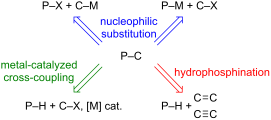
- diphenylphosphine to α,β-unsaturated ketones [127][128], esters [129], sulfonic esters [130] or to dienones [131]. The proposed mechanism is ubiquitous in metal-catalyzed hydrophosphination involving a P–H oxidative addition, insertion of the olefin into the Pd–H bond and reductive elimination. In 2007 several

Graphical Abstract

Scheme 1: Synthesis of P-stereogenic phosphines 5 using menthylphosphinite borane diastereomers 2.

Scheme 2: Enantioselective synthesis of chiral phosphines 10 with ephedrine as a chiral auxiliary.

Scheme 3: Chlorophosphine boranes 11a as P-chirogenic electrophilic building blocks.

Scheme 4: Monoalkylation of phenylphosphine borane 15 with methyl iodide in the presence of Cinchona alkaloid...

Scheme 5: Preparation of tetraphosphine borane 19.

Scheme 6: Using chiral chlorophosphine-boranes 11b as phosphide borane 20 precursors.

Scheme 7: Nickel-catalyzed cross-coupling (dppe = 1,2-bis(diphenylphosphino)ethane).

Scheme 8: Pd-catalyzed cross-coupling reaction with organophosphorus stannanes 30.

Scheme 9: Copper iodide catalyzed carbon–phosphorus bond formation.

Scheme 10: Thermodynamic kinetic resolution as the origin of enantioselectivity in metal-catalyzed asymmetric ...

Scheme 11: Ru-catalyzed asymmetric phosphination of benzyl and alkyl chlorides 35 with HPPhMe (36a, PHOX = pho...

Scheme 12: Pt-catalyzed asymmetric alkylation of secondary phosphines 36b.

Scheme 13: Different adducts 43 can result from hydrophosphination.

Scheme 14: Pt-catalyzed asymmetric hydrophosphination.

Scheme 15: Intramolecular hydrophosphination of phosphinoalkene 47.

Scheme 16: Organocatalytic asymmetric hydrophosphination of α,β-unsaturated aldehydes 59.

Scheme 17: Preparation of phosphines using zinc organometallics.

Scheme 18: Preparation of alkenylphosphines 71a from alkenylzirconocenes 69 (dtc = N,N-diethyldithiocarbamate,...

Scheme 19: SNAr with P-chiral alkylmethylphosphine boranes 13c.

Scheme 20: Synthesis of QuinoxP 74 (TMEDA = tetramethylethylenediamine).

Scheme 21: Pd-Mediated couplings of a vinyl triflate 76 with diphenylphosphine borane 13e.

Figure 1: Menthone (83) and camphor (84) derived chiral phosphines.

Scheme 22: Palladium-catalyzed cross-coupling reaction of vinyl tosylates 85 and 87 with diphenylphosphine bor...

Scheme 23: Attempt for the enantioselective palladium-catalyzed C–P cross-coupling reaction between an alkenyl...

Scheme 24: Enol phosphates 88 as vinylic coupling partners in the palladium-catalyzed C–P cross-coupling react...

Scheme 25: Nickel-catalyzed cross-coupling in the presence of zinc (dppe = 1,2-bis(diphenylphosphino)ethane).

Scheme 26: Copper-catalyzed coupling of secondary phosphines with vinyl halide 94.

Scheme 27: Palladium-catalyzed cross-coupling of aryl iodides 97 with organoheteroatom stannanes 30.

Scheme 28: Synthesis of optically active phosphine boranes 100 by cross-coupling with a chiral phosphine boran...

Scheme 29: Palladium-catalyzed P–C cross-coupling reactions between primary or secondary phosphines and functi...

Scheme 30: Enantioselective synthesis of a P-chirogenic phosphine 108.

Scheme 31: Enantioselective arylation of silylphosphine 110 ((R,R)-Et-FerroTANE = 1,1'-bis((2R,4R)-2,4-diethyl...

Scheme 32: Nickel-catalyzed arylation of diphenylphosphine 25d.

Scheme 33: Nickel-catalyzed synthesis of (R)-BINAP 116 (dppe = 1,2-bis(diphenylphosphino)ethane, DABCO = 1,4-d...

Scheme 34: Nickel-catalyzed cross-coupling between aryl bromides 119 and diphenylphosphine (25d) (dppp = 1,3-b...

Scheme 35: Stereocontrolled Pd(0)−Cu(I) cocatalyzed aromatic phosphorylation.

Scheme 36: Preparation of alkenylphosphines by hydrophosphination of alkynes.

Scheme 37: Palladium and nickel-catalyzed addition of P–H to alkynes 125a.

Scheme 38: Palladium-catalyzed asymmetric hydrophosphination of an alkyne 128.

Scheme 39: Ruthenium catalyzed hydrophosphination of propargyl alcohols 132 (cod = 1,5-cyclooctadiene).

Scheme 40: Cobalt-catalyzed hydrophosphination of alkynes 134a (acac = acetylacetone).

Scheme 41: Tandem phosphorus–carbon bond formation–oxyfunctionalization of substituted phenylacetylenes 125c (...

Scheme 42: Organolanthanide-catalyzed intramolecular hydrophosphination/cyclization of phosphinoalkynes 143.

Scheme 43: Hydrophosphination of alkynes 134c catalyzed by ytterbium-imine complexes 145 (hmpa = hexamethylpho...

Scheme 44: Calcium-mediated hydrophosphanylation of alkyne 134d.

Scheme 45: Formation and substitution of bromophosphine borane 151.

Scheme 46: General scheme for a nickel or copper catalyzed cross-coupling reaction.

Scheme 47: Copper-catalyzed synthesis of alkynylphosphines 156.
Visible-light-induced, Ir-catalyzed reactions of N-methyl-N-((trimethylsilyl)methyl)aniline with cyclic α,β-unsaturated carbonyl compounds
- Dominik Lenhart and
- Thorsten Bach
Beilstein J. Org. Chem. 2014, 10, 890–896, doi:10.3762/bjoc.10.86
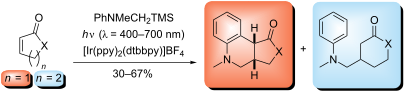
- and delivered product 14 in 41% yield. Addition to cyclic α,β-unsaturated ketones Based on the results obtained with five-membered lactone 9, it was suprising to note that the related five-membered enone, 2-cyclopentenone (15), delivered mainly the direct addition product 17 instead of the tricyclic

Graphical Abstract
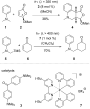
Scheme 1: PET-catalyzed addition of N,N-dimethylaniline (1) to furan-2(5H)-one 2 [38] and of N-methyl-N-((trimeth...

Scheme 2: Ir-catalyzed formation of tricyclic product 10 by a domino radical addition reaction to α,β-unsatur...

Scheme 3: Ir-catalyzed addition reactions of N-methyl-N-((trimethylsilyl)methyl)aniline (5) to 5,6-dihydro-2H...

Scheme 4: Ir-catalyzed addition reactions of N-methyl-N-((trimethylsilyl)methyl)aniline (5) to 2-cyclopenteno...

Scheme 5: Ir-catalyzed formation of tricyclic products 19 by a domino radical addition reaction to α,β-unsatu...

Scheme 6: Ir-catalyzed addition reactions of N-methyl-N-((trimethylsilyl)methyl)aniline (5) to α,β-unsaturate...

Scheme 7: Ir-catalyzed addition reactions of N-methyl-N-((trimethylsilyl)methyl)aniline (5) to α,β-unsaturate...

Scheme 8: Cyclization of putative radical A to intermediate B competes with reduction of A to form addition p...
Additive-assisted regioselective 1,3-dipolar cycloaddition of azomethine ylides with benzylideneacetone
- Chuqin Peng,
- Jiwei Ren,
- Jun-An Xiao,
- Honggang Zhang,
- Hua Yang and
- Yiming Luo
Beilstein J. Org. Chem. 2014, 10, 352–360, doi:10.3762/bjoc.10.33

- with various dipolarophiles, such as α,β-unsaturated esters [21][22][23][24][25], dienones [26][27], α,β-unsaturated ketones [28][29][30], unsaturated aryl ketones [31][32][33] and electron-poor alkenes [34][35][36][37][38][39]. Among the studied α,β-unsaturated enones for 1,3-dipolar cycloaddition
- detailed mechanism is still underway and will be published in due course. Having established the optimal protocol for this reaction, we next examined the scope of this method with regard to α,β-unsaturated ketones and azomethine ylides. With the aim of applying this additive-assisted regioselective 1,3

Graphical Abstract

Scheme 1: Different regioselectivities in 1,3-dipolar cycloaddition of azomethine ylide.
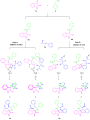
Scheme 2: Plausible pathways for the formation of different regioisomers.

Figure 1: ORTEP diagram of 4e.

Figure 2: ORTEP diagram of 5e.
Organobase-catalyzed three-component reactions for the synthesis of 4H-2-aminopyrans, condensed pyrans and polysubstituted benzenes
- Moustafa Sherief Moustafa,
- Saleh Mohammed Al-Mousawi,
- Maghraby Ali Selim,
- Ahmed Mohamed Mosallam and
- Mohamed Hilmy Elnagdi
Beilstein J. Org. Chem. 2014, 10, 141–149, doi:10.3762/bjoc.10.11
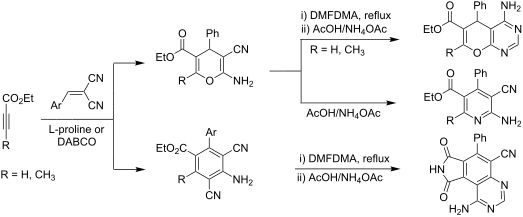
- methylenenitriles to α,β-unsaturated ketones [8], 2-amino-4H-pyrans 1 (Scheme 1) have become the central focus of a number of chemical and biological investigations [9][10]. Perez et al. recently reported an interesting method for the synthesis of condensed pyridines 2 through a three-component reaction of
- 37b. X-ray crystal structure of 39. Reaction of active methylenenitriles with α,β-unsaturated ketones 1. Synthesis of 2-amino-4-phenyl-3-cyanopyridines 2. Synthesis of polysubstituted benzenes 3. Syntheses of compound 9 and compounds 13a,b. Syntheses of compounds 18 and 21. Syntheses of compound 26

Graphical Abstract

Scheme 1: Reaction of active methylenenitriles with α,β-unsaturated ketones 1.

Scheme 2: Synthesis of 2-amino-4-phenyl-3-cyanopyridines 2.

Scheme 3: Synthesis of polysubstituted benzenes 3.

Scheme 4: Syntheses of compound 9 and compounds 13a,b.
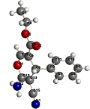
Figure 1: X-ray crystal structure of 9.

Figure 2: X-ray crystal structure of 13a.

Figure 3: X-ray crystal structure of 18.
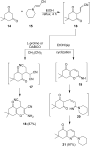
Scheme 5: Syntheses of compounds 18 and 21.
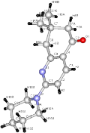
Figure 4: X-ray crystal structure of 21.

Figure 5: X-ray crystal structure of 26.
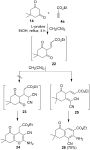
Scheme 6: Syntheses of compound 26.

Figure 6: X-ray crystal structure of 27a.

Scheme 7: Syntheses of compound 28a,b.

Figure 7: X-ray crystal structure of 28b.

Figure 8: X-ray crystal structure of 31a.

Figure 9: X-ray crystal structure of 31b.

Scheme 8: Syntheses of compound 31a,b.

Scheme 9: Syntheses of compound 33a,b.

Figure 10: X-ray crystal structure of 33a.
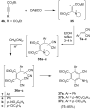
Scheme 10: Syntheses of compound 37a–c.

Figure 11: X-ray crystal structure of 37a.

Figure 12: X-ray crystal structure of 37b.

Scheme 11: Syntheses of compounds 38–40.
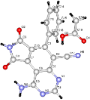
Figure 13: X-ray crystal structure of 39.
The regioselective synthesis of spirooxindolo pyrrolidines and pyrrolizidines via three-component reactions of acrylamides and aroylacrylic acids with isatins and α-amino acids
- Tatyana L. Pavlovskaya,
- Fedor G. Yaremenko,
- Victoria V. Lipson,
- Svetlana V. Shishkina,
- Oleg V. Shishkin,
- Vladimir I. Musatov and
- Alexander S. Karpenko
Beilstein J. Org. Chem. 2014, 10, 117–126, doi:10.3762/bjoc.10.8
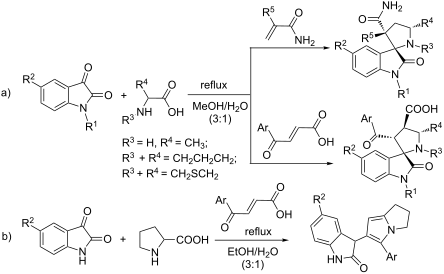
- nonnatural α-amino acids [11][12][13], more than fifteen isatins [14], and 1,3-dipolarophiles, e.g. α,β-unsaturated ketones [15][16][17], maleimides [18][19], benzo[b]thiophene-1,1-dioxide [20], bis(arylmethylidene)acetones and -cycloalkanones [21][22], 1,4-naphthoquinone [23], arylidenemalonodinitriles [24

Graphical Abstract

Figure 1: The NOE correlations of the signals in 1H NMR spectra of compounds 4b–4d.

Figure 2: Molecular structure of spirooxindole 4a according to X-ray diffraction data.
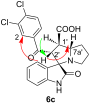
Figure 3: The NOE correlations of the signals in 1H NMR spectrum of compound 6c.

Figure 4: Molecular structure of spirooxindole 6a observed in crystal phase as solvate with methanol accordin...

Scheme 1: The mechanism of the regioselective synthesis of compounds 4 and 6.

Figure 5: Conformations of acrylamide and benzoylacrylic acid.

Figure 6: The Fukui function indices of acrylamide, azomethine ylide and benzoylacrylic acid.

Scheme 2: The synthesis of compounds 7a–7c.

Figure 7: The selected COSY, NOESY and HMBC correlations of the signals in the 1H and 13C NMR spectra of comp...

Scheme 3: Tentative reaction mechanism for the decarboxylative cyclative rearrangement of the initial three-c...
Synthesis of five- and six-membered cyclic organic peroxides: Key transformations into peroxide ring-retaining products
- Alexander O. Terent'ev,
- Dmitry A. Borisov,
- Vera A. Vil’ and
- Valery M. Dembitsky
Beilstein J. Org. Chem. 2014, 10, 34–114, doi:10.3762/bjoc.10.6
- provides an efficient tool for introducing the hydroperoxide function. The reaction starts with the coordination of oxygen to the double bond followed by the formation of hydroperoxides presumably by a stepwise or concerted mechanism [229][230]. The oxidation of α,β-unsaturated ketones 1a–c by singlet

Graphical Abstract

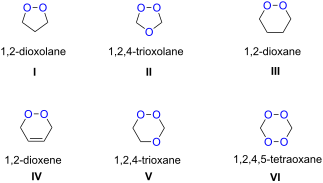
Figure 1: Five and six-membered cyclic peroxides.

Figure 2: Artemisinin and semi-synthetic derivatives.

Scheme 1: Synthesis of 3-hydroxy-1,2-dioxolanes 3a–c.

Scheme 2: Synthesis of dioxolane 6.

Scheme 3: Photooxygenation of oxazolidines 7a–d with formation of spiro-fused oxazolidine-containing dioxolan...

Scheme 4: Oxidation of cyclopropanes 10a–e and 11a–e with preparation of 1,2-dioxolanes 12a–e.

Scheme 5: VO(acac)2-catalyzed oxidation of silylated bicycloalkanols 13a–c.

Scheme 6: Mn(II)-catalyzed oxidation of cyclopropanols 15a–g.

Scheme 7: Oxidation of aminocyclopropanes 20a–c.

Scheme 8: Synthesis of aminodioxolanes 24.
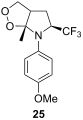
Figure 3: Trifluoromethyl-containing dioxolane 25.

Scheme 9: Synthesis of 1,2-dioxolanes 27a–e by the oxidation of cyclopropanes 26a–e.

Scheme 10: Photoinduced oxidation of methylenecyclopropanes 28.

Scheme 11: Irradiation-mediated oxidation.

Scheme 12: Application of diazene 34 for dioxolane synthesis.

Scheme 13: Mn(OAc)3-catalyzed cooxidation of arylacetylenes 37a–h and acetylacetone with atmospheric oxygen.
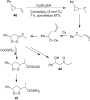
Scheme 14: Peroxidation of (2-vinylcyclopropyl)benzene (40).

Scheme 15: Peroxidation of 1,4-dienes 43a,b.

Scheme 16: Peroxidation of 1,5-dienes 46.

Scheme 17: Peroxidation of oxetanes 53a,b.

Scheme 18: Peroxidation of 1,6-diene 56.

Scheme 19: Synthesis of 3-alkoxy-1,2-dioxolanes 62a,b.

Scheme 20: Synthesis of spiro-bis(1,2-dioxolane) 66.

Scheme 21: Synthesis of dispiro-1,2-dioxolanes 68, 70, 71.

Scheme 22: Synthesis of spirohydroperoxydioxolanes 75a,b.

Scheme 23: Synthesis of spirohydroperoxydioxolane 77 and dihydroperoxydioxolane 79.

Scheme 24: Ozonolysis of azepino[4,5-b]indole 80.

Scheme 25: SnCl4-mediated fragmentation of ozonides 84a–l in the presence of allyltrimethylsilane.

Scheme 26: SnCl4-mediated fragmentation of bicyclic ozonide 84m in the presence of allyltrimethylsilane.

Scheme 27: MCl4-mediated fragmentation of alkoxyhydroperoxides 96 in the presence of allyltrimethylsilane.

Scheme 28: SnCl4-catalyzed reaction of monotriethylsilylperoxyacetal 108 with alkene 109.

Scheme 29: SnCl4-catalyzed reaction of triethylsilylperoxyacetals 111 with alkenes.

Scheme 30: Desilylation of tert-butyldimethylsilylperoxy ketones 131a,b followed by cyclization.

Scheme 31: Deprotection of peroxide 133 followed by cyclization.

Scheme 32: Asymmetric peroxidation of methyl vinyl ketones 137a–e.

Scheme 33: Et2NH-catalyzed intramolecular cyclization.

Scheme 34: Synthesis of oxodioxolanes 143a–j.

Scheme 35: Haloperoxidation accompanied by intramolecular ring closure.

Scheme 36: Oxidation of triterpenes 149a–d with Na2Cr2O7/N-hydroxysuccinimide.

Scheme 37: Curtius and Wolff rearrangements to form 1,2-dioxolane ring-retaining products.

Scheme 38: Oxidative desilylation of peroxide 124.

Scheme 39: Synthesis of dioxolane 158, a compound containing the aminoquinoline antimalarial pharmacophore.

Scheme 40: Diastereomers of plakinic acid A, 162a and 162b.

Scheme 41: Ozonolysis of alkenes.

Scheme 42: Cross-ozonolysis of alkenes 166 with carbonyl compounds.

Scheme 43: Ozonolysis of the bicyclic cyclohexenone 168.

Scheme 44: Cross-ozonolysis of enol ethers 172a,b with cyclohexanone.

Scheme 45: Griesbaum co-ozonolysis.

Scheme 46: Reactions of aryloxiranes 177a,b with oxygen.

Scheme 47: Intramolecular formation of 1,2,4-trioxolane 180.

Scheme 48: Formation of 1,2,4-trioxolane 180 by the reaction of 1,5-ketoacetal 181 with H2O2.

Scheme 49: 1,2,4-Trioxolane 186 with tetrazole fragment.

Scheme 50: 1,2,4-Trioxolane 188 with a pyridine fragment.

Scheme 51: 1,2,4-Trioxolane 189 with pyrimidine fragment.

Scheme 52: Synthesis of aminoquinoline-containing 1,2,4-trioxalane 191.

Scheme 53: Synthesis of arterolane.

Scheme 54: Oxidation of diarylheptadienes 197a–c with singlet oxygen.

Scheme 55: Synthesis of hexacyclinol peroxide 200.

Scheme 56: Oxidation of enone 201 and enenitrile 203 with singlet oxygen.

Scheme 57: Synthesis of 1,2-dioxanes 207 by oxidative coupling of carbonyl compounds 206 and alkenes 205.

Scheme 58: 1,2-Dioxanes 209 synthesis by co-oxidation of 1,5-dienes 208 and thiols.

Scheme 59: Synthesis of bicyclic 1,2-dioxanes 212 with aryl substituents.

Scheme 60: Isayama–Mukaiyama peroxysilylation of 1,5-dienes 213 followed by desilylation under acidic conditio...

Scheme 61: Synthesis of bicycle 218 with an 1,2-dioxane ring.

Scheme 62: Intramolecular cyclization with an oxirane-ring opening.

Scheme 63: Inramolecular cyclization with the oxetane-ring opening.

Scheme 64: Intramolecular cyclization with the attack on a keto group.

Scheme 65: Peroxidation of the carbonyl group in unsaturated ketones 228 followed by cyclization of hydroperox...

Scheme 66: CsOH and Et2NH-catalyzed cyclization.

Scheme 67: Preparation of peroxyplakoric acid methyl ethers A and D.

Scheme 68: Hg(OAc)2 in 1,2-dioxane synthesis.

Scheme 69: Reaction of 1,4-diketones 242 with hydrogen peroxide.

Scheme 70: Inramolecular cyclization with oxetane-ring opening.

Scheme 71: Inramolecular cyclization with MsO fragment substitution.

Scheme 72: Synthesis of 1,2-dioxane 255a, a structurally similar compound to natural peroxyplakoric acids.

Scheme 73: Synthesis of 1,2-dioxanes based on the intramolecular cyclization of hydroperoxides containing C=C ...
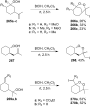
Scheme 74: Use of BCIH in the intramolecular cyclization.

Scheme 75: Palladium-catalyzed cyclization of δ-unsaturated hydroperoxides 271a–e.

Scheme 76: Intramolecular cyclization of unsaturated peroxyacetals 273a–d.

Scheme 77: Allyltrimethylsilane in the synthesis of 1,2-dioxanes 276a–d.

Scheme 78: Intramolecular cyclization using the electrophilic center of the peroxycarbenium ion 279.

Scheme 79: Synthesis of bicyclic 1,2-dioxanes.

Scheme 80: Preparation of 1,2-dioxane 286.

Scheme 81: Di(tert-butyl)peroxalate-initiated radical cyclization of unsaturated hydroperoxide 287.

Scheme 82: Oxidation of 1,4-betaines 291a–d.

Scheme 83: Synthesis of aminoquinoline-containing 1,2-dioxane 294.

Scheme 84: Synthesis of the sulfonyl-containing 1,2-dioxane.

Scheme 85: Synthesis of the amido-containing 1,2-dioxane 301.

Scheme 86: Reaction of singlet oxygen with the 1,3-diene system 302.

Scheme 87: Synthesis of (+)-premnalane А and 8-epi-premnalane A.

Scheme 88: Synthesis of the diazo group containing 1,2-dioxenes 309a–e.

Figure 4: Plakortolide Е.

Scheme 89: Synthesis of 6-epiplakortolide Е.

Scheme 90: Application of Bu3SnH for the preparation of tetrahydrofuran-containing bicyclic peroxides 318a,b.

Scheme 91: Application of Bu3SnH for the preparation of lactone-containing bicyclic peroxides 320a–f.

Scheme 92: Dihydroxylation of the double bond in the 1,2-dioxene ring 321 with OsO4.

Scheme 93: Epoxidation of 1,2-dioxenes 324.

Scheme 94: Cyclopropanation of the double bond in endoperoxides 327.

Scheme 95: Preparation of pyridazine-containing bicyclic endoperoxides 334a–c.

Scheme 96: Synthesis of 1,2,4-trioxanes 337 by the hydroperoxidation of unsaturated alcohols 335 with 1O2 and ...

Scheme 97: Synthesis of sulfur-containing 1,2,4-trioxanes 339.

Scheme 98: BF3·Et2O-catalyzed synthesis of the 1,2,4-trioxanes 342a–g.

Scheme 99: Photooxidation of enol ethers or vinyl sulfides 343.

Scheme 100: Synthesis of tricyclic peroxide 346.

Scheme 101: Reaction of endoperoxides 348a,b derived from cyclohexadienes 347a,b with 1,4-cyclohexanedione.

Scheme 102: [4 + 2]-Cycloaddition of singlet oxygen to 2Н-pyrans 350.

Scheme 103: Synthesis of 1,2,4-trioxanes 354 using peroxysilylation stage.

Scheme 104: Epoxide-ring opening in 355 with H2O2 followed by the condensation of hydroxy hydroperoxides 356 wi...

Scheme 105: Peroxidation of unsaturated ketones 358 with the H2O2/CF3COOH/H2SO4 system.

Scheme 106: Synthesis of 1,2,4-trioxanes 362 through Et2NH-catalyzed intramolecular cyclization.

Scheme 107: Reduction of the double bond in tricyclic peroxides 363.

Scheme 108: Horner–Wadsworth–Emmons reaction in the presence of peroxide group.

Scheme 109: Reduction of ester group by LiBH4 in the presence of 1,2,4-trioxane moiety.

Scheme 110: Reductive amination of keto-containing 1,2,4-trioxane 370.

Scheme 111: Reductive amination of keto-containing 1,2,4-trioxane and a Fe-containing moiety.

Scheme 112: Acid-catalyzed reactions of Н2О2 with ketones and aldehydes 374.
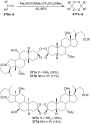
Scheme 113: Cyclocondensation of carbonyl compounds 376a–d using Me3SiOOSiMe3/CF3SO3SiMe3.

Scheme 114: Peroxidation of 4-methylcyclohexanone (378).

Scheme 115: Synthesis of symmetrical tetraoxanes 382a,b from aldehydes 381a,b.

Scheme 116: Synthesis of unsymmetrical tetraoxanes using of MeReO3.

Scheme 117: Synthesis of symmetrical tetraoxanes using of MeReO3.

Scheme 118: Synthesis of symmetrical tetraoxanes using of MeReO3.

Scheme 119: MeReO3 in the synthesis of symmetrical tetraoxanes with the use of aldehydes.

Scheme 120: Preparation of unsymmmetrical 1,2,4,5-tetraoxanes with high antimalarial activity.

Scheme 121: Re2O7-Catalyzed synthesis of tetraoxanes 398.

Scheme 122: H2SO4-Catalyzed synthesis of steroidal tetraoxanes 401.

Scheme 123: HBF4-Catalyzed condensation of bishydroperoxide 402 with 1,4-cyclohexanedione.

Scheme 124: BF3·Et2O-Catalyzed reaction of gem-bishydroperoxides 404 with enol ethers 405 and acetals 406.

Scheme 125: HBF4-Catalyzed cyclocondensation of bishydroperoxide 410 with ketones.

Scheme 126: Synthesis of symmetrical and unsymmetrical tetraoxanes 413 from benzaldehydes 412.
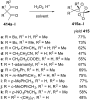
Scheme 127: Synthesis of bridged 1,2,4,5-tetraoxanes 415a–l from β-diketones 414a–l and H2O2.

Scheme 128: Dimerization of zwitterions 417.

Scheme 129: Ozonolysis of verbenone 419.

Scheme 130: Ozonolysis of O-methyl oxime 424.

Scheme 131: Peroxidation of 1,1,1-trifluorododecan-2-one 426 with oxone.

Scheme 132: Intramolecular cyclization of dialdehyde 428 with H2O2.

Scheme 133: Tetraoxanes 433–435 as by-products in peroxidation of ketals 430–432.

Scheme 134: Transformation of triperoxide 436 in diperoxide 437.

Scheme 135: Preparation and structural modifications of tetraoxanes.

Scheme 136: Structural modifications of steroidal tetraoxanes.

Scheme 137: Synthesis of 1,2,4,5-tetraoxane 454 containing the fluorescent moiety.

Scheme 138: Synthesis of tetraoxane 458 (RKA182).
Regioselective 1,4-trifluoromethylation of α,β-unsaturated ketones via a S-(trifluoromethyl)diphenylsulfonium salts/copper system
- Satoshi Okusu,
- Yutaka Sugita,
- Etsuko Tokunaga and
- Norio Shibata
Beilstein J. Org. Chem. 2013, 9, 2189–2193, doi:10.3762/bjoc.9.257
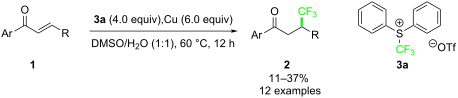
- aluminium-centered Lewis acid with low to moderate yields [18]. Dilman and co-workers partially overcame this problem by using highly electrophilic alkenes bearing either Meldrum’ acids [19], or two geminal nitrile groups [20]. However, direct 1,4-trifluoromethylation to conventional α,β-unsaturated ketones
- 1, entry 17). With suitable conditions in hand, the scope of copper-mediated conjugate trifluoromethylation of α,β-unsaturated ketones 1 with 3a was explored with a variety of substrates selected in order to establish the generality of the process (Table 2). With respect to the aryl ketone group
- -substituted enone also produced the desired product 2l (Table 2, entry 12). Based on these results, we hypothesized the reaction mechanism as shown in Scheme 2. First, the conjugate trifluoromethylation of α,β-unsaturated ketones would be initiated by a single-electron transfer between S-(trifluoromethyl

Graphical Abstract

Scheme 1: Trifluoromethylation of α,β-unsaturated ketones.

Scheme 2: Proposed mechanism for the conjugate trifluoromethylation of α,β-unsaturated ketones by S-(trifluor...
Gold-catalyzed regioselective oxidation of propargylic carboxylates: a reliable access to α-carboxy-α,β-unsaturated ketones/aldehydes
- Kegong Ji,
- Jonathan Nelson and
- Liming Zhang
Beilstein J. Org. Chem. 2013, 9, 1925–1930, doi:10.3762/bjoc.9.227
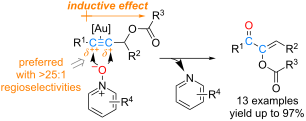
- the use of a P,S-bidentate ligand, which is proposed to enable the formation of tris-coordinated and hence less electrophilic gold carbene species. α-Carboxy α,β-unsaturated ketones/aldehydes can be obtained with fair to excellent yields. Keywords: enone; gold catalysis; oxidation; propargyl
- the tertiary counterpart underwent gold-catalyzed 3,3-rearrangement preferentially [21] and hence was not a viable substrate. Except entry 7, the gold-catalyzed oxidations proceeded with excellent regioselectivities (>25:1), and the desired α-acyloxy α,β-unsaturated ketones/aldehyde were isolated with
- scope is much limited, and the catalyst loading is 20%. With this oxidative gold catalysis, the propargyl esters, except those derived from tertiary alcohols, can be reliably converted into α-acyloxy α,β-unsaturated ketones/aldehydes. Conclusion We have realized a gold-catalyzed, highly regioselective

Graphical Abstract

Scheme 1: Generation of α-oxo gold carbenes via intermolecular oxidation of alkynes: a non-diazo approach.

Scheme 2: Gold-catalyzed regioselective oxidation of a sterically biased internal alkyne.

Scheme 3: Gold-catalyzed oxidation of the propargylic acetate 4a and the mechanistic rationale.

Scheme 4: A drastically different outcome by using diphenyl sulfoxide as the oxidant.

Figure 1: The impact of ligands on the ratio of 5a-OAc and 5a-H in the gold-catalyzed oxidation of 4a (reacti...

Figure 2: Natural charges at and the 13C chemical shifts of the alkynyl carbons in 4a.
Establishing the concept of aza-[3 + 3] annulations using enones as a key expansion of this unified strategy in alkaloid synthesis
- Aleksey I. Gerasyuto,
- Zhi-Xiong Ma,
- Grant S. Buchanan and
- Richard P. Hsung
Beilstein J. Org. Chem. 2013, 9, 1170–1178, doi:10.3762/bjoc.9.131
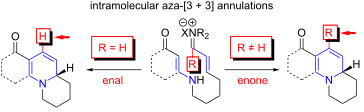
- employ vinylogous amides tethered to α,β-unsaturated ketones, or enones 1b (R ≠ H) (Scheme 1). Conceptually, employing enals or enones in an aza-[3 + 3] annulation appears to constitute very little difference, with the major difference lying in the R group in their respective products 3 and 4. While

Graphical Abstract

Figure 1: An aza-[3 + 3] annulation.

Scheme 1: Aza-[3 + 3] annulations with enones.

Figure 2: Possible natural-product targets.

Scheme 2: Synthesis of the annulation precursor enone 10.

Scheme 3: Propyleine-isopropeleine interconversion.

Figure 3: Relative stabilities of propyleine and isopropyleine.

Scheme 4: Retrosynthesis of propyleine (12).

Scheme 5: Synthesis of allyl alcohol 25.
Efficient synthesis of β’-amino-α,β-unsaturated ketones
- Isabelle Abrunhosa-Thomas,
- Aurélie Plas,
- Nishanth Kandepedu,
- Pierre Chalard and
- Yves Troin
Beilstein J. Org. Chem. 2013, 9, 486–495, doi:10.3762/bjoc.9.52

- –Emmons reaction as a key step for generating the β'-amino-α,β-enones, permits access to a range of substrates under mild conditions and in moderate to high yield. Keywords: β’-amino-α,β-unsaturated ketones; Horner–Wadsworth–Emmons reaction; stereoselective synthesis; Introduction Compounds
- preparation of chiral 2,6-disubstituted piperidines, we wish to report here a facile synthetic route to various β’-carbamate-α,β-unsaturated ketones in good overall yields and good enantioselectivities. Results and Discussion In a preliminary approach, preparation of β-amino ketones was envisaged through a
- did not allow the use of a wide range of functional groups and sometimes gave bad overall yields, we devised a general and simple method to easily access a variety of β’-amino-α,β-unsaturated ketones by a more convenient route using the Horner–Wadsworth–Emmons reaction [19][20] as the key step, as

Graphical Abstract

Scheme 1: Asymmetric synthesis of 2-methyl-6-phenyl piperidine.

Scheme 2: (a) Davies amine, BuLi, THF, −78 °C; dr ≥ 94% ; (b) H2, Pd(OH)2, MeOH; (c) Na2CO3, PhCH2CO2Cl, CH2Cl...

Scheme 3: Modified synthetic route to15.

Scheme 4: Possible pathways to obtain phosphonate 13 (a) Davies amine, BuLi, THF, −78 °C; dr ≥ 95%; (b) H2, P...

Scheme 5: Synthesis of compound 14.

Scheme 6: General synthesis of compound 13 (a) Davies amine, BuLi, THF, −78 °C; (b) H2, Pd(OH)2/C, MeOH; (c) ...

Scheme 7: Optimization of conditions for the Horner–Wadsworth–Emmons reaction.
Metal-mediated aminocatalysis provides mild conditions: Enantioselective Michael addition mediated by primary amino catalysts and alkali-metal ions
- Matthias Leven,
- Jörg M. Neudörfl and
- Bernd Goldfuss
Beilstein J. Org. Chem. 2013, 9, 155–165, doi:10.3762/bjoc.9.18
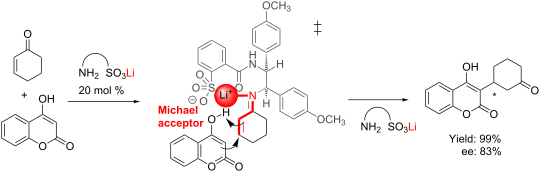
- -hydroxycoumarin (1) to prochiral α,β-unsaturated ketones. Instead of acid additives, which sometimes lead to decomposition of sensitive components [18], alkali-metal ions are employed as very mild Lewis acids (Scheme 1). The activation of Michael acceptors by iminium ions enables asymmetric additions of 4
- -hydroxycoumarins to α,β-unsaturated ketones (Scheme 2) [19][20][21][22][23][24][25][26][27]. There is a wide spread of 4-hydroxycoumarins in pharmaceuticals such as anticoagulants and substances that inhibit HIV or malaria [28][29]. Among the most prominent chiral 4-hydroxycoumarins is warfarin, which works as a
- , which are able to form imine complexes with prochiral α,β-unsaturated ketones, which could be detected by ESIMS spectrometry in an exemplary case. It was found that the Lewis acidities of the alkali metal ions are strong enough to activate the imine homologous Michael systems for nucleophilic addition

Graphical Abstract

Scheme 1: Activation of amine-bonded Michael acceptors by protonation versus Lewis acid interaction.

Scheme 2: Synthesis of 4-hydroxycoumarin derivatives by Michael addition [19-27].

Scheme 3: Precatalysts 5–8 and synthesis from chiral 1,2-diamines and 2-sulfobenzoic anhydrides.

Figure 1: X-ray crystallographic structure of 5. The conformation of the 2-sulfobenzoic moiety is fixed by hy...

Figure 2: Michael acceptors employed as substrates in the nucleophilic addition of 4-hydroxycoumarin (1).

Scheme 4: Computationally analyzed pathways A (C-protonation), and B (N-protonation), arising from the additi...

Scheme 5: Computed energy profile for reaction path A (C-protonation) and B (N-protonation) corresponding to ...
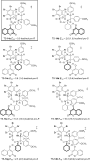
Figure 3: Enantio-determining transition states arising from the addition of 4-hydroxycoumarin to cyclohexeno...

Figure 4: The competing enantio-determining transition structures TS-14a and TS-14g. The reason for the desta...
Features of the behavior of 4-amino-5-carboxamido-1,2,3-triazole in multicomponent heterocyclizations with carbonyl compounds
- Eugene S. Gladkov,
- Katerina A. Gura,
- Svetlana M. Sirko,
- Sergey M. Desenko,
- Ulrich Groth and
- Valentin A. Chebanov
Beilstein J. Org. Chem. 2012, 8, 2100–2105, doi:10.3762/bjoc.8.236
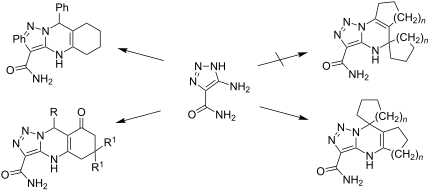
- or thermal heating was substituted by ultrasonication at ambient temperature or when the three-component reaction was replaced by a sequential protocol via the preliminary synthesis of cyclic α,β-unsaturated ketones. Some MCRs of aminoazoles with controlled switching of the direction. Some possible

Graphical Abstract
Figure 1: Some MCRs of aminoazoles with controlled switching of the direction.

Figure 2: Some possible products of MCRs involving 4-amino-5-carboxamido-1,2,3-triazole and carbonyl compound...

Scheme 1: Multicomponent and sequential reactions of 4-amino-5-carboxamido-1,2,3-triazole with cyclic ketones....

Scheme 2: Multicomponent and sequential reactions of 4-amino-5-carboxamido-1,2,3-triazole with aldehydes and ...
Organocatalytic cascade aza-Michael/hemiacetal reaction between disubstituted hydrazines and α,β-unsaturated aldehydes: Highly diastereo- and enantioselective synthesis of pyrazolidine derivatives
- Zhi-Cong Geng,
- Jian Chen,
- Ning Li,
- Xiao-Fei Huang,
- Yong Zhang,
- Ya-Wen Zhang and
- Xing-Wang Wang
Beilstein J. Org. Chem. 2012, 8, 1710–1720, doi:10.3762/bjoc.8.195
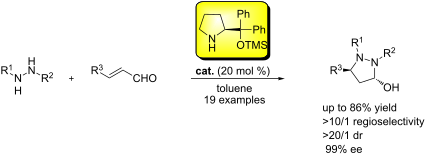
- -pyrazolines starting from α,β-unsaturated ketones and phenylhydrazine or N-tert-butyloxycarbonylhydrazine in the presence of a chiral Brønsted acid or a phase-transfer catalyst [70][71]. Compared with monosubstituted hydrazines in organocatalytic asymmetric synthesis, disubstituted hydrazines were also

Graphical Abstract

Figure 1: Important heterocycles containing pyrazolidine or pyrazoline structures.

Figure 2: X-ray crystal structure of racemic 4a (25% thermal ellipsoids).

Figure 3: X-ray crystal structure of racemic 4n (25% thermal ellipsoids).
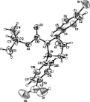
Figure 4: The X-ray crystal structure of chiral compound 4s (40% thermal ellipsoids).
Organocatalytic tandem Michael addition reactions: A powerful access to the enantioselective synthesis of functionalized chromenes, thiochromenes and 1,2-dihydroquinolines
- Chittaranjan Bhanja,
- Satyaban Jena,
- Sabita Nayak and
- Seetaram Mohapatra
Beilstein J. Org. Chem. 2012, 8, 1668–1694, doi:10.3762/bjoc.8.191

- (prolinamide or prolinol) leading to optically active 4-hydroxy-4H chromene-3-carbaldehydes 9 (Scheme 8). The reactions proceeded with good yields and enantiomeric ratio up to 98:2 by using the bulky catalyst prolinol diphenyl silylether Ia in dichloromethane/ethanol (1:1) at room temperature. Cyclic α,β
- -unsaturated ketones have also responded as Michael acceptors in the organocatalytic tandem Michael addition reaction towards the synthesis of tetrahydroxanthones. Córdova et al. [50], in 2007, reported the first organocatalytic asymmetric synthesis of tetrahydroxanthenones through the domino Michael–aldol

Graphical Abstract

Figure 1: Some representative molecules having chromene, thiochromene or 1,2-dihydroquinolin structural motif...

Figure 2: Screened chiral proline and its derivatives as organocatalysts. Rb = rubidium.
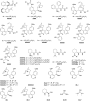
Figure 3: Screened chiral bifunctional thiourea, its derivatives, cinchona alkaloids and other organocatalyst...

Scheme 1: Diarylprolinolether-catalyzed tandem oxa-Michael–aldol reaction reported by Arvidsson.

Scheme 2: Tandem oxa-Michael–aldol reaction developed by Córdova.

Scheme 3: Domino oxa-Michael-aldol reaction developed by Wei and Wang.

Scheme 4: Chiral amine/chiral acid catalyzed tandem oxa-Michael–aldol reaction developed by Xu et al.

Scheme 5: Modified diarylproline ether as amino catalyst in oxa-Michael–aldol reaction as reported by Xu and ...

Scheme 6: Chiral secondary amine promoted oxa-Michael–aldol cascade reactions as reported by Wang and co-work...

Scheme 7: Reaction of salicyl-N-tosylimine with aldehydes by domino oxa-Michael/aza-Baylis–Hillman reaction, ...

Scheme 8: Silyl prolinol ether-catalyzed oxa-Michael–aldol tandem reaction of alkynals with salicylaldehydes ...

Scheme 9: Oxa-Michael–aldol sequence for the synthesis of tetrahydroxanthones developed by Córdova.
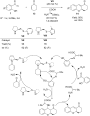
Scheme 10: Synthesis of tetrahydroxanthones developed by Xu.

Scheme 11: Diphenylpyrrolinol trimethylsilyl ether catalyzed oxa-Michael–Michael–Michael–aldol reaction for th...

Scheme 12: Enantioselective cascade oxa-Michael–Michael reaction of alkynals with 2-(E)-(2-nitrovinyl)-phenols...

Scheme 13: Domino oxa-Michael–Michael–Michael–aldol reaction of 2-(2-nitrovinyl)-benzene-1,4-diol with α,β-uns...

Scheme 14: Tandem oxa-Michael–Henry reaction catalyzed by organocatalyst and salicylic acid, as reported by Xu....

Scheme 15: Asymmetric synthesis of nitrochromenes from salicylaldehydes and β-nitrostyrene, as reported by San...

Scheme 16: Domino Michael–aldol reaction between salicyaldehydes with β-nitrostyrene, as reported by Das and c...

Scheme 17: Enantioselective synthesis of 2-aryl-3-nitro-2H-chromenes, as reported by Schreiner.

Scheme 18: (S)-diphenylpyrrolinol silyl ether-promoted cascade thio-Michael–aldol reactions, as reported by Wa...

Scheme 19: Organocatalytic asymmetric domino Michael–aldol condensation of mercaptobenzaldehyde and α,β-unsatu...

Scheme 20: Organocatalytic asymmetric domino Michael–aldol condensation between mercaptobenzaldehyde and α,β-u...

Scheme 21: Hydrogen-bond-mediated Michael–aldol reaction of 2-mercaptobenzaldehyde with α,β-unsaturated oxazol...

Scheme 22: Domino Michael–aldol reaction of 2-mercaptobenzaldehydes with maleimides catalyzed by cinchona alka...

Scheme 23: Domino thio-Michael–aldol reaction between 2-mercaptoacetophenone and enals developed by Córdova an...

Scheme 24: Enantioselective tandem Michael–Henry reaction of 2-mercaptobenzaldehyde with β-nitrostyrenes repor...

Scheme 25: Enantioselective tandem Michael–Knoevenagel reaction between 2-mercaptobenzaldehydes and benzyliden...

Scheme 26: Cinchona alkaloid thiourea catalyzed Michael–Michael cascade reaction, as reported by Wang and co-w...

Scheme 27: Domino aza-Michael–aldol reaction between 2-aminobenzaldehydes and α,β-unsaturated aldehydes, as re...

Scheme 28: (S)-Diphenylprolinol TES ether-promoted aza-Michael–aldol cascade reaction, as developed by Wang’s ...

Scheme 29: Domino aza-Michael–aldol reaction reported by Hamada.

Scheme 30: Organocatalytic asymmetric synthesis of 3-nitro-1,2-dihydroquinolines by a dual activation protocol...
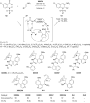
Scheme 31: Asymmetric synthesis of 3-nitro-1,2-dihydroquinolines by cascade aza-Michael–Henry–dehydration reac...
N-Heterocyclic carbene/Brønsted acid cooperative catalysis as a powerful tool in organic synthesis
- Rob De Vreese and
- Matthias D’hooghe
Beilstein J. Org. Chem. 2012, 8, 398–402, doi:10.3762/bjoc.8.43
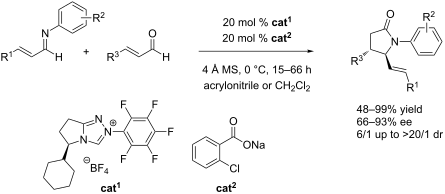
- -unsaturated aldehydes [18], the enantioselective synthesis of cyclopentenes from α,β-unsaturated aldehydes and α,β-unsaturated ketones [19], and the preparation of cyclopentanes through the reaction of enals and β,γ-unsaturated α-ketoesters [20]. Discussion Recently, Rovis et al. reported that the acetate

Graphical Abstract

Scheme 1: Synthesis of the first free and stable N-heterocyclic carbene by Arduengo [2].

Scheme 2: Conjugate “umpolung” of α,β-unsaturated aldehydes.

Scheme 3: The carbene + conjugate acid – azolium + base equilibrium.

Scheme 4: Formation of Breslow intermediates 10 and iminium salts 12 and their use toward the synthesis of γ-...

Scheme 5: Synthesis of trans-γ-lactams 16 through NHC/Brønsted acid cooperative catalysis.

Figure 1: Proposed hydrogen-bonding intermediates 19 in the formation of pyrrolidin-2-ones 16.
Syntheses and applications of furanyl-functionalised 2,2’:6’,2’’-terpyridines
- Jérôme Husson and
- Michael Knorr
Beilstein J. Org. Chem. 2012, 8, 379–389, doi:10.3762/bjoc.8.41

- [14]. This strategy was also successfully applied to the preparation of some furanyl-substituted terpyridines. The synthetic sequence starts from furanyl aldehydes 1–3 and 2-acetylpyridine (4). The first step is a base-mediated aldol-condensation that yields the α,β unsaturated ketones 5–7. Reacting

Graphical Abstract

Figure 1: Structure and atomic numbering of 2,2’:6’,2’’-terpyridines.

Scheme 1: Synthesis of furanyl-substituted terpyridines 12–14 by using Kröhnke’s method.

Scheme 2: Synthesis of terpyridines under solvent-free conditions.

Scheme 3: Preparation of 4,4′,4′′-trisubstituted terpyridine containing carboxylate moieties.

Scheme 4: Synthetic pathway for the preparation of a furanyl-functionalised quinquepyridine.

Scheme 5: Utilization of an iminium salt in the preparation of a furanyl-substituted tpy.

Figure 2: Chemical structure of U- and S-shaped isomers.

Scheme 6: Preparation of an asymmetric furanyl-substituted terpyridine.

Scheme 7: Synthesis of tpy by Stille cross-coupling reaction.

Scheme 8: Oxidation of the furan ring of furanyl-substituted terpyridines.
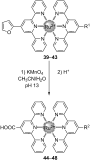
Scheme 9: Direct oxidation of a furan ring attached on Ru(II) tpy complexes.

Figure 3: Example of polyoxometalate frameworks functionalised with tpy ligands and tpy-complex (reprinted wi...

Scheme 10: Synthetic pathway to europium(III) and samarium(III) chelates 56 and 57.
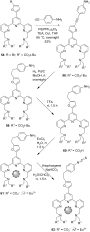
Scheme 11: Synthetic pathway to prepare thiocyanato-functionalised tpys as potential biomolecule-labelling age...
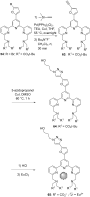
Scheme 12: Synthetic sequence envisioned for biomolecules labelling by click-chemistry.

Figure 4: Structure of pyrrolyl (66), thienyl (67) and bithienyl (68)-substituted complexes analogous to comp...
Continuous-flow hydration–condensation reaction: Synthesis of α,β-unsaturated ketones from alkynes and aldehydes by using a heterogeneous solid acid catalyst
- Magnus Rueping,
- Teerawut Bootwicha,
- Hannah Baars and
- Erli Sugiono
Beilstein J. Org. Chem. 2011, 7, 1680–1687, doi:10.3762/bjoc.7.198
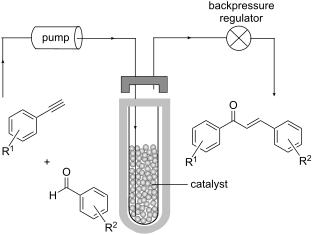
- of α,β-unsaturated ketones starting from alkynes and aldehydes by employing a heterogeneous catalyst in a flow microwave. The procedure presents a straightforward and convenient access to valuable differently substituted chalcones and can be applied on multigram scale. Keywords: chalcones; flow
- and microwave heating offers advantages such as a cleaner reaction profile, reduction of reaction times, higher yields and better selectivity [41][42][43][44][45][46][47][48][49][50][51][52][53][54]. Results and Discussion α,β-Unsaturated ketones are a common motif found in the principal core of a
- and other heterocyclic compounds [61][62][63][64][65]. Consequently, the development of an efficient synthesis to obtain these valuable compounds attracted our interest. Thus, we decided to develop an efficient continuous-flow synthesis of α,β-unsaturated ketones starting from alkynes and aldehydes by

Graphical Abstract

Scheme 1: The schematic arrangement of the continuous-flow system.

Scheme 2: Preparation of chalcone 3b on larger scale.



