Search results
Search for "X-ray crystallography" in Full Text gives 325 result(s) in Beilstein Journal of Organic Chemistry. Showing first 200.
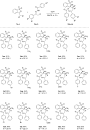
Novel analogues of a nonnucleoside SARS-CoV-2 RdRp inhibitor as potential antivirotics
Beilstein J. Org. Chem. 2024, 20, 1029–1036, doi:10.3762/bjoc.20.91
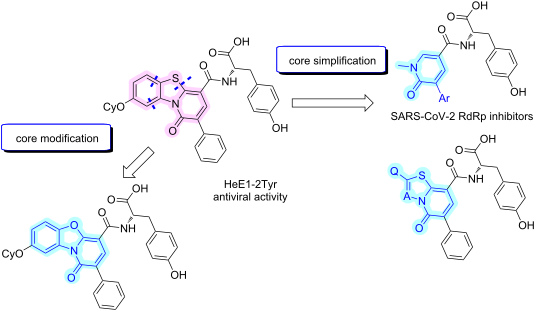
- insufficient evidence provided even by meticulous NMR analysis and eventually had to be confirmed by X-ray crystallography (Figure S1, Supporting Information File 1). Changing the ester function from an ethyl to an allyl group enabled a very mild cleavage using a Pd-mediated reaction with triethylsilane [28


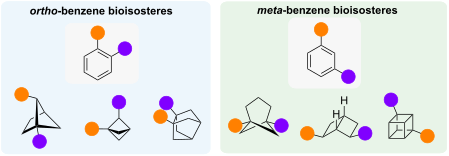
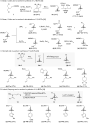
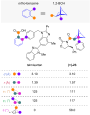
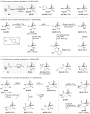
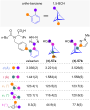
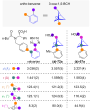
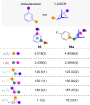
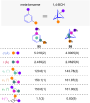
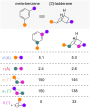
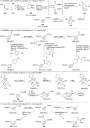
(Bio)isosteres of ortho- and meta-substituted benzenes
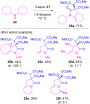
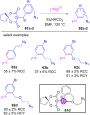
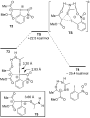
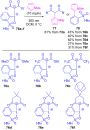
Beilstein J. Org. Chem. 2024, 20, 859–890, doi:10.3762/bjoc.20.78

















Confirmation of the stereochemistry of spiroviolene
Beilstein J. Org. Chem. 2024, 20, 852–858, doi:10.3762/bjoc.20.77
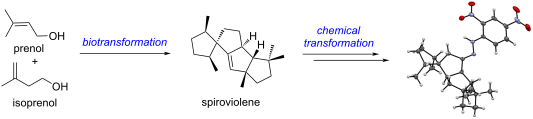
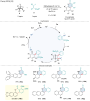
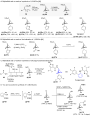
- stereochemistry by X-ray crystallography using a hydrazone derivative of 1. Results and Discussion Our work commenced with the heterologous production of spiroviolene by E. coli using a recently developed isopentenol utilization pathway for the efficient supply of two C5 precursors for terpene biosynthesis
- process. Derivatization of spiroviolene for X-ray crystallography. A) Hydroboration/oxidation reaction of spiroviolene involving a borane migration process. B) Synthesis of the hydrazone derivative of spiroviolene for single-crystal X-ray diffraction. Supporting Information Supporting Information File 19




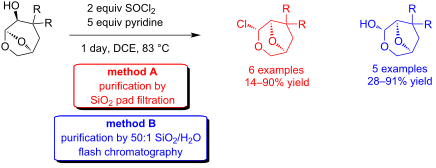
Skeletal rearrangement of 6,8-dioxabicyclo[3.2.1]octan-4-ols promoted by thionyl chloride or Appel conditions
Beilstein J. Org. Chem. 2024, 20, 823–829, doi:10.3762/bjoc.20.74
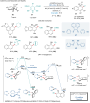
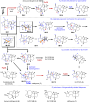
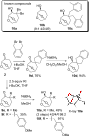
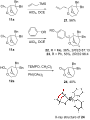
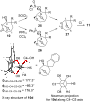
- stereoisomer 10f in 91% yield. The selectivity of the NaBH4 reduction was confirmed for both 10d (see discussion in Supporting Information File 1) and 10e by X-ray crystallography (Figure 2 and Scheme 1, respectively). The oxygen-migration reaction giving 11a was initially observed using the readily available
- , with the exo-hemiacetals favoured due to steric interactions between the substituents and alcohol, while the attempted preparation of 12b led only to complex mixtures (Scheme 2). The products of the reactions were characterised by 1D and 2D NMR, and X-ray crystallography of members from each class was
- open chain aldehydes present in solution (≈5%) with a doublet at δ 9.6 ppm, with the configuration of the hemiacetal centre confirmed in the solid state by X-ray crystallography on 12a and 12d. The 1H and 13C NMR spectra for 13b,d,e were similar to the starting materials, except that the resonances




Synthesis of 2,2-difluoro-1,3-diketone and 2,2-difluoro-1,3-ketoester derivatives using fluorine gas
Beilstein J. Org. Chem. 2024, 20, 460–469, doi:10.3762/bjoc.20.41
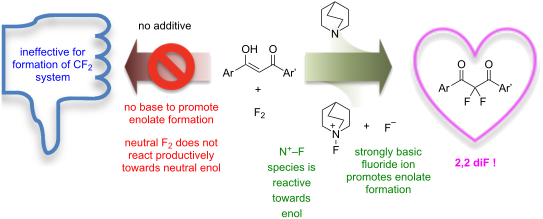
- % isolated yield (Scheme 2) and the structure was confirmed by NMR spectroscopy and X-ray crystallography (Figure 1). To expand the substrate scope of this difluorination method, a range of DBM derivatives 1b–n was synthesized from para-substituted acetophenones, para-substituted benzoyl chlorides and
- . Again, purification by column chromatography gave the products 3 as white crystalline solids and the structures of compounds 3f and 3i were confirmed by X-ray crystallography (Figure 2 and Supporting Information File 1). Molecules 3a, f, and i all exist in the solid state with the dicarbonyl moiety


Facile approach to N,O,S-heteropentacycles via condensation of sterically crowded 3H-phenoxazin-3-one with ortho-substituted anilines
Beilstein J. Org. Chem. 2024, 20, 336–345, doi:10.3762/bjoc.20.34
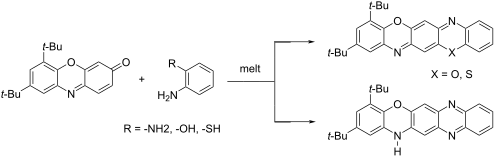
- short-term heating of the melted reactants at 220–250 °C is described, and the compounds were characterized by means of single-crystal X-ray crystallography, NMR, UV–vis, and IR spectroscopy, as well as cyclic voltammetry. The reaction with o-amino-, o-hydroxy-, and o-mercapto-substituted arylamines
- by X-ray crystallography and are shown in Figure 2 (i.e., 4f) and Figures S1 and S2, Supporting Information File 1 (i.e., 4c,d). The geometry of the phenoxazine-3-one fragment of 4c,d,f coincides with that found for 6,8-di-tert-butyl-3H-phenoxazin-3-one (1) [6]. A strong hydrogen bridge, N(15)–H···O
- molecular structure of 5c was also determined using X-ray crystallography (Figure 4). We assumed that the scope of the reaction shown in Scheme 3 could be expanded via replacement of one of the amino groups of o-phenylenediamine by another strong nucleophilic center. It was earlier found [23] that


Spatial arrangements of cyclodextrin host–guest complexes in solution studied by 13C NMR and molecular modelling
Beilstein J. Org. Chem. 2024, 20, 331–335, doi:10.3762/bjoc.20.33
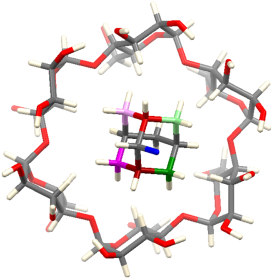
- calorimetry [13]. Single crystals for many host–guest complexes have been prepared, and their structure elucidated by X-ray crystallography [14][15]. Conformations of host–guest complexes in solution have been studied by 2D NMR experiments [11] (NOESY, ROESY) or proposed computationally [16][17] based on




Elucidating the glycan-binding specificity and structure of Cucumis melo agglutinin, a new R-type lectin
Beilstein J. Org. Chem. 2024, 20, 306–320, doi:10.3762/bjoc.20.31
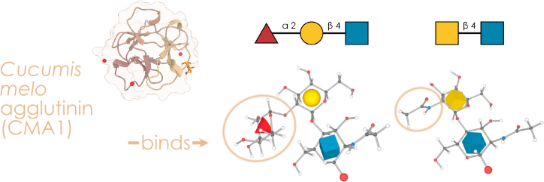
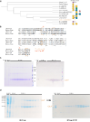
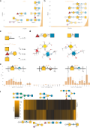
- confirmed and quantified this binding specificity in solution. Finally, we solved the high-resolution structure of the CMA1 N-terminal domain using X-ray crystallography, supporting our functional findings at the molecular level. Our study provides a comprehensive understanding of CMA1, laying the
- experiments, thermal shift assays, and high-resolution X-ray crystallography not only confirms its classification as a functional R-type lectin but also provides a deep dive into its unique glycan-binding profile and high-resolution 3D structure. Overall, we present a deeply characterized new lectin with a
- using the free software “data entry”. The IC50 was calculated using https://www.aatbio.com/tools/ic50-calculator. X-ray crystallography All consumables for crystallization and crystal handling were purchased at Molecular Dimensions, Calibre Scientific, Rotherham, UK, unless stated otherwise. CMA1



Synthesis of spiropyridazine-benzosultams by the [4 + 2] annulation reaction of 3-substituted benzoisothiazole 1,1-dioxides with 1,2-diaza-1,3-dienes
Beilstein J. Org. Chem. 2024, 20, 280–286, doi:10.3762/bjoc.20.29
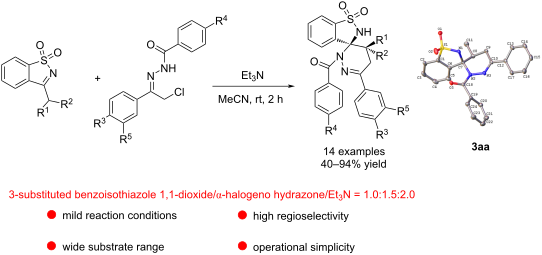
- investigated the performance of other organic and inorganic bases, but they did not improve the yield (Table 1, entries 8–12). The structure of spiropyridazine-benzosultam 3aa was determined by 1H NMR, 13C NMR, HRMS analysis and single-crystal X-ray crystallography [33]. Further experiments conducted with




Perspectives on push–pull chromophores derived from click-type [2 + 2] cycloaddition–retroelectrocyclization reactions of electron-rich alkynes and electron-deficient alkenes
Beilstein J. Org. Chem. 2024, 20, 125–154, doi:10.3762/bjoc.20.13
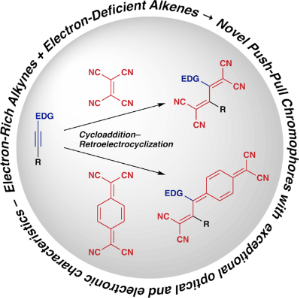
- successfully characterized through single-crystal X-ray crystallography. A mechanistic investigation of the [2 + 2] CA–RE reactions involving DCV compounds was undertaken by Diederich et al. in 2010 [77]. Their investigation unveiled that the reaction between 1 and arylated DCV derivatives followed second


Electron-beam-promoted fullerene dimerization in nanotubes: insights from DFT computations
Beilstein J. Org. Chem. 2024, 20, 92–100, doi:10.3762/bjoc.20.10
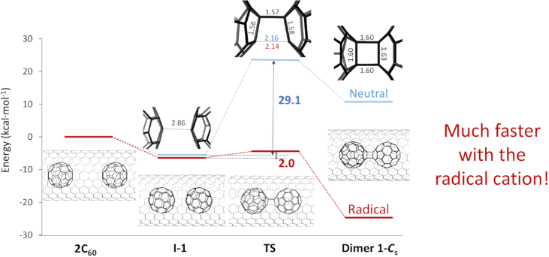
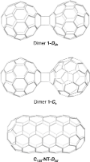
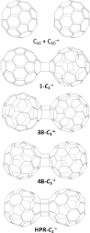
- in the latter (Figure 1). Dimer 1-Cs is at our computational settings (PBE/PW), more than 15 kcal mol−1 higher in energy than dimer 1-D2h, the one characterized by X-ray crystallography in the solid state, both in the gas phase and inside the CNT. Similar lower stabilities for dimer 1-Cs are also




Using the phospha-Michael reaction for making phosphonium phenolate zwitterions
Beilstein J. Org. Chem. 2024, 20, 41–51, doi:10.3762/bjoc.20.6
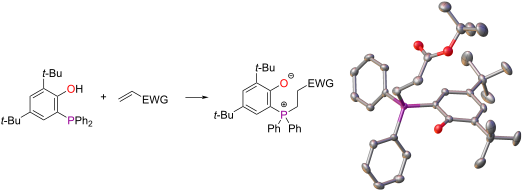
- molecules were determined by single-crystal X-ray crystallography. The bonding situation in the solid state together with NMR data suggests an important contribution of an ylidic resonance structure in these molecules. The phosphonium phenolates are characterized by UV–vis absorptions peaking around 360 nm


Controlling the reactivity of La@C82 by reduction: reaction of the La@C82 anion with alkyl halide with high regioselectivity
Beilstein J. Org. Chem. 2023, 19, 1858–1866, doi:10.3762/bjoc.19.138
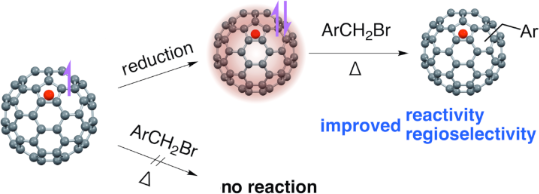
- , assuming that La@C2v-C82 and the monoadducts have the same absorption coefficients. X-ray crystallography Black crystalline rods of 3a were obtained using the liquid–liquid bilayer diffusion method with 3a in a CS2 solution and an n-hexane solution in a glass tube (⌀ = 7 mm) at room temperature. The SC-XRD


Synthesis and biological evaluation of Argemone mexicana-inspired antimicrobials
Beilstein J. Org. Chem. 2023, 19, 1511–1524, doi:10.3762/bjoc.19.108
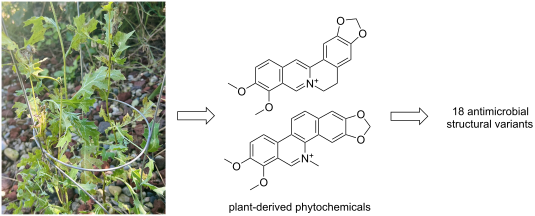
- still unclear, and so we grew high quality crystals of B4 and B6 to unambiguously determine the structure through X-ray crystallography, which showed the oxidation was in fact occurring at position-13 (Figure 2). A potential mechanistic explanation for the formation of this oxidation byproduct can be
- structures of two unexpected oxidized berberine variants were elucidated through X-ray crystallography. Overall, the berberine series showed much greater promise, with several variants displaying heightened antibacterial activity compared to original berberine. Meanwhile the chelerythrine variants were


Application of N-heterocyclic carbene–Cu(I) complexes as catalysts in organic synthesis: a review
Beilstein J. Org. Chem. 2023, 19, 1408–1442, doi:10.3762/bjoc.19.102
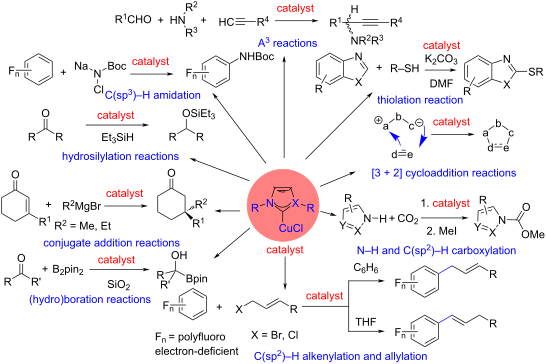
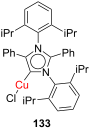
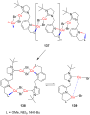
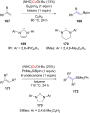
- used 1,3-diisopropylbenzimidazol-2-ylidene (iPr2-bimy) and 1,3-bis(2,6-diisopropylphenyl)imidazol-2-ylidene (IPr) (Scheme 28) [40]. The structures of all the synthesized complexes were confirmed by X-ray crystallography. A similar strategy was followed for stabilizing copper- and silver tert










Organic thermally activated delayed fluorescence material with strained benzoguanidine donor
Beilstein J. Org. Chem. 2023, 19, 1289–1298, doi:10.3762/bjoc.19.95
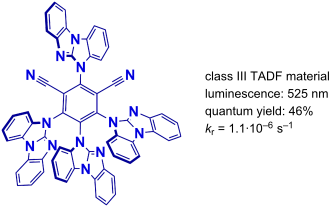
- ppm; Anal. calcd. for C60H32N14 (948.29): C, 75.94; H, 3.40; N, 20.66; found: C, 75.59; H, 3.54; N, 20.28; HRESIMS m/z: [M + Na]+ calcd. for C60H32N14Na, 971.2827; found, 971.2854. X-ray crystallography Crystals suitable for X-ray diffraction study were obtained by slow layer diffusion of hexanes


Exploring the role of halogen bonding in iodonium ylides: insights into unexpected reactivity and reaction control
Beilstein J. Org. Chem. 2023, 19, 1171–1190, doi:10.3762/bjoc.19.86
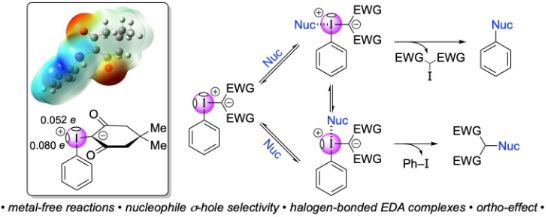
- have been evaluated extensively through both qualitative and quantitative means. Methods of evaluation have included X-ray crystallography and spectroscopy (e.g., microwave, IR, Raman, NMR, NQR), as well as through computational determination of their electrostatic VS,max potentials (Figure 2), their
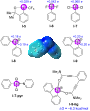
- positively charged. Halogen-bonded adducts of these have also been observed, which further illustrated the existence and properties of σ-holes in such HVI compounds. For example, I-7-pyr was characterized by X-ray crystallography and by computational methods, where molecular orbital (MO) analysis showed that








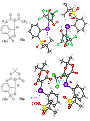
CO2 complexation with cyclodextrins
Beilstein J. Org. Chem. 2023, 19, 1021–1027, doi:10.3762/bjoc.19.78
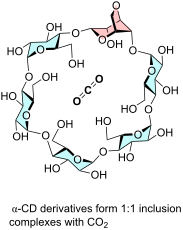
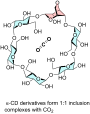
- solubility of this complex in water. X-ray crystallography of the crystals showed a 1:1 complex of CO2 to α-CD with CO2 bound in the center of the wide, secondary rim of the α-CD cavity (Figure 2). Two of the hydroxymethyl side groups on the primary narrow rim are disordered. The disordering was modeled over


Synthesis of tetrahydrofuro[3,2-c]pyridines via Pictet–Spengler reaction
Beilstein J. Org. Chem. 2023, 19, 991–997, doi:10.3762/bjoc.19.74
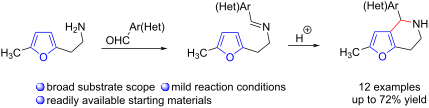
- . Reactivity of tetrahydrofuro[3,2-c]pyridine 4a. Optimization of reaction conditionsa. Supporting Information Supporting Information File 47: Experimental procedures, characterization data, copies of 1H and 13C NMR spectra, HRMS of new compounds, and X-ray crystallography data. Supporting Information File 48


First synthesis of acylated nitrocyclopropanes
Beilstein J. Org. Chem. 2023, 19, 892–900, doi:10.3762/bjoc.19.67
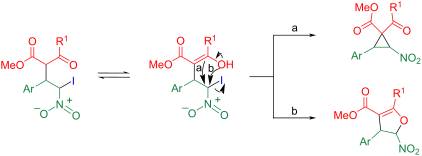
- the same way, and the obtained product 9 was converted to the 2,4-dinitrophenylhydrazone 10 to facilitate the crystallization for X-ray crystallography, which showed that a 2,3-dihydrofuran framework had formed (Scheme 4, bottom). Hence, we clarified that product 8b was not the desired cyclopropane


A fluorescent probe for detection of Hg2+ ions constructed by tetramethyl cucurbit[6]uril and 1,2-bis(4-pyridyl)ethene
Beilstein J. Org. Chem. 2023, 19, 864–872, doi:10.3762/bjoc.19.63
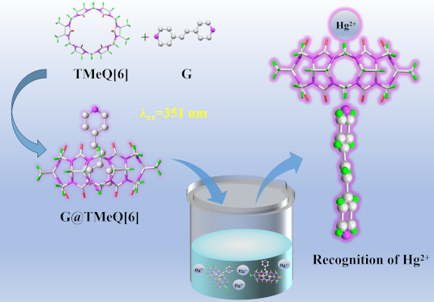
- spectroscopy data were recorded on a JEOL JNM-ECZ400s spectrometer in D2O at 293.15 K [42]. X-ray crystallography Using single-crystal X-ray diffraction has been previously described in the literature [43]. The main crystal structure parameters are recorded in Table 2. In addition, CCDC-2225763 contains the


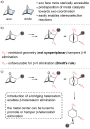
Bromination of endo-7-norbornene derivatives revisited: failure of a computational NMR method in elucidating the configuration of an organic structure
Beilstein J. Org. Chem. 2023, 19, 764–770, doi:10.3762/bjoc.19.56
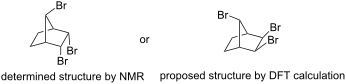
- assigned by us through crucial NMR experiments, we also present the ultimate structural proof by means of X-ray crystallography. Moreover, we disprove the mechanism proposed by the aforementioned authors based on sound mechanistic reasoning and point to an oversight by the authors that led them to an
- configuration in a molecule, in short, it is the single most important spectroscopic tool aside from X-ray crystallography to provide an accurate ensemble-guided view of the structure, even conformational dynamics in a molecule. Quantum mechanical/nuclear magnetic resonance (NMR) approaches are used for the
- irrefutably by X-ray crystallography, which would provide the ultimate structural confirmation. Toward that end, we resynthesized the molecule 6, isolated a sample and subjected it to single crystal X-ray analysis, which provided the ultimate final piece of evidence (Figure 8). Additional crystallographic


Construction of hexabenzocoronene-based chiral nanographenes
Beilstein J. Org. Chem. 2023, 19, 736–751, doi:10.3762/bjoc.19.54
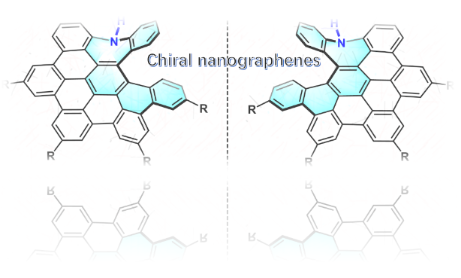
- helical conformation was confirmed by the single-crystal X-ray crystallography of its methoxy-substituted analogue. Another method to obtain the incompletely cyclized seco-HBC is the introduction of a non-hexagonal ring into the precursors of HBC. Due to the large ring strain, the precursors are not prone
- with cyclopentadienone 2 generated compound 57. The final Scholl reaction of 57 afforded helical NG 58 in high yield. This folded NG 58 is composed of two HBC layers fused to a [10]helicene with an interlayer distance of 3.6 Å as determined by X-ray crystallography. Since the helicene was initially


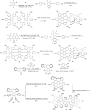


Synthesis, structure, and properties of switchable cross-conjugated 1,4-diaryl-1,3-butadiynes based on 1,8-bis(dimethylamino)naphthalene
Beilstein J. Org. Chem. 2023, 19, 674–686, doi:10.3762/bjoc.19.49
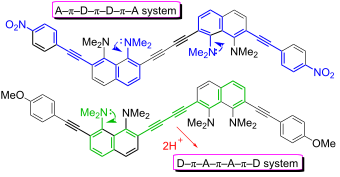
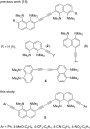
- us to undertake the current study. X-ray crystallography, UV–vis spectroscopy and cyclic voltammetry were applied to analyze the extent of π-electron conjugation and the efficiency of the particular donor–acceptor conjugation path in chromophores 5. Results and Discussion Synthesis The target



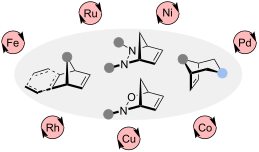
Transition-metal-catalyzed domino reactions of strained bicyclic alkenes
Beilstein J. Org. Chem. 2023, 19, 487–540, doi:10.3762/bjoc.19.38