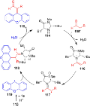
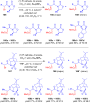
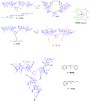
Search for "benzophenone" in Full Text gives 162 result(s) in Beilstein Journal of Organic Chemistry.
Beilstein J. Org. Chem. 2020, 16, 1022–1050, doi:10.3762/bjoc.16.91
Graphical Abstract
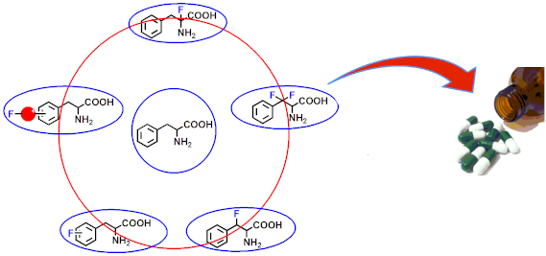
Figure 1: Categories I–V of fluorinated phenylalanines.
Scheme 1: Synthesis of fluorinated phenylalanines via Jackson’s method.
Scheme 2: Synthesis of all-cis-tetrafluorocyclohexylphenylalanines.
Scheme 3: Synthesis of ʟ-4-[sulfono(difluoromethyl)]phenylalanine (nPt: neopentyl, TCE: trichloroethyl).
Scheme 4: Synthesis of ʟ-4-[sulfono(difluoromethyl)]phenylalanine derivatives 17.
Scheme 5: Synthesis of fluorinated Phe analogues from Cbz-protected aminomalonates.
Scheme 6: Synthesis of tetrafluorophenylalanine analogues via the 3-methyl-4-imidazolidinone auxiliary 25.
Scheme 7: Synthesis of tetrafluoro-Phe derivatives via chiral auxiliary 31.
Scheme 8: Synthesis of 2,5-difluoro-Phe and 2,4,5-trifluoro-Phe via Schöllkopf reagent 34.
Scheme 9: Synthesis of 2-fluoro- and 2,6-difluoro Fmoc-Phe derivatives starting from chiral auxiliary 39.
Scheme 10: Synthesis of 2-[18F]FPhe via chiral auxiliary 43.
Scheme 11: Synthesis of FPhe 49a via photooxidative cyanation.
Scheme 12: Synthesis of FPhe derivatives via Erlenmeyer azalactone synthesis.
Scheme 13: Synthesis of (R)- and (S)-2,5-difluoro Phe via the azalactone method.
Scheme 14: Synthesis of 3-bromo-4-fluoro-(S)-Phe (65).
Scheme 15: Synthesis of [18F]FPhe via radiofluorination of phenylalanine with [18F]F2 or [18F]AcOF.
Scheme 16: Synthesis of 4-borono-2-[18F]FPhe.
Scheme 17: Synthesis of protected 4-[18F]FPhe via arylstannane derivatives.
Scheme 18: Synthesis of FPhe derivatives via intermediate imine formation.
Scheme 19: Synthesis of FPhe derivatives via Knoevenagel condensation.
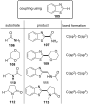
Scheme 20: Synthesis of FPhe derivatives 88a,b from aspartic acid derivatives.
Scheme 21: Synthesis of 2-(2-fluoroethyl)phenylalanine derivatives 93 and 95.
Scheme 22: Synthesis of FPhe derivatives via Zn2+ complexes.
Scheme 23: Synthesis of FPhe derivatives via Ni2+ complexes.
Scheme 24: Synthesis of 3,4,5-trifluorophenylalanine hydrochloride (109).
Scheme 25: Synthesis of FPhe derivatives via phenylalanine aminomutase (PAM).
Scheme 26: Synthesis of (R)-2,5-difluorophenylalanine 115.
Scheme 27: Synthesis of β-fluorophenylalanine via 2-amino-1,3-diol derivatives.
Scheme 28: Synthesis of β-fluorophenylalanine derivatives via the oxazolidinone chiral auxiliary 122.
Scheme 29: Synthesis of β-fluorophenylalanine from pyruvate hemiketal 130.
Scheme 30: Synthesis of β-fluorophenylalanine (136) via fluorination of β-hydroxyphenylalanine (137).
Scheme 31: Synthesis of β-fluorophenylalanine from aziridine derivatives.
Scheme 32: Synthesis of β-fluorophenylalanine 136 via direct fluorination of pyruvate esters.
Scheme 33: Synthesis of β-fluorophenylalanine via fluorination of ethyl 3-phenylpyruvate enol using DAST.
Scheme 34: Synthesis of β-fluorophenylalanine derivatives using photosensitizer TCB.
Scheme 35: Synthesis of β-fluorophenylalanine derivatives using Selectflour and dibenzosuberenone.
Scheme 36: Synthesis of protected β-fluorophenylalanine via aziridinium intermediate 150.
Scheme 37: Synthesis of β-fluorophenylalanine derivatives via fluorination of α-hydroxy-β-aminophenylalanine d...
Scheme 38: Synthesis of β-fluorophenylalanine derivatives from α- or β-hydroxy esters 152a and 155.
Scheme 39: Synthesis of a series of β-fluoro-Phe derivatives via Pd-catalyzed direct fluorination of β-methyle...
Scheme 40: Synthesis of series of β-fluorinated Phe derivatives using quinoline-based ligand 162 in the Pd-cat...
Scheme 41: Synthesis of β,β-difluorophenylalanine derivatives from 2,2-difluoroacetaldehyde derivatives 164a,b....
Scheme 42: Synthesis of β,β-difluorophenylalanine derivatives via an imine chiral auxiliary.
Scheme 43: Synthesis of α-fluorophenylalanine derivatives via direct fluorination of protected Phe 174.
Figure 2: Structures of PET radiotracers of 18FPhe derivatives.
Figure 3: Structures of melfufen (179) and melphalan (180) anticancer drugs.
Figure 4: Structure of gastrazole (JB95008, 181), a CCK2 receptor antagonist.
Figure 5: Dual CCK1/CCK2 antagonist 182.
Figure 6: Structure of sitagliptin (183), an antidiabetic drug.
Figure 7: Structure of retaglpitin (184) and antidiabetic drug.
Figure 8: Structure of evogliptin (185), an antidiabetic drug.
Figure 9: Structure of LY2497282 (186) a DPP-4 inhibitor for the treatment of type II diabetes.
Figure 10: Structure of ulimorelin (187).
Figure 11: Structure of GLP1R (188).
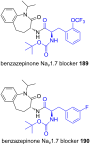
Figure 12: Structures of Nav1.7 blockers 189 and 190.
Beilstein J. Org. Chem. 2020, 16, 833–857, doi:10.3762/bjoc.16.76
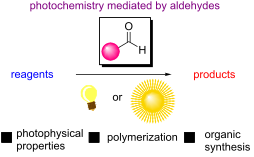
Graphical Abstract
Scheme 1: Norrish type I and II dissociations.
Scheme 2: Proposed radical pair formation after the photolysis of benzaldehyde (8).
Scheme 3: Aldehydes in the Paterno–Büchi reaction.
Scheme 4: 2,3-Diazabicyclo[2.2.1]hept-2-ene (DBH).
Scheme 5: Dissociation pathways of benzaldehyde.
Scheme 6: Reactions that lead to polarized products detectable by CIDNP.
Scheme 7: MMA (26), DEABP (27), and Michler’s ketone (28).
Scheme 8: Radical intermediates of DEABP.
Scheme 9: Photoinitiated polymerization of monomeric MMA (26) using the quinoxalines 32 and benzaldehyde (8).
Scheme 10: Acetone (4) and formaldehyde (35) as photografting initiators.
Scheme 11: Photografting by employing acetaldehyde (36) as the photoinitiator.
Scheme 12: Proposed photolysis mechanism for aliphatic ketones 44 and formaldehyde (35).
Scheme 13: Initiator 50, reductant 51, and benzaldehyde derivatives 52–54 for the polymerization of the methac...
Scheme 14: Proposed mechanism of the photomediated atom transfer radical polymerization employing the benzalde...
Scheme 15: cis/trans isomerization employing triplet states of photosensitizers.
Scheme 16: Salicylaldehyde (68) forms an internal hydrogen bond.
Scheme 17: Olefin isomerization via energy transfer from a carbonyl compound.
Scheme 18: Mechanistic pathways for the Paterno–Büchi reaction.
Scheme 19: Isomeric oxetanes formed after photochemical addition of aryl aldehydes to 2-butenes.
Scheme 20: Rotation of the C3–C4 bond of the biradical intermediate may lead to all four conformations.
Scheme 21: Photolysis products of benzaldehyde (8) in different solvents. a) In benzene or ethanol. b) In hex-...
Scheme 22: N-tert-Butylbenzamide formation proceeds via a benzoyl radical.
Scheme 23: Photochemical pinacol coupling.
Scheme 24: Photochemical ATRA catalyzed by 4-anisaldehyde (52).
Scheme 25: Proposed triplet sensitization mechanism of the ATRA reaction in the presence of 4-anisaldehyde (52...
Scheme 26: Benzaldehyde-mediated photoredox CDC reaction: compatible amides and ethers.
Scheme 27: Photoredox cross-dehydrogenative coupling (CDC) conditions and proposed reaction mechanism.
Scheme 28: Optimized conditions for the photoredox merger reaction.
Scheme 29: Proposed mechanism for the C(sp3)–H alkylation/arylation of ethers.
Scheme 30: Substrate scope for the photochemical alkylation of ethers.
Scheme 31: C(sp3)–H Functionalization of N-containing molecules.
Scheme 32: Substrate scope for the photochemical alkylation of N-containing molecules.
Scheme 33: Additional products yielded by the photochemical alkylation reaction of N-containing molecules.
Scheme 34: C(sp3)–H functionalization of thioethers.
Scheme 35: Proposed mechanism for the C(sp3)–H alkylation/arylation of N-containing molecules and thioethers.
Scheme 36: Hydroacylation using 4-cyanobenzaldehyde (53) as the photoinitiator.
Scheme 37: Selectivity for the formation of the α,α-disubstituted aldehydes.
Scheme 38: Substrate scope for the photochemical addition of aldehydes to Michael acceptors.
Scheme 39: Proposed mechanism for the hydroacylation of Michael acceptors using 4-cyanobenzaldehyde (53) as th...
Scheme 40: Catalytic arylation of aromatic aldehydes by aryl bromides in which the reaction product acts as th...
Scheme 41: Proposed mechanism for the catalytic arylation of benzaldehydes by aryl bromides in which the react...
Scheme 42: Functionalization of the chiral cyclobutanes 180.
Scheme 43: Optimized reaction conditions and proposed mechanism for the sulfonylcyanation of cyclobutenes.
Beilstein J. Org. Chem. 2020, 16, 415–444, doi:10.3762/bjoc.16.40
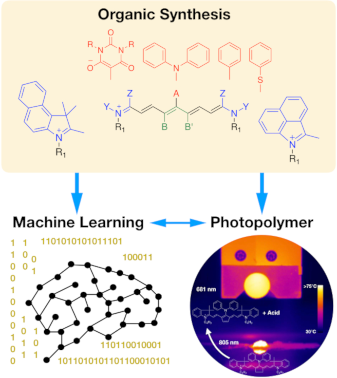
Graphical Abstract
Scheme 1: Structural patterns of several symmetric cyanines relating to trimethines (I), pentamethines (II), ...
Scheme 2: 1-Substituted 2,3,3-trimethylindolium-, 2,3,3-benzo[e]indolium-, and 2,3,3-benzo[c,d]indolium salts...
Scheme 3: Substitution of the chlorine substituent at the meso-position by a stronger nucleophilic moiety B [68].
Scheme 4: Structure of alternative chain builders for synthesis of heptamethines.
Figure 1: Simplified process chart of photophysical processes occurring in NIR absorbers.
Scheme 5: Chemical structure of the electron acceptors that were from iodonium cations 88 and triazines 89.
Figure 2: Photoinduced electron transfer under different scenarios in which each example exhibits an intrinsi...
Scheme 6: Photoexcited absorber 33 results in reaction with an iodonium cation in the respective cation radic...
Scheme 7: Reaction scheme of absorbers comprising in the molecules center a five ring bridged moiety. This le...
Scheme 8: Structure of donor compounds used in a three component system.
Figure 3: Cationic photopolymerization of an epoxide (Epikote 828) initiated by excitation of the absorber 36...
Scheme 9: Different modes of photoinitiated ATRP using UV, visible and NIR light.
Scheme 10: The structure of Sens used in photo-ATRP.
Figure 4: Comparison of the GPC traces of precursor PMMA with a) chain extended PMMA and b) PMMA-b-PS. Condit...
Figure 5: Spectral changes of the solution of 48 in the presence of [Cu(L)]Br2 (L: tris(2-pyridylmethyl)amine...
Scheme 11: Photoinduced CuAAC reactions in which photochemical reactions result in formation of the Cu(I) cata...
Scheme 12: Model reaction between benzyl azide and phenyacetylene using the absorber 48 as NIR sensitizer at 7...
Figure 6: Block copolymerization of the precursors PS-N3 and Alkyne-PCL results in the block copolymer PS-b-P...
Figure 7: UV–vis–NIR absorption changes of the solution of 48 in the presence of PMDETA, phenylacetylene and ...
Scheme 13: Workflow to design and process new materials in a setup based on an intelligent DoE to develop tech...
Scheme 14: Illustration of the iDoE setting up experiments suggested and analyzed by the A.I. After defining t...
Scheme 15: Classification of the factors for the formation of polymer networks by NIR-photocuring depending on...
Beilstein J. Org. Chem. 2020, 16, 317–324, doi:10.3762/bjoc.16.31
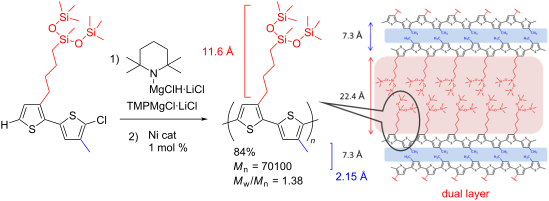
Graphical Abstract
Scheme 1: Cross-coupling polymerization of thiophene.
Scheme 2: Polymerization of bithiophene.
Scheme 3: Preparation of chlorobithiophenes.
Scheme 4: Polymerization of chlorobithiophenes.
Figure 1: Solubility tests of alternating copolymer 6 (1 mg of material dissolved in 1 mL of the solvent).
Figure 2: XRD measurement and prediction of the bilayer lamellar structure of polymer 6c. a) XRD analysis. b)...
Beilstein J. Org. Chem. 2019, 15, 2914–2921, doi:10.3762/bjoc.15.285
Graphical Abstract
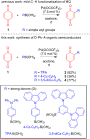
Scheme 1: Mild and direct C–H monofunctionalization of BQ 1: previous [14] and this work.
Figure 1: Benzoquinone derivatives synthesized for this study, with the donor in red and the benzoquinone acc...
Scheme 2: Synthesis of 2–4 via mild and direct C–H monofunctionalization of BQ (1).
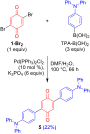
Scheme 3: Synthesis of 5 via double Suzuki coupling.
Figure 2: Crystal structures of 3 and 4.
Figure 3: HOMO/LUMO and S1/T1 energies as well as HOMO/LUMO electron density distribution profiles of 2–5.
Figure 4: Cyclic voltammograms and differential pulse voltammograms of 2–5 in degassed DCM (scan rate = 100 m...
Figure 5: UV–vis absorption spectra of 2–5 in DCM and photoluminescence spectrum of 3 in degassed DCM and in ...
Figure 6: Time-resolved PL plots. a) Prompt decay and b) delayed decay curve of 3 in thin film (λexc = 378 nm...
Beilstein J. Org. Chem. 2019, 15, 2801–2811, doi:10.3762/bjoc.15.273
Graphical Abstract
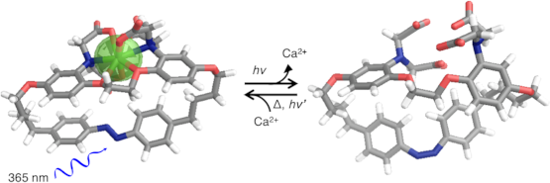
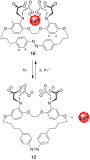
Figure 1: Azobenzene-BAPTA 1E and 1Z (a, b, c, d and e denote specific protons), showing idealized Ca2+ uptak...
Scheme 1: Synthesis of azobenzene-tethered BAPTA 1.
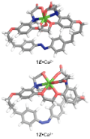
Figure 2: Energy-minimized molecular modelling structures of 1E•Ca2+ and 1Z•Ca2+ (PM6).
Figure 3: Electronic absorption spectra showing changes associated with photoisomerization of 1E (40 μM) to 1Z...
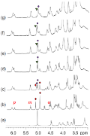
Figure 4: 1H NMR spectra (300 MHz) recorded at room temperature (298 K) in D2O of a) the thermodynamically st...
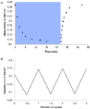
Figure 5: a) Multiple trans–cis cycles of 1E (40 μM) indicated by absorption changes at 362 nm in aqueous 0.0...
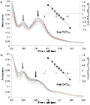
Figure 6: Electronic absorption spectra changes of 1E (42 μM) (a) and 1Z (43 μM) (b) in aqueous 0.03 M MOPS b...
Figure 7: a) Reversible Ca2+ exchange between photoregulated host 1 and turn-“on” fluorescent probe 3. b) Blu...
Beilstein J. Org. Chem. 2019, 15, 2710–2746, doi:10.3762/bjoc.15.264
Graphical Abstract
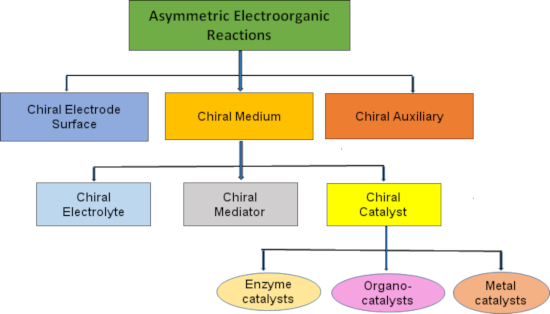
Figure 1: General classification of asymmetric electroorganic reactions.
Scheme 1: Asymmetric reduction of 4-acetylpyridine using a modified graphite cathode.
Scheme 2: Asymmetric hydrogenation of ketones using Raney nickel powder electrodes modified with optically ac...
Scheme 3: Asymmetric reduction of prochiral activated olefins with a poly-ʟ-valine-coated graphite cathode.
Scheme 4: Asymmetric reduction of prochiral carbonyl compounds, oximes and gem-dibromides on a poly-ʟ-valine-...
Scheme 5: Asymmetric hydrogenation of prochiral ketones with poly[RuIII(L)2Cl2]+-modified carbon felt cathode...
Scheme 6: Asymmetric hydrogenation of α-keto esters using chiral polypyrrole film-coated cathode incorporated...
Scheme 7: Quinidine and cinchonidine alkaloid-induced asymmetric electroreduction of acetophenone.
Scheme 8: Asymmetric electroreduction of 4- and 2-acetylpyridines at a mercury cathode in the presence of a c...
Scheme 9: Enantioselective reduction of 4-methylcoumarin in the presence of catalytic yohimbine.
Scheme 10: Cinchonine-induced asymmetric electrocarboxylation of 4-methylpropiophenone.
Scheme 11: Enantioselective hydrogenation of methyl benzoylformate using an alkaloid entrapped silver cathode.
Scheme 12: Alkaloid-induced enantioselective hydrogenation using a Cu nanoparticle cathode.
Scheme 13: Alkaloid-induced enantioselective hydrogenation of aromatic ketones using a bimetallic Pt@Cu cathod...
Scheme 14: Enantioselective reduction of ketones at mercury cathode using N,N'-dimethylquininium tetrafluorobo...
Scheme 15: Asymmetric synthesis of an amino acid using an electrode modified with amino acid oxidase and elect...
Scheme 16: Asymmetric oxidation of p-tolyl methyl sulfide using chemically modified graphite anode.
Scheme 17: Asymmetric oxidation of unsymmetric sulfides using poly(amino acid)-coated electrodes.
Scheme 18: Enantioselective, electocatalytic oxidative coupling on TEMPO-modified graphite felt electrode in t...
Scheme 19: Asymmetric electrocatalytic oxidation of racemic alcohols on a TEMPO-modified graphite felt electro...
Scheme 20: Asymmetric electrocatalytic lactonization of diols on TEMPO-modified graphite felt electrodes.
Scheme 21: Asymmetric electrochemical pinacolization in a chiral solvent.
Scheme 22: Asymmetric electroreduction using a chiral supporting electrolyte.
Scheme 23: Asymmetric anodic oxidation of enol acetates using chiral supporting electrolytes.
Scheme 24: Kinetic resolution of primary amines using a chiral N-oxyl radical mediator.
Scheme 25: Chiral N-oxyl-radical-mediated kinetic resolution of secondary alcohols via electrochemical oxidati...
Scheme 26: Chiral iodoarene-mediated asymmetric electrochemical lactonization.
Scheme 27: Os-catalyzed electrochemical asymmetric dihydroxylation of olefins using the Sharpless ligand and i...
Scheme 28: Asymmetric electrochemical epoxidation of olefins catalyzed by a chiral Mn-salen complex.
Scheme 29: Asymmetric electrooxidation of 1,2-diols, and amino alcohols using a chiral copper catalyst.
Scheme 30: Mechanism of asymmetric electrooxidation of 1,2-diols, and amino alcohols using a chiral copper cat...
Scheme 31: Enantioselective electrocarboxylation catalyzed by an electrogenerated chiral [CoI(salen)]− complex....
Scheme 32: Asymmetric oxidative cross coupling of 2-acylimidazoles with silyl enol ethers.
Scheme 33: Ni-catalyzed asymmetric electroreductive cleavage of allylic β-keto ester 89.
Scheme 34: Asymmetric alkylation using a combination of electrosynthesis and a chiral Ni catalyst.
Scheme 35: Mechanism of asymmetric alkylation using a combination of electrosynthesis and a chiral Ni catalyst....
Scheme 36: Asymmetric epoxidation by electrogenerated percarbonate and persulfate ions in the presence of chir...
Scheme 37: α-Oxyamination of aldehydes via anodic oxidation catalyzed by chiral secondary amines.
Scheme 38: The α-alkylation of aldehydes via anodic oxidation catalyzed by chiral secondary amines.
Scheme 39: Mechanism of α-alkylation of aldehydes via anodic oxidation catalyzed by chiral secondary amines.
Scheme 40: Electrochemical chiral secondary amine-catalyzed intermolecular α-arylation of aldehydes.
Scheme 41: Mechanism of electrochemical chiral secondary amine-catalyzed intermolecular α-arylation of aldehyd...
Scheme 42: Asymmetric cross-dehydrogenative coupling of tertiary amines with simple ketones via an electrochem...
Scheme 43: Electroenzymatic asymmetric reduction using enoate reductase.
Scheme 44: Assymetric reduction using alcohol dehydrogenase as the electrocatalyst.
Scheme 45: Asymmetric electroreduction catalyzed by thermophilic NAD-dependent alcohol dehydrogenase.
Scheme 46: Asymmetric epoxidation of styrene by electrochemical regeneration of flavin-dependent monooxygenase....
Scheme 47: Asymmetric electroreduction using a chloroperoxidase catalyst.
Scheme 48: Asymmetric electrochemical transformation mediated by hydrophobic vitamin B12.
Scheme 49: Diastereoselective cathodic reduction of phenylglyoxalic acids substituted with amines as chiral au...
Scheme 50: Ni-catalyzed asymmetric electroreductive cross coupling of aryl halides with α-chloropropanoic acid...
Scheme 51: Electrochemical Mannich addition of silyloxyfuran to in situ-generated N-acyliminium ions.
Scheme 52: Stereoselective electroreductive homodimerization of cinnamates attached to a camphor-derived chira...
Scheme 53: Diastereoselective electrochemical carboxylation of chiral α-bromocarboxylic acid derivatives.
Scheme 54: Electrocatalytic stereoselective conjugate addition of chiral β-dicarbonyl compounds to methyl viny...
Scheme 55: Stereoselective electrochemical carboxylation of chiral cinnamic acid derivatives under a CO2 atmos...
Scheme 56: Electrochemical diastereoselective α-alkylation of pyrrolidines attached with phosphorus-derived ch...
Scheme 57: Electrogenerated cyanomethyl anion-induced synthesis of chiral cis-β-lactams from amides bearing ch...
Scheme 58: Diastereoselective anodic oxidation followed by intramolecular cyclization of ω-hydroxyl amides bea...
Scheme 59: Electrochemical deprotonation of Ni(II) glycinate containing (S)-BPB as a chiral auxiliary: diaster...
Scheme 60: Enantioselective electroreductive coupling of diaryl ketones with α,β-unsaturated carbonyl compound...
Scheme 61: Asymmetric total synthesis of ropivacaine and its analogues using a electroorganic reaction as a ke...
Scheme 62: Asymmetric total synthesis of (−)-crispine A and its natural enantiomer via anodic cyanation of tet...
Scheme 63: Asymmetric oxidative electrodimerization of cinnamic acid derivatives as key step for the synthesis...
Beilstein J. Org. Chem. 2019, 15, 2092–2104, doi:10.3762/bjoc.15.207
Graphical Abstract
Figure 1: Sketch of the currently known prototypical examples of handcuff-derived architectures.
Figure 2: Chemical drawing of the known bis-calix[6]arene 1 and its handcuff pseudorotaxane architectures 32+...
Scheme 1: Synthesis of triple-calix[6]arene host 6.
Scheme 2:
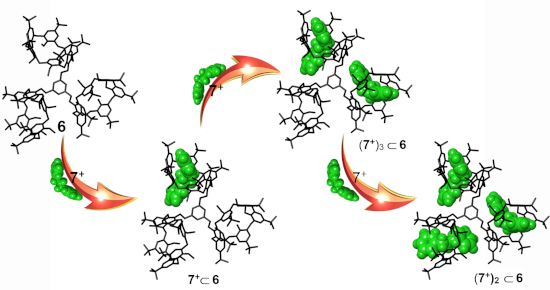
Formation of the 7+6, (7+)2
6, (7+)3
6 pseudorotaxane architectures by multiple-threading of 6 with 7+...
Figure 3:
(Bottom) Portion of the ESI-FT-ICR mass spectrum of 7+6. (Top a–c) Significant portions of: (a) 1H ...
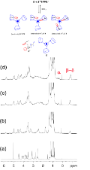
Figure 4: 1H NMR titration of 6 with 7+·TFPB– (CDCl3 , 298 K, 600 MHz). Significant portions of the 1H NMR sp...
Figure 5:
ESI-FT-ICR-MS and HR-ESI-FT-ICR-CID mass spectrum of (7+)26.
Figure 6:
Different views of the minimized structures of (7+)36 obtained by molecular mechanics calculations.
Scheme 3:
Formation of the 4+6, (4+)2
6, (4+)3
6 pseudorotaxane architectures by multiple-threading of 6 with 4+...
Figure 7: (a–d) 1H NMR titration of 6 with 4+·TFPB− (CDCl3, 298 K, 600 MHz). Significant portions of the 1H N...
Figure 8:
Different views of the minimized structures of (4+)36 obtained by molecular mechanics calculations.
Figure 9: (Top) Possible endo-benzyl and endo-alkyl stereoisomers obtainable by directional threading of cali...
Figure 10:
(Left) HR-ESI-FT-ICR mass spectrum of 8+6. (Right) HR-ESI-FT-ICR-CID mass spectrum of (8+)2
6.
Figure 11: (a–d) 1H NMR titration of 6 with 8+·TFPB− (CDCl3 , 298 K, 600 MHz). Significant portions of the 1H ...
Beilstein J. Org. Chem. 2019, 15, 1360–1370, doi:10.3762/bjoc.15.136
Graphical Abstract
Figure 1: Selected anticancer active 3,5-diaryl-1-acylpyrazoline (left) and xanthine oxygenase inhibitors (ce...
Figure 2: Selected 1-acyl-5-hydroxypyrazolines with analgesic (left, center) and antibacterial activity (cent...
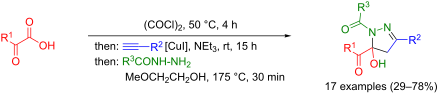
Scheme 1: Glyoxylation–alkynylation (GA) and activation–alkynylation (AA) synthesis of alkynediones in a one-...
Scheme 2: Consecutive three-component synthesis to give 5-benzoyl-3-phenyl-1H-pyrazole (6a) after alkaline de...
Figure 3: ORTEP plot of 5-benzoyl-3-phenyl-1H-pyrazole (6a) (thermal ellipsoids at 30% probability); the dire...
Scheme 3: Cyclization of 1,4-diphenylbut-3-yne-1,2-dione (3a) and Boc-hydrazine (4a) to give intermediate 5a.
Figure 4: Ellipsoid plot of 1-Boc-5-benzoyl-5-hydroxypyrazoline 5a.
Scheme 4: Model reaction for optimizing the activation–alkynylation–cyclization synthesis of 1,5-diacyl-5-hyd...
Scheme 5: One-pot activation–alkynylation–cyclization synthesis of 1,5-diacyl-5-hydroxypyrazolines 5.
Figure 5: ORTEP plot and dimer of compound 5r (thermal ellipsoids at 30% probability).
Beilstein J. Org. Chem. 2019, 15, 610–616, doi:10.3762/bjoc.15.56
Graphical Abstract
Scheme 1: Structures of scorzodihydrostilbenes A–E (1–5) and resveratrol.
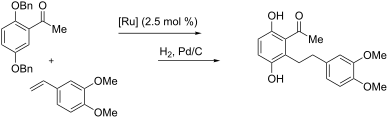
Scheme 2: Synthesis of dihydrostilbenes 8a–d by ruthenium-catalyzed addition of ketones 6 to styrenes 7. Yiel...
Scheme 3: Cleavage of benzyl protecting groups in ketones 8a and 8b. Synthesis of scorzodihydrostilbene aglyc...
Scheme 4: Synthesis of glycoside 12 and deprotected epi-scorzodihydrostilbene D (13). Yields of isolated prod...
Beilstein J. Org. Chem. 2019, 15, 236–255, doi:10.3762/bjoc.15.22
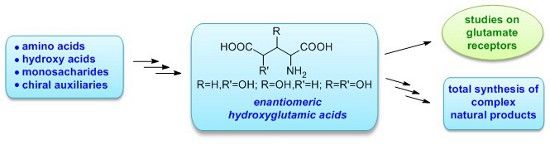
Graphical Abstract
Figure 1: Structure of L-glutamic acid.
Figure 2: 3-Hydroxy- (2), 4-hydroxy- (3) and 3,4-dihydroxyglutamic acids (4).
Figure 3: Enantiomers of 3-hydroxyglutamic acid (2).
Scheme 1: Synthesis of (2S,3R)-2 from (R)-Garner's aldehyde. Reagents and conditions: a) MeOCH=CH–CH(OTMS)=CH2...
Scheme 2: Synthesis of (2S,3R)-2 and (2S,3S)-2 from (R)-Garner’s aldehyde. Reagents and conditions: a) H2C=CH...
Scheme 3: Two-carbon homologation of the protected L-serine. Reagents and conditions: a) Fmoc-succinimide, Na2...
Scheme 4: Synthesis of di-tert-butyl ester of (2R,3S)-2 from L-serine. Reagents and conditions: a) PhSO2Cl, K2...
Scheme 5: Synthesis of (2R,3S)-2 from O-benzyl-L-serine. Reagents and conditions: a) (CF3CH2O)2P(O)CH2COOMe, ...
Scheme 6: Synthesis of (2S,3R)-2 employing a one-pot cis-olefination–conjugate addition sequence. Reagents an...
Scheme 7: Synthesis of the orthogonally protected (2S,3R)-2 from a chiral aziridine. Reagents and conditions:...
Scheme 8: Synthesis of N-Boc-protected (2S,3R)-2 from D-phenylglycine. Reagents and conditions: a) BnMgCl, et...
Scheme 9: Synthesis of (2S,3R)-2 employing ketopinic acid as chiral auxiliary. Reagents and conditions: a) Br2...
Scheme 10: Synthesis of dimethyl ester of (2S,3R)-2 employing (1S)-2-exo-methoxyethoxyapocamphane-1-carboxylic...
Scheme 11: Synthesis of N-Boc-protected dimethyl ester of (2S,3R)-2 from (S)-N-(1-phenylethyl)thioacetamide. R...
Scheme 12: Synthesis of N-Boc-protected dimethyl ester of (2S,3R)-2 via Sharpless epoxidation. Reagents and co...
Scheme 13: Synthesis of (2S,3S)-2 from the imide 51. Reagents and conditions: a) NaBH4, MeOH/CH2Cl2; b) Ac2O, ...
Scheme 14: Synthesis of (2R,3S)-2 and (2S,3S)-2 from the acetolactam 55 (PMB = p-methoxybenzyl). Reagents and ...
Scheme 15: Synthesis of (2S,3R)-2 from D-glucose. Reagents and conditions: a) NaClO2, 30% H2O2, NaH2PO4, MeCN;...
Figure 4: Enantiomers of 3-hydroxyglutamic acid (3).
Scheme 16: Synthesis of (4S)-4-hydroxy-L-glutamic acid [(2S,4S)-3] by electrophilic hydroxylation. Reagents an...
Scheme 17: Synthesis of all stereoisomers of 4-hydroxyglutamic acid (3). Reagents and conditions: a) Br2, PBr5...
Scheme 18: Synthesis of the orthogonally protected 4-hydroxyglutamic acid (2S,4S)-73. Reagents and conditions:...
Scheme 19: Synthesis of (2S,4R)-4-acetyloxyglutamic acid as a component of a dipeptide. Reagents and condition...
Scheme 20: Synthesis of N-Boc-protected dimethyl esters of (2S,4R)- and (2S,4S)-3 from (2S,4R)-4-hydroxyprolin...
Scheme 21: Synthesis of orthogonally protected (2S,4S)-3 from (2S,4R)-4-hydroxyproline. Reagents and condition...
Scheme 22: Synthesis of the protected (4R)-4-hydroxy-L-pyroglutamic acid (2S,4R)-87 by electrophilic hydroxyla...
Figure 5: Enantiomers of 3,4-dihydroxy-L-glutamic acid (4).
Scheme 23: Synthesis of (2S,3S,4R)-4 from the epoxypyrrolidinone 88. Reagents and conditions: a) MeOH, THF, KC...
Scheme 24: Synthesis of (2S,3R,4R)-4 from the orthoester 92. Reagents and conditions: a) OsO4, NMO, acetone/wa...
Scheme 25: Synthesis of (2S,3S,4S)-4 from the aziridinolactone 95. Reagents and conditions: a) BnOH, BF3·OEt2,...
Scheme 26: Synthesis of (2S,3S,4R)-4 and (2R,3S,4R)-4 from cyclic imides 106. Reagents and conditions: a) NaBH4...
Scheme 27: Synthesis of (2R,3R,4R)-4 and (2S,3R,4R)-4 from the cyclic meso-imide 110. Reagents and conditions:...
Scheme 28: Synthesis of (2S,3S,4S)-4 from the protected serinal (R)-23. Reagents and conditions: a) Ph3P=CHCOO...
Scheme 29: Synthesis of (2S,3S,4S)-4 from O-benzyl-N-Boc-D-serine. Reagents and conditions: a) ClCOOiBu, TEA, ...
Scheme 30: Synthesis of (2S,3S,4R)-127 by enantioselective conjugate addition and asymmetric dihydroxylation. ...
Figure 6: Structures of selected compounds containing hydroxyglutamic motives (in blue).
Beilstein J. Org. Chem. 2019, 15, 194–209, doi:10.3762/bjoc.15.19
Graphical Abstract
Figure 1: Structures of Grubbs 1 (1) and 2 (2) precatalysts.
Scheme 1: Design concepts for ruthenium alkylidene precatalysts [3].
Figure 2: Structures of Grubbs 1-type (3) and 2-type (4) pyridinyl-alcoholato precatalysts.
Figure 3: Structures of Grubbs 2-type (5) pyridinyl-alcoholato precatalysts.
Figure 4: Structures of pyridinyl-substituted Grubbs 2-type pyridinyl-alcoholato precatalysts.
Figure 5: The influence of the reaction temperature on the (a) conversion of 1-octene, (b) formation of PMPs ...
Figure 6: The influence of the reaction temperature on the (a) conversion of 1-octene, (b) formation of PMPs ...
Figure 7: The influence of the reaction temperature on the (a) conversion of 1-octene, (b) formation of PMPs ...
Figure 8: The influence of the reaction temperature on the (a) conversion of 1-octene, (b) formation of PMPs ...
Figure 9: Geometry-optimised structures of precatalyst 9, 6 and 8.
Figure 10: An illustration of the envisaged methoxy oxygen lone pair-aromatic π-electron interaction.
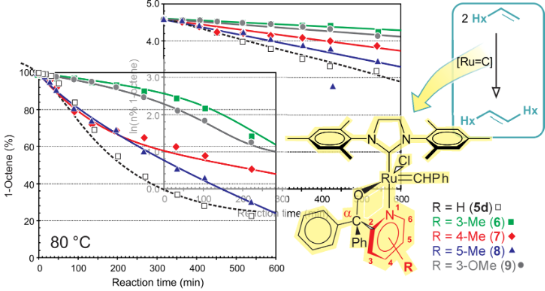
Figure 11: Influence of precatalysts 6–9 and 5d on the (a) conversion of 1-octene and (b) ln([n%1-octene]) ver...
Figure 12: 1H NMR spectra of the carbene-Hα region at different time intervals of the 1-octene/7 reaction mixt...
Figure 13: 1H NMR spectra of the Hα region of the pyridine ring of the 1-octene/7 reaction mixture in toluene-d...
Scheme 2: Synthesis of pyridinyl-alcohol ligands and Grubbs 2-type pyridinyl-alcoholato complexes.
Beilstein J. Org. Chem. 2018, 14, 3018–3024, doi:10.3762/bjoc.14.281
Graphical Abstract
Scheme 1: The nucleofugal carbanion unit C escapes from the alkoxides A1M1 or A1M2 (M = metal), generating th...
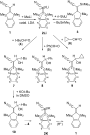
Scheme 2: Preparation of β-shielded α-lithioacrylonitrile 2Li and its reaction with aldehydes 4–6 to adducts 7...
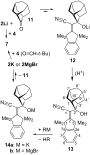
Scheme 3: Reversible formation of the adduct 13 of adamantan-2-one (11).
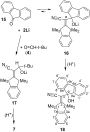
Scheme 4: Preparation and cleavage of the adduct 18 of fluoren-9-one (15).
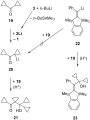
Scheme 5: Proton transfer from dicyclopropyl ketone (19) to 2Li.
Scheme 6: Metal-free release of the carbanion unit in 25 and its seizure by t-BuCH=O (→ 7); Bu = n-butyl.
Beilstein J. Org. Chem. 2018, 14, 2940–2948, doi:10.3762/bjoc.14.273
Graphical Abstract
Scheme 1: Protonation of DMAN.
Scheme 2: Protonation equilibria for 2 and 3.
Scheme 3: Protonation of imine 4a with perchloric acid.
Scheme 4: Synthesis of investigated substrates (yields obtained by paths a and b are denoted by a correspondi...
Scheme 5: Preparation of protonated forms of imines 4–7.
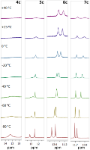
Figure 1: C=NH Signal regions of temperature-depending 1H NMR spectra for compounds 4a–7a, acetone-d6.
Scheme 6: E/Z-Isomerisation of ketimines 4a–7a.
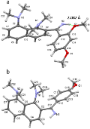
Figure 2: Molecular structure of imines 6a (a) and 4a (b). The H···O distance for 6a is shown.
Figure 3: Optimised geometry and energy difference ΔE = EE – EZ (kcal/mol) for imines 4a–7a (B3LYP/6-311+G(d,...
Figure 4: 1H NMR spectra of imines 4b–7b (4b’–7b’) in DMSO-d6, 25 °C (the signals of the forms protonated at ...
Scheme 7: Switching of protonation sites in imines 4b–7b.
Figure 5: Optimised geometries and energy differences ΔE = Eb’ – Eb (kcal/mol) for different sites of protona...
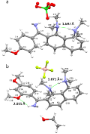
Figure 6: Molecular structure of protonated imines 4a·HClO4 (a) and 6b·EtOH (b).
Scheme 8: Protonation of the out-inverted dialkylamino group.
Scheme 9: Examples of proton sponges with stabilised in,out-conformation.
Figure 7: C=NH2+ Signal regions of temperature-depending spectra for compounds 4c–7c, acetone-d6.
Figure 8: Molecular structure of dication 6с.
Beilstein J. Org. Chem. 2018, 14, 2266–2288, doi:10.3762/bjoc.14.202
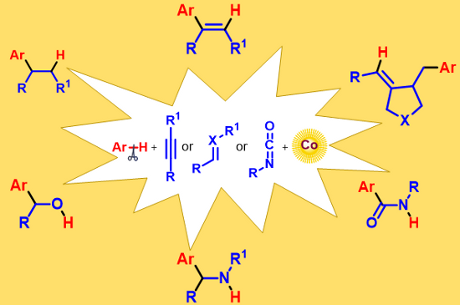
Graphical Abstract
Scheme 1: Cobalt-catalyzed C–H carbonylation.
Scheme 2: Hydroarylation by C–H activation.
Scheme 3: Pathways for cobalt-catalyzed hydroarylations.
Scheme 4: Co-catalyzed hydroarylation of alkynes with azobenzenes.
Scheme 5: Co-catalyzed hydroarylation of alkynes with 2-arylpyridines.
Scheme 6: Co-catalyzed addition of azoles to alkynes.
Scheme 7: Co-catalyzed addition of indoles to alkynes.
Scheme 8: Co-catalyzed hydroarylation of alkynes with imines.
Scheme 9: A plausible pathway for Co-catalyzed hydroarylation of alkynes.
Scheme 10: Co-catalyzed anti-selective C–H addition to alkynes.
Scheme 11: Co(III)-catalyzed hydroarylation of alkynes with indoles.
Scheme 12: Co(III)-catalyzed branch-selective hydroarylation of alkynes.
Scheme 13: Co(III)-catalyzed hydroarylation of terminal alkynes with arenes.
Scheme 14: Co(III)-catalyzed hydroarylation of alkynes with amides.
Scheme 15: Co(III)-catalyzed C–H alkenylation of arenes.
Scheme 16: Co-catalyzed alkylation of substituted benzamides with alkenes.
Scheme 17: Co-catalyzed switchable hydroarylation of styrenes with 2-aryl pyridines.
Scheme 18: Co-catalyzed linear-selective hydroarylation of alkenes with imines.
Scheme 19: Co-catalyzed linearly-selective hydroarylation of alkenes with N–H imines.
Scheme 20: Co-catalyzed branched-selective hydroarylation of alkenes with imines.
Scheme 21: Mechanism of Co-catalyzed hydroarylation of alkenes.
Scheme 22: Co-catalyzed intramolecular hydroarylation of indoles.
Scheme 23: Co-catalyzed asymmetric hydroarylation of alkenes with indoles.
Scheme 24: Co-catalyzed hydroarylation of alkenes with heteroarenes.
Scheme 25: Co(III)-catalyzed hydroarylation of activated alkenes with 2-phenyl pyridines.
Scheme 26: Co(III)-catalyzed C–H alkylation of arenes.
Scheme 27: Co(III)-catalyzed C2-alkylation of indoles.
Scheme 28: Co(III)-catalyzed switchable hydroarylation of alkyl alkenes with indoles.
Scheme 29: Co(III)-catalyzed C2-allylation of indoles.
Scheme 30: Co(III)-catalyzed ortho C–H alkylation of arenes with maleimides.
Scheme 31: Co(III)-catalyzed hydroarylation of maleimides with arenes.
Scheme 32: Co(III)-catalyzed hydroarylation of allenes with arenes.
Scheme 33: Co-catalyzed hydroarylative cyclization of enynes with carbonyl compounds.
Scheme 34: Mechanism for the Co-catalyzed hydroarylative cyclization of enynes with carbonyl compounds.
Scheme 35: Co-catalyzed addition of 2-arylpyridines to aromatic aldimines.
Scheme 36: Co-catalyzed addition of 2-arylpyridines to aziridines.
Scheme 37: Co(III)-catalyzed hydroarylation of imines with arenes.
Scheme 38: Co(III)-catalyzed addition of arenes to ketenimines.
Scheme 39: Co(III)-catalyzed three-component coupling.
Scheme 40: Co(III)-catalyzed hydroarylation of aldehydes.
Scheme 41: Co(III)-catalyzed addition of arenes to isocyanates.
Beilstein J. Org. Chem. 2018, 14, 2250–2258, doi:10.3762/bjoc.14.200
Graphical Abstract
Figure 1: The structures of carbocyclic diazodiketones 1a–g and C–H-donating tetrahydrofuran used in the proj...
Figure 2: Molecular structure of hydrazone 2b as determined by X-ray analysis data (Olex2 plot with 50% proba...
Scheme 1: Photochemical cycloelimination of furans from hydrazones 2d,e.
Scheme 2: Different pathways of diazodiketones 1 light-induced reactions in the singlet (reaction I) and trip...
Beilstein J. Org. Chem. 2018, 14, 2012–2017, doi:10.3762/bjoc.14.176
Graphical Abstract
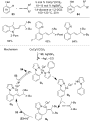
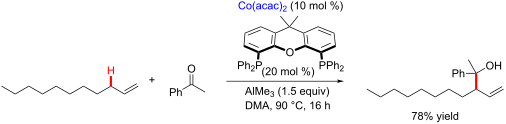
Figure 1: Precedent examples of catalytic allylic C(sp3)–H additions to carbonyl electrophiles.
Figure 2: Substrate scope for acetophenone derivatives. aPreparative scale synthesis using 1 mmol of 2a.
Figure 3: Substrate scope for α-olefins.
Figure 4: A possible catalytic cycle.
Beilstein J. Org. Chem. 2018, 14, 1389–1412, doi:10.3762/bjoc.14.117
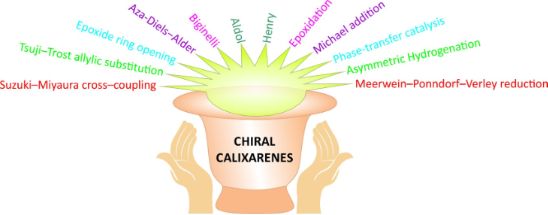
Graphical Abstract
Figure 1: Inherently chiral calix[4]arene-based phase-transfer catalysts.
Scheme 1: Asymmetric alkylations of 3 catalyzed by (±)-1 and (±)-2 under phase-transfer conditions.
Scheme 2: Synthesis of chiral calix[4]arene-based phase-transfer catalyst 7 and structure of O’Donnell’s N-be...
Scheme 3: Asymmetric alkylation of glycine derivative 3 catalyzed by calixarene-based phase-transfer catalyst ...
Figure 2: Calix[4]arene-amides used as phase-transfer catalysts.
Scheme 4: Phase-transfer alkylation of 3 catalyzed by calixarene-triamide 12.
Scheme 5: Synthesis of inherently chiral calix[4]arenes 20a/20b substituted at the lower rim. Reaction condit...
Scheme 6: Asymmetric Henry reaction between 21 and 22 catalyzed by 20a/20b.
Figure 3: Proposed transition state model of asymmetric Henry reaction.
Scheme 7: Synthesis of enantiomerically pure phosphinoferrocenyl-substituted calixarene ligands 27–29.
Scheme 8: Asymmetric coupling reaction of aryl boronates and aryl halides in the presence of calixarene mono ...
Scheme 9: Asymmetric allylic alkylation in the presence of calix[4]arene ligand (S,S)-29.
Figure 4: Structure of inherently chiral oxazoline calix[4]arenes applied in the palladium-catalyzed Tsuji–Tr...
Scheme 10: Asymmetric Tsuji–Trost reaction in the presence of calix[4]arene ligands 36–39.
Figure 5: BINOL-derived calix[4]arene-diphosphite ligands.
Scheme 11: Asymmetric hydrogenation of 41a and 41b catalyzed by in situ-generated catalysts comprised of [Rh(C...
Figure 6: Inherently chiral calix[4]arene 43 containing a diarylmethanol structure.
Scheme 12: Asymmetric Michael addition reaction of 44 with 45 catalyzed by 43.
Figure 7: Calix[4]arene-based chiral primary amine–thiourea catalysts.
Scheme 13: Asymmetric Michael addition of 48 with 49 catalyzed by 47a and 47b.
Scheme 14: Enantioselective Michael addition of 51 to 52 catalyzed by calix[4]arene thioureas.
Scheme 15: Synthesis of calix[4]arene-based tertiary amine–thioureas 54–56.
Scheme 16: Asymmetric Michael addition of 34 and 57 to nitroalkenes 49 catalyzed by 54b.
Scheme 17: Synthesis of p-tert-butylcalix[4]arene bis-squaramide derivative 64.
Scheme 18: Asymmetric Michael addition catalyzed by 64.
Scheme 19: Synthesis of chiral p-tert-butylphenol analogue 68.
Figure 8: Novel prolinamide organocatalysts based on the calix[4]arene scaffold.
Scheme 20: Asymmetric aldol reactions of 72 with 70 and 71 catalyzed by 69b.
Scheme 21: Synthesis of p-tert-butylcalix[4]arene-based chiral organocatalysts 75 and 78 derived from L-prolin...
Scheme 22: Synthesis of upper rim-functionalized calix[4]arene-based L-proline derivative 83.
Scheme 23: Synthesis and proposed structure of Calix-Pro-MN (86).
Figure 9: Calix[4]arene-based L-proline catalysts containing ester, amide and acid units.
Scheme 24: Synthesis of calix[4]arene-based prolinamide 92.
Scheme 25: Calixarene-based catalysts for the aldol reaction of 21 with 70.
Scheme 26: Asymmetric aldol reactions of 72 with cyclic ketones catalyzed by calix[4]arene-based chiral organo...
Figure 10: A proposed structure for catalyst 92 in H2O.
Scheme 27: Synthetic route for organocatalyst 98.
Scheme 28: Asymmetric aldol reactions catalyzed by 99.
Figure 11: Proposed catalytic environment for catalyst 99 in the presence of water.
Scheme 29: Asymmetric aldol reactions between 94 and 72 catalyzed by 55a.
Scheme 30: Enantioselective Biginelli reactions catalyzed by 69f.
Scheme 31: Synthesis of calix[4]arene–(salen) complexes.
Scheme 32: Enantioselective epoxidation of 108 catalyzed by 107a/107b.
Scheme 33: Synthesis of inherently chiral calix[4]arene catalysts 111 and 112.
Scheme 34: Enantioselective MPV reduction.
Scheme 35: Synthesis of chiral calix[4]arene ligands 116a–c.
Scheme 36: Asymmetric MPV reduction with chiral calix[4]arene ligands.
Scheme 37: Chiral AlIII–calixarene complexes bearing distally positioned chiral substituents.
Scheme 38: Asymmetric MPV reduction in the presence of chiral calix[4]arene diphosphites.
Scheme 39: Synthesis of enantiomerically pure inherently chiral calix[4]arene phosphonic acid.
Scheme 40: Asymmetric aza-Diels–Alder reactions catalyzed by (cR,pR)-121.
Scheme 41: Asymmetric ring opening of epoxides catalyzed by (cR,pR)-121.
Beilstein J. Org. Chem. 2018, 14, 998–1003, doi:10.3762/bjoc.14.85
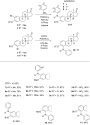
Graphical Abstract
Scheme 1: Pd-catalyzed aminations at C-2 or C-4 in the 13α-estrone series. Reactions were performed on a 0.25...
Scheme 2: Two-step synthesis of 2-amino-13α-estra-1,3,5(10)-trien-17-one (13).
Beilstein J. Org. Chem. 2018, 14, 971–978, doi:10.3762/bjoc.14.82
Graphical Abstract
Figure 1: Structures of pentavalent iodine oxidants 1 and 2, and iodine catalysts 3–13.
Figure 2: Structures of the catalysts 16–25.
Scheme 1: Oxidation of the monovalent iodine derivatives 17 and 3 to the pentavalent iodine derivatives 29 an...
Figure 3: Reaction profile of the oxidation of (a) iodobenzamide 17 and (b) 2-iodobenzoic acid (3) with Oxone®...
Scheme 2: Plausible reaction mechanism for the oxidation of alcohols catalyzed by the 2-iodobenzamides.
Beilstein J. Org. Chem. 2018, 14, 672–681, doi:10.3762/bjoc.14.55
Graphical Abstract
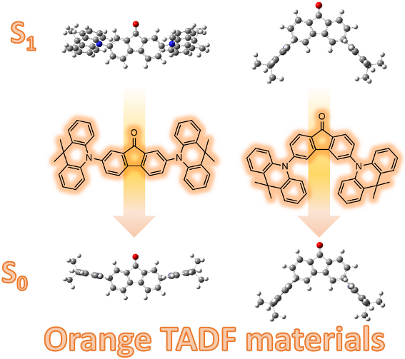
Scheme 1: Molecular structures of isomers 1 and 2.
Figure 1: (a) The optimized S0 geometries of 1 (left) and 2 (right) on B3LYP/6-31G* level in gas phase; (b) T...
Figure 2: UV–vis (solid point) and photoluminescence (hollow point) spectra of 1 and 2 in dilute solution.
Figure 3: The low temperature photoluminescence spectra of 1 (left) and 2 (right) in toluene at 77 K.
Figure 4: (a) Time-resolved transient photoluminescence decay spectra of the doped films (8 wt % in CBP) meas...
Figure 5: Energy level (eV) diagrams of OLED devices and the chemical structures of the materials utilized fo...
Figure 6: J–V–L (current density–voltage–luminance) (left) and EQE–current density characteristics of the dev...
Figure 7: EQE–current density characteristics of the devices based on 1 (top) and 2 (bottom). The solid lines...
Beilstein J. Org. Chem. 2018, 14, 537–546, doi:10.3762/bjoc.14.40
Graphical Abstract
Figure 1: Characterisation of Pd/C electrocatalyst. a) TEM micrograph. b) Energy dispersive X-ray analysis (E...
Figure 2: SEM images of (a) Pd0.02/C/T and (b) Pd0.20/C/T electrodes, with different magnifications.
Figure 3: Cyclic voltammetric behaviour of Pd0.20/C/T electrode in 0.5 M H2SO4. Scan rate: 50 mV s−1. Startin...
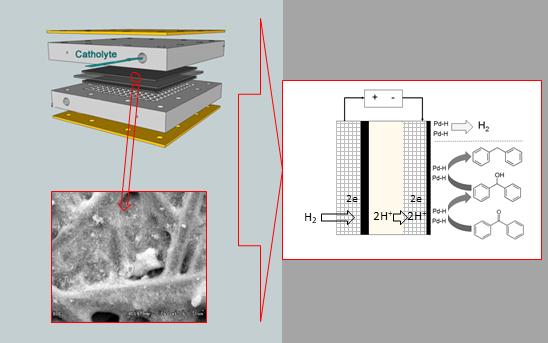
Figure 4: Scheme of all components of the electrochemical reactor including reactions involved in both anode ...
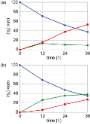
Figure 5: Fractional conversion of benzophenone as a function of coulombic passed charge using the PEMER; 0.5...
Figure 6: Plot of cell voltage versus time obtained from a preparative electrosynthesis performed at 10 mA cm...
Figure 7: Fractional conversion of benzophenone as a function of coulombic charge passed; 0.5 M benzophenone ...
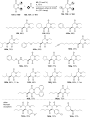
Figure 8: Comparison of fractional conversion (XR) and product yield (η) between Pd0.02/C/T, Pd0.20/C/T and Pd...
Figure 9: Fractional conversions of benzophenone and product yield of diphenylmethanol at both electrodes. (a...
Figure 10: (a) General scheme of a PEMER; (b) itemisation of the main parts of PEMER: 1) endplates, 2) gas dif...
Beilstein J. Org. Chem. 2018, 14, 282–308, doi:10.3762/bjoc.14.18
Graphical Abstract
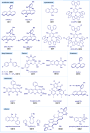
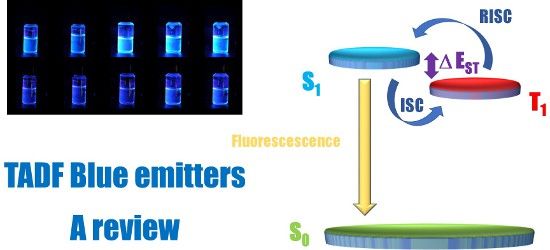
Figure 1: Radiative deactivation pathways existing in fluorescent, phosphorescent and TADF materials.
Figure 2: Boron-containing TADF emitters B1–B10.
Figure 3: Diphenylsulfone-based TADF emitters D1–D7.
Figure 4: Triazine-based TADF emitters T1–T3, T5–T7 and azasiline derivatives T3 and T4.
Figure 5: Triazine-based TADF emitters T8, T9, T11–T14 and carbazole derivative T10.
Figure 6: Triazine-based TADF emitters T15–T19.
Figure 7: Triazine- and pyrimidine-based TADF emitters T20–T26.
Figure 8: Pyrimidine-based TADF emitters T27–T30.
Figure 9: Triazine-based TADF polymers T31–T32.
Figure 10: Phenoxaphosphine oxide and phenoxathiin dioxide-based TADF emitters P1 and P2.
Figure 11: CN-Substituted pyridine and pyrimidine derivatives CN-P1–CN-P8.
Figure 12: CN-Substituted pyridine derivatives CN-P9 and CN-P10.
Figure 13: Phosphine oxide-based TADF blue emitters PO-1–PO-3.
Figure 14: Phosphine oxide-based TADF blue emitters PO-4–PO-9.
Figure 15: Benzonitrile-based emitters BN-1–BN-5.
Figure 16: Benzonitrile-based emitters BN-6–BN-11.
Figure 17: Benzoylpyridine-carbazole hybrid emitters BP-1–BP-6.
Figure 18: Benzoylpyridine-carbazole hybrid emitters BP-7–BP-10.
Figure 19: Triazole-based emitters Trz-1 and Trz-2.
Figure 20: Triarylamine-based emitters TPA-1–TPA-3.
Figure 21: Distribution of the CIE coordinates of ca. 90 blue TADF emitters listed in this review.
Beilstein J. Org. Chem. 2018, 14, 54–83, doi:10.3762/bjoc.14.4
Graphical Abstract
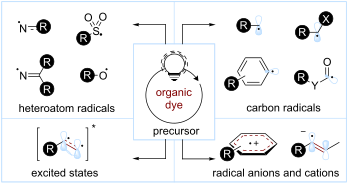
Scheme 1: General overview over the sulfur-based substrates and reactive intermediates that are discussed in ...
Scheme 2: Photoredox-catalyzed radical thiol–ene reaction, applying [Ru(bpz)3](PF6)2 as photocatalyst.
Scheme 3: Photoredox-catalyzed thiol–ene reaction of aliphatic thiols with alkenes enabled by aniline derivat...
Scheme 4: Photoredox-catalyzed radical thiol–ene reaction for the postfunctionalization of polymers (a) and n...
Scheme 5: Photoredox-catalyzed thiol–ene reaction enabled by bromotrichloromethane as redox additive.
Scheme 6: Photoredox-catalyzed preparation of β-ketosulfoxides with Eosin Y as organic dye as photoredox cata...
Scheme 7: Greaney’s photocatalytic radical thiol–ene reaction, applying TiO2 nanoparticles as photocatalyst.
Scheme 8: Fadeyi’s photocatalytic radical thiol–ene reaction, applying Bi2O3 as photocatalyst.
Scheme 9: Ananikov’s photocatalytic radical thiol-yne reaction, applying Eosin Y as photocatalyst.
Scheme 10: Organocatalytic visible-light photoinitiated thiol–ene coupling, applying phenylglyoxylic acid as o...
Scheme 11: Xia’s photoredox-catalyzed synthesis of 2,3-disubstituted benzothiophenes, applying 9-mesityl-10-me...
Scheme 12: Wang’s metal-free photoredox-catalyzed radical thiol–ene reaction, applying 9-mesityl-10-methylacri...
Scheme 13: Visible-light benzophenone-catalyzed metal- and oxidant-free radical thiol–ene reaction.
Scheme 14: Visible-light catalyzed C-3 sulfenylation of indole derivatives using Rose Bengal as organic dye.
Scheme 15: Photocatalyzed radical thiol–ene reaction and subsequent aerobic sulfide-oxidation with Rose Bengal...
Scheme 16: Photoredox-catalyzed synthesis of diaryl sulfides.
Scheme 17: Photocatalytic cross-coupling of aryl thiols with aryl diazonium salts, using Eosin Y as photoredox...
Scheme 18: Photocatalyzed cross-coupling of aryl diazonium salts with cysteines in batch and in a microphotore...
Scheme 19: Fu’s [Ir]-catalyzed photoredox arylation of aryl thiols with aryl halides.
Scheme 20: Fu’s photoredox-catalyzed difluoromethylation of aryl thiols.
Scheme 21: C–S cross-coupling of thiols with aryl iodides via [Ir]-photoredox and [Ni]-dual-catalysis.
Scheme 22: C–S cross-coupling of thiols with aryl bromides, applying 3,7-bis-(biphenyl-4-yl)-10-(1-naphthyl)ph...
Scheme 23: Collin’s photochemical dual-catalytic cross-coupling of thiols with bromoalkynes.
Scheme 24: Visible-light-promoted C–S cross-coupling via intermolecular electron donor–acceptor complex format...
Scheme 25: Li’s visible-light photoredox-catalyzed thiocyanation of indole derivatives with Rose Bengal as pho...
Scheme 26: Hajra’s visible-light photoredox-catalyzed thiocyanation of imidazoheterocycles with Eosin Y as pho...
Scheme 27: Wang’s photoredox-catalyzed thiocyanation reaction of indoles, applying heterogeneous TiO2/MoS2 nan...
Scheme 28: Yadav’s photoredox-catalyzed α-C(sp3)–H thiocyanation reaction for tertiary amines, applying Eosin ...
Scheme 29: Yadav’s photoredox-catalyzed synthesis of 5-aryl-2-imino-1,3-oxathiolanes.
Scheme 30: Yadav’s photoredox-catalyzed synthesis of 1,3-oxathiolane-2-thiones.
Scheme 31: Li’s photoredox catalysis for the preparation of 2-substituted benzothiazoles, applying [Ru(bpy)3](...
Scheme 32: Lei’s external oxidant-free synthesis of 2-substituted benzothiazoles by merging photoredox and tra...
Scheme 33: Metal-free photocatalyzed synthesis of 2-aminobenzothiazoles, applying Eosin Y as photocatalyst.
Scheme 34: Metal-free photocatalyzed synthesis of 1,3,4-thiadiazoles, using Eosin Y as photocatalyst.
Scheme 35: Visible-light photoredox-catalyzed preparation of benzothiophenes with Eosin Y.
Scheme 36: Visible-light-induced KOH/DMSO superbase-promoted preparation of benzothiophenes.
Scheme 37: Jacobi von Wangelin’s photocatalytic approach for the synthesis of aryl sulfides, applying Eosin Y ...
Scheme 38: Visible-light photosensitized α-C(sp3)–H thiolation of aliphatic ethers.
Scheme 39: Visible-light photocatalyzed cross-coupling of alkyl and aryl thiosulfates with aryl diazonium salt...
Scheme 40: Visible-light photocatalyzed, controllable sulfenylation and sulfoxidation with organic thiosulfate...
Scheme 41: Rastogi’s photoredox-catalyzed methylsulfoxidation of aryl diazonium salts, using [Ru(bpy)3]Cl2 as ...
Scheme 42: a) Visible-light metal-free Eosin Y-catalyzed procedure for the preparation of vinyl sulfones from ...
Scheme 43: Visible-light photocatalyzed cross-coupling of sodium sulfinates with secondary enamides.
Scheme 44: Wang’s photocatalyzed oxidative cyclization of phenyl propiolates with sulfinic acids, applying Eos...
Scheme 45: Lei’s sacrificial oxidant-free synthesis of allyl sulfones by merging photoredox and transition met...
Scheme 46: Photocatalyzed Markovnikov-selective radical/radical cross-coupling of aryl sulfinic acids and term...
Scheme 47: Visible-light Eosin Y induced cross-coupling of aryl sulfinic acids and styrene derivatives, afford...
Scheme 48: Photoredox-catalyzed bicyclization of 1,7-enynes with sulfinic acids, applying Eosin Y as photocata...
Scheme 49: Visible-light-accelerated C–H-sulfinylation of arenes and heteroarenes.
Scheme 50: Visible-light photoredox-catalyzed β-selenosulfonylation of electron-rich olefins, applying [Ru(bpy)...
Scheme 51: Photocatalyzed preparation of β-chlorosulfones from the respective olefins and p-toluenesulfonyl ch...
Scheme 52: a) Photocatalyzed preparation of β-amidovinyl sulfones from sulfonyl chlorides. b) Preparation of β...
Scheme 53: Visible-light photocatalyzed sulfonylation of aliphatic tertiary amines, applying [Ru(bpy)3](PF6)2 ...
Scheme 54: Reiser’s visible-light photoredox-catalyzed preparation of β-hydroxysulfones from sulfonyl chloride...
Scheme 55: a) Sun’s visible-light-catalyzed approach for the preparation of isoquinolinonediones, applying [fac...
Scheme 56: Visible-light photocatalyzed sulfonylation/cyclization of vinyl azides, applying [Ru(bpy)3]Cl2 as p...
Scheme 57: Visible-light photocatalyzed procedure for the formation of β-ketosulfones from aryl sulfonyl chlor...
Scheme 58: Zheng’s method for the sulfenylation of indole derivatives, applying sulfonyl chlorides via visible...
Scheme 59: Cai’s visible-light induced synthesis of β-ketosulfones from sulfonyl hydrazines and alkynes.
Scheme 60: Photoredox-catalyzed approach for the preparation of vinyl sulfones from sulfonyl hydrazines and ci...
Scheme 61: Jacobi von Wangelin’s visible-light photocatalyzed chlorosulfonylation of anilines.
Scheme 62: Three-component photoredox-catalyzed synthesis of N-amino sulfonamides, applying PDI as organic dye....
Scheme 63: Visible-light induced preparation of complex sulfones from oximes, silyl enol ethers and SO2.
Beilstein J. Org. Chem. 2017, 13, 2764–2799, doi:10.3762/bjoc.13.272
Graphical Abstract
Scheme 1: Trifluoromethylation of enol acetates by Langlois.
Scheme 2: Trifluoromethylation of (het)aryl enol acetates.
Scheme 3: Mechanism for the trifluoromethylation of enol acetates.
Scheme 4: Oxidative trifluoromethylation of unactivated olefins and mechanistic pathway.
Scheme 5: Oxidative trifluoromethylation of acetylenic substrates.
Scheme 6: Metal free trifluoromethylation of styrenes.
Scheme 7: Synthesis of α-trifluoromethylated ketones by oxytrifluoromethylation of heteroatom-functionalised ...
Scheme 8: Catalysed photoredox trifluoromethylation of vinyl azides.
Scheme 9: Oxidative difunctionalisation of alkenyl MIDA boronates.
Scheme 10: Synthesis of β-trifluoromethyl ketones from cyclopropanols.
Scheme 11: Aryltrifluoromethylation of allylic alcohols.
Scheme 12: Cascade multicomponent synthesis of nitrogen heterocycles via azotrifluoromethylation of alkenes.
Scheme 13: Photocatalytic azotrifluoromethylation of alkenes with aryldiazonium salts and CF3SO2Na.
Scheme 14: Copper-promoted intramolecular aminotrifluoromethylation of alkenes with CF3SO2Na.
Scheme 15: Oxytrifluoromethylation of alkenes with CF3SO2Na and hydroxamic acid.
Scheme 16: Manganese-catalysed oxytrifluoromethylation of styrene derivatives.
Scheme 17: Oxytrifluoromethylation of alkenes with NMP/O2 and CF3SO2Na.
Scheme 18: Intramolecular oxytrifluoromethylation of alkenes.
Scheme 19: Hydrotrifluoromethylation of styrenyl alkenes and unactivated aliphatic alkenes.
Scheme 20: Hydrotrifluoromethylation of electron-deficient alkenes.
Scheme 21: Hydrotrifluoromethylation of alkenes by iridium photoredox catalysis.
Scheme 22: Iodo- and bromotrifluoromethylation of alkenes by CF3SO2Na/I2O5 or CF3SO2Na / NaBrO3.
Scheme 23: N-methyl-9-mesityl acridinium and visible-light-induced chloro-, bromo- and SCF3 trifluoromethylati...
Scheme 24: Carbotrifluoromethylation of N-arylacrylamides with CF3SO2Na / TBHP by Lipshutz.
Scheme 25: Carbotrifluoromethylation of N-arylacrylamides with CF3SO2Na/TBHP reported by Lei.
Scheme 26: Carbotrifluoromethylation of N-arylacrylamides with CF3SO2Na/(NH4)2S2O8.
Scheme 27: Metal-free carbotrifluoromethylation of N-arylacrylamides with CF3SO2Na/K2S2O8 reported by Wang.
Scheme 28: Metal-free carbotrifluoromethylation of N-arylacrylamides with CF3SO2Na/PIDA reported by Fu.
Scheme 29: Metal-free cascade trifluoromethylation/cyclisation of N-arylmethacrylamides (a) and enynes (b) wit...
Scheme 30: Trifluoromethylation/cyclisation of N-arylcinnamamides: Synthesis of 3,4-disubstituted dihydroquino...
Scheme 31: Trifluoromethylation/cyclisation of aromatic-containing unsaturated ketones.
Scheme 32: Chemo- and regioselective cascade trifluoromethylation/heteroaryl ipso-migration of unactivated alk...
Scheme 33: Copper-mediated 1,2-bis(trifluoromethylation) of alkenes.
Scheme 34: Trifluoromethylation of aromatics with CF3SO2Na reported by Langlois.
Scheme 35: Baran’s oxidative C–H trifluoromethylation of heterocycles.
Scheme 36: Trifluoromethylation of acetanilides and anilines.
Scheme 37: Trifluoromethylation of heterocycles in water.
Scheme 38: Trifluoromethylation of coumarins in a continuous-flow reactor.
Scheme 39: Oxidative trifluoromethylation of coumarins, quinolines and pyrimidinones.
Scheme 40: Oxidative trifluoromethylation of pyrimidinones and pyridinones.
Scheme 41: Phosphovanadomolybdic acid-catalysed direct C−H trifluoromethylation.
Scheme 42: Oxidative trifluoromethylation of imidazopyridines and imidazoheterocycles.
Scheme 43: Oxidative trifluoromethylation of imidazoheterocycles and imidazoles in ionic liquid/water.
Scheme 44: Oxidative trifluoromethylation of 8-aminoquinolines.
Scheme 45: Oxidative trifluoromethylation of various 8-aminoquinolines using the supported catalyst CS@Cu(OAc)2...
Scheme 46: Oxidative trifluoromethylation of the naphthylamide 70.
Scheme 47: Oxidative trifluoromethylation of various arenes in the presence of CF3SO2Na and sodium persulfate.
Scheme 48: Trifluoromethylation of electron-rich arenes and unsymmetrical biaryls with CF3SO2Na in the presenc...
Figure 1: Trifluoromethylated coumarin and flavone.
Scheme 49: Metal-free trifluoromethylation catalysed by a photoredox organocatalyst.
Scheme 50: Quinone-mediated trifluoromethylation of arenes and heteroarenes.
Scheme 51: Metal- and oxidant-free photochemical trifluoromethylation of arenes.
Scheme 52: Copper-mediated trifluoromethylation of arenediazonium tetrafluoroborates.
Scheme 53: Oxidative trifluoromethylation of aryl- and heteroarylboronic acids.
Scheme 54: Oxidative trifluoromethylation of aryl- and vinylboronic acids.
Scheme 55: Oxidative trifluoromethylation of unsaturated potassium organotrifluoroborates.
Scheme 56: Oxidative trifluoromethylation of (hetero)aryl- and vinyltrifluoroborates.
Scheme 57: Copper−catalysed decarboxylative trifluoromethylation of cinnamic acids.
Scheme 58: Iron-mediated decarboxylative trifluoromethylation of α,β-unsaturated carboxylic acids.
Scheme 59: Cu/Ag-catalysed decarboxylative trifluoromethylation of cinnamic acids.
Scheme 60: I2O5-Promoted decarboxylative trifluoromethylation of cinnamic acids.
Scheme 61: Silver(I)-catalysed denitrative trifluoromethylation of β-nitrostyrenes.
Scheme 62: Copper-catalysed direct trifluoromethylation of styrene derivatives.
Scheme 63: Transition-metal-free synthesis of β-trifluoromethylated enamines.
Scheme 64: I2O5-mediated iodotrifluoromethylation of alkynes.
Scheme 65: Silver-catalysed tandem trifluoromethylation/cyclisation of aryl isonitriles.
Scheme 66: Photoredox trifluoromethylation of 2-isocyanobiphenyls.
Scheme 67: Trifluoromethylation of potassium alkynyltrifluoroborates with CF3SO2Na.
Scheme 68: N-trifluoromethylation of nitrosoarenes with CF3SO2Na (SQ: semiquinone).
Scheme 69: Trifluoromethylation of disulfides with CF3SO2Na.
Scheme 70: Trifluoromethylation of thiols with CF3SO2Na/I2O5.
Scheme 71: Electrophilic trifluoromethylsulfenylation by means of CF3SO2Na/(EtO)2P(O)H/CuCl/DMSO.
Scheme 72: Electrophilic trifluoromethylsulfenylation by means of CF3SO2Na/(EtO)2P(O)H/TMSCl.
Scheme 73: Electrophilic trifluoromethylsulfenylation by means of CF3SO2Na/PPh3/N-chlorophthalimide.
Scheme 74: Electrophilic trifluoromethylsulfenylation by means of CF3SO2Na/PCl3.
Scheme 75: Electrophilic trifluoromethylsulfenylation by means of CF3SO2Na/PCl3.
Scheme 76: Trifluoromethylsulfenylation of aryl iodides with in situ generated CuSCF3 (DMI: 1,3-dimethyl-2-imi...
Scheme 77: Pioneering trifluoromethylsulfinylation of N, O, and C-nucleophiles.
Scheme 78: Trifluoromethylsulfinylation of (1R,2S)-ephedrine (Im: imidazole; DIEA: N,N-diisopropylethylamine).
Scheme 79: Trifluoromethylsulfinylation of substituted benzenes with CF3SO2Na/CF3SO3H.
Scheme 80: Trifluoromethylsulfinylation of indoles with CF3SO2Na/P(O)Cl3.
Scheme 81: Trifluoromethylsulfinylation of indoles with CF3SO2Na/PCl3.
Scheme 82: Formation of triflones from benzyl bromides (DMA: dimethylacetamide).
Scheme 83: Formation of α-trifluoromethylsulfonyl ketones, esters, and amides.
Scheme 84: Allylic trifluoromethanesulfonylation of aromatic allylic alcohols.
Scheme 85: Copper-catalysed couplings of aryl iodonium salts with CF3SO2Na.
Scheme 86: Palladium-catalysed trifluoromethanesulfonylation of aryl triflates and chlorides with CF3SO2Na.
Scheme 87: Copper-catalysed coupling of arenediazonium tetrafluoroborates with CF3SO2Na.
Scheme 88: Synthesis of phenyltriflone via coupling of benzyne with CF3SO2Na.
Scheme 89: Synthesis of 1-trifluoromethanesulfonylcyclopentenes from 1-alkynyl-λ3-bromanes and CF3SO2Na.
Scheme 90: One-pot synthesis of functionalised vinyl triflones.
Scheme 91: Regioselective synthesis of vinyltriflones from styrenes.
Scheme 92: Trifluoromethanesulfonylation of alkynyl(phenyl) iodonium tosylates by CF3SO2Na.
Scheme 93: Synthesis of thio- and selenotrifluoromethanesulfonates.