


Search results
Search for "binding site" in Full Text gives 186 result(s) in Beilstein Journal of Organic Chemistry.
Naphthalene diimide bis-guanidinio-carbonyl-pyrrole as a pH-switchable threading DNA intercalator
Beilstein J. Org. Chem. 2020, 16, 2201–2211, doi:10.3762/bjoc.16.185
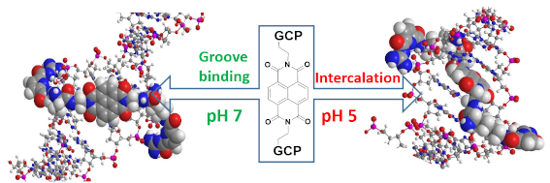
- CD experiment (Figure 3b) does not contribute significantly to the binding enthalpy. The analysis of the binding parameters collected in Table 3 at excess of DNA/RNA over compound 4 (n < 0.3, binding to primary binding site) revealed a large negative reaction enthalpy change and a large positive
- reaction entropy change, indicating favourable enthalpic (exothermic) and entropic contribution to the reaction Gibbs free energy change. This means that the reaction is both enthalpically and entropically driven. However, secondary binding site (n > 0.4; excess of 4 over DNA primarily binding site) is


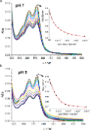

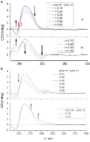


Naphthalene diimide–amino acid conjugates as novel fluorimetric and CD probes for differentiation between ds-DNA and ds-RNA
Beilstein J. Org. Chem. 2020, 16, 2032–2045, doi:10.3762/bjoc.16.170
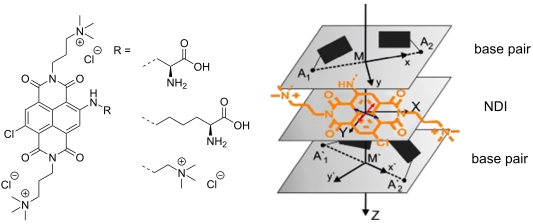
- )-polynucleotides. The DNA/RNA binding-induced circular dichroism (ICD) response of NDI at 450–550 nm strongly depended on the length and rigidity of the linker to the amino acid unit, which controls the orientation of the NDI unit inside within the intercalative binding site. The ICD selectivity also depends on
- both, the minor and major groove of the polynucleotide. Such bulky groups positioning requires the DNA double helix to shortly open at a binding site and close upon threading intercalator insertion. Also, the chosen NDI chromophore is characterised by easily tuneable emission wavelengths [23], and
- –polynucleotide systems, thereby providing insight into the aromatic core position within the intercalative binding site. Conclusion The new amino acid conjugates 3a, 3b, and reference compound 5 bearing the fluorescent NDI tag molecules showed moderate absorbance in the mid-visible range (λabs 520–540 nm) and


Design, synthesis and application of carbazole macrocycles in anion sensors
Beilstein J. Org. Chem. 2020, 16, 1901–1914, doi:10.3762/bjoc.16.157

- , starting with formate. MC008 was able to fit acetate and lactate. Thus, an additional binding site was available for lactate. In the complexes of lactate with MC006–MC009, a hydrogen bond was present between the oxygen of the hydroxy group of lactate and the NH group of the macrocyclic amide. See Figure 5




A dynamic combinatorial library for biomimetic recognition of dipeptides in water
Beilstein J. Org. Chem. 2020, 16, 1588–1595, doi:10.3762/bjoc.16.131
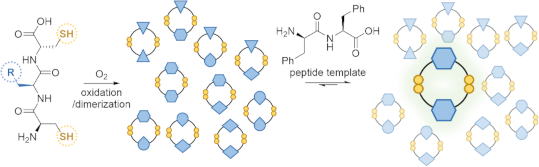
- motifs were developed and if arranged correctly can be used to synthesize artificial receptors with high affinity [2][3]. Schmuck et al. have been hugely successful in designing artificial peptide receptors [4][5]. For example, they combined a carboxylate binding site with an aromatic bowl-shaped cavity


A smart deoxyribozyme-based fluorescent sensor for in vitro detection of androgen receptor mRNA
Beilstein J. Org. Chem. 2020, 16, 1135–1141, doi:10.3762/bjoc.16.100
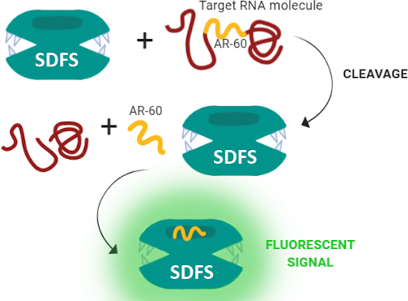
- technique is more frequently used in diagnostic laboratories than the direct sequencing method [6]. A serious problem for the detection of full-sized nucleic acids is the secondary structure, which interrupts the access of sensors to the binding site. For single-stranded RNA this problem may be partially



Synthesis and herbicidal activities of aryloxyacetic acid derivatives as HPPD inhibitors
Beilstein J. Org. Chem. 2020, 16, 233–247, doi:10.3762/bjoc.16.25
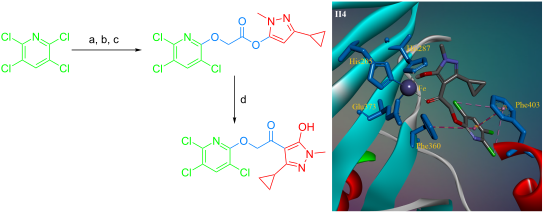
- revealed the bioactive binding site positions of potential inhibitors within the targets active site. We modeled the interactions of I12 and II4 (C) with AtHPPD (PDB ID: 1TFZ). The structure of AtHPPD was taken from the PDB data bank. All molecular modeling studies were carried out as previously reported
- process, all water molecules were removed. The ligand and protein were prepared with the Dock Ligands tool before docking. By using Define and Edit Binding Site tool to identify the active site. Then the center of the native ligand was deleted. Utilizing the CDOCKER, the prepared ligand was docked into
- the protein receptor binding site. After the docking calculations were performed, the best binding modes were determined by docking scores and also compared with the simulated binding mode of mesotrione with AtHPPD. Enzyme inhibition study AtHPPD was prepared and purified according to the reported




Potent hemithioindigo-based antimitotics photocontrol the microtubule cytoskeleton in cellulo
Beilstein J. Org. Chem. 2020, 16, 125–134, doi:10.3762/bjoc.16.14
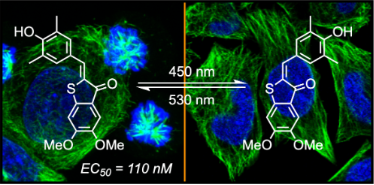
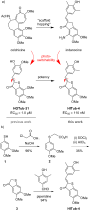
- lit-active photopharmaceuticals for the same binding site by a priori design. However, the potency of previous hemithioindigo photopharmaceuticals has not been optimal for their translation to other biological models. Results: Inspired by the structure of tubulin-inhibiting indanones, we created
- heterostilbenes that deliver green fluorescent protein (GFP)-orthogonal MT photocontrol [17]. However, in both azobenzene and heterostilbene scaffolds, the steric properties of the E- and Z-isomer are so different that the protein binding site shape determines that the Z-isomer (the lit-form) is the more
- cellulo [18]. We showed for the first time that the pseudosymmetry of hemithioindigos can be used to enable a priori design of HTI-based pharmacophores for a single binding site, with higher bioactivity as either the lit-form E- or the dark-form Z-isomer, just by changing substituent patterns, and





Reversible photoswitching of the DNA-binding properties of styrylquinolizinium derivatives through photochromic [2 + 2] cycloaddition and cycloreversion
Beilstein J. Org. Chem. 2020, 16, 111–124, doi:10.3762/bjoc.16.13
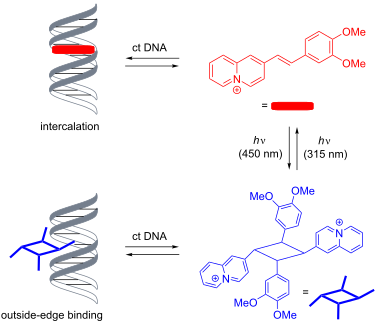
- ligands 3a–c upon association with DNA resembled the ones observed for other styryl-substituted quinolizinium derivatives [62][63][64][65][66][67]. Accordingly, the emission enhancement most likely resulted from the accommodation of the ligand in the constrained binding site of the DNA, which led to a
- restricted conformational flexibility. As a result, conformational changes of the styryl substituent in the excited state that lead to radiationless deactivation in solution were significantly suppressed within the binding site so that emission became competitive. The DNA-binding properties of the ligands 3a
- relative to the ones of the DNA base pairs [75][76]. Considering a dipole moment of the donor–acceptor systems 3a–c along the long molecular axis, a binding mode in which the ligand is accommodated in the intercalation site with its long molecular axis perpendicular to the long axis of the binding site





Photocontrolled DNA minor groove interactions of imidazole/pyrrole polyamides
Beilstein J. Org. Chem. 2020, 16, 60–70, doi:10.3762/bjoc.16.8
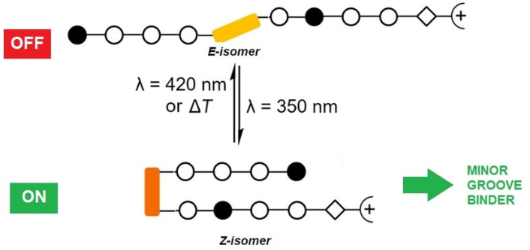
- binding site was monitored by emission spectroscopy. The addition of 2.3 equiv of E-P1 led to a displacement of 50% of TO (cf. Supporting Information File 3), which indicates only a weak binding of E-P1 because as a groove binder, the latter occupies more binding sites than TO. These data indicate that E



Chemical synthesis of tripeptide thioesters for the biotechnological incorporation into the myxobacterial secondary metabolite argyrin via mutasynthesis
Beilstein J. Org. Chem. 2019, 15, 2922–2929, doi:10.3762/bjoc.15.286
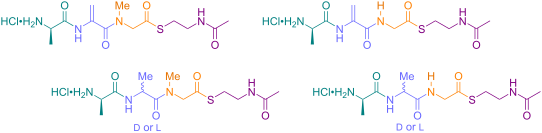
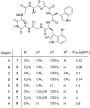
- G reveals that the antibiotic is deeply buried inside the protein’s binding pocket and only a few sites of the molecule can possibly be modified without introducing steric clash with the binding site. Besides the methoxytryptophan which has been addressed by chemical synthesis, one appealing



Palladium-catalyzed synthesis and nucleotide pyrophosphatase inhibition of benzo[4,5]furo[3,2-b]indoles
Beilstein J. Org. Chem. 2019, 15, 2830–2839, doi:10.3762/bjoc.15.276

- interactions and binding energies of the selected compounds within the binding pocket of modeled proteins were found out by using MOE (2014.0901). MOE site finder was used to locate the binding site while default setting of the triangular matcher placement method in combination with GBVI/WSA ∆G, were used to


Chemical tuning of photoswitchable azobenzenes: a photopharmacological case study using nicotinic transmission
Beilstein J. Org. Chem. 2019, 15, 2812–2821, doi:10.3762/bjoc.15.274
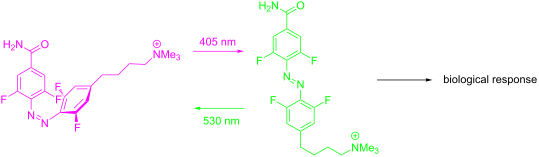
- the neurotransmitter binding site, via a (still) mysterious mechanism [15][16]. Normally, TA-based drugs can activate nicotinic acetylcholine receptors, as shown, for example, by Trauner and co-workers [17] (azo-choline, Scheme 1). Here we explore the effects of addition of the tetrafluoro motif onto


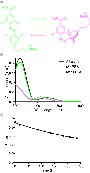


Photoreversible stretching of a BAPTA chelator marshalling Ca2+-binding in aqueous media
Beilstein J. Org. Chem. 2019, 15, 2801–2811, doi:10.3762/bjoc.15.273
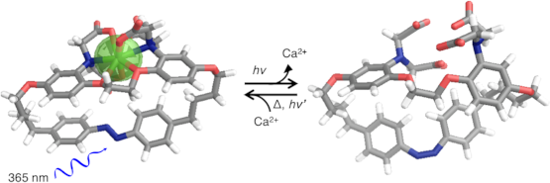
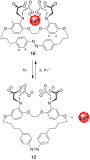
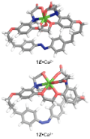
- calcium upon acting on the conformation of the adjacent binding site, rendering it a stronger or weaker binder. Photoswitching was studied in pseudo-physiological conditions (pH 7.2, [KCl] = 100 mM) and dissociation constants for azobenzene cis- and trans-isomers have been determined (0.230 μM and 0.102
- -withdrawing carbonyl function is generated from a secondary alcohol adjacent to the BAPTA binding site upon photoirradiation, which proved sufficient to lower the binding affinity 40-fold and liberate calcium in biological media [17]. This design was subsequently improved in a symmetrical variant and indeed a
- alternative approach to generate calcium release, where deforming an ion-binding site would render it less well-adapted to bind a guest. Photoisomerization of the azobenzene moiety has previously been successfully used to modulate the affinity of crown ethers [29], lariats [30], and foldamers [31] for various





A toolbox of molecular photoswitches to modulate the CXCR3 chemokine receptor with light
Beilstein J. Org. Chem. 2019, 15, 2509–2523, doi:10.3762/bjoc.15.244
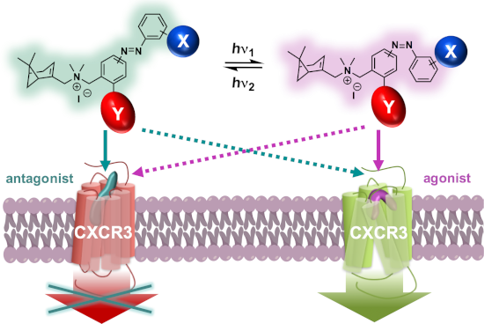
- substituent to the binding site of the receptor [24]. In order to obtain an efficacy photoswitching, we opted for replacing the biaryl moiety for an azobenzene in an azologization approach (Figure 1D) with the expectation that the isomerization of the azobenzene would provide changes in 3D shape that are



Anion-driven encapsulation of cationic guests inside pyridine[4]arene dimers
Beilstein J. Org. Chem. 2019, 15, 2486–2492, doi:10.3762/bjoc.15.241
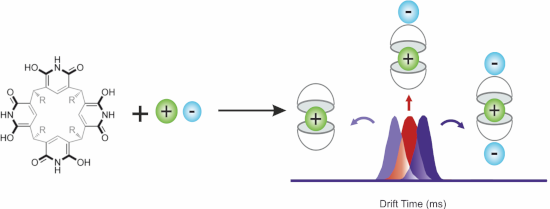
- pair (pathway 2 in Figure S4, Supporting Information File 1). As all studied ternary complexes behaved similarly in the experiments, it can be stated that Me4N+ is located inside the cavity, while the PF6−, BF4− and I− anions reside in the exo-binding site. The binding efficiency of pyridine[4]arene




Self-assembled coordination thioether silver(I) macrocyclic complexes for homogeneous catalysis
Beilstein J. Org. Chem. 2019, 15, 2465–2472, doi:10.3762/bjoc.15.239
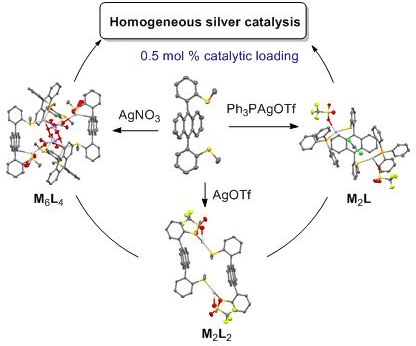
- bulkier silver salt favored a mono-coordination on each binding site. Silver(I) complexes in solution Surprisingly, several batches of each complex 1a–d were compared by 1H NMR (CDCl3, 2 mM) (see Supporting Information File 1, Figure S9) and revealed slight variations in the chemical shifts that might


Azologization and repurposing of a hetero-stilbene-based kinase inhibitor: towards the design of photoswitchable sirtuin inhibitors
Beilstein J. Org. Chem. 2019, 15, 2170–2183, doi:10.3762/bjoc.15.214
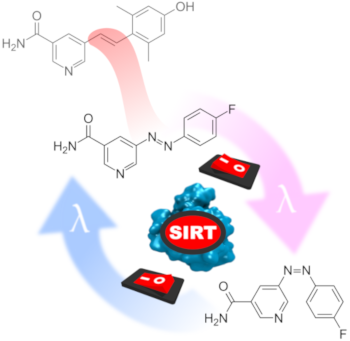
- allows for isotype-specific interactions [46]. A recently developed fluorescence polarization (FP)-based assay enables mapping of ligand binding to this specific binding site [35]. For 2a an interaction with the selectivity pocket was already implied in the same work. Additionally performed docking


Archangelolide: A sesquiterpene lactone with immunobiological potential from Laserpitium archangelica
Beilstein J. Org. Chem. 2019, 15, 1933–1944, doi:10.3762/bjoc.15.189
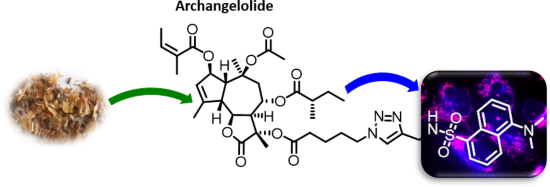
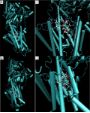
- chemistry at the HF/6-31G*//HF/6-31G* level. Compound 1 molecule was manually docked into the SERCA binding site for thapsigargin using UCSF CHIMERA 1.10.2 (University of California, San Francisco) software by two approaches. In the first one, the molecule was docked so that the spatial orientation of the




Installation of -SO2F groups onto primary amides
Beilstein J. Org. Chem. 2019, 15, 1907–1912, doi:10.3762/bjoc.15.186

- liver [23]. The nucleotide-derived probe 5’-(para-fluorosulfonylbenzoyl)adenosine (5’-FSBA) was used for labelling the second nucleotide binding site, the adenine nucleotide regulatory site [24]. In addition, aryl fluorosulfates have also been widely applied as sustainable alternative to aryl halides in


Inherent atomic mobility changes in carbocation intermediates during the sesterterpene cyclization cascade
Beilstein J. Org. Chem. 2019, 15, 1890–1897, doi:10.3762/bjoc.15.184

- substrate to the enzyme’s binding site could be identified by calculating the inherent structural mobility of the carbocation intermediates. This does involve the assumption that we can neglect the influence of changes in the interior structure of the enzyme as the reaction proceeds; however, based on the


Recent advances on the transition-metal-catalyzed synthesis of imidazopyridines: an updated coverage
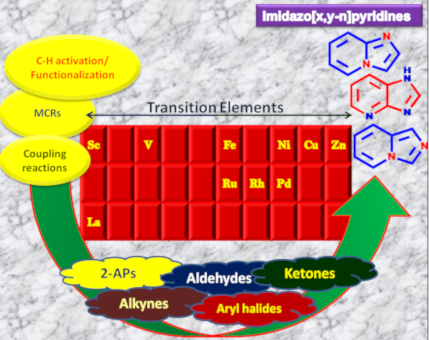
Beilstein J. Org. Chem. 2019, 15, 1612–1704, doi:10.3762/bjoc.15.165


Molecular basis for the plasticity of aromatic prenyltransferases in hapalindole biosynthesis
Beilstein J. Org. Chem. 2019, 15, 1545–1551, doi:10.3762/bjoc.15.157
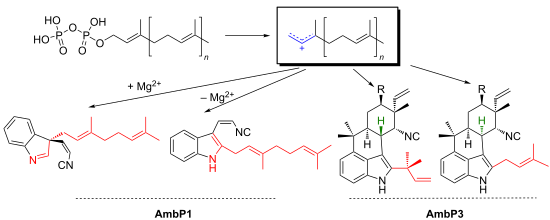
- prenyl donor [12]. This plasticity is due to the hydrophobic nature of the prenyl acceptor binding site and the fluctuations of the amino acids forming the cation shield, similarly to AmbP3. Comparison of the AmbP1 and AmbP3 amino acid sequences with other ABBA PTases The AmbP1 and AmbP3 amino acid
- shape of the substrate binding site. Conclusion The multiple structures of AmbP1 and AmbP3 with different substrate sets provide useful knowledge to understand the molecular basis of the promiscuous PTases. Their promiscuity is mainly caused by the hydrophobic binding pocket for the prenyl acceptor and
- useful catalysts that control the regiospecificity in an environmentally friendly manner. The information from their X-ray structures will contribute to future engineering of PTases. Furthermore, the structure of AmbP1 can serve as a model to alter the reaction through creating a metal binding site


Synthesis and biological evaluation of truncated derivatives of abyssomicin C as antibacterial agents
Beilstein J. Org. Chem. 2019, 15, 1468–1474, doi:10.3762/bjoc.15.147
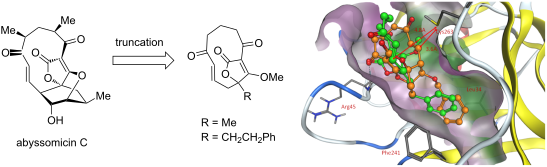
- conformations and with expected interaction points in the binding site, providing suitable docking scores (see Supporting Information File 1). The key interactions include a hydrogen bond to the backbone of Arg-45 and lipophilic interactions in the deep pocket defined by Phe-241 and Leu-34 (Figure 2). Our


Host–guest interactions between p-sulfonatocalix[4]arene and p-sulfonatothiacalix[4]arene and group IA, IIA and f-block metal cations: a DFT/SMD study
Beilstein J. Org. Chem. 2019, 15, 1321–1330, doi:10.3762/bjoc.15.131
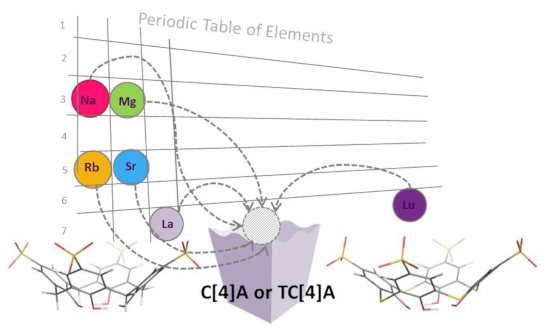
- is shown that the metal cations induce different pre-organization of the calixarene structure upon binding. The preferred binding site for the guest metal cations is the plane of the upper rim (with p-sulfonato groups), i.e., the sulfonate groups of hosts serve as anchoring points for the positively





Bambusuril analogs based on alternating glycoluril and xylylene units
Beilstein J. Org. Chem. 2019, 15, 1268–1274, doi:10.3762/bjoc.15.124
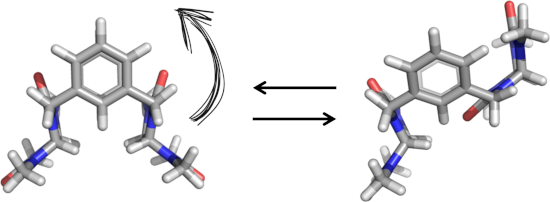
- with chromophore groups on their portals. However, the changes in the absorption spectra of these receptors upon anion binding were negligible since the groups on the portals were too distant from the anion binding site in the center of macrocycle. A different approach for the preparation of UV–vis





