Search results
Search for "cancer cells" in Full Text gives 172 result(s) in Beilstein Journal of Organic Chemistry.
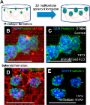
Cryogels: recent applications in 3D-bioprinting, injectable cryogels, drug delivery, and wound healing
Beilstein J. Org. Chem. 2021, 17, 2553–2569, doi:10.3762/bjoc.17.171
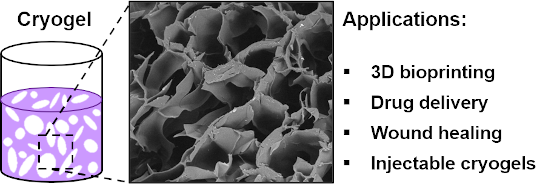
- accumulating drug payloads into the tumour. Further testing was said to be targeted towards the use of the cryogel as an approach to delay or prevent cancer recurrence through the induction of in situ cancer vaccination mediated by antigens and danger signals released from the apoptotic cancer cells [82






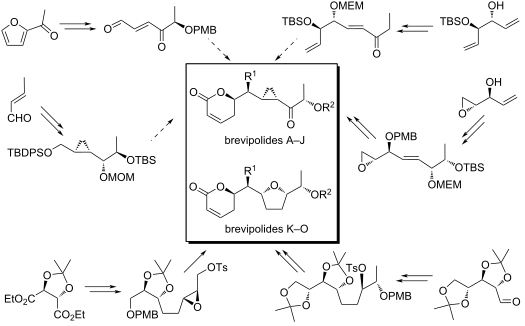
Strategies for the synthesis of brevipolides
Beilstein J. Org. Chem. 2021, 17, 2399–2416, doi:10.3762/bjoc.17.157
- [4]. These compounds demonstrated cytotoxicity against various human cancer cells. Additionally, the research group led by Pereda-Miranda later isolated more members of brevipolide (1–15) from the same plant during 2013–2017 and further confirmed the cytotoxic activity of these natural products [1
- cancer cells was conducted for brevipolides A–G (1–7) by Kinghorn and co-workers but none of the compounds showed significant activity (Table 1, entries 1–7) [4]. These seven compounds were also evaluated against HT-29 human colon carcinoma cells and only three of them were potent (Table 1, entries 1, 2
- , and 6) with the lowest ED50 value of 5.8 μM obtained for brevipolide A (1) (Table 1, entry 1). Similar cytotoxicity evaluation was performed for brevipolides G–O (7–15) against HCT-15 human colon cancer cells (Table 1, entries 7–15), and relatively high ED50 values were obtained with the lowest number


Post-functionalization of drug-loaded nanoparticles prepared by polymerization-induced self-assembly (PISA) with mitochondria targeting ligands
Beilstein J. Org. Chem. 2021, 17, 2302–2314, doi:10.3762/bjoc.17.148
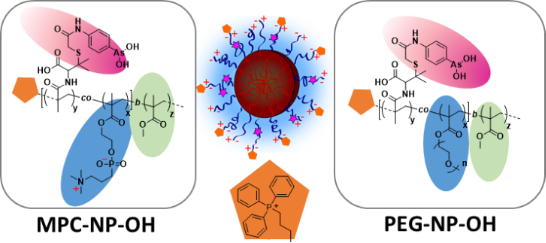
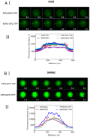
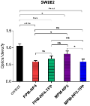
- cellular internalization as well as accumulation at the diseased tissues by targeting specific over-expressed receptors in cancer cells. However, to this date it is still debateable if active retention truly causes this "homing" effect. It has been shown that due to increased protein corona formation on a






Natural products in the predatory defence of the filamentous fungal pathogen Aspergillus fumigatus
Beilstein J. Org. Chem. 2021, 17, 1814–1827, doi:10.3762/bjoc.17.124

- breast cancer cells by arresting the cell cycle and promoting apoptosis while showing no cytotoxicity against RAW 264.7 cells, thus demonstrating their selectivity [65][67]. Further, fumigaclavine was shown to exhibit antibacterial properties and to contribute to virulence in the model insect Galleria


A systems-based framework to computationally describe putative transcription factors and signaling pathways regulating glycan biosynthesis
Beilstein J. Org. Chem. 2021, 17, 1712–1724, doi:10.3762/bjoc.17.119
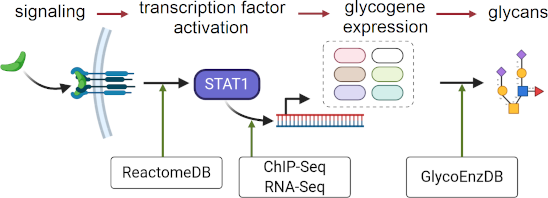
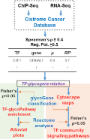
- possible that MECP2 may not be sufficiently expressed to repress MEFC2 in call cancer cells. MEF2C was found to regulate CSGALNACT1 (ρ = 0.66, RP = 0.71), CHST3 (ρ = 0.50, RP = 0.74), CHST11 (ρ = 0.47, RP = 0.84), DSEL (ρ = 0.40, RP = 0.81), and UST (ρ = 0.42, RP = 0.95). Here, CSGALNACT1 is responsible




Chemical approaches to discover the full potential of peptide nucleic acids in biomedical applications
Beilstein J. Org. Chem. 2021, 17, 1641–1688, doi:10.3762/bjoc.17.116
- enabled uptake of the conjugate in DU145 cancer cells as analyzed by fluorescence-activated cell sorting (FACS). However, the conjugate did not inhibit the targeted human telomerase in cells [170]. Langel and co-workers conjugated antisense PNA targeting mRNA of galanin receptor type 1 (GalR1) through









Synthesis of 1-indolyl-3,5,8-substituted γ-carbolines: one-pot solvent-free protocol and biological evaluation
Beilstein J. Org. Chem. 2021, 17, 1453–1463, doi:10.3762/bjoc.17.101
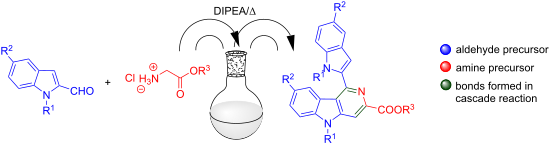
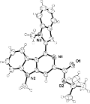
- cancer cells. Keywords: γ-carboline; cascade reaction; cell uptake; cytotoxicity; fluorescence; Introduction Carbolines are privileged aza-heterocycles found in the core of several natural and synthetic compounds and are known for their biological applications. Among the four different isomers, 9H
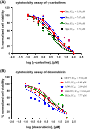
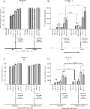
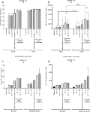
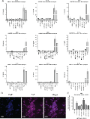
- ), and macrophage or immune cell line (RAW 264.7). The cancer cells were treated with increasing concentrations of the carboline derivatives 3ac, 3bc, 3ca, 3ga and doxorubicin (0.1 μM, 0.25 μM, 0.5 μM, 1 μM, 2.5 μM, 5 μM, 10 μM, 25 μM, 50 μM, 100 μM) and incubated for 48 h. Half-maximal inhibitory
- studies show that the γ-carbolines are highly toxic to cancer cells at micromolar concentrations similar to doxorubicin, whereas they are non-cytotoxic (Figure 6) to human macrophages or immune cells. At last, to evaluate cell uptake of the novel γ-carboline for fluorescence imaging, live-cell imaging







Synthesis of 10-O-aryl-substituted berberine derivatives by Chan–Evans–Lam coupling and investigation of their DNA-binding properties
Beilstein J. Org. Chem. 2021, 17, 991–1000, doi:10.3762/bjoc.17.81
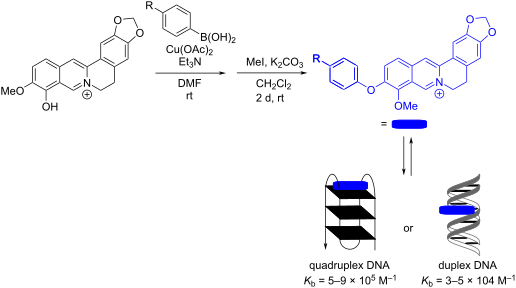
- , it has been found that berberine (1a) exhibits a selective cytotoxicity against cancer cells [12][13], which is mainly based on its DNA-binding properties [14]. Since the complexation with DNA leads to significant changes of the fluorescent quantum yields of the bound berberine, it can also be used


Enhanced target cell specificity and uptake of lipid nanoparticles using RNA aptamers and peptides
Beilstein J. Org. Chem. 2021, 17, 891–907, doi:10.3762/bjoc.17.75
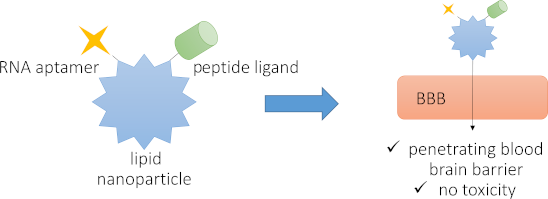
- –maleimide–PEG into their LNPs to target epidermal growth factor receptor (EGFR)-positive cancer cells. The authors showed an increased delivery of siRNAs and fluorescent quantum dot nanocrystals both in vitro and in EGFR-positive tumor xenografts in mice [48]. In 2020, Chandra et al. used a maleimide–PEG in



Microwave-assisted multicomponent reactions in heterocyclic chemistry and mechanistic aspects
Beilstein J. Org. Chem. 2021, 17, 819–865, doi:10.3762/bjoc.17.71
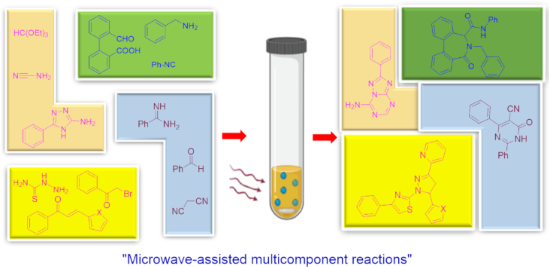
- longer reaction time (3 h) with lower yields (60%) as compared to microwave (20 min with 91% yield). The library of molecules synthesized was found to be active against SKOV-3 cancer cells with 9a emerging as a promising molecule with IC50 = 0.24 ± 0.05 μM (Scheme 3). The protocol surfaces the efficiency






Biochemistry of fluoroprolines: the prospect of making fluorine a bioelement
Beilstein J. Org. Chem. 2021, 17, 439–460, doi:10.3762/bjoc.17.40
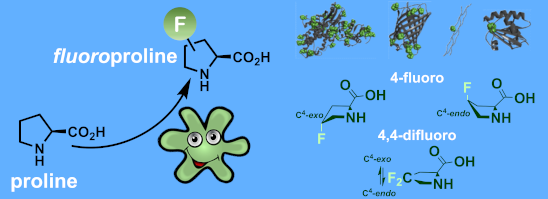
- catabolic degradation of proline plays an important role in the development of cancer cells, making the inhibition of the proline dehydrogenase a promising method in cancer therapy [69][70]. There is no information on a possible intracellular degradation of fluoroprolines, although, they are included in


19F NMR as a tool in chemical biology
Beilstein J. Org. Chem. 2021, 17, 293–318, doi:10.3762/bjoc.17.28


Synthesis and investigation of quadruplex-DNA-binding, 9-O-substituted berberine derivatives
Beilstein J. Org. Chem. 2020, 16, 2795–2806, doi:10.3762/bjoc.16.230
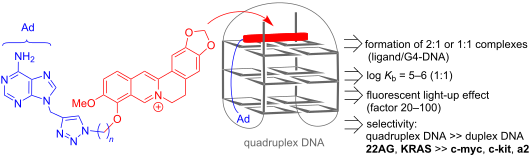
- several human cancer cells, but has only a relatively low cytotoxicity in healthy cells [31][32]. Berberine is also known as a G4-DNA ligand [33]. Especially berberine derivatives that carry additional substituents with varying alkyl chain lengths in the 9- and 13-position show enhanced binding properties


Encrypting messages with artificial bacterial receptors
Beilstein J. Org. Chem. 2020, 16, 2749–2756, doi:10.3762/bjoc.16.225
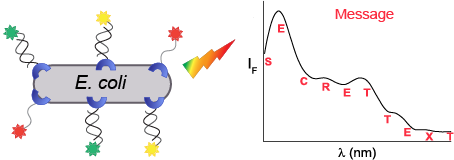
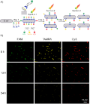
- reversibly change the properties of the cell. For example, we have shown that synthetic receptors appended with a thiol or a folate group enable bacteria expressing the His-tagged outer membrane protein C (His-OmpC) to bind to gold surfaces or cancer cells, respectively [2]. We have also shown that this




Comparative ligand structural analytics illustrated on variably glycosylated MUC1 antigen–antibody binding
Beilstein J. Org. Chem. 2020, 16, 2540–2550, doi:10.3762/bjoc.16.206
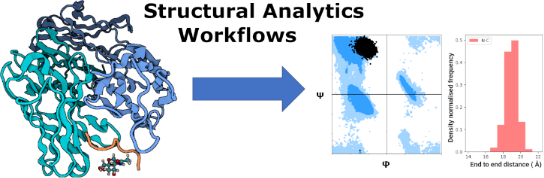
- epithelial cells, the mixture of O-glycans that glycosylate mucins are extended core 2 structures, while in breast cancer cells, O-glycan mass decreases (hypoglycosylation), and there is an increase in abundance of sialylated core 1 [15]. The upregulation of Tn (αGalNAc) and STn (αNeuAc-2,6-αGalNAc) antigens



Synthesis of new dihydroberberine and tetrahydroberberine analogues and evaluation of their antiproliferative activity on NCI-H1975 cells
Beilstein J. Org. Chem. 2020, 16, 1606–1616, doi:10.3762/bjoc.16.133
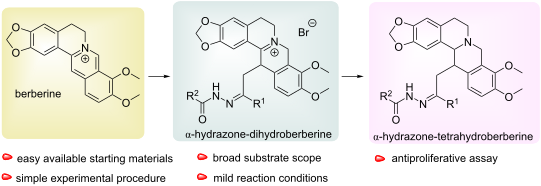
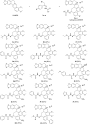
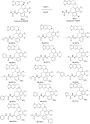
- arylhydrazono-DHBERs and -THBERs has been evaluated on NCI-H1975 lung cancer cells. Keywords: antiproliferative agent; dihydroberberine; hydrazones; reduction; tetrahydroberberine; Introduction The rhizome of Coptis chinensis Franch. is a common remedy in traditional oriental medicine for the treatment of
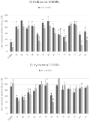
- ]. Evaluation of the antiproliferative activity of hydrazono-DHBERs 2 and hydrazono-THBERs 3 As regards the in vitro experiments on lung cancer cells, two different tests were applied to evaluate the effects of hydrazono-DHBERs 2a–n and hydrazono-THBERs 3a–g,i–n [70] on the NCI-H1975 cell proliferation. Both




One-step route to tricyclic fused 1,2,3,4-tetrahydroisoquinoline systems via the Castagnoli–Cushman protocol
Beilstein J. Org. Chem. 2020, 16, 1456–1464, doi:10.3762/bjoc.16.121
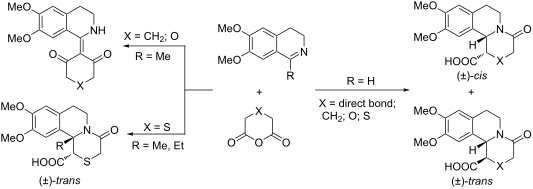
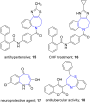
- IV inhibitor carmegliptin (2, DPP IV) with potential for the treatment of type-II diabetes [3][4]. A comparative study on novel classes of anticancer drugs identified benzo[a]quinolizines 3 and 4 (Figure 1) to be useful for a specific inhibition of heat shock response in cancer cells, which strongly
- enhances the treatment by sensitizing cancer cells to anticancer drugs [5]. The presence of such structural pattern has driven the development of various approaches for its obtaining – based either on isolation from naturally occurring sources or through multistep synthetic routes [6]. The pyrrolo[2,1-a


Synthesis and anticancer activity of bis(2-arylimidazo[1,2-a]pyridin-3-yl) selenides and diselenides: the copper-catalyzed tandem C–H selenation of 2-arylimidazo[1,2-a]pyridine with selenium
Beilstein J. Org. Chem. 2020, 16, 1075–1083, doi:10.3762/bjoc.16.94
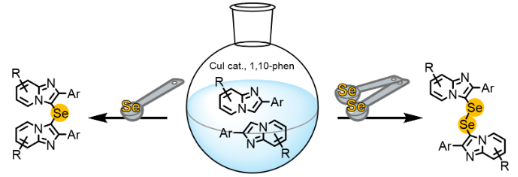
- appropriate quantity under otherwise identical reaction conditions. The prepared selenides and diselenides bearing two imidazo[1,2-a]pyridine rings were all novel compounds. Among the prepared diselenides and selenides that exhibited cytotoxicity against cancer cells, bis[2-(4-methoxyphenyl)imidazo[1,2-a
- Figure 6, 2f also exhibited cytotoxicity against U251 human glioblastoma cells and HKBMM human malignant meningioma cells. Importantly, the diselenide 2f was more cytotoxic toward HeLa cancer cells than to human brain microvascular endothelial (HBME) cells, which are noncancerous (Figure 7). Hence, the


Combining enyne metathesis with long-established organic transformations: a powerful strategy for the sustainable synthesis of bioactive molecules
Beilstein J. Org. Chem. 2020, 16, 738–755, doi:10.3762/bjoc.16.68
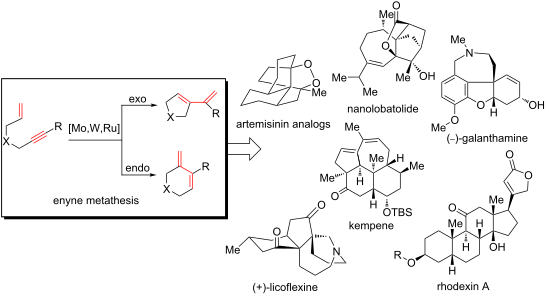
- , thereby affording the triene intermediate in a substantial yield. Additional transformations using conventional methods efficiently provided (−)-amphidinolide E (3). Amphidinolide K, another important bioactive macrolide endowed with specific cytotoxic activity against L1210 and KB cancer cells, was also




Two antibacterial and PPARα/γ-agonistic unsaturated keto fatty acids from a coral-associated actinomycete of the genus Micrococcus
Beilstein J. Org. Chem. 2020, 16, 297–304, doi:10.3762/bjoc.16.29
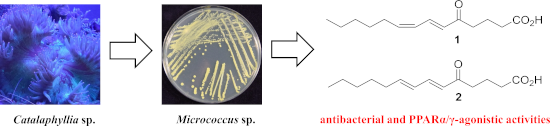
- eggplant calyx induces apoptosis in human ovarian cancer cells, leading to cell death [33]. One example of a keto fatty acid from the animal kingdom is (E)-9-oxo-2-decenoic acid, a sex pheromone found in royal jelly. Queen honey bees use this fatty acid to control the activity of worker bees [34]. (E)-7


Light-controllable dithienylethene-modified cyclic peptides: photoswitching the in vivo toxicity in zebrafish embryos
Beilstein J. Org. Chem. 2020, 16, 39–49, doi:10.3762/bjoc.16.6
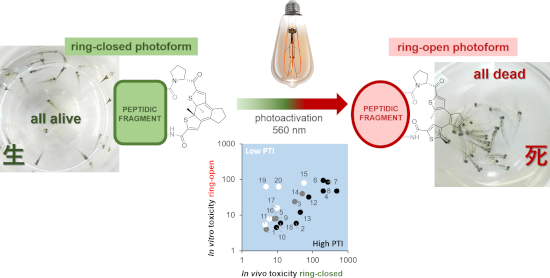
- compounds against cancer cells, the modifications implemented in series i, ii and iii are the most effective strategies so far to enhance the phototherapeutic indices. The present evaluation identifies peptides 2, 4, 7, 8, and 13 as the best candidates in terms of the phototherapeutic index. Conclusion In


Extension of the 5-alkynyluridine side chain via C–C-bond formation in modified organometallic nucleosides using the Nicholas reaction
Beilstein J. Org. Chem. 2020, 16, 1–8, doi:10.3762/bjoc.16.1
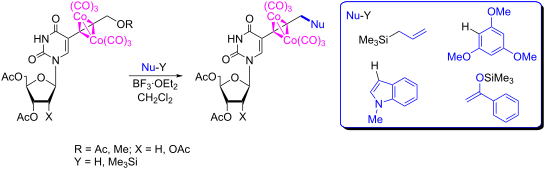
- hexacarbonyls with 2'-deoxyuridines revealed pronounced in vitro activity against MCF-7 and MDA-MB-231 human breast cancer cells [32][33]. A recent investigation of hexacarbonyl dicobalt adducts of nucleosides containing derivatives of propargyl alcohol demonstrated their antiproliferative activities for the


Plasma membrane imaging with a fluorescent benzothiadiazole derivative
Beilstein J. Org. Chem. 2019, 15, 2644–2654, doi:10.3762/bjoc.15.257
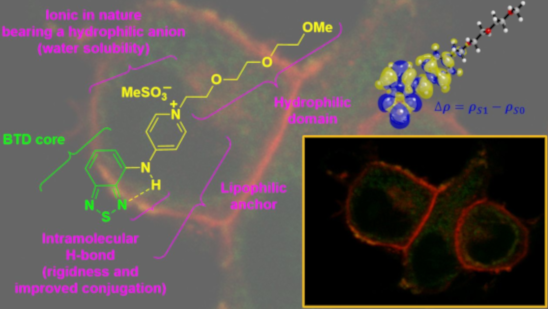
- previously stained with the fluorescent compound. There is no way to eliminate this fluorescent signal because of the constitutive presence of endosomes in mammalian cells. Cancer cells have, in addition, an accelerated metabolism and high endocytosis index [63]. Endocytosis is known to be the cellular event


Current understanding and biotechnological application of the bacterial diterpene synthase CotB2
Beilstein J. Org. Chem. 2019, 15, 2355–2368, doi:10.3762/bjoc.15.228
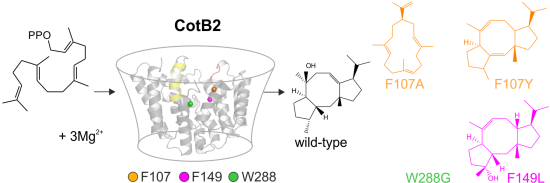
- isolated in 1985 from cigarette smoke condensate and identified as anticancer agents [76]. With quite similar potency (α-CBT: 25.2 µM and β-CBT: 21.9 µM [77]), they showed inhibition of the induction of Epstein–Barr virus early antigen by lymphoblastoid cancer cells. In the tobacco plant itself, both


Synthesis of a dihalogenated pyridinyl silicon rhodamine for mitochondrial imaging by a halogen dance rearrangement
Beilstein J. Org. Chem. 2019, 15, 2333–2343, doi:10.3762/bjoc.15.226
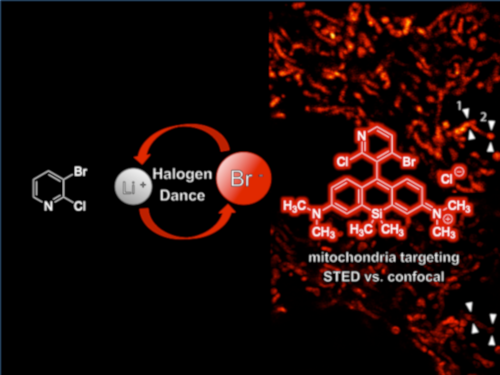
- metabolic diseases to ischemic injuries, necrosis, therapy response and cancer [39][40][41][42][43]. Because many cancer cells have a higher mitochondrial membrane potential than nontransformed cells [41][44][45], we believe that our imaging agent will achieve a reasonable tumor-to-background ratio
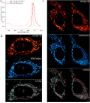
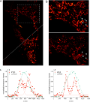
- , HeLa cells (human cervical cancer cells) and U2OS cells (human bone osteosarcoma epithelial cells) were co-stained with these dyes. The Pearson coefficients are reasonably high and similar for both cell lines (HeLa cells: 0.85 ± 0.05 (N = 20), U2OS cells: 0.81 ± 0.05 (N = 27)) supporting the
- analysis of the proposed small molecule bimodal probe [18F]16 for both optical and PET imaging of cancer cells with up-regulated mitochondrial activity. Optimization of the HD rearrangement of 19 and subsequent reaction with xanthone 17 to the silicon rhodamine dye 15. Comparison of optical properties of