


Search results
Search for "desymmetrization" in Full Text gives 64 result(s) in Beilstein Journal of Organic Chemistry.
Bidirectional cross metathesis and ring-closing metathesis/ring opening of a C2-symmetric building block: a strategy for the synthesis of decanolide natural products
Beilstein J. Org. Chem. 2013, 9, 2544–2555, doi:10.3762/bjoc.9.289
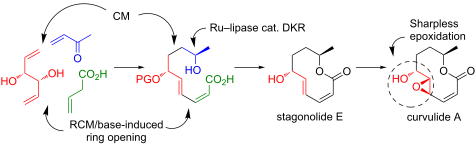
- were identified as particularly useful starting materials, because their termini are homotopic. Therefore, desymmetrization can be accomplished by monofunctionalization, making elaborate reagent or catalyst-controlled transformations unnecessary [2]. In this regard, (R,R)-hexa-1,5-diene-3,4-diol (1) [3
- electrocyclic ring opening to carboxylates 6 [25], although a non-concerted pathway can not be excluded (Scheme 1). To the best of our knowledge, metathesis/non-metathesis one flask sequences have not been used before for the two directional elaboration or desymmetrization of C2-symmetric building blocks. In
- would provide a precursor 2 (Scheme 1) for the RCM-ring opening sequence (Scheme 2). Our synthesis of stagonolide E started with a selective protection of one hydroxy group of diol 1 to furnish the known TBS-ether 10 [6][19], because we knew from previous experience that a desymmetrization based solely






Organocatalyzed enantioselective desymmetrization of aziridines and epoxides
Beilstein J. Org. Chem. 2013, 9, 1677–1695, doi:10.3762/bjoc.9.192
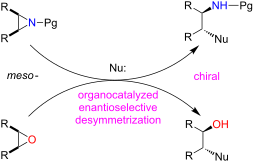
- Ping-An Wang Department of Medicinal Chemistry, School of Pharmacy, Fourth Military Medical University, Changle Xilu 17, Xi-An, 710032, P. R. China 10.3762/bjoc.9.192 Abstract Enantioselective desymmetrization of meso-aziridines and meso-epoxides with various nucleophiles by organocatalysis has
- emerged as a cutting-edge approach in recent years. This review summarizes the origin and recent developments of enantioselective desymmetrization of meso-aziridines and meso-epoxides in the presence of organocatalysts. Keywords: aziridine; desymmetrization; enantioselectivity; epoxide; organocatalysis
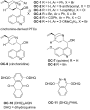
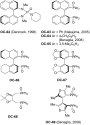
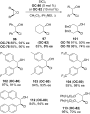
- based on transition-metal catalyzed reactions has given rise to a variety of significant achievements both in academic and industrial chemistry [2][3]. Desymmetrization is the modification of a molecule which results in the loss of symmetry elements such as a mirror plane, a center of inversion or a








Study on the total synthesis of velbanamine: Chemoselective dioxygenation of alkenes with PIFA via a stop-and-flow strategy
Beilstein J. Org. Chem. 2013, 9, 983–990, doi:10.3762/bjoc.9.113
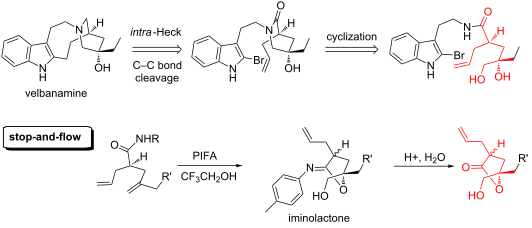
- 321004, China 10.3762/bjoc.9.113 Abstract A “stop-and-flow” strategy was developed for the chemoselective dioxygenation of alkenes with a PIFA-initiated cyclization. This method is conceived for the desymmetrization of seco-diene, and a series of substituted 5-hydroxymethyl-γ-lactones were constructed
- after hydrolysis. This strategy also differentiates terminally substituted alkenes and constitutes a potentially novel synthetic approach for the efficient synthesis toward velbanamine. Keywords: alkene; desymmetrization; dioxygenation; lactone; PIFA; velbanamine; Introduction Stictosidine-derived
- terminal alkenes. Although iodolactonization as exemplified in Kita’s elegant synthesis of rubrenolide resulted in a practical approach on desymmetrization [45], the subsequent hydrolysis still required an extra step to reveal the proper hydroxy group. Results and Discussion The pathway of cyclization


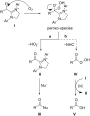
NHC-catalysed highly selective aerobic oxidation of nonactivated aldehydes
Beilstein J. Org. Chem. 2013, 9, 602–607, doi:10.3762/bjoc.9.65

- mild method for more interesting chemoselective transformations. Therefore, several substrates were oxidised under our conditions bearing either a second alcohol or aldehyde functionality. Desymmetrization of dialdehydes by selective oxidation is an important challenge, since symmetric dialdehydes are


Design and synthesis of quasi-diastereomeric molecules with unchanging central, regenerating axial and switchable helical chirality via cleavage and formation of Ni(II)–O and Ni(II)–N coordination bonds
Beilstein J. Org. Chem. 2012, 8, 1920–1928, doi:10.3762/bjoc.8.223
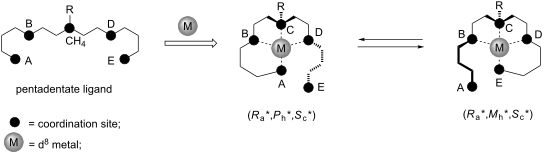
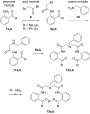
- environment upon its configurational stabilization in complexes 5 and 6. Results and Discussion To build the real molecules to this design, we explored the preparation of imino–carbonyl ligands 13 (Scheme 3) by desymmetrization of achiral carbonyl–carbonyl ligands 12. Compounds 12 were prepared in the
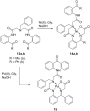
- central, axial and helical chirality. Preparation of imino–carbonyl ligands 13 by desymmetrization of achiral carbonyl–carbonyl ligands 12. Preparation of complexes 14a,b and 15 by reactions of ligands 12 with glycine. Oxidation of enolates 16 and formation of complexes 19 and 20. Supporting Information


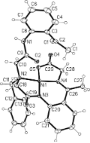

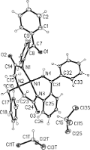
Asymmetric desymmetrization of meso-diols by C2-symmetric chiral 4-pyrrolidinopyridines
Beilstein J. Org. Chem. 2012, 8, 1778–1787, doi:10.3762/bjoc.8.203
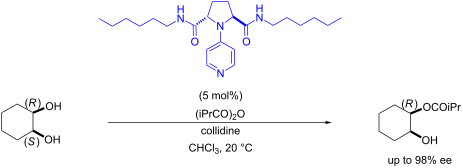
- pyrrolidinopyridine framework as a catalytic site. Some of these organocatalysts effectively promoted asymmetric desymmetrization of meso-diols via enantioselective acylation. Keywords: acylation; desymmetrization; hydrogen bond; meso-diol; nucleophilic catalyst; organocatalysis; Introduction Since the pioneering
- pyrrolidine ring such as 3 were prepared from trans-4-hydroxy-L-proline. These catalysts were found to be moderately effective for the asymmetric desymmetrization of meso-diols [11]. C2-Symmetric PPY-catalyst 4 was found to be effective for the chemo- and regioselective acylation of carbohydrates [12][14][16
- ] and the chemoselective monoacylation of linear diols [17]. Here, we report the asymmetric desymmtrization of meso-diols by C2-symmetric PPY catalysts [20]. The effects of the functional side chains at C(2) and C(5) on the efficiency of the asymmetric desymmetrization are discussed. Some of the results


The crystal structure of the Dess–Martin periodinane
Beilstein J. Org. Chem. 2012, 8, 1523–1527, doi:10.3762/bjoc.8.172

- significantly different bond lengths (I1–O5 = 2.0670(13) Å, I1–O7 = 2.1141(13) Å), which desymmetrizes the molecule overall. This desymmetrization cannot be attributed to crystal-packing effects since it is also apparent in a structural model of 1 calculated by using DFT theory at the PBE0/LANL2DZdp level [10


Organocatalytic asymmetric addition of malonates to unsaturated 1,4-diketones
Beilstein J. Org. Chem. 2012, 8, 1452–1457, doi:10.3762/bjoc.8.165
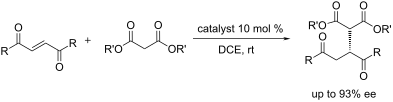
- ]. Therefore, new asymmetric additions of C-nucleophiles to unsaturated 1,4-diketones are highly in demand. The asymmetric desymmetrization of symmetric unsaturated 1,4-diketones is a very challenging target. si-Attack on one carbon atom of the double bond and re-attack on the other leads to the same
- investigated the organocatalytic approach to the asymmetric desymmetrization of the title compounds with malonates. Three types of organocatalysts providing noncovalent interactions were used for this purpose: Cinchona alkaloids (I–V), thiourea derivatives (VI, VII) and squaramide derivatives (VIII, IX
- -enantiomer. Conclusion We have developed a highly enantioselective method for the desymmetrization of aromatic unsaturated 1,4-diketones through organocatalytic reactions with malonates. The reaction is catalyzed by thiourea and squaramide derivatives with Cinchona alkaloids and affords products in very high


Synthesis of chiral sulfoximine-based thioureas and their application in asymmetric organocatalysis
Beilstein J. Org. Chem. 2012, 8, 1443–1451, doi:10.3762/bjoc.8.164
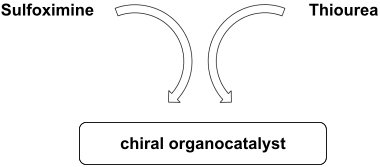
- backbone the sulfonimidoyl moiety leads to organocatalysts showing good reactivity in the catalytic desymmetrization of a cyclic meso-anhydride and moderate enantioselectivity in the catalytic asymmetric Biginelli reaction. Straightforward synthetic routes provide the newly designed thiourea-sulfoximine
- representative of each class was briefly tested in the desymmetrization of anhydride 4. Under the conditions described above for organocatalyst (S)-3 two catalyses were performed with (S)-12 (10 mol %) and (RS,SC)-19 (5 mol %). Whereas benzene-bridged sulfonimidoyl-containing thiourea (S)-12 provided the product
- hemiesters (5/ent-5). Apparently, both thioureas proved inappropriate for this reaction, and no further efforts were made to improve the anhydride desymmetrization with these types of organocatalysts. Next, the catalysis screening was focused on Biginelli reactions, which provide access to dihydropyrimidines


Bromine–lithium exchange: An efficient tool in the modular construction of biaryl ligands
Beilstein J. Org. Chem. 2011, 7, 1278–1287, doi:10.3762/bjoc.7.148
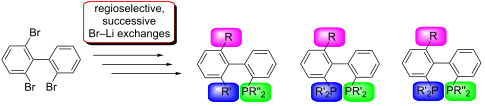
- routes to synthetically challenging aryl halide precursors have been devised. A. Alexakis et al. recently achieved a significant breakthrough. They succeeded in the desymmetrization of prochiral polybrominated [32][51] compounds by an asymmetric bromine–lithium exchange in the presence of a
- stoichiometric amount of chiral diamines. An enantiomeric excess of up to 63% was obtained [67]. H. Kagan et al. reported the desymmetrization of prochiral aromatic or vinylic dihalide substrates by halogen–metal exchange in the presence of a stoichiometric amount of diamines, with enantiomeric excess up to 26


Brønsted acid-promoted azide–olefin [3 + 2] cycloadditions for the preparation of contiguous aminopolyols: The importance of disiloxane ring size to a diastereoselective, bidirectional approach to zwittermicin A
Beilstein J. Org. Chem. 2010, 6, 1206–1210, doi:10.3762/bjoc.6.138

- pure (−)-zwittermicin A (1) is based on a short synthesis of the C9–C15 aminopolyol core that takes advantage of its underlying C2 symmetry, as outlined in Scheme 1. Desymmetrization and functionalization of the bis(oxazolidine dione) 2 provides us with a foundation for the synthesis of 1 and would


Enantioselective synthesis of tricyclic amino acid derivatives based on a rigid 4-azatricyclo[5.2.1.02,6]decane skeleton
Beilstein J. Org. Chem. 2009, 5, No. 81, doi:10.3762/bjoc.5.81

- and 8 were successfully accomplished in 9–10 steps starting with inexpensive endo-carbic anhydride (10). The key stereochemical step was the desymmetrization of the meso-alkene 11 using Hayashi’s hydrosilylation/oxidation procedure, which provided the endo-alcohol 12 in 85% ee. The target molecules




Recent progress on the total synthesis of acetogenins from Annonaceae
Beilstein J. Org. Chem. 2008, 4, No. 48, doi:10.3762/bjoc.4.48
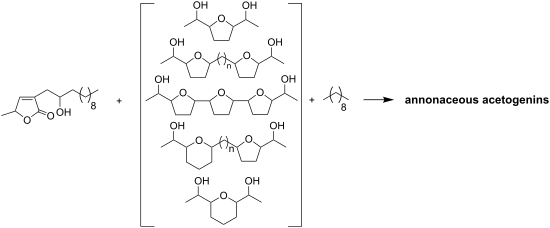
- conditions resulted in a smooth conversion of the starting material into THF 89. Triol (+)-90 was obtained with lipase Amano AK desymmetrization. For the appropriate side chain attachment, the termini were differentiated to give lactone (−)-91. Reduction of (−)-91 followed by a Wittig reaction yielded fully
- controlled double cyclization of 230 allowed the selective formation of a single diastereomer 231 in one step, thus providing general access to annonaceous acetogenins containing trans/threo/trans or cis/threo/cis bis-THF core structures. Desymmetrization of diene 231 with AD-mix-β provided the known triol


Desymmetrization of 7-azabicycloalkenes by tandem olefin metathesis for the preparation of natural product scaffolds
Beilstein J. Org. Chem. 2007, 3, No. 48, doi:10.1186/1860-5397-3-48
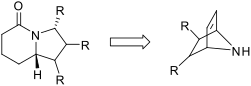
- product scaffolds and have also been used for ring opening of strained carbo- and heterocycles. In this paper we demonstrate the potential of these reactions for the desymmetrization of 7-azabicycloalkenes. Results We have established efficient protocols for the desymmetrization of different 7
- -azabicycloalkenes by intra- and intermolecular tandem metathesis sequences with ruthenium based catalysts. Conclusion Desymmetrization of 7-azabicycloalkenes by olefin metathesis is an efficient process for the preparation of common natural product scaffolds such as pyrrolidines, indolizidines and isoindoles
- ][57][58][59][60][61] In this paper, we describe the extension of this work and show that desymmetrization of 7-azabicycloalkenes via RORCM leads to valuable natural product scaffolds. In this context, symmetrical derivatives of 7-azabicycloalkenes like 7 and 12 are extremely interesting substrates for





