Search results
Search for "hydration" in Full Text gives 141 result(s) in Beilstein Journal of Organic Chemistry.
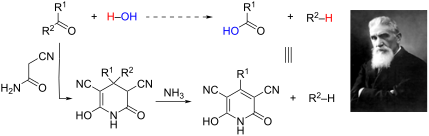
Icilio Guareschi and his amazing “1897 reaction”
Beilstein J. Org. Chem. 2021, 17, 1335–1351, doi:10.3762/bjoc.17.93










Beyond ribose and phosphate: Selected nucleic acid modifications for structure–function investigations and therapeutic applications
Beilstein J. Org. Chem. 2021, 17, 908–931, doi:10.3762/bjoc.17.76
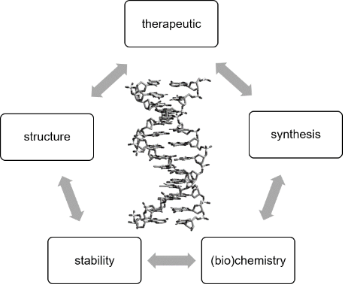
- modifications reported by chemists along with the synthesis of 2'-deoxy-2'-fluoro-nucleosides (FRNA) [24]. The negatively charged phosphodiester linkages in the backbones of DNA and RNA are of fundamental importance for reactivity, stability, conformation and hydration [25][26]. The sugar moieties in DNA and
- '-N compared to the 4'-O and 3'-O interactions in DNA. The 3'-amino moieties in the structure’s backbone were found to coordinate a larger amount of water molecules, on both the backbone and at groove sites. This increased hydration, as well as the configuration of the 3'-amino group enables the
- -phosphate backbone relative to native phosphodiester oligomers. This N-type sugar puckering and increased hydration of the sugar phosphate backbone could also account for the triplex-favoring properties of this modification [72]. Amide While many amide backbone oligonucleotide variants exist, the focus of




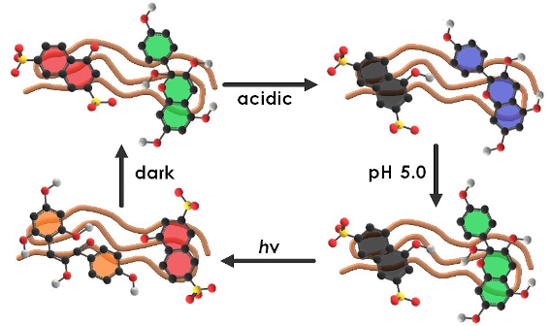
Multiswitchable photoacid–hydroxyflavylium–polyelectrolyte nano-assemblies
Beilstein J. Org. Chem. 2021, 17, 166–185, doi:10.3762/bjoc.17.17
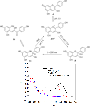
- small counterion release may contribute (likely, it is ionic repulsion due to the excess of positive charges (l < 1.0) in combination with changes in hydration shells that make this region endotherm). The last binding step starts at l = 0.16 (molar ratio 0.075), equal to 17 monomer units per poly




Selective recognition of ATP by multivalent nano-assemblies of bisimidazolium amphiphiles through “turn-on” fluorescence response
Beilstein J. Org. Chem. 2020, 16, 2728–2738, doi:10.3762/bjoc.16.223
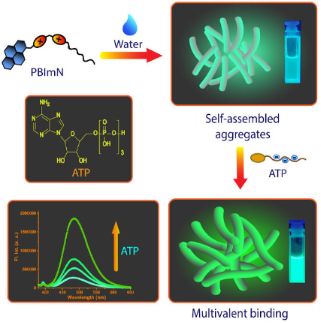
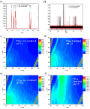
- multiple imidazolium groups to overcome the high hydration enthalpy of phosphates and b) the imidazolium groups are connected to aromatic moieties such as anthracene, pyrene, etc. The variation in the luminescence of the aromatic moieties signals the binding event and furthermore, they provide additional


Efficient [(NHC)Au(NTf2)]-catalyzed hydrohydrazidation of terminal and internal alkynes
Beilstein J. Org. Chem. 2020, 16, 2080–2086, doi:10.3762/bjoc.16.175
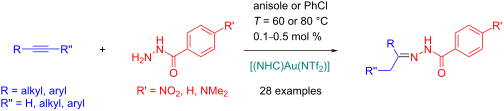
- addition product were obtained. We recently reported the excellent activity of the very bulky bispentiptycenyl-substituted (NHC)Au complexes in the hydration of terminal and internal alkynes [43] as well as in other transition-metal-catalyzed transformations [44][45]. We were now interested, whether


Syntheses of spliceostatins and thailanstatins: a review
Beilstein J. Org. Chem. 2020, 16, 1991–2006, doi:10.3762/bjoc.16.166

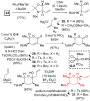
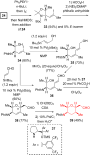
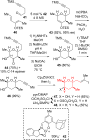
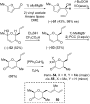
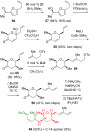
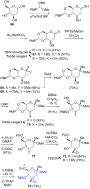
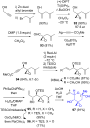
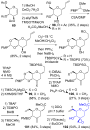
- and the amidation with 12c afforded 129. The synthesis was completed by the elimination of the 1° iodide, silyl ether cleavage, and hydration of the exocyclic enol ether. Of all the syntheses of FR901464 (1), the coupling of 91 with 48 is the most efficient sequence (6 steps, 45% yield). Nicolaou








Rearrangement of o-(pivaloylaminomethyl)benzaldehydes: an experimental and computational study
Beilstein J. Org. Chem. 2020, 16, 1636–1648, doi:10.3762/bjoc.16.136
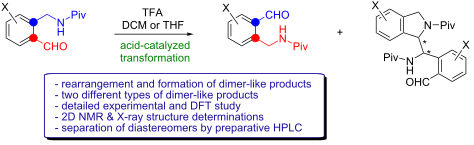
- turned out that the acid catalyst (TFA in this case), as expected, had a crucial role in the protonation and deprotonation as well as in the dehydration and hydration elementary steps of the reaction sequence. Without catalyst, the 9a→11a→4a transformations required an energy investment of 150.7 and


An overview on disulfide-catalyzed and -cocatalyzed photoreactions
Beilstein J. Org. Chem. 2020, 16, 1418–1435, doi:10.3762/bjoc.16.118
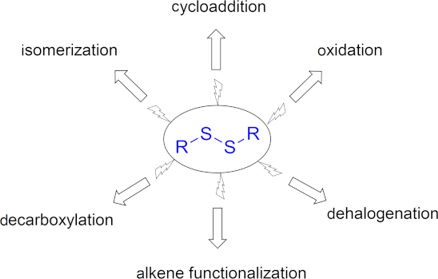
- intermediate 51 to the phenyl thiyl radical 43 yields the intermediate 49, thiophenol, the protonated pyridine 47, and bromide. Finally, HAT from the thiophenol to the intermediate 49 gives the difluoroalkylation product 50. Alkene functionalization reactions The olefin hydration is an important method to
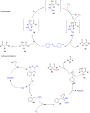
- synthesize alcohols, and realizing the anti-Markovnikov regioselectivity is extremely challenging. In 2017, Lei and co-workers reported a class of disulfide-cocatalyzed anti-Markovnikov olefin hydration reactions [24]. In this reaction, 9-mesityl-10-methylacridinium (Acr+–Mes–ClO4−) and diphenyl disulfide
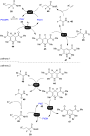
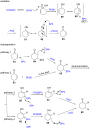
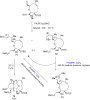
- disulfide. Disulfide-cocatalyzed anti-Markovnikov olefin hydration reactions. Disulfide-catalyzed decarboxylation of carboxylic acids. Proposed mechanism of the disulfide-catalyzed decarboxylation of carboxylic acids. Disulfide-catalyzed decarboxylation of carboxylic acids. Disulfide-catalyzed conversion of








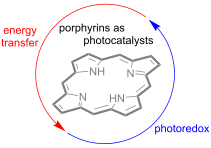
Recent applications of porphyrins as photocatalysts in organic synthesis: batch and continuous flow approaches
Beilstein J. Org. Chem. 2020, 16, 917–955, doi:10.3762/bjoc.16.83
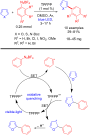
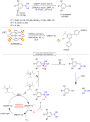
- hydration of terminal alkynes to ketones can be photocatalyzed by rhodium(III) tetrakis(p-sulfonylphenyl)porphyrin (RhIIITSPP) [37]. The coupling between RhIII(TSPP) and terminal alkynes produced the β-carbonylalkylrhodium porphyrin as a photoactive intermediate, whose irradiation produced the PhCOCH2
- tetrahydroquinolines by reductive quenching. Selenylation and thiolation of anilines. NiTPP as photoredox catalyst in oxidative and reductive quenching, in comparison with other photocatalysts. C–O bond cleavage of 1-phenylethanol using a cobalt porphyrin (CoTMPP) under visible light. Hydration of terminal alkynes by






Chemical tuning of photoswitchable azobenzenes: a photopharmacological case study using nicotinic transmission
Beilstein J. Org. Chem. 2019, 15, 2812–2821, doi:10.3762/bjoc.15.274
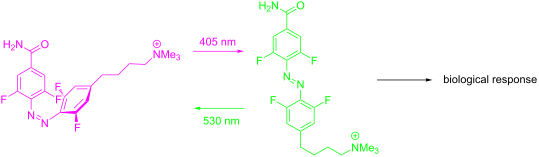
- nitrosonium tetrafluoroborate gave 8 (54% yield). The two parts of the chromophore were coupled starting by treatment of 5 with n-butyllithium at −78 °C, which was coupled in situ with 8 to AB 9 (17% yield). Copper-catalyzed hydration of 9 gave amide 10, which was treated with TBAF to alcohol 11 in 42




Iodine-mediated hydration of alkynes on keto-functionalized scaffolds: mechanistic insight and the regiospecific hydration of internal alkynes
Beilstein J. Org. Chem. 2019, 15, 2747–2752, doi:10.3762/bjoc.15.265
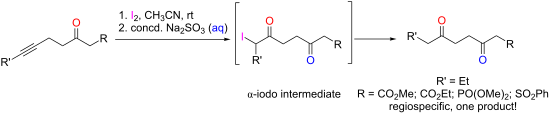
- hydration reaction of alkynes serves as a green alternative to metal-catalyzed procedures. Previous work has shown that this method works well with terminal alkynes on keto-functionalized scaffolds, including 1,3-dicarbonyls and their heteroatom analogues. It was hypothesized that the reaction proceeds
- through a 5-exo-dig neighboring group participation (NGP) cyclization and an α-iodo intermediate. The work described herein probes the existence of the intermediate through NMR investigations and explores the scope of the hydration process with internal alkynes. The NMR experiments confirm the existence
- of the α-iodo intermediate, and methodology studies demonstrate that alkyl-capped, asymmetric, internal alkynes undergo a regiospecific hydration, also via the 5-exo-dig NGP pathway. Keywords: α-iodo intermediate; internal alkyne; iodine-mediated hydration; neighboring group participation


Inherent atomic mobility changes in carbocation intermediates during the sesterterpene cyclization cascade
Beilstein J. Org. Chem. 2019, 15, 1890–1897, doi:10.3762/bjoc.15.184
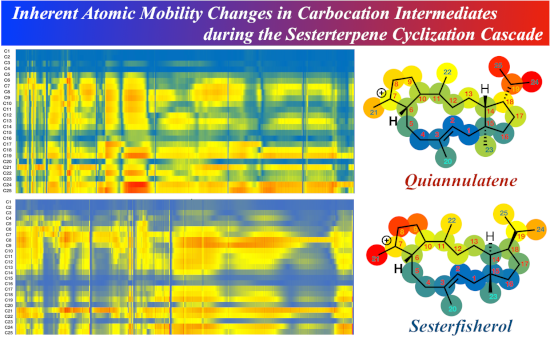
- ) triggering the biosynthetic cyclization cascade by the elimination of pyrophosphate or by protonation; (ii) preorganization of the substrate to generate the reactive conformation; (iii) protection of reactive intermediates from water; and (iv) termination of the reaction by deprotonation or hydration. We
- sesterfisherol biosynthesis. Sesterfisherol is formed by the hydration of IM11. Phase (I): 5/12/5 tricycle formation is highlighted in blue. Phase (II): conformational changes and hydrogen shifts are highlighted in orange. Phase (III): ring rearrangements are highlighted in yellow. Supporting Information


A metal-free approach for the synthesis of amides/esters with pyridinium salts of phenacyl bromides via oxidative C–C bond cleavage
Beilstein J. Org. Chem. 2019, 15, 1864–1871, doi:10.3762/bjoc.15.182

- ], rearrangement of aldoximes [18], hydration of nitriles [19], dehydrogenative coupling of primary alcohols with amines [20][21] and hydration of organonitriles to amides [22][23][24]. However, these traditional methods have certain disadvantages such as generation of toxic chemical waste, involvement of tedious




Water inside β-cyclodextrin cavity: amount, stability and mechanism of binding
Beilstein J. Org. Chem. 2019, 15, 1592–1600, doi:10.3762/bjoc.15.163
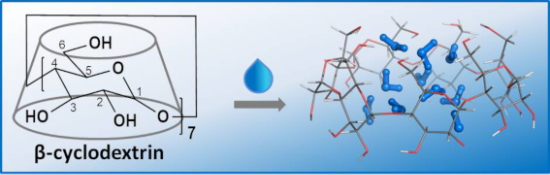
- water clusters in the interior of β-CD and what type of interactions between water molecules and cavity walls or between the water molecules themselves are dominating the energetics of the β-CD hydration? (3) What is the maximum number of water molecules inside the cavity of β-CD? (4) How do the
- thermodynamic characteristics of β-CD hydration compare with those of its smaller α-cyclodextrin (α-CD) counterpart? In this study, we address these questions by employing a combination of experimental (DSC/TG) and theoretical (DFT) approaches. Keywords: β-cyclodextrin; DFT calculations; DSC/TG experiments
- ; hydration; macrocycles; thermodynamic characteristics; Introduction Cyclodextrins (CDs), a family of enzymatically modified starches, are widely used as host macrocycles in forming inclusion complexes with various molecular entities of interest to food industry, pharmacology, cosmetics, catalysis, and


Synthesis and conformational preferences of short analogues of antifreeze glycopeptides (AFGP)
Beilstein J. Org. Chem. 2019, 15, 1581–1591, doi:10.3762/bjoc.15.162
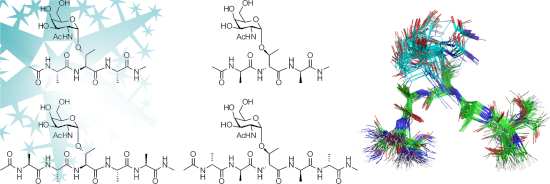
- into the ice lattice [12], others investigated the adsorption process on different surfaces via atomic force microscopy [10][13][14]. The antifreeze activity has been correlated with long-range perturbation of hydration dynamics [15]. Latest molecular dynamics simulations suggest that AFGP reversibly


Host–guest interactions between p-sulfonatocalix[4]arene and p-sulfonatothiacalix[4]arene and group IA, IIA and f-block metal cations: a DFT/SMD study
Beilstein J. Org. Chem. 2019, 15, 1321–1330, doi:10.3762/bjoc.15.131
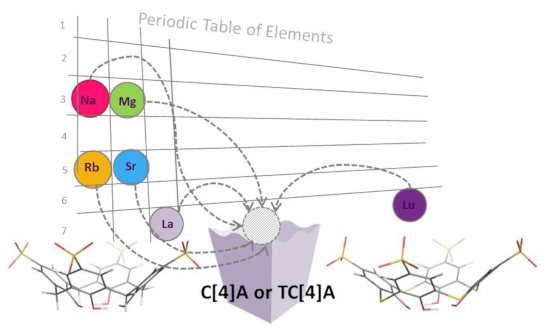
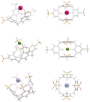
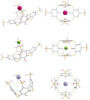
- cations (La3+) a supramolecular approach with explicit solvent treatment has been applied in the study of the effect of metal hydration on the complexation process. The La3+ binding to the p-sulfonatocalix[4]arene host molecule (now in the metal’s second coordination shell) is still exergonic as evidenced
- of p-sulfonatocalix[4]arene and some inorganic and organic cations in aqueous solution [32]. The predicted ΔG value (relative Gibbs energy) of the complexation between the host calixarene molecule and hydrated La3+ cation (with an average coordination number of water molecules in the first hydration
- metal hydration (i.e., explicit solvent treatment method) on the complexation process was studied here by employing a supramolecular approach for one representative of the metal species from the series, La3+ cation. A hydration number of 9 and initial tricapped trigonal prismatic arrangement of the





Towards the preparation of synthetic outer membrane vesicle models with micromolar affinity to wheat germ agglutinin using a dialkyl thioglycoside
Beilstein J. Org. Chem. 2019, 15, 937–946, doi:10.3762/bjoc.15.90
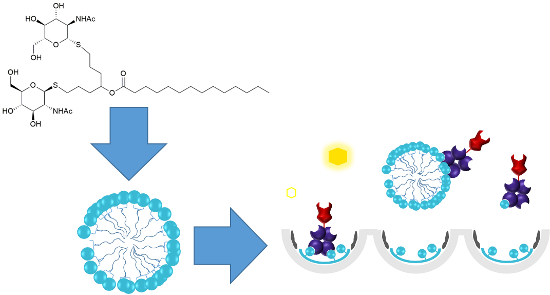
- -glycosylated compounds were observed. Preparation of vesicles upon hydration of a thin film of phospholipids and glycolipids Once synthesized, the compounds 5 and 8 bearing GlcNAc residues were used to produce giant vesicles (GVs) upon hydration with PBS (pH 7.4) by modifying reported procedures [28][29][30
- hydration temperature was 25 °C. Three volumes of the thus obtained GVs were diluted with one volume of an aqueous isotonic buffer solution termed “O-solution” (composed of 200 mM glucose in 50 mM of PBS buffer, pH 7.4) and centrifuged at 5,000 rpm for 10 minutes in a bench-top Eppendorf mini-centrifuge
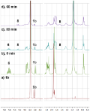
- and 6. a) Spectrum of pure 1b; b) through d) crude reaction mixture after 0, 30 and 60 minutes of irradiation, respectively. Micrographs of giant vesicles and lipid aggregates obtained from the gentle hydration (in PBS, pH 7.4) of compounds 8 and 5, alone and in binary and ternary mixtures with POPC




![[Graphic 2]](/bjoc/content/inline/1860-5397-15-90-i4.svg?max-width=637&scale=0.472728) ) and (○) ...
) and (○) ...
LCST phase behavior of benzo-21-crown-7 with different alkyl chains
Beilstein J. Org. Chem. 2019, 15, 437–444, doi:10.3762/bjoc.15.38
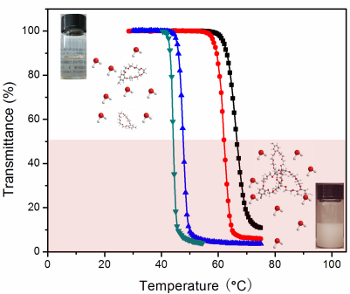
- ethers with urea-based linkers show higher water solubility (5a–e), compared to crown ethers with carbamate-based linkers (3a–e). As amide groups are more hydrophilic compared with ester groups, it is reasonable that 5a–e show stronger hydration effects and exhibit a larger water-accessible surface area


Synthesis, biophysical properties, and RNase H activity of 6’-difluoro[4.3.0]bicyclo-DNA
Beilstein J. Org. Chem. 2019, 15, 79–88, doi:10.3762/bjoc.15.9
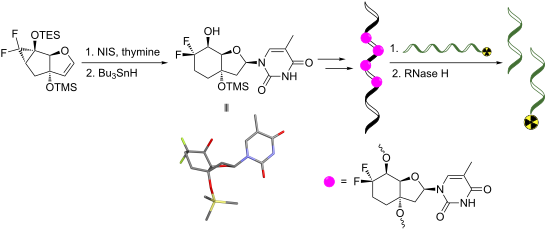
- accordance to what was reported by the Dilman group [40]. The α,α-difluoroketone 3 rapidly underwent hydration in a reversible way to form the gem-diol 4. The stereochemistry of compound 4 could be assessed indicating the selective formation of the β-nucleoside with the addition of the iodine at the 7


Cobalt bis(acetylacetonate)–tert-butyl hydroperoxide–triethylsilane: a general reagent combination for the Markovnikov-selective hydrofunctionalization of alkenes by hydrogen atom transfer
Beilstein J. Org. Chem. 2018, 14, 2259–2265, doi:10.3762/bjoc.14.201

- of 3a were lower (see Supporting Information File 1, Table S1, entries 13–15). Mukaiyama and co-workers’ pioneering Markonikov-selective alkene hydration reaction [5][49][50][51][52][53][54] proceeds using dioxygen as the oxygen atom source. Exposure of the alkene 3a to similar conditions provided


Dynamic light scattering studies of the effects of salts on the diffusivity of cationic and anionic cavitands
Beilstein J. Org. Chem. 2018, 14, 2212–2219, doi:10.3762/bjoc.14.195
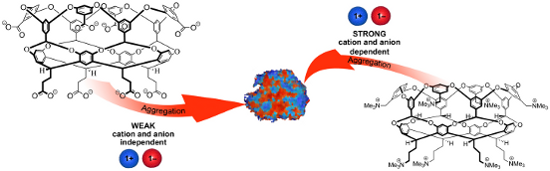
- -solubilizing group. Although its pKa may not be optimal for deprotonation at neutral or physiological pH, its small size and relatively high free energy of hydration (−373 kJ mol−1) ensure that ion-pairing effects are not strong. This was further confirmed by 1H NMR spectroscopy (Supporting Information File 1
- solution of crystalline alkali halides and the difference between the absolute free energy (or heat) of hydration of the corresponding anion and cation [27][28]. As a result, in the words of Fajans, “in the case of alkali halides, the solubility in a number of salts with the same cation (anion) and
- different anions (cations) is at a minimum when the cation and anion are approximately equal and increases with increasing difference of the ionic radii” [29]. This has been built upon by Collins who proposed that the difference in heats of hydration of a cation and anion is a surrogate for the extent of


Synthesis of new p-tert-butylcalix[4]arene-based polyammonium triazolyl amphiphiles and their binding with nucleoside phosphates
Beilstein J. Org. Chem. 2018, 14, 1980–1993, doi:10.3762/bjoc.14.173
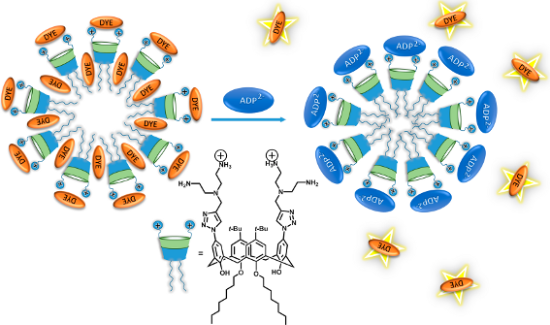
- film hydration method. To identify an optimal calixarene–AEPCDA ratio a series of PDA vesicles containing 1, 5, 10, 50 mol % of 10b was prepared. Polymerization of AEPCDA–calixarene vesicles was performed under UV irradiation using 254 nm light in quartz cuvettes of 1 cm path length. The absorbance


Synthesis of pyrimido[1,6-a]quinoxalines via intermolecular trapping of thermally generated acyl(quinoxalin-2-yl)ketenes by Schiff bases
Beilstein J. Org. Chem. 2018, 14, 1734–1742, doi:10.3762/bjoc.14.147

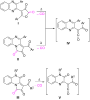
- reaction (Table 1) was not detected. The most likely way of the formation of quinoxalinone 4a is hydration of the ketene with subsequent decarboxylation (Scheme 2); more careful drying the reaction vials and solvents easily reduced the amount of compound 4a. The formation of pyrido[1,2-a]quinoxaline 5a can






Spectroelectrochemical studies on the effect of cations in the alkaline glycerol oxidation reaction over carbon nanotube-supported Pd nanoparticles
Beilstein J. Org. Chem. 2018, 14, 1428–1435, doi:10.3762/bjoc.14.120
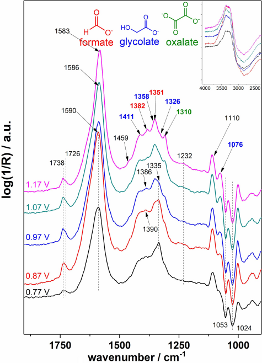
- the cation (2). The formation of the structures (1) or (2) was correlated to the hydration energies (ΔHM) of the cations. Highly charged species with a high ΔHM like Li+ were considered more likely to form structure (2), because the cation–OHads interaction is stronger than for cations with a low ΔHM


An overview of recent advances in duplex DNA recognition by small molecules
Beilstein J. Org. Chem. 2018, 14, 1051–1086, doi:10.3762/bjoc.14.93
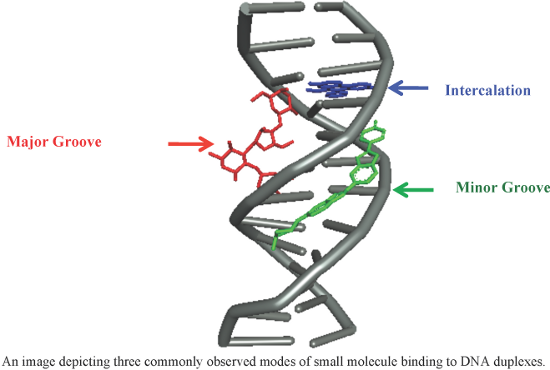
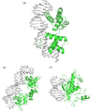
- small molecules comprise various heterocyclic and/or aromatic hydrocarbon rings with limited rotational freedom and torsion, allowing these drugs to fit into major/minor grooves of DNA by displacing water molecules from the spine of hydration as shown in the Figure 2 [25][26][27]. These molecules bind