Search results
Search for "oligonucleotides" in Full Text gives 101 result(s) in Beilstein Journal of Organic Chemistry.
DMAP-assisted sulfonylation as an efficient step for the methylation of primary amine motifs on solid support
Beilstein J. Org. Chem. 2017, 13, 806–816, doi:10.3762/bjoc.13.81
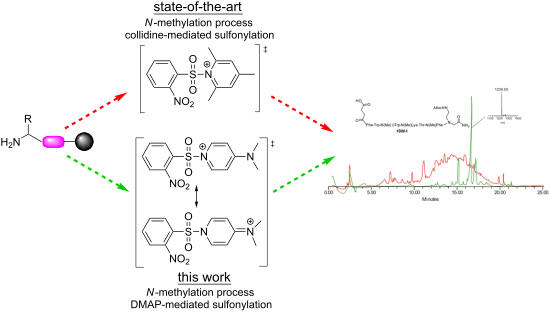
- Methylated amines and amides are common motifs found in natural and synthetic compounds, e.g., small molecules, peptides, and oligonucleotides [1][2][3][4][5][6][7][8]. Methylation of amines and amides has found many applications in the fields of pharmacological research, materials science, and in synthetic



A postsynthetically 2’-“clickable” uridine with arabino configuration and its application for fluorescent labeling and imaging of DNA
Beilstein J. Org. Chem. 2017, 13, 127–137, doi:10.3762/bjoc.13.16
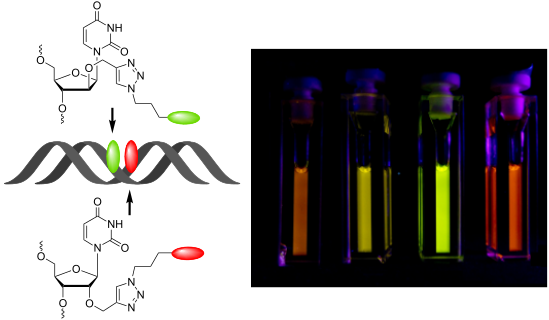
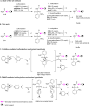
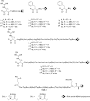
- by blue and green emitting cyanine-styryl dyes were improved due to the arabino-configured anchor. These oligonucleotides were used as energy transfer donors in hybrids with oligonucleotides modified with acceptor dyes that emit in the yellow-red range. These combinations give energy transfer pairs
- DNA polymerases in primer extension experiments and PCR [4][16]. To develop fluorescently labelled oligonucleotides that undergo energy transfer reactions [17] we recently applied 2’-propargyl-modified uridine 1 as DNA building block (Scheme 1) [15][18][19]. A simple look on the three-dimensional
- structure of double-helical DNA elucidates that the positioning of the fluorophores in the major groove may be improved by inversion of the configuration at the 2’-position of the anchor nucleoside sugar. In fact, arabino nucleic acids are an important class of antisense oligonucleotides [20] since their



Enzymatic synthesis and phosphorolysis of 4(2)-thioxo- and 6(5)-azapyrimidine nucleosides by E. coli nucleoside phosphorylases
Beilstein J. Org. Chem. 2016, 12, 2588–2601, doi:10.3762/bjoc.12.254

- comparison with the natural pyrimidine nucleosides in order to understand the impact of such modifications as monomers or constituents of oligonucleotides [8][9][10][11][12][13][14]. Thioxopyrimidine nucleosides as such, as well as building blocks of artificial oligonucleotides demonstrate promising


DNA functionalization by dynamic chemistry
Beilstein J. Org. Chem. 2016, 12, 2136–2144, doi:10.3762/bjoc.12.203
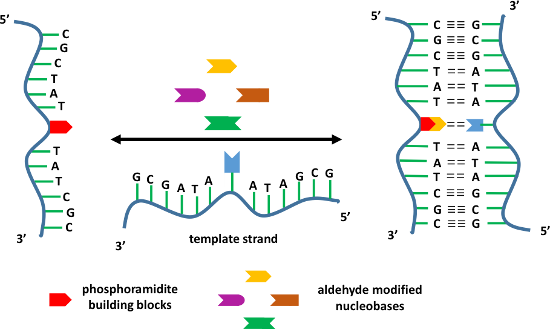
- generate libraries of molecules from simpler building blocks by reversible reactions under thermodynamic control. Here we focus on the chemical modification of DNA oligonucleotides with acyclic diol linkers and demonstrate their potential for the deoxyribonucleic acid functionalization and generation of
- oligonucleotides. The amino group containing phosphoramidite was used together with complementary single-strand DNA templates that influenced the Watson–Crick base-pairing equilibrium in the mixture with a set of aldehyde modified nucleobases. A significant fraction of all possible base-pair mismatches was
- oligonucleotides an ideal supramolecular scaffold in a wide field of applications [1][2]. In recent years oligonucleotides especially were applied to self-assembly into artificial nanostructures [3][4][5][6][7][8][9]. Preparation of oligonucleotides for new applications requires the introduction of additional


Application of Cu(I)-catalyzed azide–alkyne cycloaddition for the design and synthesis of sequence specific probes targeting double-stranded DNA
Beilstein J. Org. Chem. 2016, 12, 1348–1360, doi:10.3762/bjoc.12.128
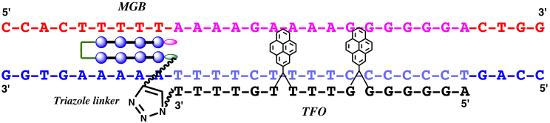
- synthesis of conjugates of pyrrole–imidazole polyamide minor groove binders (MGB) with fluorophores and with triplex-forming oligonucleotides (TFOs). Diverse bifunctional linkers were synthesized and used for the insertion of terminal azides or alkynes into TFOs and MGBs. The formation of stable triple
- –imidazole polyamides; sequence specificity: DNA; triplex-forming oligonucleotides; Introduction The recognition and detection of specific sequences in native genomic double-stranded DNA (dsDNA) is of significant importance for the development of efficient gene therapies and in vivo gene labeling [1][2][3
- ]. Besides natural and engineered peptides or proteins, two synthetic substances are known to recognize and bind dsDNA in a sequence-specific manner: triplex-forming oligonucleotides (TFOs) [4][5] and pyrrole–imidazole polyamide minor groove binders (MGBs) [6][7]. TFOs recognize polypurine stretches in


Synthesis of a deuterated probe for the confocal Raman microscopy imaging of squalenoyl nanomedicines
Beilstein J. Org. Chem. 2016, 12, 1127–1135, doi:10.3762/bjoc.12.109

- was extended to other nucleoside analogues such as antiretroviral agents, ddC, ddI and AZT [14] and to siRNA oligonucleotides [15]. More notably, squalenoylation of adenosine and the subsequent formation of NAs, allowed prolonged circulation of this nucleoside, providing neuroprotection in mice with


Nucleic acids through condensation of nucleosides and phosphorous acid in the presence of sulfur
Beilstein J. Org. Chem. 2016, 12, 670–673, doi:10.3762/bjoc.12.67

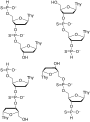
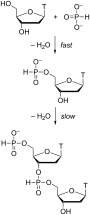
- Tuomas Lonnberg Department of Chemistry, University of Turku, Vatselankatu 2, FIN-20014 Turku, Finland 10.3762/bjoc.12.67 Abstract Short phosphorothioate oligonucleotides have been prepared by refluxing an equimolar mixture of thymidine and triethylammonium phosphite in toluene in the presence of
- polymerization. Proposed oxidants for prebiotic phosphite chemistry include H2O2 and Fe(III). The present paper describes the polymerization of thymidine and triethylammonium phosphite, with elemental sulfur acting as the oxidant. Up to pentameric oligonucleotides with internucleosidic phosphorothioate linkages
- , solubilization by micelles [14][15] or a prebiotic oil slick [16] appears a more plausible scenario [17]. Results and Discussion Preparation of phosphorothioate oligonucleotides Equimolar amounts of thymidine and aq triethylammonium phosphite and a fourfold excess of S8 were suspended in toluene. The mixture was



A journey in bioinspired supramolecular chemistry: from molecular tweezers to small molecules that target myotonic dystrophy
Beilstein J. Org. Chem. 2016, 12, 125–138, doi:10.3762/bjoc.12.14
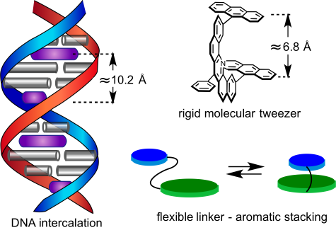
- report [8] of compound 2 containing two caffeine units linked by a rigid diyne spacer (Figure 2e). Whitlock noted that conventional bisintercalators such as 1 would have their affinity for oligonucleotides significantly reduced as a result of intramolecular π–π aromatic stacking. Whereas the diyne spacer


Bright molecules for sensing, computing and imaging: a tale of two once-troubled cities
Beilstein J. Org. Chem. 2015, 11, 2774–2784, doi:10.3762/bjoc.11.298
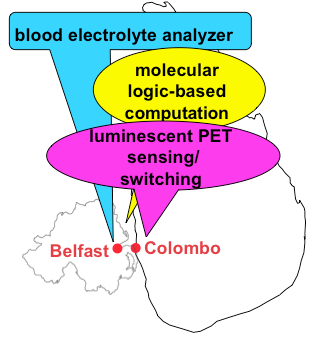
- molecular-mass oligonucleotides [81], both of which involve high levels of organization in space-time. The challenge we faced was to emulate this deep-seated animal behaviour with small molecules with no organization other than to spread them out on paper [82]. Such spreading would create a graphical user







Smart molecules for imaging, sensing and health (SMITH)
Beilstein J. Org. Chem. 2015, 11, 2540–2548, doi:10.3762/bjoc.11.274
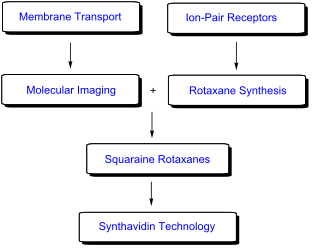
- producing reactive singlet oxygen [41][42][43]. The dyes enable new types of nanoscale heating technologies that release sensitive payload such as dyes, drugs, oligonucleotides, or proteins. The dyes can also be loaded into nanoparticles for anticancer photothermal therapy in preclinical animal models


Effective ascorbate-free and photolatent click reactions in water using a photoreducible copper(II)-ethylenediamine precatalyst
Beilstein J. Org. Chem. 2015, 11, 1950–1959, doi:10.3762/bjoc.11.211
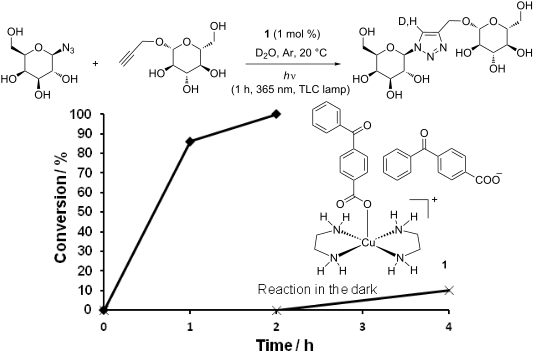
- such transformations are: (i) high copper loading, often used in excess with respect to the substrates, due to limited catalyst reactivity and the fact that the substrates (proteins, oligonucleotides or oligosaccharides) are typically used in dilute conditions; (ii) contamination of the products by


Preparation of a disulfide-linked precipitative soluble support for solution-phase synthesis of trimeric oligodeoxyribonucleotide 3´-(2-chlorophenylphosphate) building blocks
Beilstein J. Org. Chem. 2015, 11, 1553–1560, doi:10.3762/bjoc.11.171
- acids have been used to regulate gene expression through different mechanisms of action, such as antisense oligonucleotides [1][2], ribozymes [3], interfering RNAs (siRNA) [4][5] and immunostimulatory CpG [6] based therapeutics. At the same time, the interest in detailed understanding of the factors
- that govern the interaction of nucleic acids with small molecular entities and other biopolymers has increased. In particular, for NMR spectroscopic studies of such interactions, oligonucleotides are often required in quantities that are inconvenient to prepare by laboratory scale solid-phase synthesis
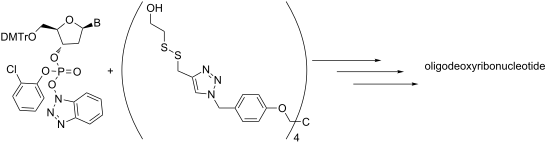
- . We have previously reported that short oligonucleotides may be conveniently prepared in hundreds of milligrams scale on a soluble tetrakis-O-[4-(1,2,3-triazol-1-yl)methylphenyl]pentaerythritol support that precipitates quantitatively from MeOH [7][8][9][10]. For example, the “outdated




Terminal lipophilization of a unique DNA dodecamer by various nucleolipid headgroups: Their incorporation into artificial lipid bilayers and hydrodynamic properties
Beilstein J. Org. Chem. 2015, 11, 913–929, doi:10.3762/bjoc.11.103
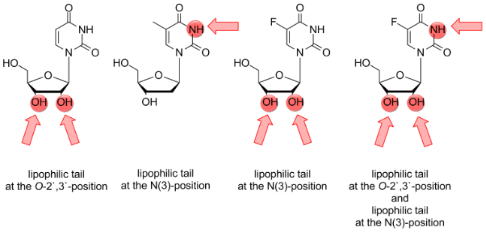
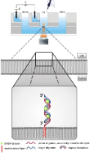
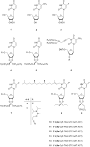
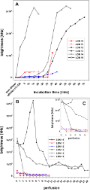
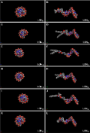
- oligonucleotides (LONs 10–15), each terminally lipophilized with different nucleolipid head groups, were synthesized using the recently prepared phosphoramidites 4b–9b. The insertion of the LONs within an artificial lipid bilayer, composed of 1-palmitoyl-2-oleoyl-sn-glycero-3-phosphocholine (POPC) and 1-palmitoyl
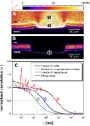
- -2-oleoyl-sn-glycero-3-phosphoethanolamine (POPE), was studied by single molecule fluorescence spectroscopy and microscopy with the help of an optically transparent microfluidic sample carrier with perfusion capabilities. The incorporation of the lipo-oligonucleotides into the bilayer was studied
- lipo-oligonucleotides. Keywords: lipid bilayer; lipo-oligonucleotides; nucleic acids; nucleolipids; Introduction For proper cell function, the biosynthetic lipophilization of proteins and carbohydrates, such as palmitoylation and farnesylation, is of decisive importance [1]. The same seems to be true






Multivalent dendritic polyglycerolamine with arginine and histidine end groups for efficient siRNA transfection
Beilstein J. Org. Chem. 2015, 11, 763–772, doi:10.3762/bjoc.11.86
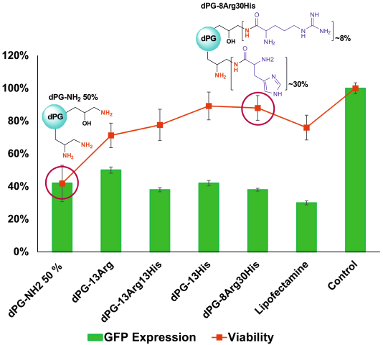
- more are being developed [1]. Although a direct delivery of “naked” siRNA or chemically modified oligonucleotides [2] has been studied, delivery vectors are typically required for efficient siRNA delivery in vivo due to unmodified siRNA’s low stability towards endogenous enzymes, poor cellular uptake


Sequence-specific RNA cleavage by PNA conjugates of the metal-free artificial ribonuclease tris(2-aminobenzimidazole)
Beilstein J. Org. Chem. 2015, 11, 493–498, doi:10.3762/bjoc.11.55
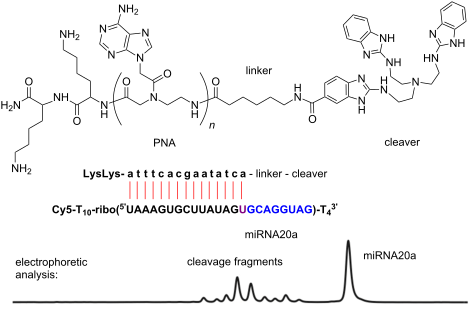
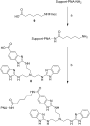
- and Nutrition, Novum, SE-141 83 Huddinge, Sweden 10.3762/bjoc.11.55 Abstract Tris(2-aminobenzimidazole) conjugates with antisense oligonucleotides are effective site-specific RNA cleavers. Their mechanism of action is independent of metal ions. Here we investigate conjugates with peptide nucleic
- RNAs 15 or 17 under identical conditions (Supporting Information File 1). The relatively low site specificity, as discussed above, may be related to the pyrimidine rich sequence of RNA 16. To examine whether PNA conjugates 10–14 would form molecular aggregates with noncognate oligonucleotides, the
- oligonucleotides and PNA conjugates are formed in all of these cases [21]. Although such effects were absent in FCS experiments with analogous DNA conjugates [16], this result is not surprising as PNA, with its uncharged backbone, is more likely to form aggregates. In the presence of 10% of DMSO, no change in




C-5’-Triazolyl-2’-oxa-3’-aza-4’a-carbanucleosides: Synthesis and biological evaluation
Beilstein J. Org. Chem. 2015, 11, 328–334, doi:10.3762/bjoc.11.38

- -carbanucleoside. However, in order to maintain the six-bond periodicity of the oligonucleotides and thus the flexibility of the oligonucleotide chain the methylene bridge at the pseudo-5’-position was retained. The obtained compounds have shown to be endowed with an interesting antitumor activity: most of them


TEMPO-derived spin labels linked to the nucleobases adenine and cytosine for probing local structural perturbations in DNA by EPR spectroscopy
Beilstein J. Org. Chem. 2015, 11, 219–227, doi:10.3762/bjoc.11.24
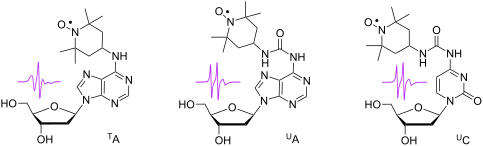
- UC-containing oligonucleotides The phosphoramidites of TA (5), UA (10) and UC (14) were used to incorporate the spin-labeled nucleosides into DNA oligonucleotides using solid-phase synthesis [77]. The low stability of the nitroxide functional group in the TEMPO moiety towards acids lead to almost ca
- . 50% reduction of the nitroxide during oligonucleotide synthesis, which utilized dichloroacetic acid for the removal of the trityl groups. However, in spite of low yields, the spin-labeled oligonucleotides were readily separated from those containing the reduced spin label by denaturing polyacrylamide
- -labeled deoxynucleosides, TA, UA and UC, were prepared and incorporated into oligonucleotides by the phosphoramidite method. While UA resulted in a major decrease in the melting temperature of a DNA duplex when incorporated opposite to C, CD measurements revealed that all three spin labels were


Synthesis of dinucleoside acylphosphonites by phosphonodiamidite chemistry and investigation of phosphorus epimerization
Beilstein J. Org. Chem. 2015, 11, 184–191, doi:10.3762/bjoc.11.19
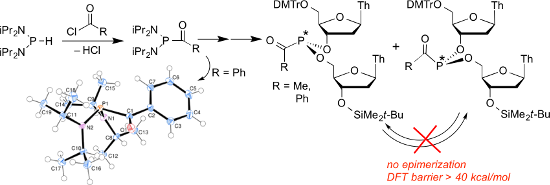
- barrier was found to be high as no epimerization was detected up to 150 °C, and consistent with this, density functional theory calculations give an inversion barrier of over 40 kcal/mol. Keywords: acylphosphine; acyl phosphite; chiral; DFT; NMR; nucleic acids; oligonucleotides; Introduction Antisense
- oligonucleotides, which are modified oligonucleotides that bind to mRNA in order to inhibit translation to proteins, have been intensively investigated for decades [1][2]. Modifications of native DNA or RNA are required to permit pharmaceutical use, for example, for conferring nuclease resistance, enhanced binding


NAA-modified DNA oligonucleotides with zwitterionic backbones: stereoselective synthesis of A–T phosphoramidite building blocks
Beilstein J. Org. Chem. 2015, 11, 50–60, doi:10.3762/bjoc.11.8
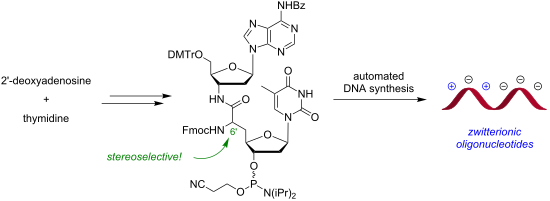
- development of oligonucleotide-derived bioactive agents. The NAA-modification represents a novel artificial internucleotide linkage which enables the site-specific introduction of positive charges into the otherwise polyanionic backbone of DNA oligonucleotides. Following initial studies with the introduction
- of the NAA-linkage at T–T sites, it is now envisioned to prepare NAA-modified oligonucleotides bearing the modification at X–T motifs (X = A, C, G). We have therefore developed the efficient and stereoselective synthesis of NAA-linked 'dimeric' A–T phosphoramidite building blocks for automated DNA
- synthesis. Both the (S)- and the (R)-configured NAA-motifs were constructed with high diastereoselectivities to furnish two different phosphoramidite reagents, which were employed for the solid phase-supported automated synthesis of two NAA-modified DNA oligonucleotides. This represents a significant step



Come-back of phenanthridine and phenanthridinium derivatives in the 21st century
Beilstein J. Org. Chem. 2014, 10, 2930–2954, doi:10.3762/bjoc.10.312

- sensitive to major erroneous ds-DNA sites (e.g., abasic sites) [91]. Namely, by using the well-known system of EB-fluorescence quenching by 7-deazaguanine incorporated within modified oligonucleotides, it showed that the abasic site (S) either one base pair away (DNA1-XY and DNA2-XY) or two base pairs away
- complex flexibility on the efficiency of the transfer. A study of comparatively flexible DNA/EB complex, EB covalently attached to the 5’-end of oligonucleotides, in detail described the rate and distance dependencies of charge transfer through DNA [92][93]. A more rigid type of EB-binding, whereby the EB




Nucleic acid chemistry
Beilstein J. Org. Chem. 2014, 10, 2928–2929, doi:10.3762/bjoc.10.311
- is of critical importance, carrying the genetic information for all living organisms. Only a few years later appeared the first reports on the chemical synthesis of oligonucleotides with a natural 3'-5' phosphodiester linker by Michelsen and Todd [2]. It took another two decades until the first step
- towards building block chemistry (the so-called phosphoramidte chemistry) was published by Letsinger and Lunsford, enabling efficient and fully synthetic access to oligonucleotides [3]. These authors discovered that DNA building blocks based on phosphorous(III) were significantly more reactive than
- phosphordiesters or -triesters. Finally, this approach using phosphoramidites as nucleoside building blocks was significantly further developed in 1981 by Beaucage and Caruthers [4]. Since then, oligonucleotides of up to 50-mers in length have become available by an extremely efficient solid-phase methodology that
Detonation nanodiamonds biofunctionalization and immobilization to titanium alloy surfaces as first steps towards medical application
Beilstein J. Org. Chem. 2014, 10, 2765–2773, doi:10.3762/bjoc.10.293
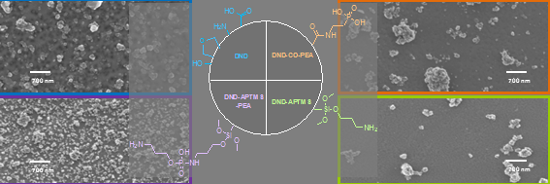
- regioselective partial incorporation of biofunctional molecules into anodically grown oxide layers. The authors electrochemically immobilized nucleic acids on titanium alloys for its surface modification with bioactive molecules [21][22][23][24][25], as, e.g., oligonucleotides and RGD peptide conjugates, for



Versatile synthesis of amino acid functionalized nucleosides via a domino carboxamidation reaction
Beilstein J. Org. Chem. 2014, 10, 2566–2572, doi:10.3762/bjoc.10.268
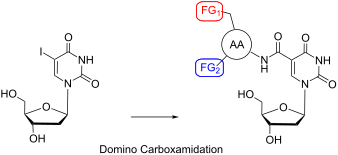
- Vicky Gheerardijn Jos Van den Begin Annemieke Madder Department of Organic and Macromolecular Chemistry, Organic and Biomimetic Chemistry Research Group, Ghent University, Krijgslaan 281 S4, 9000 Ghent, Belgium 10.3762/bjoc.10.268 Abstract Functionalized oligonucleotides have recently gained
- information. Only recently, the use of synthetic oligonucleotides and their modified analogues for a range of therapeutic and diagnostic purposes [1], including antisense therapy [2][3], antigene therapy [4][5] and SNP (Single Nucleotide Polymorphism) detection [6] has gained major interest. Due to their
- predictable and well-investigated structure, the strength of nucleic acids for a series of applications such as DNA and RNA based drugs [7], drug delivery systems [8][9], DNA-biosensors [10][11] and potential catalysts has now firmly been recognized. Rather than using unmodified oligonucleotides, providing


Autonomous assembly of synthetic oligonucleotides built from an expanded DNA alphabet. Total synthesis of a gene encoding kanamycin resistance
Beilstein J. Org. Chem. 2014, 10, 2348–2360, doi:10.3762/bjoc.10.245

- -canonical folded structures that compete with Watson–Crick pairing, and other features intrinsic to natural DNA, generally prevent the autonomous assembly of short single-stranded oligonucleotides greater than a dozen or so. Results: We describe a new strategy to autonomously assemble L-DNA constructs from
- requisite single-stranded oligonucleotides followed by annealing, primer extension to fill in any gaps, and ligation. Unfortunately, DNA is not this ideal. With just four nucleotides, the information density of standard DNA is too low to allow (without explicit design) even a dozen or so single strands to
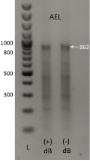
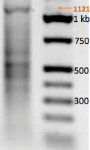
- directly cloned and sequenced, to prove success of the AEGIS-assisted autonomous assembly. With the 32B construct that lacked AEGIS nucleotides, no full-length product was observed when all 32 fragments were mixed without amplification (data not shown). To rule out the possibility that the oligonucleotides




Specific DNA duplex formation at an artificial lipid bilayer: fluorescence microscopy after Sybr Green I staining
Beilstein J. Org. Chem. 2014, 10, 2307–2321, doi:10.3762/bjoc.10.240
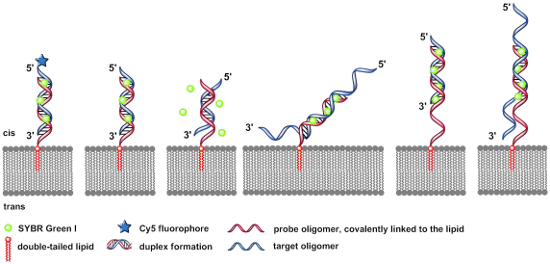
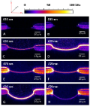
- describes the immobilization of different probe oligonucleotides (4, 7, 10) carrying each a racemic mixture of 2,3-bis(hexadecyloxy)propan-1-ol (1a) at the 5’-terminus on a stable artificial lipid bilayer composed of 1-palmitoyl-2-oleoyl-sn-glycero-3-phosphoethanolamine (POPE) and 1-palmitoyl-2-oleoyl-sn
- -biosynthetic lipophilization of various biomolecules such as of proteins and carbohydrates is of decisive importance for the correct function of the cell [1]. With the recent discovery of geranylated tRNAs in bacteria [2] the interest in so-called lipo-oligonucleotides (LONs) has grown tremendously [3][4]. The
- immobilization of lipo-oligonucleotides carrying a racemic bis(hexadecyloxy)propan-1-yl tag (1a) at the 5’-termini at an artificial lipid bilayer–water phase boundary. These were prepared using the cyanoethyl phosphoramidite 1b. A specific duplex formation with complementary cyanine-5 (Cy5)-labelled DNA strands