


Search results
Search for "ring formation" in Full Text gives 88 result(s) in Beilstein Journal of Organic Chemistry.
Highly reactive, liquid diacrylamides via synergistic combination of spatially arranged curing moieties
Beilstein J. Org. Chem. 2017, 13, 372–383, doi:10.3762/bjoc.13.40
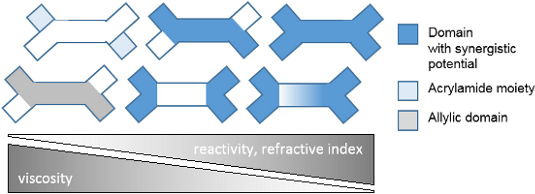
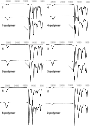
- finger print regime, we can only assume that all three propagation pathways a), b) and c) take place simultaneously. Furthermore, taking in account FTIR and DSC data, we expect that ring formation significantly contributes to the overall reaction enthalpy. It is quite clear, that the combination of
- thus highest apparent network density. This means that ring formation, which in principle should reduce the amount of covalent network points in the cured material, is superimposed by effects of conversion, entanglement and rigidity of the formed polymer. The decreasing trend of flexural modulus from 1
- intramolecular arrangement and the substitution with N-allyl, N-acyl and N-acrylamide functional groups. Surprisingly, the contribution of internal N-allyl groups was higher than that of external ones indicating a dominant, non-classical polymerization mechanism. The results support exothermic ring formation on








Posttranslational isoprenylation of tryptophan in bacteria
Beilstein J. Org. Chem. 2017, 13, 338–346, doi:10.3762/bjoc.13.37
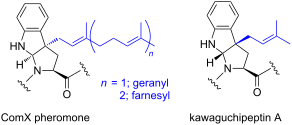
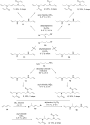
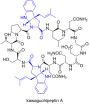
- position of its indole ring. Conclusion The posttranslational isoprenylation of tryptophan involving pyrrolidine ring formation was first discovered in a B. subtilis peptide pheromone, as a crucial modification for the pheromonal function. In addition, the discovery of the ComXnatto pheromone revealed that




Biochemical and structural characterisation of the second oxidative crosslinking step during the biosynthesis of the glycopeptide antibiotic A47934
Beilstein J. Org. Chem. 2016, 12, 2849–2864, doi:10.3762/bjoc.12.284
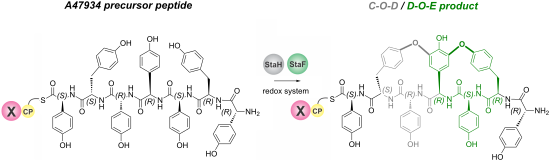
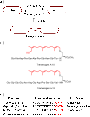
- catalysing C-O-D ring formation and that this activity relies on interactions with the non-ribosomal peptide synthetase via the X-domain. Despite the interaction of StaF with the A47934 X-domain being weaker than for the preceding Oxy enzyme StaH, StaF retains higher levels of in vitro activity: we postulate
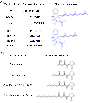
- show that the substrate specificity of StaF is not as broad as for Oxys catalysing the C-O-D ring formation, in agreement with the results from OxyAtei. Additionally, we could show that StaF interacts with the A47934 X-domain, indicating that StaF is, along with other related Oxy enzymes, recruited by
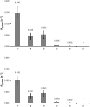
- appropriate MWCO. 2) Subsequently, the activity assay is performed using StaH and StaF together with the redox system composed of palustrisredoxin reductase (PuR), palustrisredoxin B A105V (PuxB) and NADH, in which StaH catalyses C-O-D ring formation between D-Hpg4 and L-Tyr6 and StaF catalyses ring D-O-E




O-Alkylated heavy atom carbohydrate probes for protein X-ray crystallography: Studies towards the synthesis of methyl 2-O-methyl-L-selenofucopyranoside
Beilstein J. Org. Chem. 2016, 12, 2828–2833, doi:10.3762/bjoc.12.282

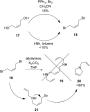
- prevent 5-membered ring formation by this group. The cis-dihydroxy groups in position 3 and 4 of compound 2 were acetylated (→ 12) prior to the deprotection of the anomeric center. Following this sequence, allyl 3,4-di-O-acetyl-2-O-methyl-α-L-fucoside (12) was synthesized in 50% yield over four steps from


Biosynthesis of oxygen and nitrogen-containing heterocycles in polyketides
Beilstein J. Org. Chem. 2016, 12, 1512–1550, doi:10.3762/bjoc.12.148
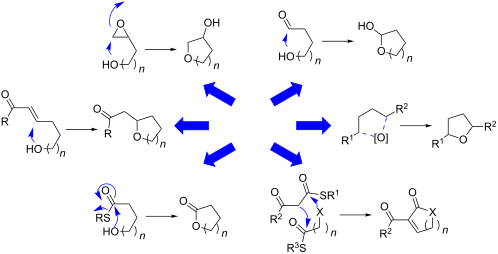
- characterised in the pederin (24) and the ambruticin (28) biosynthetic pathways (Scheme 3 and Scheme 4) [14][15]. PedPS7 is a monofunctional pyran synthase (PS) domain that was predicted to catalyse ring formation from an α,β-unsaturated intermediate in the biosynthesis of the PKS–NRPS hybrid product pederin
- polyketide with potent antitumor, antifungal, antiparasitic, pesticidal and antitrypanosomal activities (Scheme 13). In its biosynthesis, the furan-ring formation occurs on a late stage, catalysed in an unprecedented fashion by the cytochrome P450 oxidase AurH [13][62][63][64][65][66][67]. This enzyme






The synthesis of functionalized bridged polycycles via C–H bond insertion
Beilstein J. Org. Chem. 2016, 12, 985–999, doi:10.3762/bjoc.12.97
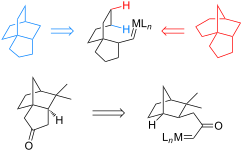
- carbenes and nitrenes generated from sulfonate esters prefer 6-membered ring formation (i.e., 1,6-insertion) opened the door for easy access to 1,3-functionalized products via C–H insertion [64][65]. The sulfonate can be a useful functional group for subsequent transformations, also. If used in the
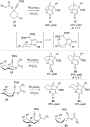
- profound effect on the preferred C–H insertion location (Scheme 14). As has been noted for other intramolecular insertions [42][43][44][45][46][47][48][49][50][51][52][53][54][55][56][57][58][59][60][61][62][63][64][65], five-membered ring formation is generally preferred over other ring sizes. Thus, the
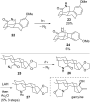
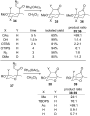
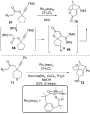
- sterically hindered catalyst such as Rh2(esp)2 or Rh2(OPiv)4 is needed to prevent dimerization of the diazoacetate. These catalysts are presumed to protect the carbene intermediates from intermolecular reactions long enough to adopt the correct conformation for bridged-ring formation. An exploration of the







Biosynthesis of α-pyrones
Beilstein J. Org. Chem. 2016, 12, 571–588, doi:10.3762/bjoc.12.56
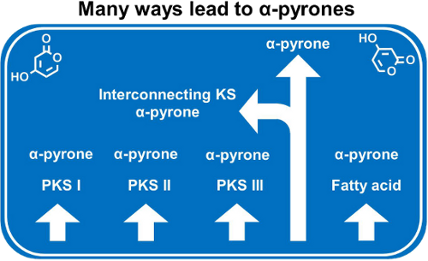
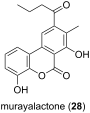
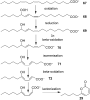
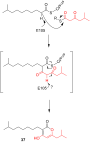
- reductive steps are optional in PKS biosynthesis, and considering the pyrone ring formation, an unsaturated PKS chain residue attached to the carrier is essential. This general PKS catalyzed mechanism is accomplished by different enzymatic machineries. In the following section the three PKS types which can
- investigated in detail. In vitro assays using NAC thioesters of the western and eastern chains in the biosynthesis of 36 [88], as well as simplified substrate mimics of both antibiotics [88][89] provided experimental evidence that the free-standing ketosynthases are responsible for the α-pyrone ring formation
- substrates, i.e., this resulted in a 12-fold increase of product formation. This is an additional hint that protein–protein interactions represent an important factor in PKS systems. Further, it seemed that the carrier proteins conferred specificity for α-pyrone ring formation, since once the carrier






A facile synthetic route to benzimidazolium salts bearing bulky aromatic N-substituents
Beilstein J. Org. Chem. 2015, 11, 1656–1666, doi:10.3762/bjoc.11.182
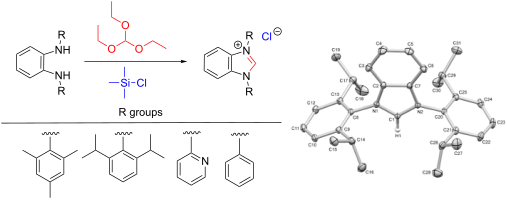
- : benzimidazolium salts; bulky ligands; cyclization; ligand design; N-heterocyclic carbenes (NHC); ring formation; Introduction Imidazole-based N-heterocyclic carbenes (NHCs) are stable systems serving as ancillary ligands mainly to construct organometallic complexes. These NHCs are sterically and electronically
- and 4-Cl the synthetic procedures proceed without noticeable problems, while complications were faced in the synthesis for 1-Cl and 2-Cl, particularly during the benzimidazole ring closures. Excluding the procedure of Borguet [42][43] all the known procedures to accomplish imidazole ring formation [44


Synthesis and chemosensing properties of cinnoline-containing poly(arylene ethynylene)s
Beilstein J. Org. Chem. 2015, 11, 373–384, doi:10.3762/bjoc.11.43

- ethynylene)s comprising a cinnoline core were prepared in high yields via a three-step methodology. A Richter-type cyclization of 2-ethynyl- and 2-(buta-1,3-diynyl)aryltriazenes was used for cinnoline ring formation, followed by a Sonogashira coupling for the introduction of trimethylsilylethynyl moieties


Photovoltaic-driven organic electrosynthesis and efforts toward more sustainable oxidation reactions
Beilstein J. Org. Chem. 2015, 11, 280–287, doi:10.3762/bjoc.11.32
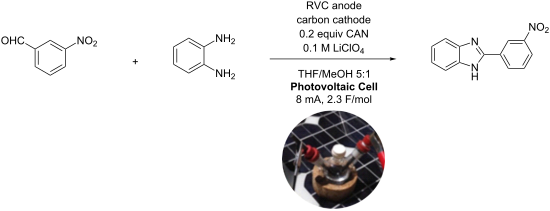
- barriers of quaternary carbon and six-membered ring formation. The use of the second nucleophile and a fast initial trapping reaction reduced the cation character of the radical cation intermediate, slowed competitive elimination reactions, and allowed for the desired quaternary carbon formation. In these


A one-pot multistep cyclization yielding thiadiazoloimidazole derivatives
Beilstein J. Org. Chem. 2014, 10, 2989–2996, doi:10.3762/bjoc.10.317
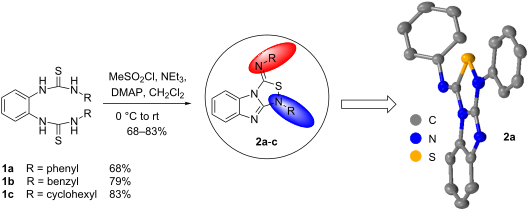
- . The TS 9‡ corresponds to the initial nucleophilic attack onto the nascent carbodiimide and is located at 14.9 kcal mol−1 whereas the introduction of solvent reduces the barrier to 9.9 kcal mol−1 (Scheme 3). There are two possible pathways for the MeSO2Cl assisted 1,2,4-thiadiazole ring formation
- , namely cyclization-IIa and cyclization-IIb (Scheme 2). It was very difficult to locate 14‡ in cyclization-IIa, the transition state for the second heterocyclic ring formation, due to a complex reaction coordinate (Figure 3). We were only successful considering that it may be promoted by a proton binding
- locate the DMAP-assisted TS for 1,2,4-thiadiazole ring formation via cyclization-IIb due to a complex reaction coordinate. Conclusion We report on a straightforward methodology to prepare three substituted benzimidazole-fused 1,2,4-thiadiazoles via a methanesulfonyl chloride assisted cyclization between


Recent advances in the electrochemical construction of heterocycles
Beilstein J. Org. Chem. 2014, 10, 2858–2873, doi:10.3762/bjoc.10.303
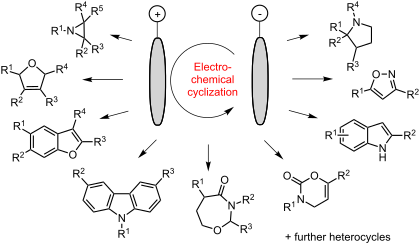
- electrochemical construction of heterocycles have been reported in recent years. These cases demonstrate that ring formation can be achieved efficiently under ambient conditions without the use of additional reagents. In order to account for the recent developments in this field, a selection of representative




A modular phosphate tether-mediated divergent strategy to complex polyols
Beilstein J. Org. Chem. 2014, 10, 2332–2337, doi:10.3762/bjoc.10.242
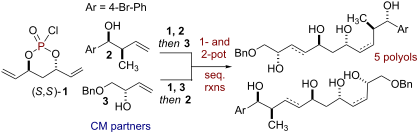
- groups since previous RCM studies [33] showed that the productive RCM for 8-membered ring formation was observed only for the S,S- configured trienes in the presence of an exo-methyl group at the allylic position (Figure 1). Initial attempts were focused on generating the first set of five polyols


Synthesis of trifluoromethyl-substituted pyrazolo[4,3-c]pyridines – sequential versus multicomponent reaction approach
Beilstein J. Org. Chem. 2014, 10, 1759–1764, doi:10.3762/bjoc.10.183

- the pyrazolo[4,3-c]pyridine system can be mainly achieved through two different approaches. One strategy involves the annelation of a pyrazole ring onto an existing, suitable pyridine derivative [16]. Alternatively, the bicyclic system can be accessed by pyridine-ring formation with an accordant


Expedient synthesis of 1,6-anhydro-α-D-galactofuranose, a useful intermediate for glycobiological tools
Beilstein J. Org. Chem. 2014, 10, 1651–1656, doi:10.3762/bjoc.10.172
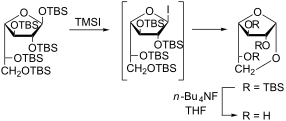
- complex products and bioactive compounds. Among the glycosans, the anhydro sugars involving the anomeric center in the ring formation, the 1,6-anhydro sugars are the most common and useful building blocks [1][2]. They can play a role in synthetic methodologies aiming at the obtainment of regioselectively


Intermediates in monensin biosynthesis: A late step in biosynthesis of the polyether ionophore monensin is crucial for the integrity of cation binding
Beilstein J. Org. Chem. 2014, 10, 361–368, doi:10.3762/bjoc.10.34
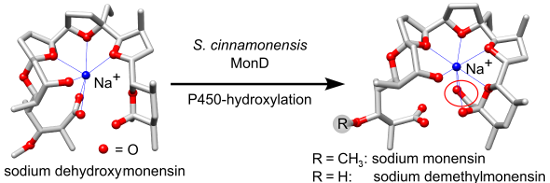
- in S. cinnamonensis [15][16][17][18][19][20], but much remains to be learned about the timing of the various steps of oxidative ring formation (and hence the true nature of the enzyme-bound intermediates) and about the exact role of the enzymes involved in these late steps. As shown in Scheme 1, the



Synthesis of 3,4-dihydro-1,8-naphthyridin-2(1H)-ones via microwave-activated inverse electron-demand Diels–Alder reactions
Beilstein J. Org. Chem. 2014, 10, 282–286, doi:10.3762/bjoc.10.24
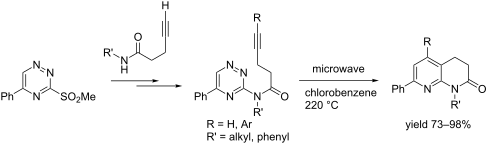
- optimal experimental conditions already reported with triazines [22][23][24]. In chlorobenzene at 220 °C (optimal reaction temperature for six-membered-ring formation), the corresponding cycloadducts 10–13 were obtained in high yields (Scheme 4, Table 3). We therefore developed an efficient method for the


Synthesis of five- and six-membered cyclic organic peroxides: Key transformations into peroxide ring-retaining products
Beilstein J. Org. Chem. 2014, 10, 34–114, doi:10.3762/bjoc.10.6
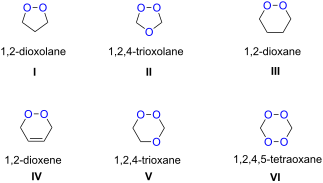
- peroxide moiety, the Isayama–Mukaiyama peroxysilylation, and reactions involving peroxycarbenium ions. Syntheses employing hydrogen peroxide and the intramolecular Kobayashi cyclization are less frequently used. 1.1. Use of oxygen for the peroxide ring formation The singlet-oxygen ene reaction with alkenes
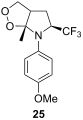
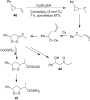
- -ene (148) (Scheme 35). The cyclization occurs selectively because the hydroperoxide group in intermediate 147 attacks only one of two possible electrophilic carbon centers [266]. 1.5. 1,2-Dioxolane ring formation through oxidation of the allylic position 1,2-Dioxolane-containing compounds 150a–d were












A construction of 4,4-spirocyclic γ-lactams by tandem radical cyclization with carbon monoxide
Beilstein J. Org. Chem. 2013, 9, 1340–1345, doi:10.3762/bjoc.9.151
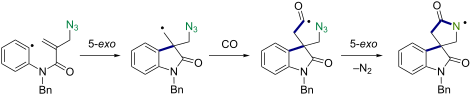
- provide a steady tool for the ring formation of 4,4-spirocyclic γ-lactams with the incorporation of CO as a carbonyl group. Experimental Typical procedure for a construction of 4,4-spirocyclic γ-lactams by tandem radical cyclization with CO: A magnetic stirring bar, 2-(azidomethyl)-N-benzyl-N-(2


Efficient synthesis of phenylene-ethynylene rods and their use as rigid spacers in divalent inhibitors
Beilstein J. Org. Chem. 2013, 9, 215–222, doi:10.3762/bjoc.9.25

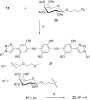
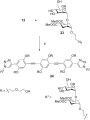
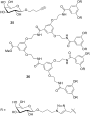
- and molecule types have been used depending on the desired geometry, such as ring formation [9], carbohydrate–triazole conjugation [10], aryl–alkyne linked structures [11][12][13][14][15] and the use of DNA as a rigid bridge between silver nanoparticles and quantum dots [5]. Among the rigid linking


















Organocatalytic C–H activation reactions
Beilstein J. Org. Chem. 2012, 8, 1374–1384, doi:10.3762/bjoc.8.159
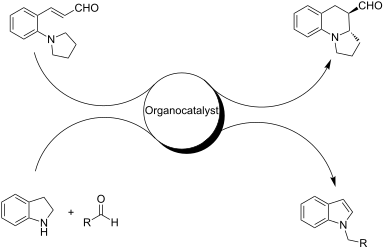
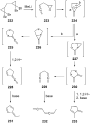
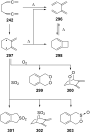
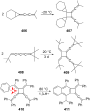
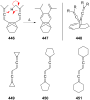
- -annulation cascade reaction with N,N-(dialkylamino)benzaldehydes, a process in which a 1,5-hydride shift occurs followed by larger ring formation [16]. After the evaluation of different Brønsted acid catalysts, diphenylphosphate (20 mol %) was identified as a suitable catalyst for the reaction. Toluene again



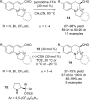


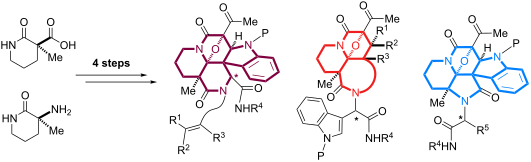
Parallel and four-step synthesis of natural-product-inspired scaffolds through modular assembly and divergent cyclization
Beilstein J. Org. Chem. 2012, 8, 930–940, doi:10.3762/bjoc.8.105
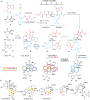
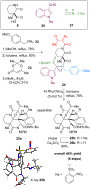
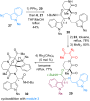
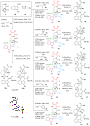
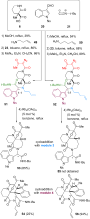
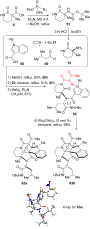
- transformations and easily separated after the cycloadditions. Whilst the cycloadditions described above demonstrate the preference for the dipolarophile installed at module 3, we then attempted to alter the cyclization mode (module 3→4) by increasing the entropic barrier for medium-sized ring formation (Scheme 4
- formation of a seven-membered ring. Despite the minor pathway, cycloaddition at module 4 also competed to give 54 in 22% yield. On the other hand, cycloaddition of 52 exclusively occurred with the indole group at module 4, giving rise to 56 in 94% yield without eight-membered ring formation leading to 55. X


Stereoselective, nitro-Mannich/lactamisation cascades for the direct synthesis of heavily decorated 5-nitropiperidin-2-ones and related heterocycles
Beilstein J. Org. Chem. 2012, 8, 567–578, doi:10.3762/bjoc.8.64
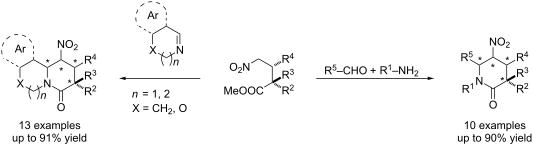
- δ-lactam ring formation) is irreversible, there are at least three possible explanations for the high diastereocontrol in the formation of 1a–j and 2a–l: - The first is that the nitro-Mannich step is highly diastereoselective and lactamisation occurs subsequently without any effect on the


Synthesis of fused tricyclic amines unsubstituted at the ring-junction positions by a cascade condensation, cyclization, cycloaddition then decarbonylation strategy
Beilstein J. Org. Chem. 2012, 8, 107–111, doi:10.3762/bjoc.8.11
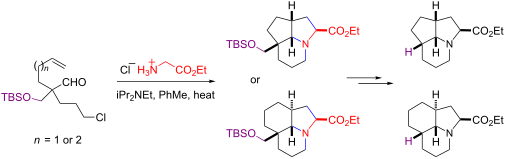
- -protection gave the alcohol 12 which was oxidized to aldehyde 8a. Cascade condensation, cyclization, cycloaddition The cascade tricyclic ring formation was then investigated with the aldehydes 6, 8a and 8b. Heating aldehyde 6 with glycine gave a mixture of unidentifiable products. However, heating with





