


Search results
Search for "silylation" in Full Text gives 97 result(s) in Beilstein Journal of Organic Chemistry.
Synthesis of the heterocyclic core of the D-series GE2270
Beilstein J. Org. Chem. 2017, 13, 1407–1412, doi:10.3762/bjoc.13.137

- group from a structurally analog of 9 in DCM as the solvent [20], the Pattenden two-step enol silylation/bromination sequence [23] also found effective to produce consecutively the tert-butyldimethylsilyl enol-ether intermediate from trithiazolylpyridine 9. The latter was treated with NBS reagent in THF

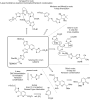


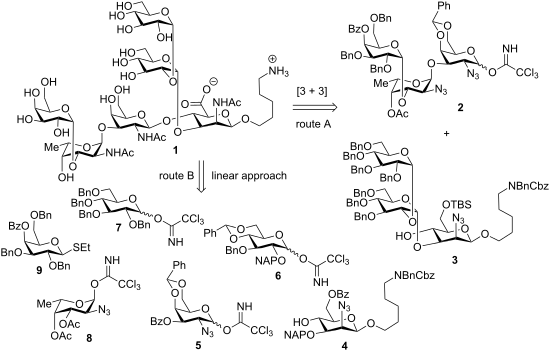
Total synthesis of a Streptococcus pneumoniae serotype 12F CPS repeating unit hexasaccharide
Beilstein J. Org. Chem. 2017, 13, 164–173, doi:10.3762/bjoc.13.19
- [25]. Silylation of the C3 hydroxy group furnished thioglycoside 17. Glycosylation of the C5 linker by activation of 17 using NIS/TfOH as the promoter at −20 °C produced mainly β-mannoside 15 (4:1 β:α) [26]. The identity of the β-isomer was confirmed by NMR analysis (1JCH β = 159.0 Hz, see Supporting


Orthogonal protection of saccharide polyols through solvent-free one-pot sequences based on regioselective silylations
Beilstein J. Org. Chem. 2016, 12, 2748–2756, doi:10.3762/bjoc.12.271

- organic synthesis in view of their compatibility with a wide range of conditions. Their regioselective installation on polyols generally requires lengthy reactions and the use of high boiling solvents. In the first part of this paper we demonstrate that regioselective silylation of sugar polyols can be
- of the silylation approach was significantly extended with the development of unprecedented “one-pot” and “solvent-free” sequences allowing the regioselective silylation/alkylation (or the reverse sequence) of saccharide polyols in short times. The developed methodologies represent a very useful and
- protecting groups are featuring the presence of hindered substituents at silicon such as in tert-butyldimethylsilyl (TBDMS) and tert-butyldiphenylsilyl (TBDPS) groups. Their bulkiness allows in many cases regioselective silyl protection of primary alcohols. Commonly, O-silylation is performed by exposing the


Synthesis of polyhydroxylated decalins via two consecutive one-pot reactions: 1,4-addition/aldol reaction followed by RCM/syn-dihydroxylation
Beilstein J. Org. Chem. 2016, 12, 2602–2608, doi:10.3762/bjoc.12.255
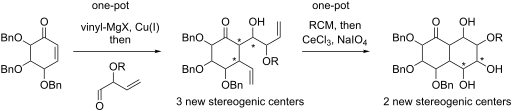
- , an alternative approach had to be used to obtain (R)-10. A known procedure based on addition of vinylmagnesium bromide to isopropylidene-protected D-glyceraldehyde followed by silylation and separation of an equimolar mixture of diastereoisomers led to optically pure olefins 21 and 22 (Scheme 5) [51


Synthesis of medronic acid monoesters and their purification by high-performance countercurrent chromatography or by hydroxyapatite
Beilstein J. Org. Chem. 2016, 12, 2145–2149, doi:10.3762/bjoc.12.204
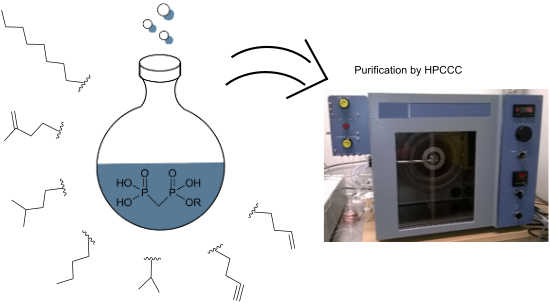
- synthesis of monoesters. Silylhalides are routinely used for dealkylation [25] of BP esters. Moreover, since the dealkylation reaction by silylation favors sterically less hindered methyl esters over other esters [26], we propose that trimethyl monoalkyl esters could offer a simple route for the synthesis
- with relatively high yields (60–78%). The three methyl ester groups were removed with bromotrimethylsilane at low temperature (<0 °C). The removal of the methylesters by silylation was found not to be fully specific and it led always to the silylation of small amounts of the alkyl ester, despite the
- low silylation temperature. This resulted in mixtures of the desired monoalkylester and medronic acid (5–20%) after the hydrolysis of silyl esters. It was evident that a suitable purification method was needed in order to obtain monoesters with sufficient purity. Two strategies were tested for the


NeoPHOX – a structurally tunable ligand system for asymmetric catalysis
Beilstein J. Org. Chem. 2016, 12, 1185–1195, doi:10.3762/bjoc.12.114
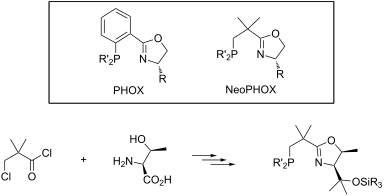
- is available. The subsequent silylation or acylation of the hydroxy group gives access to a library of diverse NeoPHOX ligands. In this way the steric size and the coordination ability of the substituent at the stereogenic center can be tuned for a specific application. Structural motifs of


Carbon–carbon bond cleavage for Cu-mediated aromatic trifluoromethylations and pentafluoroethylations
Beilstein J. Org. Chem. 2015, 11, 2661–2670, doi:10.3762/bjoc.11.286
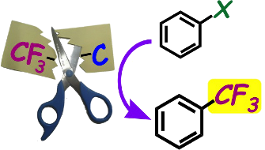
- synthesis of 2,2-difluorostyrenes through Mg(0)-promoted defluorinative silylation followed by fluorine-ion-catalyzed 1,2-desilylative defluorination. Buchwald et al. demonstrated aromatic trifluoromethylation using potassium trifluoroacetate (CF3CO2K), CuI and pyridine under flow conditions. Increasing the




Synthesis of Xenia diterpenoids and related metabolites isolated from marine organisms
Beilstein J. Org. Chem. 2015, 11, 2521–2539, doi:10.3762/bjoc.11.273
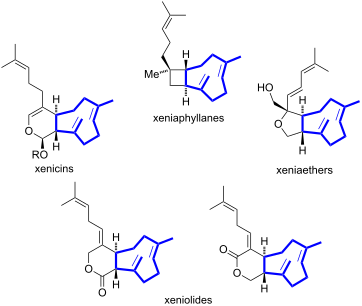
- prepared by regioselective reduction of the carbonyl group, silylation of the resulting alcohol and further reduction of the enone moiety. An ensuing transetherification of alcohol 59 with ethyl vinyl ether gave an allyl vinyl ether, which underwent a magnesium perchlorate-promoted [1,3]-sigmatropic
- literature-known procedure [47]. Regioselective reduction with sodium borohydride, followed by dehydration under Mitsunobu conditions and silylation of the tertiary alcohol furnished trimethylsiloxy ketone 78. The ketone functionality was then diastereoselectively reduced under Corey–Bakshi–Shibata
- commenced with the preparation of diol 96 by a palladium-catalyzed hydrostannylation of 2-butyne-1,4-diol (95). Regioselective silylation with tert-butyldimethylsilyl chloride of the sterically less hindered alcohol, iodination and silylation of the primary alcohol with trimethylsilyl chloride gave vinyl







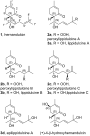
Stereoselective synthesis of hernandulcin, peroxylippidulcine A, lippidulcines A, B and C and taste evaluation
Beilstein J. Org. Chem. 2015, 11, 2117–2124, doi:10.3762/bjoc.11.228

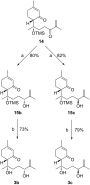
- of a regioselective O-silylation of the secondary hydroperoxide with the tert-butyldiphenylsilyl chloride (TBDPSiCl), but with our surprise most of the starting material was consumed, and after column chromatography separation only the O-silylated derivative of peroxylippidulcine A, 12, and a small
- stereochemical configurations that have been previously assigned. The key steps are: i) a modified version of the Kornblum–DeLaMare rearrangement, promoted by the O-silylation of the hydroperoxy group, and ii) an highly regioselective and stereoselective reduction of the exocyclic carbonyl group of ketone 14



Diastereoselective and enantioselective conjugate addition reactions utilizing α,β-unsaturated amides and lactams
Beilstein J. Org. Chem. 2015, 11, 530–562, doi:10.3762/bjoc.11.60

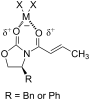
- ). Scheme 10 shows selected examples of the α,β-unsaturated lactams and amides that were used for the 1,4-silylation. Overall, the reactions were achieved in both high yields and enantioselectivities with a variety of substrates. In addition to silicon, much work has been done on the asymmetric 1,4-additon




3α,5α-Cyclocholestan-6β-yl ethers as donors of the cholesterol moiety for the electrochemical synthesis of cholesterol glycoconjugates
Beilstein J. Org. Chem. 2015, 11, 162–168, doi:10.3762/bjoc.11.16
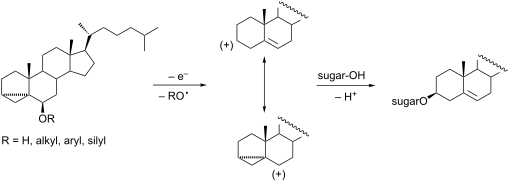
- alcohol under buffered conditions, while tert-butyldimethylsilyl ether 6h can be prepared by silylation of i-cholesterol 6a with TBDMSCl. Now we report the results of our study on the application of these ethers as cholesteryl donors in electrochemical glycosylation reactions. Results and Discussion The
- –h was prepared including alkyl, aryl, and silyl ethers. Most of the compounds were prepared by solvolysis of cholesteryl p-tosylate in an appropriate alcohol (neat or mixed with dioxane) in the presence of potassium acetate as a buffer. TBDMS ether 6h was obtained by silylation of i-cholesterol 6a


Articulated rods – a novel class of molecular rods based on oligospiroketals (OSK)
Beilstein J. Org. Chem. 2015, 11, 74–84, doi:10.3762/bjoc.11.11

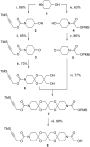
- modified Appel reaction [17]. The alkynes H can be protected by silylation (J) because only primary alkynes react in the CuAAC (Figure 3). The synthesis commences with 4-hydroxypiperidine (1), which was converted to piperidine-4-one 3 bearing a protected alkyne moiety as well as to piperidin-4-one 5 with a




A carbohydrate approach for the formal total synthesis of (−)-aspergillide C
Beilstein J. Org. Chem. 2014, 10, 3122–3126, doi:10.3762/bjoc.10.329

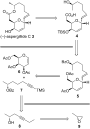
- deprotecting the acetyl groups (without affecting the benzoate functionality) by employing acetyl chloride in anhydrous methanol to afford diol 13 [33]. A two-fold silylation and selective mono desilylation afforded primary alcohol 14 which was converted to its corresponding nitrile via the triflate. The




Formal total syntheses of classic natural product target molecules via palladium-catalyzed enantioselective alkylation
Beilstein J. Org. Chem. 2014, 10, 2501–2512, doi:10.3762/bjoc.10.261

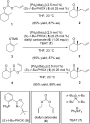
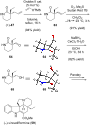
- , terminal alcohol silylation, and tertiary alcohol dehydration, affording methylene cyclohexane (−)-20. Treatment of this silyl ether with Jones reagent simultaneously cleaved the silyl group and oxidized the resulting alcohol, furnishing carboxylic acid (−)-12 in 65% yield. With this enantioenriched acid
- Novak routes to quinic acid (21). Conversion of dioxanone 25 to a cyclohexylimine enabled alkylation via a metalloenamine. On acidic work-up, imine hydrolysis furnished an alkylated dioxanone in good yield. The targeted silyl enol ether 26 was prepared by thermodynamic silylation in 66% yield [43




The effect of permodified cyclodextrins encapsulation on the photophysical properties of a polyfluorene with randomly distributed electron-donor and rotaxane electron-acceptor units
Beilstein J. Org. Chem. 2014, 10, 2145–2156, doi:10.3762/bjoc.10.222
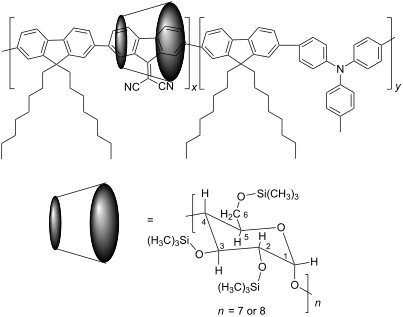
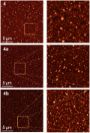
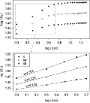
- . The roughness exponent, α, was calculated as the slope of roughness versus scan length in a double logarithmic plot, log(Lsc), before saturation. Synthesis of TMS-β-CD and TMS-γ-CD: TMS-β-CD and TMS-γ-CD were obtained by the silylation of native β-CD and γ-CD with 1-trimethylsilylimidazole [32


Synthesis of phosphoramidites of isoGNA, an isomer of glycerol nucleic acid
Beilstein J. Org. Chem. 2014, 10, 2131–2138, doi:10.3762/bjoc.10.220
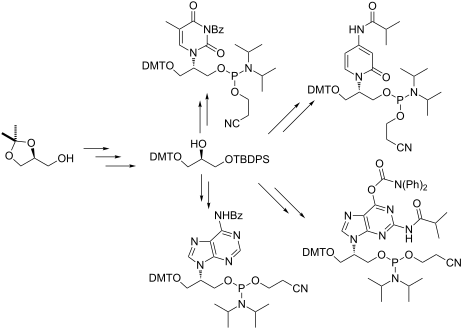
- . Results and Discussion Initial synthetic routes We started with commercially available (S)-solketal (1), which was protected as the benzyl ether 2. Ketal deprotection followed by the silylation of the primary hydroxy group with tert-butyldiphenylsilyl chloride provided the substrate 4, which is suitable




Synthesis of zearalenone-16-β,D-glucoside and zearalenone-16-sulfate: A tale of protecting resorcylic acid lactones for regiocontrolled conjugation
Beilstein J. Org. Chem. 2014, 10, 1129–1134, doi:10.3762/bjoc.10.112

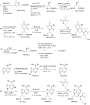
- regiocontrolled glucosylation of resorcylic acid esters and lactones. Regioselective silylation of 9 and ZEN (1) was readily achieved affording compounds 21 and 22 (14-TIPS-ZEN), respectively, in nearly quantitative yields by reaction with TIPS-Cl and imidazole in dry CH2Cl2. Applying this strategy we were


Deoxygenative gem-difluoroolefination of carbonyl compounds with (chlorodifluoromethyl)trimethylsilane and triphenylphosphine
Beilstein J. Org. Chem. 2014, 10, 344–351, doi:10.3762/bjoc.10.32
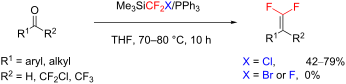
- silylation of ozone-depleting-substances bromotrifluoromethane (CF3Br) [35], bromochlorodifluoromethane (CF2BrCl) [36][37], and dibromodifluoromethane (CF2Br2) [36][37] with chlorotrimethylsilane (TMSCl). In recent years, Prakash and co-workers have discovered two Freon-free methods for the synthesis of
- , 3JP-F = 97 Hz, 3JF-H = 3.3 Hz, 1F; δ −106.6, ddd, 2JF-F = 298 Hz, 3JP-F = 101 Hz, 3JF-H = 24 Hz, 1F) was detected as the major product (for details, see Supporting Information File 1). The formation of 4 is supposed to arise from a ready silylation of the addition intermediate betaine 3 by TMSBr. When


Synthesis of the B-seco limonoid core scaffold
Beilstein J. Org. Chem. 2014, 10, 194–208, doi:10.3762/bjoc.10.15
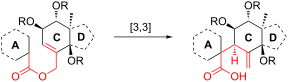
- (−)-quinic acid (16) according to the route reported by Arthurs et al. [40] with minor modifications. After Baylis–Hillman reaction and subsequent silylation of the resulting free primary hydroxy group, substrate-controlled α-methylation of the lithium enolate proceeded with full stereocontrol [41][42
- and Baylis–Hillman reaction proceeded uneventfully to afford compound 62. Deprotection of the butane-2,3-diacetal under acidic conditions followed by selective silylation of the primary and the allylic hydroxy groups gave alcohol 63. The second quaternary center of the bicyclic C–D system 66 was
- control [58]. The configuration was determined by the high coupling constant (JH4/H5 = 12.6 Hz) indicating the trans-diaxial orientation of H4 and H5. Silylation of the primary hydroxy group afforded compound 84 that was converted into the epoxide with complete stereocontrol [59]. The epoxide underwent




Recent applications of the divinylcyclopropane–cycloheptadiene rearrangement in organic synthesis
Beilstein J. Org. Chem. 2014, 10, 163–193, doi:10.3762/bjoc.10.14
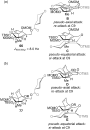
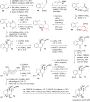
- 211 in solvent-dependent ratios. The sole product arising from the desired DVCPR via 208'' is the major product 210. The two remaining products arise from trans-silylation and fragmentation (208' to 209) or via ionic intermediate 208''' and fragmentation to give 211. The different product distribution




Total synthesis of the endogenous inflammation resolving lipid resolvin D2 using a common lynchpin
Beilstein J. Org. Chem. 2013, 9, 2762–2766, doi:10.3762/bjoc.9.310
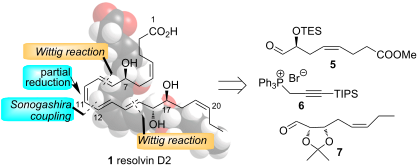
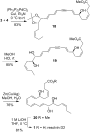
- the ylide derived from 9 provided the alkene 10 [9] with excellent stereoselectivity. Oxidation of 10 with Dess–Martin periodinane then afforded aldehyde 7. The phosphonium salt 6 [21][22] was produced from propargyl bromide via silylation of the derived sodium salt with TIPSCl followed by reaction
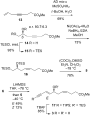
- )-Mosher ester [28][29]. Integration of the 1H MMR spectrum indicated the e.r. was 93.7:6.3 and Mosher analysis (See Supporting Information File 2 for details) confirmed the stereochemistry of the new asymmetric center of the major enantiomer as S in accord with the predicted outcome [25]. Silylation gave


The total synthesis of D-chalcose and its C-3 epimer
Beilstein J. Org. Chem. 2013, 9, 2620–2624, doi:10.3762/bjoc.9.296

- . Aldehyde IV would be generated from commercial ethyl (R)-3-hydroxybutyrate (1) via reduction. The synthesis began by protecting the commercial ethyl (R)-3-hydroxybutyrate (1) using a nearly quantitative silylation of the free hydroxy group under classical conditions (TBDPSCl, imidazole, DMF, rt) [17] to


An overview of the synthetic routes to the best selling drugs containing 6-membered heterocycles
Beilstein J. Org. Chem. 2013, 9, 2265–2319, doi:10.3762/bjoc.9.265
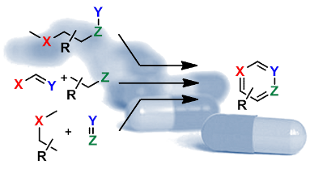
- developed, initial masking of the acid (1.104) is achieved by silylation with subsequent borane chelate formation. Addition of the amine nucleophile 1.105 under basic conditions then renders the desired product in high yield. The available patent literature however does not comment on regioselectivity


Flexible synthesis of anthracycline aglycone mimics via domino carbopalladation reactions
Beilstein J. Org. Chem. 2013, 9, 2194–2201, doi:10.3762/bjoc.9.258
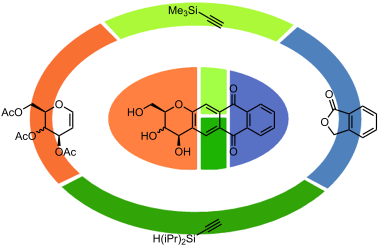
- terminal silyl substituent (or terminal hydrogen) at one side and a silane moiety at the other (Scheme 4). It is possible to access differently substituted dialkynes 16 by the silylation of 16e. This approach was not considered because of the low tolerance of 16e against base and the expensive starting



A Lewis acid-promoted Pinner reaction
Beilstein J. Org. Chem. 2013, 9, 1572–1577, doi:10.3762/bjoc.9.179

- used. A possible mechanism of this reaction is given in Scheme 7. Double silylation leads to the formation of a good leaving group and the highly electrophilic benzylic carbon is attacked by the nitrile yielding a nitrilium cation. The reaction is finalized by hydrolysis furnishing the carboxamide
- . Apparently the double silylation is not possible with electron-deficient substrates. Conclusion The Lewis acid-promoted Pinner reaction is a mild and chemoselective alternative for the synthesis of carboxylic esters starting with alcohols and nitriles. The esterification of primary aliphatic alcohols is





