


Search results
Search for "solvent effects" in Full Text gives 106 result(s) in Beilstein Journal of Organic Chemistry.
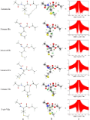
Conformational study of L-methionine and L-cysteine derivatives through quantum chemical calculations and 3JHH coupling constant analyses
Beilstein J. Org. Chem. 2017, 13, 925–937, doi:10.3762/bjoc.13.94

- conformational analysis of esterified and N-acetylated derivatives of L-methionine and L-cysteine using a combination of 1H NMR and electronic structure calculations is reported. The geometries and energies of the most stable conformers in isolated phase and taking into account the implicit solvent effects
- solvents. The results showed that the conformational stability of the esterified derivatives is not very sensitive to solvent effects, whereas the conformational equilibrium of the N-acetylated derivatives changes in the presence of solvent. According to the natural bond orbital (NBO), quantum theory of
- its population reduced from almost 100% in isolated phase to 67.7% in DMSO. In general, these population changes for the geometries of compounds 3 and 4 indicate that their conformational equilibria are sensitive to solvent effects. The conformational changes induced by the solvent were also




Synthesis and optical properties of new 5'-aryl-substituted 2,5-bis(3-decyl-2,2'-bithiophen-5-yl)-1,3,4-oxadiazoles
Beilstein J. Org. Chem. 2017, 13, 313–322, doi:10.3762/bjoc.13.34
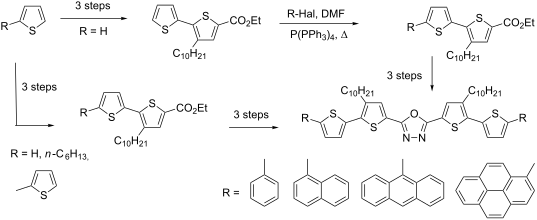
- derivatives having a thienyl (15c), phenyl (15d), naphthalen-1-yl (15e) and anthracen-9-yl (15f) aromatic substituent. The DFT/TDDFT approach at the B3LYP/Def2-SVPD level of theory coupled with polarizable continuum model of solvent effects and using the integral equation formalism variant (IEFPCM) was


Total synthesis of a Streptococcus pneumoniae serotype 12F CPS repeating unit hexasaccharide
Beilstein J. Org. Chem. 2017, 13, 164–173, doi:10.3762/bjoc.13.19
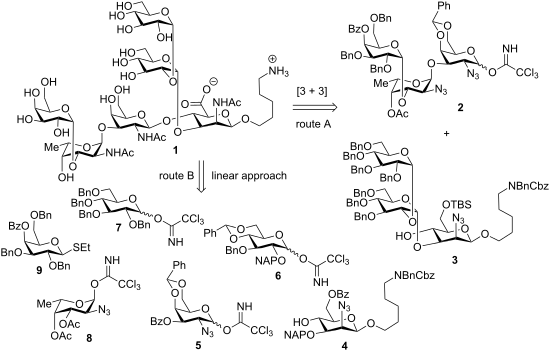
- participation groups and solvent effects. It lends further credence to the linear assembly concept in which one monosaccharide unit at a time is incorporated, and which serves as the basis for automated glycan assembly [43]. With the synthetically sourced hexasaccharide repeating unit in hand detailed


Methylenelactide: vinyl polymerization and spatial reactivity effects
Beilstein J. Org. Chem. 2016, 12, 2378–2389, doi:10.3762/bjoc.12.232
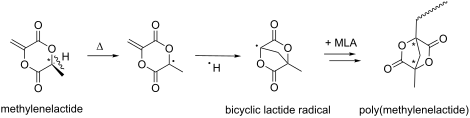
- ) = 2914 cm−1). Figure 4 shows the IR spectra of MLA and of the obtained poly(MLA). To evaluate some kinetic solvent effects of the discussed self-initiated polymerization reactions of MLA, the kinetics of the AIBN-initiated and initiator-free radical polymerizations of MLA were repeated in less polar 1,4


Experimental and theoretical investigations into the stability of cyclic aminals
Beilstein J. Org. Chem. 2016, 12, 2280–2292, doi:10.3762/bjoc.12.221
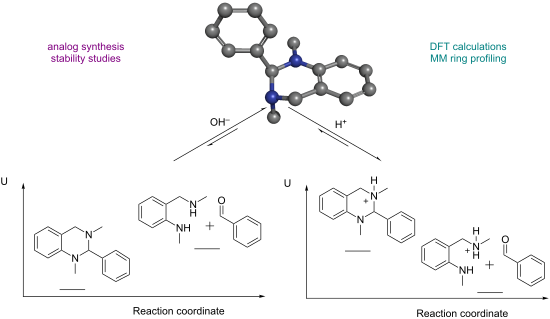
- cc-PVTZ basis sets [42][43] and all computations were performed with TURBOMOLE [44]. Solvent effects were mimicked by the Screening Model (COSMO) for water [45]. As expected, N-3 was found to be more basic for all test compounds, with the exception of 9c. Therefore, in the following text, only the


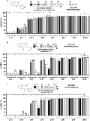

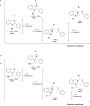


Practical synthetic strategies towards lipophilic 6-iodotetrahydroquinolines and -dihydroquinolines
Beilstein J. Org. Chem. 2016, 12, 1851–1862, doi:10.3762/bjoc.12.174

- route for the synthesis of 20a. Synthesis of THQ 21 and DHQ 22 using borane·dimethyl sulphide complex or DIBAL, respectively. Postulated mechanism for the formation of 22 using DIBAL. Miyaura borylation of 21 and 22 to give crystalline boronic esters 29 and 30. Temperature and solvent effects from the


One-pot synthesis of tetracyclic fused imidazo[1,2-a]pyridines via a three-component reaction
Beilstein J. Org. Chem. 2016, 12, 1487–1492, doi:10.3762/bjoc.12.145

- % yield. Performing the reaction under reflux conditions slightly improved the yield to 11%. We next examined solvent effects in this MCR reaction and various solvents were screened, as summarized in Table 1. We observed that protic solvents with medium polarity can facilitate the reaction by product



Chiral cyclopentadienylruthenium sulfoxide catalysts for asymmetric redox bicycloisomerization
Beilstein J. Org. Chem. 2016, 12, 1136–1152, doi:10.3762/bjoc.12.110
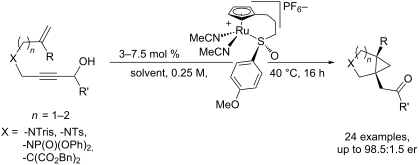
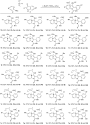
- ligands. Solvent effects on asymmetric redox bicycloisomerization reaction as described in [43]. Effect of the catalyst structure on the redox bicycloisomerization as described in [43]. Comparison of complex 1 to other catalyst systems as described in [43]. Effect of the nitrogen protecting group on




The role of alkyl substituents in deazaadenine-based diarylethene photoswitches
Beilstein J. Org. Chem. 2016, 12, 1103–1110, doi:10.3762/bjoc.12.106
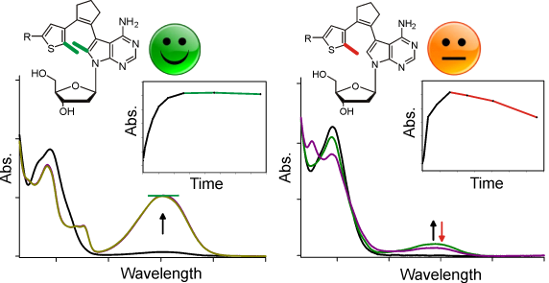
- the differences between the one- and two-methyl switches are not due to solvent effects. This latter observation already indicated poor reversibility and fatigue resistance for the one-methyl switches. We therefore undertook absorption measurements over multiple cycles of ring closure by UV and ring



Strecker degradation of amino acids promoted by a camphor-derived sulfonamide
Beilstein J. Org. Chem. 2016, 12, 732–744, doi:10.3762/bjoc.12.73
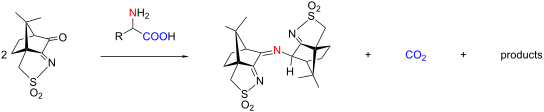
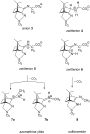
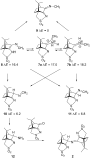
- Table 1. The calculated activation energies are of course not to be taken literally, since solvent effects were not included, nor was a basis set for superposition error correction applied. We use these calculated values for excluding high-energy pathways, and consider a threshold limit (≈40 kcal/mol





Art, auto-mechanics, and supramolecular chemistry. A merging of hobbies and career
Beilstein J. Org. Chem. 2016, 12, 362–376, doi:10.3762/bjoc.12.40
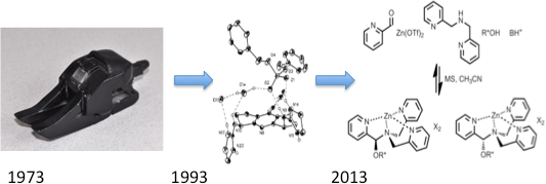
- appropriate for the job: valve spring compressors, feeler gauges, socket wrenches, etc. As organic chemists, we propose hypotheses explaining how Mother Nature works, and we have particular experimental tools to test our theories: kinetics, isotope effects, solvent effects, etc. [24]. Reactions with multiple





Enabling technologies and green processes in cyclodextrin chemistry
Beilstein J. Org. Chem. 2016, 12, 278–294, doi:10.3762/bjoc.12.30
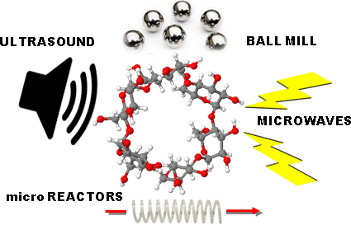
- transition state [87]. Solvent effects and ion pair formation are critical to the mechanism of SN1 reactions meaning that this mechanism is usually restricted in HSBM reactions. While solid-state intermolecular SN2 reactions depend on contact between interacting particles only, SN1 reactions may show more
- milling conditions favours SN2 reactions; however it is also true that a solventless environment does not necessarily mean that there is a lack of solution in a liquid phase. Some reaction mixture components can often be liquid, while solvent effects or mixed SN2 and SN1-type reaction mechanisms cannot be



Simple activation by acid of latent Ru-NHC-based metathesis initiators bearing 8-quinolinolate co-ligands
Beilstein J. Org. Chem. 2016, 12, 154–165, doi:10.3762/bjoc.12.17
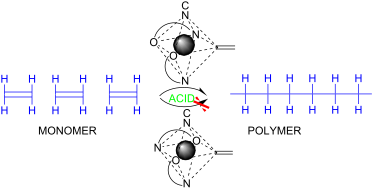
- Gaussian) using the M06 functional [73]. Solvent effects, dichloromethane, were calculated with the PCM model [74][75], and non-electrostatic terms were also included. The geometry optimizations were performed without symmetry constraints, and the nature of the extrema was checked by analytical frequency


A journey in bioinspired supramolecular chemistry: from molecular tweezers to small molecules that target myotonic dystrophy
Beilstein J. Org. Chem. 2016, 12, 125–138, doi:10.3762/bjoc.12.14
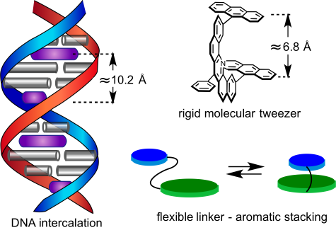
- host–guest chemistry [33]. Perry Corbin, Steven Dell, and I were pleased to work with Frank Klärner and his group on linking a host analogous to 20 to silica and to study the solvent effects on host–guest complexation chemistry using our HPLC method [34]. Many of the molecular tweezers described above


Versatile deprotonated NHC: C,N-bridged dinuclear iridium and rhodium complexes
Beilstein J. Org. Chem. 2016, 12, 117–124, doi:10.3762/bjoc.12.13
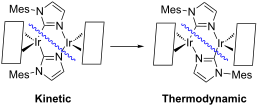
- functional [82]. Solvent effects, using either tetrahydrofuran, dichloromethane or toluene, were calculated with the polarizable continuous solvation model polarizable continuum model (PCM) model [83][84], and non-electrostatic terms were also included. The cavity is created via a series of overlapping


A comprehensive study of olefin metathesis catalyzed by Ru-based catalysts
Beilstein J. Org. Chem. 2015, 11, 1767–1780, doi:10.3762/bjoc.11.192
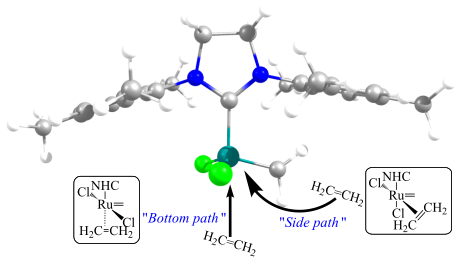
- and side, respectively. Next, by means of DFT calculations Goddard and co-workers indicated clearly that solvent effects were of paramount relevance to the relatively high stability of b [48], while in the gas phase structure a was much favored [13]. Moreover, Grubbs and co-workers reported the X-ray
- equilibrium is based on a delicate balance between electronic, steric, and solvent effects. Particularly sterically demanding substituents of the NHC and bulky olefins clearly favor the side reaction pathway. Moreover this study corroborated the validity of BP86 for these second generation Grubbs catalysts
- performed without symmetry constraints, and the nature of the extrema was checked by analytical frequency calculations. Furthermore, all extrema were confirmed by calculation of the intrinsic reaction paths. The energies discussed throughout the text contain ZPE corrections. Solvent effects including




Consequences of the electronic tuning of latent ruthenium-based olefin metathesis catalysts on their reactivity
Beilstein J. Org. Chem. 2015, 11, 1458–1468, doi:10.3762/bjoc.11.158
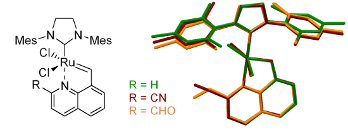
- conducted by BP86//SVP, solvent effects were added by single point calculations using M06//TZVP functional (cf. Supporting Information File 1). The first question tackled concerned the anticipated coordination of the carbonyl group in compound 15 to form the corresponding 18-electron complex. Formation of
- (orange). Energy profile of trans–cis isomerization, modelled in CH2Cl2, (ΔE in kcal/mol). Geometry optimizations BP86//SVP, solvent effects included by single point calculations, using M06//TZVP. Time/conversion plots for the transformation of 16 catalyzed by 5 mol % of the trans isomers of trans-5a, 14




Antioxidant potential of curcumin-related compounds studied by chemiluminescence kinetics, chain-breaking efficiencies, scavenging activity (ORAC) and DFT calculations
Beilstein J. Org. Chem. 2015, 11, 1398–1411, doi:10.3762/bjoc.11.151

- the kinetic solvent effect of water is of great importance in this case. Hydrogen bonding can have a profound influence on the activity of phenols as antioxidants. It is generally recognized [28][29][30] that solvent effects and especially the ionization effect of the medium may alter the mechanism of




Surprisingly facile CO2 insertion into cobalt alkoxide bonds: A theoretical investigation
Beilstein J. Org. Chem. 2015, 11, 1340–1351, doi:10.3762/bjoc.11.144
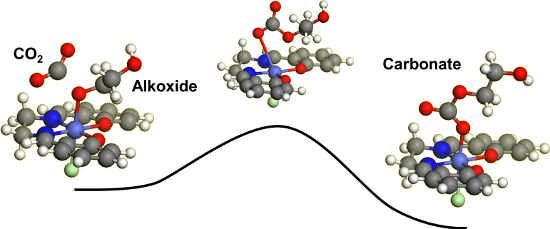
- (III)–salen complexes are related. Solvent effects were not considered in the present study. The tri-coordinated di-iminate zinc–alkoxide complex [(BDI)ZnOCH3]. The [(2-hydroxyethoxy)CoIII(salen)(L)] complex chosen as catalyst model for the calculations; 1: R1–6 = H; 1a: = -C4H8-, R3–6 = H; 1b


Properties of PTFE tape as a semipermeable membrane in fluorous reactions
Beilstein J. Org. Chem. 2015, 11, 980–993, doi:10.3762/bjoc.11.110

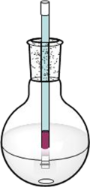
- dichlormethane as a solvent (Scheme 1 and Figure 8). Solvent-assisted transport through PTFE tape In the earlier work we reported that PTFE tape is impermeable to dimethyl phthalate [21]. However, we suspected that solvent effects may alter the permeability of PTFE tape even when it is otherwise impermeable to a




![[Graphic 1]](/bjoc/content/inline/1860-5397-11-110-i3.png?max-width=637&scale=1.18182) ), in the presence of a n...
), in the presence of a n...
First principle investigation of the linker length effects on the thermodynamics of divalent pseudorotaxanes
Beilstein J. Org. Chem. 2015, 11, 687–692, doi:10.3762/bjoc.11.78
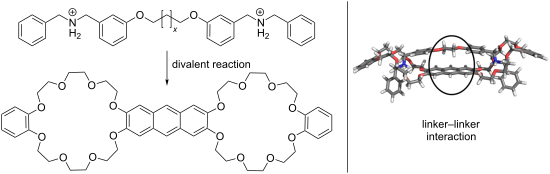
- ; Gibbs energy; pseudorotaxanes; solvent effects; COSMO-RS; Introduction If two or more binding sites of a molecular system are involved in the association process, the interaction energy can be significantly increased compared to the sum of the individual binding energies. This effect is called
- contributions, enthalpic and entropic temperature effects as well as solvent effects are included in our simulations in order to compare to experimentally obtained Gibbs energy of association. Results and Discussion In order to investigate the cooperativity effects of the binding between divalent host molecules
- temperature or solvent effects. Including the counter ion in the determination of ΔG has a much weaker effect in the divalent case compared to the monovalent one, because the guest molecule is larger and the positive charge of the amide group can be distributed better over the molecule. For the divalent


Synthesis and properties of novel star-shaped oligofluorene conjugated systems with BODIPY cores
Beilstein J. Org. Chem. 2014, 10, 2704–2714, doi:10.3762/bjoc.10.285

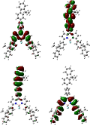
- red region of the spectrum. DFT calculations The structures of T-B1 and Y-B1 were optimised using the program Gaussian 09 [38] with the CAM-B3LYP [39] functional and the TZVP [40] basis set. Solvent effects were considered with the inclusion of the SMD [41] solvent model. In order to increase the



Photorelease of phosphates: Mild methods for protecting phosphate derivatives
Beilstein J. Org. Chem. 2014, 10, 2038–2054, doi:10.3762/bjoc.10.212
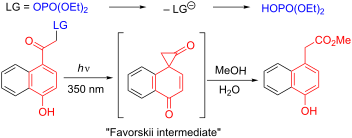
- competition for incident radiation by the unrearranged byproduct chromophore 12 or 15. The role of H2O and hydroxylic solvents observed in this series is in complete accord with solvent effects on the parent pHP photoreactions [6][13][15][40][41][42][43][44][45][46]. The photo-Favorskii reaction (Scheme 7) is


Substitution effect and effect of axle’s flexibility at (pseudo-)rotaxanes
Beilstein J. Org. Chem. 2014, 10, 1299–1307, doi:10.3762/bjoc.10.131
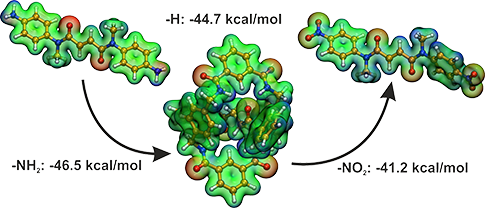
- . Solvent effects As expected, the presence of the solvent decreases the binding energy by 11–14 kcal/mol, see Table 4. Even though the trends in the difference between single and double bond binding energy is constantly 1–4 kcal/mol. By comparison of the total energies of the complex, separated wheel, and


cis–trans Isomerization of silybins A and B
Beilstein J. Org. Chem. 2014, 10, 1047–1063, doi:10.3762/bjoc.10.105
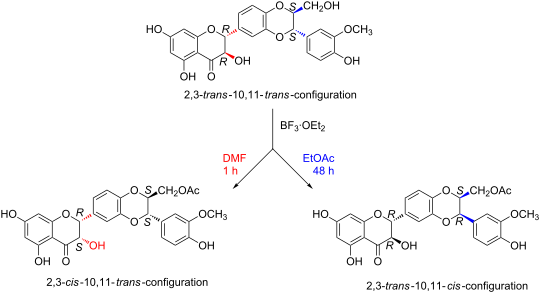
- energies, including the zero-point correction (V), enthalpies (H) and Gibbs energies (G) at 298 K of the reactants, intermediates and products were determined at the (U)B3P86/6-31+G(d,p) level, well-adapted for polyphenol reactivity. Solvent effects were implicitly taken into account by using a PCM





