


Search results
Search for "synthon" in Full Text gives 85 result(s) in Beilstein Journal of Organic Chemistry.
Synthesis of a deuterated probe for the confocal Raman microscopy imaging of squalenoyl nanomedicines
Beilstein J. Org. Chem. 2016, 12, 1127–1135, doi:10.3762/bjoc.12.109

- the dialdehyde 5 this procedure failed to give the expected Wittig adduct. Whatever the origin of this problem, we decided to explore a new strategy based on a more nucleophilic deuterated synthon. In this regard we targeted prop-1-en-2-yllithium-d5 (15) which is easily accessible through the Shapiro


A robust synthesis of 7,8-didemethyl-8-hydroxy-5-deazariboflavin
Beilstein J. Org. Chem. 2016, 12, 912–917, doi:10.3762/bjoc.12.89

- 3 as C-ring synthon. The first report by Ashton et al. [14][15] used N-(D-ribityl)-3-hydroxyaniline (2) as A-ring fragment. The second report by Yoneda et al. [16][17][18] employed 4-benzyloxy-2-chlorobenzaldehyde (4) as building block for the A-ring. Both syntheses suffer from several drawbacks


Regiodefined synthesis of brominated hydroxyanthraquinones related to proisocrinins
Beilstein J. Org. Chem. 2016, 12, 531–536, doi:10.3762/bjoc.12.52
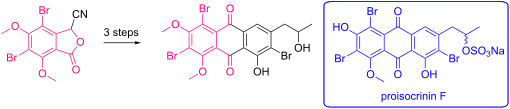
- carboxyaldehyde 15. Employment of a Darzens condensation followed by bromination was considered for further elaboration of 15 to 16. For the synthesis of key synthon 12 (Scheme 2), we started from cyclohexenone 19, which was prepared by base-catalyzed condensation of methyl acetoacetate with methyl crotonate [24


Synthesis of cyclic N1-pentylinosine phosphate, a new structurally reduced cADPR analogue with calcium-mobilizing activity on PC12 cells
Beilstein J. Org. Chem. 2015, 11, 2689–2695, doi:10.3762/bjoc.11.289

- investigated both the possible synthetic strategies (pathways A and B, Figure 2) in which the phosphate group (or its synthon) has been attached either on the end of the N1-pentyl chain (precursor A) or on the 5’-ribose position (precursor B). At first, to obtain the cpIMP (4) we followed the synthetic pathway


Biocatalysis for the application of CO2 as a chemical feedstock
Beilstein J. Org. Chem. 2015, 11, 2370–2387, doi:10.3762/bjoc.11.259
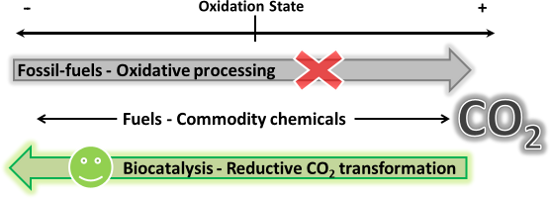
- alternative feedstock for the production of many of the chemicals we have come to rely on [6][7][8][9][10][11]. Chemical processes that employ CO2 as a synthon for the production of commodity chemicals may form the basis of a sustainable carbon economy. The benefits notwhithstanding, chemical conversion of






Design and synthesis of hybrid cyclophanes containing thiophene and indole units via Grignard reaction, Fischer indolization and ring-closing metathesis as key steps
Beilstein J. Org. Chem. 2015, 11, 1514–1519, doi:10.3762/bjoc.11.165

- cyclophane 1 containing the thiophene and indole moieties is shown in Figure 1. Here, we conceived thiophene-containing diolefin 3 as a possible synthon to assemble the target molecule 1 via 2. Route A involves an RCM of 3 followed by Fischer indolization of 2 (Figure 1). Alternatively, Fischer indolization


Synthesis of a tricyclic lactam via Beckmann rearrangement and ring-rearrangement metathesis as key steps
Beilstein J. Org. Chem. 2015, 11, 1503–1508, doi:10.3762/bjoc.11.163
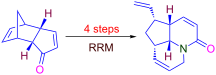
- target molecule 1 is shown in Figure 1. RRM of the tricyclic allylated compound 2 can deliver the target lactam 1. The key synthon 2 can be derived by allylation of lactam 3, which in turn can be prepared via BR starting with the known enone 4 [25][26][27], derived from dicyclopentadiene (5) [28][29][30


Synthesis of a bifunctional cytidine derivative and its conjugation to RNA for in vitro selection of a cytidine deaminase ribozyme
Beilstein J. Org. Chem. 2014, 10, 1906–1913, doi:10.3762/bjoc.10.198
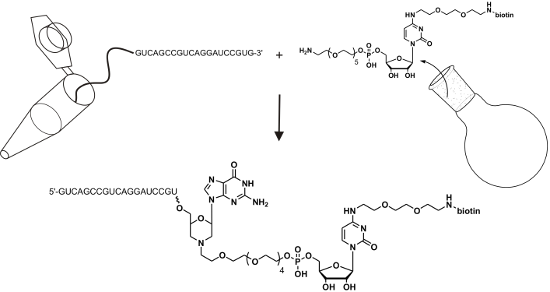
- activated uridine [31], because the triazolyl derivatives are known being stable enough to allow convenient handling and isolation, and they have shown very good reactivity with aliphatic amines. Synthon 3 could be isolated by recrystallization in 76% yield. Next, we introduced a short linker to the N4
- , which was coupled with synthon 12 in anhydrous THF in the presence of 5-benzylmercapto-1H-tetrazole (BMT) as activator (Figure 5). The coupling product 16 was isolated with a yield of 28%. Finally, all remaining protecting groups were cleaved off. The base-labile β-cyanoethyl (CE) group was removed by
- Information File 1). Retrosynthetic analysis of the bifunctional cytidine derivative 1 for functionalization of a periodate-oxidized RNA library. Introduction of the triazolyl moiety into the uridine derivative 7 generating synthon 3. I: 4 equiv POCl3, 16 equiv triazole, 20 equiv NEt3, MeCN, 60 min at 0 °C


Synthesis and solvodynamic diameter measurements of closely related mannodendrimers for the study of multivalent carbohydrate–protein interactions
Beilstein J. Org. Chem. 2014, 10, 1524–1535, doi:10.3762/bjoc.10.157
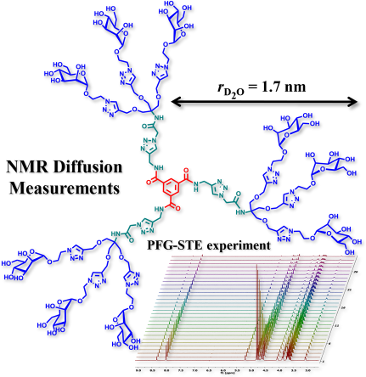
- = pulse length for bipolar pulses. All diffusion spectra were processed in Mat NMR [47]. Glycodendrimer synthesis Procedure A: multiple CuAAc couplings on polypropargylated cores To a solution of polypropargylated core (1.00 equiv) and complementary azido synthon (1.25 equiv/propargyl) in a THF/H2O
- solution of phloroglucinol (13, 10.0 mg, 79.3 μmol, 1.00 equiv) in anhydrous DMF (3 mL) was added under nitrogen anhydrous K2CO3 (previously heated at 250 °C under vaccum, 39.5 mg, 285 μmol, 3.60 equiv). After 10 min of vigorous stirring, tripropargylated synthon 14 (93.0 mg, 285 μmol, 3.60 equiv) was
- ≡CH); HRMS (+TOF-HRMS, m/z): [M + H]+ calculated for C51H57N3O15, 952.3862; found, 952.3843 (Δ = −2.10 ppm); [M + Na]+: calculated for 974.3682; found, 974.3662 (Δ = −2.05 ppm). Synthesis of bromoacylated dendron 18: To a solution of tripropargylated synthon 14 (140.0 mg, 393.0 μmol, 1.00 equiv) and


Visible light mediated intermolecular [3 + 2] annulation of cyclopropylanilines with alkynes
Beilstein J. Org. Chem. 2014, 10, 975–980, doi:10.3762/bjoc.10.96
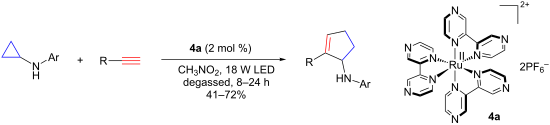
- ; visible light; Introduction Cyclopropanes have been used as a three-carbon synthon to prepare a diverse array of organic compounds [1][2][3][4]. The unusual reactivity, exhibited by cyclopropanes, is largely due to their inherent ring strain that makes cleavage of the C–C bonds facile [5]. A number of


The difluoromethylene (CF2) group in aliphatic chains: Synthesis and conformational preference of palmitic acids and nonadecane containing CF2 groups
Beilstein J. Org. Chem. 2014, 10, 18–25, doi:10.3762/bjoc.10.4

- 23. The lithium methylenedifluoroacetylide (RCF2C≡CLi) reaction to form a C–C bond, provides a particularly useful synthon to access this 1,4-di-CF2 motif. Oxidation and then treatment of the resultant ketone 24, with DAST generated the tetrafluoroacetylene 25. Complete hydrogenation of the triple




Diastereoselectivity in the Staudinger reaction of pentafluorosulfanylaldimines and ketimines
Beilstein J. Org. Chem. 2013, 9, 2675–2680, doi:10.3762/bjoc.9.303

- minimization of unfavourable hydrophobic interactions. Results and Discussion The use of fluoroalkylimines to form β-lactams has proven especially useful in synthesis [24][25][26] especially in the Ojima β-lactam synthon method [27][28][29] used to prepare docetaxel analogs [26]. The general utility of the


Oxidative 3,3,3-trifluoropropylation of arylaldehydes
Beilstein J. Org. Chem. 2013, 9, 2417–2421, doi:10.3762/bjoc.9.279
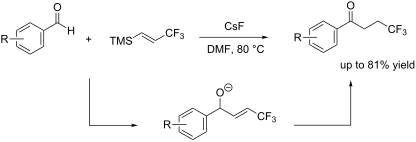
- used in place of (3,3,3-trifluoropropynyl)lithium, which can add to carbonyl compounds and couple with aryl halides through a zinc intermediate. For the 3,3,3-trifluoropropenyl synthon Yamazaki et al. reported the use of 2-(trifluoromethyl)-1-(phenylsulfenyl)vinyltrimethylsilane for the addition to


Synthesis, characterization and luminescence studies of gold(I)–NHC amide complexes
Beilstein J. Org. Chem. 2013, 9, 2216–2223, doi:10.3762/bjoc.9.260
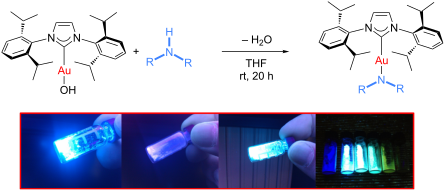
- )] (1) (IPr = 1,3-bis(2,6-diisopropylphenyl)imidazol-2-ylidene), using [AuCl(IPr)] and an excess of KOH in THF [14][15]. This complex has proven to be an excellent synthon for the preparation of a wide variety of organogold(I) species [16][17][18][19][20][21][22][23]. Two approaches have been developed


Self-assembly of 2,3-dihydroxycholestane steroids into supramolecular organogels as a soft template for the in-situ generation of silicate nanomaterials
Beilstein J. Org. Chem. 2013, 9, 1826–1836, doi:10.3762/bjoc.9.213
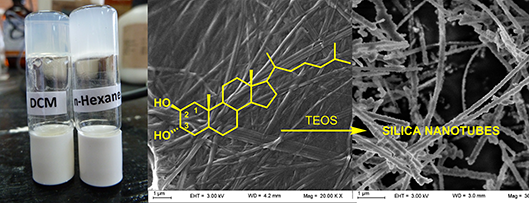
- gelation are known. The presence of a supramolecular synthon to promote the one-dimensional (1D) self-assembly is a necessary feature in order to form the fibrillar entangled network that entraps the solvent [14]. The strongest and most important supramolecular synthons involve functional groups that
- promote the one-dimensional growth. These concepts have been recently exploited to design new LMOGs [15][16]. Nevertheless, the presence of a supramolecular synthon in a molecule is a necessary but not a sufficient feature to become an organogelator. The formation of the gel involves a delicate balance of
- of 1 demonstrating that templated silica nanotubes are obtained only under controlled conditions. Considering that the design of new LMOGs with predictable gelation properties is still a challenge nowadays, we consider that the trans-diaxial dihydroxy supramolecular synthon studied herein is a


Efficient synthesis of β’-amino-α,β-unsaturated ketones
Beilstein J. Org. Chem. 2013, 9, 486–495, doi:10.3762/bjoc.9.52

- incorporating β-amino ketone functionality are prevalent in many natural products of biological importance [1]. This versatile synthon has been extensively used in the construction of β-amino acids [2], β-amino alcohols [3], and homoallylic amines [4][5], and can serve as building blocks for the preparation of


A new synthetic protocol for coumarin amino acid
Beilstein J. Org. Chem. 2013, 9, 254–259, doi:10.3762/bjoc.9.30
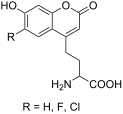
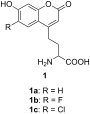
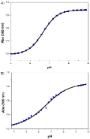
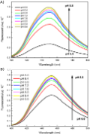
- coumarinylacetic acid, which was then reduced to an alcohol by borane-dimethyl sulfide. After the phenolic hydroxy group was protected with a tert-butyl(dimethyl)silyl group, the alcohol was converted into a bromide and was used to alkylate a glycine enolate synthon to afford an imine. All the protecting groups



Enantioselective total synthesis of (R)-(−)-complanine
Beilstein J. Org. Chem. 2012, 8, 1695–1699, doi:10.3762/bjoc.8.192

- functionalities. Synthetic studies, also conducted by Nakamura and Uemura, established the absolute structure and configuration as (R)-(−)-complanine (Figure 1), showing it to be related to other natural products that possess the vicinal amino alcohol moiety. Using a chiral-synthon approach, (R)-(−)-complanine


The Amadori rearrangement as glycoconjugation method: Synthesis of non-natural C-glycosyl type glycoconjugates
Beilstein J. Org. Chem. 2012, 8, 1619–1629, doi:10.3762/bjoc.8.185

- cyanohydrin reaction procedure. Results and Discussion C-Elongation In an initial C-elongation attempt, with the aim to avoid HCN as C-synthon, we decided to follow a protocol employing sodium cyanide, as described by Hudson [29] (Scheme 2). By this reaction sequence, starting from aldohexose 1, the obtained


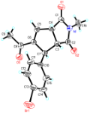
Chiral multifunctional thiourea-phosphine catalyzed asymmetric [3 + 2] annulation of Morita–Baylis–Hillman carbonates with maleimides
Beilstein J. Org. Chem. 2012, 8, 1098–1104, doi:10.3762/bjoc.8.121
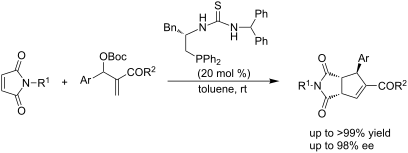
- work of Lu [11][12][13][14][15][16][17][18][19][20], all phosphine-mediated [3 + 2] annulations proceeded through an important intermediate “1,3-dipolar synthon”. The formation of a 1,3-dipolar synthon by using a catalytic amount of phosphines have been directed toward the following two paths
- : phosphines attack the middle carbon atom of allenes to produce the 1,3-dipolar synthon (Scheme 1, reaction 1), and phosphines add to the β-position of MBH carbonate to remove carbon dioxide and tert-butanol, affording the 1,3-dipolar synthon (Scheme 1, reaction 2). Concerning the asymmetric [3 + 2




An intramolecular inverse electron demand Diels–Alder approach to annulated α-carbolines
Beilstein J. Org. Chem. 2012, 8, 829–840, doi:10.3762/bjoc.8.93
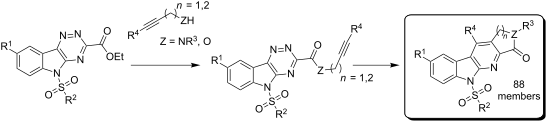
- existing indole framework. In general, applications of this construction sequence fall into two major camps, namely condensations routed through a 2-aminoindole synthon [49][50][51][52][53][54][55][56], and those targeting pyridine closures onto a 2-oxindole [57][58]. In addition, intramolecular Hartwig


Branching out at C-2 of septanosides. Synthesis of 2-deoxy-2-C-alkyl/aryl septanosides from a bromo-oxepine
Beilstein J. Org. Chem. 2012, 8, 522–527, doi:10.3762/bjoc.8.59

- envisaged that III would form as a synthon to implement C–C bond forming reactions. Vinyl halide 2 was synthesized through a ring-expansion reaction of cyclopropanated adduct 1 (Scheme 1), as reported previously [21]. The reactivity at C-2 of 2 was examined by the chosen organometallic reactions, namely


Lithium phosphonate umpolung catalysts: Do fluoro substituents increase the catalytic activity?
Beilstein J. Org. Chem. 2011, 7, 1189–1197, doi:10.3762/bjoc.7.138

- metallophosphonate catalyst must act as a nucleophile, an anion (d1-synthon) stabilization group, and as well as a leaving group (nucleofuge). Comparative computational assessments of carbanionic d1-species, which have been proposed as crucial intermediates according to the Lapworth and Breslow mechanisms, show
- observed for a benzylic fencholate, when the benzylic positions were occupied by CF3-groups (92% versus 19% yield, Scheme 2) [26]. This increased reactivity is thought to arise from a favored formation of the carbanionic d1-synthon intermediate, due to the electron withdrawing effect of the CF3 groups. A
- high as the yield achieved with phosphonate 15. The reduction of the nucleophilic character of the phosphorus nucleophile in the first step of the catalytic cycle, and of the d1-synthon in the third step of the catalytic cycle (Scheme 1), could explain these results. The increased 1J(P–H) coupling




A novel high-yield synthesis of aminoacyl p-nitroanilines and aminoacyl 7-amino-4-methylcoumarins: Important synthons for the synthesis of chromogenic/fluorogenic protease substrates
Beilstein J. Org. Chem. 2011, 7, 1030–1035, doi:10.3762/bjoc.7.117

- -amino-4-methylcoumarin; p-nitroaniline; proteolytic substrate; selenocarboxylate/azide amidation; synthon; Introduction Chromogenic and fluorogenic amino acid/peptide conjugates are widely used as substrates in enzyme assays for protease activity and specificity [1]. Proteolytic cleavage of the amino

The role of silver additives in gold-mediated C–H functionalisation
Beilstein J. Org. Chem. 2011, 7, 892–896, doi:10.3762/bjoc.7.102
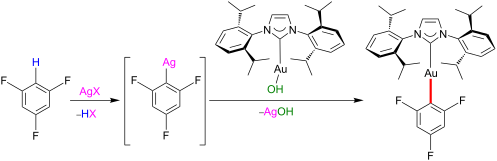
- complexes bearing N-heterocyclic carbenes (NHC) [9][10] as supporting ligands has enabled the isolation of a “golden synthon”, [Au(OH)(IPr)] 1 (IPr = 1,3-bis(2,6-diisopropylphenyl)imidazol-2-ylidene), that is able to participate in metalation reactions with aromatic C–H bonds (Scheme 1) [11]. The reactivity





