


Search results
Search for "tertiary alcohol" in Full Text gives 94 result(s) in Beilstein Journal of Organic Chemistry.
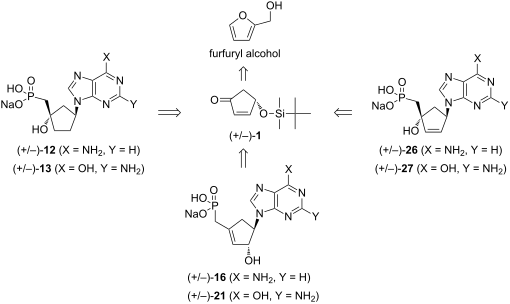
Revaluation of biomass-derived furfuryl alcohol derivatives for the synthesis of carbocyclic nucleoside phosphonate analogues
Beilstein J. Org. Chem. 2017, 13, 251–256, doi:10.3762/bjoc.13.28
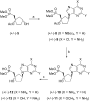
- loss of AcOH leading to compound (+/−)-15 with 85% yield. The 1,3-allylic transposition of the hindered tertiary alcohol group under acidic conditions has not been reported yet for such compounds. It may conceivably that such a transposition occurs through the formation of an allylic carbocation which




Chromium(II)-catalyzed enantioselective arylation of ketones
Beilstein J. Org. Chem. 2016, 12, 2771–2775, doi:10.3762/bjoc.12.275
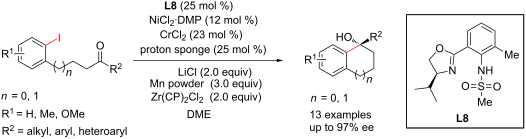
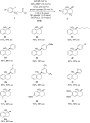
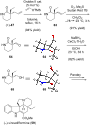
- -catalyzed enantioselective addition of aryl halides to both arylaliphatic and aliphatic ketones with high enantioselectivity in an intramolecular version, providing facile access to enantiopure tetrahydronaphthalen-1-ols and 2,3-dihydro-1H-inden-1-ols containing a tertiary alcohol. Keywords: arylation
- ; asymmetric catalysis; chromium; ketone; tertiary alcohol; Introduction Catalytic enantioselective carbon–carbon bond formation reactions have achieved enormous development during the last few decades as a consequence of the growing demand for enantiopure compounds in modern industry, especially the
- -catalyzed enantioselective arylation of ketones has never been reported to date [44]. Tetrahydronaphthalen-1-ol bears a chiral tertiary alcohol center and is a common structural motif in numerous biologically active natural products and clinical drugs [45]. The method to prepare these compounds through

Palladium-catalyzed ring-opening reactions of cyclopropanated 7-oxabenzonorbornadiene with alcohols
Beilstein J. Org. Chem. 2016, 12, 2189–2196, doi:10.3762/bjoc.12.209

- cyclopropanated 7-oxabenzonorbornadiene derivatives using alcohol nucleophiles were investigated. The optimal conditions were found to be 10 mol % PdCl2(CH3CN)2 in methanol, offering yields up to 92%. The reaction was successful using primary, secondary and tertiary alcohol nucleophiles and was compatible with a
- 8a still recovered as an inseparable mixture (Table 5, entry 6). Unexpectedly, using a tertiary alcohol proceeded quicker than a secondary alcohol and resulted in complete conversion to ring-opened product 11p in a moderate yield of 56% (Table 5, entry 7). Cyclic alcohol nucleophiles were also
- regioisomer in all cases. The scope of the reaction was also successfully expanded to include various primary, secondary, and tertiary alcohol nucleophiles. Various chemical transformations of 7-oxabenzonorbornadiene 1. Nucleophilic ring-opening reactions of 7-oxabenzonorbornadiene 1. Preparation of


Practical synthetic strategies towards lipophilic 6-iodotetrahydroquinolines and -dihydroquinolines
Beilstein J. Org. Chem. 2016, 12, 1851–1862, doi:10.3762/bjoc.12.174

- chromatography or distillation. Using one equivalent lowered the yield, but minimised bis-adduct formation, which allowed facile purification by short path distillation on larger scales. Compound 8 was functionalised to the tertiary alcohol 9 by a Grignard reaction with MeMgBr, which could be directly cyclised
- -dimethylacryloyl chloride and pyridine provided 12 in good yield (Scheme 5). The acid-catalysed reaction with 12 was predicted to proceed via initial formation of the corresponding tertiary alcohol involving a Markovnikov addition, before cyclisation as with 10. Indeed, cyclisation product 13 (see Supporting
- intermediate 7. Synthesis of THQ 10, by initial aza-Michael addition, followed by formation of the tertiary alcohol 9, which was then cyclised with H2SO4. Synthesis of THQ 14 by initial acylation, cyclisation with H2SO4 and reduction with borane·dimethyl sulphide complex. N-Alkylation of 13 and 14. Facile


Rearrangements of organic peroxides and related processes
Beilstein J. Org. Chem. 2016, 12, 1647–1748, doi:10.3762/bjoc.12.162
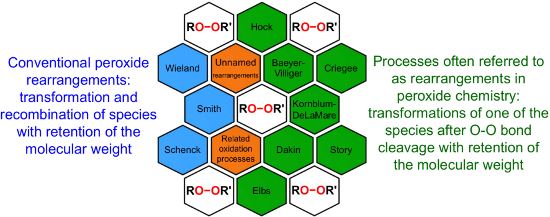
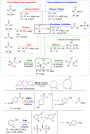
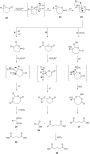
- peroxyester B is initially prepared from a tertiary alcohol A and a peracid. In addition, the peroxy ester can also be prepared via the reaction of a ketone and a peracid (i.e., through a Baeyer–Villiger oxidation); the additional product of peracid to ketone is often referred to as the Criegee intermediate
- feature of the Criegee rearrangement is that the Criegee intermediate rearranges into a carbocation. The mechanism of the Criegee reaction is presented in Scheme 38. Initially the reaction of the peracid with the tertiary alcohol 122 produces perester (Criegee intermediate) 123. One alkyl substituent













Stereoselective synthesis of tricyclic compounds by intramolecular palladium-catalyzed addition of aryl iodides to carbonyl groups
Beilstein J. Org. Chem. 2016, 12, 1236–1242, doi:10.3762/bjoc.12.118
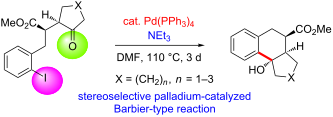
- –R2 = (CH2)4] typical Heck reaction conditions employing styrene as olefin component not only led to the desired styrene derivative B but mainly to the cyclized product C. If the reaction was performed without the olefin it provided only the tertiary alcohol C in reasonable yield [5]. Similar C–C bond
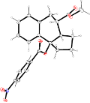
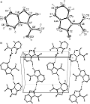
- determined by an X-ray crystal structure analysis of the corresponding p-nitrobenzoate 12a obtained by esterification of the tertiary alcohol under standard conditions (Scheme 4, Figure 1) [13]. The configuration of the second product 11b is only tentatively assigned as depicted since the available data do
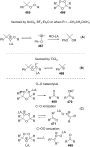
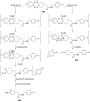
- -iodoaniline derivative to a tricyclic tertiary alcohol as reported by Solé et al. [23]. Proposed transition state (TS) explaining the stereoselective formation of cyclization products. Possible mechanism of the reduction of palladium(II) to palladium(0) by triethylamine (additional ligands at palladium are




NeoPHOX – a structurally tunable ligand system for asymmetric catalysis
Beilstein J. Org. Chem. 2016, 12, 1185–1195, doi:10.3762/bjoc.12.114
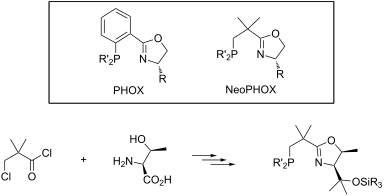
- intermediate is a NeoPHOX derivative bearing a methoxycarbonyl group at the stereogenic center next to the oxazoline N atom. The addition of methylmagnesium chloride leads to a tertiary alcohol, which can be acylated or silylated to produce NeoPHOX ligands with different sterical demand. The new NeoPHOX
- -butyl group of tert-leucine, which can be converted to a sterically demanding substituent by double addition of Grignard or alkyllithium reagents and subsequent protection of the resulting tertiary alcohol. An attractive feature of this approach is that by proper choice of the alkylmetal reagent and the
- these conditions, although this method had been successfully used for the alkylation and acylation of the tertiary alcohol function of analogous serine derived PHOX ligands [30]. Among various amines, 2,6-lutidine was finally identified as a suitable base for conversion to the desired derivatives in 67


Studies on the synthesis of peptides containing dehydrovaline and dehydroisoleucine based on copper-mediated enamide formation
Beilstein J. Org. Chem. 2016, 12, 564–570, doi:10.3762/bjoc.12.55
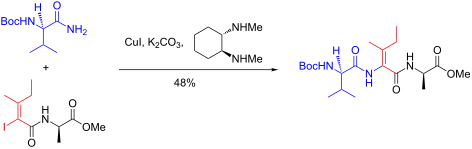
- acids dehydrovaline or dehydroisoleucine, e.g., found in myxovalargin (1), are much more challenging to prepare due to steric hindrance in the β-position and the issue of regiocontrol during elimination [4][5], as β-elimination of a tertiary alcohol group often leads to the terminal instead of the



Recent advances in N-heterocyclic carbene (NHC)-catalysed benzoin reactions
Beilstein J. Org. Chem. 2016, 12, 444–461, doi:10.3762/bjoc.12.47
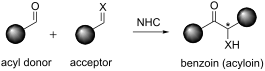
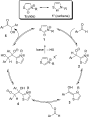
- -aminoketones 39 in high enantioselectivity [41]. Notably, the homoenolate or enolate reactivity of the NHC-enal adduct was not observed in this case. The presence of a tertiary alcohol functionality and the steric bulk of the NHC-precatalyst 40 were essential for the selective formation of the aza-benzoin



Diastereoselective synthesis of new O-alkylated and C-branched inositols and their corresponding fluoro analogues
Beilstein J. Org. Chem. 2016, 12, 353–361, doi:10.3762/bjoc.12.39

- rather contradictory concerning the acetylation of this tertiary alcohol using acetic anhydride [50][51]. With regard to a PET application, the protection of this hydroxy group is of paramount importance since the free hydroxy group could impair the incorporation of the radioactive fluorine. Therefor
- several methods of acetylation were carried out on myo-14, which was used as model. The best results for the acetylation of the tertiary alcohol in good yield was obtained with the transesterification method using isopropenyl acetate as acylating agent and p-toluenesulfonic acid as catalyst at 80 °C for 2
- stage. For this, compounds myo-20 and scyllo-20 were reacted with tosyl chloride in the presence of a catalytic amount of triethylamine at room temperature for 3 h to give tosylated myo-22 and scyllo-22 in 70 and 71% yield, respectively. Next, acetylation of the tertiary alcohol was performed before


Synthesis of Xenia diterpenoids and related metabolites isolated from marine organisms
Beilstein J. Org. Chem. 2015, 11, 2521–2539, doi:10.3762/bjoc.11.273
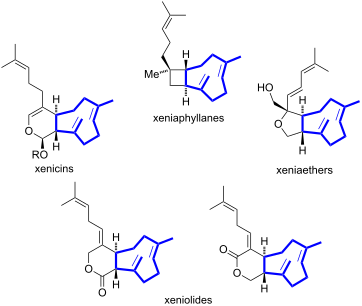
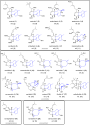
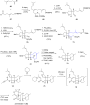
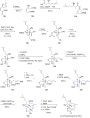
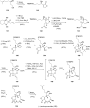
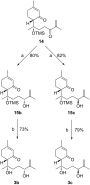
- literature-known procedure [47]. Regioselective reduction with sodium borohydride, followed by dehydration under Mitsunobu conditions and silylation of the tertiary alcohol furnished trimethylsiloxy ketone 78. The ketone functionality was then diastereoselectively reduced under Corey–Bakshi–Shibata







Stereoselective synthesis of hernandulcin, peroxylippidulcine A, lippidulcines A, B and C and taste evaluation
Beilstein J. Org. Chem. 2015, 11, 2117–2124, doi:10.3762/bjoc.11.228

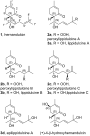
- ]. Thus, first the tertiary alcohol of 8 was protected as trimethylsilyl ether giving 9 ([α]D −11.5° (c 1.3, CHCl3), vs lit. [13] [α]D −16.3° (c 0.12, EtOH)), which, after treatment with lithium diisopropylamide (LDA) followed by addition of trimethylsilyl chloride (TMSCl) at –78 °C in THF afforded the
- amount of ketone 13 were isolated (Scheme 3). The latter is likely produced by a variant of the Kornblum–DeLaMare rearrangement [34][35] of the O-silyl precursor at room temperature, unfortunately 13 is very unstable. However, we envisaged the possibility of using this ketone, prior its tertiary alcohol



SmI2-mediated dimerization of indolylbutenones and synthesis of the myxobacterial natural product indiacen B
Beilstein J. Org. Chem. 2015, 11, 1700–1706, doi:10.3762/bjoc.11.184

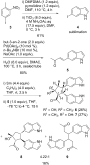
- substituents in a cis arrangement and differ regarding the configuration of the tertiary alcohol moiety. Minor bisindolylcyclopentane 8 exhibits a trans arrangement of the indolyl substituents. For the great majority of intermolecular reductive dimerizations of α,β-unsaturated β-arylketones induced by SmI2
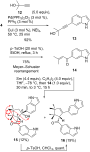
- ]. Treatment of indole 14 with SmI2 afforded the cyclic bisindole 15 and, after silica column chromatography, its elimination product cyclopentene 16. On the TLC only the tertiary alcohol 15 and full consumption of the starting material were observed. Product 15 was converted quantitatively to cyclopentene 16
- by treatment with p-TsOH (20 mol %) in chloroform (Scheme 3). As a consequence of smaller ring strain, the double bond is formed in β,γ-position to the carbonyl group. The relative configuration of tertiary alcohol 15 was determined on the basis of NOESY correlations, which revealed that 1-H (4.58



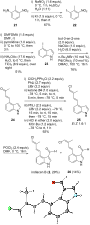
The synthesis of active pharmaceutical ingredients (APIs) using continuous flow chemistry
Beilstein J. Org. Chem. 2015, 11, 1194–1219, doi:10.3762/bjoc.11.134
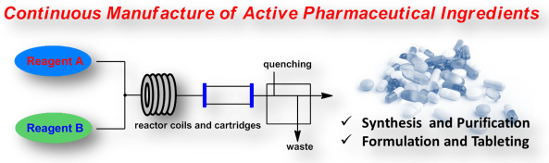
- stream of triethylamine in order to promote the elimination of the activated tertiary alcohol. A good isolated yield of (E/Z)-tamoxifen (132) (84%, E/Z ratio 25:75) was achieved after trituration with hot hexanes. As this report states, the peristaltic pumping module used in this synthesis permitted a


Further exploration of the heterocyclic diversity accessible from the allylation chemistry of indigo
Beilstein J. Org. Chem. 2015, 11, 481–492, doi:10.3762/bjoc.11.54
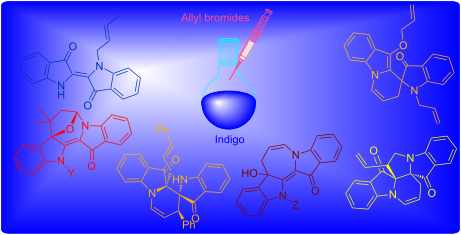
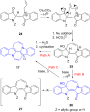
- 9 and 10, while no such product was evident from the reaction with the larger cinnamyl bromide. Minor byproducts isolated were the corresponding N-monoallylated indigos (7–15%). These heterocycles arise from the cyclisation of one allyl unit onto a carbonyl, leading to the tertiary alcohol. They are




Chemoselective O-acylation of hydroxyamino acids and amino alcohols under acidic reaction conditions: History, scope and applications
Beilstein J. Org. Chem. 2015, 11, 446–468, doi:10.3762/bjoc.11.51
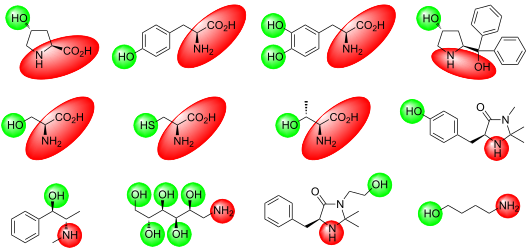




Attempts to prepare an all-carbon indigoid system
Beilstein J. Org. Chem. 2015, 11, 363–372, doi:10.3762/bjoc.11.42

- , obtained when 21 was subjected to a crossed McMurry coupling with excess acetone. In a stepwise approach, 21 was treated with either methyllithium in ether or methylmagnesium bromide in the hope of either preparing a mono- or the bis-tertiary alcohol derivative 20, which subsequently could be subjected to







Formal total syntheses of classic natural product target molecules via palladium-catalyzed enantioselective alkylation
Beilstein J. Org. Chem. 2014, 10, 2501–2512, doi:10.3762/bjoc.10.261

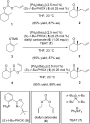
- , terminal alcohol silylation, and tertiary alcohol dehydration, affording methylene cyclohexane (−)-20. Treatment of this silyl ether with Jones reagent simultaneously cleaved the silyl group and oxidized the resulting alcohol, furnishing carboxylic acid (−)-12 in 65% yield. With this enantioenriched acid




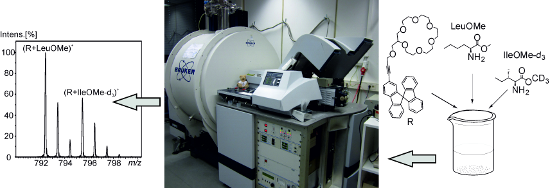
Molecular recognition of isomeric protonated amino acid esters monitored by ESI-mass spectrometry
Beilstein J. Org. Chem. 2014, 10, 825–831, doi:10.3762/bjoc.10.78
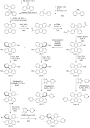
- Grignard reagent which was reacted with 9-fluorenone to afford tertiary alcohol 4 in 55% yield. Adopting a protocol of Tour et al. [16] led to 2-methoxy-9,9'-spirobifluorene (5) in 95% yield via acidic condensation of 4. Next, the methoxy group was cleaved quantitatively by reaction with boron tribromide


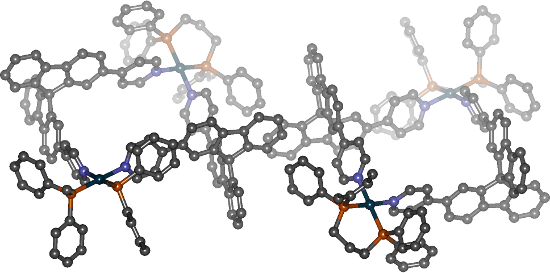
Self-assembly of metallosupramolecular rhombi from chiral concave 9,9’-spirobifluorene-derived bis(pyridine) ligands
Beilstein J. Org. Chem. 2014, 10, 432–441, doi:10.3762/bjoc.10.40
- . Tour [30], M. Gomberg [31], and V. Prelog [32][33] leading to (rac)-2,2’-dihydroxy-9,9’-spirobifluorene ((rac)-1) in six consecutive steps. This sequence involved a Sandmeyer-like iodination, followed by a Grignard reaction with fluorenone to furnish the corresponding tertiary alcohol. This alcohol was



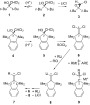
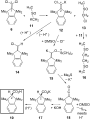
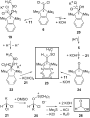
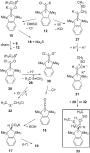
Carbenoid-mediated nucleophilic “hydrolysis” of 2-(dichloromethylidene)-1,1,3,3-tetramethylindane with DMSO participation, affording access to one-sidedly overcrowded ketone and bromoalkene descendants§
Beilstein J. Org. Chem. 2014, 10, 307–315, doi:10.3762/bjoc.10.28

- generation of dianion 37 of acid 10 (Scheme 6). Nevertheless, such one-sided shielding in the product ketone does not prevent the incorporation of a second nucleophile, affording a tertiary alcohol with a substantially impeded internal mobility. Final brominative deoxygenation of the ketones can yield


Tanzawaic acids I–L: Four new polyketides from Penicillium sp. IBWF104-06
Beilstein J. Org. Chem. 2014, 10, 251–258, doi:10.3762/bjoc.10.20
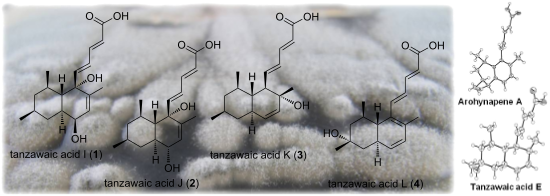
- , H-18)/δC 24.2 and δH 1.63 (s, H-16)/δC 19.1) were found as well as a trisubstituted double bond (δH 5.79 (d, J = 6.1 Hz, H-14)/δC 128.0 and δC 140.9 (C-15)), an oxymethine (δH 3.75 (dd, J = 2.7, 5.8 Hz, H-13)/δC 68.0), and a tertiary alcohol (δC 76.1, C-6). A careful inspection of COSY and HMBC data


Recent applications of the divinylcyclopropane–cycloheptadiene rearrangement in organic synthesis
Beilstein J. Org. Chem. 2014, 10, 163–193, doi:10.3762/bjoc.10.14
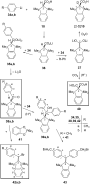
- the resulting carbon-centered radical with oxygen. The resulting tertiary alcohol was then protected to give acetate 41. Standard functional group interconversions led to the formation of the remaining side chain using Wittig-conditions to afford olefin 42. Another series of standard functional group




The myxocoumarins A and B from Stigmatella aurantiaca strain MYX-030
Beilstein J. Org. Chem. 2013, 9, 2579–2585, doi:10.3762/bjoc.9.293

- ). These signals were assigned to three methyl groups (14.0, 16.5, and 21.2 ppm), eight methylene units (22.6, 23.4, 29.2, 29.3, 29.4, 29.8, 31.8, and 38.3 ppm), a quaternary carbon at 46.5 ppm, a heteroatom-substituted quaternary carbon – most likely a tertiary alcohol – at 79.1 ppm, an ester-type
- groups to each other, to the putative ester functionality, the quaternary carbon at 46.5 ppm, and the tertiary alcohol carbon at 79.1 ppm led to the assembly of structural fragment II (F-II, Figure 2). Further substitution of the latter was obvious from HMBC cross peaks of the diastereotopic CH2 group


Towards stereochemical control: A short formal enantioselective total synthesis of pumiliotoxins 251D and 237A
Beilstein J. Org. Chem. 2013, 9, 2358–2366, doi:10.3762/bjoc.9.271
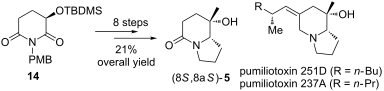
- -one (5). Synthesis of compound 18. Synthesis of hydroxylactam 18. Synthesis of tertiary alcohol 22. Synthesis of (8S,8aS)-5 and its silyl ether 23. Supporting Information Supporting Information File 488: 1H and 13C NMR of key compounds. Acknowledgments The authors are grateful to National Basic
- gave pure diastereomer 18 in 59% overall yield from 14. The trans-stereochemistry was tentatively assigned to compound 18 on the basis of our previous results, which was confirmed by the conversion of 18 into the known compound 5 (vide infra). With lactam 18 in hand, its conversion to novel tertiary
- alcohol 22 was investigated. Oxidation of alcohol 18 with an excess of Dess–Martin periodinane (DMP) in dichloromethane at room temperature for 2 h proceeded smoothly to give ketone 10 in 93% yield. It is noteworthy that keto-lactam 10 is configurational labile, and should be used immediately in the next





