Search results
Search for "C–C bond formation" in Full Text gives 153 result(s) in Beilstein Journal of Organic Chemistry.
Unexpected polymorphism during a catalyzed mechanochemical Knoevenagel condensation
Beilstein J. Org. Chem. 2019, 15, 1141–1148, doi:10.3762/bjoc.15.110
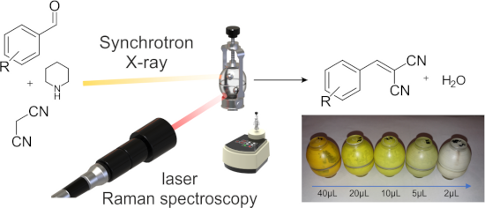
- reaction environment. It was subsequently demonstrated how a combination of different in situ methods can provide more thorough investigation of mechanochemical reaction mechanisms [14][15][16]. Of particular benefit to synthetic reactions, such as C–C bond formation [17][18], the use of Raman spectroscopy




Switchable selectivity in Pd-catalyzed [3 + 2] annulations of γ-oxy-2-cycloalkenones with 3-oxoglutarates: C–C/C–C vs C–C/O–C bond formation
Beilstein J. Org. Chem. 2019, 15, 1107–1115, doi:10.3762/bjoc.15.107
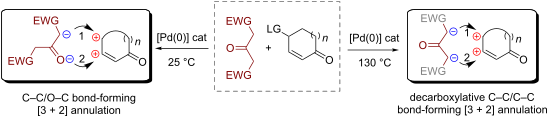
- transient η2-alkene complex A (steps a and b). Deprotonation of the pro-nucleophile 1a by the counter-anion of the η3-allyl-Pd complex exchanges the benzoate for the enolate anion (step c) [50], and following C–C bond formation from the resulting anion-scrambled complex C leads to the Pd(0) complex D (step


Oxidative radical ring-opening/cyclization of cyclopropane derivatives
Beilstein J. Org. Chem. 2019, 15, 256–278, doi:10.3762/bjoc.15.23
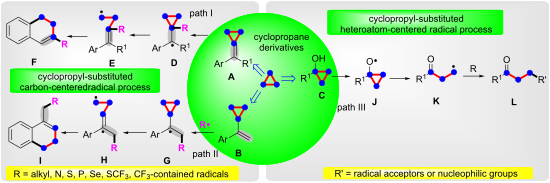
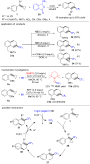
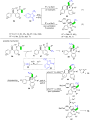
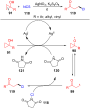
- introduced the Na2S2O8-promoted ring-opening/alkynylation of cyclopropanols 91 with ethynylbenziodoxolones (EBX) 116 for the synthesis of the alkynylated ketones 117 (Scheme 27) [107]. This reaction involved a C–C bond cleavage, radical rearrangement, and C–C bond formation, and showed a wide substrates








Synergistic approach to polycycles through Suzuki–Miyaura cross coupling and metathesis as key steps
Beilstein J. Org. Chem. 2018, 14, 2468–2481, doi:10.3762/bjoc.14.223
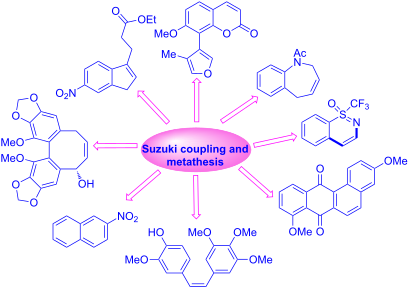
- (SM) cross-coupling reaction is also considered as one of the most versatile methods for C–C bond formation [8][9][10][11][12]. Application of a wide range of organometallic reagents (e.g., organoboron reagents) are possible due to their commercial availability. Owing to the mild reaction conditions
- summarized various approaches to a wide range of carbocycles and heterocycles that deals with a strategic utilization of SM coupling and metathesis as key steps. Interestingly, application of these two powerful methods in combination for a C–C bond formation process shorten the synthesis sequence for the


Cobalt- and rhodium-catalyzed carboxylation using carbon dioxide as the C1 source
Beilstein J. Org. Chem. 2018, 14, 2435–2460, doi:10.3762/bjoc.14.221
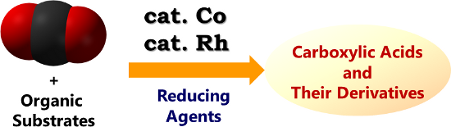
- , considerable attention has been focused on the development of the catalytic fixation of CO2 via carbon–carbon (C–C) bond formation using a variety of organic compounds as starting materials [5][6][7][8][9][10][11][12][13][14][15][16][17][18][19][20]. A key factor for the successful catalytic fixation of CO2 is
- a). Subsequently, the reductive elimination of methane from B yields the low-valent allyl-Co(I) species C (step b). Then, C–C bond formation at the γ-position occurs via a reaction with CO2, affording the carboxylate Co species D (step c). Finally, a linear carboxylated product is obtained by the
- importance, since the highly reactive intermediate can be generated by photochemical reaction such as electron transfer and energy transfer [43][44][45]. Among them, light-energy-driven CO2 fixation reactions via C–C bond formation are promising in terms of mimicking photosynthesis. In 2015, Murakami et al




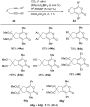

Practical tetrafluoroethylene fragment installation through a coupling reaction of (1,1,2,2-tetrafluorobut-3-en-1-yl)zinc bromide with various electrophiles
Beilstein J. Org. Chem. 2018, 14, 2375–2383, doi:10.3762/bjoc.14.213

- ), which can efficiently construct a new C–C bond [30][31][32]. Thus, we aimed at the development of an efficient preparation of a thermally stable organozinc reagent, possessing a CF2CF2 fragment as a thermally stable tetrafluoroethylenating agent, and successive C–C bond formation to produce a wide
- tetrafluoroethyllithium [12][25] and -magnesium species [22][23]. The synthetic uses of 2-Zn as a promising tetrafluorinating agent were tested in several reactions. First, we demonstrated a typical C–C bond formation reaction. Treating freshly prepared 2-Zn (ca. 0.70 M in DMF) with 5.0 equiv of iodobenzene (3a) in the


A challenging redox neutral Cp*Co(III)-catalysed alkylation of acetanilides with 3-buten-2-one: synthesis and key insights into the mechanism through DFT calculations
Beilstein J. Org. Chem. 2018, 14, 2366–2374, doi:10.3762/bjoc.14.212
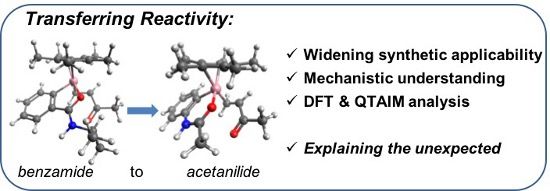
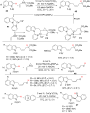
- energy difference between the C–H activation and C–C bond formation steps makes identification of the rate limiting step difficult by DFT calculations alone, however, parallel kinetic isotope effect (KIE) experiments do suggest that the C–H activation step is not rate limiting (KIE = 1.3), which is not


Hydroarylations by cobalt-catalyzed C–H activation
Beilstein J. Org. Chem. 2018, 14, 2266–2288, doi:10.3762/bjoc.14.202
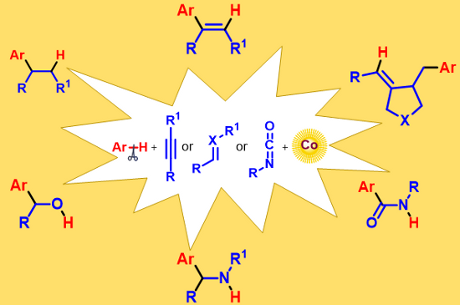
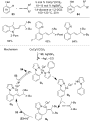
- found intermolecular kinetic isotope effect (KIE) of kH/kD = 2.1 and H/D crossover studies strongly suggest that the reaction proceeds through an oxidative addition of a C–H bond to low-valent cobalt followed by alkyne insertion and reductive elimination. Furthermore, the new C–C bond formation occurred


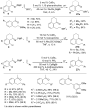






Cobalt-catalyzed nucleophilic addition of the allylic C(sp3)–H bond of simple alkenes to ketones
Beilstein J. Org. Chem. 2018, 14, 2012–2017, doi:10.3762/bjoc.14.176
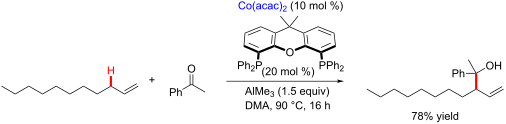
- involving catalytic C–C bond construction with the double bond of terminal alkenes (e.g., Heck reaction, hydrometalation followed by functionalization, carbometalation, and olefin metathesis) [10][11][12][13]. However, direct C–C bond formation of the allylic C(sp3)–H bond adjacent to double bonds has
- -catalyzed C–C bond formation using a stoichiometric amount of an oxidant [16][17][18][19][20][21][22], the π-allylpalladium intermediate [23][24][25] is an electrophilic species that exclusively reacts with nucleophiles. Therefore, it would be a formidable challenge for the generation of a nucleophilic π
- would lead to a low-valent allylcobalt(I) species, and then C–C bond formation of IV with 2a would proceed at the γ-position to produce cobalt alkoxide(I) V [28][29][31][32][33][34][35][36][37][38][39]. Transmetalation between V and AlMe3 would furnish branched aluminium alkoxide VI along with the


[3 + 2]-Cycloaddition reaction of sydnones with alkynes
Beilstein J. Org. Chem. 2018, 14, 1317–1348, doi:10.3762/bjoc.14.113
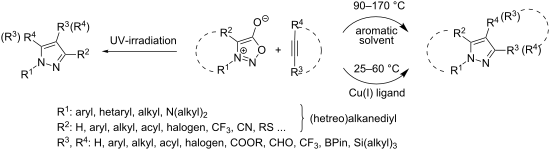
- found Taran’s suggestion as the most plausible because of the lowest activation free energy (ΔG‡ = 25.4 kcal·mol−1) and due to the observed 1,4-regiocontrol. Intrinsic reaction coordinate (IRC) calculations also showed concerted but asynchronous formation of the pyrazole ring, through initial C–C bond
- formation followed by Cu–N dissociation and C–N bond formation. Experiments performed in t-BuOD/D2O [119] also showed almost exclusive (>98:2) deuteration of position 3 in the final pyrazole ring. This finding supports the idea of Cu(I)-acetylide addition to give 3-metalated pyrazole (Cu-pyrazolide) that is


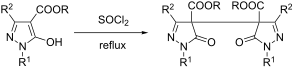
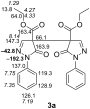
An unusual thionyl chloride-promoted C−C bond formation to obtain 4,4'-bipyrazolones
Beilstein J. Org. Chem. 2018, 14, 1287–1292, doi:10.3762/bjoc.14.110


A survey of chiral hypervalent iodine reagents in asymmetric synthesis
Beilstein J. Org. Chem. 2018, 14, 1244–1262, doi:10.3762/bjoc.14.107
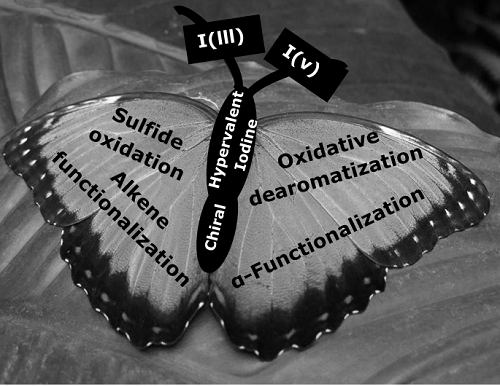
- application due to their reduced toxicity, ready availability and lower costs as replacement for transition metals leading to several “metal-free” like chemical transformations. The ongoing demand of modern synthetic chemistry for the development of catalytic enantioselective C–C bond formation reactions



One hundred years of benzotropone chemistry
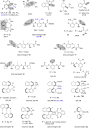
Beilstein J. Org. Chem. 2018, 14, 1120–1180, doi:10.3762/bjoc.14.98
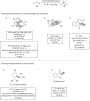
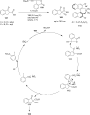
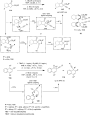
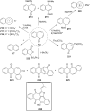
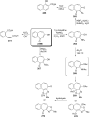
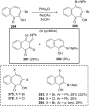
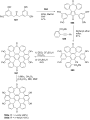
- benzotropylium ion 45. Secondly, 11 is obtained in 18% yield after benzylic bromination of 42 with NBS, followed by in situ elimination reaction of the labile bromide 43 mediated by t-BuOK (Scheme 9). Palladium-catalyzed C–C bond-formation reactions such as Heck and Sonogashira couplings are employed in a wide








Hypervalent iodine-guided electrophilic substitution: para-selective substitution across aryl iodonium compounds with benzyl groups
Beilstein J. Org. Chem. 2018, 14, 1039–1045, doi:10.3762/bjoc.14.91
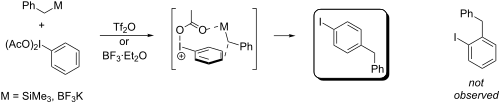
- that many of these useful reagents became a staple in synthetic chemistry laboratories [1][2]. Although hypervalent iodine reagents are commonly used in oxidation reactions, they have also found their own niche in useful C–C bond-formation and C–H activation reactions [3][4][5]. One such C–C bond
- same reaction conditions as the RICR. The resulting diphenylmethane structure obtained after the C–C bond formation could have relevant medicinal applications since it is the core of many marketed pharmaceutical drugs with antihistaminic and anxiolytic properties [23][24][25][26]. Results and
- weaker electron-donating and electron-withdrawing groups are used (Table 2, entries 1, 2, 4, 5 and 6), the C–C bond formation occurs para to the iodine, but when strong electron-donating groups are used (Table 2, entries 7 and 8) then the para-selectivity is dictated by that group. The effect of electron


Recent advances in synthetic approaches for medicinal chemistry of C-nucleosides
Beilstein J. Org. Chem. 2018, 14, 772–785, doi:10.3762/bjoc.14.65
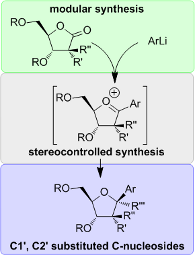
- of a pre-synthesized (hetero)aryl with a ribosyl moiety (Figure 5A) [48][49][62]. The C–C bond formation usually involves a functional group at C1' of the ribosyl moiety that is amenable to additional functionalization (Figure 5B). Like other nucleoside coupling approaches (other than the well-known
- bond formation is an important goal, but often difficult to attain [62]. Among the aforementioned approaches for C-nucleoside syntheses, the coupling of (hetero)aryls to the ribosyl moiety has seen the widest application [52][53][58][62][63][64][65][69][70][71][72][73][74][75][76][77]. This can be
- Vorbrüggen coupling reaction [66], the synthesis of C-nucleosides typically gives a mixture of stereoisomers (α and β) at the anomeric carbon [48][49][54][62][67][68]. Since the naturally occurring nucleosides (and most biologically active nucleosides) are β-anomers, achieving 100% stereospecificity in C–C


Cobalt-catalyzed directed C–H alkenylation of pivalophenone N–H imine with alkenyl phosphates
Beilstein J. Org. Chem. 2018, 14, 709–715, doi:10.3762/bjoc.14.60
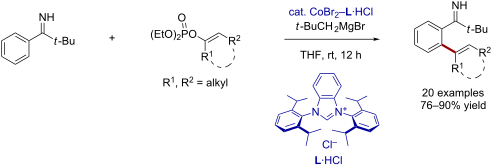
- alkenylation reaction of pivalophenone N–H imine with an alkenyl phosphate. The reaction tolerates various substituted pivalophenone N–H imines as well as cyclic and acyclic alkenyl phosphates. Keywords: alkenylation; C–C bond formation; C–H activation; cobalt; imine; Introduction Transition-metal-catalyzed
- obtained in an E-rich form from an E/Z mixture (1:1) of the starting alkenyl phosphate, demonstrating the E/Z isomerization during the C–C-bond formation. The E/Z isomerization was also observed for the conversion of cyclododecenyl phosphate (E/Z = 9:1) to the product 3af (E/Z = 3:1). Expectedly, 4


Functionalization of N-arylglycine esters: electrocatalytic access to C–C bonds mediated by n-Bu4NI
Beilstein J. Org. Chem. 2018, 14, 499–505, doi:10.3762/bjoc.14.35

- the presence of excess amounts of oxidant. On the other hand, the toxicity of residual traces of transition metal (photo)catalyst in products is also highly concerned. Consequently, metal-free and environmentally friendly oxidative C–C bond formation is highly desired. Electrochemistry has proved to


Recent developments in the asymmetric Reformatsky-type reaction
Beilstein J. Org. Chem. 2018, 14, 325–344, doi:10.3762/bjoc.14.21
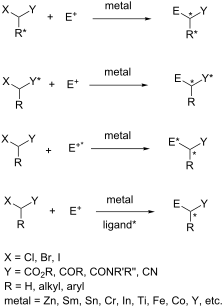
- in this process was essential for the effective C−C bond formation. They proposed the catalytic cycle depicted in Scheme 20 which begins with the reaction between chiral ligand 51, ZnEt2 and ethyl bromoacetate (9b) to give complex G. Addition of the aldehyde to the latter results in the formation of











The photodecarboxylative addition of carboxylates to phthalimides as a key-step in the synthesis of biologically active 3-arylmethylene-2,3-dihydro-1H-isoindolin-1-ones
Beilstein J. Org. Chem. 2017, 13, 2833–2841, doi:10.3762/bjoc.13.275
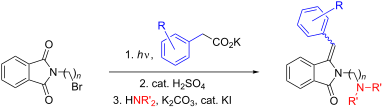
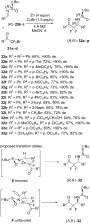
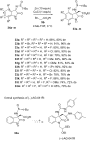
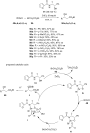
- bond formation (path A), as postulated by Griesbeck et al. for the photocyclization of phthaloyl-L-methionine [58]. Alternatively, the alcoholate obtained after C–C bond formation may cyclize to the oxazolidine (path B), as known from reactions of 1a with organometallic reagents [48][49][50]. When
- and protonation furnishes the observed benzylated hydroxyphthalimidine derivatives 3a–q. The nucleophilic cyclization to the oxazolidine derivative 4 may occur at different stages of the photodecarboxylation (Scheme 8). The phthalimide radical anion may undergo nucleophilic cyclization prior to C–C


Ring-size-selective construction of fluorine-containing carbocycles via intramolecular iodoarylation of 1,1-difluoro-1-alkenes
Beilstein J. Org. Chem. 2017, 13, 2682–2689, doi:10.3762/bjoc.13.266
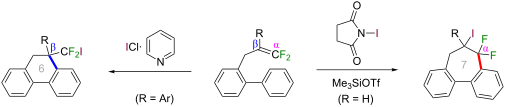
- ]. This sequence provides ready access to these compounds. Next, 2-(3,3-difluoroallyl)biphenyl (5a), without an aryl group at its vinylic position, was subjected to the conditions examined in entries 1–3 of Table 1. In contrast to 1a, iodoarylation of 5a proceeded through C–C-bond formation exclusively at


A Brønsted base-promoted diastereoselective dimerization of azlactones
Beilstein J. Org. Chem. 2017, 13, 2663–2670, doi:10.3762/bjoc.13.264

- NMR spectroscopic monitoring and revealed that the diastereoselectivity was determined during C–C bond formation step. A diastereoselective streptopyrrolidine analogue, containing three contiguous stereogenic centers, was smoothly obtained as a sole diastereomer in 70% yield. Structure of an azlactone
- bond formation, such as a dimerization process. We herein report a diastereoselective dimerization of azlactones using potassium or sodium trichloroacetate salts and acetonitrile as solvent. Besides, a reaction mechanism is proposed based on NMR studies and the relative stereochemistry of the major
- . Although no trichloromethylation product was observed, we found out that by switching the solvent, the isolated major product comes from dimerization of azlactones. At this point, we turned our attention towards this product, envisioning the development of an atom-economic reaction for stereoselective C–C





![[Graphic 5]](/bjoc/content/inline/1860-5397-13-264-i10.svg?max-width=637&scale=1.18182) vs time for the dimerization of azlactone 1a.
vs time for the dimerization of azlactone 1a.

Recent progress in the racemic and enantioselective synthesis of monofluoroalkene-based dipeptide isosteres
Beilstein J. Org. Chem. 2017, 13, 2637–2658, doi:10.3762/bjoc.13.262
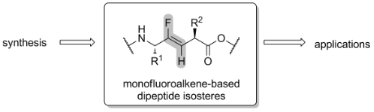
- bond isostere [6]. Using this strategy, a mutant tripeptide containing two different peptide bond isosteres could be synthesized (Figure 3). In 2016, Konno and co-workers developed a stereoselective chromium-mediated C–F bond cleavage followed by a C–C bond formation to access (Z)-monofluoroalkenes


Dimerization reactions of aryl selenophen-2-yl-substituted thiocarbonyl S-methanides as diradical processes: a computational study
Beilstein J. Org. Chem. 2017, 13, 410–416, doi:10.3762/bjoc.13.44

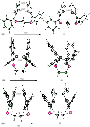
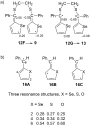
- dimer 12, followed by the C–C bond formation involving the C(2) centers of the selenophene rings to yield the obtained twelve-membered heterocycle 9. In extension of the study, calculations were performed on the related symmetrical thiobenzophenone S-methanide by the same computational approach (see
- of thiobenzophenone S-methanide 1 (Ar1 = Ar2 = Ph). On the other hand, in the hetaryl functionalized thiocarbonyl S-methanide 8 the lowest activation energy was found for the C–C bond formation between C(2) atoms of the selenophen-2-yl ring, leading to the twelve-membered macrocyclic product 9


Et3B-mediated and palladium-catalyzed direct allylation of β-dicarbonyl compounds with Morita–Baylis–Hillman alcohols
Beilstein J. Org. Chem. 2016, 12, 2402–2409, doi:10.3762/bjoc.12.234

- products 7e–i [41][44] in 60–70% yields (Table 5, entries 1–4). Conclusion In summary, we have developed a mild and direct process for the C–C bond formation from the reaction of the MBH alcohols 1a and 1b with β-dicarbonyl compounds 2 in the presence of a palladium catalyst and Et3B (promoter) with the


The direct oxidative diene cyclization and related reactions in natural product synthesis
Beilstein J. Org. Chem. 2016, 12, 2104–2123, doi:10.3762/bjoc.12.200
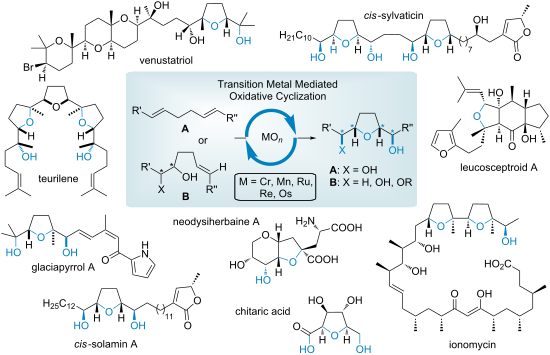
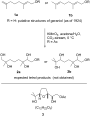
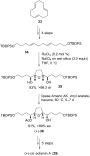
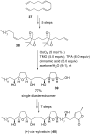
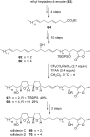
- synthesized in 2011 by the Horne group [170], using a TPAP-catalyzed type B oxidative cyclization to form the densely substituted THF diol motif following a protocol of our group [25] (Scheme 22). The 5,6-dihydroxyalkene 101 was obtained from D-mannitol diacetonide via oxidation and C-C-bond formation. The