


Search results
Search for "chromophores" in Full Text gives 143 result(s) in Beilstein Journal of Organic Chemistry.
5-Aminopyrazole as precursor in design and synthesis of fused pyrazoloazines
Beilstein J. Org. Chem. 2018, 14, 203–242, doi:10.3762/bjoc.14.15
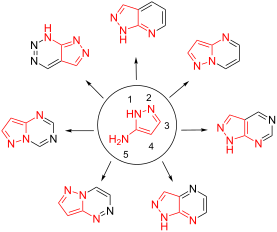
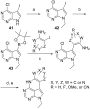
- , dehydration and aromatization reactions. The use of ionic liquids (non-volatile solvents) over toxic organic solvents makes it an environmentally benign process [45][46]. The synthesis of isomeric tetracyclic pyrazolo[3,4-b]pyridine-based coumarin chromophores 27 and 28 was reported by Chen et al. [47


Fluorescent nucleobase analogues for base–base FRET in nucleic acids: synthesis, photophysics and applications
Beilstein J. Org. Chem. 2018, 14, 114–129, doi:10.3762/bjoc.14.7
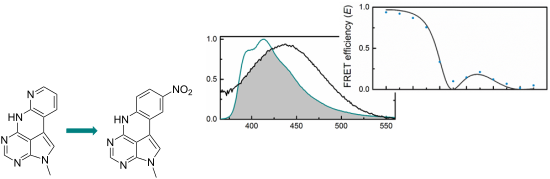
- using tCO and tCnitro [14]. Nitro groups introduce an increased charge-transfer character to chromophores, which generally results in absorption at lower energies [38][45]. Hence, tCnitro was envisioned to be able to accept the energy transferred from tC or tCO, and, thus serve as a FRET acceptor. The
- base analogue FRET pairs inside DNA When using FRET theory on fluorophores/chromophores that replace nucleobases of a normal but static DNA, estimated energy-transfer efficiencies can be simulated using the structure parameters of the B-form duplex together with photophysical parameters of the
- fluorophores/chromophores. In this way we used the photophysical parameters we already had obtained for our two FRET pairs, tCO–tCnitro and qAN1–qAnitro, to design the best combination of donor and complementary acceptor-containing DNA oligonucleotides [14][25]. We found that eight DNA strands were sufficient





Polarization spectroscopy methods in the determination of interactions of small molecules with nucleic acids – tutorial
Beilstein J. Org. Chem. 2018, 14, 84–105, doi:10.3762/bjoc.14.5
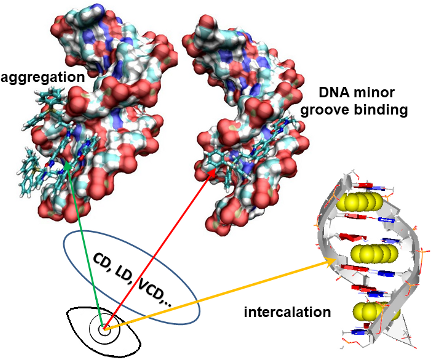
- addition, we will discuss the newest possibilities of computational analyses of the results as an outreach from the currently used empirical rules [6] for the determination of the ligand binding mode. 2. General aspects ECD and LD are based on the phenomenon of light absorption by one or more chromophores
- chromophore also absorbs in this range, the deconvolution of all contributions is not trivial (see interpretation of results in the chapters of the corresponding methods); b) monitoring changes in polarization spectra at λ > 300 nm for ligands that have corresponding chromophores. This is the most common used
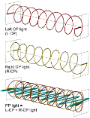
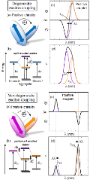
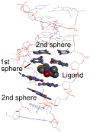
- mechanism between the various π→π* transitions of regularly arranged chromophores [14] (Figure 3, top). Chiroptical properties and ECD spectra of particular DNA or RNA sequences are therefore strongly dependent on the polynucleotide secondary structure [15], at variance to the common UV–vis spectra of the






Halogen-containing thiazole orange analogues – new fluorogenic DNA stains
Beilstein J. Org. Chem. 2017, 13, 2902–2914, doi:10.3762/bjoc.13.283
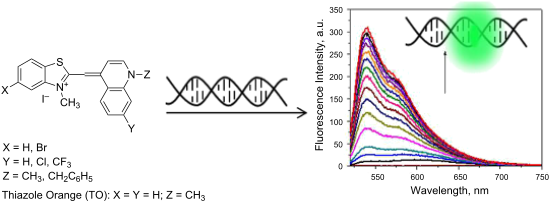
- L·mol−1·cm−1). All investigated dyes from the series are either not fluorescent or their fluorescence is quite low, but they become strongly fluorescent after binding to dsDNA. The influence of the substituents attached to the chromophores was investigated by combination of spectroscopic (UV–vis and
- been conjugated to a variety of molecules, including peptides [29], proteins [30], DNA [17], and DNA analogues such as peptide nucleic acid (PNA) [16][31]. TO-based chromophores assembled as a structural scaffold inside nucleic acids (TO-tethered nucleic acids) have attracted considerable attention [32
- chromophores have been studied by Armitage and co-workers [42][43]. According to these studies the fluorination of the symmetrical [42] and unsymmetrical [43] cyanine dyes results in reduced aggregation and significantly improved the photostability and photophysical properties of the dyes. The authors [43




Pyrene–nucleobase conjugates: synthesis, oligonucleotide binding and confocal bioimaging studies
Beilstein J. Org. Chem. 2017, 13, 2521–2534, doi:10.3762/bjoc.13.249
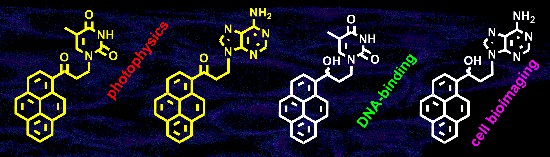
- chromophores [19][20][21]. This helical twist was evidenced by circular dichroism, in particular a strong bisignate Cotton effect for the DNA-templated pyrene assemblies [19][20]. Figure 1 shows selected examples of pyrene-modified nucleic acids and nucleosides. On the other hand, pyrene–nucleobase conjugates
- investigate the interactions between the compounds 2–5 when they bind specifically to a given DNA template. The titration experiments were performed with single and double-stranded oligonucleotides. The interactions between the chromophores and a 10-mer of the single-stranded oligo-2’-deoxyadenosine, (dA)10
- volume of the aliquots is small (μL range) that the DMSO concentration in the final samples never exceeded 5%. According to our previous studies, a low concentration of DMSO is tolerated by the helical DNA conformation [16]. After centrifugation, the unbound chromophores precipitated due to their




Structure–property relationships and third-order nonlinearities in diketopyrrolopyrrole based D–π–A–π–D molecules
Beilstein J. Org. Chem. 2017, 13, 2374–2384, doi:10.3762/bjoc.13.235

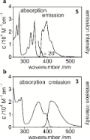
- Engineering, Czestochowa University of Technology, Armii Krajowej 17, Czestochowa, 42-200, Poland 10.3762/bjoc.13.235 Abstract Nine new quadrupolar chromophores based on diketopyrrolopyrrole were designed and prepared by cross-coupling reactions. The property tuning has been achieved by structural variation
- -emitting diodes (OLED), fluorophores, probes for ion sensing, functional polymers, and more recently also chromophores with nonlinear optical (NLO) activity. The latter property is mostly dictated by their conjugated character, electron-accepting behavior of the DPP scaffold, strong emissive character, and
- ]. Moreover, some DPP derivatives also showed aggregation induced emission (AIE) [13][14] and the ability to selectively sense fluoride ions [26][27][28]. The modern era of DPP chromophores has been opened by Gryko et al. [3][11][12][18][20][21][29] who have demonstrated their large and tunable two-photon




One-pot syntheses of blue-luminescent 4-aryl-1H-benzo[f]isoindole-1,3(2H)-diones by T3P® activation of 3-arylpropiolic acids
Beilstein J. Org. Chem. 2017, 13, 2340–2351, doi:10.3762/bjoc.13.231
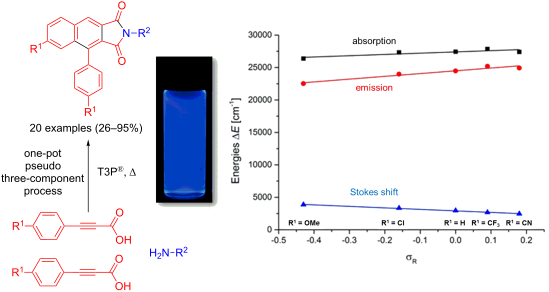
- ] where fundamental organic reactions are combined in one-pot sequences [25][26][27][28][29]. Multicomponent reactions (MCR) take advantage of creating and transforming reactive functionalities in the same reaction vessel without intermediary work-up [30]. Syntheses of functional chromophores by MCR [31
- ][32] have indeed become a powerful tool in synthetic chemistry for convergently approaching substance libraries of luminescent molecules. In particular, blue-emissive heterocyclic chromophores, intensively requested in illumination research, are equally accessible by MCR strategies [33]. Cyclic imides
- by an integrating sphere. The emission maximum appears at 468.5 nm, i.e., at the same longest wavelength band as in solution. Therefore, 1H-benzo[f]isoindole-1,3(2H)-diones 4 can be considered as AIE (aggregation induced emission) chromophores [56][57][58]. In comparison to the 1-phenyl-[2,3-c




Theoretical simulation of the infrared signature of mechanically stressed polymer solids
Beilstein J. Org. Chem. 2017, 13, 1710–1716, doi:10.3762/bjoc.13.165
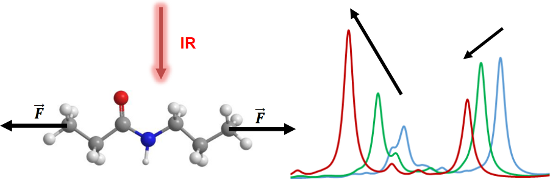
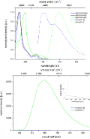
- , especially since a large number of C–H stretching, bending and wagging modes are more or less strongly coupled [30]. In the present study, we therefore focus on molecules with strong infrared chromophores, such as C–N and C–O groups. In particular, we choose N-propylpropanamide and propyl propanoate as model


New electroactive asymmetrical chalcones and therefrom derived 2-amino- / 2-(1H-pyrrol-1-yl)pyrimidines, containing an N-[ω-(4-methoxyphenoxy)alkyl]carbazole fragment: synthesis, optical and electrochemical properties
Beilstein J. Org. Chem. 2017, 13, 1583–1595, doi:10.3762/bjoc.13.158

- street, 15, 614990, Perm, Russia Laboratory of organic semiconductors, Natural Sciences Institute, Perm State University, Genkel street, 4, 614990, Perm, Russia 10.3762/bjoc.13.158 Abstract In this paper we present a synthetic approach to six new D–π–A–D conjugated chromophores containing the N-[ω-(4
- -methoxyphenoxy)alkyl]carbazole fragment. Such readily functionalizable heterocycle as carbazole was used as a main starting compound for their preparation. The investigation of the optical properties has shown that the positive solvatochromism is inherent to the chromophores containing an electron-withdrawing
- prop-2-en-1-one fragment, while the compounds containing a 2-aminopyrimidine moiety exhibit both positive and negative solvatochromism. The fluorescence quantum yields were experimentally determined for some of the synthesized chromophores; e.g., 1-(5-arylthiophen-2-yl)ethanones quantum yields were


Correlation of surface pressure and hue of planarizable push–pull chromophores at the air/water interface
Beilstein J. Org. Chem. 2017, 13, 1099–1105, doi:10.3762/bjoc.13.109
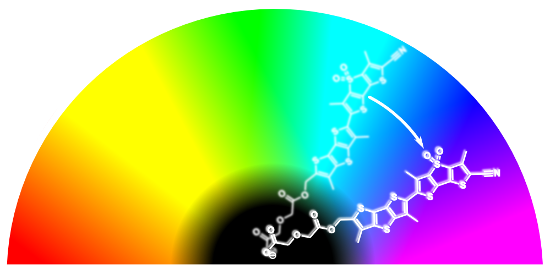
- testing the correlation of the flipper's fluorescent signal and the membrane lateral surface pressure. Hue surface-pressure correlation The flipper mechanophore shows a flexible geometry between the two heterocyclic chromophores. These two flippers can adapt to a decreasing monolayer molecular area and


Energy down converting organic fluorophore functionalized mesoporous silica hybrids for monolith-coated light emitting diodes
Beilstein J. Org. Chem. 2017, 13, 768–778, doi:10.3762/bjoc.13.76
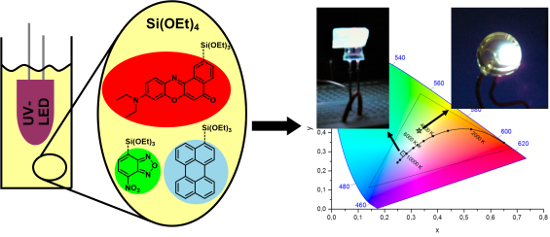
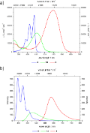
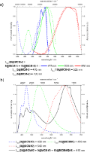
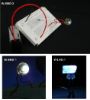
- as transparent monoliths in different shapes [17][18][19]. Here, we communicate our first efforts to design red, green, and blue light-emitting mesoporous materials from organic chromophores, their blending to white light-emitting silica hybrids based upon additive color mixing, and as a proof of
- index and tunable color temperature the characteristics of red emissive Nile red, blue emissive perylene, and green emissive benzofurazane have to be matched with comparable emission intensity. All three chromophores exhibit absorption in the UV–vis region with comparable molar absorption coefficients
- . Additional information on the excitation mechanism of all three chromophores was gained upon excitation with UV light and recording of emission spectra at different excitation wavelengths (Figure 8). Upon excitation at 320 nm green as well as intense red emission was found. With increasing excitation







Effects of solvent additive on “s-shaped” curves in solution-processed small molecule solar cells
Beilstein J. Org. Chem. 2016, 12, 2543–2555, doi:10.3762/bjoc.12.249
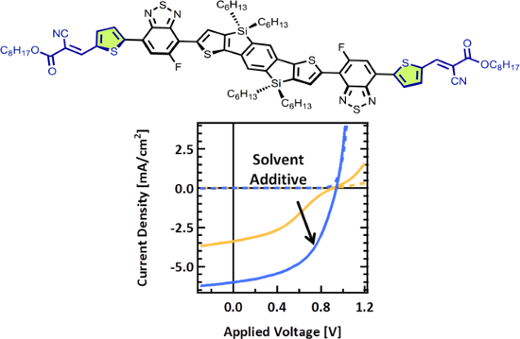
- optical bandgap must be further reduced by minimizing the energetic gap in the lowest occupied molecular orbitals (LUMO) between donor and acceptor [14]. One design approach towards this end involves adding electron-withdrawing end groups to existing central core chromophores. Chen and co-workers have


Development of a continuous process for α-thio-β-chloroacrylamide synthesis with enhanced control of a cascade transformation
Beilstein J. Org. Chem. 2016, 12, 2511–2522, doi:10.3762/bjoc.12.246
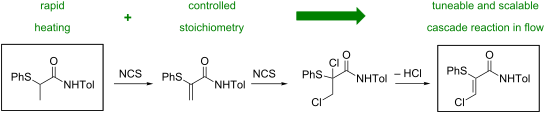
- ‘other’ components observed by HPLC analysis, but removed during work-up, are overestimated by detection at 250 nm (Table 1). Such an overestimation is consistent with the presence of additional chromophores, when compared to the desired product, and would indicate that these observed components may




High performance p-type molecular electron donors for OPV applications via alkylthiophene catenation chromophore extension
Beilstein J. Org. Chem. 2016, 12, 2298–2314, doi:10.3762/bjoc.12.223
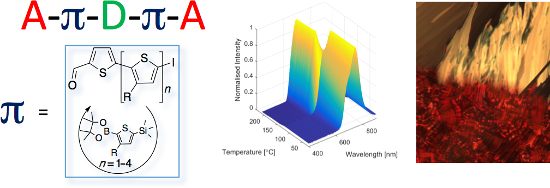
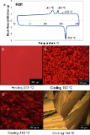
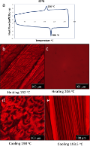
- chromophore (BPR), where good π–π stacking is not observed, even on extended thermal annealing. Small changes in the molecular structures lead to larger impacts on the thermal behaviour of the materials. DSC thermograms for materials indicate that short and long chromophores (BMR, BBR, and BPR) show single
- chromophores can be accessed, and thereby the thermal stability of OPV devices containing these new materials can be improved. We are currently examining BQR in printed solar cells. In all cases in our structure–property relationship studies, devices incorporating materials that exhibited a high temperature




Comparing blends and blocks: Synthesis of partially fluorinated diblock polythiophene copolymers to investigate the thermal stability of optical and morphological properties
Beilstein J. Org. Chem. 2016, 12, 2150–2163, doi:10.3762/bjoc.12.205
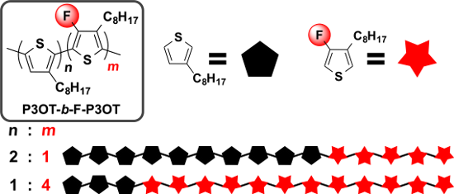
- is more difficult than in the case of polymer blends due to the chromophores being tethered. For example, in a polythiophene-polyselenophene block copolymer, isothermal recrystallization of the film results in an absorption profile that perfectly matches the linear combination of the homopolymers [26




Thiophene-forming one-pot synthesis of three thienyl-bridged oligophenothiazines and their electronic properties
Beilstein J. Org. Chem. 2016, 12, 2055–2064, doi:10.3762/bjoc.12.194
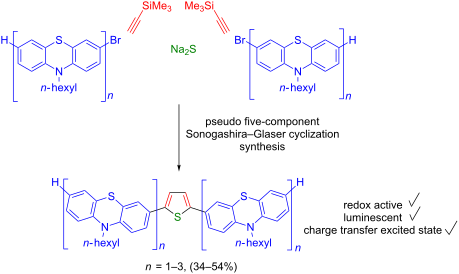
- -transfer characteristics [59][60][61][62][63], as hole-transport materials [64], for applications in mesoporous organo silica hybrid materials [65], and as chromophores in dye-sensitized solar cells [66][67][68]. Furthermore, (oligo)phenothiazines in their native reduced forms display a pronounced ability


Practical synthetic strategies towards lipophilic 6-iodotetrahydroquinolines and -dihydroquinolines
Beilstein J. Org. Chem. 2016, 12, 1851–1862, doi:10.3762/bjoc.12.174

- mildly red shifted (to 376 nm). This behaviour indicates that 1,4-DHQ structures of this type may function as more effective donor chromophores in dyes and fluorophores than the corresponding THQs due to improved orbital overlap between the nitrogen lone pair and the aromatic π-system by virtue of the


Synthesis and properties of fluorescent 4′-azulenyl-functionalized 2,2′:6′,2″-terpyridines
Beilstein J. Org. Chem. 2016, 12, 1812–1825, doi:10.3762/bjoc.12.171
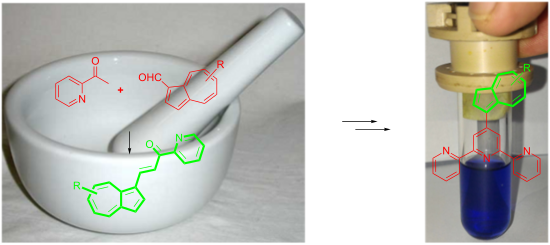
- remarkable optical and redox properties, azulene proved to be an excellent building block for developing a large variety of materials ranging from NLO chromophores [13] to molecular switches [14][15] and liquid crystals [16] or high-conductance materials [17]. In contrast to most aromatic compounds which


A flow reactor setup for photochemistry of biphasic gas/liquid reactions
Beilstein J. Org. Chem. 2016, 12, 1798–1811, doi:10.3762/bjoc.12.170
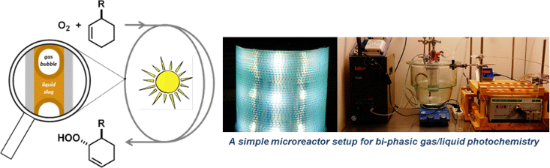
- standard batch reactions at 10−4–10−2 M concentrations of the dye so that large volumes of the reaction remain in the dark [9][52]. It is important to note that the magnitude of attenuation coefficients of the employed chromophores is a key difference between the recently emerging field of photocatalysis


Biradical vs singlet oxygen photogeneration in suprofen–cholesterol systems
Beilstein J. Org. Chem. 2016, 12, 1196–1202, doi:10.3762/bjoc.12.115

- determined in dichloromethane solutions using the same absorbance value (0.30) at 308 nm for each compound. A singlet oxygen quantum yield (ΦΔ) of 0.95 for perinaphthenone in dichloromethane was used as standard [22]. Chemical structure of the photosensitizing chromophores benzophenone (BZP) and 2


Indenopyrans – synthesis and photoluminescence properties
Beilstein J. Org. Chem. 2016, 12, 825–834, doi:10.3762/bjoc.12.81

- chromophores are valuable candidates for the fabrication of OLEDs [21][22], dye lasers [23], sensors [24], dye-sensitized solar cells, fluorescent probes [25] or logic gates [26]. Recently [27], 6-CF3-2H-pyran-2-ones have been reported as potential building blocks for the preparation of novel



A journey in bioinspired supramolecular chemistry: from molecular tweezers to small molecules that target myotonic dystrophy
Beilstein J. Org. Chem. 2016, 12, 125–138, doi:10.3762/bjoc.12.14
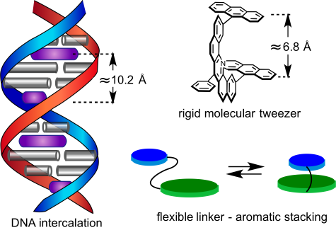
- ” chromophores obeying the NEP), were an obvious attempt to provide water solubility to a highly aromatic structure. In Roger Adams’ Laboratory, Craig Vanzyl, Greg Hamilton, and I were able to prepare molecular tweezer 4 and several substituted analogs, but none that were water soluble [9][10]. Fortunately, the
- interested in linkers or spacers that minimally allowed or even forced the two chromophores to stack on one another. The DNA target in which we became interested was a repeating sequence (CTG)n in the DMPK gene on chromosome 19. The sequence becomes unstable when n > 50, undergoing progressive expansion to


2-Hetaryl-1,3-tropolones based on five-membered nitrogen heterocycles: synthesis, structure and properties
Beilstein J. Org. Chem. 2015, 11, 2179–2188, doi:10.3762/bjoc.11.236

- which has attracted much attention due to the applications in various molecular probes and luminescent materials because of the remarkable photophysical properties of the ESIPT (excited state intramolecular proton transfer) chromophores [33][34]. UV-irradiation of solutions of these compounds in


![[Graphic 3]](/bjoc/content/inline/1860-5397-11-236-i8.png?max-width=637&scale=1.18182) N···H–O equilibrium in solutions of 2-hetaryl-5,6,7-trichloro- and 4,...
N···H–O equilibrium in solutions of 2-hetaryl-5,6,7-trichloro- and 4,...


Selected synthetic strategies to cyclophanes
Beilstein J. Org. Chem. 2015, 11, 1274–1331, doi:10.3762/bjoc.11.142






The chemical behavior of terminally tert-butylated polyolefins
Beilstein J. Org. Chem. 2015, 11, 1246–1258, doi:10.3762/bjoc.11.139
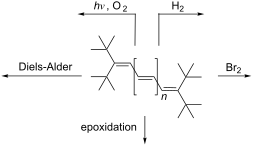
- cases the terminal double bonds survive the cycloaddition process. Photochemical behavior Although oligo- and polyene substructures are present as chromophores in, inter alia, the visual pigments [12], the carotenoid antennae of photosynthesis [13][14], and vitamins A [15] and D [16], relatively little





