


Search results
Search for "copper(II)" in Full Text gives 168 result(s) in Beilstein Journal of Organic Chemistry.
Design, synthesis and spectroscopic properties of crown ether-capped dibenzotetraaza[14]annulenes
Beilstein J. Org. Chem. 2019, 15, 617–622, doi:10.3762/bjoc.15.57

- prepared and their binding properties toward sodium and potassium ions were studied in addition to transition metals. Sakata et al. reported the syntheses and characterization of nickel(II), copper(II) [25] and oxovanadium(IV) [26] complexes of crown ether-annulated DBTAAs, which caused dimerization in the


Tandem copper and photoredox catalysis in photocatalytic alkene difunctionalization reactions
Beilstein J. Org. Chem. 2019, 15, 351–356, doi:10.3762/bjoc.15.30
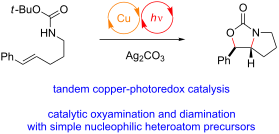
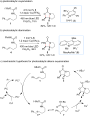
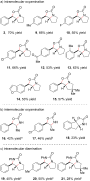
- combines the photoredox activation of electron-rich alkenes with copper(II)-mediated oxidation of electron-rich radicals as described by Kochi [18][19][20]. These studies resulted in the development of a general new protocol for oxyamination (Figure 1a) and diamination (Figure 1b) of alkenes. The mechanism
- photocatalyst can be coupled to the reduction of Cu(I) to Cu(0), which can be observed precipitating from solution over the course of the reaction. Copper(II) salts have been demonstrated to be convenient terminal oxidants in a variety of synthetically useful catalytic reactions [23][24][25][26]. They are
- easily handled, are available from commodity chemicals for nominal cost, and present minimal environmental and health concerns in large-scale applications. The use of stoichiometric copper(II) reagents, however, could become prohibitive in certain applications where specific, synthetically laborious

Oxidative radical ring-opening/cyclization of cyclopropane derivatives
Beilstein J. Org. Chem. 2019, 15, 256–278, doi:10.3762/bjoc.15.23
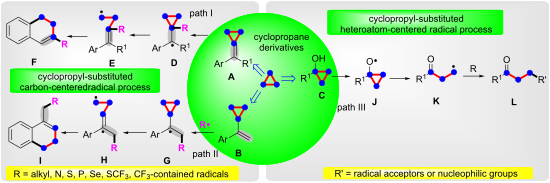
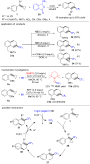
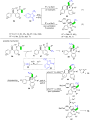
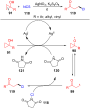
- of the copper(II) acetate-mediated oxidative radical ring-opening/cyclization of MCPs with diphenyl diselenides is outlined in Scheme 5. Firstly, the phenylselenyl radical 14, generated from the homolytic cleavage of diphenyl diselenide, is added to the C–C double bond of MCPs to afford the
- intermediate 15, which undergoes a ring-opening process to form the radical intermediate 16 [52][53]. Then, the radical 16 reacts with copper(II) acetate to produce organocopper intermediate 17. Finally, the intramolecular insertion of C–Cu in compounds 17 to the carbon–carbon double bond takes place to
- MCPs with elemental chalgogens. Copper(II) acetate-mediated oxidative radical ring-opening and cyclization of MCPs with diphenyl diselenides. AIBN-promoted oxidative radical ring-opening and cyclization of MCPs with benzenethiol. AIBN-mediated oxidative radical ring-opening and cyclization of MCPs with








Organometallic vs organic photoredox catalysts for photocuring reactions in the visible region
Beilstein J. Org. Chem. 2018, 14, 3025–3046, doi:10.3762/bjoc.14.282
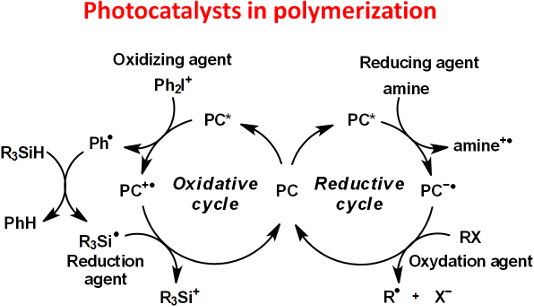
- transition metal complexes” [106]. In this mechanism, the catalyst is the most important component: it determines the equilibrium constant between the active and dormant species which is directly linked to the distribution of chain lengths [107]. As photoredox catalysts for ATRP applications, copper(II



Nucleoside macrocycles formed by intramolecular click reaction: efficient cyclization of pyrimidine nucleosides decorated with 5'-azido residues and 5-octadiynyl side chains
Beilstein J. Org. Chem. 2018, 14, 2404–2410, doi:10.3762/bjoc.14.217
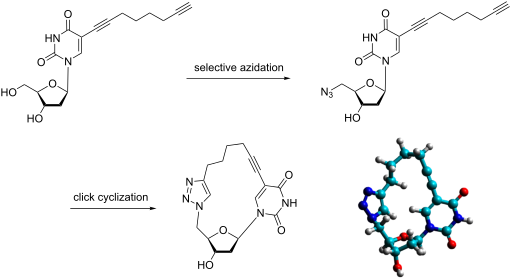
- ” reaction leading to a macrocycle or (ii) an intermolecular “click” reaction forming dimeric or oligomeric compounds. For a deeper insight, the “click” reaction was executed under different reaction conditions. First, the copper(I)-promoted “click” reaction was performed on 2 in the presence of copper(II


Synthesis of spirocyclic scaffolds using hypervalent iodine reagents
Beilstein J. Org. Chem. 2018, 14, 1778–1805, doi:10.3762/bjoc.14.152
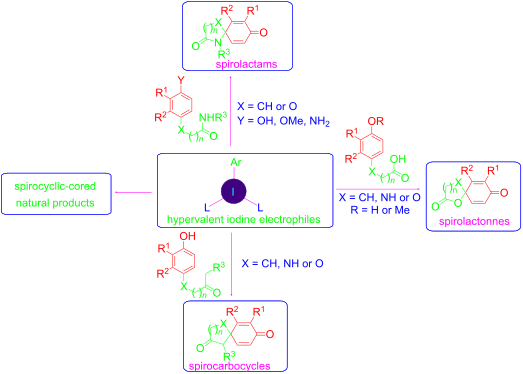
- synthesis of spiro β-lactams via oxidative dearomatization reactions. In this report, the synthesis of spiro β-lactams 56 were achieved successfully by the oxidative cyclization of p-substituted phenols 55 using PIDA (15) as an electrophile and copper(II) sulfate pentahydrate as an additive in the presence


β-Hydroxy sulfides and their syntheses
Beilstein J. Org. Chem. 2018, 14, 1668–1692, doi:10.3762/bjoc.14.143
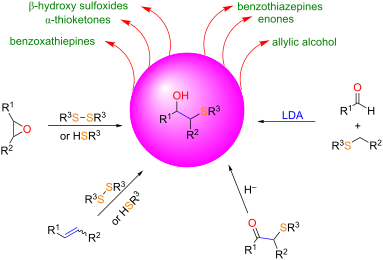
- below. 3.3.1 Acetoxysulfenylation using copper acetate. Bewick et al. reported a copper(II)-catalyzed synthesis of β-hydroxy sulfides from the reaction of cyclohexene/open-chain olefin with the basic disulfides, namely: 2,2’-dipyridyl disulfide and bis(2-aminophenyl) disulfide [68]. The intermediate 90
- . Due to the absence of this kind of chelation effect, the copper(II) acetate fails to catalyze the addition of diphenyl disulfide to alkenes under the same reaction conditions. 3.3.2 Acetoxysulfenylation using copper iodide-bipyridine as a catalyst. Taniguchi reported a copper(II) iodide-catalyzed 1,2
- -acetoxysulfenylation of alkenes using disulfides and acetic acid as substrates at 90 °C in open air as depicted in Scheme 33 [69]. This regioselective reaction gave the corresponding 1,2-acetoxysulfides in reasonable yields. Unlike a copper(II) acetate-catalyzed reaction which requires long reaction times, the copper


Hypervalent organoiodine compounds: from reagents to valuable building blocks in synthesis
Beilstein J. Org. Chem. 2018, 14, 1508–1528, doi:10.3762/bjoc.14.128
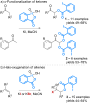
- catalytic benzoyloxy-trifluoromethylation using Togni’s reagent 5 (Scheme 4 and Scheme 5), the 1,2-benzoyloxy-azidation of alkenes can be performed in the presence of a copper catalyst with the azidobenziodoxolone ABX 40. The reaction takes place in dichloromethane using the copper(II) complex Cu(OTf)2 as
- high yielding N-arylation of 1H-1,2,3-benzotriazole (BTA), utilizing symmetrical diaryl-λ3-iodanes as two-fold aryl donors has been reported in the presence of Pd(OAc)2 and TPPTS as a water-soluble ligand, and copper(II) phenylcyclopropylcarboxylate (Scheme 35) [74]. Noteworthy, it is mentioned that Ar






Synthesis of trifluoromethylated 2H-azirines through Togni reagent-mediated trifluoromethylation followed by PhIO-mediated azirination
Beilstein J. Org. Chem. 2018, 14, 1452–1458, doi:10.3762/bjoc.14.123

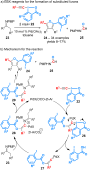
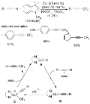
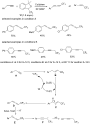
- has been proposed and is outlined in Scheme 5. Initially, CuI catalytically activates the Togni reagent 1, leading to the formation of the CF3-containing radical intermediate 9. Decomposition of the intermediate 9 produces (2-iodobenzoyloxy)copper(II) iodide (10) [65][66] with the simultaneous release




[3 + 2]-Cycloaddition reaction of sydnones with alkynes
Beilstein J. Org. Chem. 2018, 14, 1317–1348, doi:10.3762/bjoc.14.113
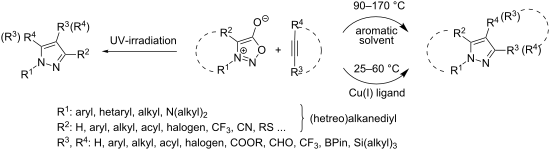
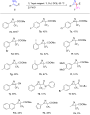
- -carboxylate in good yield. Copper(II) acetate anchored on a modified silica gel can also serve as an efficient catalyst in batch reactor or if housed in stainless steel cartridges [127] in continuous-flow conditions (Table 10). Again, the 4-substituted pyrazole is preferentially formed. Conclusion Since its


An overview of recent advances in duplex DNA recognition by small molecules
Beilstein J. Org. Chem. 2018, 14, 1051–1086, doi:10.3762/bjoc.14.93
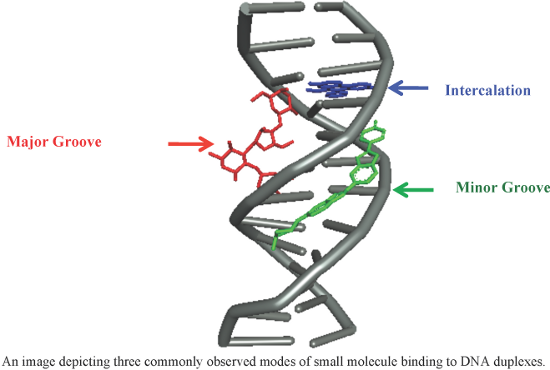
- characterized three mononuclear copper(II) complexes, [Cu(tpy)Cl2], [Cu(tpy)(NO3)2(H2O)] and [Cu(Ptpy)Cl2]·H2O·HCl and investigated their cytotoxicity and primary mode of DNA binding mechanism [94]. Molecular modeling as well as DNA cleavage studies have revealed that the first two complexes are DNA minor
- interactions play a crucial role in its binding to DNA groove. Similarly, the same group recently reported a macrocyclic copper(II) complex, ([CuL(ClO4)2] where L is 1,3,6,10,12,15-hexaazatricyclo[13.3.1.16,10]eicosane) and studied its interaction with calf thymus DNA (ct-DNA). It was confirmed that the Cu(II






Nanoreactors for green catalysis
Beilstein J. Org. Chem. 2018, 14, 716–733, doi:10.3762/bjoc.14.61
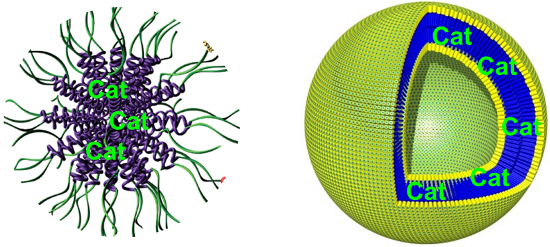
- synthesis of dendrimers and their applications as nanoreactors and catalyst carriers have been extensively studied over the last decades [94][95][96]. Fan and co-workers incorporated a bis(oxazoline)-copper(II) complex in the hydrophobic core of a polyether dendrimer [11]. The copper catalytic complex was


Progress in copper-catalyzed trifluoromethylation
Beilstein J. Org. Chem. 2018, 14, 155–181, doi:10.3762/bjoc.14.11
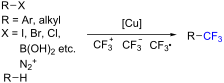
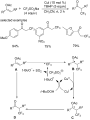
- , copper(II) species A. The latter reacts with the hydrazone to the trifluoromethylated aminyl radical intermediate C which is stabilized by the lone pair of the adjacent nitrogen atom, and (2-iodobenzoyloxy)copper(II) chloride (B). Finally, intermediate C is oxidized by copper(II) to restore the hydrazone













Recent applications of click chemistry for the functionalization of gold nanoparticles and their conversion to glyco-gold nanoparticles
Beilstein J. Org. Chem. 2018, 14, 11–24, doi:10.3762/bjoc.14.2
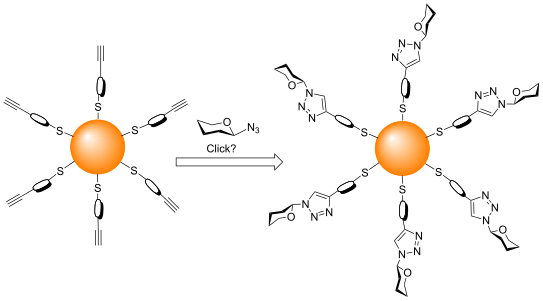
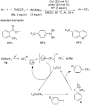
- means for the detection of copper(II) salts [65][66][67] and ascorbic acid [68], and also for protein quantification (i.e., for proteins capable of reducing Cu(II) to Cu(I)) [69]. The basis of these detection systems was that two sets of AuNPs were synthesized, one of which was functionalized with azide



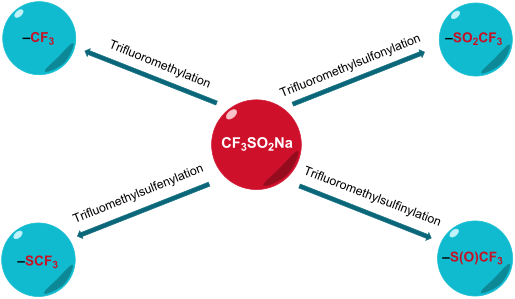
CF3SO2X (X = Na, Cl) as reagents for trifluoromethylation, trifluoromethylsulfenyl-, -sulfinyl- and -sulfonylation. Part 1: Use of CF3SO2Na
Beilstein J. Org. Chem. 2017, 13, 2764–2799, doi:10.3762/bjoc.13.272
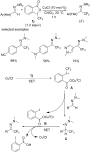
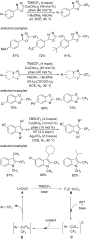
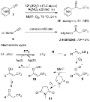
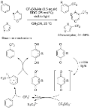
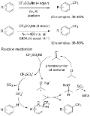
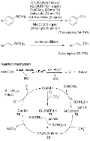
- 69) [20], Langlois and co-workers demonstrated that enol acetates 1a–c were converted into the corresponding α-trifluoromethyl ketones upon treatment with CF3SO2Na with tert-butyl hydroperoxide (TBHP) and a catalytic amount of copper(II) triflate (Scheme 1) [21]. The scope was rather narrow and
- CF3SO2Na in the presence of copper(I), reacted at the more electron-rich carbon atom of the C=C double bond to give the radical species 5 that was oxidised by copper(II) into the corresponding cationic intermediate 6 via a single electron transfer (SET). Finally, the acetyl cation was eliminated to provide
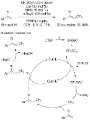
- aminotrifluoromethylation of alkenes in an intramolecular version was reported by Zhang and co-workers in 2017 (Scheme 14) [33]. Langlois’ conditions with tert-butyl hydroperoxide and a catalytic amount of copper(II) triflate were used to prepare a series of CF3-containing indoline, pyrrolidine, lactam and lactone






















Solvent-free copper-catalyzed click chemistry for the synthesis of N-heterocyclic hybrids based on quinoline and 1,2,3-triazole
Beilstein J. Org. Chem. 2017, 13, 2352–2363, doi:10.3762/bjoc.13.232
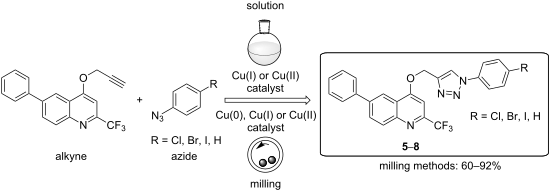
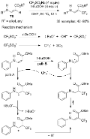
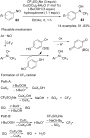
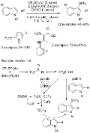
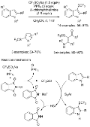
- reactions [27][28][29][30]. Significantly shortened reaction time and reduced energy requirements, along with clear benefits in yields revealed a wide potential of the mechanochemical approach for CuAAC. The initial report showed applications of standard catalyst systems, copper(II) salts and ascorbic acid
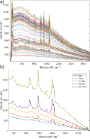
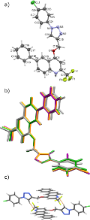
- situ generated Cu(I) through the reduction of Cu(II). Conventional solution-based CuAAC reaction using copper(II) acetate monohydrate was applied to provide triazoles 5–8. Two modes of heating the reaction mixture were used in order to test the reactivity of the azide reactants: heating at 60 °C for
- , entry 4). Solution-based method 1b using CuI, N,N’-diisopropylethylamine (DIPEA) and acetic acid afforded compounds 5–7 in 5–52% isolated yield and was thus less successful for the synthesis of 5–8 derivatives than methods 1a and 1a*, which include copper(II) acetate monohydrate as catalyst. Methods 1a



Preparation of imidazo[1,2-a]-N-heterocyclic derivatives with gem-difluorinated side chains
Beilstein J. Org. Chem. 2017, 13, 2115–2121, doi:10.3762/bjoc.13.208
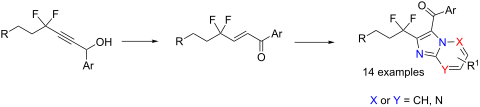
- [24]. Herein, we report the synthesis of imidazo[1,2-a]pyridines, imidazo[1,2-a]pyrimidines, and imidazopyridazines with fluorinated side chains following an efficient strategy developed by Hajra et al. [25]. This methodology, developed for the synthesis of 3-aroylimidazopyridines, involves a copper
- (II) acetate-catalyzed aerobic oxidative amination and it proceeds through a tandem Michael addition followed by an intramolecular oxidative amination. Therefore, our target molecules A could be synthesized by the oxidative coupling of 2-aminopyridines with α,β-unsaturated ketones B, themselves easily


Nitration of 5,11-dihydroindolo[3,2-b]carbazoles and synthetic applications of their nitro-substituted derivatives
Beilstein J. Org. Chem. 2017, 13, 1396–1406, doi:10.3762/bjoc.13.136

- many cases 3,6-unsubstituted carbazoles have been nitrated by using fuming or 70% nitric acid with or without addition of acetic anhydride [46]. Two inorganic nitrates, such as copper(II) nitrate [47] or cerium(IV) ammonium nitrate (CAN) [48] have also been used to give 3-mononitro or 3,6-dinitro


α-Acetoxyarone synthesis via iodine-catalyzed and tert-butyl hydroperoxide-mediateded self-intermolecular oxidative coupling of aryl ketones
Beilstein J. Org. Chem. 2017, 13, 1079–1084, doi:10.3762/bjoc.13.107

- been made [12], examples of the synthesis of α-acetoxyaryl ketones through self-intermolecular oxidative coupling of aryl ketones are still rare. Yan and coworkers reported the preparation of α-acyloxyaryl ketones from aryl ketones using a Pybox-copper(II) catalyst [13]. However, the substrate scope




Transition-metal-catalyzed synthesis of phenols and aryl thiols
Beilstein J. Org. Chem. 2017, 13, 589–611, doi:10.3762/bjoc.13.58

- -deficient aryl bromides provided good to excellent yields. D-Glucose represents a type of environmentally friendly ligand and can be easily removed during the work-up process. This work is of special value as it was the first report employing copper(II) as the catalyst in the synthesis of phenols. In 2011


Versatile synthesis of end-reactive polyrotaxanes applicable to fabrication of supramolecular biomaterials
Beilstein J. Org. Chem. 2016, 12, 2883–2892, doi:10.3762/bjoc.12.287

- )ethylamine (HEEA) were obtained from TCI (Tokyo, Japan). 4-(4,6-Dimethoxy-1,3,5-triazin-2-yl)-4-methylmorpholinium chloride (DMT-MM) and copper(II) sulfate pentahydrate (CuSO4) were obtained from Wako Pure Chemical Industries (Osaka, Japan). N,N’-Carbonyldiimidazole (CDI) and (+)-sodium L-ascorbate were




Copper-catalyzed asymmetric sp3 C–H arylation of tetrahydroisoquinoline mediated by a visible light photoredox catalyst
Beilstein J. Org. Chem. 2016, 12, 2636–2643, doi:10.3762/bjoc.12.260
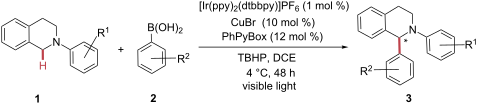
- -catalyst in DME as solvent, we observed a trace amount of the desired product at room temperature. When different copper salts were evaluated, it was found that CuBr was less active (Table 1, entry 1) and copper(II) bromide provided the highest yield for the arylation of THIQ with phenylboronic acid (2
- toluene and THF (Table 1, entries 7 and 8). On the other hand, highly polar solvents such as MeCN and MeOH were not beneficial for the formation of the desired product 3a (Table 1, entries 9 and 10). Control experiments performed in the absence of photoredox catalyst and/or transition metal copper(II
- -arylated PyBox L2 gave very good er under our reaction conditions (Table 2, entry 2). It is noteworthy that the er observed was higher when copper(I) bromide was used as a co–catalyst, compared to copper(II) bromide (Table 2, entry 3), possibly due to the Lewis acidity difference of Cu(I) and Cu(II




Catalytic Chan–Lam coupling using a ‘tube-in-tube’ reactor to deliver molecular oxygen as an oxidant
Beilstein J. Org. Chem. 2016, 12, 1598–1607, doi:10.3762/bjoc.12.156
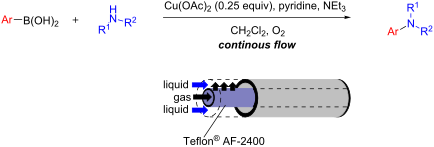
- for C(aryl)–N and C(aryl)–O coupling reactions. Their methods made use of stoichiometric amounts of copper(II) acetate as the catalyst and boronic acids as the aryl donors. In the presence of a base, the coupling could be performed at room temperature. These reactions were subsequently shown to work
- active compounds [11][12]. In 2009 the groups of Stevens and van der Eycken reported on the Chan–Lam reaction as a continuous flow protocol using copper(II) acetate (1.0 equiv), pyridine (2.0 equiv) and triethylamine (1.0 equiv) in dichloromethane [13]. Generally, when using anilines or phenols as the
- potentially an improvement on the use of stiochiometric copper(II) acetate in continuous flow, the use of TEMPO or tert-butyl peroxybenzoate as a co-oxidant introduces waste. Employing oxygen gas as an oxidant is preferred as it is cheap, renewable and environmentally benign. We therefore set out to develop a


Artificial Diels–Alderase based on the transmembrane protein FhuA
Beilstein J. Org. Chem. 2016, 12, 1314–1321, doi:10.3762/bjoc.12.124
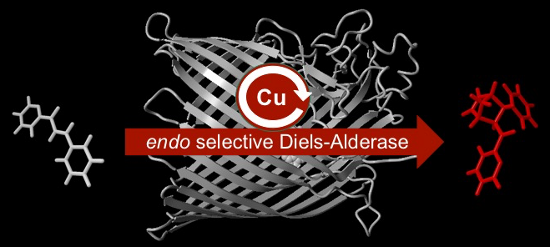
- copper(II) complexes were covalently linked to an engineered variant of the transmembrane protein Ferric hydroxamate uptake protein component A (FhuA ΔCVFtev). Copper(I) was incorporated using an N-heterocyclic carbene (NHC) ligand equipped with a maleimide group on the side arm at the imidazole nitrogen
- . Copper(II) was attached by coordination to a terpyridyl ligand. The spacer length was varied in the back of the ligand framework. These biohybrid catalysts were shown to be active in the Diels–Alder reaction of a chalcone derivative with cyclopentadiene to preferentially give the endo product. Keywords


Synthesis of 2-substituted tetraphenylenes via transition-metal-catalyzed derivatization of tetraphenylene
Beilstein J. Org. Chem. 2016, 12, 1302–1308, doi:10.3762/bjoc.12.122
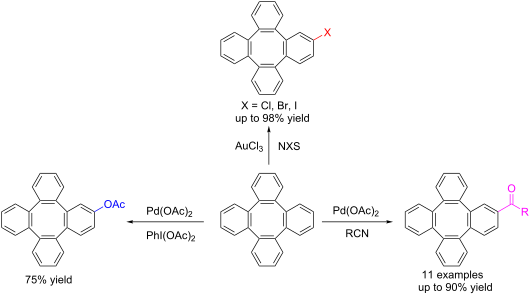
- synthesis of tetraphenylene in 1943 [22], in which 2,2’-dibromobiphenyl was converted to its corresponding Grignard reagent and subsequent addition of copper(II) chloride provided 1 in 16% yield, a variety of methods for constructing the tetraphenylene skeleton have been developed [23][24][25][26][27][28





