


Search results
Search for "emission" in Full Text gives 493 result(s) in Beilstein Journal of Organic Chemistry. Showing first 200.
Synthesis and properties of 6-alkynyl-5-aryluracils
Beilstein J. Org. Chem. 2024, 20, 898–911, doi:10.3762/bjoc.20.80
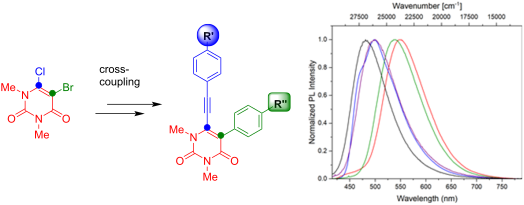
- already discussed for 5d, this again reinforces the assumption that this phenomenon could be caused by a π-donor at 5-position, regardless of its structure. Further investigation is required, but if confirmed, this could be used to create specific desired absorption behaviors. Subsequently, the emission
- spectra were investigated. As explained in the previous section, a similar behavior was observed in the emission spectra with respect to the substitution pattern. In general, a bathochromic shift of the emission was observed in the presence of a dimethylamino group at the 5-position. The bathochromic
- bathochromic shift of 5m is 57 nm and lies between the two emission peaks of 5d and 5k. Therefore, it can be concluded that combining the two substitution patterns leads to this intermediate behavior. Substitution of the 5-π-donor with a π-acceptor group reduced the bathochromic shift from 57 nm to 18 nm





SOMOphilic alkyne vs radical-polar crossover approaches: The full story of the azido-alkynylation of alkenes
Beilstein J. Org. Chem. 2024, 20, 701–713, doi:10.3762/bjoc.20.64
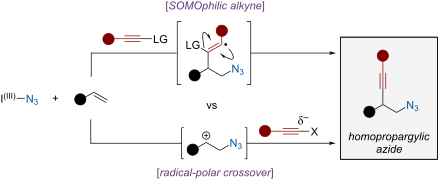
- to 80 °C instead of using light to form the radical only afforded traces of the product (Table 1, entry 2). Changing the solvent to DCE slightly increased the yield (Table 1, entry 3). Blue light with an emission spectrum centered around 467 nm was initially selected since Ph-EBX is known to absorb


Isolation and structure determination of a new analog of polycavernosides from marine Okeania sp. cyanobacterium
Beilstein J. Org. Chem. 2024, 20, 645–652, doi:10.3762/bjoc.20.57
- in 100 mL phosphate-buffered saline) was added to each well. The plates were incubated for an additional 3 h. The plates were read in a SpectraMax Gemini XS microplate fluorescence scanner (Molecular Devices) using an excitation wavelength of 536 nm and an emission wavelength of 588 nm. WI-38 cells


Synthesis of photo- and ionochromic N-acylated 2-(aminomethylene)benzo[b]thiophene-3(2Н)-ones with a terminal phenanthroline group
Beilstein J. Org. Chem. 2024, 20, 552–560, doi:10.3762/bjoc.20.47
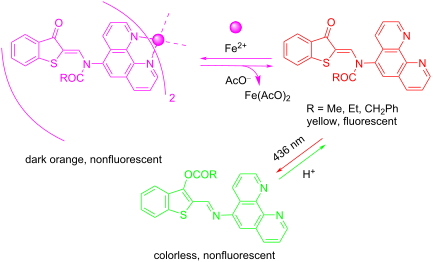
- change of the solutions from yellow to dark orange. Subsequent selective interaction with AcO− led to the restoration of the initial absorption and emission properties. Thus, the obtained compounds represent dual-mode “on–off–on” switches of optical and fluorescent properties under sequential exposure to
- absorption spectra, induced in one or both directions by absorption of electromagnetic radiation [1][2][3][4]. Due to the different structures and the different optical and emission properties of these forms, photochromic compounds are used in 3D optical memory devices, photoswitches of different types
- -Acylated compounds 2a–c in solutions exhibited fluorescence in the region of 465–468 nm, and the excitation emission spectra agreed well with the absorption spectra (Figure 1). Compounds 2a–c in solutions demonstrated a typical negative photochromism [1][16] when irradiated with visible light of 436 nm


Switchable molecular tweezers: design and applications
Beilstein J. Org. Chem. 2024, 20, 504–539, doi:10.3762/bjoc.20.45

- arms with planar Pt complexes are parallel and the distance between them allows for the intercalation of another terpy-Pt complex. The guest intercalation coupled with the induction of short-range Pt–Pt interactions was followed by UV–vis absorption and emission spectroscopies with characteristic MMLCT
- using a similar principle [24]. The protection from the solvent of the intercalated Pt guest enables its fluorescence emission and is accompanied by the induction of chirality in the resulting host–guest complex. A significant enhancement of the circular dichroism response of the chiral guest is
- chiroptical properties with a large change in the absorption spectra and a bathochromic shift in the emission maximum. This system represents a rare example of a multi-output readout system, showing responses in ECD, fluorescence, and CPL activity. The authors later reported a similar system with a bipyridine




Development of a chemical scaffold for inhibiting nonribosomal peptide synthetases in live bacterial cells
Beilstein J. Org. Chem. 2024, 20, 445–451, doi:10.3762/bjoc.20.39
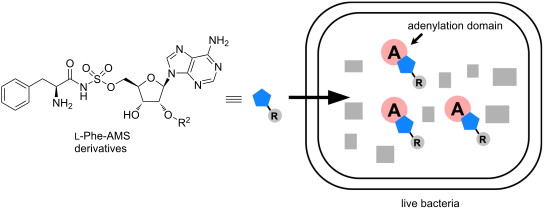
- fluorescence scanning (excitation wavelength, 532 nm; emission wavelength, 580 nm). The labeling of GrsA by probe 3 was completely suppressed by the addition of inhibitors 1, 2, 4, 5, and 7 (Figure 4a). In contrast, inhibitors 6, 8, and 9 moderately inhibited labeling, which was consistent with the decreased


Facile approach to N,O,S-heteropentacycles via condensation of sterically crowded 3H-phenoxazin-3-one with ortho-substituted anilines
Beilstein J. Org. Chem. 2024, 20, 336–345, doi:10.3762/bjoc.20.34
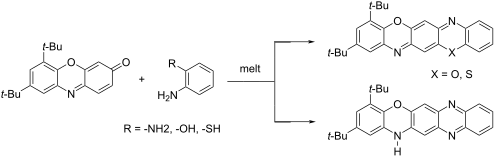
- -phenoxazin-3-ones 4, compounds 5 and 6 display intense fluorescence in solution at room temperature (Figure 5). The excitation spectra of the compounds (Figures S7–S11, Supporting Information File 1) correspond to the longest-wavelength absorption bands. The absorption and emission spectra of benzo[5,6][1,4
- , angles, and important crystallographic parameters are given in Tables S6 and S7, Supporting Information File 1. Hydrogen atoms are omitted for clarity. a) UV–vis (solid lines) and fluorescence emission (λex = 365 nm, dashed) spectra of compounds 5a–c (toluene, c = 2 10−5 M, l = 1 cm). b) Solutions of
- compounds 5a–c in toluene before irradiation (no emission) and c) during irradiation (photoluminescence, λex = 365 nm) at room temperature. UV–vis (solid lines) and fluorescence emission (dashed, λex = 365 nm) spectra of compounds 6a,b in toluene (c = 2 10−5 M, l = 1 cm) at room temperature. UV–vis


Catalytic multi-step domino and one-pot reactions
Beilstein J. Org. Chem. 2024, 20, 254–256, doi:10.3762/bjoc.20.25
- in the Full Research Paper by Nath and co-workers. The newly synthesized porphyrin derivatives displayed significant red-shifted absorption and emission compared to simple meso-tetraarylporphyrins [14]. The Carlone group reports an Enders-type triple cascade reaction toward cyclohexenals, using

Perspectives on push–pull chromophores derived from click-type [2 + 2] cycloaddition–retroelectrocyclization reactions of electron-rich alkynes and electron-deficient alkenes
Beilstein J. Org. Chem. 2024, 20, 125–154, doi:10.3762/bjoc.20.13
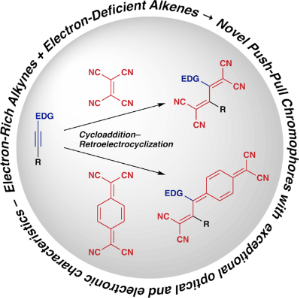
- -emission (AIE)-active aggregates exhibit emissive behavior in hexane, with an emission peak at 679 nm and a shoulder at 717 nm along with a fluorescence quantum yield of 8.5%. This luminescence phenomenon can be aptly considered to be AIE, considering the pronounced constraints imposed on molecular
- rotation in the aggregate state, including rotation around the central single bond of the TCBD moiety. Regarding the anthracene-embedded TCBD 19 in dichloromethane, no emission signal was observed. However, in the powdered form or sparsely distributed rigid matrices, a broad emission spectrum was observed
- [138]. Compounds 55 and 56 remain devoid of emissive characteristics even when in a solution or a solid state [129]. When compound 50 was characterized using a standard steady-state fluorimeter, no emission signals were observed across the visible and NIR regions extending up to 1,600 nm, both in a


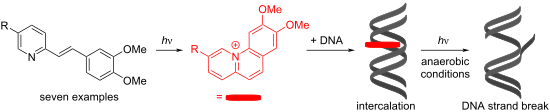
Photoinduced in situ generation of DNA-targeting ligands: DNA-binding and DNA-photodamaging properties of benzo[c]quinolizinium ions
Beilstein J. Org. Chem. 2024, 20, 101–117, doi:10.3762/bjoc.20.11
- points were measured with a melting point apparatus BÜCHI 545 (Büchi, Flawil, CH) and are uncorrected. The absorption spectra were recorded on a Varian Cary 100 Bio absorption spectrometer with Hellma quartz glass cuvettes 110-QS (layer thickness d = 10 mm). The emission spectra were recorded on a
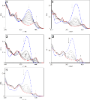
- titration of ct DNA to 3c (A), 3e (B), 3f (C), and 3g (D) (c = 20 µM) in Na phosphate buffer (pH 7.0, T = 20 °C, cNa+ = 16 mM). The arrows indicate the development of the emission bands during titration. Inset: plot of relative emission intensity versus cDNA. CD (A) and LD (B) spectra of 3f and ct DNA (cDNA
- ]quinolizinium ions 3b–g (yields in % refer to isolated products). Proposed mechanisms for the photoinduced DNA damage initiated by photoexcitation of benzoquinolizinium 3f. Absorption and emission maxima of 3c–g in the absence and presence of ct DNA and binding constants of their complexes with ct DNA. Gel




Optimizing reaction conditions for the light-driven hydrogen evolution in a loop photoreactor
Beilstein J. Org. Chem. 2024, 20, 74–91, doi:10.3762/bjoc.20.9
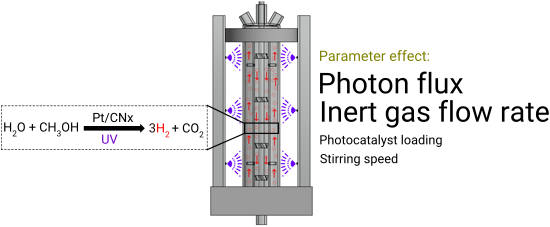
- , Germany 10.3762/bjoc.20.9 Abstract Photocatalytic hydrogen production from water is a promising way to fulfill energy demands and attain carbon emission reduction goals effectively. In this study, a loop photoreactor with a total volume of around 500 mL is presented for the photocatalytic hydrogen
- in a proper way, solar energy can be converted to hydrogen fuels. Hydrogen as an energy carrier has zero carbon emission and a high energy density [11][12]. While significant efforts are directed towards developing effective photocatalysts for solar water splitting [13][14][15][16], a crucial


Biphenylene-containing polycyclic conjugated compounds
Beilstein J. Org. Chem. 2023, 19, 1895–1911, doi:10.3762/bjoc.19.141
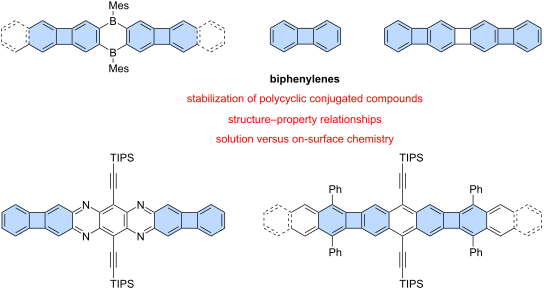
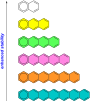
- )2C6H3, (c) H), followed by aromatization in acidic conditions, resulted in the formation of three [3]naphthalene regioisomers 43a–c, 44a–c, and 45a–c with excellent yields of up to 94%. The synthesized PAHs 43a, 44a, and 45a with diverse geometries exhibited interesting absorption and emission
- characteristics, making them highly intriguing for further study and potential applications. Among the regioisomers in the series, the linear isomer 43a displayed the highest quantum yield (Φem = 0.64). Additionally, its absorption and emission max values (λmax and λmax,em) were determined to be 476 and 477 nm
- , respectively. Compound 44a exhibited no alteration in the absorption maxima; however, there was a considerable bathochromic shift in the emission maxima (λmax = 476 nm and λmax,em = 587 nm for 44a). In contrast to compound 43a, Φem of compound 44a decreased significantly to 0.08. Likewise, compound 45a (λmax



Aromatic systems with two and three pyridine-2,6-dicarbazolyl-3,5-dicarbonitrile fragments as electron-transporting organic semiconductors exhibiting long-lived emissions
Beilstein J. Org. Chem. 2023, 19, 1867–1880, doi:10.3762/bjoc.19.139
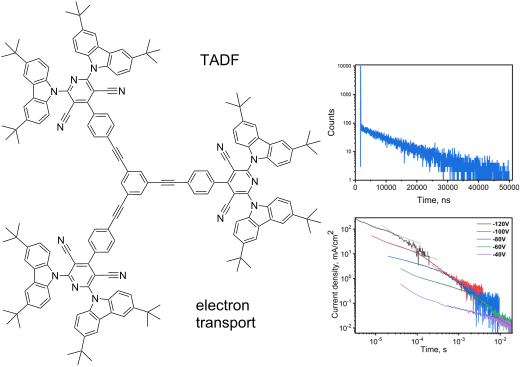
- the solutions of the compounds showed non-structured emission peaks in the visible region, which are attributed to ICT emission. The PL intensities of the solutions of the compounds are enhanced after deoxygenation, which is indicative of TADF. The photoluminescence quantum yields and TADF properties
- 10 000 cd m−2, electroluminescence ranging from blue to yellow, maximum current of 15 cd/A and higher EQE than 7%. Pyridine-3,5-dicarbonitrile-based TADF materials exhibit different visible light emission spectra (Figure 1). Recently, Chen and Lu reported two new orange-red/red TADF emitters composed
- PL intensity increased with increasing temperature and the profiles of the PL spectra were practically the same at the different temperatures proving the fluorescence nature of long-lived emission (Figure 4c and Figures S4–S6 in Supporting Information File 1). Two decay regimes were obtained for the


Thienothiophene-based organic light-emitting diode: synthesis, photophysical properties and application
Beilstein J. Org. Chem. 2023, 19, 1849–1857, doi:10.3762/bjoc.19.137
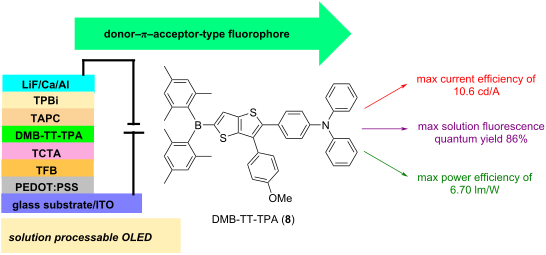
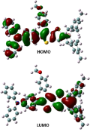
- absorption and emission maxima of 411 and 520 nm, respectively, with a mega Stokes shift of 109 nm and fluorescence quantum yields both in the solid state (41%) and in solution (86%). The optical properties were supported by computational chemistry using density functional theory for optimized geometry and
- lithiation of 7 and following reaction with dimesitylboron fluoride in 85% yield (Scheme 1). Photophysical properties The UV–vis absorption and fluorescence spectra of DMB-TT-TPA (8) were recorded in THF (Figure 1 and Table 1) [38]. It showed maximum absorption and emission wavelengths of 411 and 520 nm
- ), 2.17 (s, 12H); 13C NMR (126 MHz, CDCl3) δ 158.92, 153.46, 151.26, 147.60, 147.20, 143.95, 141.05, 140.90, 138.50, 137.96, 132.59, 130.25, 129.86, 129.49, 129.33, 128.14, 127.85, 127.57, 125.01, 123.45, 122.08, 114.12, 55.23, 23.54, 21.22. Absorption and emission of DMB-TT-TPA (8) in THF. Figure 1 was


Selectivity control towards CO versus H2 for photo-driven CO2 reduction with a novel Co(II) catalyst
Beilstein J. Org. Chem. 2023, 19, 1766–1775, doi:10.3762/bjoc.19.129
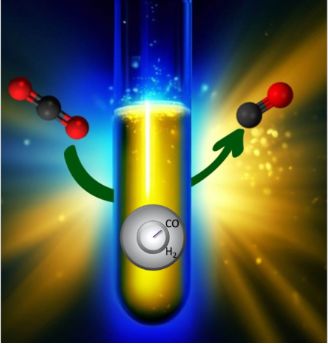
- − (−1.67 V) is plausible, albeit the difference is not high. Estimation of the redox potentials of the excited state of PS (Eox* and Ered*) was done assuming that the energy difference (E00) between the energies of the excited and ground states, both at their zero levels, is the same as the emission
- maximum. Being the emission of [Cu(dmp)DPEPhos](BF4) in DMA/TEA 7:1 567 nm, the value of E00 is 2.19 eV. It follows that Eox* is −1.22 V and Ered* is 0.52 V (see Table S3 in Supporting Information File 1). Thermodynamically, an oxidative quenching of PS* by the catalyst 1 is not feasible (ΔG > 0.3 V
- , for a total of eight simultaneous reactions. A drawing of the photoreactor is shown in the Supporting Information File 1 (Figure S9) and the emission spectrum of the lamp is reported in Figure S10. Typically, the solutions contained the photosensitizer (1 mM or 0.5 mM), catalyst 1 (different


Charge carrier transport in perylene-based and pyrene-based columnar liquid crystals
Beilstein J. Org. Chem. 2023, 19, 1755–1765, doi:10.3762/bjoc.19.128
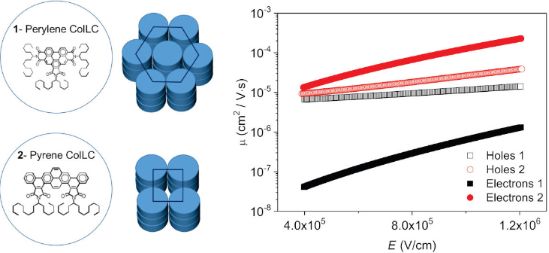
- excellent photoelectric properties such as strong emission, efficient excimer formation, and suitable intermolecular stacking for good charge carrier transport. They have been applied as active layer in OFETs with high ambipolar mobility due to their well-defined monocrystalline microstructures resulting
- aggregates and nonradiative decay processes that are thermally activated [32]. However, an increase in the emission intensity can be observed for 1 at the Colhex–Iso transition. The stronger π-stacking aggregates present in the Colhex of 1, reduce the emission compared to the the disordered isotropic phase
- . The enhanced and blue-shifted emission at the transition to the isotropic phase arise from the excited isolated molecules, where the exciton decays radiatively without diffusion. For the isolated molecules, the more localized π-orbital results in a higher energy emission state. The same effect was


Trifluoromethylated hydrazones and acylhydrazones as potent nitrogen-containing fluorinated building blocks
Beilstein J. Org. Chem. 2023, 19, 1741–1754, doi:10.3762/bjoc.19.127
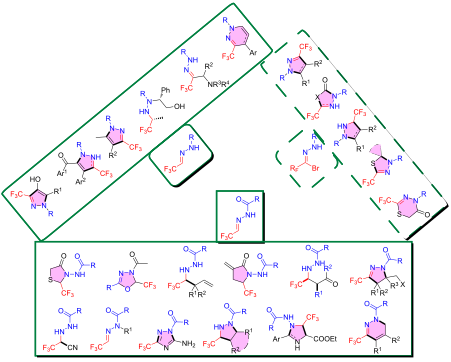
- oxidation/cyclization with NXS or Cu(OAc)2. Notably, some of the resultant CF3-substituted 1,6-dihydropyridazines exhibited aggregation-induced emission [102][103] (Scheme 16). The hydrocyanation of acylhydrazones is an important method for the preparation of α-hyrazino acids. Hu et al. reported a Lewis


Quinoxaline derivatives as attractive electron-transporting materials
Beilstein J. Org. Chem. 2023, 19, 1694–1712, doi:10.3762/bjoc.19.124
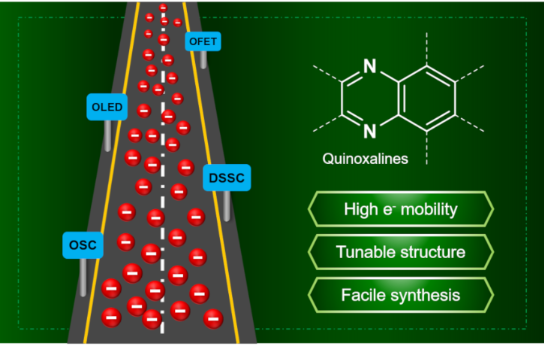
- of structural modification, the introduction of various functional groups into Qx derivatives has allowed for the precise control of energy levels, bandgaps, and carrier transport properties. For instance, Sharma et al. fine-tuned the intermolecular charge transfer (ICT) transitions and emission
- . explored the modulation of optoelectrochemical properties and thermal characteristics of pyridopyrazino[2,3-b]indole-based Qx46 series with varying substituents, i.e., bromine, chlorine, methyl and nitro group. Their study revealed inbuilt ICT and aggregation-induced emission (AIE) effects, forming
- quinone unit on quinoxaline to achieve donor–acceptor interactions and desirable electronic properties. The compounds exhibited absorption, emission, electrochemical, and thermal properties suitable for n-type materials. Theoretical properties were also investigated using time-dependent DFT. The HOMO and




A deep-red fluorophore based on naphthothiadiazole as emitter with hybridized local and charge transfer and ambipolar transporting properties for electroluminescent devices
Beilstein J. Org. Chem. 2023, 19, 1664–1676, doi:10.3762/bjoc.19.122
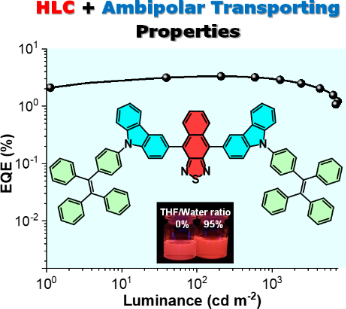
- aggregation-induced emission (AIE) luminogen. The experimental (solvatochromic and emission in THF/water mixtures studies) and theoretical investigations prove that TPECNz retains cooperative hybridized local and charge transfer (HLCT) and weak AIE features. Thanks to its D–A–D-type structure with a proper
- twist angle between the D and A units, a strong electron deficiency of the Nz unit, and electron-donating and hole-transporting natures of carbazole, TPECNz exhibits a strong deep red emission (λem = 648 nm) with a high fluorescence quantum yield of 96%, outstanding thermal property (Tg = 236 °C), and
- ambipolar charge-carrier-transporting property with a decent balance of mobility of electrons (1.50 × 10⁻⁵ cm2 V−1 s−1) and holes (4.42 × 10⁻⁶ cm2 V−1 s−1). TPECNz is successfully employed as a non-doped emitter in an OLED which displays deep red electroluminescent emission peaked at 659 nm with CIE


Tying a knot between crown ethers and porphyrins
Beilstein J. Org. Chem. 2023, 19, 1630–1650, doi:10.3762/bjoc.19.120
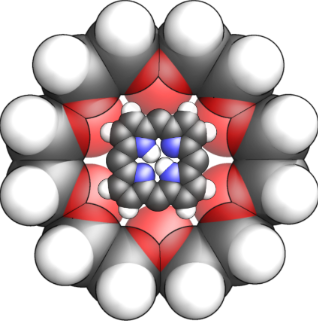
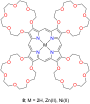
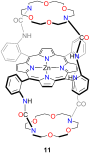
- cation and crown ether pocket, dimerisation of the crown porphyrin molecule would occur. The dimerisation led to interesting changes in the visible, NMR, ESR, and emission spectral features. Further developments by Camilleri, Gunter, Boitrel, and Osuka focused on the exploitation of meso-crowned
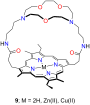
- of coordination compounds of copper(II), iron(II/III), manganese(II), nickel(II), and cobalt(II) with 9-Zn and 9-Cu was demonstrated. The emission quenching was rationalised considering the binding of the transition metal within the crown ether cavity. No quenching was observed upon the addition of









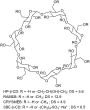
Cyclodextrins permeabilize DPPC liposome membranes: a focus on cholesterol content, cyclodextrin type, and concentration
Beilstein J. Org. Chem. 2023, 19, 1570–1579, doi:10.3762/bjoc.19.115
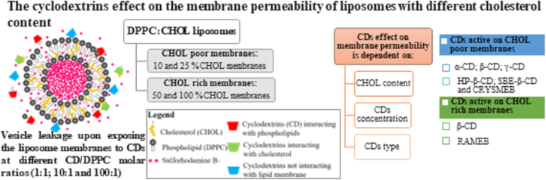
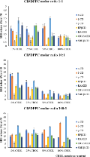
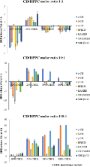
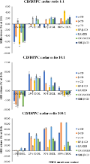
- carried out on a spectrophotometer (Hitashi F-7000 Spectrofluorometer) at an excitation wavelength of 535 nm and an emission wavelength of 590 nm. The emission spectrum was recorded in the range 540–700 nm. The results of the permeability study were expressed as the percentage of the fluorophore released


Consecutive four-component synthesis of trisubstituted 3-iodoindoles by an alkynylation–cyclization–iodination–alkylation sequence
Beilstein J. Org. Chem. 2023, 19, 1379–1385, doi:10.3762/bjoc.19.99
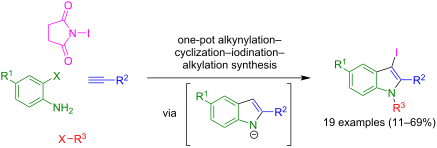
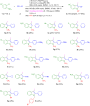
- absorption maximum of indole derivative 8b appears at 309 nm with an absorption coefficient ε = 10700 M−1 cm−1 and the emission maximum is found at 423 nm with a Stokes shift of 8700 cm−1 (Figure 1A). Moreover, compound 8b emits intensively blue in both the solid state and solution (Figure 1B). Conclusion In
- , 6.29; N, 4.52. A: Absorption and emission spectra of 1-methyl-2-phenyl-3-(p-tolyl)-1H-indole (8b), recorded in dichloromethane, T = 298 K, λexc = 290 nm. B: Emission of compound 8b in the solid state (right) and in solution (left) (UV lamp, λexc = 365 nm. Consecutive alkynylation–cyclization–alkylation




Organic thermally activated delayed fluorescence material with strained benzoguanidine donor
Beilstein J. Org. Chem. 2023, 19, 1289–1298, doi:10.3762/bjoc.19.95
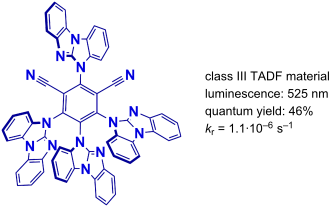
- 4CzIPN, vide supra. We collected steady state luminescence and PL after long time delays for 4BGIPN at 77 K to further support the assignment of the TADF mechanism and attempt to characterize LE and CT triplet states. The emission profiles experienced minor narrowing upon cooling to 77 K, while the PL
- localized on a donor benzoguanidine moiety. Unlike 1LE-fluorescence, 3LE-phosphorescence has a very long lifetime of 1.8 s. Excitation spectra of the broad and resolved bands for 4BGIPN in MCH glass at 77 K (Figure S4, Supporting Information File 1) follow a mirror image rule when compared with emission
- to 60 K. However, only marginal increase of lifetime measured in the range of 60 to 16 K indicating a phosphorescence PL nature below 60 K. The charge transfer singlet (1CT) and local excited singlet (1LE), triplet (3LE) state energies were estimated from the onset values of the blue emission edge of


Radical ligand transfer: a general strategy for radical functionalization
Beilstein J. Org. Chem. 2023, 19, 1225–1233, doi:10.3762/bjoc.19.90
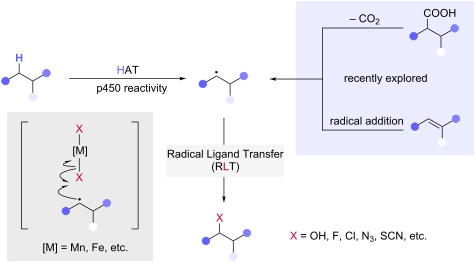
- important medical radioisotope used for positron emission tomography (PET) [43]. Optimized conditions of both isotopes included fast reaction times of under two hours; in the case of the 18F radioisotope, reactions were carried out in 10 minutes and resulted in moderate to high yields, demonstrating the


Unravelling a trichloroacetic acid-catalyzed cascade access to benzo[f]chromeno[2,3-h]quinoxalinoporphyrins
Beilstein J. Org. Chem. 2023, 19, 1216–1224, doi:10.3762/bjoc.19.89
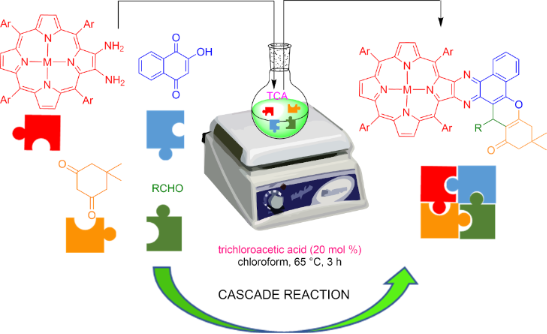
- ) porphyrins were transformed to the corresponding free base and zinc(II) benzo[f]chromeno[2,3-h]quinoxalinoporphyrins under standard demetallation and zinc insertion conditions. The absorption and emission properties of the obtained porphyrins were investigated by using UV–visible and fluorescence
- spectroscopy. The preliminary photophysical results revealed a significant red-shift in their absorption and emission spectra as compared to the meso-tetrakis(4-methylphenyl)porphyrins due to the extended π-conjugation. Keywords: bathochromic shift; benzo[f]chromeno[2,3-h]quinoxalinoporphyrins; catalysis
- other materials applications [4][5][6][7]. Among the previously synthesized synthetically modified porphyrinoids, β,β’-fused meso-tetraphenylporphyrins have gained a considerable importance because of their red-shifted absorption and emission due to the extended π-conjugation. In particular, β,β’-fused





