


Search results
Search for "epoxy" in Full Text gives 104 result(s) in Beilstein Journal of Organic Chemistry.
Oligomeric epoxide–amine adducts based on 2-amino-N-isopropylacetamide and α-amino-ε-caprolactam: Solubility in presence of cyclodextrin and curing properties
Beilstein J. Org. Chem. 2013, 9, 2803–2811, doi:10.3762/bjoc.9.315
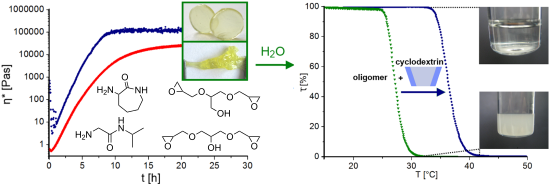
- with hydrophobic guest molecules is widely used in drug, food, cosmetics, textile, adhesives, plastics and more industries [11][12][13]. Interestingly, recently it was confirmed that α- and β-CD cannot interact with PNIPAM. Only γ-CD has a tendency to include the PNIPAM main chain [14]. Normally, epoxy
- resins exhibit poor solubility in water [15][16][17]. Accordingly, epoxide–amine polymers are not yet deeply investigated in respect to LCST behavior [18][19]. At present, most available bio-based and water soluble epoxy resins are expensive and use petroleum-based curing agents [20]. Thus, in the
- present paper we wish to describe our results about preparation and solubility of novel bio-based amine–epoxy oligoadducts. Also, we present some effects of CD on the solubility of these oligomers. Results and Discussion Generally, primary amins are bifunctional towards diepoxides and are thus monomers


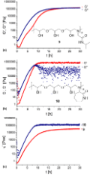


Silica sulfuric acid: a reusable solid catalyst for one pot synthesis of densely substituted pyrrole-fused isocoumarins under solvent-free conditions
Beilstein J. Org. Chem. 2013, 9, 2344–2353, doi:10.3762/bjoc.9.269
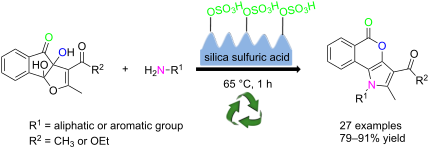
- sulfonic group of SSA generates dehydrated cationic intermediate 9. This reactive intermediate 9 provokes a nucleophilic attack of primary amines to form bicyclo[3.3.0]octanamino compound 10. Then the α-hydroxy group of 10 attacks the adjacent carbonyl carbon to generate epoxy intermediate 11. This
- unstable epoxy intermediate 11 produces a six-membered lactone intermediate 12 through the breaking of a C–C bond. Subsequently, intermediate 12 tautomerizes to 13 under formation of the isocoumarin skeleton. The dihydropyrrole-fused isocoumarin intermediate 14 is formed through the intramolecular
- nucleophilic attack of the secondary amine group to the carbonyl carbon of 13. Finally, intermediate 14 loses water to furnish pyrrole-fused isocoumarins 5 or 8. It is worth mentioning that in the previous method instead of the formation of epoxy intermediate like 11 a transannular rearrangement was proposed


Flow synthesis of phenylserine using threonine aldolase immobilized on Eupergit support
Beilstein J. Org. Chem. 2013, 9, 2168–2179, doi:10.3762/bjoc.9.254
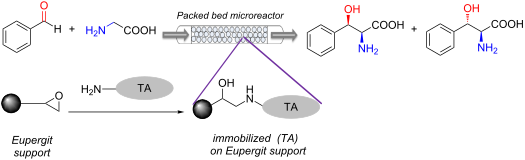
- acrylic beads provide a rapid and simple support for immobilization and have been used to immobilize various enzymes for a number of reactions [46]. Immobilization on Eupergit (a porous material) can be achieved without the need for any additional reagents, as the epoxy groups on Eupergit can react
- directly with the nucleophilic groups of the enzyme by forming strong covalent linkages like amino, hydroxy or mercapto functional groups. Eupergit has a high density of epoxy groups on the surface (oxirane density 300 μmol/g dry beads [47]), increasing the possibility of multipoint attachment of the
- each other which resulted in higher values for enzyme retention. For the indirect method, however, the epoxy groups were converted into aldehyde groups. These groups can only react with nucleophiles such as amino groups. During treatment of Eupergit with ethylenediamine, a coupling of two adjacent


A concise enantioselective synthesis of the guaiane sesquiterpene (−)-oxyphyllol
Beilstein J. Org. Chem. 2013, 9, 2028–2032, doi:10.3762/bjoc.9.239
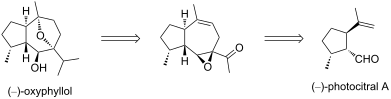
- Martin Zahel Peter Metz Fachrichtung Chemie und Lebensmittelchemie, Organische Chemie I, Technische Universität Dresden, Bergstrasse 66, 01069 Dresden, Germany 10.3762/bjoc.9.239 Abstract (−)-Oxyphyllol was prepared in only 4 steps from an epoxy enone that already served as an intermediate for
- 3 can be utilized to generate the isopropyl group, and a regioselective transannular epoxide opening would construct the oxygen-bridged bicyclic hydroazulene framework. Alcohol 3 was traced back to the known epoxy enone 4 that already served as an intermediate for the total synthesis of 5 [6]. As


Exploration of an epoxidation–ring-opening strategy for the synthesis of lyconadin A and discovery of an unexpected Payne rearrangement
Beilstein J. Org. Chem. 2013, 9, 1179–1184, doi:10.3762/bjoc.9.132
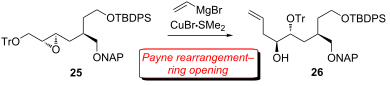
- complex [29] at the less-hindered carbon of the epoxide would provide 26. Acid- and Lewis acid promoted Payne rearrangements of epoxy alcohols [33][34] and epoxy methyl ethers [35] have been described, but we are unaware of any prior reports of Payne rearrangements of the bulkier epoxy trityl ethers


Efficient regio- and stereoselective access to novel fluorinated β-aminocyclohexanecarboxylates
Beilstein J. Org. Chem. 2013, 9, 1164–1169, doi:10.3762/bjoc.9.130

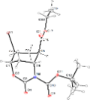
- bond oxidation with 3-chloroperbenzoic acid (MCPBA) to afford epoxy amino ester 6 cis-diastereoselectively [57] (Scheme 1). Opening of the oxirane ring in 6 with NaBH4 in EtOH at 70 °C proceeded regioselectively, providing exclusively amino ester 5 with the hydroxy function on position 4 (for analogous




Facile synthesis of functionalized spiro[indoline-3,2'-oxiran]-2-ones by Darzens reaction
Beilstein J. Org. Chem. 2013, 9, 918–924, doi:10.3762/bjoc.9.105
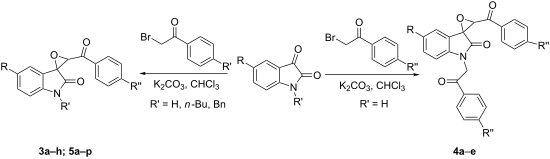
- . The 1H NMR spectra of compounds 3a–h and 4a–e usually show one set of characteristic peaks for each group, especially one singlet at about 5.10 ppm for one proton of the epoxy unit, which clearly indicates that only one isomer exists in each sample. However, 1H NMR spectra of compounds 3a and 3f
- ratios. It is known that the closure of the epoxy ring would form cis/trans isomers in the Darzens reaction process. Here the N-benzyl and the N-butyl group in the oxindole moiety may decrease the steric effect of formation of the epoxy ring and lead to the easier formation of the relatively unstable cis


New core-pyrene π structure organophotocatalysts usable as highly efficient photoinitiators
Beilstein J. Org. Chem. 2013, 9, 877–890, doi:10.3762/bjoc.9.101
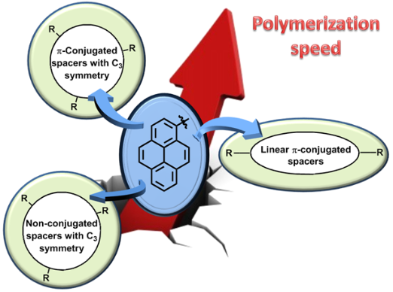
- of the epoxy content was also continuously followed by real-time FTIR spectroscopy (FTIR NEXUS 870). A Xe–Hg lamp (Hamamatsu, L8252, 150 W, filtered light at λ > 340 nm; intensity ~ 30 mW/cm²) and a halogen lamp (intensity ~10 mW/cm²; the emission spectrum is given in [43]) were used as the


Asymmetric total synthesis of smyrindiol employing an organocatalytic aldol key step
Beilstein J. Org. Chem. 2012, 8, 1112–1117, doi:10.3762/bjoc.8.123
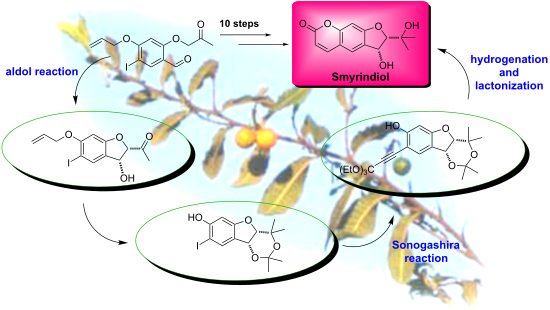
- ). A few years later Snider et al. described the, up to now, sole total synthesis of smyrindiol using an enantiomerically pure epoxy aldehyde [9]. The two possible diastereoisomers resulting from the addition of the epoxy aldehyde to the coumaryl Grignard intermediate, occurred with low


Synthesis of a library of tricyclic azepinoisoindolinones
Beilstein J. Org. Chem. 2012, 8, 1091–1097, doi:10.3762/bjoc.8.120
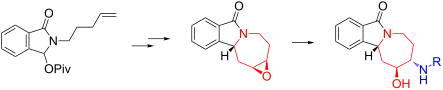
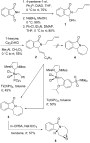
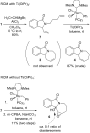
- . When the RCM reaction of 7 was conducted on larger scale in the absence of Ti(OiPr)4, and the crude intermediate was subjected to m-CPBA oxidation, epoxy alcohol 6 was isolated in 11% overall yield. LC–MS as well as NMR analyses suggested a 5:1 ratio of epimers at the hemiacetal carbon. Hydroxylation






Unprecedented deoxygenation at C-7 of the ansamitocin core during mutasynthetic biotransformations
Beilstein J. Org. Chem. 2012, 8, 861–869, doi:10.3762/bjoc.8.96
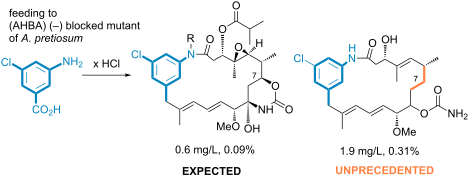
- produces the expected ansamitocin derivative 14 in good yield (Scheme 4) [28]. Besides the ester side chain, compound 14 also lacks the epoxy functionality and the N-methyl group. These two tailoring steps finalize the biosynthesis of ansamitocin P-3 (AP-3, 4) and occur only after acylation has taken place


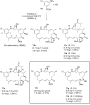


An easy α-glycosylation methodology for the synthesis and stereochemistry of mycoplasma α-glycolipid antigens
Beilstein J. Org. Chem. 2012, 8, 629–639, doi:10.3762/bjoc.8.70
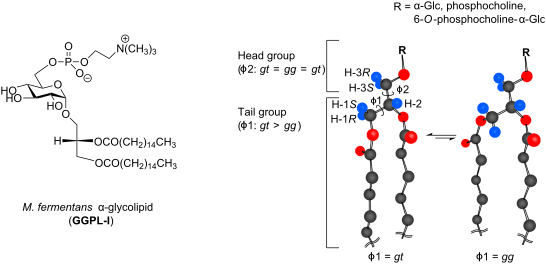
- -glycosyl bromide species [32]. In the pathway using DMF, the α-glycosylation is routed via α-glycosyl cationic imidate 3, which was predicted in former studies [33] and evidenced in our preceding NMR and MS study [25][26]. The reaction between 1 and (S)-glycidol in CH2Cl2 (+ TMU) gave a mixture of epoxy


Intramolecular carbenoid ylide forming reactions of 2-diazo-3-keto-4-phthalimidocarboxylic esters derived from methionine and cysteine
Beilstein J. Org. Chem. 2012, 8, 433–440, doi:10.3762/bjoc.8.49
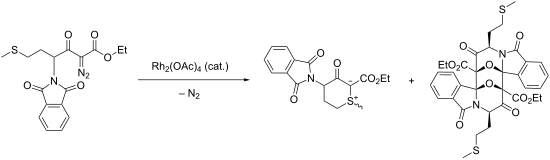
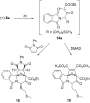
- . Characteristics are the signals for the NCH proton (13a: δ = 4.60 ppm; 13b: δ = 4.67 ppm) and the two bridgehead carbons of the epoxy bridge (13a: δ = 86.60 and 94.13 ppm; 13b: δ = 86.75 and 94.04 ppm). While a CI mass spectrum of 13b showed a weak molecular-ion peak for the dimer (the base peak representing the
- monomer unit), in the case of 13a, even under these mild conditions of chemical ionisation, the spectrum showed no peak at m/z greater than that for the monomer, which was again the base peak. The relative stereochemistry shown in Scheme 4, with the two epoxy bridges in syn relationship and the



Improved syntheses of high hole mobility phthalocyanines: A case of steric assistance in the cyclo-oligomerisation of phthalonitriles
Beilstein J. Org. Chem. 2012, 8, 120–128, doi:10.3762/bjoc.8.14
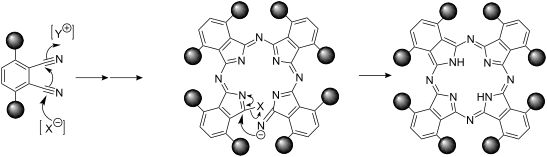
- calibrated with indium (mp 156.60, ΔH = 28.53 J·g−1) and a heating/cooling rate of 10 °C·min−1. Time-of-flight photoconductivity studies The cells were assembled in a laminar-flow hood to avoid contamination by dust or grease. Each ITO-coated glass slide was connected to a copper wire by epoxy resin (Aradite
- ) and the tip of the wire was bonded to the ITO surface with silver paint (RS 186-3600). The two halves were separated by a PET spacer (Goodfellow Cambridge Limited) with a thickness of 23 μm, held in position with clips and secured with epoxy resin. The thickness of the cell (d) was accurately



Imidazole as a parent π-conjugated backbone in charge-transfer chromophores
Beilstein J. Org. Chem. 2012, 8, 25–49, doi:10.3762/bjoc.8.4
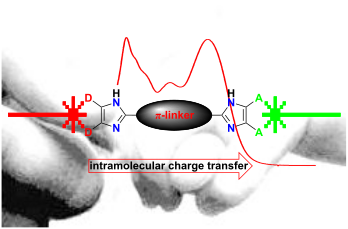
- and co-workers reported the synthesis of epoxy-based nonlinear optical polymers 144 functionalized by post-azo coupling (Figure 23; [130]). The parent polymer backbone was synthesized from diglycidyl ether of bisphenol A and aniline and was further functionalized by diazotized amine 83 (Figure 15
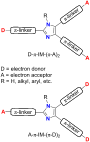
- -functionalized chromophores incorporated into a polymer backbone Rpol [18][50][51][52][53][122][123][124]. Structure of polyphosphazene polymers bearing NLO-phores [125][126][127] and some other recent examples of nonlinear optical polymers [19][128]. Epoxy- and silica-based polymers functionalized with 4,5




A practical microreactor for electrochemistry in flow
Beilstein J. Org. Chem. 2011, 7, 1108–1114, doi:10.3762/bjoc.7.127

- without any added electrolyte [4][5]. Atobe et al. constructed a thin layer flow cell from platinum and/or glassy carbon plates (3 × 3 cm), separated by adhesive tape (80 µm), with a space left in between to act as the channel, and the devices were sealed with epoxy resin [6]. They reported the self


Functionalization of anthracene: A selective route to brominated 1,4-anthraquinones
Beilstein J. Org. Chem. 2011, 7, 1036–1045, doi:10.3762/bjoc.7.118

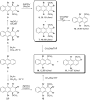
- structure of tetralin oxide 26 produced from the corresponding halohydrine 25, shows the existence of hydrogen bonding between the hydroxy and the epoxy group, which has the same stereochemistry as that of compound 5 [1][14][15]. Thus, the fact that compound 23 was not obtained from 17 can be attributed to




Synthetic applications of gold-catalyzed ring expansions
Beilstein J. Org. Chem. 2011, 7, 767–780, doi:10.3762/bjoc.7.87
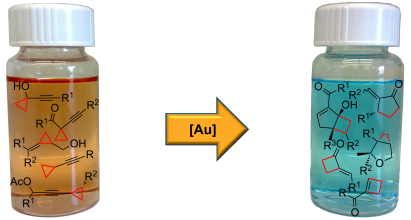
- . Acyloxylated alkynyl oxiranes 28 and 30 have also proved to be versatile building blocks for the synthesis of divinyl ketones 29 [29], 2,5-disubstituted furans 31 [30] and difurylmethane derivatives 32 [31], respectively (Scheme 10). Epoxy alkynes can also be transformed with high stereoselectivity into ketals


Metathesis access to monocyclic iminocyclitol-based therapeutic agents
Beilstein J. Org. Chem. 2011, 7, 699–716, doi:10.3762/bjoc.7.81

- tetrahydropyridine scaffold 72 allowed an efficient synthesis of 1-deoxynojirimycin 62, and its stereoisomers 65 and 66. Thus, acid hydrolysis of the epoxy ring in the anti isomer 73 (H2SO4/dioxane/H2O, 0.2:3:2) gave 1-deoxynojirimycin (62) and 1-deoxyaltronojirimycin (65) in a 1:1 ratio and in 89% yield. Conversely
- modified Upjohn conditions, Scheme 22). For iminocyclitols containing trans diols at the 3- and 4-positions an epoxy functionality at the double bond in 125 was introduced. While the syn epoxide 128 led to a mixture of fagomine (129) and 3,4-di-epi-fagomine (130), the anti epoxide 127 gave 129 selectively





Highly substituted benzannulated cyclooctanol derivatives by samarium diiodide-induced cyclizations
Beilstein J. Org. Chem. 2010, 6, 1229–1245, doi:10.3762/bjoc.6.141




Miniemulsion polymerization as a versatile tool for the synthesis of functionalized polymers
Beilstein J. Org. Chem. 2010, 6, 1132–1148, doi:10.3762/bjoc.6.130
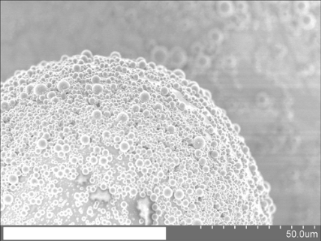
- probably yield polymer particles with a bimodal size distribution. The first polyadditions in miniemulsion carried out were the reactions of polyepoxides and hydrophobic diamines, bisphenols, and dimercaptans [11]. Stable latexes of epoxy resins could be obtained and apparent molecular weights up to 20,000
- variety of polymers, e.g., with epoxy, polyurethane (Figure 7), and polyurea, or based on synthetic polyamines, polythiourea, crosslinked starch, dextran or polyethylene imine [116]. Therefore, the functionality can be directly implemented in the capsules by using an excess of one of the monomers, or by





Synthesis, characterization and photoinduced curing of polysulfones with (meth)acrylate functionalities
Beilstein J. Org. Chem. 2010, 6, No. 56, doi:10.3762/bjoc.6.56
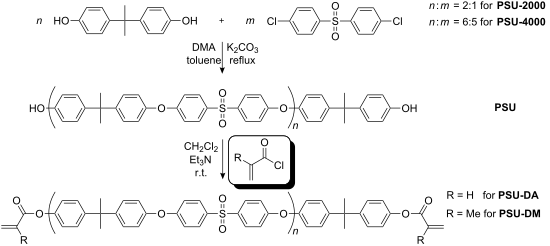
- after polymerization. The second involves direct copolymerization of functionalized monomers [4][5][6]. An increasing topic of interest concerns cooperation of PSUs with epoxy resins via end group functionalization or blending. Engineering thermoplastics based on PSU have been widely used to overcome
- the problems associated with the brittleness of epoxy resins [7][8][9][10][11]. Telechelic oligomers are defined as the prepolymers carrying one or more functional end groups. They take part in further polymerization or other reactions through their functional end groups [12]. The functionality of the




Ring opening metathesis polymerization-derived block copolymers bearing chelating ligands: synthesis, metal immobilization and use in hydroformylation under micellar conditions
Beilstein J. Org. Chem. 2010, 6, No. 28, doi:10.3762/bjoc.6.28
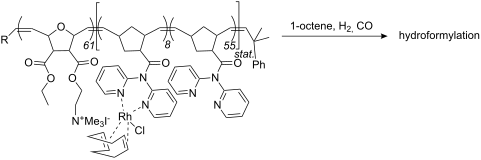
- -3,6-Epoxy-1,2,3,6-tetrahydrophtalic anhydride (10.0 g, 60.0 mmol), 2-dimethylaminoethanol (6.3 mL, 62.0 mmol, 1.03 equiv) and p-toluenesulfonic acid (590 mg, 3.1 mmol, 5 mol%) were dissolved in 120 mL of THF and stirred at room temperature for 8 h. The white precipitate was filtered, washed with


Diastereoselective functionalisation of benzo-annulated bicyclic sultams: Application for the synthesis of cis-2,4-diarylpyrrolidines
Beilstein J. Org. Chem. 2009, 5, No. 69, doi:10.3762/bjoc.5.69

- dependent on the electronic nature of the aryl motif and of the reaction solvent. Experimental Representative experimental procedures are shown for compounds 7a, 13a, 18b, 24a, 27, 31, 35, 39. For full experimental details see accompanying Supporting Information. (±)-(1S,10R,11R)-Epoxy-8-thia-9-azatricyclo


Three step synthesis of single diastereoisomers of the vicinal trifluoro motif
Beilstein J. Org. Chem. 2009, 5, No. 61, doi:10.3762/bjoc.5.61

- described. The route starts from either syn- or anti-α,β-epoxy alcohols and takes a direct approach in that each of the three steps introduces a fluorine atom in a regio- and stereo-specific manner. Starting from either the syn- or the anti-α,β-epoxy alcohol, stereospecific reactions generate two separate
- practical route to this class of compounds is required if these vicinal trifluoro motifs are to be applied usefully. A three step strategy, as illustrated in Scheme 2, starting from diastereoisomeric syn- or anti-α,β-epoxy alcohols A was envisaged, each step incorporating a fluorine atom in a stereospecific
- reactions following Sharpless’ methodology [16]. The anti-epoxy alcohols were easily generated, however it proved more difficult to prepare the syn-epoxides cleanly. Treatment with titanium isopropoxide (Ti(OiPr)4) and D-diisopropyl tartrate (D-DIPT) favoured formation of the anti-α,β-epoxy alcohols. In the





