


Search results
Search for "five-membered ring" in Full Text gives 153 result(s) in Beilstein Journal of Organic Chemistry.
Archangelolide: A sesquiterpene lactone with immunobiological potential from Laserpitium archangelica
Beilstein J. Org. Chem. 2019, 15, 1933–1944, doi:10.3762/bjoc.15.189
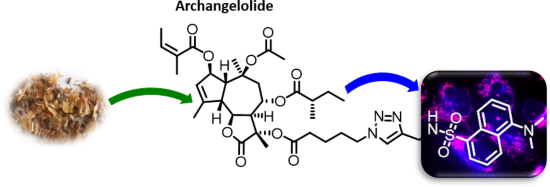
- to the guaiane type. In guaianolides, a bond is present between C1 and C5 of the ten-membered ring, creating a seven-membered and a five-membered ring. Nevertheless, the arrangement of the five-membered lactone ring to the ten-membered part of the molecule with regards to adjoining substituents is
- similar in both compound 1 and laserolide. This implies that the arrangement of the five-membered ring in a SL molecule towards the rest of the molecule may be related to its anti-inflammatory activity. Conclusion Having developed a method for the isolation of two related SLs, archangelolide (1) and




N-(1-Phenylethyl)aziridine-2-carboxylate esters in the synthesis of biologically relevant compounds
Beilstein J. Org. Chem. 2019, 15, 1722–1757, doi:10.3762/bjoc.15.168



Steroid diversification by multicomponent reactions
Beilstein J. Org. Chem. 2019, 15, 1236–1256, doi:10.3762/bjoc.15.121
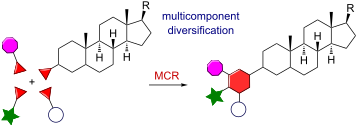
- hormonal ones. All steroids are based on a common skeleton containing three fused six-membered rings and one five membered ring. This fused-ring system provides a readily available source of rigidity and chirality, whose substituents can be oriented either towards the α- or the β-face. Steroids feature a



Alkylation of lithiated dimethyl tartrate acetonide with unactivated alkyl halides and application to an asymmetric synthesis of the 2,8-dioxabicyclo[3.2.1]octane core of squalestatins/zaragozic acids
Beilstein J. Org. Chem. 2019, 15, 1194–1202, doi:10.3762/bjoc.15.116
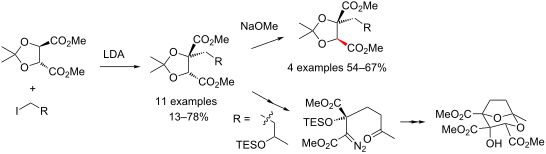
- sequence of oxidation and judicious protecting group manipulation. Base-induced epimerisation of the monoalkylated tartrates favours cis-disposition of the ester groups on the five-membered ring, thereby accessing the predominant stereochemistry found in several substituted tartaric acid-containing natural


Sigmatropic rearrangements of cyclopropenylcarbinol derivatives. Access to diversely substituted alkylidenecyclopropanes
Beilstein J. Org. Chem. 2019, 15, 333–350, doi:10.3762/bjoc.15.29
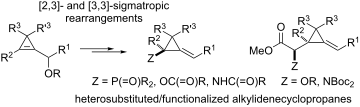
- ’ were considered which would lead to five-membered ring transition states in which the aryl group occupies a preferential pseudo-equatorial or a less favorable pseudo-axial orientation, respectively (Scheme 3) [33][34]. The authors also showed that phosphine oxide (E)-3f could be reduced to the





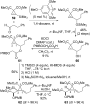


The activity of indenylidene derivatives in olefin metathesis catalysts
Beilstein J. Org. Chem. 2018, 14, 2956–2963, doi:10.3762/bjoc.14.275
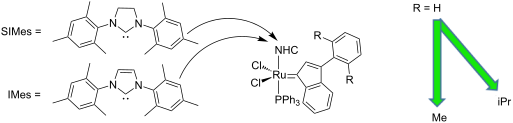
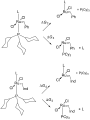
- ]. In order to evaluate the change of the aromaticity of the phenyl ring of the indenylidene derivatives 3–6, we evaluated the aromaticity of the six-membered aryl rings, as well as the ring current on the five-membered ring by means of magnetic-based aromaticity criterion NICS (GIAO, see all NICS


Generation of 1,2-oxathiolium ions from (arysulfonyl)- and (arylsulfinyl)allenes in Brønsted acids. NMR and DFT study of these cations and their reactions
Beilstein J. Org. Chem. 2018, 14, 2897–2906, doi:10.3762/bjoc.14.268
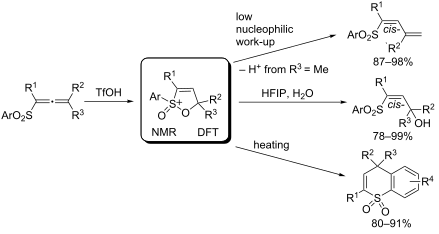
- the case of the cation Bf, the signals of two isomers were found in the spectra in a ratio of 5 to 1. These isomers appear due to cis-, trans-orientation of t-Bu and ArS groups in the five-membered ring. To the best of our knowledge, this is one of the first examples of full NMR characterization of


The influence of the cationic carbenes on the initiation kinetics of ruthenium-based metathesis catalysts; a DFT study
Beilstein J. Org. Chem. 2018, 14, 2872–2880, doi:10.3762/bjoc.14.266
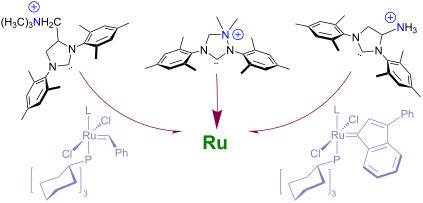
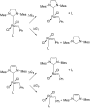
- directly to the imidazole core [28]. Finally, in the same year Ganter described a triazoliumylidene with the formal +1 charge incorporated into the five-membered ring [29]. Several complexes formed by these carbenes have been also described, however, no ruthenium complexes with such carbenes have been



Synthesis of cis-hydrindan-2,4-diones bearing an all-carbon quaternary center by a Danheiser annulation
Beilstein J. Org. Chem. 2018, 14, 2597–2601, doi:10.3762/bjoc.14.237

- reactions [27] to achieve cis-hydrindan-2,4-diones, their application to rapidly assemble the five-membered ring of the targeted 6,5-bicylic system has not been reported until now. Two examples using cycloaddition processes in this field should be mentioned: Diels–Alder [28] and Pauson–Khand [29] reactions


A novel and practical asymmetric synthesis of eptazocine hydrobromide
Beilstein J. Org. Chem. 2018, 14, 2340–2347, doi:10.3762/bjoc.14.209
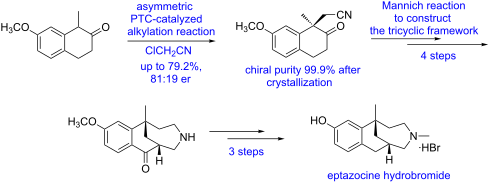
- replaced with HOAc/H2O (2:1) or Pd/C was selected as a catalyst, the reaction gave a similar result as with Raney-Ni as catalyst in NH3/CH3OH. It seems that compound 5 easily reacted with the carbonyl group to form the five-membered ring. Since the carbonyl group is necessary for the following Mannich


Phosphodiester models for cleavage of nucleic acids
Beilstein J. Org. Chem. 2018, 14, 803–837, doi:10.3762/bjoc.14.68
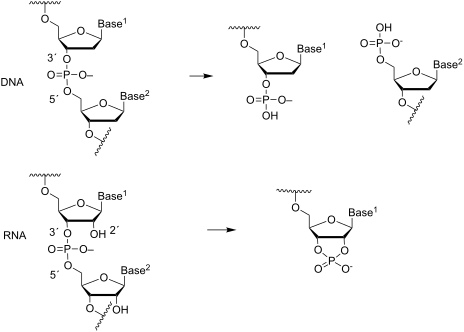
- (Scheme 3) by more than two orders of magnitude, in spite of the fact that sulfur is less electronegative than oxygen and, hence, a weaker withdrawer of electrons from phosphorus [90][91]. According to theoretical calculations, the reaction is accelerated since a less strained five-membered ring is formed



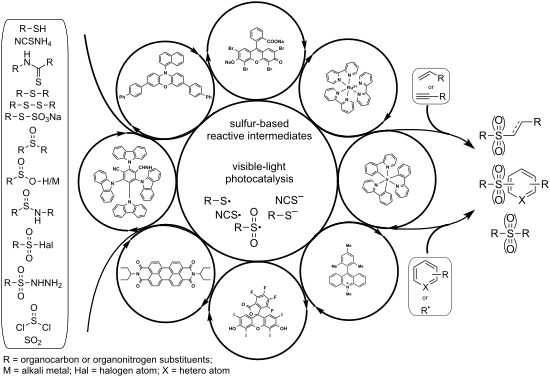
Photocatalytic formation of carbon–sulfur bonds
Beilstein J. Org. Chem. 2018, 14, 54–83, doi:10.3762/bjoc.14.4
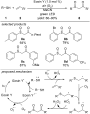
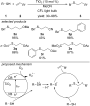
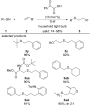
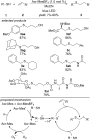
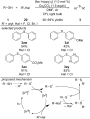
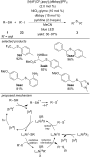
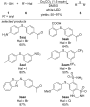
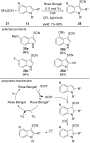
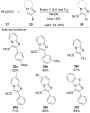
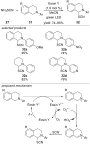
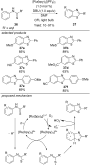
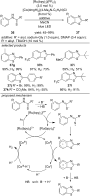
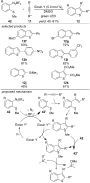
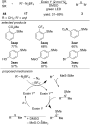
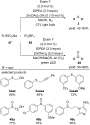
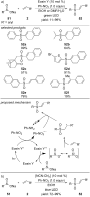
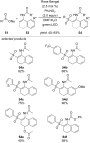
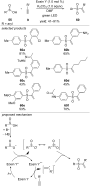
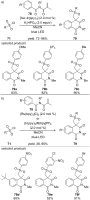
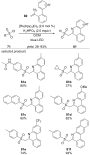
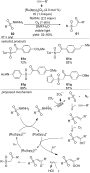
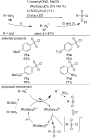
- formation of 1,3,4-thiadiazoles (Scheme 34) [69]. Again, the sulfur anion is photooxidized by Eosin Y to produce a thiyl radical intermediate. Aerobic oxidation regenerates the photocatalyst and forms a superoxide radical anion. Subsequent thiyl radical addition to the imine moiety forms the five-membered
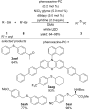
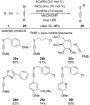
- ring, which is aromatized by hydrogen atom abstraction with the superoxide radical. Sulfides Formation of benzothiophenes A metal-free visible-light photoredox-catalyzed approach for the rapid synthesis of 2-substituted benzothiophenes applying Eosin Y as photocatalyst was reported by our laboratory








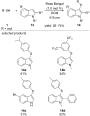
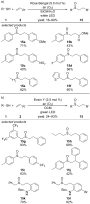
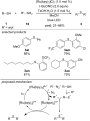

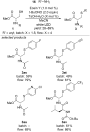




















The synthesis of the 2,3-difluorobutan-1,4-diol diastereomers
Beilstein J. Org. Chem. 2017, 13, 2883–2887, doi:10.3762/bjoc.13.280
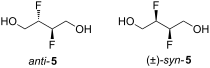
- to afford fluorohydrin (±)-9, containing the thermodynamically favoured five-membered ring [24]. This is clearly indicated by the appearance of a doublet of doublets for the primary alcohol OH proton. DAST-mediated deoxofluorination then led to (±)-10, in which an alkyl fluoride signal at −232 ppm


Synthesis of 1,3-cis-disubstituted sterically encumbered imidazolidinone organocatalysts
Beilstein J. Org. Chem. 2017, 13, 2577–2583, doi:10.3762/bjoc.13.254

- subtle differences in the substitution pattern a modular approach for their preparation is highly desirable. A simple retrosynthetic cut of the five-membered ring delivers an amino acid methyl amide and a carbaldehyde as starting materials. Chirality is commonly introduced by the use of derivatives of


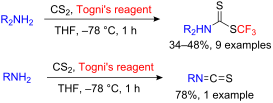
One-pot three-component route for the synthesis of S-trifluoromethyl dithiocarbamates using Togni’s reagent
Beilstein J. Org. Chem. 2017, 13, 2502–2508, doi:10.3762/bjoc.13.247
- experimentally and computationally higher than in the other two compounds (4a and 4c). This can be explained by the conformational strain in the five-membered ring in the transition state. In the ground state, the conformation of the pyrrolidine ring is 4T3 with limited steric interactions between adjacent CH2


Regiodivergent condensation of 5-alkoxycarbonyl-1H-pyrrol-2,3-diones with cyclic ketazinones en route to spirocyclic scaffolds
Beilstein J. Org. Chem. 2017, 13, 2179–2185, doi:10.3762/bjoc.13.218
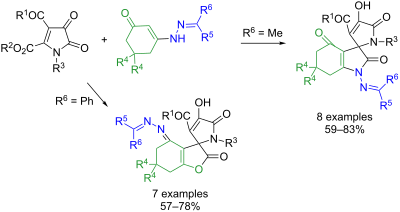
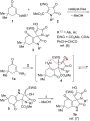
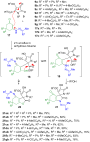
- -membered ring of intermediate 11 (Scheme 3). Although the reasons for such divergence in the reactivity are not completely understood, one could argue that the lower nucleophilicity of enolates derived from 8 as compared to that of enamine 1a could be responsible for this effect. Indeed in this case, the
- , bridged 1,3-oxazepine products 12 were formed in marginal yields, resulting from an initial aldol reaction involving the carbonyl group at C-3 of pyrroledione 9 and a subsequent intramolecular 6-endo-trig O-nucleophilic attack of the enol species at a conjugate unsaturated ketone moiety in the five





A speedy route to sterically encumbered, benzene-fused derivatives of privileged, naturally occurring hexahydropyrrolo[1,2-b]isoquinoline
Beilstein J. Org. Chem. 2017, 13, 1413–1424, doi:10.3762/bjoc.13.138
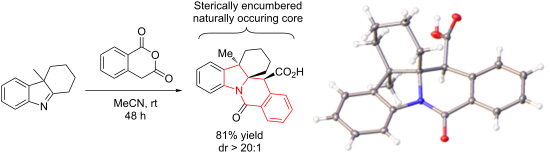
- major diastereomer was shown to possess the (RS,RS)-configuration (vide infra) and is referred to as ‘anti‘ throughout this article (considering orientation of carboxylic group relative to C11a–C12 bond of the five-membered ring); the minor, (RS,SR)-configured diastereomer is referred to as ‘syn
- behavior of the respective CCR adducts 10d,e (vide infra). Notably, free phenolic hydroxy function is well tolerated (9k → 10k) which is in line with literature reports [33]. However, the steric situation around the five-membered ring of indolenines had a profound effect on the reaction times and even the


Synthesis of alkynyl-substituted camphor derivatives and their use in the preparation of paclitaxel-related compounds
Beilstein J. Org. Chem. 2017, 13, 1230–1238, doi:10.3762/bjoc.13.122
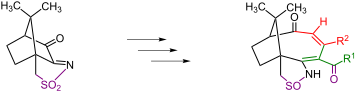
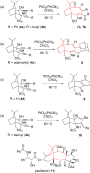
- carbocyclic five-membered ring to the 2,3-position of the bicyclic camphor-derived moiety (Scheme 2a) [20]. Reactions of 4a with halogens (e.g., bromine) or acids were even more puzzling. In addition to the annulation, an unprecedented formation of a ketone accompanied by the reduction of sulphur took place
- nitrogen and form the triflate or perrhenate salts. The newly formed five-membered ring in 23 is evident from the 13C NMR signals at 84.0, 90.0, 138.5, 136.0 and 125.5 ppm, and a 1H signal at 5.80 ppm. The enolate carbon is detected at 151.4 ppm in 13C NMR. Neither NMR nor IR show any evidence for carbonyl




Aqueous semisynthesis of C-glycoside glycamines from agarose
Beilstein J. Org. Chem. 2017, 13, 1222–1229, doi:10.3762/bjoc.13.121

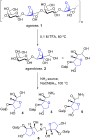
- torsion angle restraints imposed by the preexisting 3,6-anhydro five-membered ring [21], free AnGal is also not able to recover its original pyranosidic form that is found within the polysaccharide structure. As a consequence, 2 presented a C-glycofuranose unit bearing a two-carbon appendix, which
- -vicinal diol of 11 to give 12. From there, we obtained the corresponding methylamine derivative 13 by using the reductive amination conditions outlined herein. Compound 13 presents one less carbon between the five-membered ring and the amino group, in comparison to the other glycamines obtained. Both



Dimerization reactions of aryl selenophen-2-yl-substituted thiocarbonyl S-methanides as diradical processes: a computational study
Beilstein J. Org. Chem. 2017, 13, 410–416, doi:10.3762/bjoc.13.44

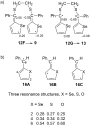
- electronegative nature of Se in the five-membered ring increases the spin density on the adjacent C(2) atom. Therefore, from the perspective of spin density, the formation of the six-membered ring 13 should be preferred. With respect to the most stable conformer 12E, the free energy barrier of the reaction


Synthesis of spiro[isoindole-1,5’-isoxazolidin]-3(2H)-ones as potential inhibitors of the MDM2-p53 interaction
Beilstein J. Org. Chem. 2016, 12, 2793–2807, doi:10.3762/bjoc.12.278
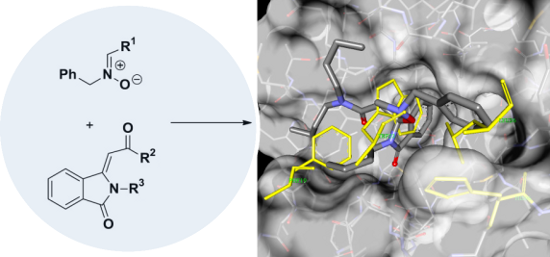
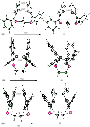
- of dipolarophiles (Z)-8 and (E)-8 with nitrone 4. The labels endo N and exo E refer to the location of the nitrone N-benzyl in the formed five-membered ring on the same or opposite side of the phenyl ring of dipolarophiles. Distances between atoms involved in the forming bonds (Å) are reported in the


Sydnone C-4 heteroarylation with an indolizine ring via Chichibabin indolizine synthesis
Beilstein J. Org. Chem. 2016, 12, 2503–2510, doi:10.3762/bjoc.12.245

- ) [37]. The five-membered ring is planar, with a maximum deviation from the least-squares plane of 0.011(1) Å for C5, while atom O6 deviates from the plane by 0.022(1) Å. Full listings of geometrical parameters are available in the CIF file (Supporting Information File 2). A search of the CSD revealed


A new paradigm for designing ring construction strategies for green organic synthesis: implications for the discovery of multicomponent reactions to build molecules containing a single ring
Beilstein J. Org. Chem. 2016, 12, 2420–2442, doi:10.3762/bjoc.12.236
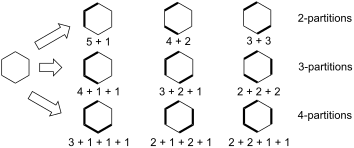
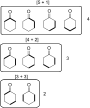
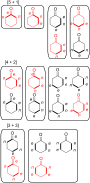
- -membered ring but contains a pivoting nucleophilic centre instead of an electrophilic one. These results may be contrasted with the analogous five-membered ring compounds cyclopentanone and pyrrolidine in Figures S4 to S7 in Supporting Information File 1. The nucleophilic–electrophilic connectivity








Biosynthesis of oxygen and nitrogen-containing heterocycles in polyketides
Beilstein J. Org. Chem. 2016, 12, 1512–1550, doi:10.3762/bjoc.12.148
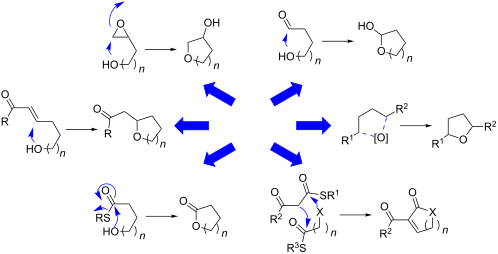
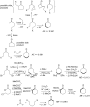
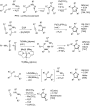
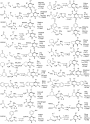
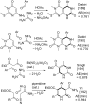
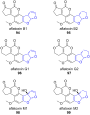
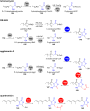
- the formation of a five-membered ring hemiacetal in 91. Spontaneous dehydration installs the furan moiety and after keto reduction by an endogenous reductase, asperfuranone (93) is obtained. Aflatoxins. Aflatoxins 94–99 are highly toxic carcinogens produced in several Aspergillus species (Figure 3






Beta-hydroxyphosphonate ribonucleoside analogues derived from 4-substituted-1,2,3-triazoles as IMP/GMP mimics: synthesis and biological evaluation
Beilstein J. Org. Chem. 2016, 12, 1476–1486, doi:10.3762/bjoc.12.144
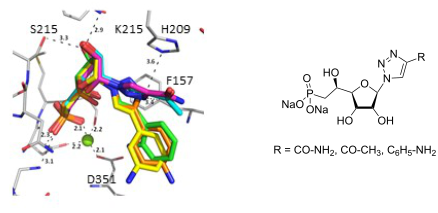
- residue of cN-II as it represents the only difference with the others (Figure 8A). One should note that in comparison to smallest substituents on the triazole ring (compounds 1n, 1o and 1q) in compounds 1h, 1i and 1j the position of the five-membered ring is rotated by 90° (Figure 8D). Conclusion A small





