Search results
Search for "host–guest" in Full Text gives 227 result(s) in Beilstein Journal of Organic Chemistry. Showing first 200.
Fabrication, characterization and adsorption properties of cucurbit[7]uril-functionalized polycaprolactone electrospun nanofibrous membranes
Beilstein J. Org. Chem. 2019, 15, 992–999, doi:10.3762/bjoc.15.97
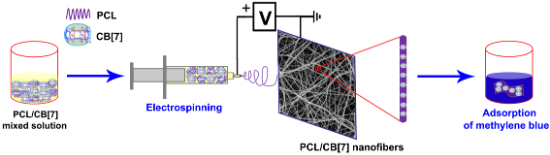
- engineering [6], energy storage [7], biosensors [8], catalysis [9], and environmental engineering [10]. Various supramolecular host molecules such as cyclodextrins (CDs), calix[n]arenes, and pillar[n]arenes can form host–guest inclusion complexes (ICs) with numerous compounds due to their unique cavity
- expected that CB[7] molecules in the nanofibers have free cavities, able to an effective capture of target molecules from the surroundings through the formation of host–guest complexes. As collected in Table S2 (Supporting Information File 1), the melting enthalpy and crystallization enthalpy of neat PCL


Halogen bonding and host–guest chemistry between N-alkylammonium resorcinarene halides, diiodoperfluorobutane and neutral guests
Beilstein J. Org. Chem. 2019, 15, 947–954, doi:10.3762/bjoc.15.91
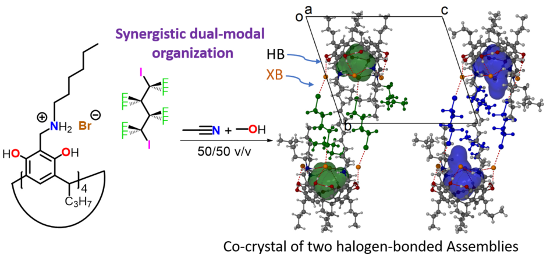
- guest inclusion in solution. Keywords: capsule; dimeric assemblies; halogen bonding; host–guest chemistry; resorcinarene salts; X-ray crystallography; Introduction The construction of specific supramolecular assemblies based on the directional non-covalent bonding has been a central goal of
- yellow cloud. (a) The halogen bonding (blue broken lines), hydrogen bonding (red broken lines) and the host–guest effect (water molecules in CPK, and the cavity space in transparent yellow cloud) in Water@2&DIOFB; (b) The halogen bonded polymer. Water molecules in CPK mode and all the other in ball-and


Mechanochemistry of supramolecules
Beilstein J. Org. Chem. 2019, 15, 881–900, doi:10.3762/bjoc.15.86
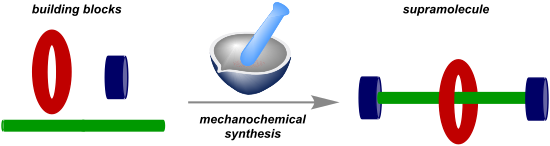
- subcomponent self-assembly of a rigid aromatic linear bisamine, pyridine-2-carboxaldehyde and Fe(II) resulting in the tetrahedral [M4L6]4− cage 25 in water reported by Nitschke [82] was a milestone of supramolecular tetrahedral complex chemistry (Figure 14). The authors have thoroughly explored the host–guest
- (Figure 21a). However, 1,8-dipyridylnaphthalene was used as hydrogen-bond acceptor for the [2 + 2] cycloaddition of fumaric acid derivatives (Figure 21b). In 2017 Purse and co-workers reported the host–guest chemistry of pyrogallo[4]arene (39) hexamers under mechano-milling conditions [94]. A hexameric
- capsule 40 formed through hydrogen-bonding and the cavity was found to be able to encapsulate different organic molecules such as alkanes, acids, amines, etc. The encapsulation of a [2.2]paracyclophane in the cage was achieved by ball milling at 30 Hz (Figure 22) and the host–guest product 40 was verified


New α- and β-cyclodextrin derivatives with cinchona alkaloids used in asymmetric organocatalytic reactions
Beilstein J. Org. Chem. 2019, 15, 830–839, doi:10.3762/bjoc.15.80

- complexes [2]. CD derivatives have been increasingly applied in catalysis and biomimetic reactions [3][4] thanks to host–guest interactions and to the non-toxic, chiral skeleton of CDs. More specifically, CDs applied in reactions involving metal catalysis [5], organocatalysis [6] and artificial enzymes [7


Homo- and hetero-difunctionalized β-cyclodextrins: Short direct synthesis in gram scale and analysis of regiochemistry
Beilstein J. Org. Chem. 2019, 15, 710–720, doi:10.3762/bjoc.15.66
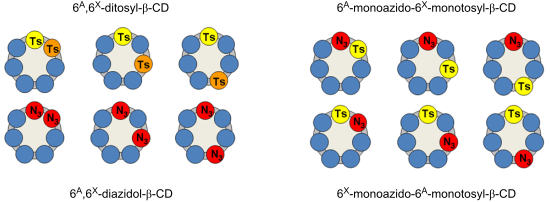
- -difunctionalization; regioselectivity; Introduction Cyclodextrins (CDs) are cyclic oligomers of α-D-glucopyranose (Figure 1 illustrates the heptamer, β-CD) that have attracted worldwide interest in various fields of applied supramolecular chemistry due to their ability to form host–guest inclusion complexes [1]. A


Aqueous olefin metathesis: recent developments and applications
Beilstein J. Org. Chem. 2019, 15, 445–468, doi:10.3762/bjoc.15.39
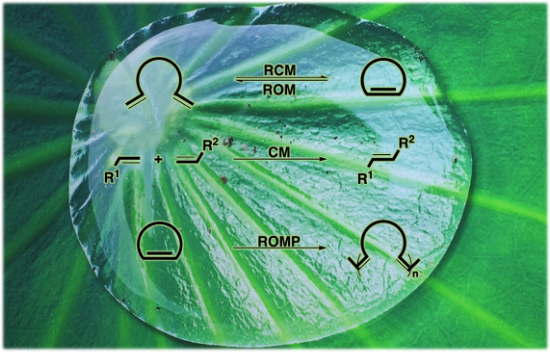
- (Figure 1c) through host–guest interactions [61]. Chung and co-workers used a PEG-tethered adamantyl ligand for various metathesis reactions in water and DCM [62]. The authors showed that the catalyst can be easily removed by generating a host–guest complex between silica-grafted β-cyclodextrin and the
- through host–guest interaction with silica-gel-supported β-cyclodextrin. Selection of artificial metathases reported by Ward and co-workers (ArM 1 based on biotin–(strept)avidin technology and ArM 2 based on dative anchoring to hCAII). Artificial metathase based on covalent anchoring approach. α




Fabrication of supramolecular cyclodextrin–fullerene nonwovens by electrospinning
Beilstein J. Org. Chem. 2019, 15, 89–95, doi:10.3762/bjoc.15.10
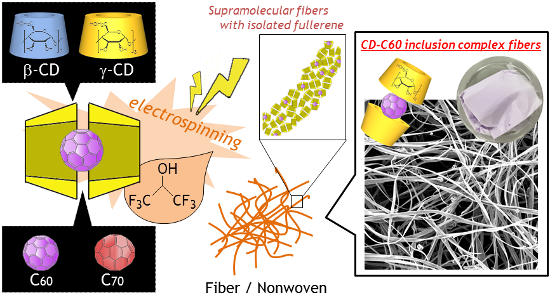
- supramolecular fiber materials composed of cyclodextrin (CD)–fullerene inclusion complexes by electrospinning. Similar to the molecular state of fullerenes in solution, the resulting fibers include molecularly-dispersed fullerenes. We believe such a concept could be expanded to diverse host–guest complexes
- functionalize such fibers is to use host–guest inclusion complexes in CD electrospinning. To date, Uyar and Celebioglu have reported electrospinning of two different inclusion complexes: hydroxypropyl-β-CD (HP-β-CD)–tricosan [16] and HP-β-CD–azobenzene inclusion complexes [17]. Although such complexes are
- 3e). In addition, the UV–vis intensity increases with increasing C60 concentrations. This technique can disperse C60 easily to aggregate in a γ-CD fiber matrix, producing supramolecular host–guest solid fiber materials with molecularly dispersed C60. However, it is not easy to demonstrate the


Enhanced single-isomer separation and pseudoenantiomer resolution of new primary rim heterobifunctionalized α-cyclodextrin derivatives
Beilstein J. Org. Chem. 2018, 14, 2829–2837, doi:10.3762/bjoc.14.261

- ; heterobifunctionalized alpha-cyclodextrin; homobifunctionalized alpha-cyclodextrin; regioisomers; regioselectivity; Introduction Cyclodextrins, cyclic cone-shaped oligosaccharides [1], have long attracted interest for their properties in host–guest complexes both in research and in pharmaceutical and food industry


Coordination-driven self-assembly of discrete Ru6–Pt6 prismatic cages
Beilstein J. Org. Chem. 2018, 14, 2242–2249, doi:10.3762/bjoc.14.199
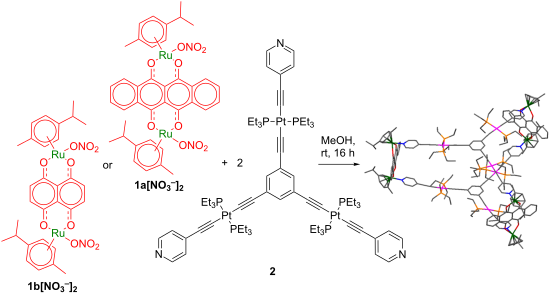
- [47][48][49][50][51] and host–guest chemistry [52][53][54][55][56] among others. The cardinal prerequisites to obtain these self-assembled supramolecular architectures include stoichiometry and conformational complementarity on the binding sites of the building blocks [57][58][59][60][61]. However


Synthesis of a water-soluble 2,2′-biphen[4]arene and its efficient complexation and sensitive fluorescence enhancement towards palmatine and berberine
Beilstein J. Org. Chem. 2018, 14, 2236–2241, doi:10.3762/bjoc.14.198
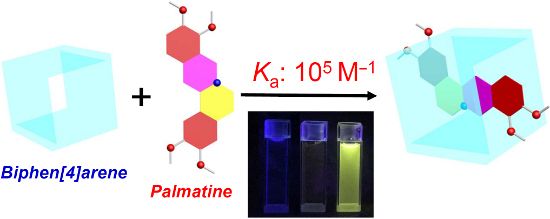
- = (2.29 ± 0.27) × 106 M−1) is 3.9 times larger than that of P (Ka = (5.87 ± 0.24) × 105 M−1). Keywords: berberine; biphenarenes; host–guest complexes; molecular recognition; palmatine; Introduction Host–guest chemistry in water is significantly important due to its extensive applications in biology
- specific structures and interesting host–guest properties [21][22][23][24][25][26][27][28][29][30][31][32]. Water-soluble pillar[n]arene derivatives, especially those containing carboxylato moieties, showed low cell toxicity and good biocompatibility, and have been applied in biomedical applications such
- as bioimaging and self-assembled drug delivery systems [33][34][35][36][37][38][39][40]. For example, our group demonstrated a direct host–guest complexation-based drug delivery system for oxaliplatin by carboxylatopillar[6]arene [36]. The encapsulation could not only improve the drug‘s stability in


Dynamic light scattering studies of the effects of salts on the diffusivity of cationic and anionic cavitands
Beilstein J. Org. Chem. 2018, 14, 2212–2219, doi:10.3762/bjoc.14.195
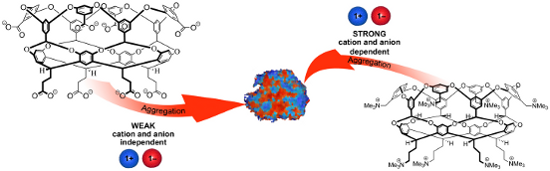
- regards to the former, we have shown how poorly solvated anions such as SCN− have an affinity for non-polar surfaces. Because of this, they can compete with the interactions between two non-polar surfaces in a host–guest complexation event and can induce an apparent weakening of the hydrophobic effect


Tetrathiafulvalene – a redox-switchable building block to control motion in mechanically interlocked molecules
Beilstein J. Org. Chem. 2018, 14, 2163–2185, doi:10.3762/bjoc.14.190
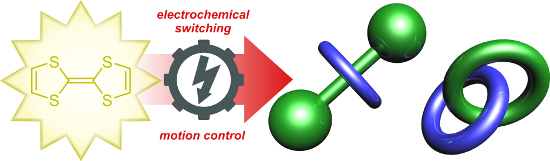
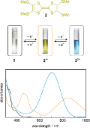
- first TTF-based pseudorotaxane was reported by Stoddart and Williams in 1991 (Figure 5) [33]. At this time, they investigated the host–guest properties of the π-electron-poor cyclophane cyclobis(paraquat-p-phenylene) (3) in form of the tetrakis(hexafluorophosphate) salt [58]. The square-shaped host
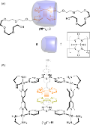
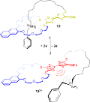
- breakthroughs for the construction of TTF-based supramolecular architectures: (b) Stepwise deprotection/alkylation, (c) phosphite-mediated heterocoupling, and (d) pyrrolo-annulated TTF derivatives I and J. (a) Host–guest equilibrium between π-electron-poor cyclophane 3 and different TTFs with their
- corresponding association constants in CH3CN. (b) Crystal structure of host–guest complex 13 [33]. Solvent molecules and counterions are omitted for clarity. TTF complexes with different host molecules. Stable TTF (a) radical-cation and (b) mixed-valence dimers in confined molecular spaces. A “three-pole







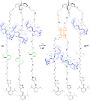


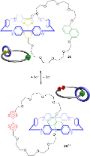


A switchable [2]rotaxane with two active alkenyl groups
Beilstein J. Org. Chem. 2018, 14, 2074–2081, doi:10.3762/bjoc.14.181
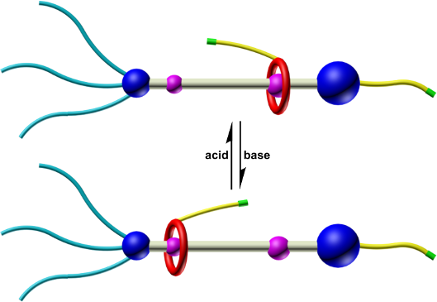
- +) containing intermediate compound 5 were assembled in dichloromethane through host–guest interaction and capped with compound 8 under Cu(I)-catalyzed azide–alkyne cycloaddition to get the final [2]rotaxane with two distinguishable recognition sites. The target [2]rotaxane R1 was then characterized by 1H NMR


Coordination-driven self-assembly vs dynamic covalent chemistry: versatile methods for the synthesis of molecular metallarectangles
Beilstein J. Org. Chem. 2018, 14, 2027–2034, doi:10.3762/bjoc.14.178
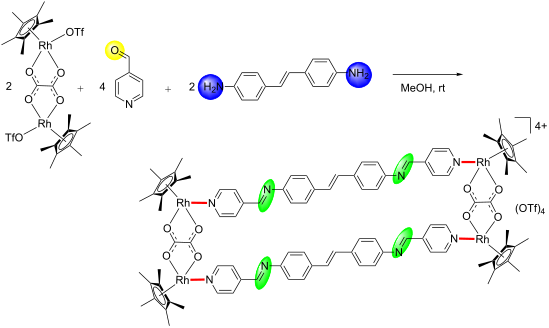
- metallarectangles, metallacages and Borromean-type rings. Moreover, many of these structures have been utilized for various applications, such as catalysts, host–guest chemistry and others [1][2][3][4][5][6][7][8][9][10][11][12][13][14][15][16][17]. Through the use of a range of diverse functional ligands, the

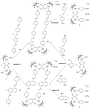


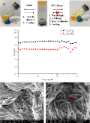
A self-assembled photoresponsive gel consisting of chiral nanofibers
Beilstein J. Org. Chem. 2018, 14, 1994–2001, doi:10.3762/bjoc.14.174
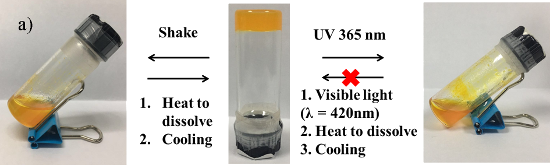
- by three-dimensional networks through self-assembly have drawn significant attention in the past decades. They are normally fabricated by means of noncovalent intermolecular interactions [3], such as π–π stacking, hydrogen bonding, van der Waals forces, hydrophobic, electrostatic, host–guest and


Synthesis of new p-tert-butylcalix[4]arene-based polyammonium triazolyl amphiphiles and their binding with nucleoside phosphates
Beilstein J. Org. Chem. 2018, 14, 1980–1993, doi:10.3762/bjoc.14.173
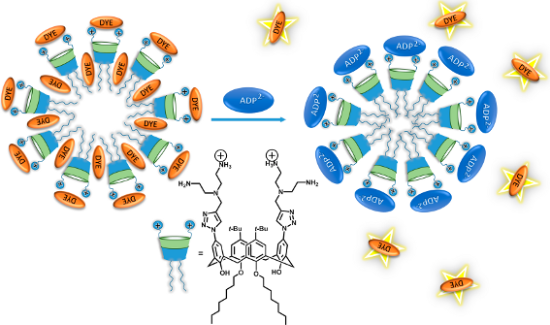
- surfactants having a host–guest recognition site [23]. So, they are able to form nanoaggregates in aqueous solutions, thus providing the concentration of the active binding sites into nanoaggregate for multivalent binding with the substrate [24]. We recently synthesized a series of cationic receptors based on
- determined by the isomolar series method at two concentrations: below and above the CAC values, measured with EY as the probe (Table 3). At concentrations below the CAC (1 µM), the monomeric molecules of the macrocycles 10a,b form with EY a discrete 1:1 host–guest complex [X2−calix2+], where X2− and calix2
- seen ADP more effectively embeds into the molecular cleft formed by two ammonium moieties due to a good host–guest geometric size and/or shape complementarity (Figure 4a and c). The three phosphate groups of ATP have a larger size and cannot realize a similar supramolecular motif in the complex. For


Rational design of boron-dipyrromethene (BODIPY) reporter dyes for cucurbit[7]uril
Beilstein J. Org. Chem. 2018, 14, 1961–1971, doi:10.3762/bjoc.14.171
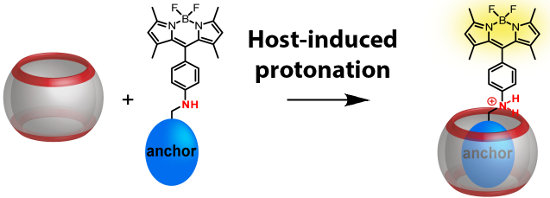
- -dipyrromethene (BODIPY) dyes as a new class of fluorophores for the design of reporter dyes for supramolecular host–guest complex formation with cucurbit[7]uril (CB7). The BODIPYs contain a protonatable aniline nitrogen in the meso-position of the BODIPY chromophore, which was functionalized with known binding
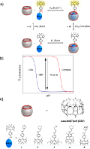
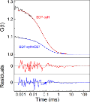
- pKa values from the direct titration and from the global fitting agreed reasonably well, and the complexation-induced pKa shifts were in the typical range reported for CB7 host–guest complexes [58]. Application of BODIPY-CB7 complexes The availability of BODIPY dyes, which respond towards complexation
- specific host–guest binding of 5 to CB7 on the surface, which suggests the use of 5 for straightforward surface functionalization to create nanophotonic devices as well as for multimodal surface group quantifications, e.g., using their optical properties for fluorescence and their fluorine heteroatom for X




An amphiphilic pseudo[1]catenane: neutral guest-induced clouding point change
Beilstein J. Org. Chem. 2018, 14, 1937–1943, doi:10.3762/bjoc.14.167
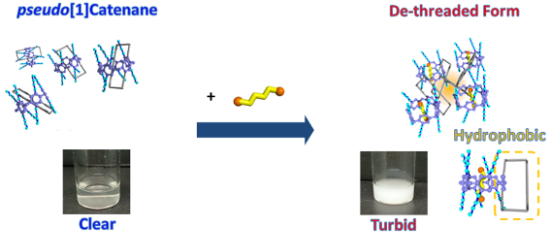
- aggregation of the hydrophobic alkyl chain rings, which induced insolubilization of the bicyclic compound in aqueous media at 20 °C and a decrease in its clouding point. Keywords: amphiphilic molecules; host–guest complexes; lower critical solution temperature; pillar[n]arenes; pseudo[1]catenane
- component because of their high functionality and superior host–guest properties with neutral guests [12][13][14][15][16]. The amphiphilic pillar[n]arenes 1 and 2 exhibit clouding points at 41 and 42 °C, respectively [5][6]. The oligo(ethylene oxide) moieties are solvated with water molecules at room
- in the clouding point. The clouding point of 1 increased upon addition of a cationic guest as the hydrophilic ratio in the molecule increased by formation of the complex with the hydrophilic cationic guest [5]. We also demonstrated photoresponsive LCST behavior by using a photoresponsive host–guest


Asymmetric Michael addition reactions catalyzed by calix[4]thiourea cyclohexanediamine derivatives
Beilstein J. Org. Chem. 2018, 14, 1901–1907, doi:10.3762/bjoc.14.164
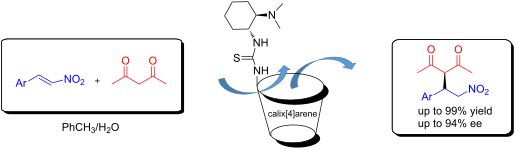
- nitrostyrene 7a lacking substituents has minimal steric hindrance and tends to bind with the calixarene cavity by supramolecular host–guest interactions which could further improve the enantioselectivity. In addition, electronic effects of the substituents on the aromatic ring showed a significant influence on
- supramolecular host–guest interaction with the calixarene to form a stable transition state A. Then, another hydrogen bond is formed between the nitrogen atom of the tertiary amine group in A and acetylacetone in its enol form, leading to the formation of a ternary complex B. Finally, nucleophilic attack of



Strong binding and fluorescence sensing of bisphosphonates by guanidinium-modified calix[5]arene
Beilstein J. Org. Chem. 2018, 14, 1840–1845, doi:10.3762/bjoc.14.157
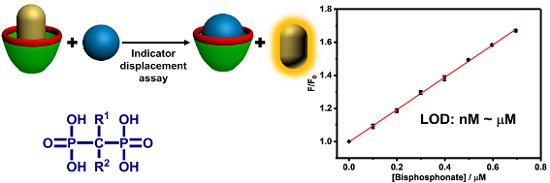
- in view of low cost, ease of use and high sensitivity of optical sensing modalities, but remains a challenge since BPs are considered as unlabeled analytes. With the development of the host–guest concept in supramolecular chemistry, the indicator displacement assay (IDA), pioneered by Prof. Anslyn
- recovery, offers the opportunity for fluorescence “switch-on” sensing of BPs. In general, fluorescent IDA could be operated at low μM or even nM concentrations, which is desirable with respect to sensing sensitivity. We tested the host–guest complexation of GC5A with a total number of 9 BP drugs clinically


Host–guest complexes of conformationally flexible C-hexyl-2-bromoresorcinarene and aromatic N-oxides: solid-state, solution and computational studies
Beilstein J. Org. Chem. 2018, 14, 1723–1733, doi:10.3762/bjoc.14.146
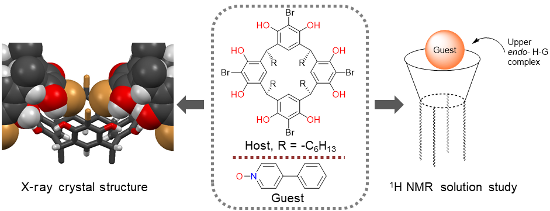
- Department of Chemistry and Biochemistry, University of Windsor, 401 Sunset Avenue, Windsor, N9B 3P4, Canada 10.3762/bjoc.14.146 Abstract Host–guest complexes of C-hexyl-2-bromoresorcinarene (BrC6) with twelve potential aromatic N-oxide guests were studied using single crystal X-ray diffraction analysis and
- , aiding in the binding of polar guests such as N-oxides. Keywords: aromatic N-oxides; C–H···π Interactions; ditopic receptors; endo/exo complexation; host–guest chemistry; resorcinarenes; Introduction Resorcinarenes are macrocyclic compounds with a bowl-shaped cavity stabilised by circular
- ], coordination chemistry [12][13], biological systems [14] and especially for host–guest (H–G) chemistry [15]. Resorcinarenes can be modified at either the upper rim 2-position, lower rim, or both, to deliver supramolecular structures with the required structure for a given function [16][17][18]. We have shown


β-Hydroxy sulfides and their syntheses
Beilstein J. Org. Chem. 2018, 14, 1668–1692, doi:10.3762/bjoc.14.143
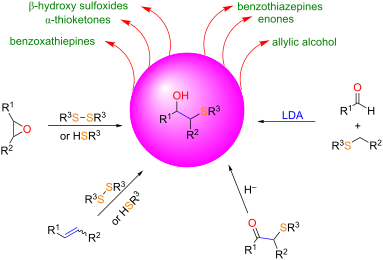
- host–guest complexes by non-covalent bonding [64]. This mode of catalysis is similar to the way enzymes mediate biochemical reactions [64]. The use of water as a solvent and the non-toxicity of the cyclodextrin catalyst make the method attractive. This method, like the previously reported protocols, is


A conformationally adaptive macrocycle: conformational complexity and host–guest chemistry of zorb[4]arene
Beilstein J. Org. Chem. 2018, 14, 1570–1577, doi:10.3762/bjoc.14.134
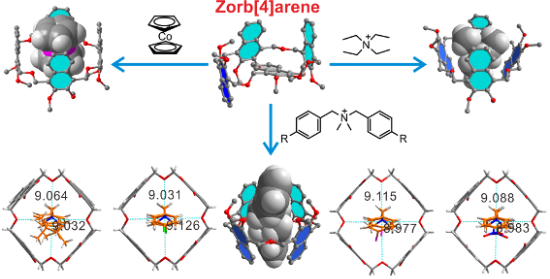
- changes are rare. In this article, we present a thorough study on the host–guest chemistry of a conformationally adaptive macrocycle, namely per-O-ethoxyzorb[4]arene (ZB4). Similar to per-O-ethoxyoxatub[4]arene, ZB4 is capable of accommodating a wide range of organic cations. However, ZB4 does not show
- binding behavior of ZB4 and lays the basis for the construction of stimuli-responsive materials with ZB4 as a major component. Keywords: conformations; host–guest chemistry; macrocycles; supramolecular chemistry; zorb[4]arene; Introduction Macrocyclic receptors are the principal workhorses used in
- 1:1 mixture of ZB4 with 4+ or 5+ (Figures S1 and S2 in Supporting Information File 1). This indicates the importance of the core quaternary ammonium ions in the host−guest complexation. All other guests can be encapsulated in the cavity of ZB4, and significant chemical shifts on both the guests and


Hyper-reticulated calixarene polymers: a new example of entirely synthetic nanosponge materials
Beilstein J. Org. Chem. 2018, 14, 1498–1507, doi:10.3762/bjoc.14.127

- substrates, indeed, have been considered a class of probe guests of choice for investigating the formation of host–guest inclusion complexes with cyclodextrins [38][39][40][41] and calixresorcinarenes [42], because of both their easy accessibility and the fact that their molecular properties can be largely


A three-armed cryptand with triazine and pyridine units: synthesis, structure and complexation with polycyclic aromatic compounds
Beilstein J. Org. Chem. 2018, 14, 1370–1377, doi:10.3762/bjoc.14.115
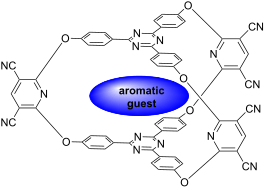
- are reported. Appropriate NMR and molecular modelling investigations proved the formation of 1:1 host–guest assemblies between the investigated cryptand and some polynuclear aromatic hydrocarbons or their derivatives. Keywords: aromatic guests; aromatic nucleophilic substitution; cryptand; NMR
- reported cage-box [11] is able to complex a plethora of aromatic compounds (e.g., anthracene, pyrene, perylene), while in the cases of several metallo-based cryptands the formation of layered host–guest supramolecular structures (with many guests in the cavity of the host) were reported [12][13][14][15
- libraries [2][25][34][35]) allowed accessing of more sophisticated architectures. In a previous work [32] we reported the formation of a host–guest complex between a cryptand having pyridine units in the bridges and 1,3,5-triphenylbenzene caps (1, Figure 1). Surprisingly, no complexation ability of cryptand