


Search results
Search for "nitrophenyl" in Full Text gives 163 result(s) in Beilstein Journal of Organic Chemistry.
Binding abilities of a chiral calix[4]resorcinarene: a polarimetric investigation on a complex case of study
Beilstein J. Org. Chem. 2017, 13, 2698–2709, doi:10.3762/bjoc.13.268

- buried under those of the host, and cannot be identified). This indicates that the p-nitrophenyl group is allocated in the deshielding region provided by the aryl subunits of the host. Therefore, we can conclude that the aromatic moiety of the guest is specifically included into the cavity, in a quite
- macrocycle cavity. Consequently, the inclusion of the guest forces them in a conformation that is more exposed to the solvent bulk. Finally, taking back to the guest, the inclusion of its p-nitrophenyl group into the cavity implies that the aliphatic moiety protrudes out of the proline-decorated host rim
- subunit. The case of the imidazolium derivative 12 is intriguing, because in principle its 1:1 complex might involve the inclusion of either aromatic ring. However, the preferential inclusion of the p-nitrophenyl group may be reasonably presumed on the grounds of the fact that the complex formed by the




p-tert-Butylthiacalix[4]arenes functionalized by N-(4’-nitrophenyl)acetamide and N,N-diethylacetamide fragments: synthesis and binding of anionic guests
Beilstein J. Org. Chem. 2017, 13, 1940–1949, doi:10.3762/bjoc.13.188

- Alena A. Vavilova Ivan I. Stoikov Kazan Federal University, Kremlevskaya, 18, Kazan 420008, Russian Federation 10.3762/bjoc.13.188 Abstract New p-tert-butylthiacalix[4]arenes, which are mono-, 1,2-di- and tetrasubstituted at the lower rim containing N-(4’-nitrophenyl)acetamide and N,N
- receptors for F−, CH3CO2− and H2PO4− ions, which based on the synthesized thiacalix[4]arenes, have been obtained. It was shown that p-tert-butylthiacalix[4]arene tetrasubstituted at the lower rim by N-(4’-nitrophenyl)acetamide moieties bonded to the anions studied with association constants within the range
- receptor. In contrast to the 1,3-disubstituted macrocycle containing two N-(4’-nitrophenyl)acetamide moieties, the 1,2-disubstituted thiacalix[4]arene, which contains only one such fragment and a N,N-diethylacetamide moiety, selectively binds F− anions. Keywords: anion binding; synthesis; thiacalixarenes


Synthesis of benzannelated sultams by intramolecular Pd-catalyzed arylation of tertiary sulfonamides
Beilstein J. Org. Chem. 2017, 13, 1932–1939, doi:10.3762/bjoc.13.187

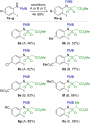
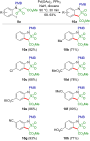
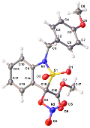
- in 1:1 ratios – were always formed, which is a serious drawback of this approach. Another well-known method based on retrosynthetic disconnections at the same C–C bond employed intramolecular vicarious nucleophilic substitution of hydrogen in the substituted N-(3-nitrophenyl)chloromethylsulfonamides




Mechanochemical synthesis of thioureas, ureas and guanidines
Beilstein J. Org. Chem. 2017, 13, 1828–1849, doi:10.3762/bjoc.13.178
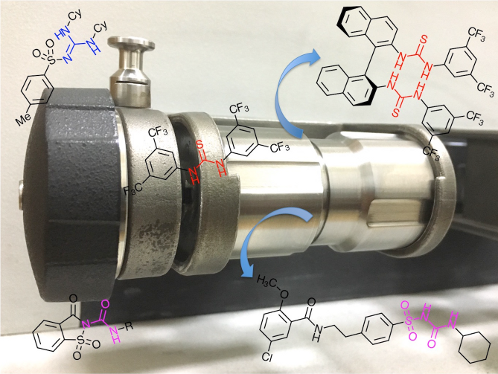
- milling was performed at low temperatures (−30 °C) using an in-house ball mill equipped with a cooling jacket. As isothiocyanate component, liquid phenyl isothiocyanate and solid methyl, 1-naphthyl, 4-bromophenyl and 4-nitrophenyl isothiocyanates were screened. While ammonia, methylamine and dimethylamine
- next screened as catalysts in Morita–Baylis–Hillman reaction, and their performance matched the previously published catalytic activity. An analogous click-type reaction between 4-nitrophenyl isothiocyanate and trans-1,2-diaminocyclohexane quantitatively afforded enantiomeric (1R,2R)-10 and (1S,2S)-10
- one or two equivalents of phenyl, 4-methoxyphenyl, 4-chlorophenyl or 4-nitrophenyl isothiocyanate. In the 1:1 reaction, solvent-free mechanosynthesis selectively provided stable mono-thioureas 19a–d in ≥95% after 30 minutes (Scheme 6a). When the reactants were milled in a 1:2 ratio for 3 hours (9






Switchable highly regioselective synthesis of 3,4-dihydroquinoxalin-2(1H)ones from o-phenylenediamines and aroylpyruvates
Beilstein J. Org. Chem. 2017, 13, 1350–1360, doi:10.3762/bjoc.13.132
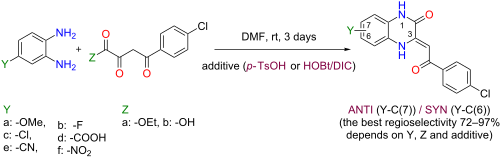
- substituted o-phenylenediamine 11. Sakata et al. reported an interesting one-pot procedure yielding 6-substituted SYN quinoxalin-2(1H)-ones from substituted N-(2-nitrophenyl)-3-oxobutanamides [28]. Another example for preparation of the desired regioisomer starts from the nucleophilic substitution of o


Nucleophilic and electrophilic cyclization of N-alkyne-substituted pyrrole derivatives: Synthesis of pyrrolopyrazinone, pyrrolotriazinone, and pyrrolooxazinone moieties
Beilstein J. Org. Chem. 2017, 13, 825–834, doi:10.3762/bjoc.13.83
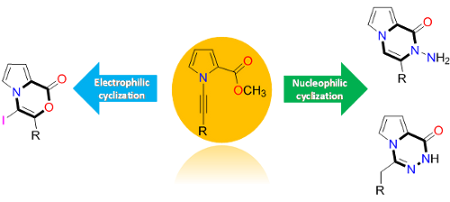
- , 55.4, 51.6; IR (ATR): 2951, 2257, 1719, 1605, 1543, 1515, 1458, 1438, 1416, 1361, 1334, 1265, 1246, 1179, 1168, 1100, 1069, 1027, 948, 830, 735, 598, 583; HRMS: [M + H]+ calcd for C14H11NO2, 256.09682; found, 256.09730. Methyl 1-[(4-nitrophenyl)ethynyl]-1H-pyrrole-2-carboxylate (7b). To a solution of 1
- , 2920, 1670, 1605, 1510, 1473, 1373, 1341, 1242, 1176, 1021, 965, 830, 800, 736, 634, 595; HRMS: [M + H]+ calcd for C13H8INO2, 256.10805; found, 256.10860. 4-(4-Nitrobenzyl)pyrrolo[1,2-d][1,2,4]triazin-1(2H)-one (13b). Methyl 1-[(4-nitrophenyl)ethynyl]-1H-pyrrole-2-carboxylate (7b, 0.30 g, 1.46 mmol) in
- , 1371, 1332, 1089, 1055, 766, 729, 696, 685; HRMS: [M + H]+ calcd for C13H8INO2, 337.96791; found, 337.97070. 4-Iodo-3-(4-nitrophenyl)-1H-pyrrolo[2,1-c][1,4]oxazin-1-one (19b). To a solution of methyl 1-[(4-nitrophenyl)ethynyl]-1H-pyrrole-2-carboxylate (7b, 0.108 g, 0.400 mmol) in DCM (20 mL), I2 (0.101




Derivatives of the triaminoguanidinium ion, 5. Acylation of triaminoguanidines leading to symmetrical tris(acylamino)guanidines and mesoionic 1,2,4-triazolium-3-aminides
Beilstein J. Org. Chem. 2017, 13, 579–588, doi:10.3762/bjoc.13.57
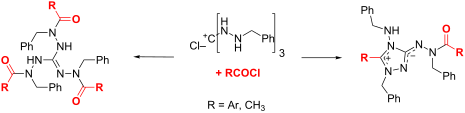
- contrast, the δ(C-5) values vary strongly with the substituent attached to this carbon atom. Whereas the values for 7a–c reflect the different interaction of the phenyl, 3,4,5-trimethoxyphenyl and 4-nitrophenyl substituents with the positive charge density at C-5 through mesomeric and inductive effects
- maximum in the series R = CH3 < phenyl ≈ 3,4,5-trimethoxyphenyl < 4-nitrophenyl. For 7a–c, this absorption band could result from a charge transfer between the amidinate moiety, representing the HOMO of the mesoionic system, and an unoccupied π-orbital of the C(=O)Ar group. Upon N-protonation or N




Regiochemistry of cyclocondensation reactions in the synthesis of polyazaheterocycles
Beilstein J. Org. Chem. 2017, 13, 257–266, doi:10.3762/bjoc.13.29
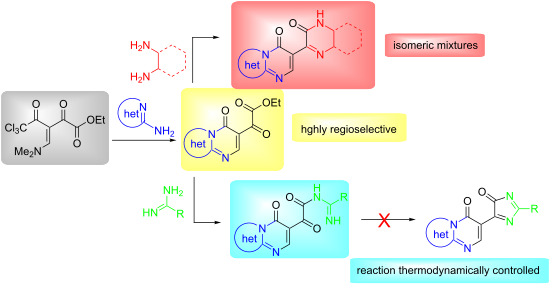
- , thiophene-2-glyoxylic acid, and N-(2-amino-4-nitrophenyl)acetamide, in accordance with the mechanism proposed in this work. To rationalize why the cyclization reaction between the amidines 8g,h and the α-ketoester did not occur, the HOMO coefficient and charge densities for the nitrogens of the amidine were


Chemical probes for competitive profiling of the quorum sensing signal synthase PqsD of Pseudomonas aeruginosa
Beilstein J. Org. Chem. 2016, 12, 2784–2792, doi:10.3762/bjoc.12.277
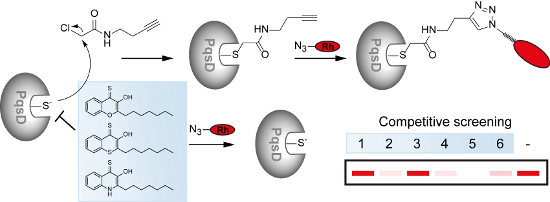
- modelling and chemical lead optimization. Examples of successful inhibitors are represented by the scaffolds of various 2-benzamidobenzoic acids [11][25][26], 2-nitrophenyl derivatives [27][28][29], ureidothiophene-2-carboxylic acids [24][30], and catechol-based compounds [31]. Many promising in vitro



Thiazol-4-one derivatives from the reaction of monosubstituted thioureas with maleimides: structures and factors determining the selectivity and tautomeric equilibrium in solution
Beilstein J. Org. Chem. 2016, 12, 2563–2569, doi:10.3762/bjoc.12.251

- it had been done earlier for 3a. On the other hand, heating the solution of thiazolidine 3g up to 120 °C led to coalescence. At this temperature even the signals of the ortho-protons of the 4-nitrophenyl ring (Δδ = 0.9 ppm at −20 °C) coalesced into one (Figure 2). The deviation of the tautomeric
- ratio for 3g from the ones observed for thiazolidines 3a–f seems to be caused by a weakening of the conjugation in the fragment NH–C=N–C=O realized in A form due to the strong electron-withdrawing effect of the 4-nitrophenyl group at the terminal NH group. Introducing an alkyl group in thioureas 1d–f


A direct method for the N-tetraalkylation of azamacrocycles
Beilstein J. Org. Chem. 2016, 12, 2457–2461, doi:10.3762/bjoc.12.239

- ), NaOH (1 M), RCH2Br (4.1 equivalents), rt, 6 h; R = C≡CH (3 and 8), C6H5 (4 and 9), o-bromophenyl (5 and 10), p-nitrophenyl (6 and 11), 2-naphthyl (7 and 12, see Table 1 for yields.). Direct synthesis of N-tetraalkylated macrocycles 3–12 from cyclam (1) and cyclen (2). Supporting Information Supporting


Regiocontroled Pd-catalysed C5-arylation of 3-substituted thiophene derivatives using a bromo-substituent as blocking group
Beilstein J. Org. Chem. 2016, 12, 2197–2203, doi:10.3762/bjoc.12.210
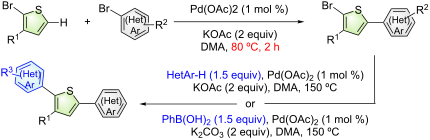
- -substituted thiophenes derivatives containing two different aryl groups at C2 and C5 positions via Suzuki coupling in the second step was also attempted (Scheme 8). The reaction of 5 with phenylboronic acid in the presence of only 1 mol % Pd(OAc)2 catalyst and K2CO3 as base gave 3-methyl-5-(4-nitrophenyl)-2




p-Nitrophenyl carbonate promoted ring-opening reactions of DBU and DBN affording lactam carbamates
Beilstein J. Org. Chem. 2016, 12, 2086–2092, doi:10.3762/bjoc.12.197
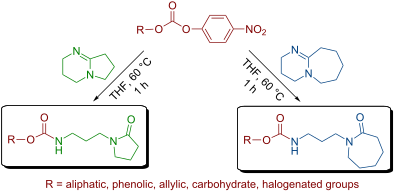
- towards highly electrophilic p-nitrophenyl carbonate derivatives with ring opening of the bicyclic ring to form corresponding substituted ε-caprolactam and γ-lactam derived carbamates. This simple method presents a unified strategy to synthesize structurally diverse ε-caprolactam and γ-lactam compounds
- with a large substrate scope. Keywords: carbonates; DBN; DBU; lactams; p-nitrophenyl; Introduction Among various organic bases, amidines such as DBU (1,8-diazabicyclo[5.4.0]undec-7-ene) and DBN (1,5-diazabicyclo[4.3.0]non-5-ene) having an imino group attached to the α-carbon of the amine are
- behavior of DBU towards imidazolides providing ε-caprolactam-derived carbamates and amides [17]. Here, in this report we present the results obtained by the reaction of DBU and DBN with highly electrophilic p-nitrophenyl carbonates leading to ε-caprolactam and γ-lactam carbamates. p-Nitrophenyl carbonates


The in situ generation and reactive quench of diazonium compounds in the synthesis of azo compounds in microreactors
Beilstein J. Org. Chem. 2016, 12, 1987–2004, doi:10.3762/bjoc.12.186
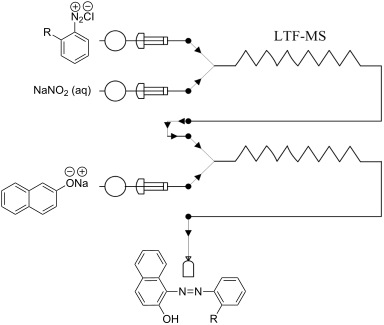
- experimental domain had no significant effect on the reaction response. For information, this flow rate range covers a residence time of 0.37 to 0.86 minutes. Azo coupling reaction in the synthesis of 4-(2-(4-nitrophenyl)diazenyl)-N-phenylbenzenamine in LTF-MS microreactors The synthesis of azo compounds
- involving couplers containing aminated aromatic systems is usually carried out in slightly acidic reaction conditions. The synthesis of 4-(2-(4-nitrophenyl)diazenyl)-N-phenylbenzenamine was an interesting choice for demonstrating the synthesis of azo compounds involving couplers containing aminated aromatic


Stereo- and regioselectivity of the hetero-Diels–Alder reaction of nitroso derivatives with conjugated dienes
Beilstein J. Org. Chem. 2016, 12, 1949–1980, doi:10.3762/bjoc.12.184
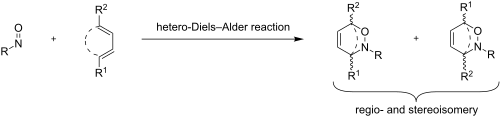
- and 4-nitrophenyl substituted derivatives. All 1,2-oxazines were isolated in high yield (>94%). An asymmetric hetero-Diels–Alder reaction used for the synthesis of (−)-epibatidine was reported by Royer [125][126]. The crucial step of the epibatidine synthesis, proceeding in 64% yield, is based on the






A convenient route to symmetrically and unsymmetrically substituted 3,5-diaryl-2,4,6-trimethylpyridines via Suzuki–Miyaura cross-coupling reaction
Beilstein J. Org. Chem. 2016, 12, 835–845, doi:10.3762/bjoc.12.82
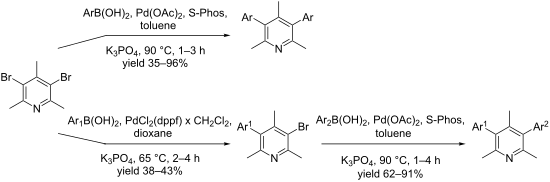
- %) as a co-solvent with toluene. On the other hand, the attempted coupling of compound 41 with 2-nitrophenylboronic acid and (2-chloro-6-methoxyphenyl)boronic acid failed. Despite more drastic conditions (xylene, DMF, 145 °C, 48 h, 8 mol % Pd(OAc)2/16 mol % S-Phos) any amount of 3,5-bis(2-nitrophenyl




A selective and mild glycosylation method of natural phenolic alcohols
Beilstein J. Org. Chem. 2016, 12, 524–530, doi:10.3762/bjoc.12.51

- organic media or ionic liquids as co-solvents [24][25][26][27]. The enzymatic transglucosylation using 4-nitrophenyl β-D-glucopyranoside as the donor and almond β-glucosidase as biocatalyst gave salidroside (2) in moderate yield [28]. Recently, we have published the enzymatic glycosylation of tyrosol (2


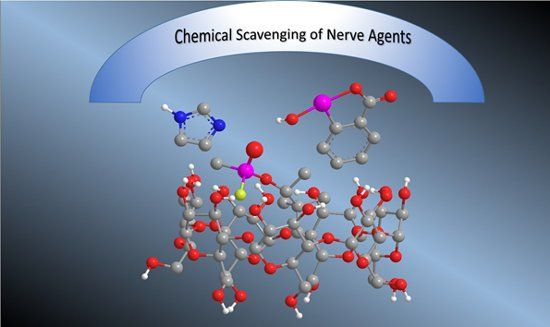
Interactions of cyclodextrins and their derivatives with toxic organophosphorus compounds
Beilstein J. Org. Chem. 2016, 12, 204–228, doi:10.3762/bjoc.12.23
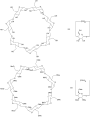
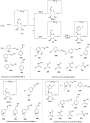
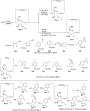
- )-(−)-enantiomer would be hydrolyzed faster in presence of α-CD. They also studied the alkaline hydrolysis of the two enantiomers of isopropyl para-nitrophenyl methylphosphonate [65] and of isopropyl (S)-2-dimethylaminoethyl methylphosphonothioate [67] in the presence of α-CD at 25 °C. The result indicates that
- the inclusion complexes stereospecific formation is not significant, but that α-CD is predominantly phosphonylated by the (−)-enantiomers. The stereospecificity observed with sarin, isopropyl para-nitrophenyl methylphosphonate and isopropyl (S)-2-dimethylaminoethyl methylphosphonothioate is ascribed





Synthesis and nucleophilic aromatic substitution of 3-fluoro-5-nitro-1-(pentafluorosulfanyl)benzene
Beilstein J. Org. Chem. 2016, 12, 192–197, doi:10.3762/bjoc.12.21
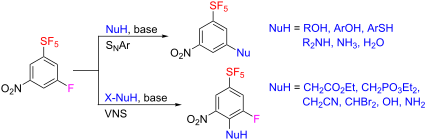
- Abstract 3-Fluoro-5-nitro-1-(pentafluorosulfanyl)benzene was prepared by three different ways: as a byproduct of direct fluorination of 1,2-bis(3-nitrophenyl)disulfane, by direct fluorination of 4-nitro-1-(pentafluorosulfanyl)benzene, and by fluorodenitration of 3,5-dinitro-1-(pentafluorosulfanyl)benzene
- byproduct of direct fluorination of 1,2-bis(3-nitrophenyl)disulfane but can be also prepared by other methods, and show that substitution for aromatic fluorine or hydrogen atoms provide a range of novel structurally diverse SF5-benzenes. Results and Discussion Direct fluorination of 1,2-bis(3-nitrophenyl
- -(pentafluorosulfanyl)benzenes. Conversion vs added fluorine equivalents for the fluorination of 1 in MeCN (left) and anhydrous HF (right). Direct fluorination of 1,2-bis(3-nitrophenyl)disulfane. Direct fluorination of 3-nitro-1-(pentafluorosulfanyl)benzene (1). Preparative fluorination of 3-nitro-1


N-Methylphthalimide-substituted benzimidazolium salts and PEPPSI Pd–NHC complexes: synthesis, characterization and catalytic activity in carbon–carbon bond-forming reactions
Beilstein J. Org. Chem. 2016, 12, 81–88, doi:10.3762/bjoc.12.9
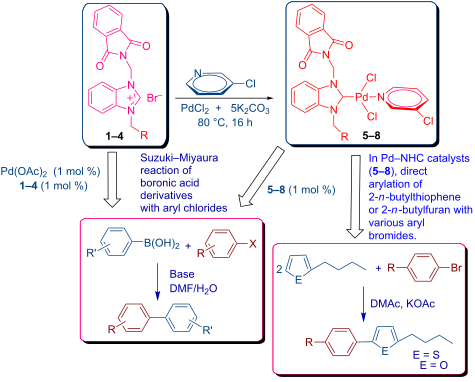
- –NHC complex as catalyst resulted in low yields and conversions (Table 3, entries 9–12). The usage of the morpholinoethyl substituted benzimidazolium compound 4 with Pd(OAc)2 resulted in higher yields of 2-(4-nitrophenyl)benzo[b]thiophene compared to the usage of compounds 1–3. Generally, the PEPPSI Pd


A convenient four-component one-pot strategy toward the synthesis of pyrazolo[3,4-d]pyrimidines
Beilstein J. Org. Chem. 2015, 11, 2125–2131, doi:10.3762/bjoc.11.229

- -6-(2-nitrophenyl)-1-phenyl-1H-pyrazolo[3,4-d]pyrimidine was determined by single crystal X-ray diffraction. Keywords: four-component; one-pot; pyrazolo[3,4-d]pyrimidine; sodium alkoxide; Introduction Heterocycles containing a pyrimidine ring are extensively present in natural products and are very


Investigation of the role of stereoelectronic effects in the conformation of piperidones by NMR spectroscopy and X-ray diffraction
Beilstein J. Org. Chem. 2015, 11, 1973–1984, doi:10.3762/bjoc.11.213

- acetone–methanol. Yields were 60–80%. The physical and spectroscopic properties of compounds 3–5 are in agreement with previous reports [53][54][55][56]. 2,4-Bis(3-nitrophenyl)-3-azabicyclo[3.3.1]nonan-9-one (6). White solid, Yield: 73%, by using the general procedure 5.10 mmol of cyclohexanone and 10.2
- ), 28.92 (C6, C8), 53.24 (C1, C5), 64.02 (C2-NH, C4-NH), 121.90 (C13, C19), 123.08 (C11, C17) 129.94 (C14, C20), 133.05 (C15, C21), 142.82 (C10, C16), 148.70 (C12-C18), 214.92 (C=O). 1-Methyl-2,4-bis(3-nitrophenyl)-3-azabicyclo[3.3.1]nonan-9-one (7). Yellow solid, Yield: 72%, by using the general procedure
- ), 129.42 (C20), 129.86 (C14), 133.03 (C21), 135.21 (C15), 141.37 (C16) 142.93 (C10), 148.26 (C18), 148.61 (C12), 215.46 (C=O). 1,5-Dimethyl-2,4-bis(3-nitrophenyl)-3-azabicyclo[3.3.1]nonan-9-one (8). White solid, Yield: 64%, by using the general procedure 5.10 mmol of 2,6-dimethylcyclohexanone and 10.2 mmol




Lewis acid-promoted hydrofluorination of alkynyl sulfides to generate α-fluorovinyl thioethers
Beilstein J. Org. Chem. 2015, 11, 1902–1909, doi:10.3762/bjoc.11.205

- the reaction from occurring. Conversely, and as expected, the 4-nitro group had a detrimental effect on the reaction outcome. When 4-nitrophenyl(ethynyl)sulfane (1i) was treated with TiF4, it took nearly 7 days to observe some reaction progress, and the desired Z-isomer of 2i could be isolated in only
- fact that the 4-nitrophenyl group surely must increase the triple bond electrophilicity, hence any trace of water present in the reaction mixture could lead to an intermediate enol thioester which would in turn readily convert to the stable thioester 5. Nonetheless, ensuring rigorously anhydrous


Pyridinoacridine alkaloids of marine origin: NMR and MS spectral data, synthesis, biosynthesis and biological activity
Beilstein J. Org. Chem. 2015, 11, 1667–1699, doi:10.3762/bjoc.11.183
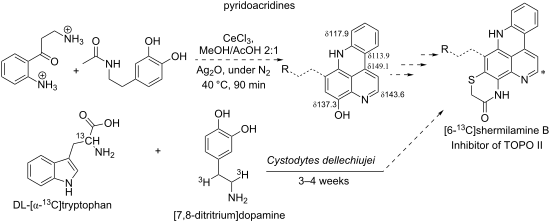
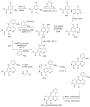
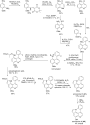
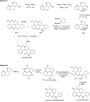
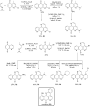
- was subsequently transformed into a quinolone benzyl ether under reflux conditions. A quinoline triflate ester was prepared from the quinolone and coupled to trimethyl(2-nitrophenyl)stannane by Stille coupling catalyzed by palladium acetate. The afforded nitrophenylquinoline was hydrolyzed and











Pyridine-promoted dediazoniation of aryldiazonium tetrafluoroborates: Application to the synthesis of SF5-substituted phenylboronic esters and iodobenzenes
Beilstein J. Org. Chem. 2015, 11, 1494–1502, doi:10.3762/bjoc.11.162

- benzenethiols [10][11][12], or by the reaction of nitrophenyl disulfides with elemental fluorine [13][14][15][16]. Aromatic and heteroaromatic SF5 compounds are mostly prepared by the derivatization of commercial nitro-(pentafluorosulfanyl)benzenes [14][17][18][19][20][21][22][23][24][25][26][27] and approaches





