


Search results
Search for "platinum" in Full Text gives 207 result(s) in Beilstein Journal of Organic Chemistry. Showing first 200.
Aryl-substituted acridanes as hosts for TADF-based OLEDs
Beilstein J. Org. Chem. 2020, 16, 989–1000, doi:10.3762/bjoc.16.88
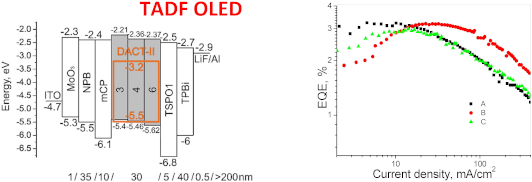
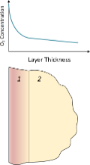
- -electrode cell consisting of a platinum coil as counter electrode, a glassy carbon working electrode, and a silver wire as reference electrode was used; sweep rate – 100 mV/s, 0.1 M solution of tetrabutylammonium hexafluorophosphate (n-Bu4NPF6)) and b) photoelectron emission spectra of the layers of


A review of asymmetric synthetic organic electrochemistry and electrocatalysis: concepts, applications, recent developments and future directions
Beilstein J. Org. Chem. 2019, 15, 2710–2746, doi:10.3762/bjoc.15.264
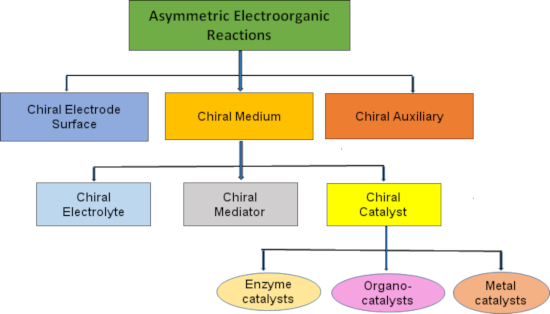
- -induced asymmetric electrochemical hydrogenation of 2,2,2-trifluoroacetophenone 32 nanoparticles was also developed (Scheme 13). These NPs with low Pt loading were further obtained by reducing platinum precursors on Cu NPs [41]. Yadav’s group, in 2013, described preparative scale enantioselective cathodic
- aryl sulfides 40 to their corresponding sulfoxides 41 using poly(amino acid)-coated platinum electrodes with moderate yield and good to excellent enantiomeric excess (Scheme 17) [47][48]. Osa and co-workers, in 1994, made an important contribution in the area by developing an enantioselective method


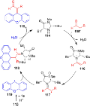


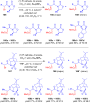


Experimental and computational electrochemistry of quinazolinespirohexadienone molecular switches – differential electrochromic vs photochromic behavior
Beilstein J. Org. Chem. 2019, 15, 2473–2485, doi:10.3762/bjoc.15.240
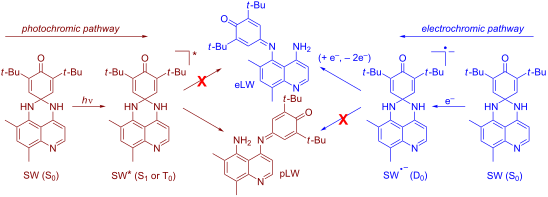
- platinum wire counter electrode, and a separately sparged Ag/AgNO3 (10 mM) nonaqueous reference electrode isolated from the working compartment with a Vycor frit. In some cases, a bare Ag wire was used as a pseudo-reference instead. The working, reference, and counter-electrodes were arranged in a triangle
- of a 19/22 septum was removed with a razor blade and used to cap the vial. The rubber had holes drilled for a reference and auxiliary electrode and a slit cut for a 7 × 70 mm platinum mesh working electrode so that the surface of the mesh faced the working and auxiliary electrodes. Teflon tubing was
- inserted through a pinhole in the septum for an argon purge and vent. The setup used a CHI112 nonaqueous Ag/AgNO3 reference electrode. The auxiliary electrode was formed by removing the silver wire from a CHI112 nonaqueous reference electrode and replacing it with a rolled 7 × 70 mm piece of platinum mesh


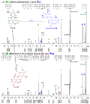


Photochromic diarylethene ligands featuring 2-(imidazol-2-yl)pyridine coordination site and their iron(II) complexes
Beilstein J. Org. Chem. 2019, 15, 2428–2437, doi:10.3762/bjoc.15.235
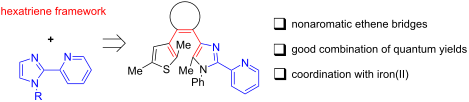
- their complexes with rhodium(I) [18], platinum(II) [30], and iridium(III) [31] were reported. In contrast, in our work, the 2-(imidazol-2-yl)pyridine unit is used as a heterocyclic moiety of diarylethenes with cyclopentenone, cyclopentene, and cyclohexenone ethene bridges. The novel ligands have been


Small anion-assisted electrochemical potential splitting in a new series of bistriarylamine derivatives: organic mixed valency across a urea bridge and zwitterionization
Beilstein J. Org. Chem. 2019, 15, 2277–2286, doi:10.3762/bjoc.15.220

- . Electrochemical investigations The electrochemical behavior was investigated using a BAS electrochemical analyzer (Bioanalytical Systems Inc, West Lafayette, IN, USA) with a three-electrode system composed of a platinum wire (1.6 mm diameter) counter electrode, a glassy carbon working electrode (3.0 mm diameter


2,3-Dibutoxynaphthalene-based tetralactam macrocycles for recognizing precious metal chloride complexes
Beilstein J. Org. Chem. 2019, 15, 1460–1467, doi:10.3762/bjoc.15.146
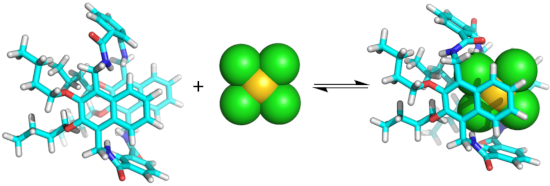
- sidewalls have been synthesized and characterized. The macrocycle containing isophthalamide bridges can bind square-planar chloride coordination complexes of gold(III), platinum(II), and palladium(II) in CDCl3, while the macrocycle with 2,6-pyridine dicarboxamide bridging units cannot. This may be due to
- a pair of new tetralactam macrocycles with 2,3-dibutoxynaphthalene as the sidewalls. The tetralactam macrocycle with 2,6-pyridine dicarboxamide cannot bind square-planar chloride coordination complexes of gold(III), platinum(II), and palladium(II) in CDCl3, while the macrocycle containing
- isophthalamide bridging units bind these complexes with decent binding affinities. This macrocycle shows similar binding affinity to chloride, weaker affinity to the chloride complex of gold(III), and much stronger affinities to the chloride complexes of platinum(II) and palladium(II), when compared to the


Selenophene-containing heterotriacenes by a C–Se coupling/cyclization reaction
Beilstein J. Org. Chem. 2019, 15, 1379–1393, doi:10.3762/bjoc.15.138

- via spectroelectrochemistry using a previously described setup with a platinum working electrode and UV–vis–NIR spectra were recorded in reflectance mode [53]. At the beginning of the measurements a potential of −500 mV (vs Ag/AgCl) was applied in order to obtain the neutral polymer films without any
- Perkin Elmer UV/VIS/NIR Lambda 19 spectrometer. Cyclic voltammetry experiments were performed with a computer-controlled Autolab PGSTAT30 potentiostat in a three-electrode single compartment cell (3 mL). The platinum working electrode consisted of a platinum wire sealed in a soft glass tube with a
- surface of A = 0.785 mm2, which was polished down to 0.25 μm with Buehler polishing paste prior to use to guarantee reproducible surfaces. The counter electrode consisted of a platinum wire and the reference electrode was an Ag/AgCl reference electrode. All potentials were internally referenced to the


Mechanochemistry of supramolecules
Beilstein J. Org. Chem. 2019, 15, 881–900, doi:10.3762/bjoc.15.86
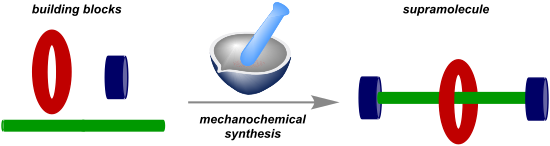
- condition than in aqueous media [56]. When a 1:1 mixture of the platinum salt [(en)PtNO3)2] and 4,4'-bipyridine were grinded in a mortar and pestle for 10 min, an NMR yield of 76% was found for the formation of molecular square 8 (Figure 4a). Similar structures were reported by Fujita’s group [57] in which


A diastereoselective approach to axially chiral biaryls via electrochemically enabled cyclization cascade
Beilstein J. Org. Chem. 2019, 15, 795–800, doi:10.3762/bjoc.15.76
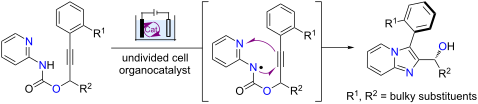
- previously established conditions employing a three-necked round-bottomed flask as the cell, a reticulated vitreous carbon (RVC) anode and a platinum plate cathode [31]. The reaction was carried in refluxing MeCN/H2O (9:1) with tetraarylhydrazine 1 as the redox catalyst, NaHCO3 (2 equiv) as an additive, and




Synthesis of polydicyclopentadiene using the Cp2TiCl2/Et2AlCl catalytic system and thin-layer oxidation of the polymer in air
Beilstein J. Org. Chem. 2019, 15, 733–745, doi:10.3762/bjoc.15.69
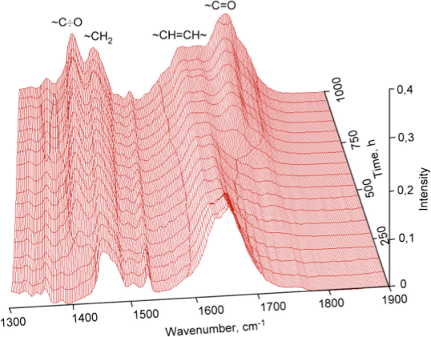
- process with a digital thermometer, consisting of a platinum thin film resistance thermometer placed on a ceramic substrate and placed in a stainless steel thin-wall case. The catalyst for cationic DCPD polymerization is a complex that is formed during the interaction of Cp2TiCl2 with AlEt2Cl. The




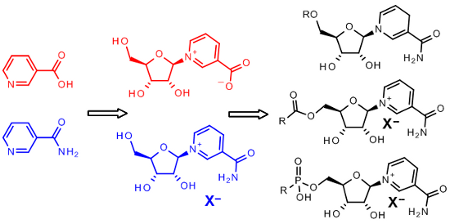
Syntheses and chemical properties of β-nicotinamide riboside and its analogues and derivatives
Beilstein J. Org. Chem. 2019, 15, 401–430, doi:10.3762/bjoc.15.36
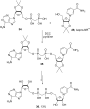
- -dihydropyridine derivatives may be also accomplished by using catalysis with organometallic complexes [72][73][74][75][76][77][78][79] or platinum nanoparticles [80]. This recently developed approach stems from an independent field of research, which focuses on the regeneration of NAD(P)H from NAD(P)+ [81][82










Synthesis of 1,2-divinylcyclopropanes by metal-catalyzed cyclopropanation of 1,3-dienes with cyclopropenes as vinyl carbene precursors
Beilstein J. Org. Chem. 2019, 15, 285–290, doi:10.3762/bjoc.15.25

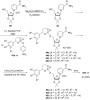
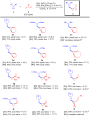
- importantly, with complete endo (syn) selectivity. The use of gold, platinum or ruthenium catalysts showed poorer results with respect to reaction yield and endo/exo (syn/anti) selectivity, as indicated in Scheme 2. Considering these results, the scope of the reaction with unbiased 1,3-dienes was next




Repurposing the anticancer drug cisplatin with the aim of developing novel Pseudomonas aeruginosa infection control agents
Beilstein J. Org. Chem. 2018, 14, 3059–3069, doi:10.3762/bjoc.14.284
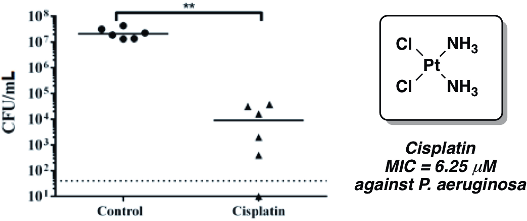
- glucose and 0.4 g/L casamino acids). For marker selection in P. aeruginosa, 30 μg mL−1 gentamycin (Gm), 50 μg mL−1 tetracycline (Tc), 100 μg mL−1 streptomycin (Strep) or 200 μg mL−1 carbenicillin (Cb) were used, as appropriate. Platinum complexes and solution preparation for MIC assay Cisplatin
- , transplatin, cDPCP, oxaliplatin, K2PtCl4 and cis-PtCl2(CH3CN)2 were purchased from Sigma-Aldrich were used as received. Platinum complexes cis-PtCl2(Py)2 [13][14] and cis-PtCl2(PPh3)2 [15] were prepared according to the reported procedure. For minimal inhibitory concentration (MIC) assays, cisplatin, cDPCP




Oxidative and reductive cyclization in stiff dithienylethenes
Beilstein J. Org. Chem. 2018, 14, 2812–2821, doi:10.3762/bjoc.14.259
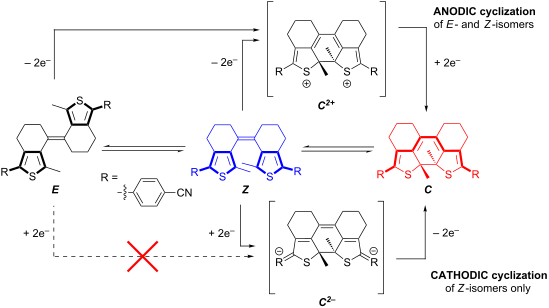
- platinum electrode that resisted further analysis (for a photograph, see Figure S41d, Supporting Information File 1). 4) The absorption spectrum of FP is red-shifted compared to the two open isomers yet blue-shifted compared to the closed isomer (Figure S29b, Supporting Information File 1). 5) Upon


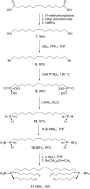
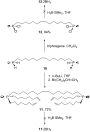
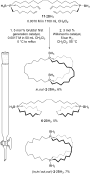
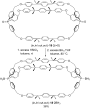
Non-metal-templated approaches to bis(borane) derivatives of macrocyclic dibridgehead diphosphines via alkene metathesis
Beilstein J. Org. Chem. 2018, 14, 2354–2365, doi:10.3762/bjoc.14.211
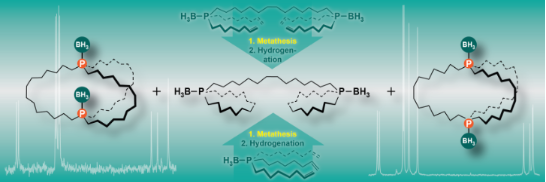
- identical phosphorus atoms. The yield was 10%. The structure has been confirmed by an independent synthesis (detachment of the diphosphine from a platinum complex followed by borane addition) and a crystal structure [6]. Finally, another white powder was obtained. As with the previous oil isolated above
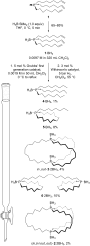
- ·2BH3 matched those reported above. The 13C{1H} NMR spectra (CDCl3, 100 MHz) of in,out-2·2BH3, (in,in/out,out)-2·2BH3, 6·2BH3, and the crude reaction mixture after hydrogenation from Scheme 5 (top); doublets are marked with an asterisk. Syntheses of gyroscope like platinum and rhodium complexes and






Bioinspired cobalt cubanes with tunable redox potentials for photocatalytic water oxidation and CO2 reduction
Beilstein J. Org. Chem. 2018, 14, 2331–2339, doi:10.3762/bjoc.14.208
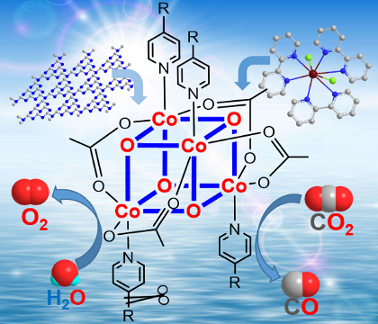
- /s scan rate in 0.2 M Na2SO4, (b) at a 50 mV/s scan rate in MeCN (0.1 M TBAPF6) under CO2-saturated conditions. The working electrode used was 3 mm diameter glassy carbon electrode, the counter electrode was a platinum foil and the reference electrode was a Ag/AgCl. The activity of 1-R for (a) water


Coordination-driven self-assembly of discrete Ru6–Pt6 prismatic cages
Beilstein J. Org. Chem. 2018, 14, 2242–2249, doi:10.3762/bjoc.14.199
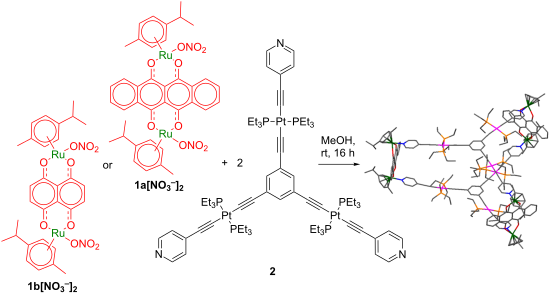
- –ruthenium(II) clips (1a(NO3)2 and 1b(NO3)2) and a tritopic platinum(II) metalloligand 2 has been performed in methanol at room temperature. The [3 + 2] hexanuclear cages 3a and 3b were isolated in good yields and characterized by well-known spectroscopic techniques including multinuclear NMR, mass
- spectrometry, UV–vis and infrared studies. Geometry optimization revealed the shapes and sizes of these hexanuclear prismatic cages. The combination of ruthenium and platinum metal center in a one-pot self-assembly reaction showcases the construction of aesthetically elegant heterometallic structures in
- supramolecular chemistry leading to the formation of a single major product. Keywords: arene–ruthenium(II); heterometallic cages; platinum metalloligand; self-assembly; supramolecular architectures; Introduction Coordination-driven self-assembly of discrete architectures has evolved as a unique protocol to


Tetrathiafulvalene – a redox-switchable building block to control motion in mechanically interlocked molecules
Beilstein J. Org. Chem. 2018, 14, 2163–2185, doi:10.3762/bjoc.14.190
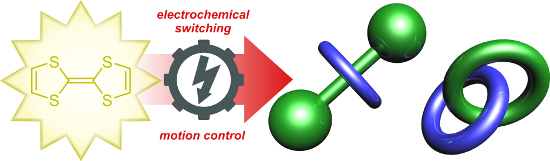
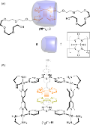
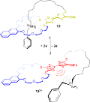
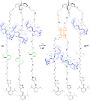
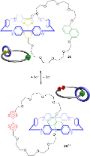
- Figure 27b), donor–acceptor interactions and hydrogen bonding generate a neutral TTF dimer that is surrounded by cofacially oriented bipyridinium units [112]. The intertwined structure is locked by formation of platinum(II)–pyridine coordination bonds. Interestingly, the doubly interlocked catenane











Recent advances in materials for organic light emitting diodes
Beilstein J. Org. Chem. 2018, 14, 1944–1945, doi:10.3762/bjoc.14.168

- Cebrián and Matteo Mauro review the advances made in platinum(II) complexes for OLEDs [3]. Rebecca Pittkowski and Thomas Strassner report bright blue-to-blue-green phosphorescent platinum(II) complexes employing sterically bulky diketonate ancillary ligands [4]. In addition, Lin Gan et al. describe a new
Direct electrochemical generation of organic carbonates by dehydrogenative coupling
Beilstein J. Org. Chem. 2018, 14, 1578–1582, doi:10.3762/bjoc.14.135
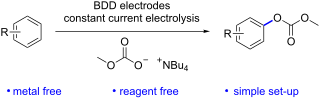
- diamond (BDD) as electrode material has the capability to convert simple aromatic systems by direct C–H activation [21][22][23][24][25][26][27]. In contrast, other typical anode materials such as graphite, glassy carbon, or platinum tend to lead to electrode fouling when applying high positive potentials


Recent advances in phosphorescent platinum complexes for organic light-emitting diodes
Beilstein J. Org. Chem. 2018, 14, 1459–1481, doi:10.3762/bjoc.14.124
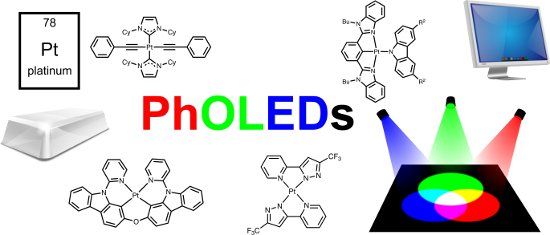
- square planar platinum(II) complexes bearing π-conjugated chromophoric ligands playing a key role in such respect. In this contribution, the most recent and promising trends in the field of phosphorescent platinum complexes will be reviewed and discussed. In particular, the importance of proper molecular
- ; electroluminescence; OLED; phosphorescence; platinum complexes; Introduction Photoactive TMCs have attracted enormous attention in the last two decades because of their peculiar photophysical and rich redox properties, which make them appealing from both fundamental research and technological applications points of
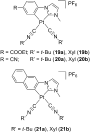
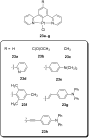
- including photocatalysis [6], bio-imaging [7][8], and solar-energy conversion [9], just to cite a few. Thompson and Forrest reported in 1998 on the first example of a phosphorescent emitter, namely 2,3,7,8,12,13,17,18-octaethyl-21H,23H-porphyrin platinum(II) (Pt(OEP)), used as dopant for the fabrication of





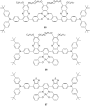

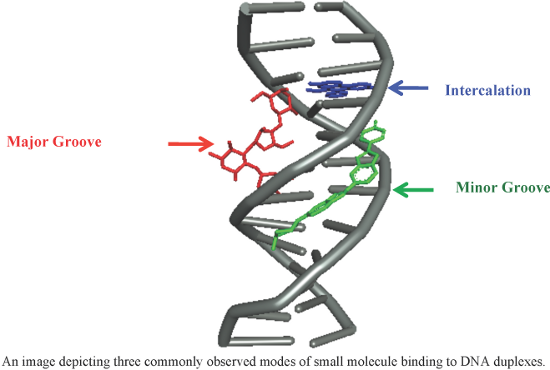
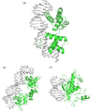
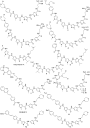
An overview of recent advances in duplex DNA recognition by small molecules
Beilstein J. Org. Chem. 2018, 14, 1051–1086, doi:10.3762/bjoc.14.93






Polysubstituted ferrocenes as tunable redox mediators
Beilstein J. Org. Chem. 2018, 14, 1004–1015, doi:10.3762/bjoc.14.86
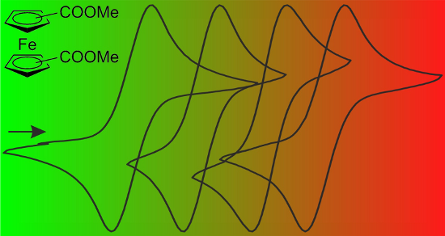
- (time-dependent) density functional theoretical (TD)-DFT methods. Results and Discussion Electrochemistry of esters 1–4 The esters 1–4 were studied by cyclic and square wave voltammetry in 0.1 M CH2Cl2 solutions of [n-Bu4N][B(C6F5)4], using platinum working and counter electrodes. All esters 1–4 show an
- carried out on a BioLogic SP-50 voltammetric analyzer using a platinum working electrode, a platinum wire as counter electrode, and a 0.01 M Ag/AgNO3 CH3CN electrode as reference electrode. The measurements were carried out at a scan rate of 100 mV s−1 for cyclic voltammetry experiments and 100 mV s−1 for


On the design principles of peptide–drug conjugates for targeted drug delivery to the malignant tumor site
Beilstein J. Org. Chem. 2018, 14, 930–954, doi:10.3762/bjoc.14.80
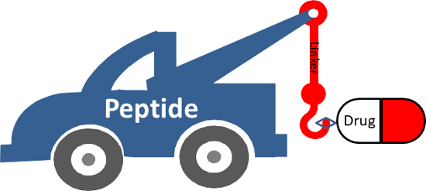
- with the German Gynecological Oncology Group (AGO) and 3 other centers from Bulgaria on 43 women. The patients had platinum-resistant advanced ovarian cancer, FIGO (Fédération Internationale de Gynécologie et d'Obstétrique) III or IV or recurrent endometrial cancer (EC) and LHRH receptor-positive tumor


Two novel blue phosphorescent host materials containing phenothiazine-5,5-dioxide structure derivatives
Beilstein J. Org. Chem. 2018, 14, 869–874, doi:10.3762/bjoc.14.73
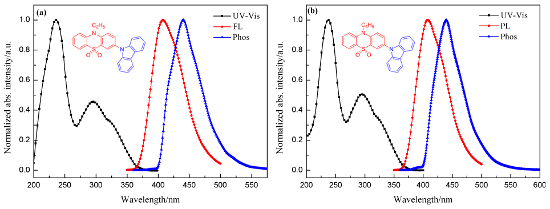
- the supporting electrolyte. The cyclic voltammograms are shown in Figure 3. Cyclic voltammetry was measured with a glassy carbon working electrode, a platinum wire counter electrode, a saturated Ag/AgCl reference electrode, ferrocenium-ferrocene (Fc+/Fc) as the internal standard and tetrabutylammonium





