


Search results
Search for "polycyclic" in Full Text gives 299 result(s) in Beilstein Journal of Organic Chemistry. Showing first 200.
Quinoxaline derivatives as attractive electron-transporting materials
Beilstein J. Org. Chem. 2023, 19, 1694–1712, doi:10.3762/bjoc.19.124
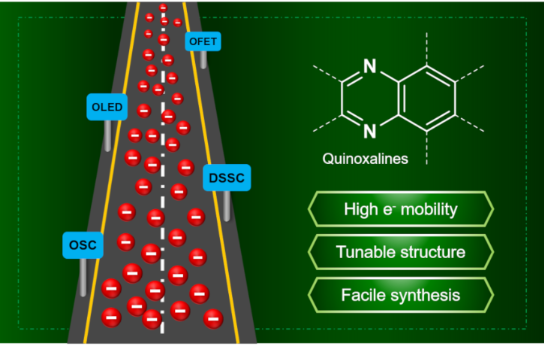
- structure, resulting in improved photovoltaic properties and overall PCEs (12.12–13.3%) [29]. Researchers have explored Y6 derivatives for hydrogen production. Zhang and co-workers synthesized a two-dimensional polycyclic material by merging two Y6 molecules with a Qx unit. They blended the newly formed
- reports have highlighted the development of novel synthetic routes for producing Qx derivatives with desired properties. Kvashnin et al. reported a simple yet promising strategy for designing and synthesizing n-type semiconductors. The team developed a synthetic route to produce polycyclic (hetero


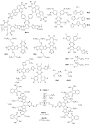
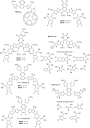
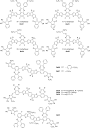


Decarboxylative 1,3-dipolar cycloaddition of amino acids for the synthesis of heterocyclic compounds
Beilstein J. Org. Chem. 2023, 19, 1677–1693, doi:10.3762/bjoc.19.123
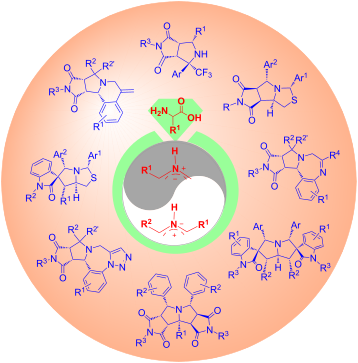
- -five-component double cycloadditions for polycyclic pyrrolizidines With the success of the three-component [3 + 2] cycloadditions shown in Scheme 5, we then explored the double cycloaddition reactions proposed in Scheme 4. The reaction has synthetic significance since the resulting pyrrolizidine
- diastereoselectivity is caused by the different R2/R2’ and R3/R3’groups which no longer have the same stereochemistry as that shown in Scheme 8. Double cycloadditions for bis[spirooxindole-pyrrolizidine] compounds After completing the pseudo-five-component double cycloaddition reactions leading to polycyclic




A series of perylene diimide cathode interlayer materials for green solvent processing in conventional organic photovoltaics
Beilstein J. Org. Chem. 2023, 19, 1620–1629, doi:10.3762/bjoc.19.119
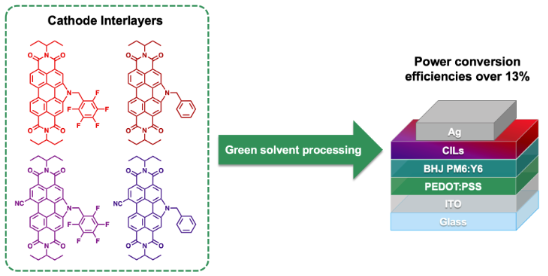
- stabilization of the first excited state in relation to the stabilization of the ground state, which is observed in other PDIs when installing the electron-withdrawing nitrile group on the polycyclic aromatic core [27][28]. The molar extinction coefficients (ε) of all compounds in ethyl acetate were determined


Selective construction of dispiro[indoline-3,2'-quinoline-3',3''-indoline] and dispiro[indoline-3,2'-pyrrole-3',3''-indoline] via three-component reaction
Beilstein J. Org. Chem. 2023, 19, 1234–1242, doi:10.3762/bjoc.19.91
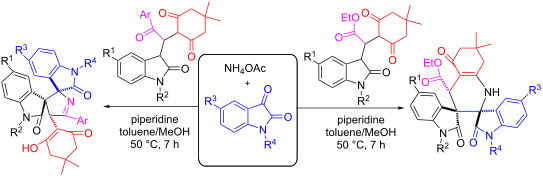
- multicomponent reactions have been successfully developed to construct multifunctionalized or polycyclic spirooxindoles. For example, Zhang successfully developed a recyclable bifunctional cinchona/thiourea-catalyzed four-component Michael/Mannich cyclization sequence for the asymmetric synthesis of
- . This reaction provided efficient synthetic protocols for the synthesis of dispiro[indoline-3,2'-quinoline-3',3''-indoline] and dispiro[indoline-3,2'-pyrrole-3',3''-indoline] derivatives. A plausible reaction mechanism was proposed to explain the selective formation of the different polycyclic compounds



Aromatic C–H bond functionalization through organocatalyzed asymmetric intermolecular aza-Friedel–Crafts reaction: a recent update
Beilstein J. Org. Chem. 2023, 19, 956–981, doi:10.3762/bjoc.19.72

- acyclic, carbocyclic, heterocyclic, and polycyclic molecular architectures with high molecular complexity. In particular, asymmetric organocatalysis plays a pivotal role in the construction of optically active, bioactive, and natural products. The main advantages of organocatalyzed stereoselective




Synthesis of substituted 8H-benzo[h]pyrano[2,3-f]quinazolin-8-ones via photochemical 6π-electrocyclization of pyrimidines containing an allomaltol fragment
Beilstein J. Org. Chem. 2023, 19, 778–788, doi:10.3762/bjoc.19.58
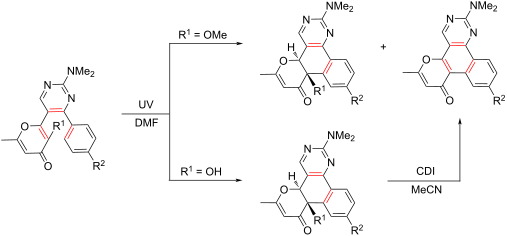
- derivative 11a. Thus, all our attempts towards the regiospecific photochemical conversion of pyrimidines 10 into polycyclic compounds 12 were unsuccessful. A plausible mechanism for the considered phototransformation of compounds 9 and 10 is depicted in Scheme 6. At first, pyrimidines 10 undergo a 6π
- -electrocyclization under UV irradiation resulting in the formation of unstable intermediate A, starting from which two directions of further transformation are possible. The most obvious pathway is a simple elimination of a methanol molecule with aromatization of the central benzene ring leading to polycyclic
- more preferable process compared to aromatization. The above-mentioned photochemical reaction of pyrimidines 10 allows to synthesize polycyclic products 12 (Scheme 8, method A). In this case, the yields of compounds 12 did not exceed 41%, which is associated with low regioselectivity of the process and


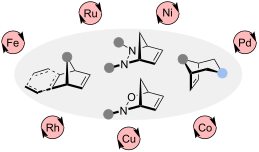
Transition-metal-catalyzed domino reactions of strained bicyclic alkenes
Beilstein J. Org. Chem. 2023, 19, 487–540, doi:10.3762/bjoc.19.38


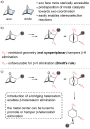





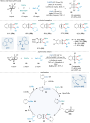


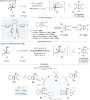


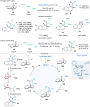


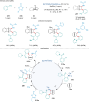


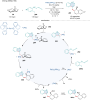




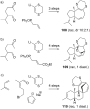
Strategies to access the [5-8] bicyclic core encountered in the sesquiterpene, diterpene and sesterterpene series
Beilstein J. Org. Chem. 2023, 19, 245–281, doi:10.3762/bjoc.19.23
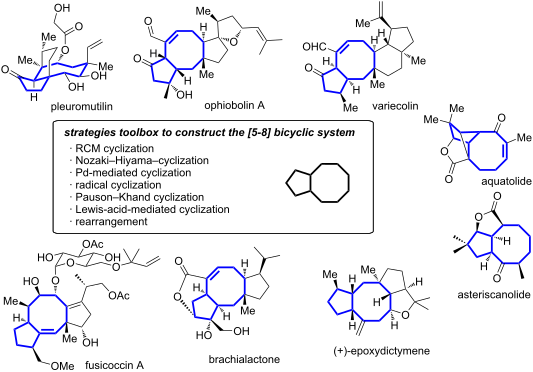
- [2]. In several cases, terpenes possess a complex polycyclic framework which challenged the chemistry community over the years to develop efficient approaches and methodologies to access them. Indeed, some classes of terpenes, mainly diterpenes (C20) and sesterterpenes (C25) and to a lesser extent


1,4-Dithianes: attractive C2-building blocks for the synthesis of complex molecular architectures
Beilstein J. Org. Chem. 2023, 19, 115–132, doi:10.3762/bjoc.19.12
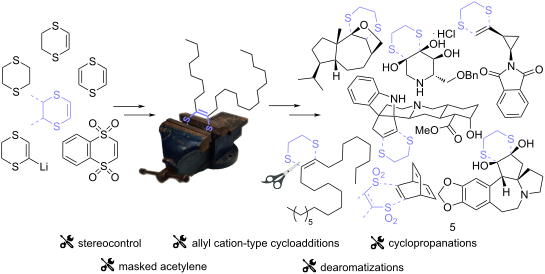
- of dithiin-fused allyl alcohols and similar non-cyclic sulfur-substituted allyl alcohols. Applications of dihydrodithiins in the rapid assembly of polycyclic terpenoid scaffolds [108][109]. Dihydrodithiin-mediated allyl cation and vinyl carbene cycloadditions via a gold(I)-catalyzed 1,2-sulfur











Preparation of β-cyclodextrin/polysaccharide foams using saponin
Beilstein J. Org. Chem. 2023, 19, 78–88, doi:10.3762/bjoc.19.7
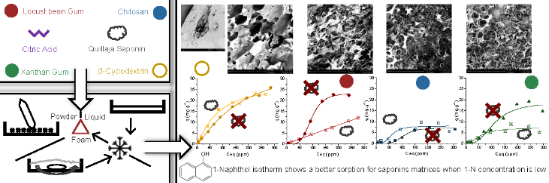
- and cholesterol lowering properties, for example [10]. As reported by Liu et al. [19], saponins can show interesting interactions with hydrophobic organic compounds (HOC) and more precisely with polycyclic aromatic hydrocarbons (PAHs). For example, phenanthrene can be removed by saponins [20], by




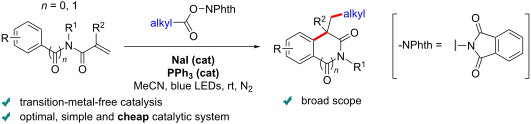
NaI/PPh3-catalyzed visible-light-mediated decarboxylative radical cascade cyclization of N-arylacrylamides for the efficient synthesis of quaternary oxindoles
Beilstein J. Org. Chem. 2023, 19, 57–65, doi:10.3762/bjoc.19.5
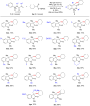
- %). Interestingly, a cyclic N-arylamide derivative was also well tolerated, furnishing polycyclic structure 3la in 67% yield. In addition, substrates with different N-substituents, such as ethyl, benzyl, and phenyl, could be converted into the expected products 3ma–oa in good yields. It should be noted that




A novel bis-triazole scaffold accessed via two tandem [3 + 2] cycloaddition events including an uncatalyzed, room temperature azide–alkyne click reaction
Beilstein J. Org. Chem. 2022, 18, 1636–1641, doi:10.3762/bjoc.18.175
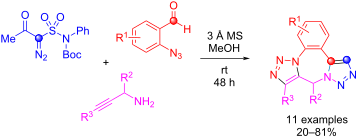
- valuable part of the drug discovery chemistry toolbox. For the same reason, development of new methods [3] to either build 1,2,3-triazoles de novo and/or incorporate them into polycyclic scaffolds is a worthy undertaking which can help discover biological activity associated with hitherto unattainable
- ) [6]. Indeed, if an alkyne and an azido group were strategically positioned within the structure of the amine and the aldehyde components for the reaction with 1, subsequent intramolecular azide–alkyne cycloaddition would be a feasible event which would create a polycyclic bis-1,2,3-triazole framework


Preparation of β-cyclodextrin-based dimers with selectively methylated rims and their use for solubilization of tetracene
Beilstein J. Org. Chem. 2022, 18, 1596–1606, doi:10.3762/bjoc.18.170
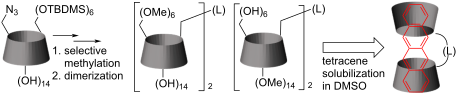
- could be expected that the extension of the hydrophobic cavity by the combined methylation and “dimerization” may improve the binding potential towards such substrates even more. Linear polycyclic aromatic hydrocarbons (acenes) and their derivatives are good organic semiconductors and show interesting


Dissecting Mechanochemistry III
Beilstein J. Org. Chem. 2022, 18, 1454–1456, doi:10.3762/bjoc.18.150
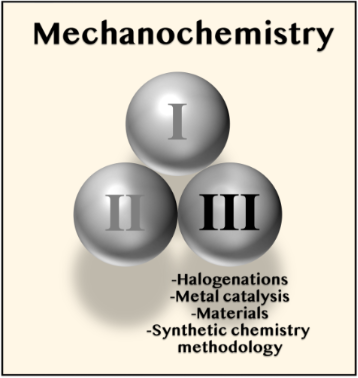
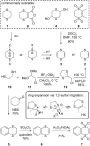
- Margetić used dibrominated polycyclic imides as substrates to generate reactive alkenes, which could be trapped in situ by several dienes through Diels−Alder cycloadditions by ball milling (Scheme 3) [7]. Further, Moores and co-workers synthesized phosphorus-bridged heptazine-based carbon nitrides (g-h-PCN
- . Mechanochemical palladium-catalyzed borylation protocol of aryl halides. 1,2-Debromination of polycyclic imides, followed by in situ trapping of the dienophile by several dienes. Synthesis of g-h-PCN from sodium phosphide and trichloroheptazine mediated by mechanochemistry. Mechanochemical intra- and


1,4,6,10-Tetraazaadamantanes (TAADs) with N-amino groups: synthesis and formation of boron chelates and host–guest complexes
Beilstein J. Org. Chem. 2022, 18, 1424–1434, doi:10.3762/bjoc.18.148
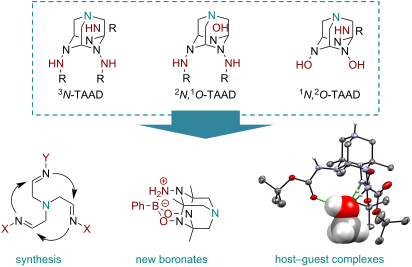
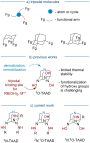
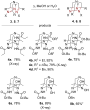
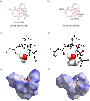
- Tripodal molecules are widely used as chelating ligands for transition metal catalysis [1][2][3], sensors for ions and small molecules [4][5], reagents for surface grafting [6], building blocks for the construction of supramolecular structures [7], polycyclic cage molecules [8], and porous materials [9






Cytochrome P450 monooxygenase-mediated tailoring of triterpenoids and steroids in plants
Beilstein J. Org. Chem. 2022, 18, 1289–1310, doi:10.3762/bjoc.18.135
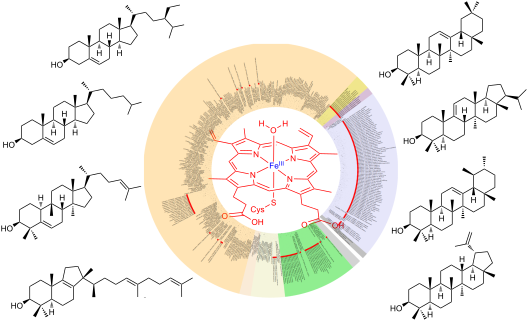
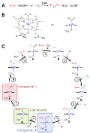
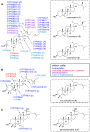
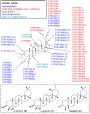
- polycyclic skeletons of triterpenoids and steroids are created by oxidosqualene cyclases (OSCs) from the universal substrate 2,3-oxidosqualene [5]. As different folding modes (chair–boat–chair vs chair–chair–chair) and different ring sizes can occur during this cyclisation cascade, resulting triterpene and




Enzymes in biosynthesis
Beilstein J. Org. Chem. 2022, 18, 1131–1132, doi:10.3762/bjoc.18.116
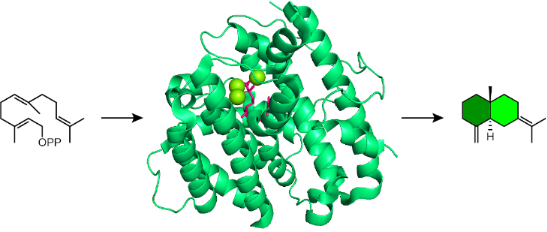
- proceed through multistep cationic cascade reactions and usually produce a polycyclic terpene hydrocarbon or alcohol with multiple stereogenic centers. While these transformations require only a single enzyme, polyketide and nonribosomal peptide biosyntheses are catalyzed by megasynthases that follow an

Isolation and biosynthesis of daturamycins from Streptomyces sp. KIB-H1544
Beilstein J. Org. Chem. 2022, 18, 1009–1016, doi:10.3762/bjoc.18.101
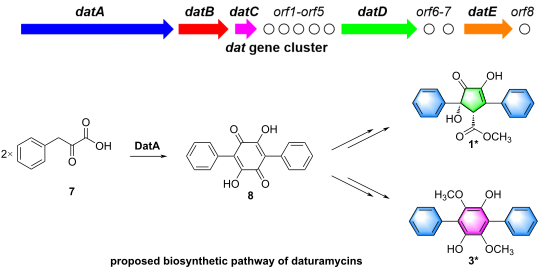
- skeleton exhibit a large number of structural diversity due to the differences of the center ring and the connection among rings. Structurally, most natural terphenyls are p-terphenyl derivatives consisting of a C-18 tricyclic or polycyclic C-18 aromatic skeleton. Diarylcyclopentenones, which possess a


Electrochemical and spectroscopic properties of twisted dibenzo[g,p]chrysene derivatives
Beilstein J. Org. Chem. 2022, 18, 963–971, doi:10.3762/bjoc.18.96
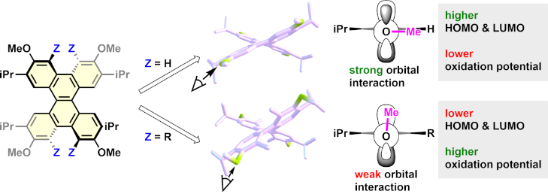
- , a strong photoluminescence was observed for DBC-H and DBC-Si. Keywords: DFT calculation; dibenzo[g,p]chrysenes; fluorescent compounds; oxidation; polycyclic aromatic hydrocarbon (PAH); twisted acenes; Introduction Polycyclic aromatic hydrocarbons (PAHs) have attracted interest as potential


Morita–Baylis–Hillman reaction of 3-formyl-9H-pyrido[3,4-b]indoles and fluorescence studies of the products
Beilstein J. Org. Chem. 2022, 18, 926–934, doi:10.3762/bjoc.18.92
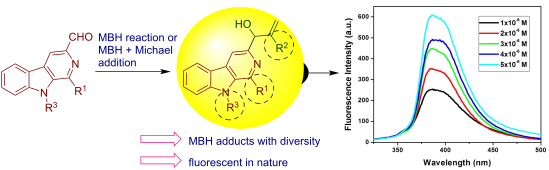
- and substituents was also studied during investigation of fluorescence properties of these derivatives. Keywords: β-carboline; DABCO; fluorescence; MBH reaction; Michael addition; structure–fluorescence activity relationship; Introduction Among the polycyclic alkaloids based on indole, the tricyclic


Efficient production of clerodane and ent-kaurane diterpenes through truncated artificial pathways in Escherichia coli
Beilstein J. Org. Chem. 2022, 18, 881–888, doi:10.3762/bjoc.18.89
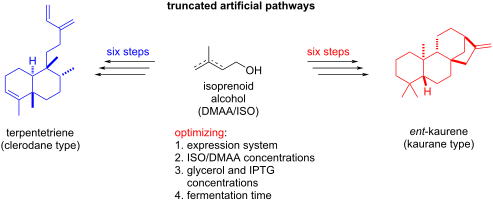
- categories of diterpenoid natural products with complicated polycyclic carbon skeletons and significant pharmacological activities. Despite exciting advances in organic chemistry, access to these skeletons is still highly challenging. Using synthetic biology to engineer microbes provides an innovative
- group or a combination of enzymatic and chemical tools (chemoenzymatic synthesis) [8][9][10][11]. Despite great efforts spanning several decades, de novo organic synthetic methods access to the core diterpene skeletons are still highly challenging owing to their numerous chiral centers and polycyclic


Copper-catalyzed multicomponent reactions for the efficient synthesis of diverse spirotetrahydrocarbazoles
Beilstein J. Org. Chem. 2022, 18, 796–808, doi:10.3762/bjoc.18.80
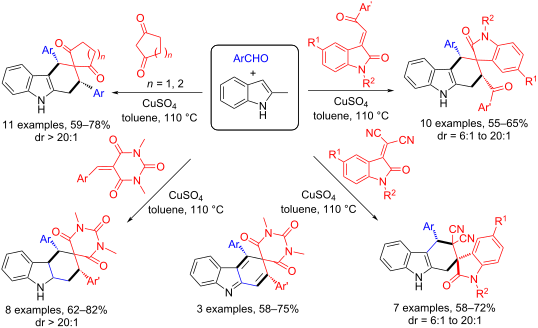
- this respect, Lévy reported a copper-catalyzed three-component reaction of aromatic aldehydes, ethyl indole-2-acetate and N-alkylmaleimides for the efficient construction of polycyclic tetrahydrocarbazoles, in which indolo-2,3-quinodimethane intermediate was initially generated and sequentially





Synthesis of odorants in flow and their applications in perfumery
Beilstein J. Org. Chem. 2022, 18, 754–768, doi:10.3762/bjoc.18.76
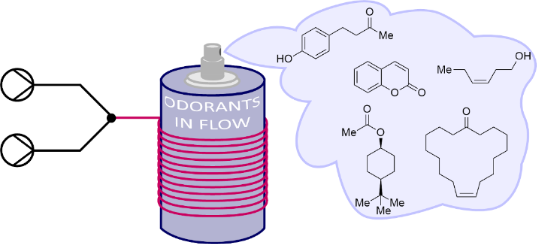
- iron (Habanolide, (12E)-oxacyclohexadec-12-en-2-one) [3][4][9][46][47]. Although, all musks of natural origin are macrocyles, most synthetic musks are polycyclic musks (PCM), while the fourth synthetic generation of musks are linear molecules [3][4]. In 1999, juniper lactone (56) was isolated from the


Complementarity of solution and solid state mechanochemical reaction conditions demonstrated by 1,2-debromination of tricyclic imides
Beilstein J. Org. Chem. 2022, 18, 746–753, doi:10.3762/bjoc.18.75

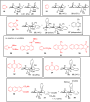
- Petar Strbac Davor Margetic Ruđer Bošković Institute, Bijenička cesta 54, HR-10002 Zagreb, Croatia 10.3762/bjoc.18.75 Abstract The solution phase 1,2-debromination of polycyclic imides using the Zn/Ag couple was successfully transferred to solid state mechanochemical conditions. The Zn/Ag couple
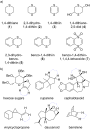
- polycyclic molecules given in Figure 1 are interesting reactive intermediates which could be applied in the Diels−Alder reactions of less reactive or thermally susceptible dienes. Often, these are generated in situ and trapped with dienes in a single pot, such as 7-oxanorbornadiene imides 1–3. For instance
- , Cycloaddition strategies towards polycyclic guanidines (CycloGu)). Poster presented at the ACS 25th Annual Green Chemistry & Engineering Conference, June 14-18, 2021.




Tri(n-butyl)phosphine-promoted domino reaction for the efficient construction of spiro[cyclohexane-1,3'-indolines] and spiro[indoline-3,2'-furan-3',3''-indolines]
Beilstein J. Org. Chem. 2022, 18, 669–679, doi:10.3762/bjoc.18.68
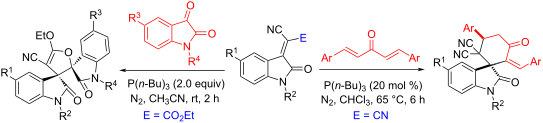
- respect, we have also developed several domino reactions by employing tertiary phosphine addition to electron-deficient alkynes as key protocol for the construction of diverse polycyclic spirooxindoles [53][54][55][56][57][58][59]. In continuation of our aim to explore elegant domino reactions for spiro





