Search results
Search for "switching" in Full Text gives 332 result(s) in Beilstein Journal of Organic Chemistry. Showing first 200.
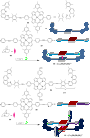
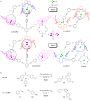
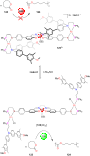
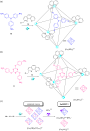
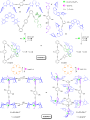
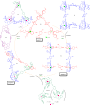
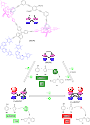
Heteroleptic metallosupramolecular aggregates/complexation for supramolecular catalysis
Beilstein J. Org. Chem. 2022, 18, 597–630, doi:10.3762/bjoc.18.62
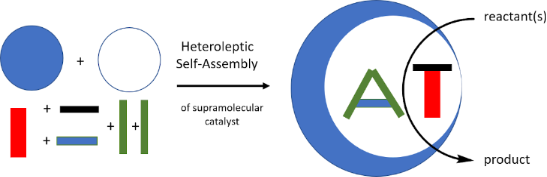
- chemistry and information science. Keywords: heteroleptic complexation; information science; supramolecular catalysis; switching catalysis; systems chemistry; Introduction Supramolecular catalysis [1][2][3] for most chemists is associated with a catalytically active capsule providing either activating
- /disassembly The common modus operandi to set up switchable catalysis usually relies on systems that can be toggled between two (or more) distinct switching states within a molecule [104][105][106][107]. In contrast, supramolecular approaches allow the shuffling and reshuffling of components to switch ON/OFF
- manifold opportunities for switchable ON/OFF catalysis controlled by supramolecular interconversions. Switchable catalysis decided by an ensemble of communicating molecules, which act as an information system and control the switching states, remodels somehow the situation in a living cell, where a desired











Unexpected chiral vicinal tetrasubstituted diamines via borylcopper-mediated homocoupling of isatin imines
Beilstein J. Org. Chem. 2022, 18, 303–308, doi:10.3762/bjoc.18.34
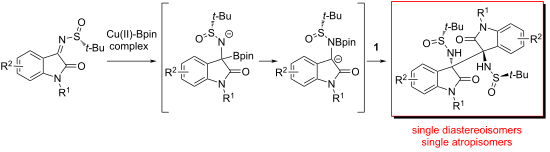
- most effectively, further promoting the conversion of the substrate. Other changes in reaction conditions, such as heating at 70 °C, increasing the amount of copper catalyst to 10 mol % and switching the copper salt from CuSO4 to the more soluble Cu(OTf)2, did not improve the yield significantly (Table


Regioselectivity of the SEAr-based cyclizations and SEAr-terminated annulations of 3,5-unsubstituted, 4-substituted indoles
Beilstein J. Org. Chem. 2022, 18, 293–302, doi:10.3762/bjoc.18.33
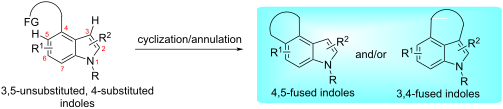
- regioselectivity switching in the SEAr-based cyclizations of 3,5-unsubstituted, 4-substituted indoles. In the course of their studies on chemospecific cyclization of α-carbonyl sulfoxonium ylides on aryls and heteroaryls, the Aïssa group in 2019 demonstrated hexafluoroisopropanol (HFIP)-promoted regioselective
- indole-derived phenylenediamines. Indole C5 regioselective intramolecular FC acylation of 4-substituted indoles. Catalyst-dependent regioselectivity switching in the cyclization of ethyl 2-diazo-4-(4-indolyl)-3-oxobutanoate. Indole C5 regioselective cyclization of α-carbonyl sulfoxonium ylides. Indole C5


Synthesis and late stage modifications of Cyl derivatives
Beilstein J. Org. Chem. 2022, 18, 174–181, doi:10.3762/bjoc.18.19
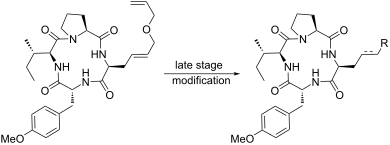
- diastereomeric ratio were similar to the reaction with LDA. If the Boc-protected ester 8b was then treated with LHMDS under the same reaction conditions (Table 1, entry 3) surprisingly no conversion was observed at all. Switching the base back to LDA (Table 1, entry 4) gave similar results than before (Table 1



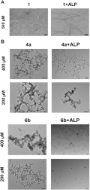
Synthesis and bioactivity of pyrrole-conjugated phosphopeptides
Beilstein J. Org. Chem. 2022, 18, 159–166, doi:10.3762/bjoc.18.17
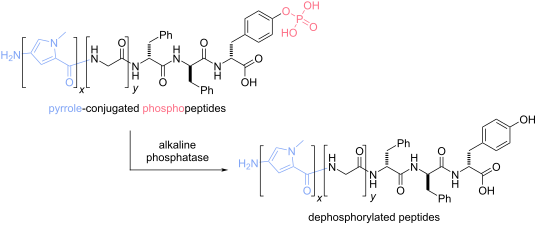
- . Switching the ᴅ-phosphoserine in 4a and 4b by ʟ-phosphoserine (pS), creates 5a and 5b. ᴅ-Trialanine replaces triglycine in 2f–h to produce 6a–c, which should resist to proteases, such as polyglycine hydrolases [73], which are known to cleave at the glycine–glycine site. The addition of an arginine residue



Me3Al-mediated domino nucleophilic addition/intramolecular cyclisation of 2-(2-oxo-2-phenylethyl)benzonitriles with amines; a convenient approach for the synthesis of substituted 1-aminoisoquinolines
Beilstein J. Org. Chem. 2021, 17, 2765–2772, doi:10.3762/bjoc.17.186
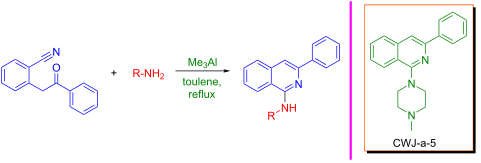
- inefficient for this transformation under similar reaction conditions yielding the desired product only in 16% yield (Table 1, entry 3). Interestingly, a substantial improvement in the yield of the reaction was observed by switching to Me3Al in toluene at 110 °C, delivering 85% of the desired product in 8 h


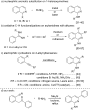
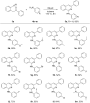


Chemical syntheses and salient features of azulene-containing homo- and copolymers
Beilstein J. Org. Chem. 2021, 17, 2164–2185, doi:10.3762/bjoc.17.139
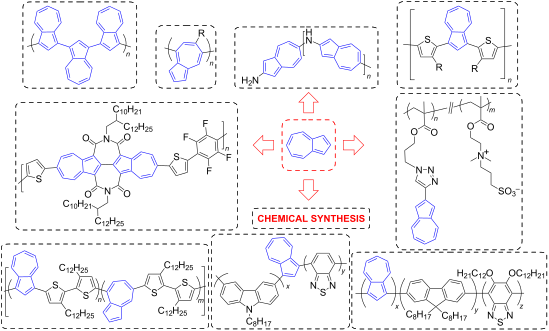
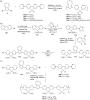
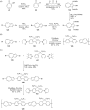
- azulene units in the polymer chain. The thin film made up of polymer 121, containing entirely 4,7-disubstituted azulene, showed a reversible and rapid color switching in an acidic environment. This paper presented an interesting strategy of tuning the property of a polymer by incorporating a varying





Constrained thermoresponsive polymers – new insights into fundamentals and applications
Beilstein J. Org. Chem. 2021, 17, 2123–2163, doi:10.3762/bjoc.17.138
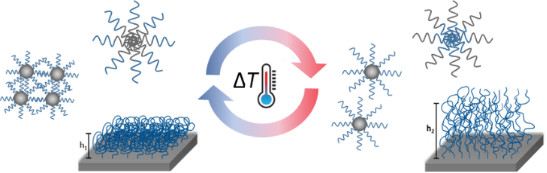
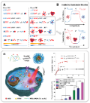
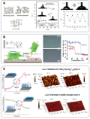
- the last decades, numerous stimuli-responsive polymers have been developed and investigated regarding their switching properties. In particular, thermoresponsive polymers, which form a miscibility gap with the ambient solvent with a lower or upper critical demixing point depending on the temperature
- thermoresponsive polymers with limited mobility focusing on UCST behavior and the possibilities for influencing their thermoresponsive switching characteristics. It comprises star polymers, micelles as well as polymer chains grafted to flat substrates and particulate inorganic surfaces. The elaboration of the
- physicochemical interplay between the architecture of the polymer assembly and the resulting thermoresponsive switching behavior will be in the foreground of this consideration. Keywords: lower critical solution temperature (LCST); responsive coating; smart material; thermoresponsive polymer; upper critical


Progress and challenges in the synthesis of sequence controlled polysaccharides
Beilstein J. Org. Chem. 2021, 17, 1981–2025, doi:10.3762/bjoc.17.129
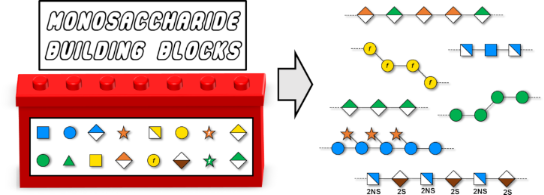
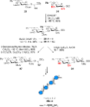
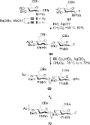
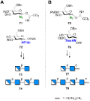
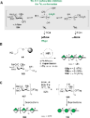
- biggest synthetic polysaccharide obtained to date (Scheme 15). Switching from a












Electron-rich triarylphosphines as nucleophilic catalysts for oxa-Michael reactions
Beilstein J. Org. Chem. 2021, 17, 1689–1697, doi:10.3762/bjoc.17.117
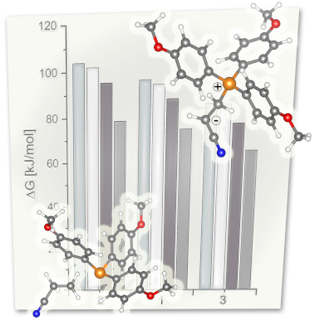
- than those presented here can be achieved [22][23]. Switching to the weaker Michael acceptor acrylamide (E = −23.54 for N,N-dimethylacrylamide) [19], no useful conversions on any account were obtained. However, TMTPP performs best, giving 61 and 74% conversions with 1-propanol (b) and allyl alcohol (c


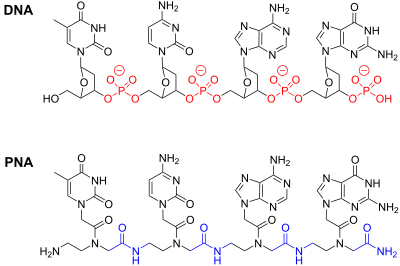
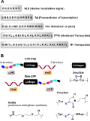
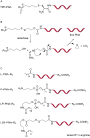
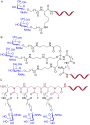
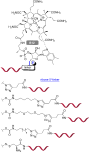
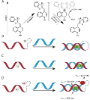
Chemical approaches to discover the full potential of peptide nucleic acids in biomedical applications
Beilstein J. Org. Chem. 2021, 17, 1641–1688, doi:10.3762/bjoc.17.116









Recent advances in the application of isoindigo derivatives in materials chemistry
Beilstein J. Org. Chem. 2021, 17, 1533–1564, doi:10.3762/bjoc.17.111
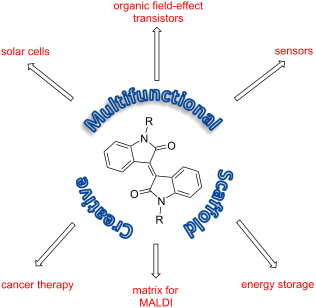
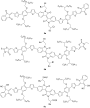
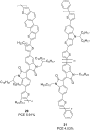
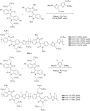
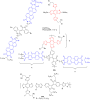
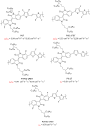
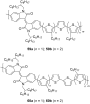
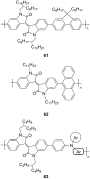
- , such as staining efficiency (362 cm2⋅C−1 at 1050 nm), fast switching time (0.5 s), high optical contrast (59% at 1500 nm), and redox stability (<8% after 4000 cycles). Poly(isoindigothiophene) 65 containing sulfonate groups in the side chain was used as an anionic photoactive polyelectrolyte in a














Substituted nitrogen-bridged diazocines
Beilstein J. Org. Chem. 2021, 17, 1503–1508, doi:10.3762/bjoc.17.107
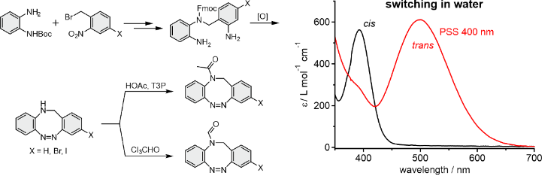
- . Moreover, the photoconversion yield for the E→Z isomerization is quantitative (within the detection limit of UV and NMR spectroscopy). A high efficiency in switching the biological activity off is important to avoid side effects of residual concentrations of the active form [13]. Water solubility and high
- Z→E switching efficiencies in water are additional important criteria for applications in biological environments [14]. Our previously published NAc-bridged diazocine 10c (Scheme 1, Table 1) exhibits both properties [15]. This is in stark contrast to the CH2–CH2 and S–CH2-bridged diazocines and the
- . In contrast to previous approaches, the azo cyclization (ring closure) was achieved via the oxidation of the bis-anilines 7 with mCPBA (≈60% yield). Among the nitrogen-bridged diazocines compounds 10a and 11c are water soluble and retained their high switching efficiency (≈70%) also in water. The


Cascade intramolecular Prins/Friedel–Crafts cyclization for the synthesis of 4-aryltetralin-2-ols and 5-aryltetrahydro-5H-benzo[7]annulen-7-ols
Beilstein J. Org. Chem. 2021, 17, 1481–1489, doi:10.3762/bjoc.17.104
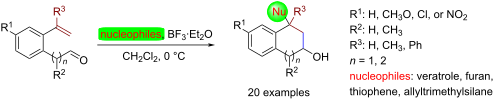
- ). However, the reaction with AlMe3 as the promotor resulted in a competing reduction of 13a to 2-bromophenylethanol (12a) that was obtained as the major product (Table 1, entry 3). Switching to the weaker Lewis acid In(OTf)3 failed to induce any intramolecular Prins cyclization (Table 1, entry 4), whilst




A comprehensive review of flow chemistry techniques tailored to the flavours and fragrances industries
Beilstein J. Org. Chem. 2021, 17, 1181–1312, doi:10.3762/bjoc.17.90
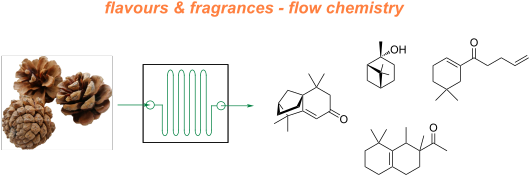
- close to optimal as possible. Certain drawbacks to using a flow-approach must also however be acknowledged. Problems may arise due to quenching requirements, the necessity for solvent switching, concentration limitations, compensating for different encountered reaction kinetics over multiple steps when










Heterogeneous photocatalytic cyanomethylarylation of alkenes with acetonitrile: synthesis of diverse nitrogenous heterocyclic compounds
Beilstein J. Org. Chem. 2021, 17, 1171–1180, doi:10.3762/bjoc.17.89
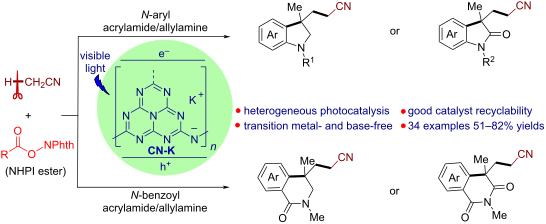
- ). Traditional g-C3N4 exhibited a low catalytic activity for this transformation (Table 1, entry 6). Switching from CN-K to a homogeneous organo photocatalyst such as eosin Y and 4CzIPN, led to lower yields of the desired product (Table 1, entries 7 and 8). The expensive Ru/Ir-based metal complexes gave similar


[2 + 1] Cycloaddition reactions of fullerene C60 based on diazo compounds
Beilstein J. Org. Chem. 2021, 17, 630–670, doi:10.3762/bjoc.17.55
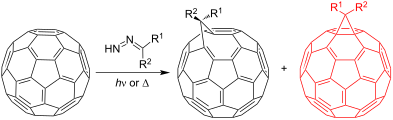
- solar cells [49][50]. In view of the globalization of energy problems, the issues of switching to alternative energy sources are becoming increasingly relevant. Solar energy, like the majority of renewable energy sources, is environmentally friendly and has almost no negative impact on the environment
Annulation of a 1,3-dithiole ring to a sterically hindered o-quinone core. Novel ditopic redox-active ligands
Beilstein J. Org. Chem. 2021, 17, 273–282, doi:10.3762/bjoc.17.26
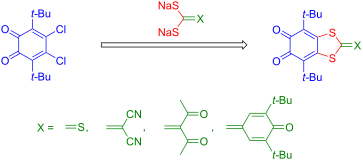
- -quinone-tetrathiafulvalene-o-quinone and o-quinone-(p-phenylene extended tetrathiafulvalene)-o-quinone were found to display switching SMM [4][5][6][7] or unique luminescent properties [8]. There are many reports describing the preparation of p-quinone derivatives annulated with a 1,3-dithiole moiety [9


Multiswitchable photoacid–hydroxyflavylium–polyelectrolyte nano-assemblies
Beilstein J. Org. Chem. 2021, 17, 166–185, doi:10.3762/bjoc.17.17
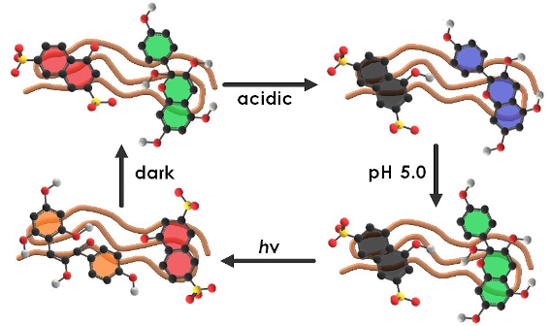
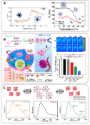
- spectroscopy, and isothermal titration calorimetry. Results and Discussion Characterization of the flavy building block In the first step the switchability and the photostability of pelargonidin chloride (Flavy) were investigated. The switching ability of Flavy is already well-known [79][80]. Here it was
- shows the transformation of B to Cc with the fluorescence band changing from λ = 300 nm to λ = 400 nm. Formation and switching cycles of the ternary assemblies In the first step, the supramolecular assemblies were formed by mixing the photoacid 1N36S with Flavy and adding the cationic polyelectrolyte
- concentration ratio k represents the relative molar concentration of the photoacid and the Flavy molecule, as given in Equation 2: First, a system with a loading ratio of l = 0.9 and a concentration ratio of k = 1.0 was investigated. In this case, we focused on the two main switching cycles displayed in Scheme




Naphthalonitriles featuring efficient emission in solution and in the solid state
Beilstein J. Org. Chem. 2020, 16, 2960–2970, doi:10.3762/bjoc.16.246
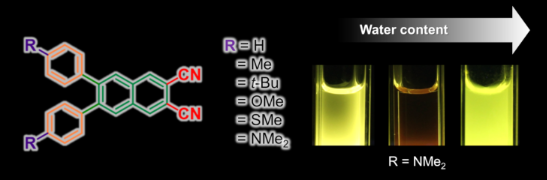
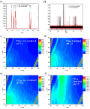
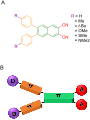
- . Also, by varying the water fractions, different phenomena can be observed and tuned by judicious choice of the substituents. Upon increasing the water content of THF solutions with NMe2 (i.e., a pure CT emitter), the luminescence exhibits intensity switching and a red-shift upon coupling/decoupling



Incorporation of a metal-mediated base pair into an ATP aptamer – using silver(I) ions to modulate aptamer function
Beilstein J. Org. Chem. 2020, 16, 2870–2879, doi:10.3762/bjoc.16.236
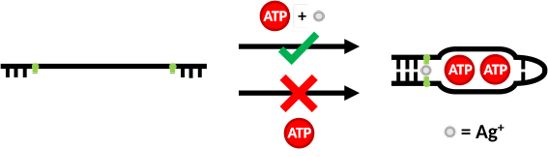
- applied in combination with a fluorophore (fluorescein), a quencher (DABCYL), and complementary oligonucleotides to devise a system referred to as structure-switching signaling aptamer [40]. Based on this concept, two systems were devised to investigate whether the Im–Ag(I)–Im base pairs could be applied
- it allows triggering the function at any desired point. Further optimizations will be necessary to eliminate the effect of excess transition metal ions and to enable a more complete switching of the aptamer function. This could be possible by using other metal-mediated base pairs, based either on
- investigate the envisaged functionality of the modified structure-switching signaling aptamers (f = fluorescein, q = DABCYL). The strand shown in black is derived from the ATP/AMP-binding aptamer. System A: the aptamers 1af, 1bf, 1cf, and 1df with the complementary sequence 1q (X = imidazole, f = fluorescein


Using multiple self-sorting for switching functions in discrete multicomponent systems
Beilstein J. Org. Chem. 2020, 16, 2831–2853, doi:10.3762/bjoc.16.233

- hand denotes the formation of a single entity from all constituents using orthogonal binding motifs. In the self-sorting of more than two components, thus at least one ligand has to be multivalent (Figure 2). Clearly, heteromeric self-sorting has a superior value for switching because it allows for
- several assortments and thus opens up a new arena called multiple self-sorting [31], for instance, upon the addition of an external input C to AB, when B in AB is replaced by the better binding C or D: AB → AC→ AD, a process that is of interest for setting up smart reaction networks. For switching, the
- systematic indexing of examples as single, double, and multiple self-sorted systems and an evaluation of the functions during the reversible switching. Review Single self-sorting The first chapter is not yet devoted to the multiple self-sorting events, but to the rare cases where a statistical ensemble of









Synthesis of 4-substituted azopyridine-functionalized Ni(II)-porphyrins as molecular spin switches
Beilstein J. Org. Chem. 2020, 16, 2589–2597, doi:10.3762/bjoc.16.210
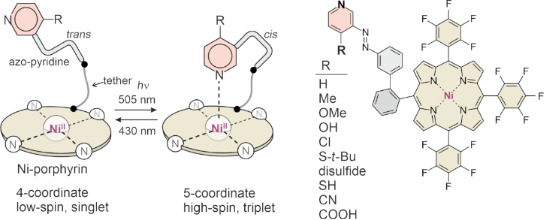
- Jannis Ludwig Tobias Moje Fynn Rohricht Rainer Herges Otto Diels Institute of Organic Chemistry, University of Kiel, Otto-Hahn-Platz 3–4, 24098 Kiel, Germany 10.3762/bjoc.16.210 Abstract We present the synthesis and the spin switching efficiencies of Ni(II)-porphyrins substituted with
- shown that the spin switching efficiency is strongly dependent on the solvent and on the substituent at the 4-position of the pyridine unit. We now introduced thiol, disulfide, thioethers, nitrile and carboxylic acid groups and investigated their spin switching efficiency. Keywords: azopyridines; Ni(II
- the switchable ligand). This approach has been dubbed “record player” design for obvious reasons (Figure 1a). The Ni-porphyrin (“disk”) is low-spin if the azo-aryl unit (“tone arm”) is in trans configuration. Upon switching to the bent cis configuration, the lone pair of the pyridine (or imidazole


Thermodynamic and electrochemical study of tailor-made crown ethers for redox-switchable (pseudo)rotaxanes
Beilstein J. Org. Chem. 2020, 16, 2576–2588, doi:10.3762/bjoc.16.209
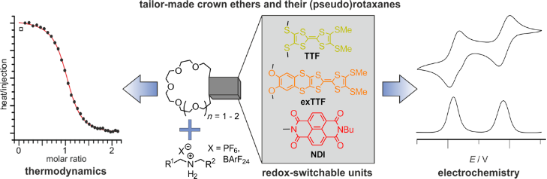
- described with regard to their potential to form redox-switchable rotaxanes. A combination of isothermal titration calorimetry and voltammetric techniques reveals correlations between the binding energies and redox-switching properties of the corresponding pseudorotaxanes with secondary ammonium ions. For
- rotary motor [30], and an acid/base-switchable asymmetric organocatalyst [31]. In addition to MIMs switchable by light or chemical reagents, redox-switchable molecular assemblies are of particular interest, since redox switching at electrodes is considered to operate without chemical waste and
- electrochemical analytical tools, e.g., cyclic voltammetry (CV), exhibit great potential to investigate the kinetic and thermodynamic parameters of the switching processes [32][33]. Although various redox-active crown ethers have been described [14][21][34], they are not commonly implemented into crown ether




Comparative ligand structural analytics illustrated on variably glycosylated MUC1 antigen–antibody binding
Beilstein J. Org. Chem. 2020, 16, 2540–2550, doi:10.3762/bjoc.16.206
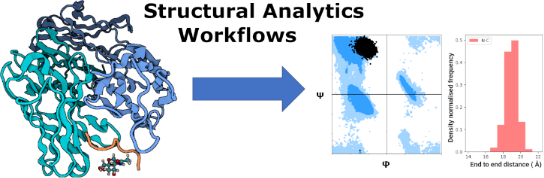
- a time step of 0.001 ps. The particle mesh Ewald (PME) method was used. Nonbonded interactions were cut-off using the force-switching method from 10 Å to 12 Å, and hydrogen bonding constraints applied. During equilibration, the protein backbone and side chains were restrained (force constants of