Search for "synthetic strategy" in Full Text gives 287 result(s) in Beilstein Journal of Organic Chemistry. Showing first 200.
Beilstein J. Org. Chem. 2021, 17, 2585–2610, doi:10.3762/bjoc.17.173
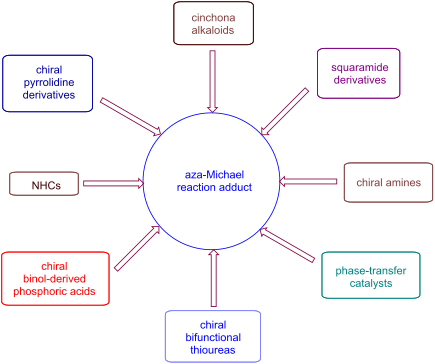
Graphical Abstract
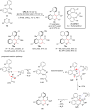
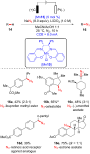
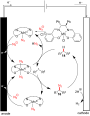
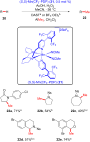
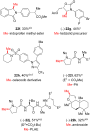
Scheme 1: Asymmetric aza-Michael addition catalyzed by cinchona alkaloid derivatives.
Scheme 2: Intramolecular 6-exo-trig aza-Michael addition reaction.
Scheme 3: Asymmetric aza-Michael/Michael addition cascade reaction of 2-nitrobenzofurans and 2-nitrobenzothio...
Scheme 4: Asymmetric aza-Michael addition of para-dienone imide to benzylamine.
Scheme 5: Asymmetric synthesis of chiral N-functionalized heteroarenes.
Beilstein J. Org. Chem. 2021, 17, 2570–2584, doi:10.3762/bjoc.17.172
Graphical Abstract
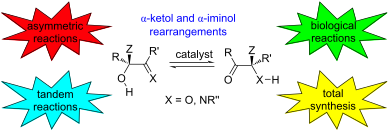
Figure 1: Generalized α-ketol or α-iminol rearrangement.
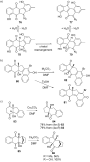
Figure 2: Nickel(II)-catalyzed enantioselective rearrangement of ketol 3 to form the ring-expanded and chiral...
Figure 3: Enantioselective ring expansion of β-hydroxy-α-dicarbonyl 6 catalyzed by a chiral copper-bisoxazoli...
Figure 4: Enantioselective rearrangement of ketols 9 and 12 and hydroxyaldimine 14 catalyzed by Al(III) or Sc...
Figure 5: Asymmetric rearrangement of α,α-dialkyl-α-siloxyaldehydes 16 to α-siloxyketones 17 catalyzed by chi...
Figure 6: BF3-promoted diastereospecific rearrangement of α-ketol 21 to difluoroalkoxyborane 22.
Figure 7: In the presence of a gold catalyst and water in 1,4-dioxane, 1-alkynylbutanol derivatives undergo t...
Figure 8: The diastereospecific α-ketol rearrangement of 32 to 33, part of the total synthesis of periconiano...
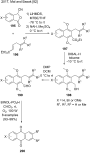
Figure 9: Two α-ketol rearrangements, one catalyzed by silica gel on 38 and the other by NaOMe on both 38 and ...
Figure 10: α-Ketol rearrangement of triumphalone (41) to isotriumphalone (42) via ring contraction.
Figure 11: Tandem reaction of strophasterol A synthetic intermediate 43 to 44 through a vinylogous α-ketol rea...
Figure 12: Tandem reaction consisting of a Diels–Alder cycloaddition followed by an α-ketol rearrangement, par...
Figure 13: Single-pot reaction consisting of Claisen and α-ketol rearrangements, part of the total synthesis o...
Figure 14: Enzyme-catalyzed α-ketol rearrangements. a) Ketol-acid reductoisomerase (KAR) catalyzes the rearran...
Figure 15: The conversion of asperfloroid (73) to asperflotone (72), featuring the ring-expanding α-ketol rear...
Figure 16: Hypothetical interconversion of natural products prekinamycin (76) and isoprekinamycin (77) and che...
Figure 17: Proposed biosynthetic pathway converting acylphloroglucinol (87) to isolated elodeoidins A–H 92–96....
Figure 18: α-Iminol rearrangements catalyzed by VANOL Zr (99). The rearrangement can be conducted with preform...
Figure 19: α-Iminol rearrangements catalyzed by silica gel and montmorillonite K 10. a) For 102a (102 with R =...
Figure 20: Synthesis of tryptamines 110 via a ring-contracting α‑iminol rearrangement. A mechanism for the fin...
Figure 21: Tandem synthesis of functionalized α-amino cyclopentanones 119 from heteroarenes 115 and cyclobutan...
Figure 22: Four eburnane-type alkaloid natural products 122–125 were synthesized from common intermediate 127,...
Beilstein J. Org. Chem. 2021, 17, 2477–2487, doi:10.3762/bjoc.17.164
Graphical Abstract
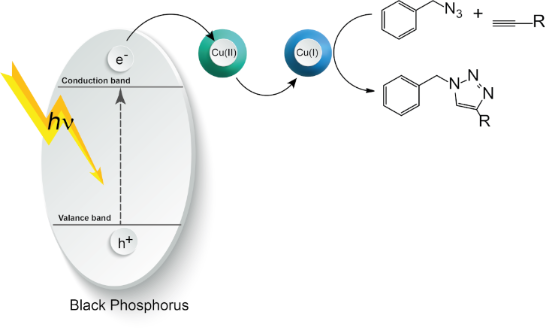
Figure 1: Structures of azide and alkyne functional molecules and polymers used in the photoinduced CuAAC rea...
Figure 2: UV–vis spectra of CuICl, CuIICl2 and BPNs.
Figure 3: a) 1H NMR spectra of the model reaction between benzyl azide (Az-1) and phenylacetylene (Alk-3) bef...
Scheme 1: Proposed mechanism for photoinduced CuAAC reaction using exfoliated BPNs.
Figure 4: a) 1H NMR spectrum of chain end modified PCL-Anth; b) UV–vis spectra of (azidomethyl)anthracene (bl...
Scheme 2: Synthesis of PS-b-PCL block copolymer via exfoliated BPNs-mediated photoinduced CuAAC reaction.
Figure 5: a) GPC traces of PS-Az, PCL-Alk and block copolymer (Ps-b-PCL) b) 1H NMR spectrum of the block copo...
Scheme 3: Preparation of the cross-linked polymer by CuAAC reaction using multifunctional monomers, Az-3 and ...
Figure 6: a) DSC thermogram of photoinduced synthesis of nanocomposite networks (heating rate: 10 °C/min). b)...
Figure 7: (a, b) TEM images of cross-linked polymer at two different magnifications, c) HAADF-STEM image and ...
Beilstein J. Org. Chem. 2021, 17, 2425–2432, doi:10.3762/bjoc.17.159
Graphical Abstract
Figure 1: Representative bioactive carbazole derivatives.
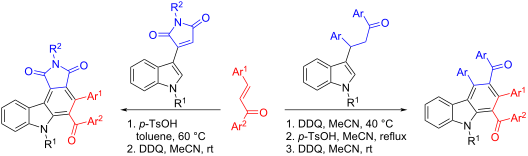
Scheme 1: Synthesis of tetrahydropyrrolo[3,4-c]carbazoles 3a and 3b.
Figure 2: Single crystal structure of the isomer 3a.
Figure 3: Single crystal structure of the isomer 3b.
Figure 4: Single crystal structure of the isomer 4g.
Scheme 2: Proposed domino reaction mechanism for the formation of carbazoles 6.
Beilstein J. Org. Chem. 2021, 17, 2321–2328, doi:10.3762/bjoc.17.150
Graphical Abstract
Figure 1: Representation of bioactive molecules and applications.
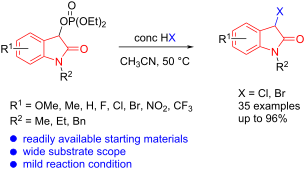
Scheme 1: Synthetic methodologies for 3-monohalooxindoles.
Scheme 2: Substrate scope of the acidolysis of isatin-derived phosphates 2 with hydrochloric acid. Standard r...
Scheme 3: Substrate scope of the acidolysis of isatin-derived phosphates 2 with hydrobromic acid. Standard re...
Scheme 4: Reduction of the substrates 2 to the corresponding oxindoles 5.
Scheme 5: Plausible reaction mechanism.
Beilstein J. Org. Chem. 2021, 17, 2164–2185, doi:10.3762/bjoc.17.139
Graphical Abstract
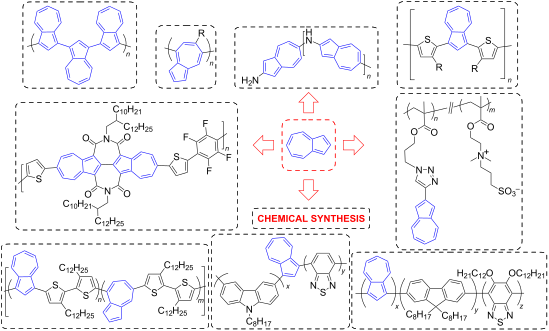
Figure 1: Chemical structure, numbering scheme, and resonance form of azulene.
Scheme 1: Synthesis of polyazulene-iodine (PAz-I2) and polyazulene-bromine (PAz-Br2) complexes.
Scheme 2: Synthesis of ‘true polyazulene’ 3 or 3’ by cationic polymerization.
Scheme 3: Synthesis of 1,3-polyazulene 5 by Yamamoto protocol.
Scheme 4: Synthesis of 4,7-dibromo-6-(n-alkyl)azulenes 12–14.
Scheme 5: Synthesis of (A) 4,7-diethynyl-6-(n-dodecyl)azulene (16) and (B) 4,7-polyazulene 17 containing an e...
Scheme 6: Synthesis of directly connected 4,7-polyazulenes 18–20.
Scheme 7: Synthesis of (A) tert-butyl N-(6-bromoazulen-2-yl)carbamate (27), (B) dimeric aminoazulene 29, and ...
Figure 2: Iminium zwitterionic resonance forms of poly[2(6)-aminoazulene] 31.
Scheme 8: Synthesis of poly{1,3-bis[2-(3-alkylthienyl)]azulene} 33–38.
Scheme 9: Synthesis of polymer ruthenium complexes 40–43.
Scheme 10: Synthesis of 4,7-polyazulenes 45 containing a thienyl linker.
Scheme 11: Synthesis of azulene-bithiophene 48 and azulene-benzothiadiazole 52 copolymers. Conditions: (a): (i...
Scheme 12: Synthesis of azulene-benzodithiophene copolymer 54 and azulene-bithiophene copolymer 56.
Scheme 13: Synthesis of (A) 5,5’-bis(trimethylstannyl)-3,3’-didodecyl-2,2’-bithiophene (60) and (B) azulene-bi...
Scheme 14: Synthesis of 1,3-bisborylated azulene 67.
Scheme 15: Synthesis of D–A-type azulene-DPP copolymers 69, 71, and 72. Conditions: (a) Pd(PPh3)4, K2CO3, Aliq...
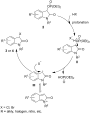
Scheme 16: Synthesis of the key precursor TBAzDI 79.
Scheme 17: Synthesis of TBAzDI-based polymers 81 and 83. Conditions: (a) P(o-tol)3, Pd2(dba)3, PivOH, Cs2CO3, ...
Scheme 18: Synthesis of (A) 1,3-dibromo-2-arylazulene 92–98 and (B) 2-arylazulene-thiophene copolymers 99–101.
Scheme 19: Synthesis of (A) poly[2,7-(9,9-dialkylfluorenyl)-alt-(1’,3’-azulenyl)] 106–109, (B) 1,3-bis(7-bromo...
Scheme 20: Synthesis of azulene-fluorene copolymers 117–121 containing varying ratios of 1,3- and 4,7-connecte...
Scheme 21: Synthesis of (A) 2,6-dibromoazulene (125), (B) azulene-fluorene copolymer 126, and (C) azulene-fluo...
Scheme 22: Synthesis of 2-arylazulene-fluorene copolymers 131–134.
Scheme 23: Synthesis of azulene-fluorene-benzothiadiazole terpolymers 136–138.
Scheme 24: Synthesis of azulene-carbazole-benzothiadiazole-conjugated polymers 140–144.
Scheme 25: Synthesis of (A) azulene-2-yl methacrylate (146) and (B) the triazole-containing azulene methacryla...
Scheme 26: Synthesis of (A) azulene methacrylate polymer 151 and (B) triazole-containing azulene methacrylate ...
Scheme 27: Synthesis of azulene methyl methacrylate polymers 154, 155 (A and B) and azulene-sulfobetaine metha...
Beilstein J. Org. Chem. 2021, 17, 2028–2050, doi:10.3762/bjoc.17.131
Graphical Abstract
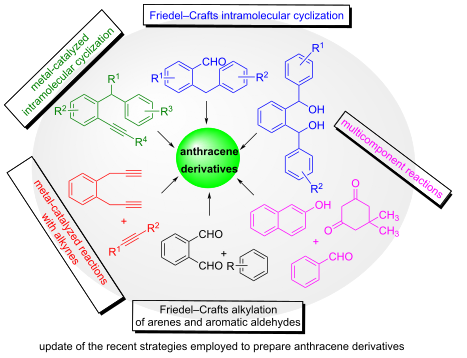
Figure 1: Examples of anthracene derivatives and their applications.
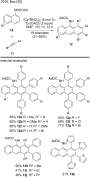
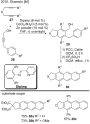
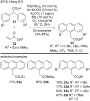
Scheme 1: Rhodium-catalyzed oxidative coupling reactions of arylboronic acids with internal alkynes.
Scheme 2: Rhodium-catalyzed oxidative benzannulation reactions of 1-adamantoyl-1-naphthylamines with internal...
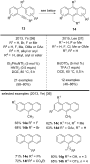
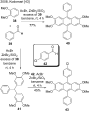
Scheme 3: Gold/bismuth-catalyzed cyclization of o-alkynyldiarylmethanes.
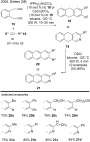
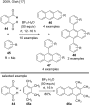
Scheme 4: [2 + 2 + 2] Cyclotrimerization reactions with alkynes/nitriles in the presence of nickel and cobalt...
Scheme 5: Cobalt-catalyzed [2 + 2 + 2] cyclotrimerization reactions with bis(trimethylsilyl)acetylene (23).
Scheme 6: [2 + 2 + 2] Alkyne-cyclotrimerization reactions catalyzed by a CoCl2·6H2O/Zn reagent.
Scheme 7: Pd(II)-catalyzed sp3 C–H alkenylation of diphenyl carboxylic acids with acrylates.
Scheme 8: Pd(II)-catalyzed sp3 C–H arylation with o-tolualdehydes and aryl iodides.
Scheme 9: Alkylation of arenes with aromatic aldehydes in the presence of acetyl bromide and ZnBr2/SiO2.
Scheme 10: BF3·H2O-catalyzed hydroxyalkylation of arenes with aromatic dialdehyde 44.
Scheme 11: Bi(OTf)3-promoted Friedel–Crafts alkylation of triarylmethanes and aromatic acylals and of arenes a...
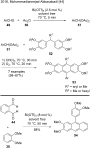
Scheme 12: Reduction of anthraquinones by using Zn/pyridine or Zn/NaOH reductive methods.
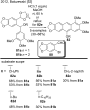
Scheme 13: Two-step route to novel substituted Indenoanthracenes.
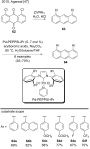
Scheme 14: Synthesis of 1,8-diarylanthracenes through Suzuki–Miyaura coupling reaction in the presence of Pd-P...
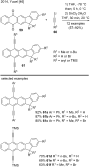
Scheme 15: Synthesis of five new substituted anthracenes by using LAH as reducing agent.
Scheme 16: One-pot procedure to synthesize substituted 9,10-dicyanoanthracenes.
Scheme 17: Reduction of bromoanthraquinones with NaBH4 in alkaline medium.
Scheme 18: In(III)-catalyzed reductive-dehydration intramolecular cycloaromatization of 2-benzylic aromatic al...
Scheme 19: Acid-catalyzed cyclization of new O-protected ortho-acetal diarylmethanols.
Scheme 20: Lewis acid-mediated regioselective cyclization of asymmetric diarylmethine dipivalates and diarylme...
Scheme 21: BF3·OEt2/CF3SO3H-mediated cyclodehydration reactions of 2-(arylmethyl)benzaldehydes and 2-(arylmeth...
Scheme 22: Synthesis of 2,3,6,7-anthracenetetracarbonitrile (90) by double Wittig reaction followed by deprote...
Scheme 23: Homo-elongation protocol for the synthesis of substituted acene diesters/dinitriles.
Scheme 24: Synthesis of two new parental BN anthracenes via borylative cyclization.
Scheme 25: Synthesis of substituted anthracenes from a bifunctional organomagnesium alkoxide.
Scheme 26: Palladium-catalyzed tandem C–H activation/bis-cyclization of propargylic carbonates.
Scheme 27: Ruthenium-catalyzed C–H arylation of acetophenone derivatives with arenediboronates.
Scheme 28: Pd-catalyzed intramolecular cyclization of (Z,Z)-p-styrylstilbene derivatives.
Scheme 29: AuCl-catalyzed double cyclization of diiodoethynylterphenyl compounds.
Scheme 30: Iodonium-induced electrophilic cyclization of terphenyl derivatives.
Scheme 31: Oxidative photocyclization of 1,3-distyrylbenzene derivatives.
Scheme 32: Oxidative cyclization of 2,3-diphenylnaphthalenes.
Scheme 33: Suzuki-Miyaura/isomerization/ring closing metathesis strategy to synthesize benz[a]anthracenes.
Scheme 34: Green synthesis of oxa-aza-benzo[a]anthracene and oxa-aza-phenanthrene derivatives.
Scheme 35: Triple benzannulation of substituted naphtalene via a 1,3,6-naphthotriyne synthetic equivalent.
Scheme 36: Zinc iodide-catalyzed Diels–Alder reactions with 1,3-dienes and aroyl propiolates followed by intra...
Scheme 37: H3PO4-promoted intramolecular cyclization of substituted benzoic acids.
Scheme 38: Palladium-catalyzed intermolecular direct acylation of aromatic aldehydes and o-iodoesters.
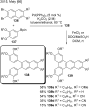
Scheme 39: Cycloaddition/oxidative aromatization of quinone and β-enamino esters.
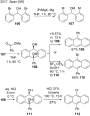
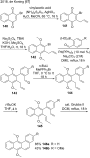
Scheme 40: ʟ-Proline-catalyzed [4 + 2] cycloaddition reaction of naphthoquinones and α,β-unsaturated aldehydes....
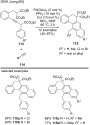
Scheme 41: Iridium-catalyzed [2 + 2 + 2] cycloaddition of a 1,2-bis(propiolyl)benzene derivative with alkynes.
Scheme 42: Synthesis of several anthraquinone derivatives by using InCl3 and molecular iodine.
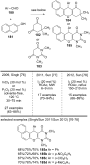
Scheme 43: Indium-catalyzed multicomponent reactions employing 2-hydroxy-1,4-naphthoquinone (186), β-naphthol (...
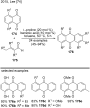
Scheme 44: Synthesis of substituted anthraquinones catalyzed by an AlCl3/MeSO3H system.
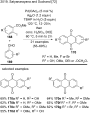
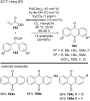
Scheme 45: Palladium(II)-catalyzed/visible light-mediated synthesis of anthraquinones.
Scheme 46: [4 + 2] Anionic annulation reaction for the synthesis of substituted anthraquinones.
Beilstein J. Org. Chem. 2021, 17, 1733–1751, doi:10.3762/bjoc.17.122
Graphical Abstract
Scheme 1: Mn-catalyzed late-stage fluorination of sclareolide (1) and complex steroid 3.
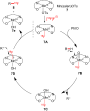
Figure 1: Proposed reaction mechanism of C–H fluorination by a manganese porphyrin catalyst.
Scheme 2: Late-stage radiofluorination of biologically active complex molecules.
Figure 2: Proposed mechanism of C–H radiofluorination.
Scheme 3: Late-stage C–H azidation of bioactive molecules. a1.5 mol % of Mn(TMP)Cl (5) was used. bMethyl acet...
Figure 3: Proposed reaction mechanism of manganese-catalyzed C–H azidation.
Scheme 4: Mn-catalyzed late-stage C–H azidation of bioactive molecules via electrophotocatalysis. a2.5 mol % ...
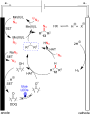
Figure 4: Proposed reaction mechanism of electrophotocatalytic azidation.
Scheme 5: Manganaelectro-catalyzed late-stage azidation of bioactive molecules.
Figure 5: Proposed reaction pathway of manganaelectro-catalyzed late-stage C–H azidation.
Scheme 6: Mn-catalyzed late-stage amination of bioactive molecules. a3 Å MS were used. Protonation with HBF4⋅...
Figure 6: Proposed mechanism of manganese-catalyzed C–H amination.
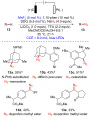
Scheme 7: Mn-catalyzed C–H methylation of heterocyclic scaffolds commonly found in small-molecule drugs. aDAS...
Scheme 8: Examples of late-stage C–H methylation of bioactive molecules. aDAST activation. bFor insoluble sub...
Scheme 9: A) Mn-catalyzed late-stage C–H alkynylation of peptides. B) Intramolecular late-stage alkynylative ...
Figure 7: Proposed reaction mechanism of Mn(I)-catalyzed C–H alkynylation.
Scheme 10: Late-stage Mn-catalyzed C–H allylation of peptides and bioactive motifs.
Scheme 11: Intramolecular C–H allylative cyclic peptide formation.
Scheme 12: Late-stage C–H glycosylation of tryptophan analogues.
Scheme 13: Late-stage C–H glycosylation of tryptophan-containing peptides.
Scheme 14: Late-stage C–H alkenylation of tryptophan-containing peptides.
Scheme 15: A) Late-stage C–H macrocyclization of tryptophan-containing peptides and B) traceless removal of py...
Beilstein J. Org. Chem. 2021, 17, 1641–1688, doi:10.3762/bjoc.17.116
Graphical Abstract
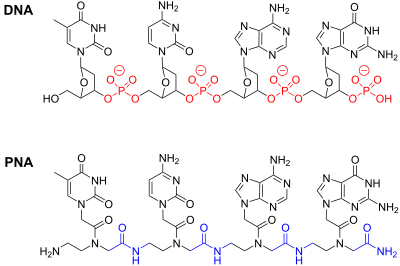
Figure 1: Structure of DNA and PNA.
Figure 2: PNA binding modes: (A) PNA–dsDNA 1:1 triplex; (B) PNA–DNA–PNA strand-invasion triplex; (C) the Hoog...
Figure 3: Structure of P-form PNA–DNA–PNA triplex from reference [41]. (A) view in the major groove and (B) view ...
Figure 4: Structures of backbone-modified PNA.
Figure 5: Structures of PNA having α- and γ-substituted backbones.
Figure 6: Structures of modified nucleobases in PNA to improve Hoogsteen hydrogen bonding to guanine and aden...
Figure 7: Proposed hydrogen bonding schemes for modified PNA nucleobases designed to recognize pyrimidines or...
Figure 8: Modified nucleobases to modulate Watson–Crick base pairing and chemically reactive crosslinking PNA...
Figure 9: Examples of triplets formed by Janus-wedge PNA nucleobases (blue). R1 denotes DNA, RNA, or PNA back...
Figure 10: Examples of fluorescent PNA nucleobases. R1 denotes DNA, RNA, or PNA backbones.
Figure 11: Endosomal entrapment and escape pathways of PNA and PNA conjugates.
Figure 12: (A) representative cell-penetrating peptides (CPPs), (B) conjugation designs and linker chemistries....
Figure 13: Proposed delivery mode by pHLIP-PNA conjugates (A) the transmembrane section of pHLIP interacting w...
Figure 14: Structures of modified penetratin CPP conjugates with PNA linked through either disulfide (for stud...
Figure 15: Chemical structure of C9–PNA, a stable amphipathic (cyclic-peptide)–PNA conjugate.
Figure 16: Structures of PNA conjugates with a lipophilic triphenylphosphonium cation (TPP–PNA) through (A) th...
Figure 17: Structures of (A) chloesteryl–PNA, (B) cholate–PNA and (C) cholate–PNA(cholate)3.
Figure 18: Structures of PNA–GalNAc conjugates (A) (GalNAc)2K, (B) triantennary (GalNAc)3, and (C) trivalent (...
Figure 19: Vitamin B12–PNA conjugates with different linkages.
Figure 20: Structures of (A) neomycin B, (B) PNA–neamine conjugate, and (C) PNA–neosamine conjugate.
Figure 21: PNA clamp (red) binding to target DNA containing a mixture of sequences (A) PNA binds with higher a...
Figure 22: Rolling circle amplification using PNA openers (red) to invade a dsDNA target forming a P-loop. A p...
Figure 23: Molecular beacons containing generic fluorophores (Fl) and quenchers (Q) recognizing a complementar...
Figure 24: (A) Light-up fluorophores such as thiazole orange display fluorescence enhancement upon binding to ...
Figure 25: Templated fluorogenic detection of oligonucleotides using two PNAs. (A) Templated FRET depends on h...
Figure 26: Lateral flow devices use a streptavidin labeled strip on nitrocellulose paper to anchor a capture P...
Beilstein J. Org. Chem. 2021, 17, 1453–1463, doi:10.3762/bjoc.17.101
Graphical Abstract
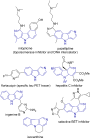
Figure 1: Selected examples of compounds containing the γ-carboline core.
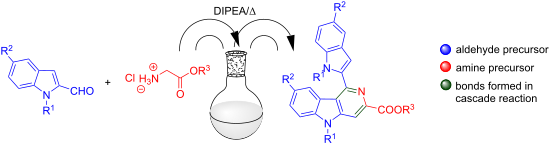
Scheme 1: The synthetic strategy of present work in comparison with previous reports.
Scheme 2: Series of synthesized 1-indolyl-3,5,8-substituted γ-carboline 3aa–ac, 3ba-ea and 1-indolyl-1,2-dihy...
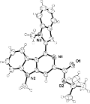
Figure 2: Single-crystal XRD structure of 3ac (CCDC: 1897787).
Scheme 3: Plausible mechanism for the formation of 1,2-dihydro-γ-carboline derivative 3ga and 1-indolyl-3,5,8...
Figure 3: UV–vis absorption (left side) and emission (right side) spectra of 3ac measured in different solven...
Figure 4: Fluorescence decay profile of 3ac in DMSO (left side; λex 360 nm) and 10−5 M solutions of compound ...
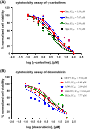
Figure 5: Dose–response curves for (A) γ-carbolines 3ac, 3bc, 3ca, 3ga in the breast cancer cell line, MCF7 a...
Figure 6: Dose–response curve of γ-carbolines 3ac, 3bc, 3ca, 3ga in macrophage cell line, RAW264.7.
Figure 7: Laser scanning confocal microscopy studies (λex = 405 nm; collection range = 420–470 nm) for uptake...
Beilstein J. Org. Chem. 2021, 17, 1374–1384, doi:10.3762/bjoc.17.96
Graphical Abstract
Scheme 1: Retrosynthetic pathways to the pyrrole-based C3-symmetric truxene derivative 6.
Scheme 2: Synthesis of tripyrrolotruxene 6 via cyclotrimerization and RCM as crucial steps.
Scheme 3: Synthesis of star-shaped molecule 6 utilizing the Clauson–Kaas pyrrole strategy.
Scheme 4: Synthesis of truxene derivative 6 involving Ullmann-type cross-coupling reaction.
Scheme 5: Synthesis of imidazole and benzimidazole containing truxene derivatives 14 and 16.
Scheme 6: Construction of truxene-based di- and trioxazole derivatives 21 and 20.
Scheme 7: Synthesis of benzene-bridged rings containing trioxazolotruxene system 25.
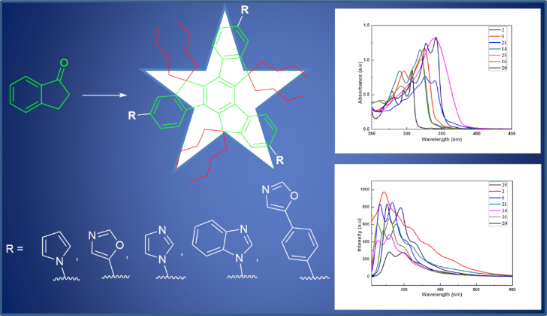
Figure 1: Normalized absorption (left); fluorescence spectra (right) of the synthesized truxene derivatives (...
Beilstein J. Org. Chem. 2021, 17, 1096–1140, doi:10.3762/bjoc.17.86
Graphical Abstract
Scheme 1: General strategy for the enantioselective synthesis of N-containing heterocycles from N-tert-butane...
Scheme 2: Methodologies for condensation of aldehydes and ketones with tert-butanesulfinamides (1).
Scheme 3: Transition models for cis-aziridines and trans-aziridines.
Scheme 4: Mechanism for the reduction of N-tert-butanesulfinyl imines.
Scheme 5: Transition models for the addition of organomagnesium and organolithium compounds to N-tert-butanes...
Scheme 6: Synthesis of 2,2-dibromoaziridines 15 from aldimines 14 and bromoform, and proposed non-chelation-c...
Scheme 7: Diastereoselective synthesis of aziridines from tert-butanesulfinyl imines.
Scheme 8: Synthesis of vinylaziridines 22 from aldimines 14 and 1,3-dibromopropene 23, and proposed chelation...
Scheme 9: Synthesis of vinylaziridines 27 from aldimines 14 and α-bromoesters 26, and proposed transition sta...
Scheme 10: Synthesis of 2-chloroaziridines 28 from aldimines 14 and dichloromethane, and proposed transition s...
Scheme 11: Synthesis of cis-vinylaziridines 30 and 31 from aldimines 14 and bromomethylbutenolide 29.
Scheme 12: Synthesis of 2-chloro-2-aroylaziridines 36 and 32 from aldimines 14, arylnitriles 34, and silyldich...
Scheme 13: Synthesis of trifluoromethylaziridines 39 and proposed transition state of the aziridination.
Scheme 14: Synthesis of aziridines 42 and proposed state transition.
Scheme 15: Synthesis of 1-substituted 2-azaspiro[3.3]heptanes, 1-phenyl-2-azaspiro[3.4]octane and 1-phenyl-2-a...
Scheme 16: Synthesis of 1-substituted 2,6-diazaspiro[3.3]heptanes 48 from chiral imines 14 and 1-Boc-azetidine...
Scheme 17: Synthesis of β-lactams 52 from chiral imines 14 and dimethyl malonate (49).
Scheme 18: Synthesis of spiro-β-lactam 57 from chiral (RS)-N-tert-butanesulfinyl isatin ketimine 53 and ethyl ...
Scheme 19: Synthesis of β-lactam 60, a precursor of (−)-batzelladine D (61) and (−)-13-epi-batzelladine D (62)...
Scheme 20: Rhodium-catalyzed asymmetric synthesis of 3-substituted pyrrolidines 66 from chiral imine (RS)-63 a...
Scheme 21: Asymmetric synthesis of 1,3-disubstituted isoindolines 69 and 70 from chiral imine 67.
Scheme 22: Asymmetric synthesis of cis-2,5-disubstituted pyrrolidines 73 from chiral imine (RS)-71.
Scheme 23: Asymmetric synthesis of 3-hydroxy-5-substituted pyrrolidin-2-ones 77 from chiral imine (RS)-74.
Scheme 24: Asymmetric synthesis of 4-hydroxy-5-substituted pyrrolidin-2-ones 80 from chiral imines 79.
Scheme 25: Asymmetric synthesis of 3-pyrrolines 82 from chiral imines 14 and ethyl 4-bromocrotonate (81).
Scheme 26: Asymmetric synthesis of γ-amino esters 84, and tetramic acid derivative 86 from chiral imines (RS)-...
Scheme 27: Asymmetric synthesis of α-methylene-γ-butyrolactams 90 from chiral imines (Z,SS)-87 and ethyl 2-bro...
Scheme 28: Asymmetric synthesis of methylenepyrrolidines 92 from chiral imines (RS)-14 and 2-(trimethysilylmet...
Scheme 29: Synthesis of dibenzoazaspirodecanes from cyclic N-tert-butanesulfinyl imines.
Scheme 30: Stereoselective synthesis of cyclopenta[c]proline derivatives 103 from β,γ-unsaturated α-amino acid...
Scheme 31: Stereoselective synthesis of alkaloids (−)-angustureine (107) and (−)-cuspareine (108).
Scheme 32: Stereoselective synthesis of alkaloids (−)-pelletierine (112) and (+)-coniine (117).
Scheme 33: Synthesis of piperidine alkaloids (+)-dihydropinidine (122a), (+)-isosolenopsin (122b) and (+)-isos...
Scheme 34: Stereoselective synthesis of the alkaloids(+)-sedamine (125) from chiral imine (SS)-119.
Scheme 35: Stereoselective synthesis of trans-5-hydroxy-6-substituted-2-piperidinones 127 and 129 from chiral ...
Scheme 36: Stereoselective synthesis of trans-5-hydroxy-6-substituted ethanone-2-piperidinones 132 from chiral...
Scheme 37: Stereoselective synthesis of trans-3-benzyl-5-hydroxy-6-substituted-2-piperidinones 136 from chiral...
Scheme 38: Stereoselective synthesis of trans-5-hydroxy-6-substituted 2-piperidinones 139 from chiral imine 138...
Scheme 39: Stereoselective synthesis of ʟ-hydroxypipecolic acid 145 from chiral imine 144.
Scheme 40: Synthesis of 1-substituted isoquinolones 147, 149 and 151.
Scheme 41: Stereoselective synthesis of 3-substituted dihydrobenzo[de]isoquinolinones 154.
Scheme 42: Enantioselective synthesis of alkaloids (S)-1-benzyl-6,7-dimethoxy-1,2,3,4-tetrahydroisoquinoline (...
Scheme 43: Enantioselective synthesis of alkaloids (−)-cermizine B (171) and (+)-serratezomine E (172) develop...
Scheme 44: Stereoselective synthesis of (+)-isosolepnosin (177) and (+)-solepnosin (178) from homoallylamine d...
Scheme 45: Stereoselective synthesis of tetrahydroquinoline derivatives 184, 185 and 187 from chiral imines (RS...
Scheme 46: Stereoselective synthesis of pyridobenzofuran and pyridoindole derivatives 193 from homopropargylam...
Scheme 47: Stereoselective synthesis of 2-substituted 1,2,5,6-tetrahydropyridines 196 from chiral imines (RS)-...
Scheme 48: Stereoselective synthesis of 2-substituted trans-2,6-disubstituted piperidine 199 from chiral imine...
Scheme 49: Stereoselective synthesis of cis-2,6-disubstituted piperidines 200, and alkaloid (+)-241D, from chi...
Scheme 50: Stereoselective synthesis of 6-substituted piperidines-2,5-diones 206 and 1,7-diazaspiro[4.5]decane...
Scheme 51: Stereoselective synthesis of spirocyclic oxindoles 210 from chiral imines (RS)-53.
Scheme 52: Stereoselective synthesis of azaspiro compound 213 from chiral imine 211.
Scheme 53: Stereoselective synthesis of tetrahydroisoquinoline derivatives from chiral imines (RS)-214.
Scheme 54: Stereoselective synthesis of (−)-crispine A 223 from chiral imine (RS)-214.
Scheme 55: Synthesis of (−)-harmicine (228) using tert-butanesulfinamide through haloamide cyclization.
Scheme 56: Stereoselective synthesis of tetraponerines T1–T8.
Scheme 57: Stereoselective synthesis of phenanthroindolizidines 246a and (−)-tylophorine (246b), and phenanthr...
Scheme 58: Stereoselective synthesis of indoline, tetrahydroquinoline and tetrahydrobenzazepine derivatives 253...
Scheme 59: Stereoselective synthesis of (+)-epohelmin A (258) and (+)-epohelmin B (260) from aldimine (RS)-79.
Scheme 60: Stereoselective synthesis of (−)-epiquinamide (266) from chiral aldimine (SS)-261.
Scheme 61: Synthesis synthesis of (–)-hippodamine (273) and (+)-epi-hippodamine (272) using chiral sulfinyl am...
Scheme 62: Stereoselective synthesis of (+)-grandisine D (279) and (+)-amabiline (283).
Scheme 63: Stereoselective synthesis of (−)-epiquinamide (266) and (+)-swaisonine (291) from aldimine (SS)-126....
Scheme 64: Stereoselective synthesis of (+)-C(9a)-epi-epiquinamide (294).
Scheme 65: Stereoselective synthesis of (+)-lasubine II (298) from chiral aldimine (SS)-109.
Scheme 66: Stereoselective synthesis of (−)-epimyrtine (300a) and (−)-lasubine II (ent-302) from β-amino keton...
Scheme 67: Stereoselective synthesis of (−)-tabersonine (310), (−)-vincadifformine (311), and (−)-aspidospermi...
Scheme 68: Stereoselective synthesis of (+)-epohelmin A (258) and (+)-epohelmin B (260) from aldehyde 313 and ...
Scheme 69: Total synthesis of (+)-lysergic acid (323) from N-tert-butanesulfinamide (RS)-1.
Beilstein J. Org. Chem. 2021, 17, 819–865, doi:10.3762/bjoc.17.71
Graphical Abstract
Figure 1: Marketed drugs with acridine moiety.
Scheme 1: Synthesis of 4-arylacridinediones.
Scheme 2: Proposed mechanism for acridinedione synthesis.
Scheme 3: Synthesis of tetrahydrodibenzoacridinones.
Scheme 4: Synthesis of naphthoacridines.
Scheme 5: Plausible mechanism for naphthoacridines.
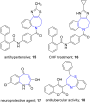
Figure 2: Benzoazepines based potent molecules.
Scheme 6: Synthesis of azepinone.
Scheme 7: Proposed mechanism for azepinone formation.
Scheme 8: Synthesis of benzoazulenen-1-one derivatives.
Scheme 9: Proposed mechanism for benzoazulene-1-one synthesis.
Figure 3: Indole-containing pharmacologically active molecules.
Scheme 10: Synthesis of functionalized indoles.
Scheme 11: Plausible mechanism for the synthesis of functionalized indoles.
Scheme 12: Synthesis of spirooxindoles.
Scheme 13: Synthesis of substituted spirooxindoles.
Scheme 14: Plausible mechanism for the synthesis of substituted spirooxindoles.
Scheme 15: Synthesis of pyrrolidinyl spirooxindoles.
Scheme 16: Proposed mechanism for pyrrolidinyl spirooxindoles.
Figure 4: Pyran-containing biologically active molecules.
Scheme 17: Synthesis of functionalized benzopyrans.
Scheme 18: Plausible mechanism for synthesis of benzopyran.
Scheme 19: Synthesis of indoline-spiro-fused pyran derivatives.
Scheme 20: Proposed mechanism for indoline-spiro-fused pyran.
Scheme 21: Synthesis of substituted naphthopyrans.
Figure 5: Marketed drugs with pyrrole ring.
Scheme 22: Synthesis of tetra-substituted pyrroles.
Scheme 23: Mechanism for silica-supported PPA-SiO2-catalyzed pyrrole synthesis.
Scheme 24: Synthesis of pyrrolo[1,10]-phenanthrolines.
Scheme 25: Proposed mechanism for pyrrolo[1,10]-phenanthrolines.
Figure 6: Marketed drugs and molecules containing pyrimidine and pyrimidinones skeletons.
Scheme 26: MWA-MCR pyrimidinone synthesis.
Scheme 27: Two proposed mechanisms for pyrimidinone synthesis.
Scheme 28: MWA multicomponent synthesis of dihydropyrimidinones.
Scheme 29: Proposed mechanism for dihydropyrimidinones.
Figure 7: Biologically active fused pyrimidines.
Scheme 30: MWA- MCR for the synthesis of pyrrolo[2,3-d]pyrimidines.
Scheme 31: Proposed mechanism for pyrrolo[2,3-d]pyrimidines.
Scheme 32: Synthesis of substituted pyrrolo[2,3-d]pyrimidine-2,4-diones.
Scheme 33: Probable pathway for pyrrolo[2,3-d]pyrimidine-2,4-diones.
Scheme 34: Synthesis of pyridopyrimidines.
Scheme 35: Plausible mechanism for the synthesis of pyridopyrimidines.
Scheme 36: Synthesis of dihydropyridopyrimidine and dihydropyrazolopyridine.
Scheme 37: Proposed mechanism for the formation of dihydropyridopyrimidine.
Scheme 38: Synthesis of thiopyrano[4,3-d]pyrimidines.
Scheme 39: Plausible mechanism for the synthesis of thiopyrano[4,3-d]pyrimidines.
Scheme 40: Synthesis of decorated imidazopyrimidines.
Scheme 41: Proposed mechanism for imidazopyrimidine synthesis.
Figure 8: Pharmacologically active molecules containing purine bases.
Scheme 42: Synthesis of aza-adenines.
Scheme 43: Synthesis of 5-aza-7-deazapurines.
Scheme 44: Proposed mechanism for deazapurines synthesis.
Figure 9: Biologically active molecules containing pyridine moiety.
Scheme 45: Synthesis of steroidal pyridines.
Scheme 46: Proposed mechanism for steroidal pyridine.
Scheme 47: Synthesis of N-alkylated 2-pyridones.
Scheme 48: Two possible mechanisms for pyridone synthesis.
Scheme 49: Synthesis of pyridone derivatives.
Scheme 50: Postulated mechanism for synthesis of pyridone.
Figure 10: Biologically active fused pyridines.
Scheme 51: Benzimidazole-imidazo[1,2-a]pyridines synthesis.
Scheme 52: Mechanism for the synthesis of benzimidazole-imidazo[1,2-a]pyridines.
Scheme 53: Synthesis of pyrazolo[3,4-b]pyridine-5-spirocycloalkanedione derivatives.
Scheme 54: Proposed mechanism for spiro-pyridines.
Scheme 55: Functionalized macrocyclane-fused pyrazolo[3,4-b]pyridine derivatives.
Scheme 56: Mechanism postulated for macrocyclane-fused pyrazolo[3,4-b]pyridine.
Scheme 57: Generation of pyrazolo[3,4-b]pyridines.
Scheme 58: Proposed mechanism for the synthesis of pyrazolo[3,4-b]pyridines.
Scheme 59: Proposed mechanism for the synthesis of azepinoindole.
Figure 11: Pharmaceutically important molecules with quinoline moiety.
Scheme 60: Povarov-mediated quinoline synthesis.
Scheme 61: Proposed mechanism for Povarov reaction.
Scheme 62: Synthesis of pyrazoloquinoline.
Scheme 63: Plausible mechanism for pyrazoloquinoline synthesis.
Figure 12: Quinazolinones as pharmacologically significant scaffolds.
Scheme 64: Four-component reaction for dihydroquinazolinone.
Scheme 65: Proposed mechanism for dihydroquinazolinones.
Scheme 66: Synthesis purine quinazolinone and PI3K-δ inhibitor.
Scheme 67: Synthesis of fused benzothiazolo/benzoimidazoloquinazolinones.
Scheme 68: Proposed mechanism for fused benzothiazolo/benzoimidazoloquinazolinones.
Scheme 69: On-water reaction for synthesis of thiazoloquinazolinone.
Scheme 70: Proposed mechanism for the thiazoloquinazolinone synthesis.
Scheme 71: β-Cyclodextrin-mediated synthesis of indoloquinazolinediones.
Scheme 72: Proposed mechanism for synthesis of indoloquinazolinediones.
Figure 13: Triazoles-containing marketted drugs and pharmacologically active molecules.
Scheme 73: Cu(I) DAPTA-catalyzed 1,2,3-triazole formation.
Scheme 74: Mechanism for Cu(I) DAPTA-catalyzed triazole formation.
Scheme 75: Synthesis of β-hydroxy-1,2,3-triazole.
Scheme 76: Proposed mechanism for synthesis of β-hydroxy-1,2,3-triazoles.
Scheme 77: Synthesis of bis-1,2,4-triazoles.
Scheme 78: Proposed mechanism for bis-1,2,4-triazoles synthesis.
Figure 14: Thiazole containing drugs.
Scheme 79: Synthesis of a substituted thiazole ring.
Scheme 80: Synthesis of pyrazolothiazoles.
Figure 15: Chromene containing drugs.
Scheme 81: Magnetic nanocatalyst-mediated aminochromene synthesis.
Scheme 82: Proposed mechanism for the synthesis of chromenes.
Beilstein J. Org. Chem. 2021, 17, 730–736, doi:10.3762/bjoc.17.62
Graphical Abstract
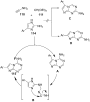
Figure 1: Natural products possessing the pyrrolo[2,3-c]quinoline skeleton.
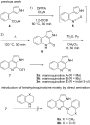
Scheme 1: Total synthesis of marinoquinolines and the failure of the introduction of a tetrahydroquinoline mo...
Scheme 2: Retrosynthetic analysis of the pyrrolo[2,3-c]quinoline ring construction.
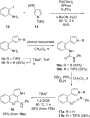
Scheme 3: Synthesis of N-substituted 4-aminopyrrolo[3,2-c]quinoline 18.
Scheme 4: Synthesis of the tetrahydroquinoline moiety through cycloamination.
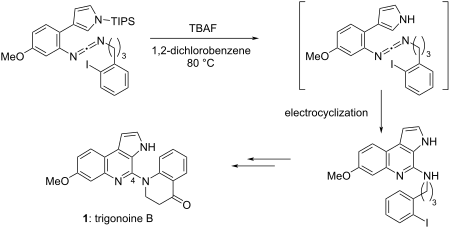
Scheme 5: Synthesis of trigonoine B (1).
Beilstein J. Org. Chem. 2021, 17, 461–484, doi:10.3762/bjoc.17.41
Graphical Abstract
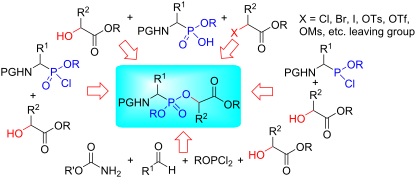
Figure 1: Phosphonopeptides, phosphonodepsipeptides, peptides, and depsipeptides.
Figure 2: The diverse strategies for phosphonodepsipeptide synthesis.
Scheme 1: Synthesis of α-phosphonodepsidipeptides as inhibitors of leucine aminopeptidase.
Figure 3: Structure of 2-hydroxy-2-oxo-3-[(phenoxyacetyl)amino]-1,2-oxaphosphorinane-6-carboxylic acid (16).
Scheme 2: Synthesis of α-phosphonodepsidipeptide 17 as coupling partner for cyclen-containing phosphonodepsip...
Scheme 3: Synthesis of α-phosphonodepsidipeptides containing enantiopure hydroxy ester as VanX inhibitors.
Scheme 4: Synthesis of α-phosphonodepsidipeptides as VanX inhibitors.
Scheme 5: Synthesis of optically active α-phosphonodepsidipeptides as VanX inhibitors.
Scheme 6: The synthesis of phosphonodepsipeptides through a thionyl chloride-catalyzed esterification of N-Cb...
Scheme 7: Synthesis of α-phosphinodipeptidamide as a hapten.
Scheme 8: Synthesis of α-phosphonodepsioctapeptide 41.
Scheme 9: Synthesis of phosphonodepsipeptides via an in situ-generated phosphonochloridate.
Scheme 10: Synthesis of α-phosphonodepsitetrapeptides 58 as inhibitors of the aspartic peptidase pepsin.
Scheme 11: Synthesis of a β-phosphonodepsidipeptide library 64.
Scheme 12: Synthesis of another β-phosphonodepsidipeptide library.
Scheme 13: Synthesis of γ-phosphonodepsidipeptides.
Scheme 14: Synthesis of phosphonodepsipeptides 85 as folylpolyglutamate synthetase inhibitors.
Scheme 15: Synthesis of the γ-phosphonodepsitripeptide 95 as an inhibitor of γ-gutamyl transpeptidase.
Scheme 16: Synthesis of phosphonodepsipeptides as inhibitors and probes of γ-glutamyl transpeptidase.
Scheme 17: Synthesis of phosphonyl depsipeptides 108 via DCC-mediated condensation and oxidation.
Scheme 18: Synthesis of phosphonodepsipeptides 111 with BOP and PyBOP as coupling reagents.
Scheme 19: Synthesis of optically active phosphonodepsipeptides with BOP and PyBOP as coupling reagents.
Scheme 20: Synthesis of phosphonodepsipeptides with BroP and TPyCIU as coupling reagents.
Scheme 21: Synthesis of a phosphonodepsipeptide hapten with BOP as coupling reagent.
Scheme 22: Synthesis of phosphonodepsitripeptide with BOP as coupling reagent.
Scheme 23: Synthesis of norleucine-derived phosphonodepsipeptides 135 and 138.
Scheme 24: Synthesis of norleucine-derived phosphonodepsipeptides 141 and 144.
Scheme 25: Solid-phase synthesis of phosphonodepsipeptides.
Scheme 26: Synthesis of phosphonodepsidipeptides via the Mitsunobu reaction.
Scheme 27: Synthesis of γ-phosphonodepsipeptide via the Mitsunobu reaction.
Scheme 28: Synthesis of phosphonodepsipeptides via a multicomponent condensation reaction.
Scheme 29: Synthesis of phosphonodepsipeptides with a functionalized side-chain via a multicomponent condensat...
Scheme 30: High yielding synthesis of phosphonodepsipeptides via a multicomponent condensation.
Scheme 31: Synthesis of optically active phosphonodepsipeptides via a multicomponent condensation reaction.
Scheme 32: Synthesis of N-phosphoryl phosphonodepsipeptides.
Scheme 33: Synthesis of phosphonodepsipeptides via the alkylation of phosphonic monoesters.
Scheme 34: Synthesis of phosphonodepsipeptides as inhibitors of aspartic protease penicillopepsin.
Scheme 35: Synthesis of phosphonodepsipeptides as prodrugs.
Scheme 36: Synthesis of phosphonodepsithioxopeptides 198.
Scheme 37: Synthesis of phosphonodepsipeptides.
Scheme 38: Synthesis of phosphonodepsipeptides with C-1-hydroxyalkylphosphonic acid.
Scheme 39: Synthesis of phosphonodepsipeptides with C-1-hydroxyalkylphosphonate via the rhodium-catalyzed carb...
Scheme 40: Synthesis of phosphonodepsipeptides with a C-1-hydroxyalkylphosphonate motif via a copper-catalyzed...
Beilstein J. Org. Chem. 2021, 17, 293–318, doi:10.3762/bjoc.17.28
Graphical Abstract
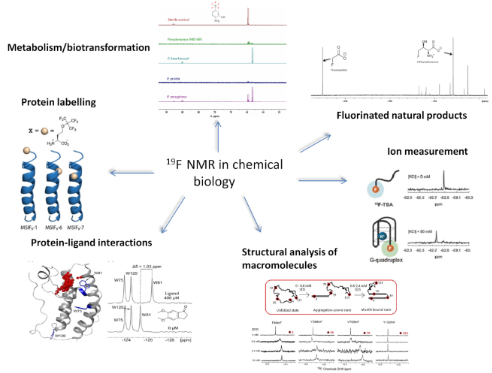
Figure 1: Selected examples of 19F-labelled amino acid analogues used as probes in chemical biology.
Figure 2: (a) Sequences of the antimicrobial peptide MSI-78 and pFtBSer-containing analogs and cartoon repres...
Figure 3: (a) Chemical structures of a selection of trifluoromethyl tags. (b) Comparative analysis showing th...
Figure 4: (a) First bromodomain of Brd4 with all three tryptophan residues displayed in blue and labelled by ...
Figure 5: (a) Enzymatic hydroxylation of GBBNF in the presence of hBBOX (b) 19F NMR spectra showing the conve...
Figure 6: (a) In-cell enzymatic hydrolysis of the fluorinated anandamide analogue ARN1203 catalyzed by hFAAH....
Figure 7: (a) X-ray crystal structure of CAM highlighting the location the phenylalanine residues replaced by...
Figure 8: 19F PREs of 4-F, 5-F, 6-F, 7-FTrp49 containing MTSL-modified S52CCV-N. The 19F NMR resonances of ox...
Figure 9: 19F NMR as a direct probe of Ud NS1A ED homodimerization. Schematic representation showing the loca...
Figure 10: (a) Representative spectrum of a 182 μM sample of Aβ1-40-tfM35 at varying times indicating the majo...
Figure 11: Illustration of the conformational switch induced by SDS in 4-tfmF-labelled α-Syn. Also shown are t...
Figure 12: (a) Structural models of the Myc‐Max (left), Myc‐Max‐DNA (middle) and Myc‐Max‐BRCA1 complexes (righ...
Figure 13: (a) Side (left) and bottom (right) views of the pentameric apo ELIC X-ray structure (PDB ID: 3RQU) ...
Figure 14: (a) General structure of a selection of recently developed 19F-labelled nucleotides for their use a...
Figure 15: Monitoring biotransformation of the fluorinated pesticide cyhalothrin by the fungus C. elegans. The...
Figure 16: Following the biodegradation of emerging fluorinated pollutants by 19F NMR. The spectra are from cu...
Figure 17: Discovery of new fluorinated natural products by 19F NMR. The spectrum is of the culture supernatan...
Figure 18: Application of 19F NMR to investigate the biosynthesis of nucleocidin. The spectra are from culture...
Figure 19: Detection of new fluorofengycins (indicated by arrows) in culture supernatants of Bacillus sp. CS93...
Figure 20: Measurement of β-galactosidase activity in MCF7 cancer cells expressing lacZ using 19F NMR. The deg...
Figure 21: Detection of ions using 19F NMR. (a) Structure of TF-BAPTA and its 19F iCEST spectra in the presenc...
Figure 22: (a) The ONOO−-mediated decarbonylation of 5-fluoroisatin and 6-fluoroisatin. The selectivity of (b)...
Beilstein J. Org. Chem. 2021, 17, 11–21, doi:10.3762/bjoc.17.2
Graphical Abstract
Scheme 1: Overview of the synthetic methods for the carbazole-based heterohelicenes. i) Pd2dba3, xantphos, K3...
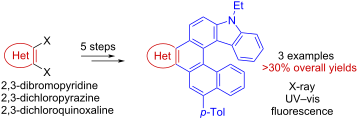
Scheme 2: Synthetic strategy for the carbazole-based [6]helicenes fused with an azine ring.
Scheme 3: Sonogashira coupling of compound 4b with phenylacetylene. i) Pd(PPh3)2Cl2, CuI, iPr2NH, DMSO, 80 °C...
Figure 1: Molecular structure of carbazole-based [6]helicenes 10a (a), 10b (b) and 10c (c) (X-ray data).
Figure 2: Crystal packing of carbazole-based [6]helicenes 10a (a, b), 10b (c,d) and 10c (e). Hydrogen atoms a...
Beilstein J. Org. Chem. 2020, 16, 2960–2970, doi:10.3762/bjoc.16.246
Graphical Abstract
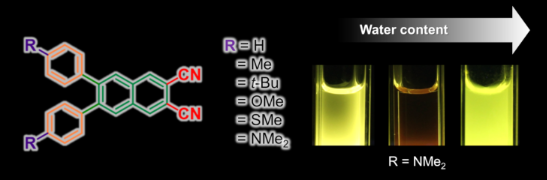
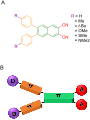
Scheme 1: A) Structures of the six investigated 2,3-disubstituted-6,7-diphenylnaphthalene derivatives with va...
Scheme 2: Synthesis of p-phenyl-6,7-disubstituted naphthalene-2,3-dicarbonitrile.
Figure 1: Molecular structure in the crystal of Me as obtained by X-ray diffractometric analysis. Thermal dis...
Figure 2: A) Intermolecular CH…π interactions for compound Me. B) Weak intermolecular π–π stacking interactio...
Figure 3: Normalized absorption spectra of the evaluated compounds in fluid THF at rt. All solutions were opt...
Figure 4: Normalized emission spectra of the evaluated compounds in fluid THF at rt (left) and in a frozen gl...
Figure 5: A) Photographs of H at different THF/H2O ratios under UV excitation (λ = 365 nm). B) Photoluminesce...
Beilstein J. Org. Chem. 2020, 16, 2363–2441, doi:10.3762/bjoc.16.197
Graphical Abstract
Scheme 1: Amine/photoredox-catalysed α-alkylation of aldehydes with alkyl bromides bearing electron-withdrawi...
Scheme 2: Amine/HAT/photoredox-catalysed α-functionalisation of aldehydes using alkenes.
Scheme 3: Amine/cobalt/photoredox-catalysed α-functionalisation of ketones and THIQs.
Scheme 4: Amine/photoredox-catalysed α-functionalisation of aldehydes or ketones with imines. (a) Using keton...
Scheme 5: Bifunctional amine/photoredox-catalysed enantioselective α-functionalisation of aldehydes.
Scheme 6: Bifunctional amine/photoredox-catalysed α-functionalisation of aldehydes using amine catalysts via ...
Scheme 7: Amine/photoredox-catalysed RCA of iminium ion intermediates. (a) Synthesis of quaternary stereocent...
Scheme 8: Bifunctional amine/photoredox-catalysed RCA of enones in a radical chain reaction initiated by an i...
Scheme 9: Bifunctional amine/photoredox-catalysed RCA reactions of iminium ions with different radical precur...
Scheme 10: Bifunctional amine/photoredox-catalysed radical cascade reactions between enones and alkenes with a...
Scheme 11: Amine/photocatalysed photocycloadditions of iminium ion intermediates. (a) External photocatalyst u...
Scheme 12: Amine/photoredox-catalysed addition of acrolein (94) to iminium ions.
Scheme 13: Dual NHC/photoredox-catalysed acylation of THIQs.
Scheme 14: NHC/photocatalysed spirocyclisation via photoisomerisation of an extended Breslow intermediate.
Scheme 15: CPA/photoredox-catalysed aza-pinacol cyclisation.
Scheme 16: CPA/photoredox-catalysed Minisci-type reaction between azaarenes and α-amino radicals.
Scheme 17: CPA/photoredox-catalysed radical additions to azaarenes. (a) α-Amino radical or ketyl radical addit...
Scheme 18: CPA/photoredox-catalysed reduction of azaarene-derived substrates. (a) Reduction of ketones. (b) Ex...
Scheme 19: CPA/photoredox-catalysed radical coupling reactions of α-amino radicals with α-carbonyl radicals. (...
Scheme 20: CPA/photoredox-catalysed Povarov reaction.
Scheme 21: CPA/photoredox-catalysed reactions with imines. (a) Decarboxylative imine generation followed by Po...
Scheme 22: Bifunctional CPA/photocatalysed [2 + 2] photocycloadditions.
Scheme 23: PTC/photocatalysed oxygenation of 1-indanone-derived β-keto esters.
Scheme 24: PTC/photoredox-catalysed perfluoroalkylation of 1-indanone-derived β-keto esters via a radical chai...
Scheme 25: Bifunctional hydrogen bonding/photocatalysed intramolecular [2 + 2] photocycloadditions of quinolon...
Scheme 26: Bifunctional hydrogen bonding/photocatalysed intramolecular RCA cyclisation of a quinolone.
Scheme 27: Bifunctional hydrogen bonding/photocatalysed intramolecular [2 + 2] photocycloadditions of quinolon...
Scheme 28: Bifunctional hydrogen bonding/photocatalysed [2 + 2] photocycloaddition reactions. (a) First use of...
Scheme 29: Bifunctional hydrogen bonding/photocatalysed deracemisation of allenes.
Scheme 30: Bifunctional hydrogen bonding/photocatalysed deracemisation reactions. (a) Deracemisation of sulfox...
Scheme 31: Bifunctional hydrogen bonding/photocatalysed intramolecular [2 + 2] photocycloaddition of coumarins....
Scheme 32: Bifunctional hydrogen bonding/photocatalysed [2 + 2] photocycloadditions of quinolones. (a) Intramo...
Scheme 33: Hydrogen bonding/photocatalysed formal arylation of benzofuranones.
Scheme 34: Hydrogen bonding/photoredox-catalysed dehalogenative protonation of α,α-chlorofluoro ketones.
Scheme 35: Hydrogen bonding/photoredox-catalysed reductions. (a) Reduction of 1,2-diketones. (b) Reduction of ...
Scheme 36: Hydrogen bonding/HAT/photocatalysed deracemisation of cyclic ureas.
Scheme 37: Hydrogen bonding/HAT/photoredox-catalysed synthesis of cyclic sulfonamides.
Scheme 38: Hydrogen bonding/photoredox-catalysed reaction between imines and indoles.
Scheme 39: Chiral cation/photoredox-catalysed radical coupling of two α-amino radicals.
Scheme 40: Chiral phosphate/photoredox-catalysed hydroetherfication of alkenols.
Scheme 41: Chiral phosphate/photoredox-catalysed synthesis of pyrroloindolines.
Scheme 42: Chiral anion/photoredox-catalysed radical cation Diels–Alder reaction.
Scheme 43: Lewis acid/photoredox-catalysed cycloadditions of carbonyls. (a) Formal [2 + 2] cycloaddition of en...
Scheme 44: Lewis acid/photoredox-catalysed RCA reaction using a scandium Lewis acid between α-amino radicals a...
Scheme 45: Lewis acid/photoredox-catalysed RCA reaction using a copper Lewis acid between α-amino radicals and...
Scheme 46: Lewis acid/photoredox-catalysed synthesis of 1,2-amino alcohols from aldehydes and nitrones using a...
Scheme 47: Lewis acid/photocatalysed [2 + 2] photocycloadditions of enones and alkenes.
Scheme 48: Meggers’s chiral-at-metal catalysts.
Scheme 49: Lewis acid/photoredox-catalysed α-functionalisation of ketones with alkyl bromides bearing electron...
Scheme 50: Bifunctional Lewis acid/photoredox-catalysed radical coupling reaction using α-chloroketones and α-...
Scheme 51: Lewis acid/photocatalysed RCA of enones. (a) Using aldehydes as acyl radical precursors. (b) Other ...
Scheme 52: Bifunctional Lewis acid/photocatalysis for a photocycloaddition of enones.
Scheme 53: Lewis acid/photoredox-catalysed RCA reactions of enones using DHPs as radical precursors.
Scheme 54: Lewis acid/photoredox-catalysed functionalisation of β-ketoesters. (a) Hydroxylation reaction catal...
Scheme 55: Bifunctional copper-photocatalysed alkylation of imines.
Scheme 56: Copper/photocatalysed alkylation of imines. (a) Bifunctional copper catalysis using α-silyl amines....
Scheme 57: Bifunctional Lewis acid/photocatalysed intramolecular [2 + 2] photocycloaddition.
Scheme 58: Bifunctional Lewis acid/photocatalysed [2 + 2] photocycloadditions (a) Intramolecular cycloaddition...
Scheme 59: Bifunctional Lewis acid/photocatalysed rearrangement of 2,4-dieneones.
Scheme 60: Lewis acid/photocatalysed [2 + 2] cycloadditions of cinnamate esters and styrenes.
Scheme 61: Nickel/photoredox-catalysed arylation of α-amino acids using aryl bromides.
Scheme 62: Nickel/photoredox catalysis. (a) Desymmetrisation of cyclic meso-anhydrides using benzyl trifluorob...
Scheme 63: Nickel/photoredox catalysis for the acyl-carbamoylation of alkenes with aldehydes using TBADT as a ...
Scheme 64: Bifunctional copper/photoredox-catalysed C–N coupling between α-chloro amides and carbazoles or ind...
Scheme 65: Bifunctional copper/photoredox-catalysed difunctionalisation of alkenes with alkynes and alkyl or a...
Scheme 66: Copper/photoredox-catalysed decarboxylative cyanation of benzyl phthalimide esters.
Scheme 67: Copper/photoredox-catalysed cyanation reactions using TMSCN. (a) Propargylic cyanation (b) Ring ope...
Scheme 68: Palladium/photoredox-catalysed allylic alkylation reactions. (a) Using alkyl DHPs as radical precur...
Scheme 69: Manganese/photoredox-catalysed epoxidation of terminal alkenes.
Scheme 70: Chromium/photoredox-catalysed allylation of aldehydes.
Scheme 71: Enzyme/photoredox-catalysed dehalogenation of halolactones.
Scheme 72: Enzyme/photoredox-catalysed dehalogenative cyclisation.
Scheme 73: Enzyme/photoredox-catalysed reduction of cyclic imines.
Scheme 74: Enzyme/photocatalysed enantioselective reduction of electron-deficient alkenes as mixtures of (E)/(Z...
Scheme 75: Enzyme/photoredox catalysis. (a) Deacetoxylation of cyclic ketones. (b) Reduction of heteroaromatic...
Scheme 76: Enzyme/photoredox-catalysed synthesis of indole-3-ones from 2-arylindoles.
Scheme 77: Enzyme/HAT/photoredox catalysis for the DKR of primary amines.
Scheme 78: Bifunctional enzyme/photoredox-catalysed benzylic C–H hydroxylation of trifluoromethylated arenes.
Beilstein J. Org. Chem. 2020, 16, 2272–2281, doi:10.3762/bjoc.16.188
Graphical Abstract
Figure 1: Structure of PBA-BODIPY (1) and schematic representation of dextran (Dex) and PBA-BODIPY conjugated...
Scheme 1: Schematic representation of dextran/PBA-BODIPY bioconjugations in: A. conventional solution-based c...
Figure 2: A) Amount of recovered PBA-BODIPY (1, i.e., nonreacted 1) in the mixtures DMSO/EtOH and in the seri...
Figure 3: A) UV–vis absorption and B) fluorescence emission spectra (λexc = 380 nm) of the BODIPY-dextran con...
Figure 4: A) Hydrodynamic diameter of (nm) conjugate Dex-1b (at 1 mg/mL in H2O, black curve) and PBS (red cur...
Figure 5: Fluorescence emission spectra of pyrene (4.4 × 10⁻⁸ M) in water and in a water solution in the pres...
Beilstein J. Org. Chem. 2020, 16, 2212–2259, doi:10.3762/bjoc.16.186
Graphical Abstract
Figure 1: Representation of corannulene (1) and sumanene (2), the subunits of fullerene (C60).
Scheme 1: Mehta’s unsuccessful effort for the synthesis of sumanene scaffold 2.
Scheme 2: First synthesis of sumanene 2 by Sakurai et al. from norbornadiene 10.
Scheme 3: Synthesis of trimethylsumanene 28 from easily accessible norbornadiene (10).
Scheme 4: Generation of anions 29–31 and the preparation of tris(trimethylsilyl)sumanene 32.
Scheme 5: Synthesis of tri- and hexa-substituted sumanene derivatives.
Scheme 6: Synthesis of bowl-shaped π-extended sumanene derivatives 37a–f.
Scheme 7: Synthesis of monooxasumanene 38, trioxosumanene 40 along with imination of them.
Scheme 8: Synthesis of trimethylsumanenetrione 46 and exo-functionalized products 45a,b.
Scheme 9: Synthesis of bisumanenylidene 47 and sumanene dimer 48 from 2.
Scheme 10: The mono-substitution of 2 to generate diverse mono-sumanene derivatives 49a–d.
Scheme 11: Synthesis of sumanene building block 53 useful for further extension.
Scheme 12: Synthesis of hexafluorosumanene derivative 55 by Sakurai and co-workers.
Scheme 13: Preparation of sumanene-based carbene 60 and its reaction with cyclohexane.
Scheme 14: Barton–Kellogg reaction for the synthesis of sterically hindered alkenes.
Scheme 15: Synthesis of hydroxysumanene 68 by employing Baeyer–Villiger oxidation.
Scheme 16: Synthesis of sumanene derivatives having functionality at an internal carbon.
Scheme 17: Mechanism for nucleophilic substitution reaction at the internal carbon.
Scheme 18: Synthesis of diverse monosubstituted sumanene derivatives.
Scheme 19: Synthesis of di- and trisubstituted sumanene derivatives from sumanene (2).
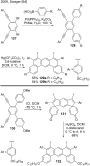
Scheme 20: Preparation of monochlorosumanene 88 and hydrogenation of sumanene (2).
Scheme 21: The dimer 90 and bissumanenyl 92 achieved from halosumannes.
Scheme 22: Pyrenylsumanene 93 involving the Suzuki-coupling as a key transformation.
Scheme 23: Synthesis of various hexaarylsumanene derivatives using the Suzuki-coupling reaction.
Scheme 24: Synthesis of hexasubstituted sumanene derivatives 96 and 97.
Scheme 25: Synthesis of thioalkylsumanenes via an aromatic nucleophilic substitution reaction.
Scheme 26: Synthesis of tris(ethoxycarbonylethenyl)sumanene derivative 108.
Scheme 27: Synthesis of ferrocenyl-based sumanene derivatives.
Scheme 28: Synthesis of sumanenylferrocene architectures 118 and 119 via Negishi coupling.
Scheme 29: Diosmylation and the synthesis of phenylboronate ester 121 of sumanene.
Scheme 30: Synthesis of the iron-complex of sumanene.
Scheme 31: Synthesis of tri- and mononuclear sumanenyl zirconocene complexes.
Scheme 32: Synthesis of [CpRu(η6-sumanene)]PF6.
Scheme 33: Preparation of sumanene-based porous coordination networks 127 (spherical tetramer units) and 128 (...
Scheme 34: Synthesis of sumanenylhafnocene complexes 129 and 130.
Scheme 35: Synthesis of 134 and 135 along with PdII coordination complex 136.
Scheme 36: Synthesis of alkali metals sumanene complex K7(C21H102−)2(C21H93−)·8THF (137) containing di- and tr...
Scheme 37: The encapsulation of a Cs+ ion between two sumanenyl anions.
Scheme 38: Synthesis of monothiasumanene 140 and dithiasumanene 141 from 139.
Scheme 39: Synthesis of trithiasumanene 151 by Otsubo and his co-workers.
Scheme 40: Synthesis of trithiasumanene derivatives 155 and 156.
Scheme 41: Synthetic route towards hexathiolated trithiasumanenes 158.
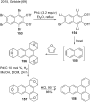
Scheme 42: Synthesis of triselenasumanene 160 by Shao and teammates.
Scheme 43: Synthesis of tritellurasumanene derivatives from triphenylene skeletons.
Scheme 44: Synthesis of pyrazine-fused sumanene architectures through condensation reaction.
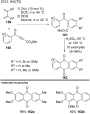
Scheme 45: Treatment of the trichalcogenasumanenes with diverse oxidative reagents.
Scheme 46: Ring-opening reaction with H2O2 and oxone of heterasumanenes 178 and 179.
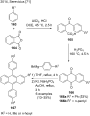
Scheme 47: Synthesis of polycyclic compounds from sumanene derivatives.
Scheme 48: Synthesis of diimide-based heterocycles reported by Shao’s and co-workers.
Scheme 49: Synthesis of pristine trichalcogenasumanenes, 151, 205, and 206.
Scheme 50: Synthesis of trichalcogenasumanenes via hexaiodotriphenylene precursor 208.
Scheme 51: Synthesis of trisilasumanenes 214 and 215.
Scheme 52: Synthesis of trisilasumanene derivatives 218 and 219.
Scheme 53: Synthesis of novel trigermasumanene derivative 223.
Scheme 54: An attempt towards the synthesis of tristannasumanene derivative 228.
Scheme 55: Synthesis of triphosphasumanene trisulfide 232 from commercially available 229.
Scheme 56: The doping of sumanene derivatives with chalcogens (S, Se, Te) and phosphorus.
Scheme 57: Synthesis of heterasumanene containing three different heteroatoms.
Scheme 58: Synthesis of trichalcogenasumanene derivatives 240 and 179.
Scheme 59: Preparation of trichalcogenasumanenes 245 and 248.
Scheme 60: Design and synthesis of trichalcogenasumanene derivatives 252 and 178.
Scheme 61: Synthesis of spirosumanenes 264–269 and non-spiroheterasumanenes 258–263.
Scheme 62: Synthesis of sumanene-type hetero polycyclic compounds.
Scheme 63: Synthesis of triazasumanenes 288 and its sulfone congener 287.
Scheme 64: Synthesis of C3-symmetric chiral triaryltriazasumanenes via cross-coupling reaction.
Scheme 65: Synthesis of mononaphthosumanene 293 using Suzuki coupling as a key step.
Scheme 66: Synthesis of di- and trinaphthosumanene derivatives 302–304.
Scheme 67: Synthesis of hemifullerene skeletons by Hirao’s group.
Scheme 68: Design and construction of C70 fragment from a C60 sumanene fragment.
Beilstein J. Org. Chem. 2020, 16, 2073–2079, doi:10.3762/bjoc.16.174
Graphical Abstract
Figure 1: Pharmacologically active nonracemic phosphonates with heterocyclic moieties.
Figure 2: Starting nonracemic 4-nitro-2-oxophosphonates.
Scheme 1: Intermolecular N-methylation of reduction product 7.
Scheme 2: Synthesis of pyrrolidinyl phosphonic acids 11a–d.
Figure 3: ORTEP diagram of (2R,3R,4S)-10a.
Scheme 3: Synthesis of tetrahydropyranylphosphonates 13a–f via diastereoselective Henry/acetalyzation reactio...
Figure 4: ORTEP diagram of (2S,3R,4S,5S,6R)-13b.
Scheme 4: Synthesis of (3,4-dihydro-2H-pyran-5-yl)phosphonate 14.
Beilstein J. Org. Chem. 2020, 16, 1955–1962, doi:10.3762/bjoc.16.162
Graphical Abstract
Figure 1: Chemical structures of hexa-acylated Escherichia coli lipid A, monophosphorylated lipid X (the redu...
Scheme 1: Enantioselective synthesis of Nap-protected (R)-3-hydroxytetradecanoic acid (7). Conditions: (a) Me...
Scheme 2: Synthesis of monoacylated glucosamine building blocks. Conditions: (a) NaHCO3, TrocCl, H2O, 0 °C, 9...
Scheme 3: Synthesis of lipid X monosaccharide 1. Conditions: (a) Zn, AcOH, CH2Cl2, rt; (b) acid 7, EDC·HCl, D...
Scheme 4: Synthesis of the disaccharide lipid A precursor 2. Conditions: (a) TfOH, 4 Å MS, dry CH2Cl2, 94%; (...
Beilstein J. Org. Chem. 2020, 16, 1740–1753, doi:10.3762/bjoc.16.146
Graphical Abstract
Figure 1: Representative examples of some commercial drugs and biologically active alkaloids.
Scheme 1: Synthesis of β-carboline-linked 2-nitrochalcones.
Scheme 2: Synthesis of β-carboline-linked benzothiophenone frameworks.
Scheme 3: Comparison of outcome of one-pot vs two-pot approach.
Scheme 4: One-pot synthesis of β-carboline C-1-tethered benzothiophenone derivatives.
Scheme 5: One-pot synthesis of β-carboline C-3-linked benzothiophenone derivatives.
Scheme 6: One-pot synthesis of β-carboline-linked benzothiophene derivative 6C.
Scheme 7: Control experiment in the presence of a radical scavenger.
Figure 2: Proposed reaction mechanism.
Figure 3: Fluorescence spectra of 2aA–nA, 2bB, 2hB, and 6C.
Figure 4: Fluorescence spectra of 4aA–gA, and 4eB.
Beilstein J. Org. Chem. 2020, 16, 1732–1739, doi:10.3762/bjoc.16.145
Graphical Abstract
Figure 1: Chemical structures of MPD and the three structural analogs MPC-1, MPC-2, and MPC-3. The molecular ...
Figure 2: Chemical structures of commercially available (S)-citronellol (Cit), 4,4′-dihydroxybenzophenone (BZ...
Figure 3: The synthetic route leading to compounds MPC-1 and MPC-2. Compound β-4Ac-Man-CEP was prepared in 4 ...
Figure 4: Preparation of mannosyl phosphoramidites. Starting from 2,3,4,6-tetra-O-acetyl-β-ᴅ-mannopyranose (β...