


Search results
Search for "triazine" in Full Text gives 85 result(s) in Beilstein Journal of Organic Chemistry.
Metal-free aerobic oxidations mediated by N-hydroxyphthalimide. A concise review
Beilstein J. Org. Chem. 2013, 9, 1296–1310, doi:10.3762/bjoc.9.146
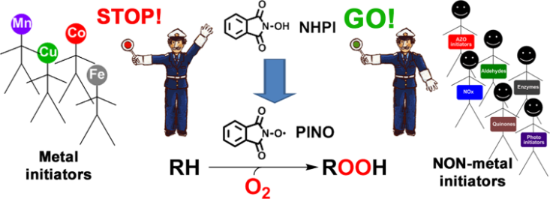
- the photocatalytic oxidative activation of NHPI by graphitic carbon nitride (g-C3N4) and visible light irradiation [65]. g-C3N4, the most stable allotrope of carbon nitride, is a two-dimensional polymer with a tri-s-triazine ring unit and a π-conjugated layered structure similar to graphene. It is a


Mild and efficient cyanuric chloride catalyzed Pictet–Spengler reaction
Beilstein J. Org. Chem. 2013, 9, 1235–1242, doi:10.3762/bjoc.9.140
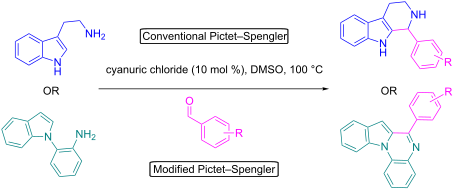
- Pictet–Spengler reaction catalyzed by cyanuric chloride (trichloro-1,3,5-triazine, TCT) is described. The 6-endo cyclization of tryptophan/tryptamine and modified Pictet–Spengler substrates with both electron-withdrawing and electron-donating aldehydes was carried out by using a catalytic amount of TCT
- additional deprotection step has to be introduced. Instead, a mild and efficient catalyst that can effectively produce iminium species in situ could generate the compound of interest without adding any extra steps. We envisaged that the use of cyanuric chloride (2,4,6-trichloro-1,3,5-triazine, TCT) [38][39


New core-pyrene π structure organophotocatalysts usable as highly efficient photoinitiators
Beilstein J. Org. Chem. 2013, 9, 877–890, doi:10.3762/bjoc.9.101
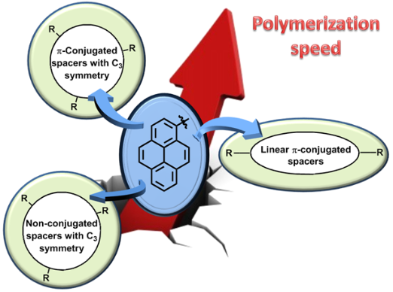
- architectures (Scheme 2) [42][43][44] are linked PI–PI units (e.g., PI = pyrene) or PI-PI’ (e.g., PI = pyrene and PI’ = 2,2’-dimethoxy-2-phenylacetophenone) and PI moieties (e.g., PI = benzophenone, thioxanthone, 2,2’-dimethoxy-2-phenylacetophenone, pyrene) linked to a trifunctional core (truxene, triazine


Spin state switching in iron coordination compounds
Beilstein J. Org. Chem. 2013, 9, 342–391, doi:10.3762/bjoc.9.39


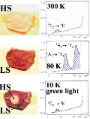
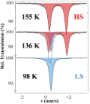


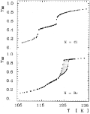

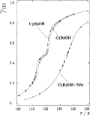


![[Graphic 1]](/bjoc/content/inline/1860-5397-9-39-i3.png?max-width=637&scale=1.18182) ) modes versus the anion volu...
) modes versus the anion volu...






Bioactive selaginellins from Selaginella tamariscina (Beauv.) Spring
Beilstein J. Org. Chem. 2012, 8, 1884–1889, doi:10.3762/bjoc.8.217

- conducted on precoated silica gel plates GF254 (Qingdao Marine Chemical Factory). 3-(4,5-Dimethylthiazol-2-yl)-2,5-diphenyltetrazolium bromide (MTT), cisplatin, and 2,4,6-tri(2-pyridyl)-1,3,5-triazine (TPTZ) were from Aladdin Reagent Co. Ltd. 2,2’-azinobis(3-ethylbenzothiazoline-6-sulfonic acid) diammonium


Regioselective synthesis of 7,8-dihydroimidazo[5,1-c][1,2,4]triazine-3,6(2H,4H)-dione derivatives: A new drug-like heterocyclic scaffold
Beilstein J. Org. Chem. 2012, 8, 1584–1593, doi:10.3762/bjoc.8.181
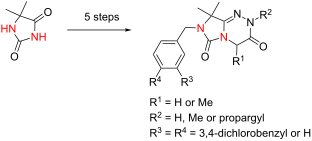
- /bjoc.8.181 Abstract Dihydroimidazo[5,1-c][1,2,4]triazine-3,6(2H,4H)-dione derivatives were prepared by successive N3- and N1-alkylation of hydantoins, followed by regioselective thionation and subsequent cyclization under mild conditions. In a final alkylation step a further substituent may be
- ] properties. The impressive array of biological effects of these compounds is associated with the 1,2,4-triazine ring as the core structural moiety, which also occurs in a number of natural products [5]. In addition, the 1,2,4-triazine scaffold has found application in pharmaceuticals and agrochemicals [6
- ]. For example, some 7-phenylimidazo-[1,2.b][1,2,4]triazine derivatives of the general structure 1 (Figure 1) have been developed as selective ligands for γ-aminobutyric acid type A (GABAA) receptors and are therefore of benefit in the treatment and prevention of adverse conditions of the central nervous


An intramolecular inverse electron demand Diels–Alder approach to annulated α-carbolines
Beilstein J. Org. Chem. 2012, 8, 829–840, doi:10.3762/bjoc.8.93
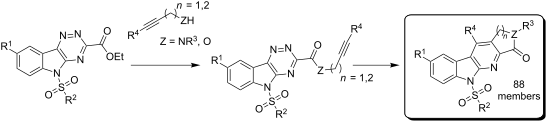
- library of eighty-eight α-carbolines was prepared by using this robust methodology for biological evaluation. Keywords: α-carboline; chemical diversity; inverse electron demand Diels–Alder; isatin; pyrido[2,3-b]indole; 1,2,4-triazine; Introduction In comparison with the well-known β-carbolines, α
- this design was the electron donation from the indole nitrogen into the isatin-derived triazine ring of 9, which would result in an elevated LUMO of the triazinyl azadiene, and thereby inhibit the desired cycloaddition. Thus, it was anticipated that an electron-withdrawing group R2, which could also
- serve as a diversification point, would be needed on the indole nitrogen. Results and Discussion Feasibility studies began with isatin-derived 1,2,4-triazine 9a (9, R1 = H) [73][74], which was easily prepared by the condensation of isatin (10, R1= H) with ethyl oxaloamidrazonate [75][76][77] (11) in


A general and facile one-pot process of isothiocyanates from amines under aqueous conditions
Beilstein J. Org. Chem. 2012, 8, 61–70, doi:10.3762/bjoc.8.6
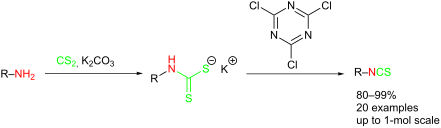
- isothiocyanates – is still a challenge in organic chemistry. Results and Discussion Previously, Furumoto reported the application of cyanuric chloride (2,4,6-trichloro-1,3,5-triazine, TCT) as a desulfurylation reagent in the synthesis of carbodiimides from thioureas under mild conditions [60]. In that reaction
- , the S-nucleophiles first reacted with TCT and then decomposed to release the product carbodiimides and by-product 2,4,6-trimercapto-1,3,5-triazine (TMT) [61]. Considering that TCT is an efficient desulfurylation reagent of thioureas to synthesize carbodiimides and that it is affordable in large scale


An overview of the key routes to the best selling 5-membered ring heterocyclic pharmaceuticals
Beilstein J. Org. Chem. 2011, 7, 442–495, doi:10.3762/bjoc.7.57
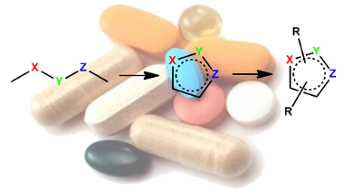
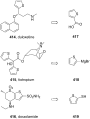
- (Scheme 52) [79]. Other synthetic routes to 1,2,4-triazoles have also been reported. For example, the desired triazole ring of anastrozole can be obtained by reacting an appropriately substituted hydrazine hydrochloride salt 269 with triazine (270) (Scheme 53) [80]. It has been proposed that this novel
- transformation occurs by a two step process: Initially, a molecule of triazine undergoes condensation and ring cleavage with the hydrazine to generate formamidrazone 271 which then immediately reacts with a second molecule of triazine to yield the 1,2,4-triazole [81]. Hence, in this case the triazine can be
- considered as a formamide donor. Rizatriptan (76) has also been prepared by both the above mentioned procedures, i.e., via the pre-made triazole or by treatment of a hydrazine hydrochloride salt with triazine (Scheme 54) [82]. Indeed, the latter protocol has been further expanded to make use of additional







Synthesis of methylenebisamides using CC- or DCMT- activated DMSO
Beilstein J. Org. Chem. 2008, 4, No. 51, doi:10.3762/bjoc.4.51

- , when amides react with electrophile-activated DMSO, the yields are rather low. We have found new electrophiles, 2,4,6-trichloro[1,3,5]triazine (CC) and 2,4-dichloro-6-methoxy[1,3,5]triazine (DCMT), which activate DMSO in the presence of amides to yield methylenebisamides in good to fair yields. The
- amides can be aromatic or aliphatic. The operation is simple and the reagents are inexpensive. Keywords: amides; condensation; DMSO; methylenebisamides; 2,4,6-trichloro[1,3,5]triazine; Introduction Sulfoxides are activated by electrophiles to produce reactive sulfonium salts. These electrophiles
- on the chlorination [10] and etherification [11] of benzyl alcohols and from other references [12][13][14], we believe the reaction between 2,4,6-trichloro[1,3,5]triazine (cyanogen chloride, or CC) and DMSO produces a reactive sulfonium salt intermediate. Therefore, it was of interest to study the


Other Beilstein-Institut Open Science Activities



