Search results
Search for "GC-MS" in Full Text gives 265 result(s) in Beilstein Journal of Organic Chemistry. Showing first 200.
Direct electrochemical generation of organic carbonates by dehydrogenative coupling
Beilstein J. Org. Chem. 2018, 14, 1578–1582, doi:10.3762/bjoc.14.135
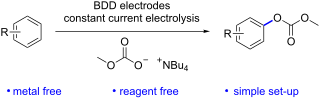
- was most likely and quinoide products were generated due to water traces in the commercially available acetonitrile. In order to investigate the potential functionalization of a side chain, xylene was tested. In contrast to benzene, traces of two compounds were detected by GC–MS analysis with a
- studies on a potential scope of aromatic compounds, the symmetric 1,3,5-threefold substitution pattern showed best selectivity according to GC–MS measurements. Since the nucleophilic attack is controlled by sterics, non-symmetric substitution patterns gave weak signals and product mixtures. Generally, the


Acyl-group specificity of AHL synthases involved in quorum-sensing in Roseobacter group bacteria
Beilstein J. Org. Chem. 2018, 14, 1309–1316, doi:10.3762/bjoc.14.112

- GC/MS-based method using XAD-16 as adsorbent in marine broth, developed by us [8]. The bacteria were isolated from different habitats: D. shibae DFL-12 was isolated from the dinoflagellate Prorocentrum lima [29], P. inhibens T5 was collected from a water sample of the German Wadden Sea [30], P
- concomitantly transfers any bound or free fatty acid into its methyl ester (FAME) [33]. The extracts were analyzed by GC/MS (Figure 1). Short and long FAMEs were detected, ranging from methyl octanoate to methyl icosanoate (Table 2). The three Phaeobacter strains produced identical fatty acids. We identified
- determined using GC/MS [9][10][32]. Coenzyme A or abbreviated ACP analogs, N-pantothenoylcysteamine thioesters of fatty acids (PCEs) were synthesized (Scheme 2) to serve as substrate substitutes for the native precursors. Calcium pantothenate (6) was protected with acetone forming acid 7 that was transformed


Volatiles from three genome sequenced fungi from the genus Aspergillus
Beilstein J. Org. Chem. 2018, 14, 900–910, doi:10.3762/bjoc.14.77

- Abstract The volatiles emitted by agar plate cultures of three genome sequenced fungal strains from the genus Aspergillus were analysed by GC–MS. All three strains produced terpenes for which a biosynthetic relationship is discussed. The obtained data were also correlated to genetic information about the
- from cantaloupe a structural revision to the Z stereoisomer is proposed. Ethyl (Z)-hept-4-enoate also occurs in Aspergillus clavatus and was identified by synthesis of an authentic standard. Keywords: Aspergillus; GC–MS; genomics; terpenes; volatiles; Introduction Ascomycete fungi are a highly
- grown on medium 129 were collected on charcoal filters with a closed loop stripping apparatus (CLSA) [23]. After solvent extraction (CH2Cl2) of the filters the extracts were analysed by GC–MS and compounds were identified by comparison of the recorded EI mass spectra to mass spectral libraries and of




Volatiles from the xylarialean fungus Hypoxylon invadens
Beilstein J. Org. Chem. 2018, 14, 734–746, doi:10.3762/bjoc.14.62
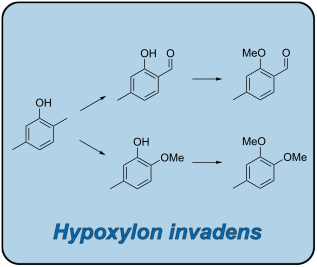
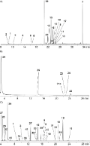
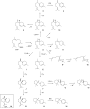
- The volatiles emitted by agar plate cultures of the xylarialean fungus Hypoxylon invadens were investigated by use of a closed loop stripping apparatus in combination with GC–MS. Several aromatic compounds were found that could only be identified by comparison to all possible constitutional isomers
- α-cadinene (5). The same problem applies to the unambiguous identification of regioisomers of aromatic compounds. We have recently reported on the GC–MS-based identification of the fungal volatiles 1-chloro-3,4-dimethoxybenzene (6) and 1,3-dichloro-4,5-dimethoxybenzene (7) from an endophytic
- unambiguous GC–MS-based structural assignment was only possible by comparison to all regioisomers with different substitution patterns at the benzene ring. Results and Discussion The volatiles released by agar plate cultures of Hypoxylon invadens MUCL 54175 were collected through the CLSA headspace method and




Stepwise radical cation Diels–Alder reaction via multiple pathways
Beilstein J. Org. Chem. 2018, 14, 704–708, doi:10.3762/bjoc.14.59
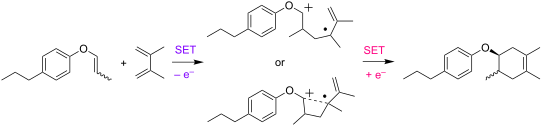
- the reaction was indeed stepwise. When the reaction was carefully monitored by gas chromatography–mass spectrometry (GC–MS), we found that an adduct was generated in the early stage that was not the Diels–Alder product 3. Therefore, we intentionally stopped the reaction after 0.1 F/mol of electricity
- development in our laboratory. GC–MS Monitoring of the oxidative SET-triggered reaction of aryl vinyl ether 1c. Radical cation Diels–Alder reaction of trans-anethole [17]. Radical cation Diels–Alder reactions of aryl vinyl ether and sulfides [17][25]. Radical cation Diels–Alder reaction of aryl vinyl ether (1


Investigating radical cation chain processes in the electrocatalytic Diels–Alder reaction
Beilstein J. Org. Chem. 2018, 14, 642–647, doi:10.3762/bjoc.14.51
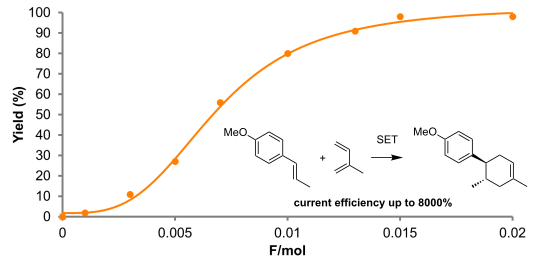
- spectrometry (GC–MS, Figure 2). Surprisingly, we found that only 0.015 F/mol was sufficient to complete the reaction and the Diels–Alder adduct 3 was obtained in 98% yield, suggesting that the current efficiency was up to 6533%. To the best of our knowledge, this is one of the highest current efficiencies in
- electrochemical synthesis in that one electron can run the radical cation chain process up to 65 times. GC–MS monitoring showed a sigmoidal curve with an induction period. The monitoring was carried out in the presence of a large excess (10 equivalents) of isoprene (2), which might follow pseudo-first order
- [33]. The reaction was monitored by GC–MS and also showed a sigmoidal curve (Figure 4). Conclusion In conclusion, we have optimized the reaction conditions for the electrocatalytic Diels–Alder reaction in order to improve the turnover number of the radical cation chain process, which resulted in a


Diastereoselective auxiliary- and catalyst-controlled intramolecular aza-Michael reaction for the elaboration of enantioenriched 3-substituted isoindolinones. Application to the synthesis of a new pazinaclone analogue
Beilstein J. Org. Chem. 2018, 14, 593–602, doi:10.3762/bjoc.14.46

- Ministère de l’Enseignement Supérieur et de la Recherche, the Région Hauts-de-France and the FEDER are acknowledged for supporting and funding partially this work. Mrs Céline Delabre (UCCS) is thanked for GC–MS and HPLC analyses. Dr M. Kouach and Ms A. Descat (Univ. Lille) are thanked for HRMS analyses. Ms


High-yielding continuous-flow synthesis of antimalarial drug hydroxychloroquine
Beilstein J. Org. Chem. 2018, 14, 583–592, doi:10.3762/bjoc.14.45
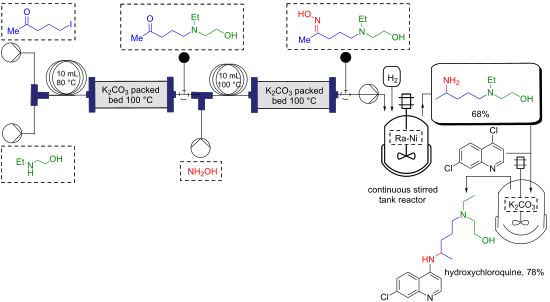
- found to give near quantitative conversion. The reaction profile was monitored using GC–MS and 1H NMR – no intermediates were observed under these conditions. Optimization of the flow rate with 55% hydroiodic acid (Table 1, entries 6–8) revealed that a flow rate of 1.0 mL min−1 (tR = 5 min) gave an
- (residence time, tR = 5 min) at 80 °C. The completion of the reaction was monitored using GC–MS. Complete consumption of starting material was observed. The reaction mixture was cooled to room temperature and sodium hydrogencarbonate was added until neutralized at pH 7. The crude mixture was extracted with


Functionalization of N-arylglycine esters: electrocatalytic access to C–C bonds mediated by n-Bu4NI
Beilstein J. Org. Chem. 2018, 14, 499–505, doi:10.3762/bjoc.14.35

- gives imine intermediate product 5, which was detected by TLC and GC–MS. Moreover, when separated synthesized 5 was subjected to react with 2a, the corresponding product 3aa was isolated in 89% yield. These control experiments indicate that 5 is a possible reaction intermediate. Based on these control


Volatiles from the tropical ascomycete Daldinia clavata (Hypoxylaceae, Xylariales)
Beilstein J. Org. Chem. 2018, 14, 135–147, doi:10.3762/bjoc.14.9
- /bjoc.14.9 Abstract The volatiles from the fungus Daldinia clavata were collected by use of a closed-loop stripping apparatus and analysed by GC–MS. A few compounds were readily identified by comparison of measured to library mass spectra and of retention indices to published data, while for other
- included in the Xylariaceae, but have recently been reassigned to the Hypoxylaceae [16]. Since many of the compounds observed during GC–MS analyses in the volatile profiles of these fungi could not be identified with confidence in the latter study, we have selected some of these strains for intensified
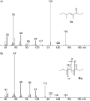
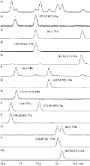
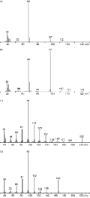
- unambiguous verification of the suggested structures. Volatiles from Daldinia clavata identified by GC–MS A representative total ion chromatogram of a CLSA headspace extract from D. clavata is shown in Figure 1. Several of the emitted volatiles were readily identified from their mass spectra and retention








Halogen-containing thiazole orange analogues – new fluorogenic DNA stains
Beilstein J. Org. Chem. 2017, 13, 2902–2914, doi:10.3762/bjoc.13.283
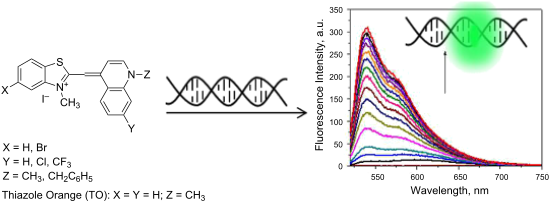
- and the fluorescence spectra on a Cary Eclipse fluorescence spectrophotometer (Varian, Australia). The GC–MS analysis was performed on a gas chromatograph HP 6890 GC System Plus coupled to a mass selective detector HP 5973 MSD. The mass selective detector operated in electron impact ionization mode at
- , 880, 765, 725, 625 cm−1; GC–MS m/z: 324 (100%, [M+] − CH3); elemental analysis (%) for C19H16ClIN2S Mw = 466.77, calcd for N, 6.00; found: 5.57. Procedures B1 and B2: 2a (1 mmol) and 4a (1 mmol) were finely ground together and the mixture was transferred to a 50 mL reaction flask. Distilled water (15
- , 1450, 1370, 1315, 1110, 974, 780, 750, 725 cm−1; GC–MS (m/z): 324 (100%, [M+] − CH2Ph); elemental analysis (%) for C25H20ClIN2S Mw = 542.86, calcd for N 5.16; found: 5.53. 2-((1-Benzyl-7-(trifluoromethyl)quinolin-4(1H)-ylidene)methyl)-3-methylbenzo[d]thiazol-3-ium iodide (5b): Yield 68%; mp 284–285 °C




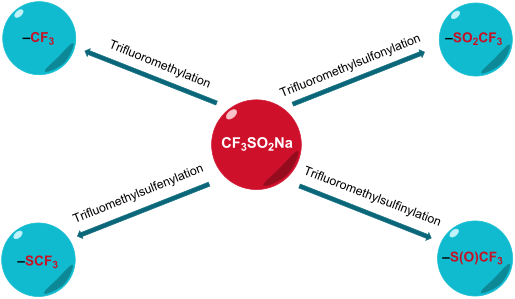
CF3SO2X (X = Na, Cl) as reagents for trifluoromethylation, trifluoromethylsulfenyl-, -sulfinyl- and -sulfonylation. Part 1: Use of CF3SO2Na
Beilstein J. Org. Chem. 2017, 13, 2764–2799, doi:10.3762/bjoc.13.272
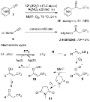
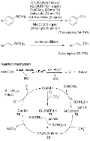
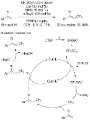
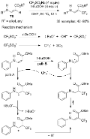
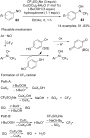
- -unsaturated ketones 58 (Scheme 31b). Benzophenone (BP) or anthracene-9,10-dione (AQ) were used as sensitizers under irradiation using a UV lamp at 280 nm. A radical pathway that involves CF3• was established after a negative reaction in the presence of TEMPO (TEMPO–CF3 was detected by GC–MS). An example of







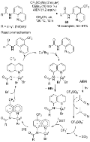


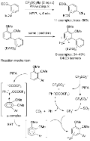


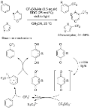
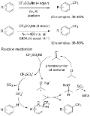











Is the tungsten(IV) complex (NEt4)2[WO(mnt)2] a functional analogue of acetylene hydratase?
Beilstein J. Org. Chem. 2017, 13, 2332–2339, doi:10.3762/bjoc.13.230
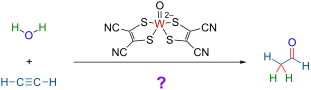
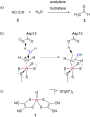
- experiment, 1-octyne and complex 1 (2 mol %) were heated at 50 °C in aqueous acetone. In situ analysis of the reaction mixture after 20 hours by GC–MS failed to reveal any new product next to unchanged 1-octyne. We have recently developed standardized screening procedures for detecting alkyne hydration

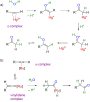


Mechanically induced oxidation of alcohols to aldehydes and ketones in ambient air: Revisiting TEMPO-assisted oxidations
Beilstein J. Org. Chem. 2017, 13, 2049–2055, doi:10.3762/bjoc.13.202
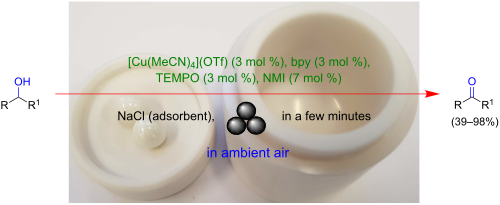
- selectively that it was complete within just a few minutes. The progress of the reaction was monitored by TLC and GC–MS analysis until the completion of the reaction. The experimental protocol involved two stages, namely the preparation of the catalytic system and the final oxidation reaction. During the
- smoothly reached completion in only 14 minutes (two cycles of 7 minutes each). GC–MS analysis of the crude reaction mixture only showed the presence of the desired aromatic aldehyde, indicating that over-oxidation did not occur (Scheme 2, right side). Prolonged milling did not result in the formation of
- further purified via filtering on a short pad of silica gel to give final aldehyde 2a with a higher degree of purity (>95% as determined by GC–MS analysis). Since most common alcohols are, unfortunately, liquids at room temperature, their mechanical activation requires using a versatile dispersant


Pd(OAc)2/Ph3P-catalyzed dimerization of isoprene and synthesis of monoterpenic heterocycles
Beilstein J. Org. Chem. 2017, 13, 1807–1815, doi:10.3762/bjoc.13.175
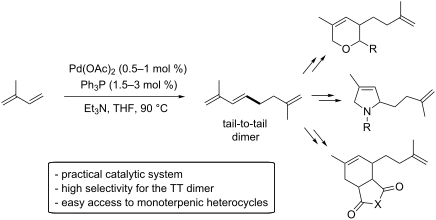
- ” and a GC–MS “QP-2010 SE”. Exact masses (HRMS) were recorded on an Agilent Q-TOF 6540 UHD spectrometer. Commercially available reagents were used without further purification. Pd-catalyzed dimerization of isoprene The reaction was performed under nitrogen in a screw-cap vial. Pd(OAc)2 (11.2 mg, 0.05


18-Hydroxydolabella-3,7-diene synthase – a diterpene synthase from Chitinophaga pinensis
Beilstein J. Org. Chem. 2017, 13, 1770–1780, doi:10.3762/bjoc.13.171
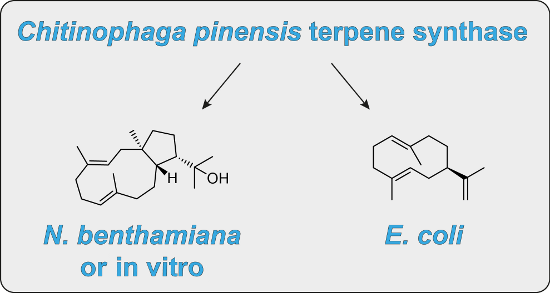
- based on the identification of this compound and its Cope rearrangement product β-elemene (2) formed by the thermal impact during GC–MS analysis [19] in E. coli headspace extracts under heterologous expression of the terpene synthase gene (Scheme 1). Here we present the diterpene synthase activity of
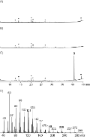
- -, sesqui- and diterpene activity by incubation with geranyl (GPP), farnesyl (FPP) and geranylgeranyl diphosphate (GGPP) as substrates, which yielded a single product 3 only from GGPP, but no products from FPP and GPP as demonstrated by GC–MS analysis (Figure 1). The mass spectrum of 3 showed a molecular
- in all treatments to suppress endogenous silencing of N. benthamiana upon agroinfiltration. No difference was found by GC–MS in EtOAc extracts of N. benthamiana leaves expressing an empty vector or HdS, while the chromatogram of an extract obtained from HdS-mit expressing leaves revealed an




An efficient Pd–NHC catalyst system in situ generated from Na2PdCl4 and PEG-functionalized imidazolium salts for Mizoroki–Heck reactions in water
Beilstein J. Org. Chem. 2017, 13, 1735–1744, doi:10.3762/bjoc.13.168

- standard. Mass spectrometry data (MALDI–TOF) of the three imidazolium salts L1–L3 were collected on a Bruker ultrafleXtreme mass spectrometer. Low-resolution mass analyses were performed on a Thermo Trace ISQ GC–MS instrument in EI mode (70 eV) or a Thermo Scientific ITQ 1100TM mass spectrometer in ESI


An effective Pd nanocatalyst in aqueous media: stilbene synthesis by Mizoroki–Heck coupling reaction under microwave irradiation
Beilstein J. Org. Chem. 2017, 13, 1717–1727, doi:10.3762/bjoc.13.166

- chromatograph with a flame ionization detector, and equipped with the following columns: HP-5 25 m × 0.20 mm × 0.25 μm column. 1H NMR and 13C NMR were conducted on a high resolution spectrometer Bruker Advance 400, in CDCl3 as solvent. Gas chromatographic/mass spectrometer analyses were carried out on a GC–MS
- stilbene products 3–15 were purified by silica gel column chromatography. The products were characterized by 1H NMR, 13C NMR, and GC–MS. All spectroscopic data were in agreement with those previously reported for the following compounds: (E)-1-(4-styrylphenyl)ethanone (3) [64], (E)-phenyl(4-styrylphenyl
- by silica gel column chromatography. The products were characterized by 1H NMR, 13C NMR, and GC–MS. All the spectroscopic data were in agreement with those previously reported for the following compounds: (E)-1,1'-(ethene-1,2-diylbis(4,1-phenylene))diethanone (17) [68] and (E)-1,2-bis(3,5


Photocatalyzed synthesis of isochromanones and isobenzofuranones under batch and flow conditions
Beilstein J. Org. Chem. 2017, 13, 1456–1462, doi:10.3762/bjoc.13.143
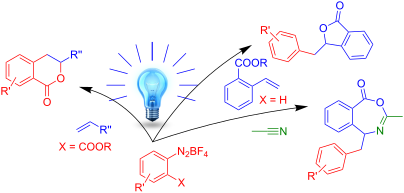
- carbonyl oxygen. Compound 9 immediately afforded isochromanone 4d (60%) upon exposure to water (Scheme 4). Careful control of the isolation procedures (see Supporting Information File 1) allowed us to isolate 9 and identify it through GC–MS and 1H NMR experiments (the compound, however, partially


Mechanochemical synthesis of graphene oxide-supported transition metal catalysts for the oxidation of isoeugenol to vanillin
Beilstein J. Org. Chem. 2017, 13, 1439–1445, doi:10.3762/bjoc.13.141

- nm × 0.5 μm and a flame ionization detector (FID). The results were finally confirmed by GC–MS. N2 isotherms of (a) RGO, (b) Fe/RGO, and (c) Co/RGO. SEM images of (a and b) RGO, (c) 1% Fe/RGO, and (d) 1% Co/RGO. TEM micrographs at different magnifications of (a and b) RGO, (c and d) 1% Fe/RGO, and (e


Use of costic acid, a natural extract from Dittrichia viscosa, for the control of Varroa destructor, a parasite of the European honey bee
Beilstein J. Org. Chem. 2017, 13, 952–959, doi:10.3762/bjoc.13.96

- -methylaromadendrin and 7-O-methylaromadendrin-3-acetate (Figure 4) by GC–MS analysis. To the best of our knowledge, these structures are reported for the first time as components of D. viscosa. The conditions of the GC–MS experiment were as follows [51]: The essential oil and extracts were analyzed by GC–MS on a
- Shimadzu GC-17 A gas chromatograph coupled with a Shimadzu GC–MS-QP 5050 mass selective detector. A Supelco SBP-5 fused silica capillary column of 30 m, 0.25 mm i.d. (0.25 μm film thickness) was used for the analysis. The carrier gas was helium (He) at a flow rate of 0.9 mL/min. The injector and the
- mass spectra using the NIST 64 and NIST 120 GC–MS libraries and the comparison of their retention times with those of reference. Screening tests. The experiment was conducted in a completely randomized design under laboratory conditions in five replications. In each replication 20, 60, or 100


Transition-metal-free one-pot synthesis of alkynyl selenides from terminal alkynes under aerobic and sustainable conditions
Beilstein J. Org. Chem. 2017, 13, 910–918, doi:10.3762/bjoc.13.92

- ). However, with 6-bromohex-1-ene the yield of compound 5d dropped to 41% (Table 3, entry 5) and 2-methyltetrahydro-2H-selenopyran was detected by GC–MS. This indicates a possible competitive intramolecular addition reaction between the selenium atom-centered radical and the alkenyl moiety. The reaction with
- -substituted product 5p was only detected in traces by GC–MS suggesting that this product cyclized in the reaction medium to afford indole 9 (Table 4, entry 9). On the other hand, when o-MeO-substituted phenylacetylene 6j was employed the corresponding selenyl-substituted product 5q was isolated in 51% yield
- ]. Therefore, we can explain the formation of indole 9 by oxidation of 5p, generated in situ as described above, to afford the iminium intermediate 12. Hydrolysis of the latter liberates the secondary amine 13 (Scheme 7). This intermediate was detected by GC–MS in traces. Finally, the presence of base in


Substitution of fluorine in M[C6F5BF3] with organolithium compounds: distinctions between O- and N-nucleophiles
Beilstein J. Org. Chem. 2017, 13, 703–713, doi:10.3762/bjoc.13.69

- polyfluoroaryltrifluoroborates by hydrogen in alcohol at elevated temperature and obtaining the corresponding polyfluoroarenes in high yields. The latter are more simple substances and available for analysis by NMR spectroscopy, GC–MS and HRMS methods [33]. Heating a mixture of 6-K, 7-K, 8-K and 9-K in MeOH leads to conversion
- ]. The structures of 18 and 19 are consistent with 19F NMR, GC–MS and HRMS data. For characterization of the products derived from 1-K and PhLi we performed the hydrodeboration of a mixture of 1-K, 10-K and 11-K by stirring it in 2-methoxyethanol under reflux. After evaporation of the alcohol and C6F5H
- , the known 2,3,5,6-tetrafluorobiphenyl (14) [35][36] and 2,3,4,5-tetrafluorobiphenyl (15) [35][36] were obtained (Scheme 6). Then a mixture of borates 10-K, 11-K, 12-K, and 13-K was converted to biphenyls 14, 15, and terphenyls 20, 21, respectively, and characterized by 19F NMR spectroscopy, GC–MS and


Ultrasound-promoted organocatalytic enamine–azide [3 + 2] cycloaddition reactions for the synthesis of ((arylselanyl)phenyl-1H-1,2,3-triazol-4-yl)ketones
Beilstein J. Org. Chem. 2017, 13, 694–702, doi:10.3762/bjoc.13.68
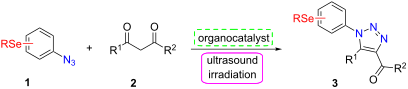
- spectra (13C NMR) were obtained at 100 MHz on Bruker DPX 400 spectrometer. Chemical shifts are reported in ppm, referenced to the solvent peak of CDCl3. Low-resolution mass spectra were obtained with a Shimadzu GC-MS-QP2010 mass spectrometer. High resolution mass spectra (HRMS) were recorded on a Bruker


Unpredictable cycloisomerization of 1,11-dien-6-ynes by a common cobalt catalyst
Beilstein J. Org. Chem. 2017, 13, 639–643, doi:10.3762/bjoc.13.62
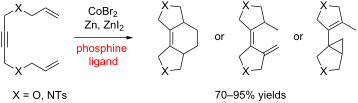
- protons. On the basis of 1H–1H and 1H–13C correlation NMR spectra as well as GC–MS analysis we had assigned the structures of these products as the cyclopropane derivatives with internal 4 and exocyclic 5 double bonds (Scheme 2). Our spectral data correlate well with that of similar compounds, which were