Search for "chirality" in Full Text gives 313 result(s) in Beilstein Journal of Organic Chemistry. Showing first 200.
Beilstein J. Org. Chem. 2020, 16, 2363–2441, doi:10.3762/bjoc.16.197
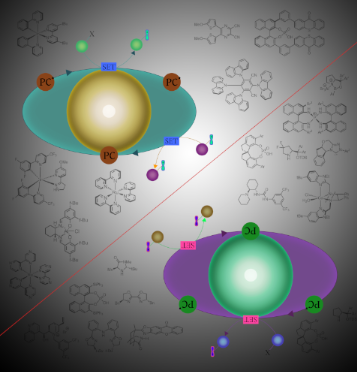
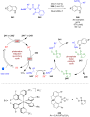
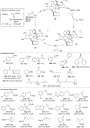
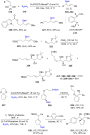
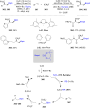
Graphical Abstract
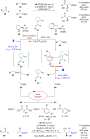
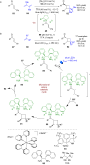
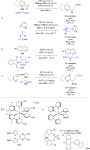
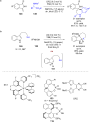
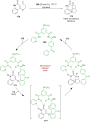
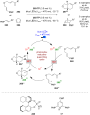
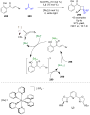
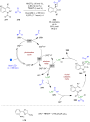
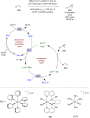
Scheme 1: Amine/photoredox-catalysed α-alkylation of aldehydes with alkyl bromides bearing electron-withdrawi...
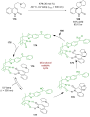
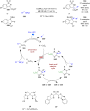
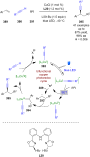
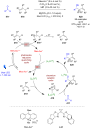
Scheme 2: Amine/HAT/photoredox-catalysed α-functionalisation of aldehydes using alkenes.
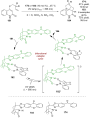
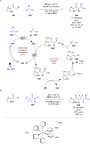
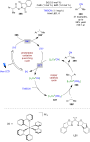
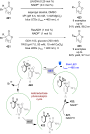
Scheme 3: Amine/cobalt/photoredox-catalysed α-functionalisation of ketones and THIQs.
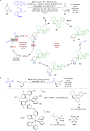
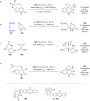
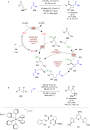
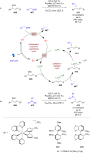
Scheme 4: Amine/photoredox-catalysed α-functionalisation of aldehydes or ketones with imines. (a) Using keton...
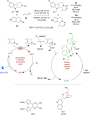
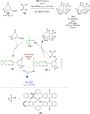
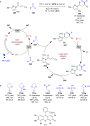
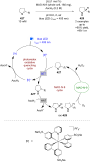
Scheme 5: Bifunctional amine/photoredox-catalysed enantioselective α-functionalisation of aldehydes.
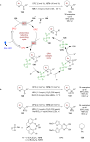
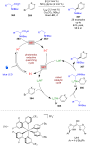
Scheme 6: Bifunctional amine/photoredox-catalysed α-functionalisation of aldehydes using amine catalysts via ...
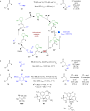
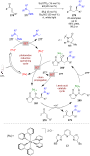
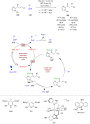
Scheme 7: Amine/photoredox-catalysed RCA of iminium ion intermediates. (a) Synthesis of quaternary stereocent...
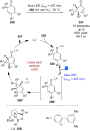
Scheme 8: Bifunctional amine/photoredox-catalysed RCA of enones in a radical chain reaction initiated by an i...
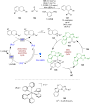
Scheme 9: Bifunctional amine/photoredox-catalysed RCA reactions of iminium ions with different radical precur...
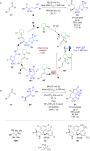
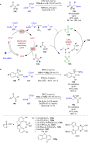
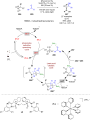
Scheme 10: Bifunctional amine/photoredox-catalysed radical cascade reactions between enones and alkenes with a...
Scheme 11: Amine/photocatalysed photocycloadditions of iminium ion intermediates. (a) External photocatalyst u...
Scheme 12: Amine/photoredox-catalysed addition of acrolein (94) to iminium ions.
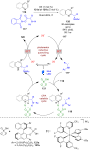
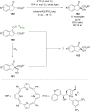
Scheme 13: Dual NHC/photoredox-catalysed acylation of THIQs.
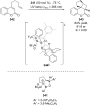
Scheme 14: NHC/photocatalysed spirocyclisation via photoisomerisation of an extended Breslow intermediate.
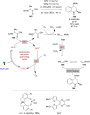
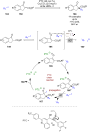
Scheme 15: CPA/photoredox-catalysed aza-pinacol cyclisation.
Scheme 16: CPA/photoredox-catalysed Minisci-type reaction between azaarenes and α-amino radicals.
Scheme 17: CPA/photoredox-catalysed radical additions to azaarenes. (a) α-Amino radical or ketyl radical addit...
Scheme 18: CPA/photoredox-catalysed reduction of azaarene-derived substrates. (a) Reduction of ketones. (b) Ex...
Scheme 19: CPA/photoredox-catalysed radical coupling reactions of α-amino radicals with α-carbonyl radicals. (...
Scheme 20: CPA/photoredox-catalysed Povarov reaction.
Scheme 21: CPA/photoredox-catalysed reactions with imines. (a) Decarboxylative imine generation followed by Po...
Scheme 22: Bifunctional CPA/photocatalysed [2 + 2] photocycloadditions.
Scheme 23: PTC/photocatalysed oxygenation of 1-indanone-derived β-keto esters.
Scheme 24: PTC/photoredox-catalysed perfluoroalkylation of 1-indanone-derived β-keto esters via a radical chai...
Scheme 25: Bifunctional hydrogen bonding/photocatalysed intramolecular [2 + 2] photocycloadditions of quinolon...
Scheme 26: Bifunctional hydrogen bonding/photocatalysed intramolecular RCA cyclisation of a quinolone.
Scheme 27: Bifunctional hydrogen bonding/photocatalysed intramolecular [2 + 2] photocycloadditions of quinolon...
Scheme 28: Bifunctional hydrogen bonding/photocatalysed [2 + 2] photocycloaddition reactions. (a) First use of...
Scheme 29: Bifunctional hydrogen bonding/photocatalysed deracemisation of allenes.
Scheme 30: Bifunctional hydrogen bonding/photocatalysed deracemisation reactions. (a) Deracemisation of sulfox...
Scheme 31: Bifunctional hydrogen bonding/photocatalysed intramolecular [2 + 2] photocycloaddition of coumarins....
Scheme 32: Bifunctional hydrogen bonding/photocatalysed [2 + 2] photocycloadditions of quinolones. (a) Intramo...
Scheme 33: Hydrogen bonding/photocatalysed formal arylation of benzofuranones.
Scheme 34: Hydrogen bonding/photoredox-catalysed dehalogenative protonation of α,α-chlorofluoro ketones.
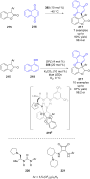
Scheme 35: Hydrogen bonding/photoredox-catalysed reductions. (a) Reduction of 1,2-diketones. (b) Reduction of ...
Scheme 36: Hydrogen bonding/HAT/photocatalysed deracemisation of cyclic ureas.
Scheme 37: Hydrogen bonding/HAT/photoredox-catalysed synthesis of cyclic sulfonamides.
Scheme 38: Hydrogen bonding/photoredox-catalysed reaction between imines and indoles.
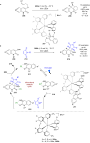
Scheme 39: Chiral cation/photoredox-catalysed radical coupling of two α-amino radicals.
Scheme 40: Chiral phosphate/photoredox-catalysed hydroetherfication of alkenols.
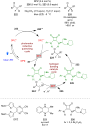
Scheme 41: Chiral phosphate/photoredox-catalysed synthesis of pyrroloindolines.
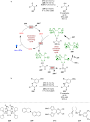
Scheme 42: Chiral anion/photoredox-catalysed radical cation Diels–Alder reaction.
Scheme 43: Lewis acid/photoredox-catalysed cycloadditions of carbonyls. (a) Formal [2 + 2] cycloaddition of en...
Scheme 44: Lewis acid/photoredox-catalysed RCA reaction using a scandium Lewis acid between α-amino radicals a...
Scheme 45: Lewis acid/photoredox-catalysed RCA reaction using a copper Lewis acid between α-amino radicals and...
Scheme 46: Lewis acid/photoredox-catalysed synthesis of 1,2-amino alcohols from aldehydes and nitrones using a...
Scheme 47: Lewis acid/photocatalysed [2 + 2] photocycloadditions of enones and alkenes.
Scheme 48: Meggers’s chiral-at-metal catalysts.
Scheme 49: Lewis acid/photoredox-catalysed α-functionalisation of ketones with alkyl bromides bearing electron...
Scheme 50: Bifunctional Lewis acid/photoredox-catalysed radical coupling reaction using α-chloroketones and α-...
Scheme 51: Lewis acid/photocatalysed RCA of enones. (a) Using aldehydes as acyl radical precursors. (b) Other ...
Scheme 52: Bifunctional Lewis acid/photocatalysis for a photocycloaddition of enones.
Scheme 53: Lewis acid/photoredox-catalysed RCA reactions of enones using DHPs as radical precursors.
Scheme 54: Lewis acid/photoredox-catalysed functionalisation of β-ketoesters. (a) Hydroxylation reaction catal...
Scheme 55: Bifunctional copper-photocatalysed alkylation of imines.
Scheme 56: Copper/photocatalysed alkylation of imines. (a) Bifunctional copper catalysis using α-silyl amines....
Scheme 57: Bifunctional Lewis acid/photocatalysed intramolecular [2 + 2] photocycloaddition.
Scheme 58: Bifunctional Lewis acid/photocatalysed [2 + 2] photocycloadditions (a) Intramolecular cycloaddition...
Scheme 59: Bifunctional Lewis acid/photocatalysed rearrangement of 2,4-dieneones.
Scheme 60: Lewis acid/photocatalysed [2 + 2] cycloadditions of cinnamate esters and styrenes.
Scheme 61: Nickel/photoredox-catalysed arylation of α-amino acids using aryl bromides.
Scheme 62: Nickel/photoredox catalysis. (a) Desymmetrisation of cyclic meso-anhydrides using benzyl trifluorob...
Scheme 63: Nickel/photoredox catalysis for the acyl-carbamoylation of alkenes with aldehydes using TBADT as a ...
Scheme 64: Bifunctional copper/photoredox-catalysed C–N coupling between α-chloro amides and carbazoles or ind...
Scheme 65: Bifunctional copper/photoredox-catalysed difunctionalisation of alkenes with alkynes and alkyl or a...
Scheme 66: Copper/photoredox-catalysed decarboxylative cyanation of benzyl phthalimide esters.
Scheme 67: Copper/photoredox-catalysed cyanation reactions using TMSCN. (a) Propargylic cyanation (b) Ring ope...
Scheme 68: Palladium/photoredox-catalysed allylic alkylation reactions. (a) Using alkyl DHPs as radical precur...
Scheme 69: Manganese/photoredox-catalysed epoxidation of terminal alkenes.
Scheme 70: Chromium/photoredox-catalysed allylation of aldehydes.
Scheme 71: Enzyme/photoredox-catalysed dehalogenation of halolactones.
Scheme 72: Enzyme/photoredox-catalysed dehalogenative cyclisation.
Scheme 73: Enzyme/photoredox-catalysed reduction of cyclic imines.
Scheme 74: Enzyme/photocatalysed enantioselective reduction of electron-deficient alkenes as mixtures of (E)/(Z...
Scheme 75: Enzyme/photoredox catalysis. (a) Deacetoxylation of cyclic ketones. (b) Reduction of heteroaromatic...
Scheme 76: Enzyme/photoredox-catalysed synthesis of indole-3-ones from 2-arylindoles.
Scheme 77: Enzyme/HAT/photoredox catalysis for the DKR of primary amines.
Scheme 78: Bifunctional enzyme/photoredox-catalysed benzylic C–H hydroxylation of trifluoromethylated arenes.
Beilstein J. Org. Chem. 2020, 16, 2338–2345, doi:10.3762/bjoc.16.195
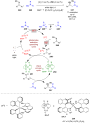
Graphical Abstract
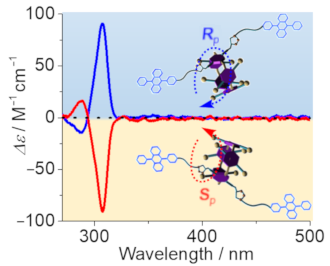
Scheme 1: Formation of hierarchically assembled lithium-bridged titanium(IV) helicates as well as the ligands...
Scheme 2: Previously reported on/off switch for “remote-controlled” [23-31] stereoselectivity of a Diels–Alder react...
Scheme 3: Elucidating the pathway of the stereoinduction of the Diels–Alder reaction. Ten equivalents of chir...
Scheme 4: Synthesis of the ligands with secondary amine-containing substituents.
Beilstein J. Org. Chem. 2020, 16, 2314–2321, doi:10.3762/bjoc.16.192
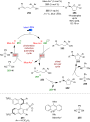
Graphical Abstract
Figure 1: Structures of electron-rich bis-macrocyclic host 1, and electron-poor guests bis(ammonium) 2, and b...
Figure 2: (a) Hunter’s 77 backbone-atom trefoil knot–metal complex [9]. (b) The world’s smallest knot: Leigh’s 7...
Figure 3: Schematic representation of the second-generation TLC approach to a 73 backbone atom trefoil knot.
Scheme 1: Two routes to azidobromide 6.
Scheme 2: Initial route to core diester 13. aLigand = tris(2-benzimidazolylmethyl)amine.
Scheme 3: Better yielding route to core diester 13. aLigand = tris(2-benzimidazolylmethyl)amine.
Scheme 4: Saponification of 13 and bis-macrocyclization to form host 1.
Scheme 5: Synthesis of 23 backbone-atom bis(ammonium) guest 2.
Scheme 6: Synthesis of 25 backbone-atom bis(pyridinium) guest 3.
Beilstein J. Org. Chem. 2020, 16, 2212–2259, doi:10.3762/bjoc.16.186
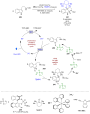
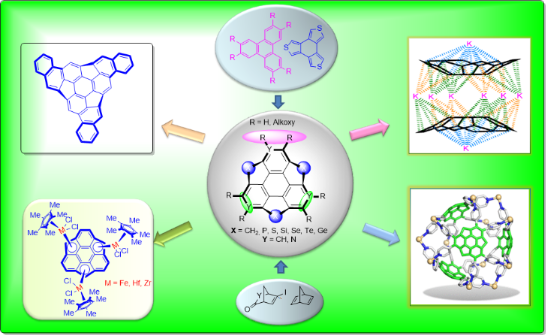
Graphical Abstract
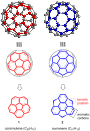
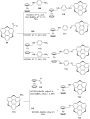
Figure 1: Representation of corannulene (1) and sumanene (2), the subunits of fullerene (C60).
Scheme 1: Mehta’s unsuccessful effort for the synthesis of sumanene scaffold 2.
Scheme 2: First synthesis of sumanene 2 by Sakurai et al. from norbornadiene 10.
Scheme 3: Synthesis of trimethylsumanene 28 from easily accessible norbornadiene (10).
Scheme 4: Generation of anions 29–31 and the preparation of tris(trimethylsilyl)sumanene 32.
Scheme 5: Synthesis of tri- and hexa-substituted sumanene derivatives.
Scheme 6: Synthesis of bowl-shaped π-extended sumanene derivatives 37a–f.
Scheme 7: Synthesis of monooxasumanene 38, trioxosumanene 40 along with imination of them.
Scheme 8: Synthesis of trimethylsumanenetrione 46 and exo-functionalized products 45a,b.
Scheme 9: Synthesis of bisumanenylidene 47 and sumanene dimer 48 from 2.
Scheme 10: The mono-substitution of 2 to generate diverse mono-sumanene derivatives 49a–d.
Scheme 11: Synthesis of sumanene building block 53 useful for further extension.
Scheme 12: Synthesis of hexafluorosumanene derivative 55 by Sakurai and co-workers.
Scheme 13: Preparation of sumanene-based carbene 60 and its reaction with cyclohexane.
Scheme 14: Barton–Kellogg reaction for the synthesis of sterically hindered alkenes.
Scheme 15: Synthesis of hydroxysumanene 68 by employing Baeyer–Villiger oxidation.
Scheme 16: Synthesis of sumanene derivatives having functionality at an internal carbon.
Scheme 17: Mechanism for nucleophilic substitution reaction at the internal carbon.
Scheme 18: Synthesis of diverse monosubstituted sumanene derivatives.
Scheme 19: Synthesis of di- and trisubstituted sumanene derivatives from sumanene (2).
Scheme 20: Preparation of monochlorosumanene 88 and hydrogenation of sumanene (2).
Scheme 21: The dimer 90 and bissumanenyl 92 achieved from halosumannes.
Scheme 22: Pyrenylsumanene 93 involving the Suzuki-coupling as a key transformation.
Scheme 23: Synthesis of various hexaarylsumanene derivatives using the Suzuki-coupling reaction.
Scheme 24: Synthesis of hexasubstituted sumanene derivatives 96 and 97.
Scheme 25: Synthesis of thioalkylsumanenes via an aromatic nucleophilic substitution reaction.
Scheme 26: Synthesis of tris(ethoxycarbonylethenyl)sumanene derivative 108.
Scheme 27: Synthesis of ferrocenyl-based sumanene derivatives.
Scheme 28: Synthesis of sumanenylferrocene architectures 118 and 119 via Negishi coupling.
Scheme 29: Diosmylation and the synthesis of phenylboronate ester 121 of sumanene.
Scheme 30: Synthesis of the iron-complex of sumanene.
Scheme 31: Synthesis of tri- and mononuclear sumanenyl zirconocene complexes.
Scheme 32: Synthesis of [CpRu(η6-sumanene)]PF6.
Scheme 33: Preparation of sumanene-based porous coordination networks 127 (spherical tetramer units) and 128 (...
Scheme 34: Synthesis of sumanenylhafnocene complexes 129 and 130.
Scheme 35: Synthesis of 134 and 135 along with PdII coordination complex 136.
Scheme 36: Synthesis of alkali metals sumanene complex K7(C21H102−)2(C21H93−)·8THF (137) containing di- and tr...
Scheme 37: The encapsulation of a Cs+ ion between two sumanenyl anions.
Scheme 38: Synthesis of monothiasumanene 140 and dithiasumanene 141 from 139.
Scheme 39: Synthesis of trithiasumanene 151 by Otsubo and his co-workers.
Scheme 40: Synthesis of trithiasumanene derivatives 155 and 156.
Scheme 41: Synthetic route towards hexathiolated trithiasumanenes 158.
Scheme 42: Synthesis of triselenasumanene 160 by Shao and teammates.
Scheme 43: Synthesis of tritellurasumanene derivatives from triphenylene skeletons.
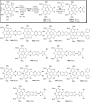
Scheme 44: Synthesis of pyrazine-fused sumanene architectures through condensation reaction.
Scheme 45: Treatment of the trichalcogenasumanenes with diverse oxidative reagents.
Scheme 46: Ring-opening reaction with H2O2 and oxone of heterasumanenes 178 and 179.
Scheme 47: Synthesis of polycyclic compounds from sumanene derivatives.
Scheme 48: Synthesis of diimide-based heterocycles reported by Shao’s and co-workers.
Scheme 49: Synthesis of pristine trichalcogenasumanenes, 151, 205, and 206.
Scheme 50: Synthesis of trichalcogenasumanenes via hexaiodotriphenylene precursor 208.
Scheme 51: Synthesis of trisilasumanenes 214 and 215.
Scheme 52: Synthesis of trisilasumanene derivatives 218 and 219.
Scheme 53: Synthesis of novel trigermasumanene derivative 223.
Scheme 54: An attempt towards the synthesis of tristannasumanene derivative 228.
Scheme 55: Synthesis of triphosphasumanene trisulfide 232 from commercially available 229.
Scheme 56: The doping of sumanene derivatives with chalcogens (S, Se, Te) and phosphorus.
Scheme 57: Synthesis of heterasumanene containing three different heteroatoms.
Scheme 58: Synthesis of trichalcogenasumanene derivatives 240 and 179.
Scheme 59: Preparation of trichalcogenasumanenes 245 and 248.
Scheme 60: Design and synthesis of trichalcogenasumanene derivatives 252 and 178.
Scheme 61: Synthesis of spirosumanenes 264–269 and non-spiroheterasumanenes 258–263.
Scheme 62: Synthesis of sumanene-type hetero polycyclic compounds.
Scheme 63: Synthesis of triazasumanenes 288 and its sulfone congener 287.
Scheme 64: Synthesis of C3-symmetric chiral triaryltriazasumanenes via cross-coupling reaction.
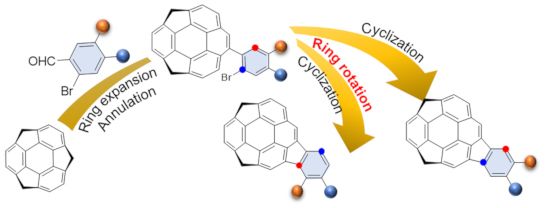
Scheme 65: Synthesis of mononaphthosumanene 293 using Suzuki coupling as a key step.
Scheme 66: Synthesis of di- and trinaphthosumanene derivatives 302–304.
Scheme 67: Synthesis of hemifullerene skeletons by Hirao’s group.
Scheme 68: Design and construction of C70 fragment from a C60 sumanene fragment.
Beilstein J. Org. Chem. 2020, 16, 2032–2045, doi:10.3762/bjoc.16.170
Graphical Abstract
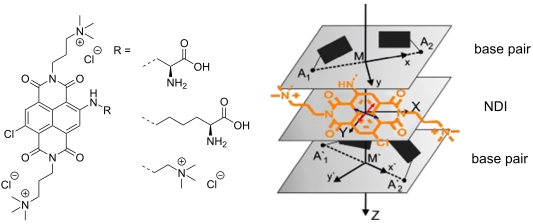
Figure 1: Structures of investigated compounds stressing steric differences in linker length attached to the ...
Scheme 1: Synthesis of water-soluble naphthalene diimides 3a,b, and 5.
Figure 2: UV–vis absorption (solid line) and fluorescence spectra (dashed line) of NDI 3a,b, and 5 (c = 4.5 ×...
Figure 3: Calculations for Cl-NDI-NMe model compound (at the B3LYP/6-31+G** level of theory) in water (PCM). ...
Figure 4: (a) Melting curve of poly(dA-dT)2 alone and after the addition of NDI 3a,b, and 5 (r = 0.3 ([NDI]/[...
Figure 5: Changes in fluorescence intensity (spectra are normalized) of (a) 3a (c = 1.0 × 10⁻⁶ M), (b) 3b (c ...
Figure 6: Calorimetric titration of a poly(dG-dC)2 solution in sodium cacodylate buffer (pH 5.0) at 298 K wit...
Figure 7: CD titration of poly(dG-dC)2 (c = 2.0 × 10⁻⁵ M) with (a) 3a, (b) 3b, and (c) 5 with increasing mola...
Figure 8: Schematic representation of the alignment of the intercalating 3a (left) and 3b (right) between the...
Beilstein J. Org. Chem. 2020, 16, 1296–1304, doi:10.3762/bjoc.16.110
Graphical Abstract
Figure 1: Phthalimide derivatives 1–3 and the corresponding azomethine ylides 1AMY-3AMY.
Scheme 1: Irradiation of 1 in the presence of acrylonitrile (AN).
Figure 2: Dependence of the chemical shift of the H-atom at the cyclohexane 2 position in compound 2 on the β...
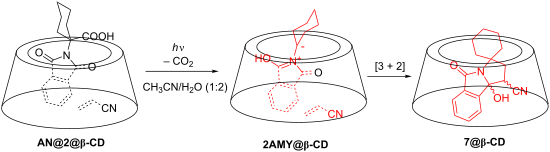
Scheme 2: Complexation of 2 with β-CD, and formation of a ternary complex AN@2@β-CD.
Scheme 3: Photochemistry of 2 in the presence of AN, with or without β-CD.
Scheme 4: Photochemistry of 3 in the presence of AN, with or without β-CD.
Beilstein J. Org. Chem. 2020, 16, 1100–1110, doi:10.3762/bjoc.16.97
Graphical Abstract
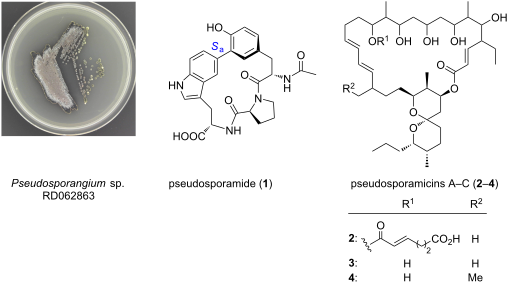
Figure 1: Structures of pseudosporamide (1) and pseudosporamicins A–C (2–4).
Figure 2: COSY, key HMBC and ROESY correlations of pseudosporamide (1).
Figure 3: 1H NMR ΔδS−R values for PGME amides 5a and 5b obtained from compound 1.
Figure 4: The opposite axial chirality around the biaryl C-6–C-7'' bond influenced by the C-2 configuration i...
Figure 5: The experimental and calculated ECD spectra in MeCN.
Figure 6: COSY, key HMBC and NOESY correlations of compound 2.
Figure 7: NOESY correlations for the spiroacetal moiety of compound 2.
Figure 8: Selected examples of oligomycin-class metabolites from actinomycetes.
Beilstein J. Org. Chem. 2020, 16, 917–955, doi:10.3762/bjoc.16.83
Graphical Abstract
Figure 1: Chemical structures of the porphyrinoids and their absorption spectra: in bold are highlighted the ...
Figure 2: Photophysical and photochemical processes (Por = porphyrin). Adapted from [12,18].
Figure 3: Main dual photocatalysts and their oxidative/reductive excited state potentials, including porphyri...
Scheme 1: Photoredox alkylation of aldehydes with diazo acetates using porphyrins and a Ru complex. aUsing a ...
Scheme 2: Proposed mechanism for the alkylation of aldehydes with diazo acetates in the presence of TPP.
Scheme 3: Arylation of heteroarenes with aryldiazonium salts using TPFPP as photocatalyst, and corresponding ...
Scheme 4: A) Scope with different aryldiazonium salts and enol acetates. B) Photocatalytic cycles and compari...
Scheme 5: Photoarylation of isopropenyl acetate A) Comparison between batch and continuous-flow approaches an...
Scheme 6: Dehalogenation induced by red light using thiaporphyrin (STPP).
Scheme 7: Applications of NiTPP as both photoreductant and photooxidant.
Scheme 8: Proposed mechanism for obtaining tetrahydroquinolines by reductive quenching.
Scheme 9: Selenylation and thiolation of anilines.
Scheme 10: NiTPP as photoredox catalyst in oxidative and reductive quenching, in comparison with other photoca...
Scheme 11: C–O bond cleavage of 1-phenylethanol using a cobalt porphyrin (CoTMPP) under visible light.
Scheme 12: Hydration of terminal alkynes by RhIII(TSPP) under visible light irradiation.
Scheme 13: Regioselective photocatalytic hydro-defluorination of perfluoroarenes by RhIII(TSPP).
Scheme 14: Formation of 2-methyl-2,3-dihydrobenzofuran by intramolecular hydro-functionalization of allylpheno...
Scheme 15: Photocatalytic oxidative hydroxylation of arylboronic acids using UNLPF-12 as heterogeneous photoca...
Scheme 16: Photocatalytic oxidative hydroxylation of arylboronic acids using MOF-525 as heterogeneous photocat...
Scheme 17: Preparation of the heterogeneous photocatalyst CNH.
Scheme 18: Photoinduced sulfonation of alkenes with sulfinic acid using CNH as photocatalyst.
Scheme 19: Sulfonic acid scope of the sulfonation reactions.
Scheme 20: Regioselective sulfonation reaction of arimistane.
Scheme 21: Synthesis of quinazolin-4-(3H)-ones.
Scheme 22: Selective photooxidation of aromatic benzyl alcohols to benzaldehydes using Pt/PCN-224(Zn).
Scheme 23: Photooxidation of benzaldehydes to benzoic acids using Pt or Pd porphyrins.
Scheme 24: Photocatalytic reduction of various nitroaromatics using a Ni-MOF.
Scheme 25: Photoinduced cycloadditions of CO2 with epoxides by MOF1.
Figure 4: Electronic configurations of the species of oxygen. Adapted from [66].
Scheme 26: TPP-photocatalyzed generation of 1O2 and its application in organic synthesis. Adapted from [67-69].
Scheme 27: Pericyclic reactions involving singlet oxygen and their mechanisms. Adapted from [67].
Scheme 28: First scaled up ascaridole preparation from α-terpinene.
Scheme 29: Antimalarial drug synthesis using an endoperoxidation approach.
Scheme 30: Photooxygenation of colchicine.
Scheme 31: Synthesis of (−)-pinocarvone from abundant (+)-α-pinene.
Scheme 32: Seeberger’s semi-synthesis of artemisinin.
Scheme 33: Synthesis of artemisinin using TPP and supercritical CO2.
Scheme 34: Synthesis of artemisinin using chlorophyll a.
Scheme 35: Quercitol stereoisomer preparation.
Scheme 36: Photocatalyzed preparation of naphthoquinones.
Scheme 37: Continuous endoperoxidation of conjugated dienes and subsequent rearrangements leading to oxidized ...
Scheme 38: The Opatz group total synthesis of (–)-oxycodone.
Scheme 39: Biomimetic syntheses of rhodonoids A, B, E, and F.
Scheme 40: α-Photooxygenation of chiral aldehydes.
Scheme 41: Asymmetric photooxidation of indanone β-keto esters by singlet oxygen using PTC as a chiral inducer...
Scheme 42: Asymmetric photooxidation of both β-keto esters and β-keto amides by singlet oxygen using PTC-2 as ...
Scheme 43: Bifunctional photo-organocatalyst used for the asymmetric oxidation of β-keto esters and β-keto ami...
Scheme 44: Mechanism of singlet oxygen oxidation of sulfides to sulfoxides.
Scheme 45: Controlled oxidation of sulfides to sulfoxides using protonated porphyrins as photocatalysts. aIsol...
Scheme 46: Photochemical oxidation of sulfides to sulfoxides using PdTPFPP as photocatalyst.
Scheme 47: Controlled oxidation of sulfides to sulfoxides using SnPor@PAF as a photosensitizer.
Scheme 48: Syntheses of 2D-PdPor-COF and 3D-Pd-COF.
Scheme 49: Photocatalytic oxidation of A) thioanisole to methyl phenyl sulfoxide and B) various aryl sulfides,...
Scheme 50: General mechanism for oxidation of amines to imines.
Scheme 51: Oxidation of secondary amines to imines.
Scheme 52: Oxidation of secondary amines using Pd-TPFPP as photocatalyst.
Scheme 53: Oxidative amine coupling using UNLPF-12 as heterogeneous photocatalyst.
Scheme 54: Synthesis of Por-COF-1 and Por-COF-2.
Scheme 55: Photocatalytic oxidation of amines to imines by Por-COF-2.
Scheme 56: Photocyanation of primary amines.
Scheme 57: Synthesis of ᴅ,ʟ-tert-leucine hydrochloride.
Scheme 58: Photocyanation of catharanthine and 16-O-acetylvindoline using TPP.
Scheme 59: Photochemical α-functionalization of N-aryltetrahydroisoquinolines using Pd-TPFPP as photocatalyst.
Scheme 60: Ugi-type reaction with 1,2,3,4-tetrahydroisoquinoline using molecular oxygen and TPP.
Scheme 61: Ugi-type reaction with dibenzylamines using molecular oxygen and TPP.
Scheme 62: Mannich-type reaction of tertiary amines using PdTPFPP as photocatalyst.
Scheme 63: Oxidative Mannich reaction using UNLPF-12 as heterogeneous photocatalyst.
Scheme 64: Transformation of amines to α-cyanoepoxides and the proposed mechanism.
Beilstein J. Org. Chem. 2020, 16, 895–903, doi:10.3762/bjoc.16.81
Graphical Abstract
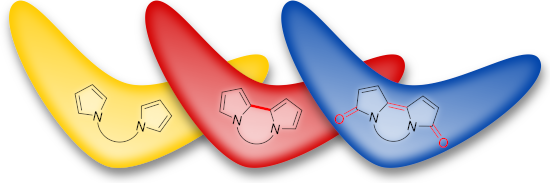
Scheme 1: The previously reported family of the boomerang bipyrroles obtained by Pd-induced double C–H bond a...
Scheme 2: Synthesis and structures of α-free and α-oxygenated bipyrrole boomerangs. Reagents and conditions: ...
Figure 1: DFT-Optimized structures (B3LYP/6-31G(d,p)) of cNDA2O and cNMI3H.
Figure 2: Absorption and emission spectra of cNMI2H (top) and cNMI3H (bottom) measured in toluene, dichlorome...
Beilstein J. Org. Chem. 2020, 16, 858–870, doi:10.3762/bjoc.16.77
Graphical Abstract
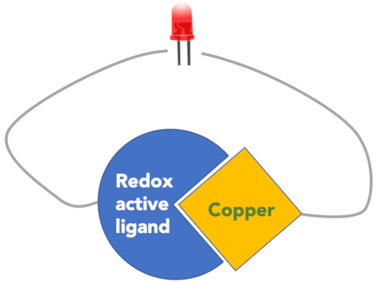
Scheme 1: Copper complexes with amidophenolate type benzoxazole ligands for alcohol oxidations.
Scheme 2: Copper-catalyzed aerobic oxidation of alcohols and representative substrate scope.
Scheme 3: Introduction of H-bonding network in the ligand coordination sphere.
Scheme 4: Well-defined isatin copper complexes.
Scheme 5: Catalyst control in the biomimetic phenol ortho-oxidation.
Scheme 6: Structural diversity accessible by direct functionalization.
Scheme 7: Copper-catalyzed trifluoromethylation of heteroaromatics with redox-active iminosemiquinone ligands....
Scheme 8: Reversal of helical chirality upon redox stimuli and enantioselective Michael addition with a redox...
Scheme 9: Interaction of guanidine-copper catalyst with oxygen and representative coupling products. a4 mol %...
Scheme 10: Access to 1,2-oxy-aminoarenes by copper-catalyzed phenol–amine coupling.
Scheme 11: Copper-catalyzed aziridination through molecular spin catalysis with redox-active iminosemiquinone ...
Scheme 12: Nitrogen-group and carbon-group transfer in copper-catalyzed aziridination and cyclopropanation thr...
Beilstein J. Org. Chem. 2020, 16, 691–737, doi:10.3762/bjoc.16.67
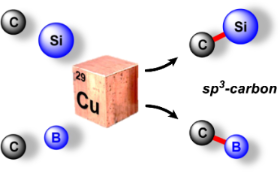
Graphical Abstract
Scheme 1: Pharmaceuticals possessing a silicon or boron atom.
Scheme 2: The first Cu-catalyzed C(sp3)–Si bond formation.
Scheme 3: Conversion of benzylic phosphate 6 to the corresponding silane.
Scheme 4: Conversion of alkyl triflates to alkylsilanes.
Scheme 5: Conversion of secondary alkyl triflates to alkylsilanes.
Scheme 6: Conversion of alkyl iodides to alkylsilanes.
Scheme 7: Trapping of intermediate radical through cascade reaction.
Scheme 8: Radical pathway for conversion of alkyl iodides to alkylsilanes.
Scheme 9: Conversion of alkyl ester of N-hydroxyphthalimide to alkylsilanes.
Scheme 10: Conversion of gem-dibromides to bis-silylalkanes.
Scheme 11: Conversion of imines to α-silylated amines (A) and the reaction pathway (B).
Scheme 12: Conversion of N-tosylimines to α-silylated amines.
Scheme 13: Screening of diamine ligands.
Scheme 14: Conversion of N-tert-butylsulfonylimines to α-silylated amines.
Scheme 15: Conversion of aldimines to nonracemic α-silylated amines.
Scheme 16: Conversion of N-tosylimines to α-silylated amines.
Scheme 17: Reaction pathway [A] and conversion of aldehydes to α-silylated alcohols [B].
Scheme 18: Conversion of aldehydes to benzhydryl silyl ethers.
Scheme 19: Conversion of ketones to 1,2-diols (A) and conversion of imines to 1,2-amino alcohols (B).
Scheme 20: Ligand screening (A) and conversion of aldehydes to α-silylated alcohols (B).
Scheme 21: Conversion of aldehydes to α-silylated alcohols.
Scheme 22: 1,4-Additions to α,β-unsaturated ketones.
Scheme 23: 1,4-Additions to unsaturated ketones to give β-silylated derivatives.
Scheme 24: Additions onto α,β-unsaturated lactones to give β-silylated lactones.
Scheme 25: Conversion of α,β-unsaturated to β-silylated lactams.
Scheme 26: Conversion of N-arylacrylamides to silylated oxindoles.
Scheme 27: Conversion of α,β-unsaturated carbonyl compounds to silylated tert-butylperoxides.
Scheme 28: Catalytic cycle for Cu(I) catalyzed α,β-unsaturated compounds.
Scheme 29: Conversion of p-quinone methides to benzylic silanes.
Scheme 30: Conversion of α,β-unsaturated ketimines to regio- and stereocontrolled allylic silanes.
Scheme 31: Conversion of α,β-unsaturated ketimines to enantioenriched allylic silanes.
Scheme 32: Regioselective conversion of dienedioates to allylic silanes.
Scheme 33: Conversion of alkenyl-substituted azaarenes to β-silylated adducts.
Scheme 34: Conversion of conjugated benzoxazoles to enantioenriched β-silylated adducts.
Scheme 35: Conversion of α,β-unsaturated carbonyl indoles to α-silylated N-alkylated indoles.
Scheme 36: Conversion of β-amidoacrylates to α-aminosilanes.
Scheme 37: Conversion of α,β-unsaturated ketones to enantioenriched β-silylated ketones, nitriles, and nitro d...
Scheme 38: Regio-divergent silacarboxylation of allenes.
Scheme 39: Silylation of diazocarbonyl compounds, (A) asymmetric and (B) racemic.
Scheme 40: Enantioselective hydrosilylation of alkenes.
Scheme 41: Conversion of 3-acylindoles to indolino-silanes.
Scheme 42: Proposed mechanism for the silylation of 3-acylindoles.
Scheme 43: Silyation of N-chlorosulfonamides.
Scheme 44: Conversion of acyl silanes to α-silyl alcohols.
Scheme 45: Conversion of N-tosylaziridines to β-silylated N-tosylamines.
Scheme 46: Conversion of N-tosylaziridines to silylated N-tosylamines.
Scheme 47: Conversion of 3,3-disubstituted cyclopropenes to silylated cyclopropanes.
Scheme 48: Conversion of conjugated enynes to 1,3-bis(silyl)propenes.
Scheme 49: Proposed sequence for the Cu-catalyzed borylation of substituted alkenes.
Scheme 50: Cu-catalyzed synthesis of nonracemic allylic boronates.
Scheme 51: Cu–NHC catalyzed synthesis of α-substituted allylboronates.
Scheme 52: Synthesis of α-chiral (γ-alkoxyallyl)boronates.
Scheme 53: Cu-mediated formation of nonracemic cis- or trans- 2-substituted cyclopropylboronates.
Scheme 54: Cu-catalyzed synthesis of γ,γ-gem-difluoroallylboronates.
Scheme 55: Cu-catalyzed hydrofunctionalization of internal alkenes and vinylarenes.
Scheme 56: Cu-catalyzed Markovnikov and anti-Markovnikov borylation of alkenes.
Scheme 57: Cu-catalyzed borylation/ortho-cyanation/Cope rearrangement.
Scheme 58: Borylfluoromethylation of alkenes.
Scheme 59: Cu-catalyzed synthesis of tertiary nonracemic alcohols.
Scheme 60: Synthesis of densely functionalized and synthetically versatile 1,2- or 4,3-borocyanated 1,3-butadi...
Scheme 61: Cu-catalyzed trifunctionalization of allenes.
Scheme 62: Cu-catalyzed selective arylborylation of arenes.
Scheme 63: Asymmetric borylative coupling between styrenes and imines.
Scheme 64: Regio-divergent aminoboration of unactivated terminal alkenes.
Scheme 65: Cu-catalyzed 1,4-borylation of α,β-unsaturated ketones.
Scheme 66: Cu-catalyzed protodeboronation of α,β-unsaturated ketones.
Scheme 67: Cu-catalyzed β-borylation of α,β-unsaturated imines.
Scheme 68: Cu-catalyzed synthesis of β-trifluoroborato carbonyl compounds.
Scheme 69: Asymmetric 1,4-borylation of α,β-unsaturated carbonyl compounds.
Scheme 70: Cu-catalyzed ACB and ACA reactions of α,β-unsaturated 2-acyl-N-methylimidazoles.
Scheme 71: Cu-catalyzed diborylation of aldehydes.
Scheme 72: Umpolung pathway for chiral, nonracemic tertiary alcohol synthesis (top) and proposed mechanism for...
Scheme 73: Cu-catalyzed synthesis of α-hydroxyboronates.
Scheme 74: Cu-catalyzed borylation of ketones.
Scheme 75: Cu-catalyzed borylation of unactivated alkyl halides.
Scheme 76: Cu-catalyzed borylation of allylic difluorides.
Scheme 77: Cu-catalyzed borylation of cyclic and acyclic alkyl halides.
Scheme 78: Cu-catalyzed borylation of unactivated alkyl chlorides and bromides.
Scheme 79: Cu-catalyzed decarboxylative borylation of carboxylic acids.
Scheme 80: Cu-catalyzed borylation of benzylic, allylic, and propargylic alcohols.
Beilstein J. Org. Chem. 2020, 16, 681–690, doi:10.3762/bjoc.16.66
Graphical Abstract
Figure 1: Structure of the target buckybowls 5a–c.
Scheme 1: Synthesis of dialkoxides 5a–c.
Scheme 2: Proposed mechanism of the formation of 5b and 5c.
Figure 2: Crystal structure of 5a. a) ORTEP drawing of the crystallographically independent unit with thermal...
Figure 3: a) Definition of POAV angle (φ). b) Side and c) top view of the molecular skeleton of 1. The double...
Figure 4: Crystal structure of 5b. a) ORTEP drawing of the crystallographically independent unit with thermal...
Figure 5: Crystal structure of 5c. a) ORTEP drawing of the crystallographically independent unit with thermal...
Figure 6: a) UV–vis spectra and b) emission spectra of 1 and dialkoxides 5a–c. For all the spectra, the conce...
Beilstein J. Org. Chem. 2020, 16, 362–383, doi:10.3762/bjoc.16.35
Graphical Abstract
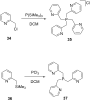
Scheme 1: Synthesis of pyridylphosphine ligands.
Figure 1: Pyridylphosphine ligands.
Scheme 2: Synthesis of piperidyl- and oxazinylphosphine ligands.
Scheme 3: Synthesis of linear multi-chelate pyridylphosphine ligands.
Scheme 4: Synthesis of chiral acetal pyridylphosphine ligands.
Scheme 5: Synthesis of diphenylphosphine-substituted triazine ligands.
Scheme 6: Synthesis of (pyridine-2-ylmethyl)phosphine ligands.
Scheme 7: Synthesis of diphosphine pyrrole ligands.
Scheme 8: Synthesis of 4,5-diazafluorenylphosphine ligands.
Scheme 9: Synthesis of thioether-containing pyridyldiphosphine ligands starting from ethylene sulfide and dip...
Scheme 10: Synthesis of monoterpene-derived phosphine pyridine ligands.
Scheme 11: Synthesis of N-phenylphosphine-substituted imidazole ligands.
Scheme 12: Synthesis of triazol-4-ylphosphine ligands.
Scheme 13: Synthesis of phosphanyltriazolopyridines and product selectivity depending on the substituents’ eff...
Scheme 14: Synthesis of PTA-phosphine ligands.
Scheme 15: Synthesis of isomeric phosphine dipyrazole ligands by varying the reaction temperature.
Scheme 16: Synthesis of N-tethered phosphine imidazolium ligands (route A) and diphosphine imidazolium ligands...
Scheme 17: Synthesis of {1-[2-(pyridin-2-yl)- (R = CH) and {1-[2-(pyrazin-2-yl)quinazolin-4-yl]naphthalen-2-yl...
Scheme 18: Synthesis of oxazolylindolylphosphine ligands 102.
Scheme 19: Synthesis of pyrrolylphosphine ligands.
Scheme 20: Synthesis of phosphine guanidinium ligands.
Scheme 21: Synthesis of a polydentate aminophosphine ligand.
Scheme 22: Synthesis of quinolylphosphine ligands.
Scheme 23: Synthesis of N-(triazolylmethyl)phosphanamine ligands.
Figure 2: Triazolylphosphanamine ligands synthesized by Wassenaar’s method [22].
Scheme 24: Synthesis of oxazaphosphorines.
Scheme 25: Synthesis of paracyclophane pyridylphosphine ligands.
Scheme 26: Synthesis of triazolylphosphine ligands.
Figure 3: Click-phosphine ligands.
Scheme 27: Ferrocenyl pyridylphosphine imine ligands.
Scheme 28: Synthesis of phosphinooxazolines (PHOX).
Scheme 29: Synthesis of ferrocenylphosphine oxazoles.
Beilstein J. Org. Chem. 2020, 16, 88–105, doi:10.3762/bjoc.16.11
Graphical Abstract
Scheme 1: Arbusov, phospha-Fries, and phospha-Brook rearrangements.
Scheme 2: Cyclization of 1a and 1b under acidic conditions.
Scheme 3: The synthesis of P-stereogenic β-hydroxyalkylphosphine sulfides.
Scheme 4: Cyclization of 8 and 19 in the presence of H3PO4.
Scheme 5: Cyclization of (SP)-19 in the presence of H3PO4.
Figure 1: 1H NMR spectra of compounds 12 and 29.
Figure 2: 13C NMR spectra of compounds 12 and 29.
Scheme 6: Synthesis of the alkenylphosphine sulfides used in study.
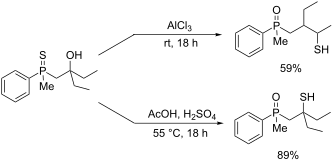
Scheme 7: The reaction of mesylate compounds with Lewis-acidic AlCl3.
Scheme 8: The reaction of alkenylphosphine sulfides with AlCl3.
Scheme 9: Rearrangement of 20 in the presence of Brønsted acid. The calculated energies next to the arrows ar...
Scheme 10: Rearrangement of 20 in the presence of Lewis acid. The calculated energies next to the arrows are r...
Scheme 11: The synthesis of chiral substrates for rearrangement reactions.
Scheme 12: The reaction of (SP)-60 and (SP)-65 with AlCl3.
Scheme 13: Reaction of chiral β-hydroxyalkylphosphine sulfides with Brønsted acid.
Scheme 14: Attempted cyclization of enantiomerically enriched 53 and 46.
Beilstein J. Org. Chem. 2019, 15, 2968–2981, doi:10.3762/bjoc.15.293
Graphical Abstract
Figure 1: Chemical structures of the isolated compounds 1–6.
Figure 2: Experimental and TDDFT-calculated ECD spectra of compounds 1 (A), 2 (B), and 3 (C) in MeOH.
Figure 3: A) Selected COSY (bold bonds) and HMBC (red arrows) correlations for compounds 2 and 3. B) Partial ...
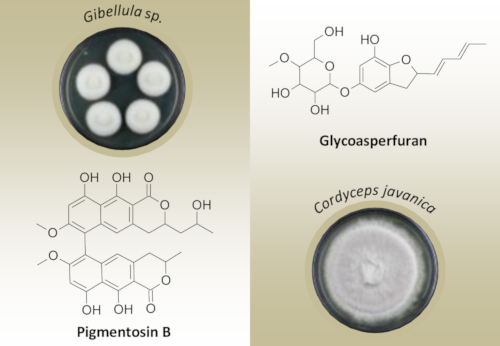
Figure 4: Chemical structures of selected, literature-known compounds that are related to this study.
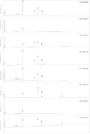
Figure 5: HPLC–UV–vis profiles (200–600 nm) generated from the culture filtrate extracts of several isolates ...
Figure 6: HPLC–UV–vis profiles (200–600 nm) generated from the culture filtrate extracts of several isolates ...
Beilstein J. Org. Chem. 2019, 15, 2881–2888, doi:10.3762/bjoc.15.282
Graphical Abstract
Scheme 1: Structures of 4-substituted 1-glucopyranosyltriazoles 1a–g and 2a–g [15].
Scheme 2: Synthesis of 1,2-cis-/trans-bistriazoles 7a–7g and 8a–8g [15].
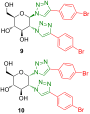
Scheme 3: Compounds 9 (trans) and 10 (cis) [15].
Scheme 4: Synthesis of (1R,2R)- and (1R,2S)-1,2-bis-(4-(4-bromophenyl)-1H-triazol-1-yl)cyclohexane (12 and 14...
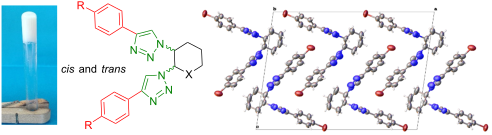
Figure 1: Tube inversion test: gels formed by compounds 7f, 8f, 10, 12, and 14.
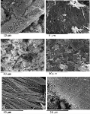
Figure 2: SEM images of the xerogels of compounds 7f (DMSO, top left), 8f (DMSO/H2O, 3:1, v/v, top right), 10...
Figure 3: ORTEP representation of the molecular structure of compound 12 (trans configuration) obtained from ...
Figure 4: Crystal packing of compound 12 (trans configuration) in DMSO.
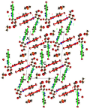
Figure 5: Crystal packing of 10 (cis configuration) in DMSO/H2O (1:1, v/v). Colored lines: π–π stacking inter...
Figure 6: CD spectra of compound 10 (cis) in DMSO/H2O (1:2, v/v) in solution (in black) and as gel (in blue).
Beilstein J. Org. Chem. 2019, 15, 2767–2773, doi:10.3762/bjoc.15.268
Graphical Abstract
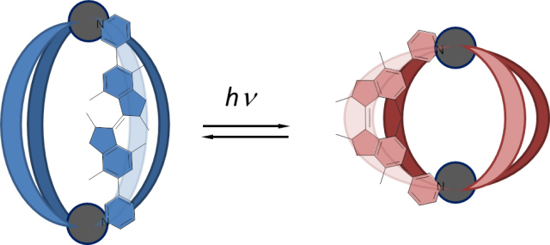
Figure 1: Schematic representation of a photoresponsive cage with ligands based on overcrowded alkenes.
Scheme 1: Cage formation of overcrowded alkene switches E/Z-1 and their isomerization behavior. Note that the...
Figure 2: Aromatic region of stacked 1H NMR spectra (in CD3CN) of stable Z-1 and cage complex Pd2(stable Z-1)4...
Figure 3: HRMS spectra of cage complex Pd2(stable Z-1)4 (top) and cage complex Pd2(stable E-1)4 (bottom); Ins...
Figure 4: Crystal structure of cage complex Pd2(stable E-1)4 (top left) and DFT optimized structures of cage ...
Figure 5: Aromatic region of stacked 1H NMR spectra (CD3CN/CD2Cl2 1:1) of i) Pd2(stable Z-1)4; ii) Pd2(stable ...
Beilstein J. Org. Chem. 2019, 15, 2710–2746, doi:10.3762/bjoc.15.264
Graphical Abstract
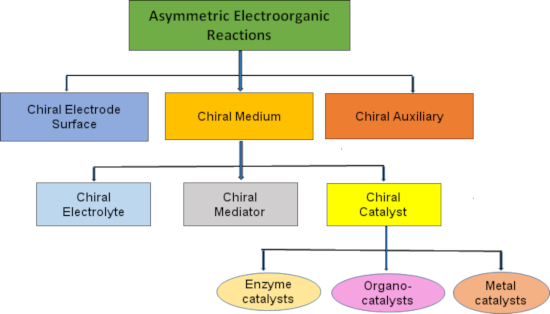
Figure 1: General classification of asymmetric electroorganic reactions.
Scheme 1: Asymmetric reduction of 4-acetylpyridine using a modified graphite cathode.
Scheme 2: Asymmetric hydrogenation of ketones using Raney nickel powder electrodes modified with optically ac...
Scheme 3: Asymmetric reduction of prochiral activated olefins with a poly-ʟ-valine-coated graphite cathode.
Scheme 4: Asymmetric reduction of prochiral carbonyl compounds, oximes and gem-dibromides on a poly-ʟ-valine-...
Scheme 5: Asymmetric hydrogenation of prochiral ketones with poly[RuIII(L)2Cl2]+-modified carbon felt cathode...
Scheme 6: Asymmetric hydrogenation of α-keto esters using chiral polypyrrole film-coated cathode incorporated...
Scheme 7: Quinidine and cinchonidine alkaloid-induced asymmetric electroreduction of acetophenone.
Scheme 8: Asymmetric electroreduction of 4- and 2-acetylpyridines at a mercury cathode in the presence of a c...
Scheme 9: Enantioselective reduction of 4-methylcoumarin in the presence of catalytic yohimbine.
Scheme 10: Cinchonine-induced asymmetric electrocarboxylation of 4-methylpropiophenone.
Scheme 11: Enantioselective hydrogenation of methyl benzoylformate using an alkaloid entrapped silver cathode.
Scheme 12: Alkaloid-induced enantioselective hydrogenation using a Cu nanoparticle cathode.
Scheme 13: Alkaloid-induced enantioselective hydrogenation of aromatic ketones using a bimetallic Pt@Cu cathod...
Scheme 14: Enantioselective reduction of ketones at mercury cathode using N,N'-dimethylquininium tetrafluorobo...
Scheme 15: Asymmetric synthesis of an amino acid using an electrode modified with amino acid oxidase and elect...
Scheme 16: Asymmetric oxidation of p-tolyl methyl sulfide using chemically modified graphite anode.
Scheme 17: Asymmetric oxidation of unsymmetric sulfides using poly(amino acid)-coated electrodes.
Scheme 18: Enantioselective, electocatalytic oxidative coupling on TEMPO-modified graphite felt electrode in t...
Scheme 19: Asymmetric electrocatalytic oxidation of racemic alcohols on a TEMPO-modified graphite felt electro...
Scheme 20: Asymmetric electrocatalytic lactonization of diols on TEMPO-modified graphite felt electrodes.
Scheme 21: Asymmetric electrochemical pinacolization in a chiral solvent.
Scheme 22: Asymmetric electroreduction using a chiral supporting electrolyte.
Scheme 23: Asymmetric anodic oxidation of enol acetates using chiral supporting electrolytes.
Scheme 24: Kinetic resolution of primary amines using a chiral N-oxyl radical mediator.
Scheme 25: Chiral N-oxyl-radical-mediated kinetic resolution of secondary alcohols via electrochemical oxidati...
Scheme 26: Chiral iodoarene-mediated asymmetric electrochemical lactonization.
Scheme 27: Os-catalyzed electrochemical asymmetric dihydroxylation of olefins using the Sharpless ligand and i...
Scheme 28: Asymmetric electrochemical epoxidation of olefins catalyzed by a chiral Mn-salen complex.
Scheme 29: Asymmetric electrooxidation of 1,2-diols, and amino alcohols using a chiral copper catalyst.
Scheme 30: Mechanism of asymmetric electrooxidation of 1,2-diols, and amino alcohols using a chiral copper cat...
Scheme 31: Enantioselective electrocarboxylation catalyzed by an electrogenerated chiral [CoI(salen)]− complex....
Scheme 32: Asymmetric oxidative cross coupling of 2-acylimidazoles with silyl enol ethers.
Scheme 33: Ni-catalyzed asymmetric electroreductive cleavage of allylic β-keto ester 89.
Scheme 34: Asymmetric alkylation using a combination of electrosynthesis and a chiral Ni catalyst.
Scheme 35: Mechanism of asymmetric alkylation using a combination of electrosynthesis and a chiral Ni catalyst....
Scheme 36: Asymmetric epoxidation by electrogenerated percarbonate and persulfate ions in the presence of chir...
Scheme 37: α-Oxyamination of aldehydes via anodic oxidation catalyzed by chiral secondary amines.
Scheme 38: The α-alkylation of aldehydes via anodic oxidation catalyzed by chiral secondary amines.
Scheme 39: Mechanism of α-alkylation of aldehydes via anodic oxidation catalyzed by chiral secondary amines.
Scheme 40: Electrochemical chiral secondary amine-catalyzed intermolecular α-arylation of aldehydes.
Scheme 41: Mechanism of electrochemical chiral secondary amine-catalyzed intermolecular α-arylation of aldehyd...
Scheme 42: Asymmetric cross-dehydrogenative coupling of tertiary amines with simple ketones via an electrochem...
Scheme 43: Electroenzymatic asymmetric reduction using enoate reductase.
Scheme 44: Assymetric reduction using alcohol dehydrogenase as the electrocatalyst.
Scheme 45: Asymmetric electroreduction catalyzed by thermophilic NAD-dependent alcohol dehydrogenase.
Scheme 46: Asymmetric epoxidation of styrene by electrochemical regeneration of flavin-dependent monooxygenase....
Scheme 47: Asymmetric electroreduction using a chloroperoxidase catalyst.
Scheme 48: Asymmetric electrochemical transformation mediated by hydrophobic vitamin B12.
Scheme 49: Diastereoselective cathodic reduction of phenylglyoxalic acids substituted with amines as chiral au...
Scheme 50: Ni-catalyzed asymmetric electroreductive cross coupling of aryl halides with α-chloropropanoic acid...
Scheme 51: Electrochemical Mannich addition of silyloxyfuran to in situ-generated N-acyliminium ions.
Scheme 52: Stereoselective electroreductive homodimerization of cinnamates attached to a camphor-derived chira...
Scheme 53: Diastereoselective electrochemical carboxylation of chiral α-bromocarboxylic acid derivatives.
Scheme 54: Electrocatalytic stereoselective conjugate addition of chiral β-dicarbonyl compounds to methyl viny...
Scheme 55: Stereoselective electrochemical carboxylation of chiral cinnamic acid derivatives under a CO2 atmos...
Scheme 56: Electrochemical diastereoselective α-alkylation of pyrrolidines attached with phosphorus-derived ch...
Scheme 57: Electrogenerated cyanomethyl anion-induced synthesis of chiral cis-β-lactams from amides bearing ch...
Scheme 58: Diastereoselective anodic oxidation followed by intramolecular cyclization of ω-hydroxyl amides bea...
Scheme 59: Electrochemical deprotonation of Ni(II) glycinate containing (S)-BPB as a chiral auxiliary: diaster...
Scheme 60: Enantioselective electroreductive coupling of diaryl ketones with α,β-unsaturated carbonyl compound...
Scheme 61: Asymmetric total synthesis of ropivacaine and its analogues using a electroorganic reaction as a ke...
Scheme 62: Asymmetric total synthesis of (−)-crispine A and its natural enantiomer via anodic cyanation of tet...
Scheme 63: Asymmetric oxidative electrodimerization of cinnamic acid derivatives as key step for the synthesis...
Beilstein J. Org. Chem. 2019, 15, 2076–2084, doi:10.3762/bjoc.15.205
Graphical Abstract
Scheme 1: Asymmetric α-photooxygenation of chiral aldehydes.
Scheme 2: α-Photooxygenation of β-substituted aldehydes.
Scheme 3: Synthesis and α-photooxygenation of 3,4-diphenylbutanal (1).
Scheme 4: Stereoselective α-photooxygenation of 3,4-diphenylbutanal (1) with 1O2.
Scheme 5: Schematic representation of the in situ methodology and preferred conformation of diols with Mo2 co...
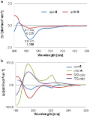
Figure 1: ECD spectra of diols syn-6 and anti’-6 recorded a) with 19 in DMSO and b) in acetonitrile compared ...
Scheme 6: Asymmetric synthesis of 3,4-diphenylbutane-1,2-diol.
Beilstein J. Org. Chem. 2019, 15, 1996–2002, doi:10.3762/bjoc.15.195
Graphical Abstract
Figure 1: Inherent chirality generated by meta-substitution – the two structures are non-superposable mirror ...
Figure 2: General approach by Albrecht for MIC directed cyclometalation via C–H activation; M = Ru(II), Ir(II...
Figure 3: Concept of cyclometalated calix[4]arene target.
Scheme 1: Synthesis of model mesoionic carbene 5.
Scheme 2: Attempted Ullmann-coupling to give monoazide 7.
Scheme 3: Synthesis of monoazidocalix[4]arene 7 under optimized conditions.
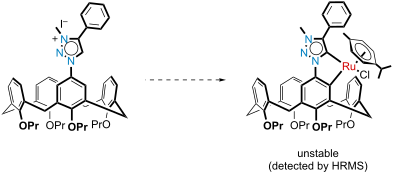
Scheme 4: Synthesis of the putative calix[4]arene mesoionic carbene ruthenium complex 13.
Figure 4: High-resolution mass spectrum (ESI+) of putative ruthenacycle calix[4]arene 13.
Beilstein J. Org. Chem. 2019, 15, 1913–1924, doi:10.3762/bjoc.15.187
Graphical Abstract
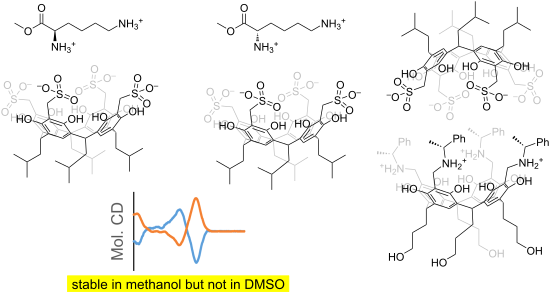
Figure 1: Structures of the compounds used in this study and labelling scheme for NMR spectra.
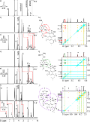
Figure 2: Spectra of complexes [1(LysOMe)2], [1(ArgOMe)2], [1(HisOMe)2]: 1H NMR (a–g) and ROESY (h–j) in meth...
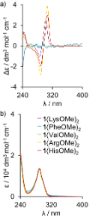
Figure 3: CD (a) and UV (b) spectra of complexes [1(LysOMe)2], [1(PheOMe)2], [1(ValOMe)2], [1(ArgOMe)2], and [...
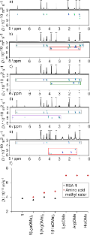
Figure 4: DOSY spectra of 1 (a), [1(LysOMe)2] (b), [1(ArgOMe)2] (c), [1(HisOMe)2] (d) and [LysOMe + 1(LysOMe)2...
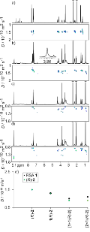
Figure 5: 1H NMR spectra of 1 (a), LysOMe (b), 1H NMR and DOSY spectra of [1(LysOMe)2] (insets show the shape...
Figure 6: 1H NMR spectra of (R)-2 (a); [1((R)-2] (b); [1 + 1((R)-2] (c) (insets show the shape of signals f, ...
Figure 7: 1H NMR and DOSY spectra of (R)-2 (a); [1(R)-2] (b) (inset show the shape signals f, DMSO-d6, 298K, ...
Beilstein J. Org. Chem. 2019, 15, 1722–1757, doi:10.3762/bjoc.15.168
Graphical Abstract
Figure 1: Examples of three-carbon chirons.
Figure 2: Structures of derivatives of N-(1-phenylethyl)aziridine-2-carboxylic acid 5–8.
Figure 3: Synthetic equivalency of aziridine aldehydes 6.
Scheme 1: Synthesis of N-(1-phenylethyl)aziridine-2-carboxylates 5. Reagents and conditions: a) TEA, toluene,...
Scheme 2: Absolute configuration at C2 in (2S,1'S)-5a. Reagents and conditions: a) 20% HClO4, 80 °C, 30 h the...
Scheme 3: Major synthetic strategies for a 2-ketoaziridine scaffold [R* = (R)- or (S)-1-phenylethyl; R′ = Alk...
Scheme 4: Synthesis of cyanide (2S,1'S)-13. Reagents and conditions: a) NH3, EtOH/H2O, rt, 72 h; b) Ph3P, CCl4...
Scheme 5: Synthesis of key intermediates (R)-16 and (R)-17 for (R,R)-formoterol (14) and (R)-tamsulosin (15)....
Scheme 6: Synthesis of mitotic kinesin inhibitors (2R/S,1'R)-23. Reagents and conditions: a) H2, Pd(OH)2, EtO...
Scheme 7: Synthesis of (R)-mexiletine ((R)-24). Reagents and conditions: a) TsCl, TEA, DMAP, CH2Cl2, rt, 1 h;...
Scheme 8: Synthesis of (−)-cathinone ((S)-27). Reagents and conditions: a) PhMgBr, ether, 0 °C; b) H2, 10% Pd...
Scheme 9: Synthesis of N-Boc-norpseudoephedrine ((1S,2S)-(+)-29) and N-Boc-norephedrine ((1R,2S)-29). Reagent...
Scheme 10: Synthesis of (−)-ephedrine ((1R,2S)-31). Reagents and conditions: a) TfOMe, MeCN then NaBH3CN, rt; ...
Scheme 11: Synthesis of xestoaminol C ((2S,3R)-35), 3-epi-xestoaminol C ((2S,3S)-35) and N-Boc-spisulosine ((2S...
Scheme 12: Synthesis of ʟ-tryptophanol ((S)-41). Reagents and conditions: a) CDI, MeCN, rt, 1 h then TMSI, MeC...
Scheme 13: Synthesis of ʟ-homophenylalaninol ((S)-42). Reagents and conditions: a) NaH, THF, 0 °C to −78 °C, 1...
Scheme 14: Synthesis of ᴅ-homo(4-octylphenyl)alaninol ((R)-47) and a sphingolipid analogue (R)-48. Reagents an...
Scheme 15: Synthesis of florfenicol ((1R,2S)-49). Reagents and conditions: a) (S)-1-phenylethylamine, TEA, MeO...
Scheme 16: Synthesis of natural tyroscherin ((2S,3R,6E,8R,10R)-55). Reagents and conditions: a) I(CH2)3OTIPS, t...
Scheme 17: Syntheses of (−)-hygrine (S)-61, (−)-hygroline (2S,2'S)-62 and (−)-pseudohygroline (2S,2'R)-62. Rea...
Scheme 18: Synthesis of pyrrolidine (3S,3'R)-68, a fragment of the fluoroquinolone antibiotic PF-00951966. Rea...
Scheme 19: Synthesis of sphingolipid analogues (R)-76. Reagents and conditions: a) BnBr, Mg, THF, reflux, 6 h;...
Scheme 20: Synthesis of ᴅ-threo-PDMP (1R,2R)-81. Reagents and conditions: a) TMSCl, NaI, MeCN, rt, 1 h 50 min,...
Scheme 21: Synthesis of the sphingolipid analogue SG-14 (2S,3S)-84. Reagents and conditions: a) LiAlH4, THF, 0...
Scheme 22: Synthesis of the sphingolipid analogue SG-12 (2S,3R)-88. Reagents and conditions: a) 1-(bromomethyl...
Scheme 23: Synthesis of sphingosine-1-phosphate analogues DS-SG-44 and DS-SG-45 (2S,3R)-89a and (2S,3R)-89a. R...
Scheme 24: Synthesis of N-Boc-safingol ((2S,3S)-95) and N-Boc-ᴅ-erythro-sphinganine ((2S,3R)-95). Reagents and...
Scheme 25: Synthesis of ceramide analogues (2S,3R)-96. Reagents and conditions: a) NaBH4, ZnCl2, MeOH, −78 °C,...
Scheme 26: Synthesis of orthogonally protected serinols, (S)-101 and (R)-102. Reagents and conditions: a) BnBr...
Scheme 27: Synthesis of N-acetyl-3-phenylserinol ((1R,2R)-105). Reagents and conditions: a) AcOH, CH2Cl2, refl...
Scheme 28: Synthesis of (S)-linezolid (S)-107. Reagents and conditions: a) LiAlH4, THF, 0 °C to reflux; b) Boc2...
Scheme 29: Synthesis of (2S,3S,4R)-2-aminooctadecane-1,3,4-triol (ᴅ-ribo-phytosphingosine) (2S,3S,4R)-110. Rea...
Scheme 30: Syntheses of ᴅ-phenylalanine (R)-116. Reagents and conditions: a) AcOH, CH2Cl2, reflux, 4 h; b) MsC...
Scheme 31: Synthesis of N-Boc-ᴅ-3,3-diphenylalanine ((R)-122). Reagents and conditions: a) PhMgBr, THF, −78 °C...
Scheme 32: Synthesis of ethyl N,N’-di-Boc-ʟ-2,3-diaminopropanoate ((S)-125). Reagents and conditions: a) NaN3,...
Scheme 33: Synthesis of the bicyclic amino acid (S)-(+)-127. Reagents and conditions: a) BF3·OEt2, THF, 60 °C,...
Scheme 34: Synthesis of lacosamide, (R)-2-acetamido-N-benzyl-3-methoxypropanamide (R)-130. Reagents and condit...
Scheme 35: Synthesis of N-Boc-norfuranomycin ((2S,2'R)-133). Reagents and conditions: a) H2C=CHCH2I, NaH, THF,...
Scheme 36: Synthesis of MeBmt (2S,3R,4R,6E)-139. Reagents and conditions: a) diisopropyl (S,S)-tartrate (E)-cr...
Scheme 37: Synthesis of (+)-polyoxamic acid (2S,3S,4S)-144. Reagents and conditions: a) AD-mix-α, MeSO2NH2, t-...
Scheme 38: Synthesis of the protected 3-hydroxy-ʟ-glutamic acid (2S,3R)-148. Reagents and conditions: a) LiHMD...
Scheme 39: Synthesis of (+)-isoserine (R)-152. Reagents and conditions: a) AcCl, MeCN, rt, 0.5 h then Na2CO3, ...
Scheme 40: Synthesis of (3R,4S)-N3-Boc-3,4-diaminopentanoic acid (3R,4S)-155. Reagents and conditions: a) Ph3P...
Scheme 41: Synthesis of methyl (2S,3S,4S)-4-(dimethylamino)-2,3-dihydroxy-5-methoxypentanoate (2S,3S,4S)-159. ...
Scheme 42: Syntheses of methyl (3S,4S) 4,5-di-N-Boc-amino-3-hydroxypentanoate ((3S,4S)-164), methyl (3S,4S)-4-N...
Scheme 43: Syntheses of (3R,5S)-5-(aminomethyl)-3-(4-methoxyphenyl)dihydrofuran-2(3H)-one ((3R,5S)-168). Reage...
Scheme 44: Syntheses of a series of imidazolin-2-one dipeptides 175–177 (for R' and R'' see text). Reagents an...
Scheme 45: Syntheses of (2S,3S)-N-Boc-3-hydroxy-2-hydroxymethylpyrrolidine ((2S,3S)-179). Reagents and conditi...
Scheme 46: Syntheses of enantiomers of 1,4-dideoxy-1,4-imino-ʟ- and -ᴅ-lyxitols (2S,3R,4S)-182 and (2R,3S,4R)-...
Scheme 47: Synthesis of 1,4-dideoxy-1,4-imino-ʟ-ribitol (2S,3S,4R)-182. Reagents and conditions: a) AcOH, CH2Cl...
Scheme 48: Syntheses of 1,4-dideoxy-1,4-imino-ᴅ-arabinitol (2R,3R,4R)-182 and 1,4-dideoxy-1,4-imino-ᴅ-xylitol ...
Scheme 49: Syntheses of natural 2,5-imino-2,5,6-trideoxy-ʟ-gulo-heptitol ((2S,3R,4R,5R)-184) and its C4 epimer...
Scheme 50: Syntheses of (−)-dihydropinidine ((2S,6R)-187a) (R = C3H7) and (2S,6R)-isosolenopsins (2S,6R)-187b ...
Scheme 51: Syntheses of (+)-deoxocassine ((2S,3S,6R)-190a, R = C12H25) and (+)-spectaline ((2S,3S,6R)-190b, R ...
Scheme 52: Synthesis of (−)-microgrewiapine A ((2S,3R,6S)-194a) and (+)-microcosamine A ((2S,3R,6S)-194b). Rea...
Scheme 53: Syntheses of ʟ-1-deoxynojirimycin ((2S,3S,4S,5R)-200), ʟ-1-deoxymannojirimycin ((2S,3S,4S,5S)-200) ...
Scheme 54: Syntheses of 1-deoxy-ᴅ-galacto-homonojirimycin (2R,3S,4R,5S)-211. Reagents and conditions: a) MeONH...
Scheme 55: Syntheses of 7a-epi-hyacinthacine A1 (1S,2R,3R,7aS)-220. Reagents and conditions: a) TfOTBDMS, 2,6-...
Scheme 56: Syntheses of 8-deoxyhyacinthacine A1 ((1S,2R,3R,7aR)-221). Reagents and conditions: a) H2, Pd/C, PT...
Scheme 57: Syntheses of (+)-lentiginosine ((1S,2S,8aS)-227). Reagents and conditions: a) (EtO)2P(O)CH2COOEt, L...
Scheme 58: Syntheses of 8-epi-swainsonine (1S,2R,8S,8aR)-231. Reagents and conditions: a) Ph3P=CHCOOMe, MeOH, ...
Scheme 59: Synthesis of a protected vinylpiperidine (2S,3R)-237, a key intermediate in the synthesis of (−)-sw...
Scheme 60: Synthesis of a modified carbapenem 245. Reagents and conditions: a) AcOEt, LiHMDS, THF, −78 °C, 1.5...
Beilstein J. Org. Chem. 2019, 15, 1601–1611, doi:10.3762/bjoc.15.164
Graphical Abstract
Scheme 1: Preparation of A1/A2-difunctionalized pillar[5]arenes (P5A-DPA and P5A-Py) by click reactions. Reag...
Figure 1: UV–vis absorption (a) and fluorescence emission spectra (b) of Py-6, P5A-Py (λex = 420 nm) and DPA-6...
Figure 2: (a) Fluorescence decay curves of Py-6 and P5A-Py at 450 nm and (b) fluorescence decay curves of DPA...
Figure 3: (a) Chiral HPLC traces of P5A-DPA, (b), (c) the first and second fractions of P5A-DPA, detected by ...
Figure 4: (a) CD, (b) UV–vis and (c) fluorescence spectra of the RP5A-DPA (20 μM) in THF and THF/H2O solvent ...
Beilstein J. Org. Chem. 2019, 15, 1304–1312, doi:10.3762/bjoc.15.129
Graphical Abstract
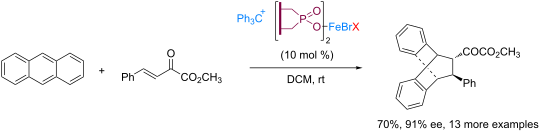
Scheme 1: Asymmetric carbocation catalysis.
Scheme 2: Synthesis of new carbocation catalysts with weakly coordinating metal-based phosphate anion.
Figure 1: Dissociation of latent carbocation by the use of Lewis acids. a) UV–vis absorption spectra of TP (0...
Scheme 3: a) The reaction with 9,10-dimethylanthracene (3b). b) Gram-scale reaction of 3a and 4k, and transfo...
Beilstein J. Org. Chem. 2019, 15, 1236–1256, doi:10.3762/bjoc.15.121
Graphical Abstract
Figure 1: Structures of natural steroids of A) animal and B) plant origin.
Scheme 1: Synthesis of a steroidal β-lactam by Ugi reaction of a cholanic aldehyde [14].
Scheme 2: Synthetic route to steroidal 2,5-diketopiperazines based on a diastereoselective Ugi-4CR with an an...
Scheme 3: Multicomponent synthesis of a heterocycle–steroid hybrid using a ketosteroid as carbonyl component [18]....
Scheme 4: Synthesis of peptidomimetic–steroid hybrids using the Ugi-4CR with spirostanic amines and carboxyli...
Scheme 5: Synthesis of azasteroids using the Ugi-4CR with androstanic and pregnanic carboxylic acids [22].
Figure 2: Ugi-4CR-derived library of androstanic azasteroids with diverse substitution patterns at the phenyl...
Scheme 6: Synthesis of 4-azacholestanes by an intramolecular Ugi-4C-3R [26].
Scheme 7: Synthesis of amino acid–steroid hybrid by multiple Ugi-4CR using steroidal isocyanides [29].
Scheme 8: Synthesis of ecdysteroid derivatives by Ugi-4CR using a steroidal isocyanide [30].
Scheme 9: Stereoselective multicomponent synthesis of a steroid–tetrahydropyridine hybrid using a chiral bifu...
Scheme 10: Pd(II)-catalyzed three-component reaction with an alkynyl seco-cholestane [34].
Scheme 11: Multicomponent synthesis of steroid–thiazole hybrids from a steroidal ketone [36].
Scheme 12: Synthesis of cholanic pseudo-peptide derivatives by novel MCRs based on the reactivity of ynamide [37,38].
Scheme 13: Synthesis of steroid-fused pyrimidines and pyrimidones using the Biginelli-3CR [39,42,43].
Scheme 14: Synthesis of steroidal pyridopyrimidines by a reaction sequence comprising a 4CR followed by a post...
Scheme 15: Synthesis of steroid-fused pyrimidines by MCR of 2-hydroxymethylene-3-ketosteroids [46].
Scheme 16: Synthesis of steroid-fused naphthoquinolines by the Kozlov–Wang MCR using ketosteroids [50,51].
Scheme 17: Conjugation of steroids to carbohydrates and peptides by the Ugi-4CR [62,63].
Scheme 18: Solid-phase multicomponent conjugation of peptides to steroids by the Ugi-4CR [64].
Scheme 19: Solid-phase multicomponent conjugation of peptides to steroids by the Petasis-3CR [68].
Scheme 20: Synthesis of steroidal macrobicycles (cages) by multiple multicomponent macrocyclizations based on ...
Scheme 21: One-pot synthesis of steroidal cages by double Ugi-4CR-based macrocyclizations [76].