Search results
Search for "cycloaddition" in Full Text gives 739 result(s) in Beilstein Journal of Organic Chemistry. Showing first 200.
New triazinephosphonate dopants for Nafion proton exchange membranes (PEM)
Beilstein J. Org. Chem. 2024, 20, 1623–1634, doi:10.3762/bjoc.20.145
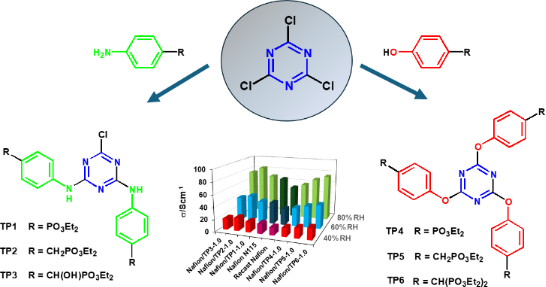
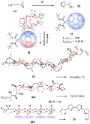
- molecular cages [46][47] and at porous materials, as linkers in metal-organic frameworks (MOFs) [48], used in the evaluation of the cycloaddition of CO2 to epoxides [49] and CO2 uptake [50]. Taking in consideration the strategy of the incorporation of dopants to promote the proton conduction in Nafion




Rapid construction of tricyclic tetrahydrocyclopenta[4,5]pyrrolo[2,3-b]pyridine via isocyanide-based multicomponent reaction
Beilstein J. Org. Chem. 2024, 20, 1436–1443, doi:10.3762/bjoc.20.126
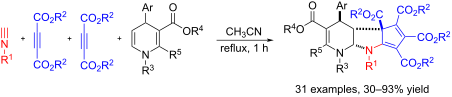
- -3,4b,5,6,7(1H)-pentacarboxylates in high yields and with high diastereoselectivity. The reaction was finished by in situ generation of activated 5-(alkylimino)cyclopenta-1,3-dienes from addition of alkyl isocyanide to two molecules of but-2-ynedioates and sequential formal [3 + 2] cycloaddition
- reaction with 5,6-unsubstituted 1,4-dihydropyridine. Keywords: [3 + 2] cycloaddition; cyclopenta-1,3-diene; cyclopenta[4,5]pyrrolo[2,3-b]pyridine; 1,4-dihydropyridine; electron-deficient alkyne; isocyanide; Introduction Isocyanide is a unique and attractive functional group in organic chemistry. The
- a [4 + 2] cycloaddition process [45]. Very recently, we also found that base-promoted [4 + 2] cycloaddition of salicyl N-tosylimines and 5,6-unsubstituted 1,4-dihydropyridines resulted in novel tetrahydrochromeno[3,2-b]pyridine derivatives in satisfactory yields [46]. Inspired by these efficient


Synthesis of substituted triazole–pyrazole hybrids using triazenylpyrazole precursors
Beilstein J. Org. Chem. 2024, 20, 1396–1404, doi:10.3762/bjoc.20.121
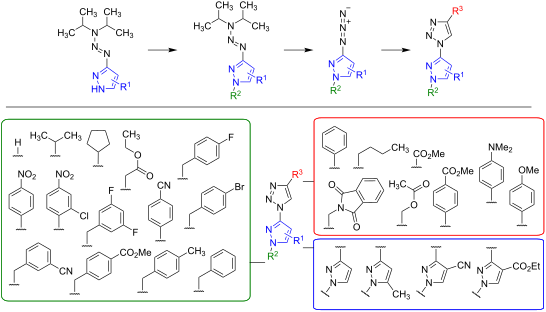
- the triazole unit via a copper-catalyzed azide–alkyne cycloaddition. The developed methodology was used to synthesize a library of over fifty new multi-substituted pyrazole–triazole hybrids. We also demonstrate a one-pot strategy that renders the isolation of potentially hazardous azides obsolete. In
- cholerae [13], show antimicrobial properties [14], and can act as P2X7 antagonists, a receptor involved in neuroinflammation and depression [15]. Pyrazolyltriazoles are most easily obtained via the copper-catalyzed azide–alkyne cycloaddition (CuAAC) from pyrazolyl azides (7 and 8). These are usually
- cycloaddition of the gained synthesized azidopyrazoles with different alkynes was to be conducted. The 3-(3,3-diisopropyltriaz-1-en-1-yl)-1H-pyrazole precursors 15a–d were synthesized according to previously reported procedures [3][26][27] via the generation of a diazonium salt from aminopyrazoles 14a–d




Sustainable tandem acylation/Diels–Alder reaction toward versatile tricyclic epoxyisoindole-7-carboxylic acids in renewable green solvents
Beilstein J. Org. Chem. 2024, 20, 1308–1319, doi:10.3762/bjoc.20.114
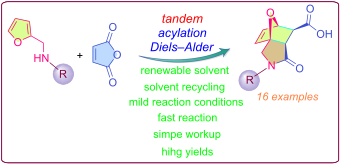
- ] cycloaddition between maleic anhydride and secondary amine occurs first, followed by the corresponding amidation (Figure 3, path II) [110]. Although IMDAF reactions involving furan systems bearing amide functionality are generally reversible [134], the formation of the addition products in high yields in this
- maleamic acid precursors. Optimization of IMDAF cycloaddition using different solvents.a Synthesized tricyclic epoxyisoindole-7-carboxylic acidsa. Supporting Information Supporting Information File 88: Tables S1 and S2, Cartesian coordinates of the optimized structures and copies of NMR spectra.


The Ugi4CR as effective tool to access promising anticancer isatin-based α-acetamide carboxamide oxindole hybrids
Beilstein J. Org. Chem. 2024, 20, 1213–1220, doi:10.3762/bjoc.20.104
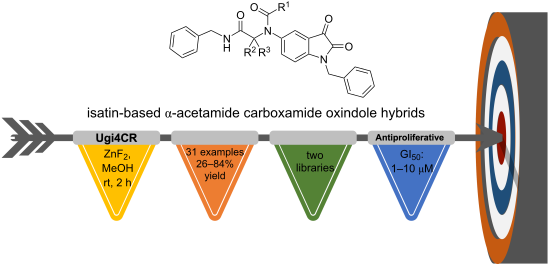
- –alkyne cycloaddition (CuAAC) reaction, or commonly entitled “click” reaction, is a widely and straightforward tool to access the 1,2,3-triazole ring [26][27]. Due to the presence of an alkyne group on the Ugi-adduct 5bb (Scheme 2) we decided to use the CuAAC reaction to introduce a 1,2,3-triazole unit




Novel route to enhance the thermo-optical performance of bicyclic diene photoswitches for solar thermal batteries
Beilstein J. Org. Chem. 2024, 20, 1053–1068, doi:10.3762/bjoc.20.93
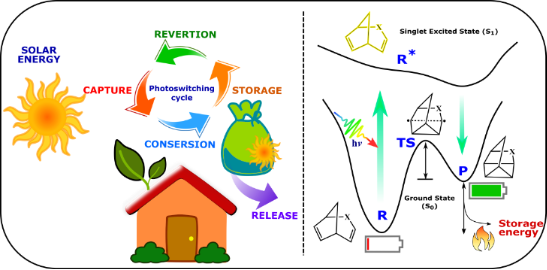
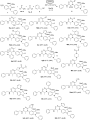
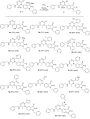
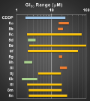
- incorporate all desired features within a single photoswitch is a focus of current research [15][16][17][18][19][20][21][22][23][24][25][26][27][28][29][30]. The bridged bicyclic diene (BBD)-based NBD/QC couple involves a reversible [2 + 2]-cycloaddition and the chemical transformation during its


Novel analogues of a nonnucleoside SARS-CoV-2 RdRp inhibitor as potential antivirotics
Beilstein J. Org. Chem. 2024, 20, 1029–1036, doi:10.3762/bjoc.20.91
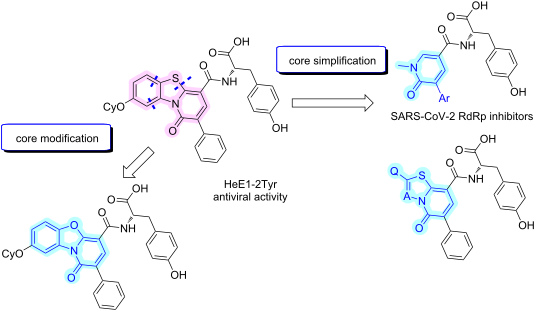
- , led to two crucial mesoionic compounds, 22 and 27. The recrystallized intermediates then underwent a formal cycloaddition with ethyl acrylate, followed by the elimination of H2S, forming the desired heterocyclic core structures (intermediates 23 and 28, respectively). A subsequent saponification step


A Diels–Alder probe for discovery of natural products containing furan moieties
Beilstein J. Org. Chem. 2024, 20, 1001–1010, doi:10.3762/bjoc.20.88
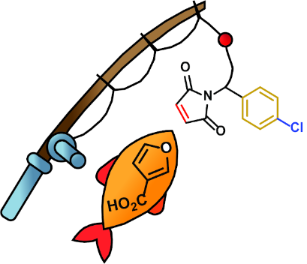
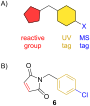
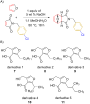
- including fungal infections, and cancers. However, it is challenging to discover and isolate these small molecules from cell supernatant. The work described herein showcases the development of a molecular probe that can covalently modify furan moieties via a [4 + 2] Diels–Alder cycloaddition, making them
- undergo a [4 + 2] Diels–Alder cycloaddition to identify furan moieties within complex cell supernatants. Results and Discussion When designing the reactive group of the furan probe 6, we chose to focus on a well-known reaction with furans, the Diels–Alder cyclization. While the Diels–Alder cyclization
- furans. While the frontier molecular orbital theory can be applied to this cycloaddition reaction, the thermodynamics must also be taken into consideration. Most Diels–Alder reactions with furans as the diene follow normal-electron-demand with the diene HOMO reacting with the dienophile LUMO due to the




(Bio)isosteres of ortho- and meta-substituted benzenes
Beilstein J. Org. Chem. 2024, 20, 859–890, doi:10.3762/bjoc.20.78
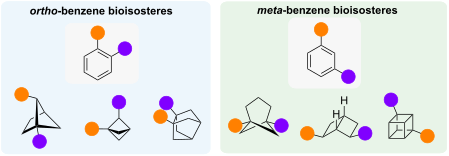
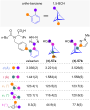
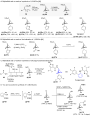
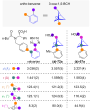
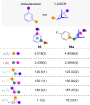
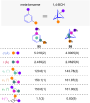
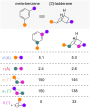
- ) [32]. The synthesis of the corresponding 2-aza-1,5-BCHs 13 was achieved by an intramolecular photochemical [2 + 2] cycloaddition. They were able to employ this synthetic route to synthesise a variety of 1,2-BCPs (±)-14 bearing a protected amine in the bridge position. In early 2023, MacMillan and co
- intramolecular crossed [2 + 2] cycloaddition strategy (Scheme 4C) [36]. They were able to avoid purification by column chromatography by transformation of BCH ester (±)-53 into BCH acid (±)-54, allowing isolation of pure 1,2-BCH (±)-54 by crystallisation. Through their synthesis they were able to access both
- -workers adopted a similar intramolecular [2 + 2] cycloaddition using benzophenone as a triplet sensitizer to access 1,5-BCHs (±)-59a–e as racemic mixtures of endo:exo diastereomers (Scheme 5A) [42]. Basic hydrolysis of the ester moiety followed by recrystallisation gave the diasteromerically pure acid

















Chemoenzymatic synthesis of macrocyclic peptides and polyketides via thioesterase-catalyzed macrocyclization
Beilstein J. Org. Chem. 2024, 20, 721–733, doi:10.3762/bjoc.20.66
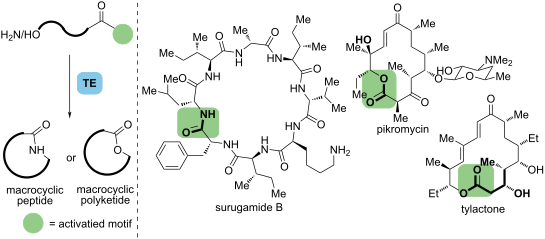
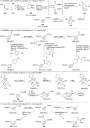
- several positions and also form 6–14 residue cyclic peptides [37][38]. It should be noted that TycC TE was more sensitive to the amino acid changes near the site of ring closure. The alkyne-containing analogs were conjugated to a variety of azido sugars via copper(I)-catalyzed cycloaddition to obtain the


SOMOphilic alkyne vs radical-polar crossover approaches: The full story of the azido-alkynylation of alkenes
Beilstein J. Org. Chem. 2024, 20, 701–713, doi:10.3762/bjoc.20.64
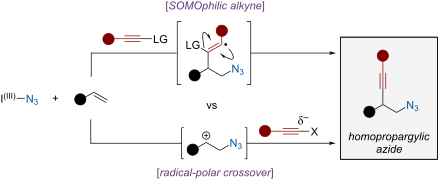
- elimination of the organometallic intermediate would lead to the desired product (Scheme 1B, reaction 1). Unfortunately, this approach will not be compatible in the case of azidation since the copper, azides and alkynes present in the mixture are expected to undergo alkyne–azide cycloaddition reactions [28


Enhanced reactivity of Li+@C60 toward thermal [2 + 2] cycloaddition by encapsulated Li+ Lewis acid
Beilstein J. Org. Chem. 2024, 20, 653–660, doi:10.3762/bjoc.20.58
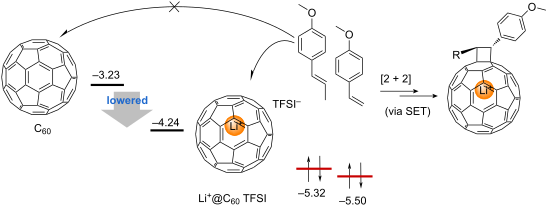
- derivatization of this novel material. In this study, we report the synthesis of Li+@C60 derivatives via the thermal [2 + 2] cycloaddition reaction of styrene derivatives, achieving significantly higher yields of monofunctionalized Li+@C60 compared to previously reported reactions. Furthermore, by combining
- experimental and theoretical approaches, we clarified the range of applicable substrates for the thermal [2 + 2] cycloaddition of Li+@C60, highlighting the expanded scope of this straightforward and selective functionalization method. Keywords: electron transfer; fullerene; ion-endohedral fullerene; Lewis
- acid catalyst; thermal [2 + 2] cycloaddition; Introduction Chemical functionalization of fullerenes is a fascinating and extensively studied approach, playing a pivotal role in fullerene-based materials science to introduce various characteristic functionalities [1][2][3][4][5][6][7]. Significant




HPW-Catalyzed environmentally benign approach to imidazo[1,2-a]pyridines
Beilstein J. Org. Chem. 2024, 20, 628–637, doi:10.3762/bjoc.20.55
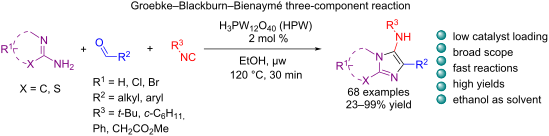
- report from the literature [24] a plausible reaction mechanism is shown in Scheme 6. It involves the nucleophilic attack of the aminopyridine 1 to the HPW-activated carbonyl compound 2, followed by iminium ion formation (iii) and [4 + 1] cycloaddition with the isocyanide. A 1,3-hydrogen shift yields the




Development of a chemical scaffold for inhibiting nonribosomal peptide synthetases in live bacterial cells
Beilstein J. Org. Chem. 2024, 20, 445–451, doi:10.3762/bjoc.20.39
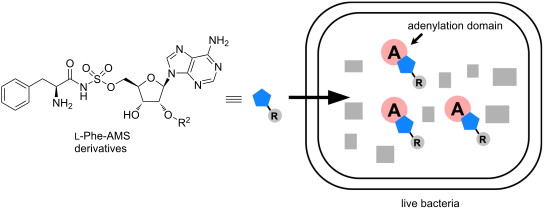
- benzophenone moiety in probe 3. The samples were then reacted with TAMRA-N3 (structure shown in Figure S4, Supporting Information File 1) under copper(I)-catalyzed azide–alkyne cycloaddition conditions [21] and subjected to sodium dodecyl sulfate-polyacrylamide gel electrophoresis coupled with in-gel
- are treated with a TAMRA-N3 under copper(I)-catalyzed azide–alkyne cycloaddition conditions, followed by SDS-PAGE coupled with in-gel fluorescence scanning. AMS, 5′-O-sulfamoyladenosine. Competitive labeling experiments of GrsA using probe 3 in the presence of ʟ-Phe-AMS inhibitors. (A) Labeling of


Synthesis of π-conjugated polycyclic compounds by late-stage extrusion of chalcogen fragments
Beilstein J. Org. Chem. 2024, 20, 287–305, doi:10.3762/bjoc.20.30
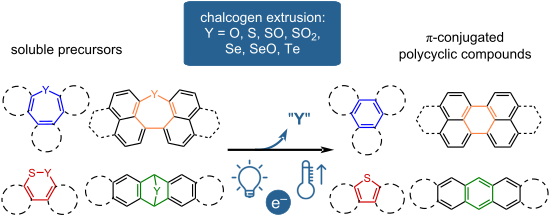
- isomers. Finally, reaction of this bisaryne precursor with an excess cesium fluoride and bare isobenzofuran gave rise to the end-capped soluble precursor 59 via a double cycloaddition process. All polyepoxides 58–60 were deposited by sublimation on a Au(111) surface, triggering in some cases partial




Unveiling the regioselectivity of rhodium(I)-catalyzed [2 + 2 + 2] cycloaddition reactions for open-cage C70 production
Beilstein J. Org. Chem. 2024, 20, 272–279, doi:10.3762/bjoc.20.28
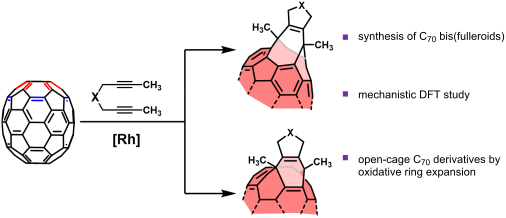
- holds significant promise for applications in the fields of medicinal chemistry, materials science, and photovoltaics. In this study, we investigate the regioselectivity of the rhodium(I)-catalyzed [2 + 2 + 2] cycloaddition reactions between diynes and C70 as a novel procedure for generating C70 bis
- to be able to produce meaningful changes in the reactivity of the cage [28][29][30][31][32]. In 2018, our group reported a catalytic process to transform C60 in bis(fulleroid) derivatives [33][34][35]. This transformation encompassed a partially intermolecular Rh-catalyzed [2 + 2 + 2] cycloaddition
- unexpectedly, the [6,6]-bond in C60 was the one involved in this [2 + 2 + 2] cycloaddition. Although there are several papers reporting the opening of a hole in C70 [39][40][41][42][43][44][45], this chemistry has been less explored than in C60. The lower D5h symmetry of C70 compared to the Ih of C60 increases


Catalytic multi-step domino and one-pot reactions
Beilstein J. Org. Chem. 2024, 20, 254–256, doi:10.3762/bjoc.20.25

- . Zhang, Ma, and W. Zhang reflects the state of the art in the α-amino acid-based [3 + 2] cycloaddition reactions of N–H-type azomethine ylides in multicomponent, one-pot, and stepwise reactions for the synthesis of diverse bioactive heterocyclic compounds and natural products [9]. Computational studies
- of transannular cycloadditions of cycloalkenone hydrazones catalyzed by BINOL-derived phosphoric acid are reported in the Full Research Paper by Vicario, Merino, and co-workers [10]. Their methodologies can now be used to predict the reactivity of different substrates in other cycloaddition reactions

Perspectives on push–pull chromophores derived from click-type [2 + 2] cycloaddition–retroelectrocyclization reactions of electron-rich alkynes and electron-deficient alkenes
Beilstein J. Org. Chem. 2024, 20, 125–154, doi:10.3762/bjoc.20.13
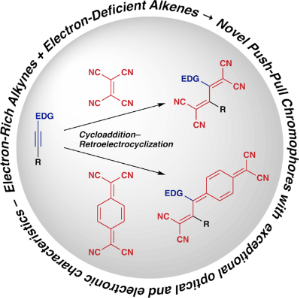
- Michio Yamada Department of Chemistry, Tokyo Gakugei University, Nukuikitamachi 4-1-1, Koganei, Tokyo 184-8501, Japan 10.3762/bjoc.20.13 Abstract Various push–pull chromophores can be synthesized in a single and atom-economical step through [2 + 2] cycloaddition–retroelectrocyclization (CA–RE
- of click-type [2 + 2] cycloaddition (CA)–retroelectrocyclization (RE) reactions, offering means for preparing these coveted push–pull chromophores [7]. A review conducted in 2023 comprehensively explored the optoelectronic properties of TCBDs along with their photovoltaic applications [8]. The
- reactions, yielding multicyanated ethenes [95]. Contrarily, alkenes bearing three or four ester substitutions partake in a [4 + 2]-type hetero-Diels–Alder (DA) reaction, yielding a third product, presumably through a [3 + 2] cycloaddition reaction, followed by rearrangement. The [2 + 2] CA–RE reactions


Photoinduced in situ generation of DNA-targeting ligands: DNA-binding and DNA-photodamaging properties of benzo[c]quinolizinium ions
Beilstein J. Org. Chem. 2024, 20, 101–117, doi:10.3762/bjoc.20.11
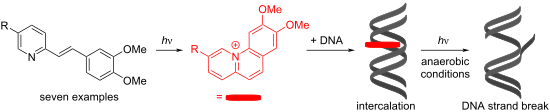
- by the reaction with C-radicals 4 and 5 to give peroxides such as 6 (Scheme 4), by cycloaddition of 1O2 to alkene and diene units, or by deactivation of the excited state in a triplet-triplet annihilation [90], all of which leading to a reduced photocleavage efficiency. However, with much longer





Electron-beam-promoted fullerene dimerization in nanotubes: insights from DFT computations
Beilstein J. Org. Chem. 2024, 20, 92–100, doi:10.3762/bjoc.20.10
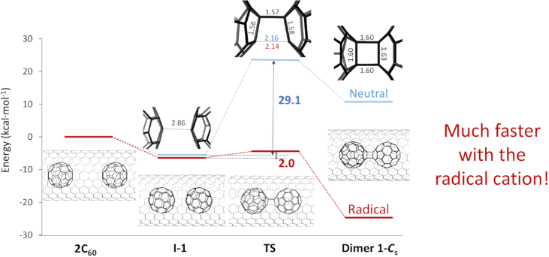
- the reaction either via singlet excitation or via radical cation formation (Scheme 1). Estimation of the activation barrier for the [2 + 2] cycloaddition when the nanotube acts as a sensitizer is 33.5 ± 6.8 kJ mol−1. This value agrees with computational predictions for the reaction via an excited
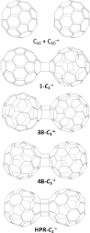
- analyzed the interaction between C60 and the nanotube within the peapod. Next, we have found that some dimeric C60–C60 fullerene structures inside the carbon nanotube are thermodynamically favorable. Experiments indicate that, besides C60 sensitization via a singlet excited state, the [2 + 2] cycloaddition
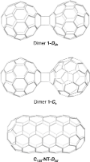
- + 2] cycloaddition in phase 1 We analyzed in detail the energy profile for the first step in the dimerization process, that is, the reversible [2 + 2] cycloaddition to obtain dimers 1-Cs and 1-D2h. We initially considered dimerization in the gas phase to check the reliability of our methodology




Cycloaddition reactions of heterocyclic azides with 2-cyanoacetamidines as a new route to C,N-diheteroarylcarbamidines
Beilstein J. Org. Chem. 2024, 20, 17–24, doi:10.3762/bjoc.20.3
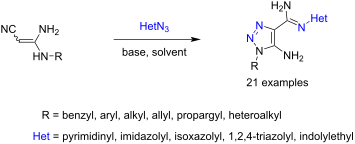
- 1,2,3-triazole ring, either an additional pyrimidinedione, 4-nitroimidazole, isoxazole, 1,3,4-triazole, 2-oxochromone or thiazole ring, has been developed. The process was facilitated by a strong base and includes the cycloaddition reaction of 3,3-diaminoacrylonitriles (2-cyanoacetamidines) to
- -triazole-4-carbimidamides with alkyl, allyl, propargyl, benzyl, cycloalkyl, and indolyl substituents at the N1 position . Keywords: Cornforth rearrangement; cycloaddition reactions; 3,3-diaminoacrylonitriles; heterocyclic azides; 1,2,3-triazole; Introduction Heteroaryl amidines are widely used in the
- of hybrids of 1,2,3-triazole with other heterocycles and to identify biologically active compounds among the synthesized compounds. It is known that the cycloaddition reaction of azidopyrimidinediones with enamines [13] represents an effective method for the synthesis of pyrimidinyl amidines [14


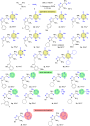

Aldiminium and 1,2,3-triazolium dithiocarboxylate zwitterions derived from cyclic (alkyl)(amino) and mesoionic carbenes
Beilstein J. Org. Chem. 2023, 19, 1947–1956, doi:10.3762/bjoc.19.145
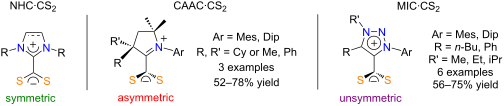
- system (G) was first investigated by Albrecht et al. in 2008 [23]. Because the heterocyclic precursors needed to prepare 1,2,3-triazol-5-ylidenes are readily available through the [3 + 2] cycloaddition of an azide and an alkyne, these compounds are currently the most popular MICs for catalytic and other
- -disubstituted-1,2,3-triazole derivatives is readily achieved via the copper(I)-catalyzed [3 + 2] cycloaddition of an azide and a terminal alkyne (CuAAC) [63][64][65]. A further alkylation of the N3 position with an alkyl halide is an equally straightforward procedure that ultimately affords a large assortment


Construction of diazepine-containing spiroindolines via annulation reaction of α-halogenated N-acylhydrazones and isatin-derived MBH carbonates
Beilstein J. Org. Chem. 2023, 19, 1923–1932, doi:10.3762/bjoc.19.143
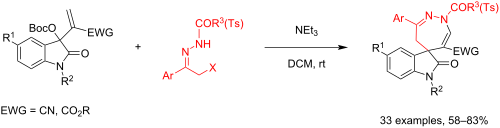
- alternative synthetic methodologies for functionalized 1,2-diazepines has drawn extensive attention [14][15][16][17][18][19][20][21]. One of the most attractive strategies to synthesize the 1,2-diazepine motif represents the [4 + 3] cycloaddition reaction between activated azoalkenes and 1,3-dipolarophiles
- spirooxindoles [36][37][38][39][40][41][42][43]. In the presence of Lewis bases, isatin-derived MBH carbonates usually undergo [3 + 2] and [3 + 3] cycloaddition reactions with a broad range of active C–C and C–N double bonds and 1,3-dipolarpohiles to give various five- or six-membered cyclic spirooxindoles [44
- ][45][46][47][48]. However, the [4 + 3] cycloaddition reaction of isatin-derived MBH carbonates with active diene components has not been well developed probably due to the lack of suitable active diene compounds [49][50][51][52][53]. In this respect, Chen and co-workers were the first who reported the



Biphenylene-containing polycyclic conjugated compounds
Beilstein J. Org. Chem. 2023, 19, 1895–1911, doi:10.3762/bjoc.19.141
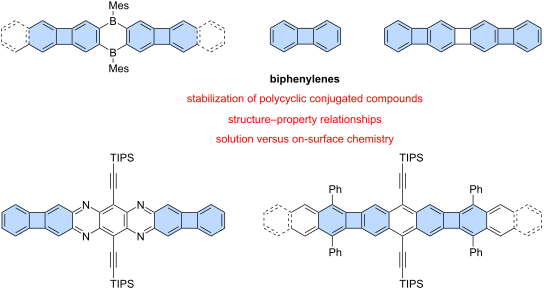
- ] cycloaddition [19][20], [2 + 2 + 2] cycloaddition [21], and the Ullmann reaction [15][22] (Scheme 1). Due to the observed low yields in flash vacuum pyrolysis, the difficulty in synthesizing starting materials, such as 3, and the impractical nature of scaling up the method for large quantities, the other three
- arene–oxanorbornadiene annulation reactions [40]. This study involved converting PAHs obtained through annulation and aromatization steps into curved PAH structures using metal-catalyzed cycloaddition reactions pioneered by Vollhart [41] and Kotora [42]. Unlike previous studies that reported
- and iPrOH, resulting in the formation of compound 37 in 49% yield. In the final step, Ir-catalyzed cycloaddition reaction with diphenylacetylene (tolane) led to PAH 38 in 47% yield. According to the X-ray analysis results, it is evident that the structure of compound 38 is far from planarity, and the

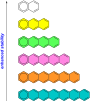


Anion–π catalysis on carbon allotropes
Beilstein J. Org. Chem. 2023, 19, 1881–1894, doi:10.3762/bjoc.19.140
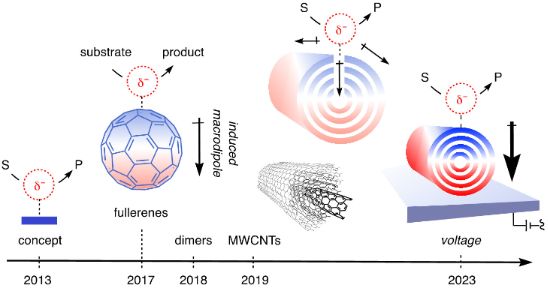
- preferred to maximize orbital overlap (Figure 4) [63]. For π-acidic surfaces, the exo transition state VII is more completely accessible (Figure 4). The 3-hydroxy-2-pyrone (24) was selected as representative diene for the anionic [4 + 2] cycloaddition with maleimide 25 as standard dienophile to afford endo