


Search results
Search for "ferrocene" in Full Text gives 156 result(s) in Beilstein Journal of Organic Chemistry.
Synthesis and photophysical characteristics of polyfluorene polyrotaxanes
Beilstein J. Org. Chem. 2015, 11, 2677–2688, doi:10.3762/bjoc.11.288
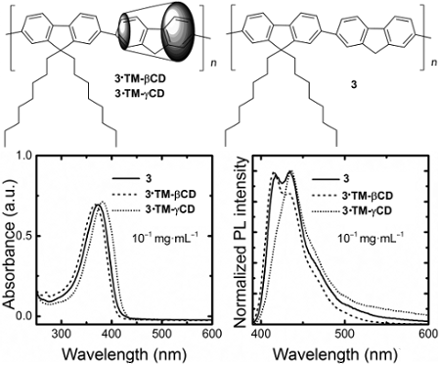
- gap (ΔEg) using ferrocene (Fc) as reference [51]. The IP, EA energy levels and ΔEg were calculated according to Equations 1–3 [52][53]. where: −4.80 eV represents the position of the Fc+/Fc redox couple in the energetic diagram [51]; +0.44 V is the redox potential of Fc+/Fc vs Ag. As indicated in


Copper-catalyzed asymmetric conjugate addition of organometallic reagents to extended Michael acceptors
Beilstein J. Org. Chem. 2015, 11, 2418–2434, doi:10.3762/bjoc.11.263
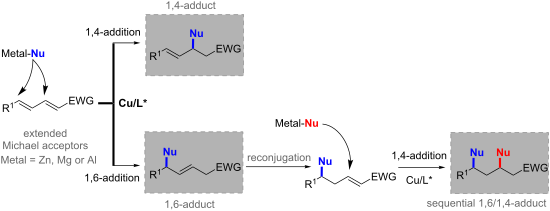
- acceptors, which were the focus of a work reported by Feringa and co-workers in 2008 [28]. In this study, the efficiency of ferrocene-based ligands was investigated for the addition of Grignard reagents onto ethyl sorbate, using CuBr·SMe2 as the copper source. Reversed Josiphos L8 was selected as the most
- adducts [38]. Various ligands were tested and the best catalytic performance was achieved using bidentate ferrocene-based ligand L14 in combination with tetrakis(acetonitrile)copper(I) perchlorate as the copper source. The conversion of aromatic linear dienones 67 was reported with a complete


Size-controlled and redox-responsive supramolecular nanoparticles
Beilstein J. Org. Chem. 2015, 11, 2388–2399, doi:10.3762/bjoc.11.260
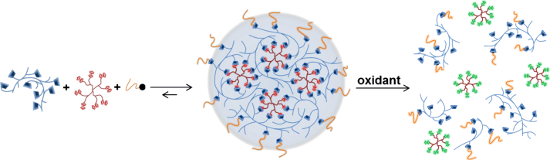
- ) grafted with β-cyclodextrin (CD) and a positively charged ferrocene (Fc)-terminated poly(amidoamine) dendrimer, with a monovalent stabilizer at the surface. Fc was chosen for its loss of CD-binding properties when oxidizing it to the ferrocenium cation. The ionic strength was shown to play an important
- charged polymers and dendrimers. In order to use these SNPs for biomedical applications, in particular for drug delivery, a stimulus-responsive self-assembled system is desired for controlled cargo release. Ferrocene (Fc) is a ubiquitous redox-responsive molecule that is associated with a reversible one
- protein isolation method [24]. So far, this concept has not been applied to SNPs. Here, we aim to make SNPs with a redox-switchable assembly/disassembly mechanism. As a proof of concept, we used positively charged CD-grafted poly(ethylene imine) (CD-PEI) as a host, positively charged ferrocene-terminated


A new approach to ferrocene derived alkenes via copper-catalyzed olefination
Beilstein J. Org. Chem. 2015, 11, 2072–2078, doi:10.3762/bjoc.11.223
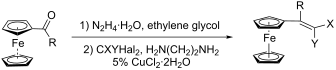
- , 28 Vavilov Street, Moscow 119991, Russia 10.3762/bjoc.11.223 Abstract A new approach to ferrocenyl haloalkenes and bis-alkenes was elaborated. The key procedure involves copper catalyzed olefination of N-unsubstituted hydrazones, obtained from ferrocene-containing carbonyl compounds and hydrazine
- of vinyl groups: while for the monoalkene containing molecules no reduction is seen, the divinyl products are reduced in several steps. Keywords: catalytic olefination; copper catalysis; cyclic voltammetry; ferrocene; Introduction The introduction of complex functional fragments into the specified
- place of the target molecule is of current interest in modern synthetic chemistry [1]. From this point of view, the development of ferrocene-based molecules as crucial fragments of new materials and novel pharmacological entities is of great importance. Indeed, since the discovery of ferrocene [2] and


Supramolecular chemistry: from aromatic foldamers to solution-phase supramolecular organic frameworks
Beilstein J. Org. Chem. 2015, 11, 2057–2071, doi:10.3762/bjoc.11.222
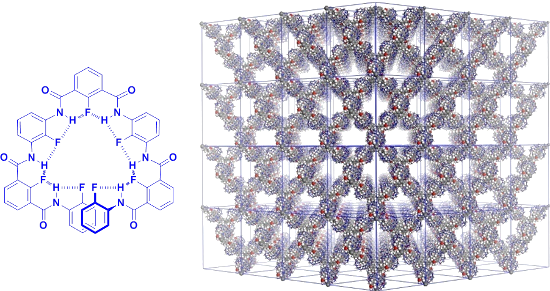
- (SIOC). In the spring of 1985, the second semester of the fourth year, I entered Professor Zhendong Chen’s lab to perform my dissertation research. I stayed in the lab for about three months and prepared several ferrocene-derived conjugated molecules to study the homologous linearity [1]. I later


![[Graphic 1]](/bjoc/content/inline/1860-5397-11-222-i19.png?max-width=637&scale=1.18182) 16 and dynamic [2]catenane formed by compounds 17–19.
16 and dynamic [2]catenane formed by compounds 17–19.


Polythiophene and oligothiophene systems modified by TTF electroactive units for organic electronics
Beilstein J. Org. Chem. 2015, 11, 1749–1766, doi:10.3762/bjoc.11.191
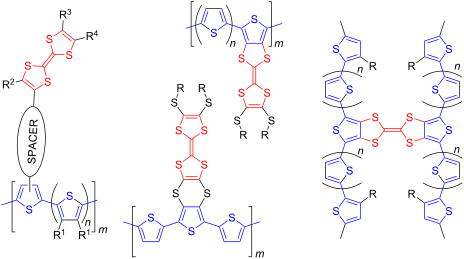
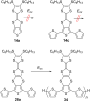
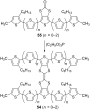
- ) and BHJSCs. So far, various electroactive units have been anchored aside the polythiophene backbone, including ferrocene [8], porphyrin [9], 2-carboxyanthraquinone [10], 1,3-dithiole-2-ylidenefluorene [11][12], dithiinoquinoxaline [13][14] and fullerene C60 [15][16]. The incorporation of acceptor






SmI2-mediated dimerization of indolylbutenones and synthesis of the myxobacterial natural product indiacen B
Beilstein J. Org. Chem. 2015, 11, 1700–1706, doi:10.3762/bjoc.11.184

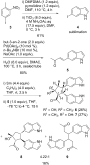
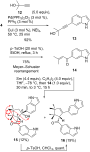
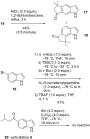
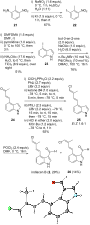
- of 1,1'-dicinnamoylferrocenes had also afforded cis-phenyl-disubstituted cyclopentanols, presumably as a consequence of parallel orientation of the enone systems by fixation of the carbonyl oxygens by Sm(III) and tethering by the ferrocene unit [26]. A possible reason for our findings could be the



Synthesis and spectroscopic properties of β-triazoloporphyrin–xanthone dyads
Beilstein J. Org. Chem. 2015, 11, 1434–1440, doi:10.3762/bjoc.11.155
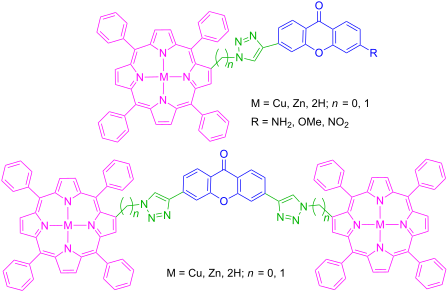
- porphyrins with diverse functionalities such as quinolone [19], ferrocene [20], carbohydrate [21] and fullerene [22] through a copper(I)-catalyzed Huisgen–Sharpless–Meldal 1,3-dipolar cycloaddition reaction [23][24]. Some of these triazolo-bridged porphyrin dyads have shown an efficient intramolecular energy


Selected synthetic strategies to cyclophanes
Beilstein J. Org. Chem. 2015, 11, 1274–1331, doi:10.3762/bjoc.11.142
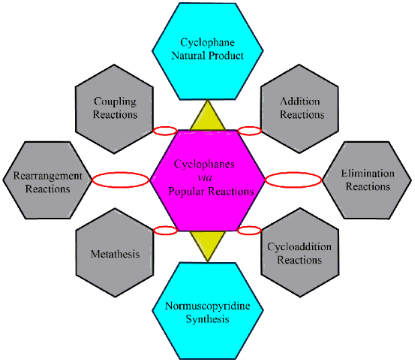
- compounds which are discussed in detail in this review. Review Synthetic routes to cyclophanes Addition reactions Mannich reaction: In 2001, Erker and co-workers [84] have reported the synthesis of amino-substituted [3]ferrocenophane through an intramolecular Mannich reaction starting with the ferrocene
- accomplished in a one-pot reaction under Wolff–Kishner reaction conditions to generate 223 and 259, respectively (Scheme 41). Cycloaddition reactions [2 + 2] Cycloaddition: Roemer and Lentz [175] have reported the synthesis of fluorinated ferrocenophanes from 1,10-bis(trifluorovinyl)ferrocene and 1,4-(1,10
- -ferrocenediyl)-1,1,2,2,3,3,4-heptafluorobutane. The authors have reported a [2 + 2] cycloaddition reaction under thermal conditions. 1,10-Bis(trifluorovinyl)ferrocene (261) was synthesized starting with diiodoferrocene 260 by Negishi-type coupling. Compound 261 was subjected to a [2 + 2] cycloaddition sequence






Single-molecule conductance of a chemically modified, π-extended tetrathiafulvalene and its charge-transfer complex with F4TCNQ
Beilstein J. Org. Chem. 2015, 11, 1068–1078, doi:10.3762/bjoc.11.120
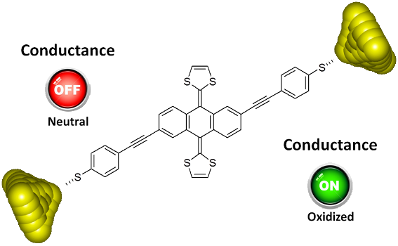
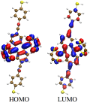
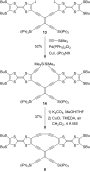
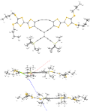
- viologen [5][6], aniline [7][8], thiophene [9], anthraquinone [10] and ferrocene [11] have been previously studied. However, a particularly suitable redox-active molecule for molecular electronics is the well-known electron donor tetrathiafulvalene (TTF) molecule. Pristine TTF, as well as the
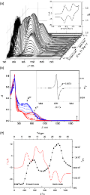
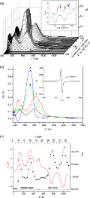
- argon atmosphere and at a scan rate of 0.1 Vs−1. The electrochemical cell consisted of a glassy carbon working electrode, Ag/AgNO3 reference electrode and a Pt wire counter electrode. It is worth mentioning that ferrocene was not employed as the inner reference since its oxidation potential overlaps




Tuning the size of a redox-active tetrathiafulvalene-based self-assembled ring
Beilstein J. Org. Chem. 2015, 11, 966–971, doi:10.3762/bjoc.11.108
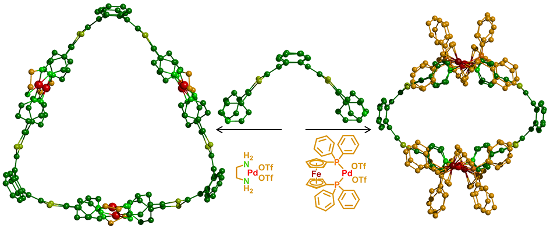
- (dppf)(OTf)2 (M = Pd or Pt; dppf = 1,1’-bis(diphenylphosphino)ferrocene; OTf = trifluoromethanesulfonate) in nitromethane at 40 °C converged into a single symmetrical M4L2 discrete species (Scheme 1, Figure 1b) [39]. It is worth noting that the through space interaction between the phenyl rings of the
- bulky 1,1’-bis(diphenylphosphino) ferrocene (dppf) coligand and the pyridine moieties force the exTTF unit to increase significantly its curvature in comparison to ligand L1 (56° vs 86° respectively between the 1,3-dithiol-2-ylidene mean planes (Figure 1)). This leads to the formation of the compact
- on the Pd metal center. In particular, whereas a 1,1’-bis(diphenylphosphino)ferrocene co-ligand promotes a clipping of the ligand pyridyl units and leads to a strong curvature of the exTTF moiety integrated in a M4L2 coordination cage, the use of a smaller co-ligand leads to the formation of a larger


Interactions between tetrathiafulvalene units in dimeric structures – the influence of cyclic cores
Beilstein J. Org. Chem. 2015, 11, 930–948, doi:10.3762/bjoc.11.104
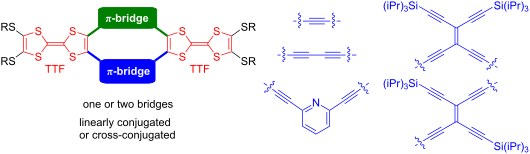
- [11][12] have shown how rotamers can indeed influence the electronic coupling in bis-ruthenium complexes separated by oligoynediyl spacers. In addition, an increased interaction between redox centres upon linking them together in cyclic structures was previously observed in ferrocene-dimers [13]. Here
- Supporting Information File 1, Figure S4) using cyclic voltammetry (with a platinum-wire working electrode in the presence of internal ferrocene potential marker). They are very close to 1a and 2a, respectively, as expected. Using 3b as a reference compound, it is seen that all the other compounds are
- rotating the two TTF units around the ethyne bridge of 2.5 kJ mol−1 (see Supporting Information File 1). The electronic interactions between two TTFs being spanned by alkynyl or poly-alkynyl bridges are quite poor in comparison to other redox groups. Ferrocene units are only marginally better than TTFs







3α,5α-Cyclocholestan-6β-yl ethers as donors of the cholesterol moiety for the electrochemical synthesis of cholesterol glycoconjugates
Beilstein J. Org. Chem. 2015, 11, 162–168, doi:10.3762/bjoc.11.16
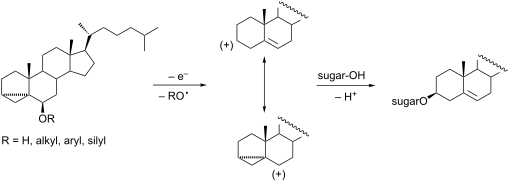
- electrode was a Bioanalytical Systems platinum inlay (1 mm in diameter), the auxiliary electrode was a platinum mesh (contained in a glass tube with a medium porosity glass frit), and the reference electrode was Ag/0.1 M AgNO3 in acetonitrile. The potential of the electrode vs the ferrocene/ferricinium ion


Redox active dendronized polystyrenes equipped with peripheral triarylamines
Beilstein J. Org. Chem. 2014, 10, 3097–3103, doi:10.3762/bjoc.10.326
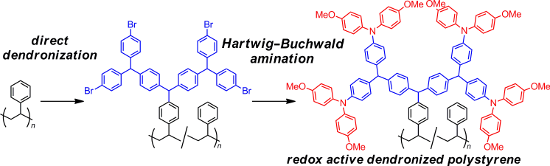
- polymers [2][3][4][5][6][7][8] as scaffolds serves as a useful method for synthesizing organic functional materials having nanosize three-dimensional structures. Although there are many examples of redox-active dendrimers, including those equipped with ferrocene [9][10], triarylamines [11][12][13][14], and




Inherently chiral calix[4]arenes via oxazoline directed ortholithiation: synthesis and probe of chiral space
Beilstein J. Org. Chem. 2014, 10, 2751–2755, doi:10.3762/bjoc.10.291

- examined as ligands in the palladium-catalyzed Tsuji–Trost allylation reaction, returning results comparable to their planar chiral ferrocene counterparts pointing towards future application of these types of compounds. Keywords: calix[4]arene; inherently chiral; ortholithiation; oxazoline; Tsuji–Trost
- calixarenes 5–8, we noted their similarity to planar chiral thioether oxazoline ferrocene ligands (9 in Figure 1) already reported by Dai and co-workers [35]. We therefore initiated a pilot study with our inherently chiral calix[4]arenes, using the palladium-catalyzed Tsuji–Trost allylation reaction (Scheme 3
- co-workers with respect to their planar chiral ferrocene derivatives (e.g., 9). Although it is unclear to us why the rate should be enhanced, the fact that it does bodes well for calix[4]arenes being investigated as ligands. On a less positive note, ligands 7b and 8 were completely ineffective, with


Solution processable diketopyrrolopyrrole (DPP) cored small molecules with BODIPY end groups as novel donors for organic solar cells
Beilstein J. Org. Chem. 2014, 10, 2683–2695, doi:10.3762/bjoc.10.283
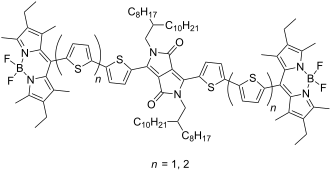
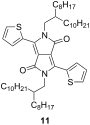
- acetonitrile. In both cases, a Ag wire reference electrode and a Pt counter-electrode, in the presence of Bu4NPF6 (0.1 M), were used. All the values are quoted versus the redox potential of the ferrocene/ferrocenium couple. Normalised UV–vis absorption spectra of 9 (black), 10 (red) and DPP core (11, green) in




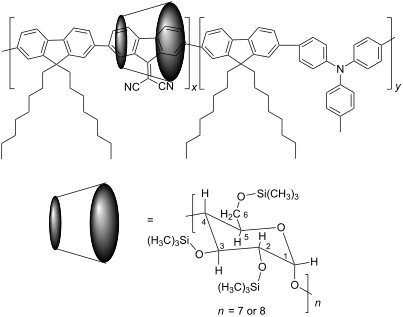
The effect of permodified cyclodextrins encapsulation on the photophysical properties of a polyfluorene with randomly distributed electron-donor and rotaxane electron-acceptor units
Beilstein J. Org. Chem. 2014, 10, 2145–2156, doi:10.3762/bjoc.10.222
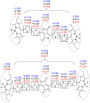
- electronic affinity (EA), and the electrochemical band gaps (ΔEg) by using ferrocene (Fc) as a reference [45][46]. It should be mentioned that the encapsulated 1a or 1b moieties and 2 randomly distributed into the 3 backbone leads to the synthesis of compounds with smaller optical and electrochemical gaps


Chiral phosphines in nucleophilic organocatalysis
Beilstein J. Org. Chem. 2014, 10, 2089–2121, doi:10.3762/bjoc.10.218
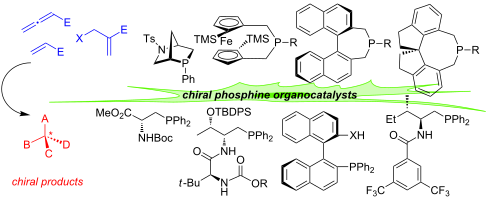
- have been constructed based on bridged-ring (Figure 1), binaphthyl (Figure 2), ferrocene (Figure 3), spirocyclic (Figure 4), and five-membered phospholane ring (Figure 5) skeletons. Multifunctional chiral phosphines have generally been constructed based on binaphthyl skeletons (Figure 7) and amino
- synthesized a series of ferrocene-modified planar chiral phosphines featuring a new skeleton (Figure 3) [44][45]. Among these compounds, the P-cyclohexyl phosphine C1 proved to be the most efficient catalyst for [3 + 2] cycloadditions of ethyl 2,3-butadienoate with activated enones, fumarate esters, and
- of up to >20:1 (Scheme 9) [44][45]. The bulky ferrocene was presumably responsible for the high enantioselectivities. Notably, the presence of the electron-rich ferrocene unit inhibited oxidation of the phosphines, imparting them with air-stability and easy-to-handle properties [45]. Subsequently


A new charge-tagged proline-based organocatalyst for mechanistic studies using electrospray mass spectrometry
Beilstein J. Org. Chem. 2014, 10, 2027–2037, doi:10.3762/bjoc.10.211
- )ferrocene]palladium(II) dichloride dichloromethane complex (0.22 g, 0.28 mmol) and Na2CO3 (8.78 g, 82.4 mmol) were suspended in a H2O/1,2-dimethoxyethane mixture (1:3, 75 mL), heated to 100 °C und stirred for 16 h. The resulting mixture was filtered and the filtrate was mixed with H2O (75 mL) and CH2Cl2 (75



Five-membered ring annelation in [2.2]paracyclophanes by aldol condensation
Beilstein J. Org. Chem. 2014, 10, 2021–2026, doi:10.3762/bjoc.10.210
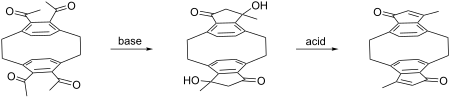
- for novel cyclophanes (Scheme 1). For example, 2 has been converted into the corresponding bis-olefin, from which multi-layered ferrocene complexes (“metallocenophanes”) were prepared [6]. Analogously, from 4 several tropyliophane salts were obtained [5]. In the case of the cyclopentenone-annelated


Aryl substitution of pentacenes
Beilstein J. Org. Chem. 2014, 10, 1692–1705, doi:10.3762/bjoc.10.178
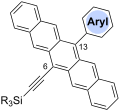
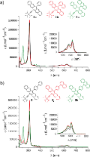
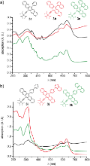
- results are often observed between MPA and DSC. Cyclic voltammetry Electrochemical analysis by cyclic voltammetry (CV) was used to investigate the electronic properties of pentacene derivatives 3a–k in CH2Cl2 (ca. 1.5 mM) using tetrabutylammonium hexafluorophosphate as supporting electrolyte and ferrocene




Rational design of cyclopropane-based chiral PHOX ligands for intermolecular asymmetric Heck reaction
Beilstein J. Org. Chem. 2014, 10, 1536–1548, doi:10.3762/bjoc.10.158
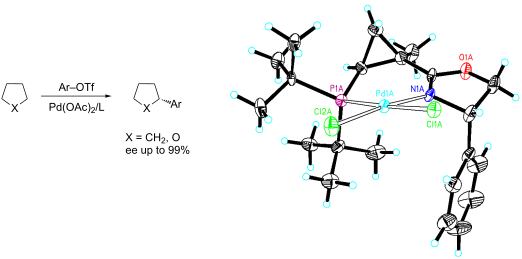
- selectivity. Structural modification of the flat ortho-phenylene tether in the Pfaltz ligand through the incorporation of additional chirality elements into the ligand backbone allowed for significant improvement of the enantioselectivity. Thus, ferrocene-based ligands introduced by Dai and Hou [55][56], and


Synthesis of 1-[bis(trifluoromethyl)phosphine]-1’-oxazolinylferrocene ligands and their application in regio- and enantioselective Pd-catalyzed allylic alkylation of monosubstituted allyl substrates
Beilstein J. Org. Chem. 2014, 10, 1261–1266, doi:10.3762/bjoc.10.126
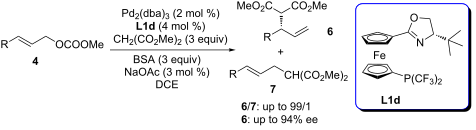
- ’-oxazolinylferrocene ligands has been synthesized from ferrocene. It became apparent that these ligands can be used in the regio- and enantioselective Pd-catalyzed allylic alkylation of monosubstituted allyl substrates in a highly efficient manner. Excellent regio- and enantioselectivity could be obtained for a wide
- range of substrates. Keywords: allylic substitution; enantioselectivity; ferrocene; organophosphorus; palladium; regioselectivity; Introduction The palladium-catalyzed asymmetric allylic alkylation (AAA) reaction is now becoming an efficient method for the construction of carbon–carbon bonds [1][2][3
- Pd-catalyzed allylic alkylation reaction. Excellent results were obtained for the bulky and electron-rich aryl allyl substrates [25][26][27]. In 2001, Dai, Hou and their coworkers synthesized a new class of 1,1’-ferrocene-based P,N-ligands, namely SiocPhox. The application of these SiocPhox ligands


Preparation of phosphines through C–P bond formation
Beilstein J. Org. Chem. 2014, 10, 1064–1096, doi:10.3762/bjoc.10.106
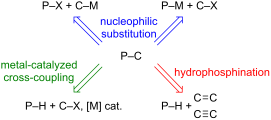
- triarylphosphines with this methodology. However, a modified catalyst system [Pd(Et-FerroTANE)] containing a ferrocene-based ligand was used [205]. This catalyst had the advantage that it was easily prepared in situ while the unstable catalyst used by Glueck et al., required storage at −25 °C in the dark. The


Tailoring of organic dyes with oxidoreductive compounds to obtain photocyclic radical generator systems exhibiting photocatalytic behavior
Beilstein J. Org. Chem. 2014, 10, 936–947, doi:10.3762/bjoc.10.92
- tetrabutylammonium hexafluorophosphate (Aldrich) as supporting electrolyte. The samples were bubbled with argon for 20 minutes prior to the analysis. Ferrocene was used as standard [60]. Steady sate UV–vis spectra were obtained on a Varian Cary 4000 UV–vis double beam spectrophotometer in 1 cm path quartz UV grade


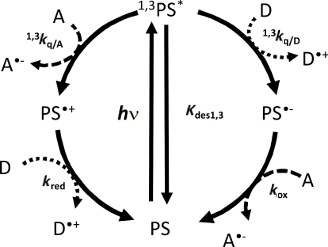
![[Graphic 1]](/bjoc/content/inline/1860-5397-10-92-i10.png?max-width=637&scale=1.18182) ), b) excited state...
), b) excited state...





